This site is supported by our readers. We may earn a commission, at no cost to you, if you purchase through links.

Your puppy’s first training class can feel like herding a tornado through an obstacle course—exciting, unpredictable, and slightly chaotic. Most new puppy owners walk in armed with treats and optimism, only to discover their well-behaved angel transforms into a distracted whirlwind the moment other puppies appear.
The difference between trainers who succeed and those who leave frustrated often comes down to preparation, not the puppy’s temperament. Understanding what supplies you’ll need, how your puppy learns during those critical early weeks, and which techniques actually work will transform that first session from overwhelming to confidence-building.
With the right approach, you’ll build the foundation for a well-mannered companion while strengthening the trust between you both.
Table Of Contents
Key Takeaways
- Success in your first puppy training class hinges on preparation—gathering the right supplies (proper leash, high-value treats, safe training space) matters more than your puppy’s natural temperament.
- Puppies learn best in ultra-short bursts of 5-10 minutes because their attention span is tiny, and immediate rewards delivered within 1-2 seconds help them connect actions to consequences through positive reinforcement.
- The critical socialization window between 3-14 weeks shapes lifelong behavior patterns, so exposing your puppy to people, dogs, and environments during this period prevents fear responses later.
- Training doesn’t stop after class—practicing skills in multiple environments (home, yard, car) with consistent cues and tracking progress daily turns classroom lessons into reliable real-world behavior.
Preparing for Your First Puppy Training Class
Getting ready for your first puppy training class doesn’t have to feel overwhelming. You just need a few key items, the right mindset, and a space where your puppy can focus without distractions.
Let’s walk through what you’ll need to set both of you up for success.
Gathering Essential Supplies
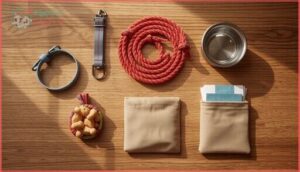
Success in puppy training starts with the right gear. Before your first puppyhood training session, gather these essentials to support your puppy’s development and make learning smooth:
- Leash selection and collar: A flat collar or yoke with a 4–6 foot leash teaches leash manners.
- Training aids: A chew-safe toy redirects energy during puppy care activities.
- Supply kits: Portable water bowl, treat storage pouch, and waste bags keep sessions organized.
Puppy proofing your kit ensures safer, more effective puppy training. Removing tempting items and setting up safe boundaries helps your puppy stay calm and focused, especially when you’re working through early aggression or over-arousal challenges.
Ensuring the validity of scientific information, such as methodological rigor, is vital for reliable guidance.
Choosing The Right Training Treats

Once you’ve got your supplies, the right treats become your secret weapon. Choose soft, meat-based food rewards in bite-sized pieces—they’re easy to chew and keep training momentum going. High-value treats motivate puppies better than kibble during positive reinforcement sessions.
| Treat Quality | Why It Matters |
|---|---|
| Small, soft texture | Prevents choking; quick to consume |
| Strong aroma | Captures attention fast |
| Minimal ingredients | Reduces allergen risk |
| Calorie-conscious | Fits daily dietary needs |
Rotate texture variety to sustain curiosity. Pair every reward with clear cues and praise—that’s your reward system in action. Healthy ingredients and smart calorie management prevent weight gain while your puppy masters treat selection and reward timing.
Setting Up a Safe Training Environment
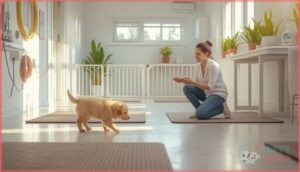
With your treats sorted, turn your focus to safe flooring and hazard removal. Non-slip mats prevent slips during obedience training, while proper ventilation systems reduce stress. Create your puppy training zone by: Clear away distractions and mark boundaries so your dog can focus on basic obedience cues without competing stimuli.
- Securing loose cords and toxic substances away from curious mouths
- Sanitizing surfaces between sessions to limit germ spread
- Posting emergency planning contacts where handlers can see them
Equipment sanitation aids positive reinforcement and early socialization efforts. Clean bowls and toys also reduce the risk of illness during this critical learning window, so review essential prep steps before training begins to keep your puppy healthy and focused.
Understanding Puppy Behavior and Needs

Your puppy isn’t just a miniature dog, they’re a rapidly developing learner with unique needs at every stage. Understanding how their brain works, what captures their attention, and how trust forms will make your first training class far more effective.
Let’s break down the key behavioral factors that shape how your puppy learns and reacts to training.
Puppy Development Stages and Learning
Your puppy’s brain is wired to absorb everything during specific windows of growth. Between 3 and 14 weeks, the socialization period shapes how your pup will respond to people, dogs, and environments for life. Understanding these developmental markers helps you align training techniques with canine cognition—teaching sit when motor skills are ready, around 8 to 12 weeks, maximizes success through positive reinforcement and learning theory.
| Age Range | Developmental Marker | Training Focus |
|---|---|---|
| 3–14 weeks | Socialization window opens | Gentle exposure to people, sounds |
| 8–12 weeks | Motor coordination develops | Basic cues: sit, target, name recognition |
| 12–16 weeks | Bite inhibition refines | Redirect mouthing, reinforce gentle play |
Managing Attention Span and Energy
Focus wavers fast in young dogs—most puppies hold attention for just 5 to 10 minutes during early puppy development. Short, positive sessions work best—try introducing new sights and sounds in quick bursts, especially with energetic breeds like the Chinese Crested Powderpuff.
Match training routines to energy levels by scheduling short sessions after moderate play, when arousal peaks without overstimulation. Use high-value rewards and clear cues to anchor attention control, building impulse control gradually.
Between bouts, 18 to 20 hours of daily rest consolidate learning and sustain focus for positive reinforcement.
Building Trust Before Training
Trust building lays the groundwork for every command your puppy will master. Establish consistent routines and calm environments first, letting your pup retreat when overwhelmed—this respects puppy consent and emotional safety.
Gentle interactions, eye contact, and predictable rewards forge relationship building through positive reinforcement.
Observe body language closely; signs like yawning or ears back mean it’s time to pause and adjust your pace during canine socialization.
What to Expect in The First Class
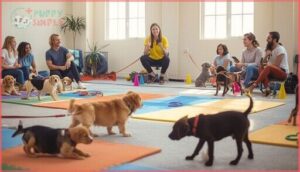
Walking into your first puppy training class can feel a bit like the first day of school—you’re not quite sure what’s coming, but you’re ready to learn. Most classes follow a similar flow, mixing basic skill-building with plenty of chances for your pup to meet new friends.
Here’s what usually happens in that first session.
Basic Commands Introduced
Your first class will likely cover five basic cues: sit, stay, come, down, and leave it. Each command builds obedience training through positive reinforcement and reward systems.
You’ll learn cue consistency—using the same words every time—plus hand signals and command timing. “Reward immediately after the correct response,” says certified trainer Jamie Scott. These dog obedience methods shape reliable training outcomes when practiced consistently.
Socialization With People and Puppies
You’ll meet other puppies and their owners during supervised socialization segments—a cornerstone of canine socialization and development. Proper human interaction during the first 12 weeks dramatically reduces fear response later, says behavior specialist Dr. Chen.
Watch for calm, predictable exchanges that build social bonds through positive reinforcement. Dog trainers orchestrate these introductions carefully, ensuring your pup learns canine communication without overwhelm or stress.
Structure and Routine of Training Sessions
Expect a predictable rhythm: each session runs 5–10 minutes, starting with a warm-up, moving through labeled command drills, then closing with a calm cooldown.
Training schedules rely on consistent cues and reward systems—reinforcing the same behaviors at fixed times builds trust fast.
Your trainer tracks session planning notes, capturing what worked and what needs adjustment, so routine activities like creating structure through crate training and obedience training feel manageable, not overwhelming.
Tips for Successful Training Sessions

You’ve made it through your first class, and now the real work begins. The good news is that a few simple strategies can make every training session more effective, helping your puppy learn faster while keeping things fun for both of you.
Let’s walk through the techniques that set successful trainers apart from those who struggle.
Using Positive Reinforcement Techniques
Positive reinforcement training works because you’re teaching your puppy that good things happen when they listen. Reward timing matters most—deliver that treat within 1–2 seconds so your pup connects the dots.
Positive reinforcement works best when you deliver the reward within 1–2 seconds so your puppy connects the action to the treat
Start with continuous rewards, then shift to variable rewards to keep them guessing.
Cue consistency across everyone in your household prevents confusion and speeds up behavior shaping beautifully.
Keeping Sessions Short and Engaging
Your puppy’s attention span is tiny, so keep training sessions between 5–10 minutes to match their mental capacity. Break each session into 2–3 brief segments, focusing on one goal at a time to prevent overwhelm.
Watch for yawning or pacing—those signal fatigue. End on a successful cue to leave your pup wanting more, not checked out.
Staying Consistent With Cues and Rewards
Once your pup nails a behavior, it’s tempting to switch things up—but don’t. Stick with the same verbal cues and hand signals every time, says expert trainers who emphasize consistent signals. That clarity speeds learning.
Use a reward hierarchy: high-value treats for tough tasks, standard ones for mastered cues. This reinforcement schedule keeps motivation steady and training routines predictable, building a solid foundation through positive reinforcement and consistency.
Handling Setbacks With Patience
Even with consistency, your puppy won’t always get it right—and that’s normal. When setbacks happen, take a breath and resist the urge to correct harshly. Instead, use these Patience Techniques:
- Log each mistake with context—environment, distractions, energy level—for Setback Analysis.
- Lower the difficulty temporarily to rebuild confidence through Positive Reinforcement.
- Watch for stress signals like yawning or pacing, and pause for Stress Management.
- Keep your voice calm during repetitive attempts, modeling Calm Communication.
This approach strengthens impulse control and fosters healthy dog behavior as your puppy learns.
Continuing Training at Home

Your puppy’s education doesn’t end when class wraps up. The real magic happens at home, where you reinforce what they’ve learned and help them build confidence in everyday situations.
Here’s how to keep the momentum going between formal training sessions.
Practicing Skills in Different Environments
Think of your home as a warm-up studio, not the final performance venue. Your puppy needs practice in at least three distinct environments—home, yard, and car—to master cue generalization and avoid contextual learning traps.
Bring portable training essentials everywhere: treats, leash, clicker. Gradually layer in distractions like noise or toys while maintaining your positive reinforcement approach, building resilience through environmental adaptation and smart distraction management.
Reinforcing Good Behavior Daily
Consistency matters more than flawlessness in canine development. Your puppy thrives on predictable reward schedules, so aim for 2–5 minute training bursts throughout the day.
Use behavior tracking to spot what works, deliver positive feedback immediately after the right action, and vary your reward system—treats, toys, praise—to keep positive reinforcement training fresh and habit formation strong.
Monitoring Progress and Adjusting Strategies
Track each week with a simple checklist—record success rates, note how quickly your puppy reacts to cues, and watch for patterns in mistakes.
Performance analysis reveals when to tweak training methods: if progress stalls below your target, switch reward schedules or shorten sessions.
Strategy optimization through consistent progress tracking turns guesswork into smart dog behavior modification, keeping positive reinforcement sharp and obedience training on target.
Knowing When to Seek Professional Help
When should you call in a pro? Persistent aggression issues, extreme fear responses, or house soiling that won’t quit signal it’s time. If medical concerns surface or behavioral setbacks pile up despite consistent positive reinforcement, a certified dog trainer can diagnose what’s derailing progress.
Expert-led dog behavior modification and training and behavior modification sessions offer targeted solutions your puppy training at home might be missing.
Frequently Asked Questions (FAQs)
How much does puppy training class typically cost?
Group puppy training classes generally run $30 to $80 per session, while private lessons cost $60 to $120 hourly.
Budget planning matters—package deals offering four to six classes often provide better expense management and price comparison value.
What vaccines does my puppy need before class?
Your puppy needs core vaccines—distemper, parvovirus, and hepatitis—started at 6–8 weeks with booster shots every 3–4 weeks.
Most classes require health clearance proving your puppy’s vaccine schedule is current before enrollment.
Can I bring multiple puppies to one class?
Ironically, bringing both puppies might seem efficient—but most group puppy classes restrict enrollment to one per household.
Multi puppy classes exist, though trainer supervision, group size limits, and safety protocols often require separate sessions for effective puppy socialization.
What if my puppy gets overwhelmed or scared?
If your puppy shows Fear Response Management signs—cowering, panting, or disengaging—remove them from the trigger immediately.
Use Calming Techniques like returning to familiar cues, then gradually reintroduce challenges using positive reinforcement training and Stress Reduction Methods.
Are online puppy training classes equally effective?
Your laptop becomes the classroom when geography or schedule makes in-person lessons tough. Research shows remote learning produces comparable behavior outcomes, especially when you’re consistent with positive reinforcement training between virtual coaching sessions.
This approach to training is often preferred for its virtual dog training benefits.
Conclusion
Sure, your puppy might occasionally mistake “sit” for “launch into orbit,” but that’s the beauty of those first puppy training class tips—they transform chaos into cooperation, one treat at a time.
You’ve got the supplies, the mindset, and the patience to guide your whirlwind companion through each stage. Mistakes will happen, progress will surprise you, and before long, that distracted furball becomes the well-mannered dog you envisioned.
Trust the process. You’re building something lasting together.
- http://www.doggieacademy.com/
- https://www.youtube.com/channel/UC-TFajjG5CMAmUrJG1ONtKQ
- https://americascanineeducator.com/meet-americas-canine-educator/
- https://academichelpexpress.blog/2024/08/please-use-the-bulleted-points-and-the-rubric-below-to-guide-your-work-your-pa/
- https://www.sciencedirect.com/science/article/pii/S0749208123000268