
This site is supported by our readers. We may earn a commission, at no cost to you, if you purchase through links.

Most people discover the Chinese Crested Powderpuff by accident—they come for the famously hairless variety and end up falling for its fluffy, fully-coated sibling instead. Same breed, same litter sometimes, completely different look.
The Powderpuff carries a silky double coat that flows like it belongs on a dog three times its size, packed into a compact 8–12 pound frame that lives, on average, 13–15 years.
Behind that elegant exterior is a dog with serious attachment tendencies, specific grooming demands, and a handful of health conditions worth knowing before you commit. Everything you need to decide if this breed belongs in your home is ahead.
Table Of Contents
- Key Takeaways
- Chinese Crested Powderpuff Overview
- Powderpuff Temperament and Family Fit
- Grooming and Daily Care
- Health Risks and Screening
- Top 3 Chinese Crested Guides
- Frequently Asked Questions (FAQs)
- Are Chinese Crested powder puffs rare?
- What is the temperament of powderpuffs?
- How big do powderpuff Chinese Cresteds get?
- How big does a Chinese Crested powder puff get?
- What is the difference between Chinese Crested and powder puff?
- How much does a Chinese Crested powder puff cost?
- Are Chinese Crested Powderpuffs hypoallergenic?
- Do they bark excessively?
- Are they good with other pets?
- How much do Powderpuff puppies cost?
- Conclusion
Key Takeaways
- The Chinese Crested Powderpuff is a compact 8–12 lb companion with a silky double coat and a velcro personality that means it’ll follow you from room to room — so it’s not the right fit if you’re away from home a lot.
- Grooming isn’t optional with this breed — daily brushing, regular baths, and seasonal skin checks are all part of the deal to keep that flowing coat healthy and mat-free.
- Serious eye conditions like Primary Lens Luxation and Progressive Retinal Atrophy can move fast, so genetic screening before you buy — and regular vet checkups after — can genuinely save your dog’s sight.
- Powderpuffs are rarer than their hairless siblings because their full coat comes from a recessive gene, which means you’ll pay $1,000–$3,000 for a puppy, though rescue adoption is a solid option at $100–$400.
Chinese Crested Powderpuff Overview

The Chinese Crested Powderpuff is one of those dogs that turns heads everywhere it goes — a full, silky coat on a tiny frame isn’t something you see every day.
Whether you go hairless or fluffy, this breed ranks among the most manageable low-dander dog breeds for sensitive households.
But there’s more than good looks to this breed. Here’s what makes the Powderpuff truly stand out.
Unique Appearance and Full Double Coat
The powderpuff’s most striking feature is its full coat of soft, fine hair — a true Fluffy Silhouette that sets it apart from the mostly bare hairless variety. A Silky Guard Layer sits over a plush undercoat, creating Elegant Body Framing that feels airy, not bulky. Coat Density Standards ensure the coat remains smooth and flowing, never heavy or curly. This structure mirrors the role of primary and secondary hairs, combining a protective guard layer with a soft undercoat.
- Soft Outline Contrast against the hairless variety’s exposed skin
- Double coat covers the entire body evenly
- Fine bone structure beneath the full coat stays visible
Size, Weight, and Typical Lifespan
Beneath that silky coat is a surprisingly compact frame. The Adult Height Range sits at 11 to 13 inches at the shoulder, with most adults weighing between 8 and 12 pounds — so Weight Management matters more than you’d think. Even a pound of extra weight shows on a small breed dog.
The Growth Maturity Timeline is gentle, with no dramatic growth spurts. Longevity Factors like lean body condition and regular vet care support a life expectancy of 13 to 15 years, placing them among the longer-lived toy group companions.
Hairless Vs Powderpuff Differences
Same breed, very different experience. The hairless variety has soft, exposed skin requiring sunscreen, moisturizer, and cozy sweaters — daily concerns like Skin Sensitivity and Sun Protection are paramount.
Powderpuff dogs, by contrast, handle temperature swings better thanks to their insulating double coat.
Genetic Inheritance means both varieties can appear in a single litter.
Hairless dogs also commonly exhibit Dental Anomalies like missing premolars — an issue powderpuff dogs typically avoid.
Coat Colors and Texture Variations
Allowed Color Spectrum runs from creamy white and apricot to deep black and tan, chocolate, silver, and beyond — solid, parti-colored, or tri-colored all qualify.
Texture Standards favor soft, flowing guard hairs over a fine undercoat, never woolly or curly.
Expect Shade Shifts too; Color Genetics mean that rich puppy coats often lighten with age — completely normal.
Origins and Breed Recognition
The Chinese Crested’s story is a winding one. Its African ancestry traveled ancient historical trade routes to China, where breeders refined the type over centuries.
That rich genetic heritage shaped today’s Powderpuff. This is how the breed standard evolution unfolded through the kennel club timeline:
- AKC granted full recognition in April 1991
- FCI recognized the breed in 1987 under standard no. 288
- UKC, CKC, NZKC, and others followed, cementing worldwide acceptance
Are Chinese Crested Powderpuffs Rare?
Powderpuffs actually rare? Somewhat — but not in the way you’d think. Since the powderpuff coat stems from a recessive coat gene, hairless puppies dominate most litters at roughly a 2:1 or 3:1 ratio. This naturally shifts the breed population toward the hairless look.
| Factor | Hairless | Powderpuff |
|---|---|---|
| Coat Gene Frequency | Dominant | Recessive |
| Litters Ratio | More common | Less common |
| Registration Numbers | Higher | Lower |
Powderpuff Temperament and Family Fit

The Powderpuff’s personality is honestly one of its best selling points — this is a dog that genuinely wants to be with you. Whether you’re living solo, raising a family, or somewhere in between, how this breed fits into your daily life comes down to a few key traits worth knowing.
They’re also surprisingly resilient dogs, though staying informed about common Labrashepherd health and mobility considerations can help you catch any issues early and keep them comfortable long-term.
Here’s what you can expect: a companion whose adaptability and affection make it suited to diverse households, provided its core needs are met.
Affectionate “velcro Dog” Personality
If you want a dog that follows your every move, the Chinese Crested Powderpuff temperament delivers exactly that. These velcro dogs thrive on shadow following — room to room, all day long.
Their dog temperament traits include emotional mirroring, cuddling signals, and a strong lap preference.
Attachment triggers are simple: your presence, your voice, your calm. For any small companion dog lover, that bond feels genuinely special.
Playfulness, Energy Level, and Daily Activity
Don’t let their small size fool you — Powderpuffs have real spark. Their moderate activity level means 30 to 45 minutes of daily walks and interactive play keeps them happy without exhausting you. Split it up—short bursts work great.
Mental stimulation matters just as much as structured exercise for these dogs. Indoor activity ideas like puzzle toys and training games handle energy management beautifully on rainy days.
Behavior With Children and Other Pets
These dogs are genuinely good with children and other pets — but gentle handling and a calm environment make all the difference. Their temperament and personality traits lean cooperative, making them a naturally family-friendly pet when everyone plays nice.
Supervised introductions help kids and animals learn to read each other. Child safety matters most with toddlers; sudden grabs stress this sensitive breed.
Watchdog Instincts and Barking Tendencies
Your Chinese Crested Powderpuff is a natural watchdog — small but surprisingly switched-on. Alert barking activates when strangers appear or unusual sounds trigger their attention, yet they’re not yappy. The AKC classifies them as "only to alert" barkers.
Key dog behavior traits to manage include:
- Stranger sensitivity that can escalate without early socialization
- Triggered barking from noises or unfamiliar visitors
- Quick response to quiet cue training and noise desensitization
Separation Anxiety and Companionship Needs
Powderpuffs are true velcro dogs — they thrive on closeness and struggle with separation anxiety. Sudden or long absences trigger significant distress, not just boredom.
Gradual desensitization, predictable routines, and a dedicated safe resting area make a significant difference. For persistent cases, a behavior consultation helps. Early dog socialization builds confidence, easing stress during alone time.
Apartment Living and Indoor Suitability
Good news for apartment dwellers — this small breed companion adapts remarkably well to compact spaces. Weighing just 8–12 lbs, space efficiency isn’t an issue.
- Climate control keeps them comfy year-round
- Indoor play satisfies their moderate energy needs
- Noise management matters; they’ll alert-bark occasionally
- Storage solutions are simple — minimal gear required
This apartment-friendly dog truly thrives wherever you are.
Grooming and Daily Care
That gorgeous double coat doesn’t maintain itself — and with a Powderpuff, grooming is less of a chore and more of a bonding ritual once you get the hang of it. The good news is that with the right routine, you can keep your dog looking and feeling great without spending hours at the grooming table.
Here’s what daily and weekly care actually looks like for this breed.
Brushing Routine to Prevent Mats
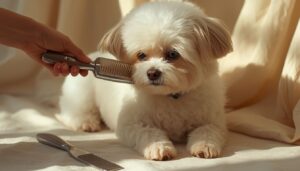
Consistency is key to keeping a fluffy coat tangle-free. Aim for daily brushing—or, at minimum, several sessions weekly.
Use a slicker brush and metal comb together; this tool combination catches knots a brush alone might miss.
Work section by section, brushing down to the skin, and focus on friction areas like behind the ears.
Mat prevention begins before mats form, making regular grooming essential.
Bathing, Conditioning, and Drying Tips

Bath time matters just as much as brushing. Use a lukewarm bath — around 38–40°C — to protect that soft double coat without stripping natural oils. Apply conditioner after shampooing and let it sit 2–3 minutes for a proper conditioner timing.
Towel dry method first: press, don’t rub. Then blow-dry on medium heat, finishing cool.
Finish with leave-in sprays for lasting softness.
Facial Trimming and Coat Upkeep

Trimming your Powderpuff’s face is simpler than it looks. Begin with eye hair trimming at the inner corners—fine hairs there irritate eyes fast. Follow with a clean muzzle line shaping from cheek to chin for effective stain control.
Ear fringe grooming prevents tangles before they start. This step ensures a neat, manageable coat.
Using clippers and scissors for Powderpuff coats provides control for safe clipping techniques, delivering a smooth coat finish.
Nail Care for Hare-foot Structure
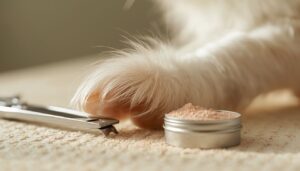
Your Powderpuff’s hare feet have longer toes with a deeper quick — the live tissue inside each nail — making Quick Depth Monitoring essential before every cut. Aim for a Clip Frequency Schedule of every two to four weeks.
Your Tool Selection Guide starts simple: sharp guillotine clippers or a grinder. For Bleeding Stop Methods, keep styptic powder nearby.
Routine nail trimming and foot pad care, including pad maintenance and regular checks, prevents painful ingrown nails and gait problems.
Ear Cleaning and Dental Hygiene

Cleaning your Powderpuff’s ears every one to two weeks keeps Wax Buildup Management simple and Ear Infection Prevention realistic. For safe dog ear cleaning, remember:
- Use cotton balls — never swabs — for Cleaning Tool Safety
- Apply a vet-approved cleaner without touching the tip inside
- Wipe only as deep as one knuckle
Canine dental care matters just as much. Over 80% of dogs over three have periodontal disease. Daily Dental Brushing Techniques — soft brush, pet-safe toothpaste, 30 seconds per side — support long-term dog dental health and Oral Health Monitoring.
Seasonal Care and Skin Checks

Each season brings its own skin challenges for your Powderpuff. Winter requires Winter Skin Care to combat dryness from cold air and indoor heating—moisturizing after baths helps seal in hydration. Summer demands Summer Sun Protection due to UV rays affecting exposed skin patches.
Spring Skin Screening is essential to detect seasonal coat staining and early skin issues before they worsen. Autumn calls for an Autumn Moisture Boost with heavier conditioning.
Remain vigilant for skin allergy in dogs, such as redness, itching, or atopic dermatitis flare-ups, and report any unusual symptoms to your vet promptly.
Health Risks and Screening

Like most purebreds, the Chinese Crested Powderpuff comes with a handful of health conditions worth knowing before you bring one home.
Some are genetic, others show up with age, and a few can be caught early with the right tests.
Here’s what to watch for and screen against.
Primary Lens Luxation Warning Signs
Primary Lens Luxation is one of the most serious heritable eye diseases affecting Chinese Cresteds — and it moves fast. Among common eye diseases in small dogs, this ranks as a top health concern of Chinese Crested dogs.
Watch for squinting pain, corneal haze (that bluish-white cloudiness), irregular pupil shape, or excessive tearing. These are classic warning signs of eye lens luxation.
Left untreated, sudden blindness can follow within hours.
Without treatment, lens luxation can steal a dog’s sight in mere hours
PRA and Other Eye Concerns
Progressive Retinal Atrophy (PRA) is a heritable eye disease that quietly destroys rod cells first, causing Night Vision Loss before daylight vision fades.
Watch for:
- Hesitation in dim rooms or at dusk
- Enlarged pupils and stronger eye shine
- Cloudiness signaling Cataract Complications
PRA can also trigger Uveitis Management needs and Glaucoma Monitoring. A PRA RCD3 genetic test catches it early — before symptoms appear.
Patellar Luxation and Joint Health
Patellar luxation — a condition where a dog’s kneecap slips out of its groove — commonly affects small breeds like the Powderpuff. A skipping limp that resolves after a few steps is a classic sign. Early detection is critical, as untreated cases often progress to cartilage damage and arthritis. The Orthopedic Foundation for Animals (OFA) uses a Luxation Grading system (1–4) to assess severity through a Patella examination.
Grades range from mild (Grade 1: patella pops out but returns easily) to severe (Grade 4: permanently displaced, requiring surgery). Surgical correction is recommended for Grades 3 and 4 to realign the joint and prevent chronic pain. Milder cases (Grades 1–2) may be managed with weight control, activity modification, and joint supplements. All breeding dogs should undergo OFA Patella examinations to screen for this condition.
| Grade | What It Means | Recommended Action |
|---|---|---|
| 1 | Patella pops out, returns easily | Monitor, weight control |
| 2 | Occasional luxation, mild lameness | Activity Modification, supplements |
| 3 | Frequent luxation, visible limb changes | Surgical Correction likely needed |
| 4 | Permanently displaced, can’t reduce | Surgery required |
| Any | Breeding dog screening | OFA Patella examination |
Legg-Calvé-Perthes Disease in Puppies
Legg-Calvé-Perthes Disease disrupts blood flow to the femur’s head, causing bone tissue death. For Powderpuff puppies, early detection is critical. Watch for these key symptoms:
- A worsening hind-leg limp
- Limb muscle atrophy on the affected side
- Reluctance to jump or climb stairs
Surgical interventions, such as femoral head removal, paired with rehabilitation protocols, can restore good mobility. Strict breeding restrictions must apply—never breed affected dogs.
Recommended Genetic Tests and OFA Exams
Beyond bone and joint issues, genetic testing for dogs rounds out your Powderpuff’s health picture. A PLL DNA test screens for the ADAMTS17 mutation behind lens dislocation, while PRA RCD3 screening catches hereditary blindness early. These specific tests identify critical hereditary conditions, providing a clearer genetic health profile.
Adding an OFA patella exam, Cardiac OFA evaluation, and the full CHIC certification protocol ensures comprehensive health assessments. This combination of genetic screenings and physical evaluations offers trustworthy health testing recommendations for both breeders and buyers, covering ocular, cardiac, and orthopedic well-being.
Nutrition, Weight Control, and Longevity
Good nutrition works hand-in-hand with genetic screenings. A 10-pound Powderpuff needs roughly 400 calories daily — split into two meals for steady energy and meal frequency balance. Prioritize high protein ratios and omega supplementation to support skin, joints, and vision long-term.
- Feed ½ to 1 cup of quality kibble daily
- Split meals morning and evening for calorie management
- Add omega fatty acids for coat and joint support
- Reduce to 350 calories for senior nutrition needs
- Keep treats under 10% of daily intake
Smart nutrition and diet for longevity can genuinely stretch your dog’s life expectancy of toy dogs toward that 15-year mark.
Top 3 Chinese Crested Guides
If you want to go deeper on this breed, a few well-researched guides are worth having on your shelf.
Each one covers the Chinese Crested from a different angle, so there’s something useful no matter where you are in your ownership journey.
Here are three worth checking out.
1. Bare Facts Chinese Crested Dog Guide
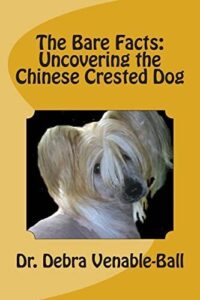
The Bare Facts Chinese Crested Dog Guide is a comprehensive reference for breed enthusiasts, offering 266 pages of insights into history, genetics, grooming, whelping, nutrition, and vaccination debates. Published in 2014, it serves as a valuable shelf resource for both show breeders and pet owners.
Despite its breadth, the book has notable limitations: reviewers highlight sparse black-and-white imagery and outdated genetic discussions. These gaps slightly temper its practicality for modern readers.
Priced at $24.99, the guide remains a solid starting point for serious Chinese Crested owners, balancing depth with accessibility despite minor flaws.
| Best For | Chinese Crested owners, breeders, and enthusiasts who want a deep dive into the breed’s history, health, and care — all in one place. |
|---|---|
| Language | English |
| Format | Paperback |
| Breed Coverage | Chinese Crested focused |
| Grooming Guidance | Yes, show and pet grooming |
| Health Topics | Skin, dental, digestion |
| Price | $24.99 |
| Additional Features |
|
- Covers a lot of ground — history, genetics, grooming, nutrition, whelping, and more across 266 pages
- Practical enough for both show breeders and everyday pet owners
- At $24.99, it’s an affordable reference to keep on the shelf
- Photos are limited and black-and-white, which makes visual guidance a bit lacking
- Genetic content feels incomplete and doesn’t reflect newer research
- Doesn’t go deep enough on related breeds or modern health developments
2. Chinese Crested Dog Care Guide
If you’re just getting started with a Powderpuff, the Chinese Crested Dog Care Guide is a solid companion to keep nearby. At 155 pages and $19.68, it covers everything from skin and coat care to training and nutrition — all in one place.
The guide features full-color photos and quick-reference boxes, making it easy to find answers fast.
Keep in mind it was published in 2005, so double-check any health or nutrition advice with your vet.
| Best For | New Chinese Crested owners, rescuers, and show enthusiasts who want a single, easy-to-use reference covering both the Hairless and Powderpuff varieties. |
|---|---|
| Language | English |
| Format | Paperback |
| Breed Coverage | Chinese Crested focused |
| Grooming Guidance | Yes, both varieties covered |
| Health Topics | Skin, dental, acne, sunburn |
| Price | $19.68 |
| Additional Features |
|
- Covers the full picture — skin care, coat, teeth, nutrition, and training — all in one 155-page book.
- Full-color photos and quick-reference boxes make it easy to find what you need without digging through walls of text.
- Solid for breeders and show participants, with dedicated sections on breed standards and grooming for both varieties.
- Published in 2005, so some health and nutrition advice may not line up with current vet guidelines.
- Training guidance leans general — you’ll need to apply it yourself to breed-specific situations.
- Only available in English, which limits who can actually use it.
3. Complete Chinese Crested Dog Guide
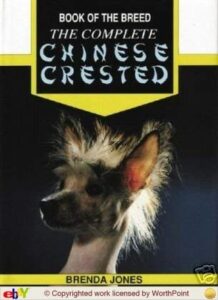
The Complete Chinese Crested Dog Guide serves as the most comprehensive resource for dedicated owners. Published by Howell Book House and spanning 160 pages, it meticulously covers breed standards, origin history, care, and breeding programs. This thoroughness makes it an essential reference for understanding the breed’s fundamentals.
Breeders particularly appreciate its detailed lineage information and show-dog guidance, which supports informed breeding practices and competitive preparation. Used copies are available for around $18.02, though scarcity persists due to the book being out of print.
However, note its 1991 publication date; while foundational content remains valuable, health and nutrition sections may require updates from contemporary veterinary sources to ensure alignment with current best practices.
| Best For | Serious breeders and devoted Chinese Crested owners who want deep, breed-specific knowledge for showing, breeding, or understanding the breed’s roots. |
|---|---|
| Language | English |
| Format | Paperback |
| Breed Coverage | Chinese Crested focused |
| Grooming Guidance | Yes, breed-specific grooming |
| Health Topics | Care and breed standards |
| Price | $18.02 |
| Additional Features |
|
- Covers everything — origin, care, breeding, and show standards — all in one place
- Breeders love the detailed lineage info and show-dog guidance
- Solid reference for anyone researching the breed’s history and characteristics
- Published in 1991, so health and nutrition advice may be out of date
- Out of print, which means availability is hit or miss
- The professional tone and old-book smell may put off casual readers
Frequently Asked Questions (FAQs)
Are Chinese Crested powder puffs rare?
Yes, powderpuffs are less common than hairless Chinese Cresteds. The full coat comes from a recessive gene, so fewer are born per litter.
Though both varieties come from the same breed.
What is the temperament of powderpuffs?
Powderpuffs are affectionate, velcro-style companions who follow you from room to room. They’re playful but not hyper, gentle with family, and surprisingly alert — quick to bark when something feels off.
How big do powderpuff Chinese Cresteds get?
These little dogs stay quite compact. Most adults stand 11 to 13 inches tall and weigh between 8 and 12 pounds — small enough to curl comfortably in your lap.
How big does a Chinese Crested powder puff get?
Think of them as the perfect lap-sized companion — standing just 11 to 13 inches tall and weighing between 8 and 12 pounds. Full growth usually wraps up around 9 to 12 months.
What is the difference between Chinese Crested and powder puff?
The Chinese Crested is the breed — hairless and powderpuff are its two coat varieties.
Hairless dogs have bare skin with hair tufts, while powderpuffs wear a full, silky double coat from nose to tail.
How much does a Chinese Crested powder puff cost?
Expect to spend $1,200 to $2,500 for a companion-quality puppy from a reputable breeder. Show-quality pups from champion lines can push $3,000 to $5, Rescue adoption fees run just $100 to $
Are Chinese Crested Powderpuffs hypoallergenic?
No dog is truly hypoallergenic — not even this breed. Powderpuffs shed less than most, but they still produce dander, saliva, and skin oils that can trigger real allergy symptoms.
Do they bark excessively?
Not exactly town criers. Powderpuffs are moderate barkers — they’ll sound the alarm for strangers or when bored, but they won’t narrate your entire day. Consistent training keeps things refreshingly quiet.
Are they good with other pets?
Usually, yes. They tend to get along well with other dogs and even cats when introduced slowly.
Small pets like rabbits or hamsters are a different story — keep those meetings supervised or skipped entirely.
How much do Powderpuff puppies cost?
Funny thing — the rarer the dog, the harder it is to pin down a price. Powderpuff puppies usually run $1,000 to $3,000, though champion lines can push past $5,
Conclusion
Some dogs fit into your life. The Chinese Crested Powderpuff rewrites it entirely. That silky coat demands real commitment, those Velcro tendencies will follow you to every room, and the genetic screening alone could fill a calendar.
But here’s what nobody warns you about: once this breed chooses you, the loyalty runs so deep it feels less like pet ownership and more like finding a missing piece you didn’t know you were looking for.