This site is supported by our readers. We may earn a commission, at no cost to you, if you purchase through links.
Your dog just logged eight miles, scrambled over two creek crossings, and still has energy to burn. You’re the one reaching for ibuprofen. The gap between your endurance and theirs isn’t magic—it’s metabolism, and a big part of that comes down to what’s in the bowl before the trailhead.
Most hikers spend hours researching gear and ten minutes picking dog food. That mismatch shows up fast on a long trail. A dog running on low-grade kibble can bonk mid-hike the same way an athlete crashes on junk food. Caloric density and macronutrient ratios matter far more out here than the cute dog on the bag.
The good news: the market for dry dog foods for outdoor and hiking dogs has genuinely improved. You’ve got options across every format, budget, and pack-weight tolerance—and knowing what separates the best from the rest makes the choice straightforward.
Table Of Contents
- Key Takeaways
- Top 10 Dry Foods for Hiking Dogs
- 1. Blue Buffalo Chicken and Brown Rice Dog Food
- 2. Pedigree Adult Grilled Steak Dog Food
- 3. Kibbles n Bits Bistro Beef Dog Food
- 4. Purina ONE Lamb and Rice Dog Food
- 5. Ziwi Peak Air Dried Dog Food
- 6. Mountain House Breakfast Food Assortment
- 7. Mountain House Freeze Dried Camping Meals
- 8. Diamond Performance High Protein Dog Food
- 9. Purina Pro Plan Active Chicken Rice
- 10. Purina Pro Plan Sport Chicken Rice
- Active Dog Nutrition Needs
- Best Food Types for Hiking
- Ingredients Worth Prioritizing
- Portability and Packability Factors
- Hydration and Rehydration Needs
- Weather and Trip Length Considerations
- Buying Guide for Outdoor Dogs
- Frequently Asked Questions (FAQs)
- Conclusion
Key Takeaways
- Your hiking dog’s calorie needs can double or triple on the trail, so prioritize foods hitting at least 30% protein and 20% fat — not whatever has the cutest bag.
- Freeze-dried and air-dried options win on pack weight and nutrient preservation, making them smarter choices for multi-day backcountry trips than standard kibble.
- Named animal protein (like "chicken" or "salmon") as the first ingredient signals better digestibility and faster muscle recovery — vague labels like "meat meal" are a red flag.
- Switch your dog’s food 7–10 days before any trip; a sudden change mid-trail is a fast track to digestive trouble at the worst possible moment.
Top 10 Dry Foods for Hiking Dogs
Not all dog foods are built for the trail, so picking the right one can make a real difference in how your dog performs and recovers. The options below range from everyday kibble to lightweight freeze-dried formulas — each chosen with active dogs in mind. Here’s what made the cut.
If you’re weighing the trade-offs between convenience and nutrition, this breakdown of freeze-dried natural dog food options can help you zero in on what actually fits your dog’s needs on the trail.
1. Blue Buffalo Chicken and Brown Rice Dog Food
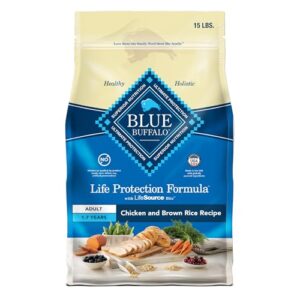
Blue Buffalo’s Chicken and Brown Rice formula is a solid trail companion for everyday active dogs. Deboned chicken leads the ingredient list, supporting lean muscle through quality amino acids — no by-product meals in sight.
The LifeSource Bits deliver antioxidants and chelated minerals that support immune health on long days out. Omega-3 and 6 fatty acids from flaxseed keep skin and coat in good shape. It skips corn, wheat, and soy, and uses natural tocopherols instead of artificial preservatives.
| Best For | Active adult dogs whose owners want a clean-ingredient, grain-inclusive kibble that supports muscle, joint health, and a shiny coat. |
|---|---|
| Food Form | Dry kibble |
| Primary Protein | Chicken |
| Life Stage | Adult |
| Package Weight | 15 lbs |
| Artificial Additives | None |
| Digestive Support | Prebiotic fiber |
| Additional Features |
|
- Real deboned chicken is the first ingredient, providing quality protein for lean muscle maintenance
- LifeSource Bits deliver a targeted blend of antioxidants and chelated minerals to support immune health
- Free from corn, wheat, soy, and artificial preservatives — a cleaner formula than many mainstream options
- Contains grains (brown rice, barley, oatmeal), so not suitable for dogs on a grain-free diet
- Caloric needs vary by dog, requiring owners to carefully monitor portion sizes
- Packaging may differ from product images shown online
2. Pedigree Adult Grilled Steak Dog Food
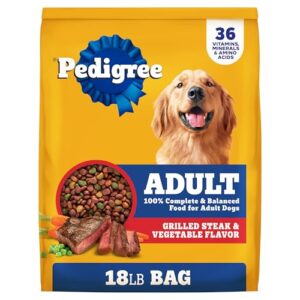
Not every hiking dog needs a premium formula — and that’s where Pedigree fits in. For casual day hikes on a budget, this 18 lb kibble keeps things simple.
It delivers omega-6 fatty acids and zinc for coat and skin support, plus prebiotic fiber for digestion. That said, it contains BHA and artificial dyes, which aren’t ideal for dogs logging serious trail miles. Ground corn leads the ingredient list — fine for low-intensity outings, less ideal for multi-day backcountry pushes.
| Best For | Budget-conscious dog owners who take their pup on occasional, low-intensity hikes and want a no-fuss feeding routine without breaking the bank. |
|---|---|
| Food Form | Dry kibble |
| Primary Protein | Beef & Steak |
| Life Stage | Adult |
| Package Weight | 18 lbs |
| Artificial Additives | BHA & artificial colors |
| Digestive Support | Prebiotic fiber |
| Additional Features |
|
- Omega-6 fatty acids and zinc support a healthy coat and skin
- Prebiotic fiber promotes smooth digestion on and off the trail
- 18 lb bag offers solid value for multi-dog households or regular use
- Contains BHA preservative and artificial dyes (Red 40, Yellow 6, Blue 2, Yellow 5)
- Ground whole grain corn as the lead ingredient makes it less ideal for high-energy or backcountry dogs
- Wheat and soy content may trigger allergies in sensitive dogs
3. Kibbles n Bits Bistro Beef Dog Food
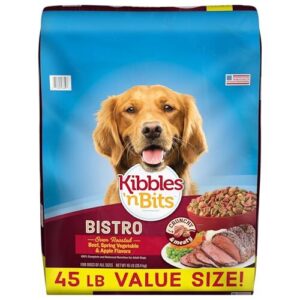
Step down from Pedigree, and Kibbles n Bits Bistro Beef lands in similar territory — bulk value, not backcountry performance. The 45 lb bag suits multi-dog households, but the ingredient list tells the real story: whole corn and soybean meal lead the way, with beef and bone meal rather than fresh meat.
It also contains BHA and artificial dyes like Red 40 and Yellow 5. For a casual stroll, maybe. For serious trail miles, your dog deserves better fuel.
| Best For | Multi-dog households or large breed owners looking for an affordable, bulk dry food option for adult dogs with everyday activity levels. |
|---|---|
| Food Form | Dry kibble |
| Primary Protein | Beef |
| Life Stage | Adult |
| Package Weight | 45 lbs |
| Artificial Additives | BHA & artificial colors |
| Digestive Support | None listed |
| Additional Features |
|
- Comes in a large 45 lb bag, making it cost-effective for homes with multiple dogs
- Oven roasted beef flavor with spring vegetables and apple appeals to picky eaters
- Suitable for adult dogs of all breeds and sizes
- Corn and soybean meal are the primary ingredients rather than quality meat sources
- Contains BHA, an artificial preservative with known health concerns
- Includes artificial dyes (Red 40, Yellow 5, Blue 2) that offer no nutritional value
4. Purina ONE Lamb and Rice Dog Food
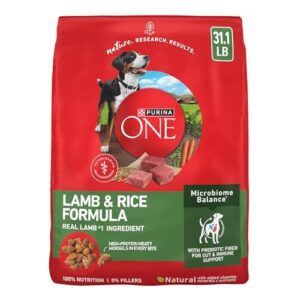
Purina ONE is a genuine step up from the filler-heavy options above. Real lamb leads the ingredient list, followed by a SmartBlend of protein-rich morsels that help maintain muscle — useful when your dog’s covering serious elevation gain.
The prebiotic fiber helps gut health, and natural glucosamine sources help cushion joints on rocky descents. It does contain corn and soy, which may not suit every dog. But for moderate trail adventures, it delivers solid nutrition without the premium price tag.
| Best For | Adult dogs with moderate to high activity levels who need solid joint and digestive support without breaking the bank. |
|---|---|
| Food Form | Dry kibble |
| Primary Protein | Lamb |
| Life Stage | Adult |
| Package Weight | 31.1 lbs |
| Artificial Additives | None listed |
| Digestive Support | Prebiotic fiber |
| Additional Features |
|
- Real lamb is the first ingredient, delivering quality protein to support lean muscle mass
- Prebiotic fiber and natural glucosamine promote gut health and joint cushioning — great for active or trail dogs
- Solid all-around nutrition at a mid-range price point
- Contains corn and soy, which can be a dealbreaker for dogs with sensitivities or owners preferring grain-free diets
- Formulated for adults only — not suitable for puppies or senior dogs with different nutritional needs
- Feeding portions need to be monitored carefully to avoid overfeeding
5. Ziwi Peak Air Dried Dog Food
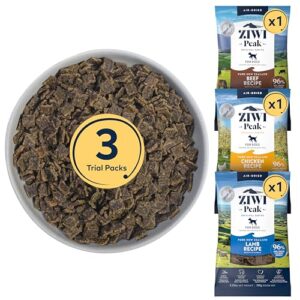
Ziwi Peak is truly peerless. 96% meat, organs, and bone per recipe — no fillers, no grain, no shortcuts. It’s air-dried rather than extruded, which preserves natural enzymes and mimics raw feeding without the refrigeration headache on trail.
Green mussels add natural glucosamine and chondroitin for joint support on tough descents. The 3.5oz variety pack is a smart way to test flavors before committing. Yes, it costs more — but your dog’s recovery miles later will justify it.
| Best For | Active dog owners and outdoor adventurers who want the nutritional benefits of raw feeding without the hassle of refrigeration, especially those with dogs needing joint, digestive, or coat support. |
|---|---|
| Food Form | Air-dried jerky |
| Primary Protein | Beef, Chicken & Lamb |
| Life Stage | All stages |
| Package Weight | 3×3.5 oz |
| Artificial Additives | None |
| Digestive Support | Included |
| Additional Features |
|
- 96% meat, organs, and bone with no fillers or grains — closely mirrors a raw diet while staying shelf-stable
- Includes New Zealand Green Mussels for natural glucosamine and chondroitin, supporting joint health on demanding terrain
- Suitable for all life stages, from puppies to seniors, and flexible enough to use as a meal, topper, or treat
- Higher price point than standard kibble may not suit budget-conscious pet owners
- The 3.5oz trial portions are small and may not give a full picture of how a dog performs on a sustained diet
- Requires stable storage conditions to maintain air-dried quality, which can be a consideration on long trips
6. Mountain House Breakfast Food Assortment
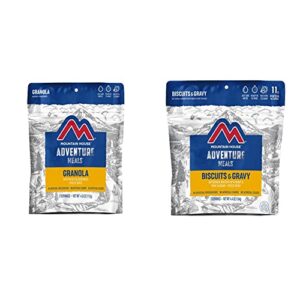
Technically built for humans, the Mountain House Breakfast Food Assortment still earns a place in your pack. When your dog’s regular food runs short on a multi-day route, these pouches pull real weight.
Ready in under 10 minutes with hot water, the granola with blueberries and biscuits and gravy options are calorie-dense and contain no artificial flavors or preservatives. At just 50 grams per pack, the weight-to-meal ratio is hard to argue with — especially at mile 15.
| Best For | Backpackers and campers who need a lightweight, no-fuss breakfast option that’s ready in minutes with just hot water. |
|---|---|
| Food Form | Freeze-dried |
| Primary Protein | Granola & Biscuits |
| Life Stage | All stages |
| Package Weight | 50g |
| Artificial Additives | None |
| Digestive Support | None listed |
| Additional Features |
|
- Freeze-dried technology locks in nutrients and flavor without artificial additives
- Wide bowl-shaped pouches mean you can eat straight from the pack — no dishes needed
- At 50 grams per serving, the weight-to-meal ratio is tough to beat on long routes
- Requires hot water, so you’ll need a stove or heating source on the trail
- Contains milk and pork products, which rules it out for some dietary needs
- Weight and portioning can vary between meal types within the same pack
7. Mountain House Freeze Dried Camping Meals
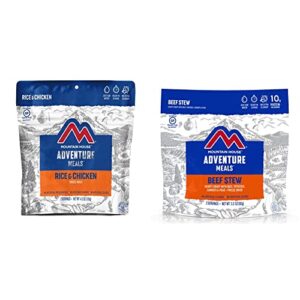
Mountain House Freeze Dried Camping Meals work on the same principle as the breakfast assortment — but these are full dinner-style pouches. Rice & Chicken or Beef Stew options come ready in under 10 minutes with hot water, no refrigeration needed, and each pouch weighs just 4 to 6 ounces.
For sustained trail energy, pairing these meals with carb-smart choices—like those behind high-performance nutrition for active dogs—highlights how complex carbs outperform simple starches on long days out.
That’s real caloric density without the bulk. With a 30-year shelf life and nitrogen-flushed packaging, these hold up through humidity, heat, and rough handling — exactly what a backcountry pack demands.
| Best For | Backpackers, campers, hunters, and anyone who needs a lightweight, no-fuss hot meal in the field or a reliable option for emergency food storage. |
|---|---|
| Food Form | Freeze-dried |
| Primary Protein | Chicken or Beef |
| Life Stage | All stages |
| Package Weight | Varies by pouch |
| Artificial Additives | None |
| Digestive Support | None listed |
| Additional Features |
|
- Ready in under 10 minutes with just hot water — no cooking gear, no cleanup, eat straight from the pouch
- Freeze-dried with no artificial preservatives or colors, and certified gluten-free
- No refrigeration needed and built for long-term storage, making it great for both trail use and emergency kits
- You need access to hot water, which isn’t always a given in every outdoor situation
- Each pouch has two servings, so solo travelers may end up with more food than they need in one sitting
- Variety is limited to just two flavors — Rice & Chicken or Beef Stew
8. Diamond Performance High Protein Dog Food
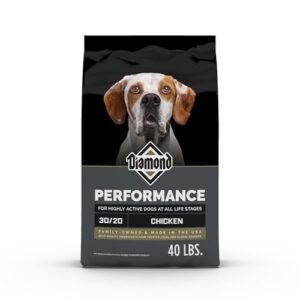
If your dog pulls hard from sunrise to sunset, 30% protein and 20% fat is exactly what that effort demands — and Diamond Performance delivers both. Real chicken leads the ingredient list, with 83% animal-sourced protein fueling muscle recovery after long days on the trail.
Glucosamine and chondroitin keep joints comfortable mile after mile. The built-in probiotics — guaranteed at 80 million CFU per pound — help keep digestion steady even when routines shift. At 40 lbs per bag, it’s a solid home-base option before any trip.
| Best For | Active, working, and sporting dogs of all life stages that need high-protein fuel to support intense daily activity and recovery. |
|---|---|
| Food Form | Dry kibble |
| Primary Protein | Chicken |
| Life Stage | All stages |
| Package Weight | 40 lbs |
| Artificial Additives | None listed |
| Digestive Support | Probiotics & antioxidants |
| Additional Features |
|
- 30% protein with 83% from animal sources supports serious muscle recovery and endurance
- Glucosamine and chondroitin help protect joints during high-impact, repetitive activity
- Guaranteed 80 million CFU of probiotics per pound keeps digestion on track even with shifting routines
- May cause gas, loose stools, or digestive upset in dogs with sensitive stomachs
- Not a great fit for low-activity, sedentary, or senior-only diets
- Manufactured in a shared facility, which may be a concern for dogs with ingredient sensitivities
9. Purina Pro Plan Active Chicken Rice
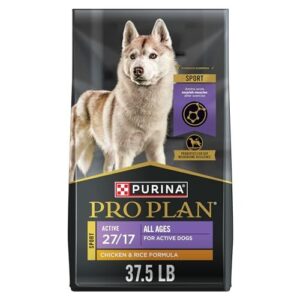
Purina Pro Plan Active brings solid trail credentials without overcomplicating things. Real chicken leads the ingredient list, delivering a 27% protein and 17% fat ratio that helps maintain lean muscle and sustained energy on longer outings.
The formula includes live probiotics, glucosamine for joint support, and Omega-3s for coat health — practical additions for dogs covering rough terrain regularly. At 37.5 lbs, it’s best suited as a home-base food. Pre-portion before your trip and store it well — heat above 90°F degrades fats fast.
| Best For | Active, high-energy, sporting, or working dogs that need sustained energy and muscle support during regular outdoor adventures. |
|---|---|
| Food Form | Dry kibble |
| Primary Protein | Chicken & Rice |
| Life Stage | Adult |
| Package Weight | 37.5 lbs |
| Artificial Additives | None listed |
| Digestive Support | Live probiotics |
| Additional Features |
|
- Real chicken as the first ingredient with a strong 27/17 protein-to-fat ratio keeps hard-working dogs fueled and lean
- Live probiotics, glucosamine, and Omega-3s cover digestion, joint health, and coat condition in one bag
- A 37.5 lb bag offers solid value for owners feeding larger or multiple active dogs
- The high fat content makes this a poor fit for low-activity or weight-prone dogs
- Heat degrades the fats quickly, so storage and portioning on trips requires extra planning
- Pricing can vary by retailer, making it harder to budget consistently
10. Purina Pro Plan Sport Chicken Rice
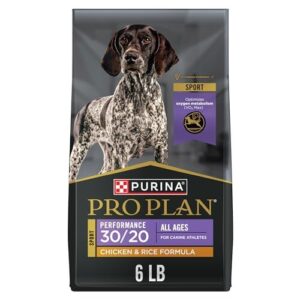
Step up from Active, and Sport is where serious trail dogs belong. This formula hits the 30% protein, 20% fat mark — the ideal performance ratio for dogs burning real calories over real miles.
Real chicken leads, backed by an amino acid mix for muscle recovery and antioxidants to keep the immune system humming. Glucosamine from poultry and fish meal helps joints on punishing descents.
At 6 pounds, it’s a manageable carry. Just avoid heat above 90°F — fat degrades fast out there.
| Best For | Highly active and working dogs — trail runners, hunting dogs, cattle dogs, and canine athletes that burn serious calories daily. |
|---|---|
| Food Form | Dry kibble |
| Primary Protein | Chicken |
| Life Stage | Adult |
| Package Weight | 6 lbs |
| Artificial Additives | None listed |
| Digestive Support | None listed |
| Additional Features |
|
- Hits the optimal 30% protein / 20% fat ratio built for dogs with real endurance demands
- Real chicken plus amino acids and antioxidants support muscle recovery and immune health
- Glucosamine from poultry and fish meal protects joints on tough terrain
- Not a good fit for low-activity or sedentary dogs — the high fat content could lead to weight gain
- Contains corn gluten meal and whole grain corn, which some owners prefer to avoid
- Small 6-pound bag means more frequent repurchasing for multi-dog households or long trips
Active Dog Nutrition Needs
A dog that hikes with you is working hard — and working dogs need to eat differently than couch dogs. Getting the nutrition right isn’t complicated, but a few key areas really do make a difference on the trail. Here’s what to pay attention to when fueling your dog for the miles ahead.
Higher Daily Calorie Requirements
On a long trail day, your dog’s calorie needs can double or triple. Five key factors drive this:
- Body weight and lean muscle mass
- Trail intensity and elevation gain
- Hot or cold ambient temperatures
- Trip duration and total daily mileage
- Rest days versus full active-day output
Understanding basal metabolic rate is also important as it covers the calories required for essential functions.
Calorie scaling is essential on multi-day trips. Nutrient-dense, high-protein diets keep energy metabolism steady.
Protein for Muscle Recovery
Calories get your dog down the trail — protein brings them back ready for tomorrow.
Calories carry your dog down the trail, but protein is what brings them back ready for tomorrow
After a hard day of hiking, muscle fibers need amino acids to repair. Leucine, in particular, triggers muscle protein synthesis almost immediately. That’s why feeding a high-protein meal within 1–2 hours after activity matters. Aim for at least 30% protein in your dog’s diet to support real muscle recovery.
Fat for Sustained Energy
Protein patches up muscles — fat keeps the engine running mile after mile. Once glycogen dips, your dog’s body triggers lipolysis, converting stored fat into free fatty acids for steady fuel.
At 9 kcal per gram, fat packs nearly twice the energy of protein or carbs. Aim for at least 20% fat in trail diets to support sustained output without early fatigue.
Carbohydrates for Quick Fuel
Fat controls the long game — carbs are your dog’s quick-release energy. When trails spike, simple sugars hit the bloodstream fast, fueling muscles within minutes.
Aim for 30–50% carbohydrates in a high-energy diet. Solid trail sources include:
- Glucose polymers like maltodextrin — fast fuel with low GI impact
- Fruit sugars for quick energy plus natural electrolytes
- Digestible grains for sustained energy release
Minerals for Trail Endurance
Sweat strips more than water — it pulls sodium, potassium, and calcium with every mile. These minerals regulate fluid balance, drive muscle contractions, and keep your dog’s stride strong. Without them, you’ll notice fatigue, cramping, or excessive thirst.
Aim for foods with named mineral sources and consider a salt-rich broth on long days to replace what the trail takes.
Best Food Types for Hiking
Not all dog food is created equal when you’re miles from the nearest trailhead. The format your dog’s food comes in matters just as much as what’s actually in it. Here are the main types worth knowing before you pack your bags.
Standard Dry Kibble
Standard dry kibble is the trail workhorse most hikers already trust. Through extrusion and starch gelatinization, ingredients fuse into dense, crunchy pellets — usually packing 20–32% protein and 10–20% fat — while a complete nutrient premix covers vitamins and minerals.
That crunchy texture even helps with dental wear. It’s heavier than freeze-dried, but familiar, affordable, and genuinely reliable mile after mile.
Air-dried Dog Food
Air-dried food earns its place in your pack. Slow airflow — not heat — pulls moisture out over 48–72 hours, locking in vitamins, enzymes, and omega fatty acids.
Four reasons it works on trail:
- 30–50% crude protein from named animal sources
- High protein digestibility — often above 85%
- Organ meats for dense micronutrients
- Jerky-like texture dogs reliably eat
No rehydration required.
Freeze-dried Dog Food
Freeze-dried food is the lightest option in your pack — moisture stripped completely through a pressurized vacuum process, leaving nutrients almost entirely intact.
| Benefit | What It Means on Trail |
|---|---|
| Protein preserved | Muscle recovery stays supported |
| Omega-3s intact | Joints and coat hold up |
| Microbial growth blocked | Safe for multi-day trips |
| Raw diet similarity | Picky dogs actually eat it |
| Nutrient-dense, high-protein | Less food, more fuel |
No rehydration required — though adding water improves palatability fast.
Dehydrated Dog Food
Dehydrated food sits between kibble and freeze-dried — lighter than one, more flexible than the other. Low-temperature drying locks in nutrients while cutting moisture to around 4–5%.
- Nutrient-dense calories per cup
- Rehydrates into a meal-like texture
- Shelf-stable up to 24 months
- No artificial preservatives needed
- Works with cold or warm water
Add water at camp — your dog gets fuel and hydration in one bowl.
Weight Versus Nutrition Tradeoffs
Every gram in your pack matters — but so does what’s inside it. Freeze-dried and air-dried options win on weight, yet dehydrated and kibble often pack more calories per serving.
The real tradeoff isn’t light versus heavy; it’s caloric density versus total load. High-protein formulas help preserve your dog’s muscle on long trips without requiring bigger portions to hit daily energy targets.
Ingredients Worth Prioritizing
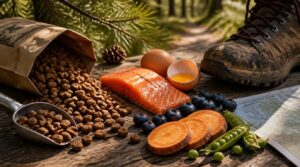
Not every ingredient on a dog food label pulls its weight on the trail. What’s actually in the bag matters more than the marketing on the front of it. Here’s what to look for when you’re choosing a food built to keep your dog moving.
Named Animal Protein First
Flip any bag over and scan the ingredient list — the first item tells you everything. If it reads "chicken" or "salmon," you’re on solid ground. Vague terms like "meat" or "poultry" are red flags.
Named proteins are more digestible, support faster muscle recovery on trail, and help you manage sensitivities by tracking exactly what your dog’s eating.
Healthy Fats and Oils
Protein gets the spotlight, but fat does the heavy lifting on long trails. It delivers 9 calories per gram — nearly double carbs.
Look for these essential fatty acid sources:
- Fish oil — provides omega-3 fatty acids for joint comfort and reduced trail inflammation
- Canola oil — balances omega-3 6 fatty acids for skin and coat
- Flaxseed — offers anti-inflammatory oil benefits cold-pressed
- Avocado oil — stable, high-quality sustained energy fats
Avoid rancid fats — they’ll wreck your dog’s stomach mid-hike.
Digestible Carbohydrate Sources
Fats carry the miles, but carbs light the match. Quick energy release comes from digestible sources like sweet potatoes and brown rice — raising blood glucose fast enough to power sudden climbs without crashing your dog mid-trail.
Low-glycemic carbohydrates like oats and lentils help maintain sustained glucose levels, spreading energy steadily instead of spiking it.
| Carb Source | Trail Benefit |
|---|---|
| Brown rice | Easy starch digestion, gentle on gut |
| Sweet potato | Nutrient-dense, moderate glycemic load |
| Oats | Sustained glucose, good fiber absorption |
| Lentils | Slow-digesting, helps dog nutrition long-term |
Skip corn and soy — low digestibility, minimal return.
Omega Fatty Acid Support
Carbs spark the engine — but omega-3 and omega-6 fatty acids keep it running smoothly mile after mile. EPA and DHA from fish oil reduce joint inflammation, support cardiovascular function, and keep your dog’s brain sharp on long, demanding trails. A shiny coat is just the visible bonus.
For dogs avoiding fish, algal oil delivers DHA cleanly. Start low, around 100 mg per kg daily.
No Artificial Preservatives
Watch out for these five synthetic preservatives hiding on ingredient labels:
- BHA — fat degradation
- BHT — hormone disruption
- TBHQ — immune damage
- Ethoxyquin — kidney risk
- Nitrates — chronic inflammation
Freeze-dried and dehydrated dog food skip these — moisture removal does the preserving. Opt for mixed tocopherols or rosemary extract. Clean label choices protect your dog’s health on multi-day trails without sacrificing shelf stability.
Portability and Packability Factors
What you pack matters just as much as what’s inside it. The right packaging setup can save you hassle on the trail and keep your dog’s food fresh, safe, and easy to access. Here’s what to look for when choosing a hiking food that’s built for the backcountry.
Lightweight Food Density
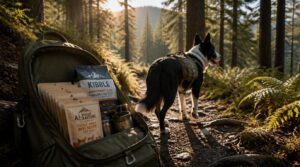
Every ounce in your pack matters on the trail. Caloric density — calories per gram — is what really drives your food selection. Nutrient-dense, lightweight dog food with high energy density means you carry less without your dog running low. Freeze-dried options consistently beat standard kibble here on calorie-to-weight ratio. Kibble is heavier, giving you far fewer calories per pound you carry.
| Food Type | Calories/oz | Pack Weight |
|---|---|---|
| Freeze-dried | ~125 kcal | Lightest |
| Air-dried | ~100 kcal | Light |
| Standard kibble | ~85 kcal | Heaviest |
Resealable Trail Packaging
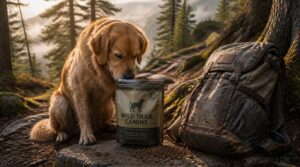
Good packaging does more than hold food — it protects it. Look for bags with moisture barrier film and durable zip or press seals that handle repeated opening without losing grip.
Stand-up pouches with gussets collapse as they empty, saving pack space. Some include freshness indicators to flag spoilage on multi-day trips. Shelf-stable and lightweight, these resealable bags keep trail nutrition secure through rain, dust, and rough handling.
Pre-portioned Serving Packs
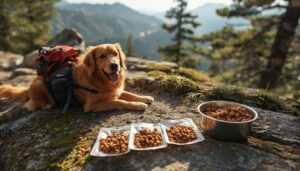
Pre-portioned packs take the guesswork out of trail feeding. Each single-serving pack holds an exact measured amount, so you’re not eyeballing portions after a long climb. That precision matters for caloric intake planning — active dogs need consistent fuel, not rough estimates.
Individually sealed portions also stay fresh longer, cutting down on waste across multi-day trips.
Moisture-resistant Storage
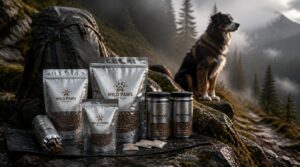
Moisture can ruin shelf-stable food faster than you’d think. Your top storage picks:
- Resealable bag with metalized film blocks humidity
- Vacuum canisters remove 99.9% of ambient air
- Desiccant sachets absorb 1.5g of moisture daily
- Roll-top closure bags seal tight in wet conditions
Hydrophobic bin coatings shed dew without bulk. Packaging durability keeps food fresh when your pack takes a beating.
Wildlife-safe Food Handling
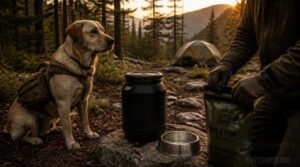
Bears don’t need an invitation — just a smell. Odor-proof storage and bear-resistant packaging are non-negotiable in backcountry zones.
Set up your wildlife zone separation by keeping feeding areas well away from your tent. Dispose of waste in sealed bags immediately. Use scent-free cleaning agents on bowls and utensils, and consider predator deterrents recommended by local rangers.
Hydration and Rehydration Needs
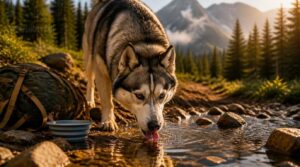
Water is just as important for your dog as the food you pack. When you’re miles from the nearest tap, knowing how to manage your dog’s hydration — and how their food fits into that picture — makes a real difference. Here’s what to keep in mind.
Water-to-food Ratios
Getting the water-to-food ratio right matters more than most hiking dog owners realize.
- Freeze-dried meals: 1–2 cups water per serving
- Dehydrated dog food: 4–6 cups per meal
- Kibble rehydration: 1.5–2.5× volume expansion rate
- Air-dried: needs noticeably less water
- Grain-heavy recipes: always add a bit extra
Too little leaves food gritty. A measuring cup prevents nutrient dilution risks on the trail.
Cold-water Rehydration Options
No stove? No problem. Several cold-water rehydrating formulas — especially freeze-dried dog food — reconstitute fully in cold water within 10 to 30 minutes, depending on the brand.
Dehydrated dog food takes longer without heat, so start soaking at your last rest break. Portable dog food designed for stove-free meal prep makes trailside rehydration genuinely simple — just add water and wait.
Hot-water Preparation Benefits
When you have a stove, use it. Hot water — around 60–70°C — cuts rehydration time a lot, improving food palatability through better fat dispersion and aroma release. It also helps with enhanced digestive motility after hard miles.
For shelf-stable, nutrient-dense, high-protein dehydrated dog food, hot water accelerates accelerated nutrient solubility and can reduce surface microbial load — a quiet win on multi-day trips.
Electrolyte Balance Support
Hot water speeds up rehydration — but what goes into that bowl matters just as much as how fast it absorbs. Your dog loses sodium, potassium, and magnesium through sweat and panting on long climbs. Calcium helps with nerve signaling during hard muscle effort.
The best backpacking dog food takes care of this quietly — complete mineral profiles keep fluid balance steady across the miles without extra supplements.
Preventing Dehydration Outdoors
Dehydration sneaks up fast on trail. Start prehydrating 24 hours before your hike — don’t wait until morning.
Watch for these warning signs in your dog:
- Dark yellow urine or no urination
- Dry gums or tacky mouth
- Lethargy or sudden disinterest in moving
- Rapid heart rate or confusion
- Excessive panting beyond normal exertion
Pale yellow urine means you’re both on track.
Weather and Trip Length Considerations

Weather and trip length change everything about how you feed your dog on the trail. A scorching July desert hike calls for a completely different approach than a three-day winter backpacking loop. Here’s what you need to know before you pack a single cup of kibble.
Hot-weather Feeding Adjustments
Summer trails hit dogs harder than you’d think. Heat can cut your dog’s appetite by 10–25 percent, so don’t panic if they’re eating less — adjust instead.
Shift meals to early morning or evening when it’s cooler, split rations into three or four smaller portions, and add an electrolyte topper to drinking water. Skip starch-heavy foods; fat digests with less internal heat.
Cold-weather Calorie Increases
Winter trails demand more from your dog’s body than summer ones ever will. Cold triggers thermogenic energy costs — shivering, brown fat activation, and keeping limbs warm all quietly burn through calories.
- Boost daily intake by 20–40% on cold trips
- Prioritize high-fat, calorie-dense foods for sustained heat
- Muscle mass dogs burn faster in cold
- Watch for cold-induced appetite suppression despite higher needs
Multi-day Food Planning
Planning multi-day food for your dog needs to be deliberate. Calorie budgeting starts with body weight, daily mileage, and builds from there.
| Trip Length | Daily Calories (per kg) | Reserve Meals |
|---|---|---|
| 1–2 days | 60–75 kcal | 1 extra serving |
| 3–5 days | 75–90 kcal | 1 full day |
| 6+ days | 90–110 kcal | 2 full days |
Pack three meals daily, rotating protein sources to prevent palatability fatigue. Pre-portion everything by day and dog before leaving — it cuts guesswork on trail. Always carry at least a 10% calorie reserve for any unexpected detours or delays.
Shelf Life on Trips
Shelf life isn’t just a printed date — it’s a moving target on trail. Temperature cycling between warm days and cool nights creates condensation inside packaging, quietly accelerating spoilage.
Keep kibble in Mylar barrier bags with oxygen absorbers to limit rancidity. Aim for storage below 70°F with humidity under 60%. Rotate supplies using a simple inventory log so nothing gets forgotten.
Avoiding Fat Spoilage
Fat goes rancid faster than you’d expect on trail. Oxygen exposure is the main culprit — heat and light make it worse.
- Pre-portion into single-use sachets to minimize air contact
- Choose opaque, airtight containers over flexible bags
- Look for formulas with natural antioxidants like vitamin E
- Keep food shaded and cool during rest stops
- Sniff before serving — off odors mean toss it
Buying Guide for Outdoor Dogs
Choosing the right food for your trail dog doesn’t have to feel overwhelming. A few key factors — activity level, age, calorie density, and ingredient quality — make all the difference between a dog who finishes strong and one who fades on mile eight. Here’s what to look for before you buy.
Match Food to Activity Level
Activity level is the single biggest variable in canine nutrition. A dog lounging between trips burns far fewer calories than one grinding uphill for six hours — so the food has to match the trail, not the couch.
| Activity Level | Calorie Adjustment | Ideal Macros |
|---|---|---|
| Light activity | +10–20% | Carb-forward diet |
| Moderate hiking | +20–30% | Balanced macros |
| High-intensity trekking | +30–40% | High-protein, nutrient-dense |
Choosing a high-energy diet designed for an active outdoor lifestyle prevents fatigue and helps with faster recovery on multi-day trips.
Check AAFCO Suitability
Once you’ve matched food to your dog’s activity level, flip the bag over and find the AAFCO nutritional adequacy statement.
- Verify it says "complete and balanced"
- Confirm the life stage matches your dog’s age
- Check whether it’s formulated or feeding-trial tested
- Look for "all life stages" if you want broader coverage
No statement? Put it back.
Compare Calories Per Cup
Once the AAFCO box is checked, calories per cup become your next filter — especially when every ounce in your pack matters.
| Food | Calories Per Cup | Protein % |
|---|---|---|
| Purina Pro Plan Sport | ~490 kcal | 30% |
| Diamond Performance | ~470 kcal | 32% |
| Ziwi Peak Air-Dried | ~390 kcal | 38% |
| Blue Buffalo Chicken & Rice | ~410 kcal | 26% |
| Pedigree Grilled Steak | ~350 kcal | 23% |
Denser cups mean smaller scoops — which means lighter loads. Grams beat cups for accuracy on long trips.
Consider Age and Health
Calories per cup tell part of the story. Senior protein needs shift as dogs age — older hikers need high-quality protein to hold lean muscle, not just any filler-heavy kibble. Keep these lifestage dietary requirements in mind:
- Joint mobility supplements — look for glucosamine and chondroitin
- Age-related calorie adjustments — less active seniors need fewer calories
- Digestive fiber support — beet pulp or chicory aids gut health
- Managing senior weight — lighter loads mean easier joints
Talk to your vet first.
Transition Before Hiking Trips
Switching foods right before the trail is a gamble your dog’s stomach will lose. Gradual dietary changes over seven to ten days prevent GI distress when it matters most.
| Day Range | Old Food | New Food |
|---|---|---|
| Days 1–3 | 75% | 25% |
| Days 4–6 | 50% | 50% |
| Days 7–10 | 25% | 75% |
Watch stool consistency daily — loose stools mean slow down the switch.
Frequently Asked Questions (FAQs)
What to feed a dog on a hike?
Feed your dog a light meal 1–2 hours before hitting the trail. Offer small snacks every 30–60 minutes during breaks, always paired with water. Stick to calorie-dense, shelf-stable options to keep pack weight down.
How often should trail dogs be fed daily?
Most trail dogs do well on two meals daily — morning and evening. Very active dogs may benefit from a midday snack to keep energy steady through long stretches of sustained effort.
Do small breeds need different hiking nutrition?
Yes — small breeds burn more calories per pound than larger dogs. Their faster small breed metabolism means they need calorie-dense meals and frequent small portions to maintain energy and stable blood sugar on the trail.
Should dogs fast before a strenuous hike?
No — fasting before a strenuous hike isn’t necessary and can actually backfire. Feed your dog 2–3 hours before the trail to top off energy stores without risking mid-hike bloating.
Are raw food diets practical for backpacking trips?
Raw diets can work short-term, but spoilage risk rises fast in heat. Freeze-dried raw options are safer — shelf-stable, nutrient-dense, and light enough for multi-day trips without sacrificing a high-protein diet.
Conclusion
The less you think about your dog’s food, the more it matters. Every mile past the trailhead, that choice compounds—energy held or lost, muscles that recover or don’t.
Choosing the right dry dog foods for outdoor and hiking dogs isn’t about obsessing over labels. It’s about making one smart decision before the trip so neither of you hits a wall halfway up the ridge. Feed the dog that’s actually running. The trail does the rest.
- https://peeva.co/blog/fueling-fido-on-the-trail-best-dog-foods-tips-for-backpacking-with-a-dog
- https://www.petmd.com/dog/nutrition/are-you-feeding-your-dog-right-amount
- https://thehikingtreeblog.wordpress.com/2015/01/21/long-distance-hiking-with-a-dog-nutrition
- https://www.denverdog.co/a-complete-guide-to-calorie-content-in-dog-food
- https://www.eukanuba.com/articles/nutrition/how-much-to-feed-your-active-dog