This site is supported by our readers. We may earn a commission, at no cost to you, if you purchase through links.
A sneeze here and there means nothing. Dogs sneeze for the same reason you do—something tickled the wrong nerve, and the body cleared it.
But when your dog sneezing a lot becomes the background noise of your household, that’s a different story.
Occasional is normal; relentless is a signal.
The causes range from a dust cloud kicked up during vacuuming to a grass seed lodged deep in a nostril, and knowing the difference matters more than most owners realize.
What follows breaks down the most common culprits, the warning signs that shouldn’t wait, and the practical steps that actually help.
Table Of Contents
- Key Takeaways
- Is Dog Sneezing Ever Normal?
- Why is My Dog Sneezing a Lot?
- Irritants and Allergies in Dogs
- Infections, Mites, and Nasal Disease
- Foreign Objects and Dental Causes
- Reverse Sneezing Vs. Regular Sneezing
- Signs Your Dog Needs a Vet
- How Vets Diagnose The Cause
- How to Help a Sneezing Dog
- Frequently Asked Questions (FAQs)
- What are dogs telling you when they sneeze?
- How can I differentiate between normal and abnormal sneezing in my dog?
- Can dog sneezing spread illness to humans?
- Do certain seasons worsen dog sneezing episodes?
- How long does normal sneezing last?
- Are there over-the-counter sneeze remedies safe?
- Can puppies sneeze more than adult dogs?
- Can dogs sneeze more after eating or drinking?
- Does sneezing affect a dogs sleep quality?
- Can anxiety or stress trigger sneezing in dogs?
- Conclusion
Key Takeaways
- A dog sneezing 1–3 times daily is normal, but more than 15 episodes a day, colored discharge, or symptoms lasting beyond 48 hours mean it’s time to call your vet.
- One-sided sneezing often points to something physical — a lodged grass seed, nasal polyp, or tumor — while sneezing from both nostrils usually signals allergies or infection.
- Common household irritants like scented candles, cleaning sprays, and dusty bedding are among the easiest causes to fix, and often the first thing worth ruling out.
- Some signs can’t wait: bright red nosebleeds, blue gums, open-mouth breathing at rest, or facial swelling all need same-day veterinary attention, not a watch-and-see approach.
Is Dog Sneezing Ever Normal?
Yes, dog sneezing is often completely normal — but the details matter.
If you’re unsure what’s normal and what’s not, this guide on common reasons dogs sneeze and when to worry breaks it down really well.
How often your dog sneezes, when it happens, and what breed they are can all shift the answer.
Here’s what to keep in mind.
Occasional Vs. Frequent Sneezing
Most dogs sneeze one to three times a day without any cause for concern. When trigger frequency increases — repeated bouts throughout the day, cluster intensity that lingers, or episode length stretching past a minute — that shift matters.
Track exposure timing alongside observation logs of discharge color and frequency.
Consistent frequent sneezing beyond roughly 15 episodes daily warrants a closer look.
Play Sneezing During Excitement
Not every sneeze is a symptom. Play sneezing is a normal communication behavior — your dog’s way of signaling excitement or submission mid‑game.
An excitement airflow surge through rapid breathing can cause nasal membrane dehydration, and play‑induced dust exposure stirs particles right into their nose.
This behavior also acts as a non-threat communication cue during play. Watch the body language signals:
- Sneezing at the start of play burst timing
- Relaxed, bouncy posture throughout
- Immediate re-engagement after each sneeze
- No discharge or facial pawing
- Stops once your dog settles down
Breed-related Snorting in Flat-faced Dogs
Flat-faced breeds like Bulldogs and Pugs are built differently — and that difference shows up in every breath they take. elongated soft palate and stenotic nares create nasal obstruction that makes snorting their baseline normal.
Brachycephalic obstructive airway syndrome in dogs ranges widely in BOAS severity, and heat stress impact can push mild cases into obvious breathing effort.
Surgical correction helps the most affected dogs breathe easier.
When Normal Sneezing Becomes Excessive
So where’s the line? Healthy dogs sneeze one to three times daily. More than three to four bouts across separate occasions start crossing into excessive sneezing territory — an early warning sign worth logging.
Owner observation logs help you spot escalating patterns before they worsen. If sneezing persists beyond 48 hours, disrupts eating or sleep, or triggers nasal discharge, don’t wait.
Why is My Dog Sneezing a Lot?
Not all sneezing means the same thing, and the pattern your dog shows can tell you a lot. A key distinctions help narrow down what’s going on before you even call the vet.
look at first.
Sudden Sneezing Vs. Chronic Sneezing
Timing tells you a lot. Sudden sneezing normally flares after a clear trigger — dust, smoke, or a new cleaning product — then settles once exposure ends.
Chronic rhinitis, by contrast, recurs day after day, with discharge consistency shifting from watery to thick over time. Increasing breathing effort and persistent nasal discharge are the details that decide treatment timing and how urgently your dog needs care.
One-sided Sneezing Vs. Both Nostrils
Which nostril is actually doing the sneezing matters more than you might think. The nasal cycle naturally alternates airflow dominance between sides, so mild asymmetry is normal. But persistent one-sided sneezing — especially with nasal discharge — raises red flags:
- foreign body in the nose triggers violent, localized sneezing.
- Septal deviation increases airflow resistance on the narrower side.
- Nasal polyps cause asymmetry and one-sided blockage.
- nasal tumor often presents unilaterally, worsening gradually.
- Lying position effects can temporarily shift congestion, mimicking one-sided symptoms.
Bilateral sneezing more often points to allergies or infections. One-sided persistence needs nasal endoscopy.
What Sneezing Patterns Can Suggest
When dog sneezes, it matters. Morning bursts often trace back to stirred-up dust, while sneezing that clusters after walks suggests outdoor triggers.
Time of day, trigger sequence, episode duration, discharge changes, and burst style each tell a different story.
Clear watery discharge points toward irritation or allergy; colored discharge signals something more serious. Patterns narrow the possibilities considerably before you even reach the vet.
Common Causes at a Glance
Sneezing rarely has just one explanation. Most cases fall into a handful of categories, your vet thinks about immediately:
- Environmental irritants — Airborne irritant sources like dust, smoke, and cleaning fumes trigger nasal tissue swelling within minutes.
- Seasonal allergen flare — Allergic rhinitis peaks with pollen and fungal spore inhalation seasonally.
- Foreign body in the nose — Grass awns cause sudden, violent sneezing.
- Odontogenic nasal extension — Dental disease and nasal mites round out the list.
Irritants and Allergies in Dogs
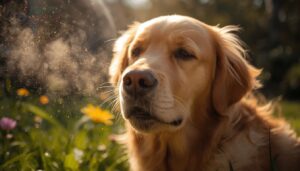
Sometimes culprit behind your dog’s sneezing isn’t an infection or a foreign object — it’s simply something in the air. Everyday irritants and allergens are actually among the most common reasons dogs sneeze more than usual.
Here’s what to look out for.
Dust, Smoke, Candles, and Cleaning Products
Your home’s air quality matters more than you might think. Burning paraffin candles releases soot particles and volatile organic compounds like benzene and formaldehyde, while cleaning aerosol residues and dustborne chemicals settle into surfaces and get inhaled.
These airborne irritants and airborne particles trigger reflex sneezing within minutes. Removing the source — candle, spray, or dust — usually stops it fast.
Pollen, Mold, and Seasonal Allergy Triggers
Pollen doesn’t follow a single calendar — in Germany, tree pollen starts as early as February, while grass peaks in June and ragweed runs through September. Mold spore growth spikes whenever humidity rises. Climate change impact is extending these seasons, making regional allergen variability increasingly unpredictable.
Pollen count peaks vary by location, so your dog’s exposure to seasonal allergic rhinitis and environmental allergens shifts throughout the year.
Watery Eyes, Itchy Skin, and Clear Discharge
Seasonal allergen exposure doesn’t just trigger sneezing — it often activates a full histamine response across multiple body systems. You might notice your dog’s allergen exposure pathways producing symptoms well beyond the nose:
- Watery eyes from conjunctival inflammation
- Itchy skin reflecting barrier dysfunction at the skin surface
- Clear nasal discharge typical of seasonal allergic rhinitis
Environmental allergens like pollen drive these seasonal flare-ups simultaneously.
When Allergy-related Sneezing Keeps Returning
If your dog’s allergic rhinitis keeps flaring up, the culprit often lives indoors. Allergen reservoirs — bedding, carpets, upholstery — keep reloading your dog’s nasal passages long after outdoor exposure ends. Regular environmental decontamination and air filtration cut that cycle substantially.
Long-term antihistamines manage chronic symptoms, while allergen immunotherapy targets the root sensitivity. Allergy testing helps identify exactly which environmental allergies are driving the pattern.
Infections, Mites, and Nasal Disease
Sometimes the cause of all that sneezing isn’t floating around in the air — it’s living inside your dog’s nasal passages. Infections, parasites, and nasal disease can all trigger persistent sneezing, and each one comes with its own set of clues.
Here’s what to watch for.
Bacterial and Viral Upper Respiratory Infections
Both viral and bacterial upper respiratory infections follow similar transmission routes — respiratory droplets, shared bowls, and close contact — though the incubation period varies by pathogen.
Canine influenza spreads fast and hits hard; Bordetella bronchiseptica often lingers.
Viral infections can damage airway tissue, raising superinfection risk when bacteria move in secondarily.
Vaccination strategies reduce severity substantially, while antimicrobial stewardship means antibiotics are reserved for confirmed bacterial infection.
Fungal Infections Such as Aspergillosis
While bacteria and viruses get most of the attention, fungal infections — particularly nasal aspergillosis — are a real concern. Aspergillosis occurs when inhaled spores trigger hyphal tissue invasion into nasal passages, driving an immune-mediated response that damages surrounding tissue.
Watch for:
- Brown or rust-tinged discharge
- Aspergilloma formation (a fungal ball)
- Progressive sneezing with facial discomfort
Fungal serology testing and antifungal therapy choices depend on how severe the infection has become.
Nasal Mites and Severe Nasal Irritation
Less talked about than bacteria or fungi, nasal mites (Pneumonyssoides caninum) are surprisingly common parasites that live inside your dog’s nasal passages, causing relentless nasal irritation and nasal inflammation.
Mite transmission usually happens through direct dog-to-dog contact. The mite life cycle sustains infestation without treatment, so mite diagnosis — confirmed via nasal flush or endoscopy — is essential.
Your vet will outline safe treatment options for nasal mites in dogs and mite prevention strategies.
What Discharge Color May Indicate
Nasal discharge color is one of the clearest diagnostic clues you have. Use this nasal discharge color guide as a starting point:
- Clear mucus meaning — mild irritant or allergy, usually non-urgent
- Milky white mucus — increased inflammation, monitor closely
- Yellow pus indicator — likely infection, warrants veterinary advice
- Green purulent sign — significant bacterial involvement, seek care promptly
- Brown old blood/epistaxis — old or fresh bleeding; treat as urgent clinical signs
Foreign Objects and Dental Causes

Sometimes the cause of all that sneezing isn’t in the air—it’s something inside your dog’s nose, or even hiding in their mouth. Foreign objects and dental problems are two surprisingly common culprits that often get overlooked.
Here’s what you need to know about each one.
Grass Awns, Seeds, and Lodged Debris
A grass awn works like a tiny anchor. Barbed Seed Structures latch onto fur, then migrate into a nostril — seed dispersal mechanics turned hazard.
Humidity-driven Awn Movement lets the awn shift deeper with moisture, driving Awn-induced Tissue Damage that sustains sneezing fits.
The result is often Asymmetric Nasal Irritation: one-sided sneezing with nasal discharge that won’t quit.
| Feature | Grass Awn / Grass Seed | Other Nasal Foreign Bodies |
|---|---|---|
| Entry route | Inhaled during outdoor play | Accidental contact or inhalation |
| Irritation type | Progressive, worsening | Often immediate and static |
| Foreign body in the nose | Migrates deeper over time | Usually stays near entry point |
Violent Sneezing With Nose Rubbing or Pawing
When a foreign object is lodged inside your dog’s nose, the body responds quickly. The pawing reflex kicks in almost immediately — your dog rubs their face, shakes their head, and won’t settle.
Watch for these signals:
- Sudden, violent, and repetitive sneezing that doesn’t stop
- One-sided nasal discharge or bleeding
- Frantic face rubbing paired with acute nasal pain
- Visible distress beyond typical inflammatory sneezing
That combination points to mechanical irritants and nasal obstruction — not allergic rhinitis or reverse sneezing.
Tooth-root Abscesses and Periodontal Disease
Dental disease doesn’t always stay in the mouth. A root canal infection or deep periodontal pocket depth can quietly erode the thin bone separating your dog’s tooth roots from the nasal cavity.
Dental disease can silently erode the bone between tooth roots and nasal cavity, turning a hidden infection into a breathing problem
Once that barrier breaks down, bacteria trigger rhinitis and nasal discharge that mimics a respiratory infection.
Dental radiography often reveals bone loss indicators invisible to the naked eye, confirming a dental root abscess as the true culprit.
Why These Problems Usually Need Veterinary Treatment
Both problems share a stubborn truth: home remedies won’t fix underlying pathology. A lodged awn can migrate deeper, raising complication risk and setting up systemic spread through inflamed tissue.
Dental infections behave similarly—without diagnostic accuracy from imaging and cultures, treatment failure is almost inevitable.
When to seek veterinary care for dog sneezing is simple: if pawing, discharge, or pain is present, don’t wait.
Reverse Sneezing Vs. Regular Sneezing
Reverse sneezing can look alarming the first time you see it, but it’s not the same as a regular sneeze — and the difference actually matters. Understanding what’s happening in dog’s body helps you figure out whether to stay calm or call your vet.
Here’s what to know about reverse sneezing, what sets it off, and how to handle it when it happens.
What Reverse Sneezing Looks and Sounds Like
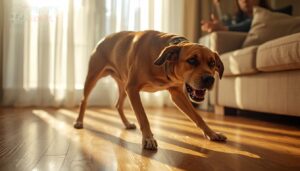
Reverse sneezing can look alarming the first time you witness it. Your dog suddenly freezes in a stiff front stance, neck stretched forward in a neck extension posture, and begins pulling air inward with rapid inhalation bursts. The result? A loud honking snort sound — sometimes resembling a goose. Flared nostrils and a rigid, elbows-out posture complete the picture.
| What You See | What’s Happening |
|---|---|
| Sudden stillness | Reflex triggered by upper airway irritation |
| Neck extended forward | Airway repositioning to ease inhalation |
| Mouth closed, nose active | Reverse sneezing mechanisms in dogs at work |
| Flared nostrils, stiff legs | Respiratory effort during rapid inhalation bursts |
| Episode ends in seconds | Normal behavior resumes immediately after |
Common Triggers for Reverse Sneezing Episodes

Now that you know what an episode looks like, identifying what sets it off often brings real peace of mind. Most reverse sneezing traces back to environmental irritants — Strong Fragrances, Cooking Odors, dust, or smoke. Air Conditioning Changes and Humidity Fluctuations can catch sensitive airways off guard, as can Car Travel Motion.
| Trigger Category | Common Examples | Why It Happens |
|---|---|---|
| Indoor irritants | Strong Fragrances, Cooking Odors | Inflames nasopharyngeal tissue |
| Environmental shifts | Air Conditioning Changes, Humidity Fluctuations | Disrupts airway moisture balance |
| Physical causes | Nasal mites, foreign body in the nose | Direct mechanical irritation |
When Reverse Sneezing is Usually Harmless
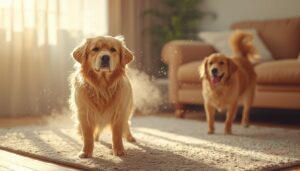
Most of the time, brief self-limiting episodes are nothing to worry about. If your dog sneezes hard for 30 seconds, and then trots off wagging its tail like nothing happened, that’s the non-progressive reflex behaving exactly as it should. Normal post-episode behavior — no fatigue, no labored breathing, no discharge — is your clearest reassurance.
| Sign | What It Means |
|---|---|
| Episode under 30 seconds | Consistent with mild nasopharyngeal irritation |
| Immediate return to play | Normal post-episode behavior confirmed |
| No nasal discharge present | Environmental irritants, not infection |
| Occasional, not daily | Brachycephalic breed predisposition or passing trigger |
| Otherwise eating and active | Owner reassurance tips apply here |
How to Calm a Reverse Sneezing Episode

When your dog’s episode begins, stay calm — your reaction sets the tone. A gentle throat massage or soft neck rub can trigger swallowing, which often breaks the spasm quickly. Moving your dog toward fresh air reduces ongoing irritation mid-episode.
| Action | Method | When to Use |
|---|---|---|
| Throat Massage | Light circular pressure under the jaw | During the episode |
| Swallow Prompt | Cover nostrils briefly for one second | Mid-spasm |
| Fresh Air Position | Guide dog toward an open window | Episode onset |
| Gentle Neck Rub | Slow strokes along the throat | To soothe and calm |
| Post-episode Hydration | Offer water once breathing normalizes | Immediately after |
home care tips for dogs with frequent sneezing work by interrupting the reflex — not masking it.
Signs Your Dog Needs a Vet
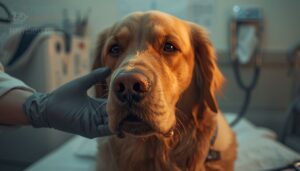
Most sneezing clears up on its own, but some signs tell you it’s time to stop waiting and call your vet.
Knowing which symptoms cross that line can make a real difference for your dog. Here’s what to watch for.
Bloody, Yellow, Green, or Brown Discharge
Discharge color is one of the clearest infection clues your dog can give you. Clear mucus is usually fine, but color progression toward yellow or green signals bacterial sinusitis or active inflammation.
Brown discharge often reflects blood oxidation — older bleeding that’s darkened over time.
Foul odor, thickening mucus texture, or blood coming from one nostril all suggest fungal infection in nasal passages, nasal tumors and polyps, or serious disease requiring prompt evaluation.
Facial Swelling, Pain, or Nosebleeds
Facial swelling, nose pain, or blood coming from a nostril — these aren’t symptoms to watch and wait on.
Causes range from nasal vestibulitis and inflammatory facial swelling to foreign body in the nose, nasal tumors and polyps, or traumatic nasal injury.
Epistaxis, or nose bleeding, can stem from vascular nosebleed causes or sinus tumor pain.
Any of these signs warrants same-day veterinary contact.
Fever, Lethargy, Coughing, or Appetite Loss
When sneezing pairs with fever, lethargy, reduced appetite, or a persistent cough, you’re likely looking at a systemic symptom cluster — not just nasal irritation.
Upper respiratory infection, canine influenza, or kennel cough can drive this combination.
Fever detection and lethargy evaluation matter here because viral infection can escalate quickly.
Cough severity and appetite tracking help your vet determine whether bacterial culture and targeted treatment are needed.
Weight Loss or Worsening Long-term Sneezing
Weight loss alongside worsening sneezing is a signal worth taking seriously.
Chronic inflammation impact on appetite is real — persistent nasal disease, whether from nasal aspergillosis, nasal mites, or nasal tumors, quietly drains energy reserves and suppresses hunger. Body condition monitoring helps catch this early.
Diagnostic imaging, nutritional supplementation, and appetite stimulant use may all factor into your dog’s recovery plan once diagnosis and treatment begin.
Emergency Signs That Should Not Wait
Some signs don’t allow for a "wait and see" approach — they mean go now.
- Bright red bleeding or blood coming from a nostril that won’t stop signals urgent nasal bleeding
- Blue gums or open-mouth breathing at rest indicate respiratory distress requiring immediate care
- Wheezing sounds or gasping alongside forceful sneezing suggest a serious airway emergency
- Throat swelling affecting swallowing or breathing needs same-day attention
- Significance of nasal discharge and blood in a dog’s sneezing together — especially thick, colored, or bloody — is a clear indicator of when to seek emergency veterinary care for sneezing
How Vets Diagnose The Cause

your dog keeps sneezing and you’re not sure why, your vet has a clear process for finding answers. It’s not guesswork — there are specific tools and techniques used to pinpoint what’s actually going on.
Here’s what that diagnostic process usually looks like.
Physical Exam and Nasal Assessment
Before anything else, your vet takes a careful look at your dog’s nose — checking external nose symmetry, nasal mucosa color, and any signs of palpation tenderness.
They’ll assess discharge consistency, perform a septal deviation check, and note which nostril is involved.
This veterinary assessment of canine nasal conditions builds the foundation for everything that follows.
Rhinoscopy and Foreign Body Removal
When the physical exam points toward something lodged inside the nose, rhinoscopy is usually the next step. Under anesthesia, a lighted scope enters the nostril for direct endoscopic visualization — locating the foreign body precisely before instrument choice determines what’s safest to use. Endoscopic retrieval minimizes complications, and post‑removal monitoring confirms nothing remains.
Key steps in rhinoscopy for foreign body removal:
- Anesthesia management keeps your dog still and comfortable during instrumentation.
- Forceps or clamp-style tools grasp solid objects positioned near the nasal cavity’s front.
- Post‑removal reassessment confirms complete extraction before signs resolve.
Nasal Flush, Cytology, and Cultures
Once rhinoscopy is complete, a nasal lavage often follows. Sterile saline flushes the cavity, collecting mucus and inflammatory cells — the rinsate then undergoes cytology staining methods to identify neutrophils, eosinophils, or fungal forms like nasal aspergillosis.
Bacterial culture interpretation guides antibiotic therapy for bacterial nasal infections, though fungal culture challenges mean negative results don’t always rule out infection.
X-rays, CT Scans, and Biopsy
When X-rays fall short — and they often do with soft tissue — CT scan fills the gap. Radiographic and CT imaging of canine nose structures together give far more detail than X‑rays alone, especially when contrast enhancement highlights suspicious masses or vessels.
- CT guidance improves biopsy yield by pinpointing the most abnormal tissue slice
- CT scan cross-sections reveal bone erosion invisible on plain radiographs
- Imaging limitations mean biopsy remains the only way to confirm tumor type
How to Help a Sneezing Dog
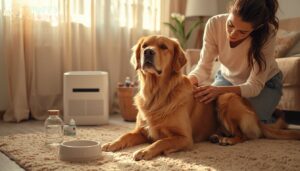
Most sneezing dogs don’t need a prescription — they need a few smart changes at home and a clearer picture of when those changes aren’t enough. The good news is that a lot of what helps is simple, practical, and well within your control.
Here’s what you can do to make your dog more comfortable and keep problems from sneaking up on you.
Remove Likely Irritants From The Environment
Start by thinking like a detective: what changed in your home before the sneezing began?
Tobacco smoke, scented candles, air fresheners, and cleaning sprays release airborne irritants and volatile organic compounds that overwhelm a dog’s sensitive nose.
Swap to low VOC cleaning products, run HEPA vacuuming regularly to capture dust mite allergens, schedule ventilation when outdoor pollen is low, and consider an air purifier with HEPA filtration — simple preventive measures for airborne irritants in pets that can make a real difference.
Wash Bedding and Vacuum More Often
Your dog’s bedding quietly collects dust, dander, and mold spores — all common environmental irritants and seasonal allergy effects on dogs. A hot water wash at 60°C weekly, followed by thorough bedding drying, dramatically helps allergen reduction.
For carpets, frequent carpet passes with a HEPA vacuum pulls particles from deep fibers.
Prioritize:
- Washing shared pet bedding weekly
- Running HEPA filters in sleeping areas
- Vacuuming high-traffic zones two to three times weekly
Use Humidified Air for Mild Irritation
Dry indoor air worsens nasal irritation fast — and a humidifier can take the edge off mild sneezing from environmental irritants or seasonal allergies.
Moisture reduces dryness in your dog’s nasal passages, thins mucus, and eases airborne allergens that trigger allergic rhinitis in dogs.
| Feature | Cool-Mist Humidifier | Warm-Mist Humidifier |
|---|---|---|
| Ideal RH Range | 40–60% | 40–60% |
| Safe Water Use | Distilled recommended | Distilled recommended |
| Humidifier Maintenance | Clean every 3 days | Clean every 3 days |
| Best For | Homes with pets/children | Dry, cold climates |
| Allergen Risk | Low if cleaned properly | Low if cleaned properly |
Ask Your Vet About Safe Medications
When sneezing lingers despite removing irritants, medication may help — but only under veterinary guidance. Human NSAIDs like ibuprofen are toxic to dogs, and even Benadryl requires species-specific dosing. Always confirm prescription dosage, check label verification, and watch for side effects.
- Request a veterinary prescription before starting any treatment
- Ask about anti-inflammatory medication or steroid therapy for allergic rhinitis
- Discuss Apoquel for chronic environmental allergies
- Report drug interactions if your dog takes other medications
- Monitor side effect changes within the first 48 hours
Prevent Dental Disease With Regular Care
Few people connect a sore tooth to a sneezing dog, but severe periodontal disease can extend infection directly into the nasal cavity.
Daily tooth brushing removes the plaque that hardens into tartar, and professional cleanings catch what brushing misses.
Make dental prophylaxis part of your dog’s routine — dental disease is a quiet driver of nasal irritation that’s genuinely preventable.
When to Monitor at Home Vs. Book an Appointment
Monitoring at home makes sense when sneezing is occasional, there’s no discharge, and your dog is eating and playing normally. Book an appointment if you notice persistent sneezing beyond 48 hours, colored nasal discharge, blood coming from a nostril, or systemic signs like lethargy or appetite loss.
Use this simple owner checklist: one-sided nasal obstruction, worsening pattern, or any red flag symptoms — call your vet.
Frequently Asked Questions (FAQs)
What are dogs telling you when they sneeze?
sneeze carries more meaning than you might think.
It can be a communication signal, an allergy cue, a pain warning, or an environmental alert — each one telling you something specific about your dog’s world.
How can I differentiate between normal and abnormal sneezing in my dog?
Normal sneezes are brief, infrequent, and discharge-free. Watch for a sneezing duration metric exceeding 48 hours, nasal discomfort signs, or appetite variation correlation — those flag abnormal and warrant veterinary attention.
Can dog sneezing spread illness to humans?
dog respiratory infections don’t easily jump to humans — but it’s not impossible. zoonotic pathogens, aerosol transmission, and surface contamination are real concerns, especially for immunocompromised individuals.
Good hand hygiene matters more than you’d think.
Do certain seasons worsen dog sneezing episodes?
Yes.
Spring pollen, Summer dust, Fall mold, and Winter heating all shift your dog’s environmental irritant load. Humidity swings intensify seasonal allergies, making sneezing episodes cluster predictably around the same months each year.
How long does normal sneezing last?
A typical sneezing burst lasts just seconds — one quick reflex, then done. Healthy dogs sneeze one to three times daily, with each episode resolving fast once the irritant clears.
Are there over-the-counter sneeze remedies safe?
Not all human remedies translate safely to dogs.
OTC antihistamines like Benadryl may help mild sneezing, but dosing, ingredient compatibility, and age/size considerations matter—always confirm with your vet first.
Can puppies sneeze more than adult dogs?
Puppies can sneeze more than adult dogs.
Immune maturity is still developing, exploratory sniffing increases early allergen exposure, and nasal passage growth makes them more reactive to environmental irritants — all common causes of sneezing in dogs.
Can dogs sneeze more after eating or drinking?
A perfectly calm dog can sneeze mid-meal — not from illness, but from food particle irritation, swallowing air, or a drinking splash reflex triggering the nasal passages.
It’s often mechanical, not medical.
Does sneezing affect a dogs sleep quality?
Yes, it can. Sleep disruption from excessive sneezing, nighttime nasal congestion, and restless breathing — sometimes with snoring-like sounds — raises wake-up frequency and leaves your dog less rested overall.
Can anxiety or stress trigger sneezing in dogs?
Stress and anxiety can trigger sneezing in dogs.
Unfamiliar environments, routine changes, or loud noises may prompt stress-induced sneezing as a behavioral cue—calming strategies and routine stability often reduce these episodes noticeably.
Conclusion
Most sneezes are just your dog’s way of tidying up the neighborhood—a quick, involuntary housekeeping routine that clears and moves on.
But when a dog sneezing a lot becomes your new normal, the body is filing a complaint worth reading.
Discharge color, duration, and accompanying symptoms are the real story.
Trust those signals.
Address irritants early, stay current on dental care, and don’t hesitate to call your vet—because some complaints deserve more than a tissue.
- https://www.dogster.com/dog-health-care/allergies-in-dogs-causes-symptoms-treatment
- https://www.ncbi.nlm.nih.gov/pmc/articles/PMC2147700/
- https://www.nationalgeographic.com/science/article/scented-candles-smoke-air-pollution
- https://pmc.ncbi.nlm.nih.gov/articles/PMC11933706/
- https://goodsmellsinc.com/blogs/gsi-blog/the-5-most-harmful-ingredients-found-in-common-candles-and-why-you-should-avoid-them