
This site is supported by our readers. We may earn a commission, at no cost to you, if you purchase through links.

Most dog sneezes mean nothing—a dusty rug, a nose buried too deep in the grass, a whiff of your morning coffee. But when the sneezing keeps coming back, or shows up with discharge, pawing at the face, or a strange honking sound, something else is going on.
Dogs sneeze for a surprisingly wide range of reasons, from harmless environmental irritants to nasal foreign bodies to infections that need prompt treatment. Knowing the difference between a passing tickle and a genuine problem could save you an unnecessary emergency visit—or help you catch something serious before it escalates.
Table Of Contents
- Key Takeaways
- Why is My Dog Sneezing So Much?
- Common Causes of Dog Sneezing
- What is Reverse Sneezing in Dogs?
- Play Sneezing: When It’s Just Communication
- Breed Anatomy and Sneezing Frequency
- What Nasal Discharge Color Tells You
- When to See The Vet for Dog Sneezing
- How Vets Diagnose The Cause of Sneezing
- How to Help a Sneezing Dog at Home
- Frequently Asked Questions (FAQs)
- Why is my dog sneezing?
- Do dogs sneeze?
- Why does my dog sneeze when he eats grass?
- Why does my dog sneeze when I kiss him?
- Why has my dog started sneezing all of a sudden?
- What are dogs telling you when they sneeze?
- Is it normal for a dog to sneeze a lot?
- Why does my dog sneeze?
- Why does my Rottweiler sneeze?
- Why is my dog sneezing during a playdate?
- Conclusion
Key Takeaways
- Most dog sneezes are harmless, but recurring sneezes paired with discharge, bloody nostrils, facial swelling, or pawing at the nose signals it’s time to call your vet.
- Causes range widely — from dust and seasonal pollen to lodged grass seeds, nasal mites, fungal infections, and even dental disease spreading bacteria into the nasal cavity.
- Nasal discharge color is one of your clearest diagnostic clues: clear discharge points to allergies, yellow or green discharge suggests bacterial infection, and brown or bloody discharge warrants same-day veterinary attention.
- Simple home measures — HEPA air filtration, humidity control, allergen-proof bedding, and consistent dental hygiene — can meaningfully reduce how often your dog sneezes.
Why is My Dog Sneezing So Much?
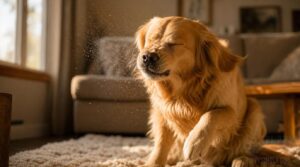
Not every sneeze means something is wrong — but when your dog won’t stop, it’s worth paying attention.
Paying attention to frequency, triggers, and timing can help you figure out what’s going on — a dog sneezing a lot often follows patterns worth recognizing.
A few key factors separate a normal sneeze from one that needs a closer look. Here’s what you should know.
Normal Sneezing Vs. Excessive Sneezing
Not every sneeze your dog lets out signals trouble — but episode duration and cluster pattern matter more than most owners realize.
Normal sneezing has a clear trigger and stops once the irritant is gone, while excessive sneezing keeps returning without obvious cause.
- Clears quickly after irritant removal response
- Stays linked to one obvious moment
- Doesn’t cause discharge or lethargy
- Excessive sneezing repeats across environments
- Higher inflammatory level often shows in discharge
How Often Should a Healthy Dog Sneeze?
Most healthy dogs sneeze one to three times daily — a normal baseline rate. Puppies may reach the higher end due to curious sniffing, while older dogs typically sneeze less spontaneously. Tracking your dog’s pattern over a few days is a simple yet effective monitoring tip.
Activity-triggered sneezing bursts, such as after outdoor walks, are common and usually harmless. However, if your dog sneezes excessively, consider checking for environmental allergies in dogs.
When Sneezing Becomes a Warning Sign
One to three sneezes a day are fine — but certain signs indicate a different story. Seek same-day veterinary care if you notice one-sided sneezing with pawing at the nose, blood coming from a nostril, facial swelling, or open-mouth breathing.
Pale gums, lethargy, fever, or persistent coughing alongside sneezing are veterinary emergency signs in sneezing dogs that shouldn’t wait.
Common Causes of Dog Sneezing
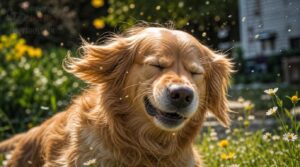
Sneezing has more causes than most people realize, and the right response depends on what’s behind it.
Some are harmless and resolve on their own, while others need a vet’s attention sooner rather than later.
Here are the most common reasons your dog might be sneezing.
Airborne and Environmental Irritants
Your home’s air might be the culprit. Airborne irritants and environmental pollutants are among the most overlooked sneezing triggers in dogs. Common offenders include:
- House Dust Particles stirred up by sweeping or vacuuming
- Volatile Organic Compounds from cleaners, candles, or new furniture
- Aerosol Sprays and air fresheners
- Fireplace Smoke and combustion fumes
- Vehicle Emissions seeping indoors through poor ventilation
Remove the source — the sneezing stops.
Seasonal and Environmental Allergies
Seasonal allergies follow a predictable schedule that affects dogs year-round. Tree pollen peaks in spring, while weed pollen dominates in fall, and mold spores persist indoors, ensuring symptoms remain active regardless of the season. These airborne allergens trigger histamine release, leading to allergic rhinitis in dogs, characterized by sneezing, watery eyes, and clear nasal discharge.
Key allergens and their seasonal patterns are summarized below:
| Allergen | Season | Key Symptom |
|---|---|---|
| Tree pollen | Spring | Sneezing fits |
| Dust mites | Year-round | Chronic congestion |
| Weed pollen | Fall | Watery eyes |
Environmental factors like dust mites and allergen cross-reactivity between pollen types can worsen reactions, causing dogs to experience symptoms even indoors. This compounding effect highlights the complexity of managing canine allergies effectively.
Foreign Objects Lodged in The Nose
Sometimes, a foreign body in the nose is the culprit behind sudden, frantic sneezing. Grass seeds and small debris commonly lodge near the inferior turbinate — turbinate lodging causes one-sided, foul-smelling discharge that won’t quit.
Organic vs inorganic objects matter too: Organic material swells, worsens obstruction, and accelerates rhinolith development.
Foreign body removal from a dog’s nose requires anesthetic extraction. Trust the odor clues — persistent smell means something’s still there.
Bacterial, Viral, and Fungal Infections
Infections are another reason your dog might be sneezing repeatedly. Bacterial infections commonly produce crusted discharge—yellow or green mucus that dries around the nostrils. Viral infections cause similar upper respiratory inflammation, and because of viral shedding, a sick dog can infect others fast.
Fungal infections dig deeper, often requiring prolonged antifungal therapy.
Antibiotic stewardship and vaccination prevention both matter here—know when to seek veterinary care for sneezing dogs.
Nasal Mites
Nasal mites (Pneumonyssoides caninum) are a surprisingly common nasal parasite infection in dogs. These tiny, light-yellow mites complete their entire life cycle inside the nasal passages, spreading through direct and indirect transmission vectors — including fleas and flies.
Key clinical signs to watch for:
- Frequent sneezing and reverse sneezing
- Bloody or thick nasal discharge
- Facial itching and reduced scent ability
Diagnosis relies on diagnostic cytology from a nasal flush, and treatment protocols involve antiparasitic treatment prescribed by your vet.
Nasal Tumors and Polyps
Growths inside the nose—whether benign nasal polyps or malignant nasal tumors—can cause persistent sneezing, bloody discharge, and visible facial swelling. These symptoms signal a need for further investigation in canines.
Diagnostic imaging for nasal issues and a tissue biopsy confirm the diagnosis. This process ensures accurate identification of the growth’s nature and extent.
Treatment ranges from surgical resection and radiation therapy to medical management. Prognostic indicators vary widely by tumor type, emphasizing the importance of tailored care.
Dental and Periodontal Disease
Your dog’s mouth and nose share more anatomy than most people realize. Plaque biofilm and calculus formation drive periodontal pocket depth and alveolar bone loss around the upper teeth—and those roots sit directly beneath the nasal cavity.
Gingival bleeding, tooth decay, and severe gum disease can push bacteria upward, triggering sneezing. Dental disease causing nasal symptoms is easy to miss, but your vet won’t.
What is Reverse Sneezing in Dogs?
Reverse sneezing sounds alarming the first time you hear it — a honking, gasping noise that seems to come out of nowhere. But it’s actually one of the most misunderstood things dogs do.
Here’s what’s really going on, what sets it off, and when (if ever) you need to worry.
What It Looks and Sounds Like
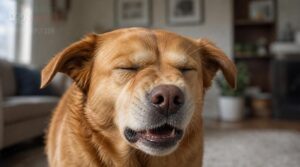
If you’ve never seen it before, reverse sneezing can look alarming. Your dog stands rigid, neck extended, producing rapid snorting sounds — a loud, honking inhale that sounds nothing like a normal sneeze.
Watch for these signs:
- Head bobbing and facial twitching during the episode
- Clustered bursts of forceful inhalation lasting 10–60 seconds
- Muzzle moisture and brief sneezing fits afterward
- Watery, red eyes during prolonged episodes
What Triggers Reverse Sneezing
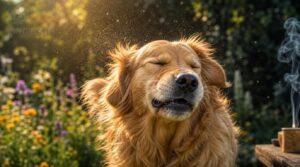
Common triggers include environmental irritants like scented candles, perfumes, dust, and pollen — anything that inflames the nasopharynx.
Grass awns or other nasal foreign bodies can provoke episodes, as can rapid inhalation during play, leash pulling, or fast eating.
Brachycephalic breeds tend to react more easily to these triggers.
Is Reverse Sneezing Dangerous?
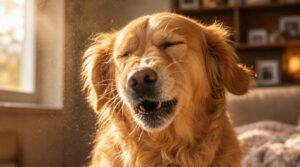
For most dogs, reverse sneezing is harmless — episodes are brief, self-limiting, and do not disrupt normal breathing afterward.
However, red flag signs worth watching include prolonged episodes, labored breathing between sneezes, or sudden changes in frequency. These symptoms may indicate underlying conditions like nasal foreign bodies, chronic inflammation, or airway obstruction risk. When such patterns emerge, veterinary care isn’t optional.
How to Stop a Reverse Sneezing Episode
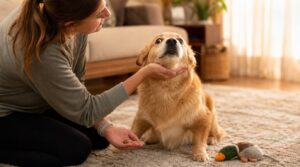
When your dog’s reverse sneezing kicks in, staying calm is your first move.
- Treat swallowing — offer a small snack to trigger a natural swallow reflex
- Nostril pinch — gently close nostrils for about 2 seconds, then release
- Head elevation — lift the head slightly to shift airway position
- Throat massage — lightly stroke the throat to encourage relaxed breathing
- Calm distraction — a favorite toy often breaks the cycle faster than anything
Most episodes resolve within a minute on their own.
Play Sneezing: When It’s Just Communication
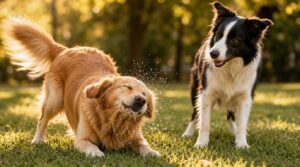
Not every sneeze your dog lets out is a sign that something’s wrong — sometimes it’s just how they talk. Play sneezing is a real behavior, and once you know what it looks like, it’s easy to spot.
Here’s what to watch for and how to tell it apart from sneezing that actually needs your attention.
What Play Sneezing Looks Like
Play sneezing is your dog’s way of saying, "I’m having the best time right now." During active play, you’ll notice a bouncy posture, loose limbs, and an open-mouth exhale — softer and less forceful than a real sneeze.
These clustered bursts align directly with excitement timing, often paired with play bows or forward lunges. The playful facial expression stays relaxed throughout.
It’s behavioral sneezing as canine communication, pure and simple.
How to Tell Play Sneezing Apart From Real Sneezing
To distinguish behavioral sneezing from medical sneezing in dogs, focus on four key factors: body language, trigger specificity, episode duration, and frequency pattern. Play-related sneezing—a form of canine communication—is typically associated with excitement, characterized by a loose posture, wagging tail, and an immediate return to play. In contrast, genuine sneezing interrupts calm moments, persists throughout the day, and often involves the presence of discharge (watery, thick, or colored mucus).
Play sneezing stops when the fun stops; medical sneezing doesn’t care what your dog is doing
Behavioral sneezing ceases when play stops, as it is directly tied to the dog’s activity. Medical sneezing, however, occurs regardless of the dog’s current behavior, manifesting unpredictably and independently of play or excitement.
Breed Anatomy and Sneezing Frequency
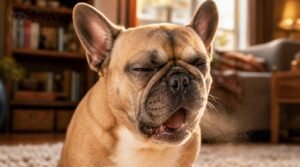
Some dogs sneeze more than others simply because of how they’re built. Flat-faced breeds, in particular, have nasal anatomy that makes everyday breathing a bit of a workout.
Here’s what that means for the breeds most affected — and when it signals something more serious.
Why Flat-Faced Dogs Sneeze More
Flat-faced breeds like Bulldogs aren’t built for breathing easily — and their noses show it. Compressed nasal passages create airflow turbulence that constantly irritates sensitive tissue. Sneezing becomes a daily reflex when excess upper airway tissue, heat-related dryness, and concentrated irritants amplify discomfort in their restricted breathing spaces.
Brachycephalic dogs with brachycephalic airway syndrome face even greater challenges:
- Compressed nasal passages restrict normal airflow
- Airflow turbulence increases contact with nasal lining
- Extra upper airway tissue narrows breathing space further
- Heat-related dryness amplifies irritation during activity
- Higher irritant concentration triggers stronger sneeze responses
Breeds Most Prone to Nasal Issues
Bulldogs, Pugs, and Boston Terriers top the list regarding chronic nasal issues. Their brachycephalic airway, combined with narrow nostril airflow, means irritants linger longer and sneeze triggers, hit harder.
Allergy-prone breeds also develop persistent inflammation more easily, while congenital nasal defects—present from birth—quietly worsen symptoms over time.
Nasal tumor risk also rises when anatomy already strains the system.
When Anatomy Masks a Serious Condition
Brachycephalic airflow is already noisy and restricted — so when something more serious develops, it can hide in plain sight. A masked nasal infection, hidden foreign body, or early nasal tumor may not stand out until symptoms worsen.
One-sided obstruction is your clearest clue. If your brachycephalic dog’s sneezing shifts to one nostril or intensifies, don’t chalk it up to anatomy — get it checked.
What Nasal Discharge Color Tells You
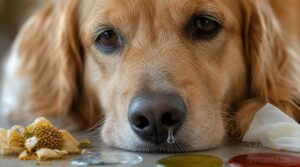
Nasal discharge is one of the most useful clues your dog’s body gives you — if you know how to read it. The color and consistency can point you toward allergies, infection, or something that needs same-day attention.
Here’s what each type usually means.
Clear Discharge — Allergies or Mild Irritation
Clear, watery discharge is almost always a sign of allergic rhinitis or an airborne irritant — not infection. Think of it as your dog’s nose doing its job, flushing out pollen, dust mites, or chemical sprays.
Seasonal exposure timing matters: if symptoms flare in spring or fall, environmental allergens are likely driving it. Keeping a symptom log helps your vet identify the pattern quickly.
Yellow or Green Discharge — Bacterial Infection
When discharge shifts from clear to yellow or green, that color change is your signal — bacterial infection has likely moved in. Odor indicators matter too: a foul or fishy smell alongside thicker mucus suggests active inflammation.
Watch for these inflammatory signs:
- Persistent colored discharge lasting more than 2–3 days
- Facial swelling or pawing at the nose
- Fever, lethargy, or reduced appetite
Underlying sources vary, so vets use diagnostic methods like culture sensitivity testing to confirm the exact bacterium before prescribing targeted antibiotics — guessing rarely ends well.
Brown, Rust, or Bloody Discharge — Fungal or Serious Causes
Brown, rust, or bloody discharge signals serious concerns. This color range often indicates nasal aspergillosis — a fungal infection that erodes nasal tissue, sometimes causing fungal septal erosion and a distinctly foul fungal odor cue.
Rusty mucus or blood from one nostril may also point to nasal tumors and cancer in dogs. Don’t wait — seek veterinary care immediately to address these urgent health risks.
When to See The Vet for Dog Sneezing
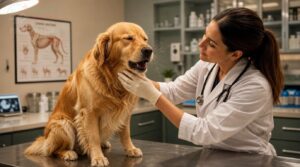
Not every sneezing fit needs a vet visit, but some do — and knowing the difference can genuinely matter.
The tricky part is figuring out which situation you’re actually in. Here’s a simple breakdown to help you decide what to do next.
Go to an Emergency Vet Immediately If
Some symptoms can’t wait — not even until morning. If your dog shows any of the following, head to an emergency vet right now:
- Profuse nosebleed or uncontrolled bleeding from a nostril that won’t stop with gentle pressure
- Severe breathing distress, open-mouth breathing, or sudden collapse with extreme weakness
- Rapid abdominal swelling, facial swelling, a high fever, or deep lethargy alongside respiratory distress
Don’t second-guess these signs.
Schedule a Vet Appointment Within 1–3 Days If
Not every symptom demands a midnight ER run — but some need attention within a day or two.
Schedule a vet visit within 1–3 days if you notice any of the following:
| Symptom | What It May Signal | Why It Can’t Wait |
|---|---|---|
| Increasing frequency of sneezing | Infection, foreign body, or early tumor | Worsens quickly without treatment |
| Blood-tinged discharge or blood coming from nostril | Fungal infection, nasal mites, or mass | Bleeding sources need prompt identification |
| Unilateral nasal swelling | Abscess, polyp, or tumor | One-sided swelling is rarely benign |
| New breathing noises | Nasal obstruction or airway compromise | Partial blockages can escalate fast |
| Appetite loss, lethargy, or fever | Systemic infection spreading from nasal cavity | Signals the body is actively fighting something |
| Unexplained weight loss in dogs | Chronic disease or nasal tumor | Gradual decline often masks serious illness |
Trust your instincts — you know your dog’s normal.
Monitor at Home If
Sometimes a sneeze is just a sneeze. Monitor at home if your dog has only occasional sudden sneezing spikes with no new nasal discharge, no nose pawing, and no labored breathing.
Normal is 1–3 sneezes daily. If there’s no elevated temperature, no facial swelling, no blood coming from nostrils, and your dog is eating and acting normally, watch and wait.
How Vets Diagnose The Cause of Sneezing
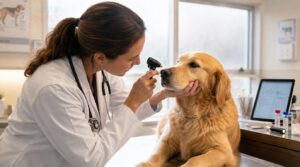
When your dog’s sneezing doesn’t have an obvious explanation, your vet will follow a clear, step-by-step process to find the cause. That process usually starts simple and gets more detailed depending on what turns up.
Here’s what to expect at each stage.
Physical Exam and Patient History
Before any diagnostic testing or imaging begins, the veterinarian starts with a thorough history timeline — asking when sneezing started, what triggers it, and how episodes have changed over time. Trigger identification matters enormously here.
The clinical examination then follows: nasal palpation, facial assessment, and respiratory auscultation help narrow the possibilities before anything more invasive is considered. Your observations as the owner genuinely shape this whole process.
Rhinoscopy and Nasal Lavage
When the physical exam points to something deeper, rhinoscopy is the next step — a nasal endoscopy performed under a carefully managed anesthesia protocol. The scope follows established navigation landmarks through the nasal passages while saline lavage technique flushes debris and improves visibility.
The procedure usually involves:
- Endoscope insertion through each nostril
- Stepwise scope navigation along the nasal meatus
- Saline flush to clear mucus and improve view
- Nasal flush collection for cytology sample analysis
- Post-procedure care to monitor recovery from anesthesia
These diagnostic methods for canine nasal issues and treatment options for canine nasal irritation are often resolved in a single session.
Imaging — X-Rays and CT Scans
When rhinoscopy falls short, diagnostic imaging fills the gaps. Initial assessments often use bone radiographs of the nasal cavity to detect obvious bony destruction or masses. However, for deeper insights into soft tissues, sinuses, or hidden foreign bodies, CT scans—particularly with slice reconstruction and 3D volumetric rendering—provide superior detail. Contrast-enhanced CT further refines diagnostics by highlighting abnormal vascularity or infection borders invisible on standard imaging.
| Imaging Type | Best For | Limitation |
|---|---|---|
| Bone radiographs | Bony changes, quick screening | Low soft-tissue detail |
| CT slice reconstruction | Sinus and soft-tissue mapping | Higher cost, requires anesthesia |
| Contrast CT | Tumor vascularity, infection borders | Contrast reaction risk |
| 3D volumetric rendering | Surgical planning, complex anatomy | Specialist interpretation needed |
| X-ray of nasal cavity | Initial, accessible diagnostic step | Misses early or subtle disease |
While radiation safety remains paramount, CT consistently outperforms plain radiographs in precision for canine nasal diagnostics. Its ability to resolve intricate anatomical relationships and subtle pathologies makes it indispensable when initial screening proves insufficient.
How to Help a Sneezing Dog at Home
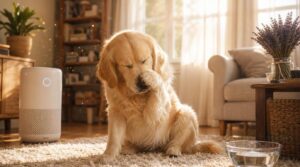
Not every sneezing episode needs a vet visit — sometimes a few simple changes at home make a real difference.
The good news is that environmental triggers are things you can actually control.
Here’s what you can do to help your dog breathe easier.
Reducing Indoor and Outdoor Allergens
Think of your home as the first line of defense against your dog’s sneezing. Humidity control matters — keeping indoor levels at or below 50% discourages dust mite allergy triggers and aids mold prevention.
Entryway decontamination is simple but effective: wipe your dog’s paws after walks to limit pollen sensitivity flare-ups.
Regular vacuuming and closing windows during high-pollen days meaningfully reduce environmental allergens and dog respiratory health issues overall.
HEPA Filters, Bedding, and Air Quality Tips
A true HEPA purifier captures 99.97% of airborne irritants — including dust mites, pollen, and mold spores — making bedroom placement your highest-impact move for air quality improvement for pet health.
Run it where your dog sleeps, improve airflow by keeping the unit unobstructed, and pair it with allergen-proof covers and weekly hot-water washes.
Filter maintenance matters too — a clogged filter won’t protect anyone.
Steam Therapy and Cool-Mist Humidifiers
Air quality improvement for pet health doesn’t stop at filtration. A cool-mist humidifier — ultrasonic vs evaporative models both work — adds moisture that soothes irritated nasal passages overnight. Placement strategy matters; keep it near the center of the room, not beside bedding.
Maintain a consistent cleaning schedule to prevent airborne pollutants from circulating. Ideal humidity reduces environmental allergens without inviting mold.
Dental Hygiene to Prevent Nasal Complications
Your dog’s mouth and nose share more anatomy than most owners realize. Plaque reduction through daily brushing, a consistent flossing protocol, and regular dental scaling all help control oral-nasal bacterial spread — a direct pathway from infected tooth roots into nasal tissue.
Dental disease leading to nasal symptoms in dogs, including sinusitis, is preventable. Good gum health starts at the toothbrush.
Supplements and Veterinary-Guided Remedies
Beyond dental care, vet-guided remedies can meaningfully reduce sneezing frequency. Saline flushing clears mild nasal irritants when your dog tolerates it. Probiotic supplement use and omega-3 supplementation offer modest immune support for allergy-prone dogs — but dosing matters.
Antihistamine dosing and intranasal therapy should always come from your vet, since age, weight, and other medications all change the equation.
Frequently Asked Questions (FAQs)
Why is my dog sneezing?
Your dog’s nose is a finely tuned alarm system — and sneezing is its way of sounding off.
From common causes of dog sneezing like dust and allergic reactions to stress-induced sneezing, something’s irritating that nasal lining.
Do dogs sneeze?
Yes, dogs sneeze — a natural reflex built into their neural pathways. Muscle coordination drives a forceful air burst that clears irritants fast, an evolutionary advantage that doubles as social signaling during play.
Why does my dog sneeze when he eats grass?
Grass triggers a chew-triggered reflex through multiple pathways. Grass pollen bursts irritate the nasal lining, while blades cause abrasion to the nasal lining.
A lodged grass seed can become a nasal foreign body, requiring veterinary attention.
Why does my dog sneeze when I kiss him?
Most likely, human scent irritation is at play. Your breath odor triggers a reflex sneeze, and facial proximity airflow stimulates sensitive nasal receptors.
It’s often just behavioral — attention-seeking sneezes during an affectionate moment.
Why has my dog started sneezing all of a sudden?
Sudden sneezing usually points to something new entering your dog’s environment — a nasal foreign body, allergen, or irritant.
Stress-induced sneezing, recent vaccination, medication reaction, or sudden temperature change can also trigger unexpected excessive sneezing episodes.
What are dogs telling you when they sneeze?
A sneeze isn’t always just a sneeze. Dogs use it as a discomfort alert, stress signal, attention cue, and pack communication tool — sometimes more than a simple reflex.
Is it normal for a dog to sneeze a lot?
Occasional sneezing is completely normal for dogs. Most healthy dogs sneeze one to three times daily. Anything beyond that — especially with discharge, pawing, or other symptoms — deserves a closer look.
Why does my dog sneeze?
Your dog sneezes when something irritates the nasal lining — a reflex triggered by dust, allergens, nasal foreign bodies, or shifts in environmental humidity.
This reaction is a reflex as old as mammals themselves, rooted in the body’s automatic response to protect airways from irritants.
Why does my Rottweiler sneeze?
Rottweilers sneeze for the same reasons most dogs do — primarily due to allergic reactions. These can stem from environmental factors like dust, pollen, or nasal foreign bodies, as well as upper respiratory infections.
Additionally, genetic predisposition can make certain individuals more reactive to these triggers.
Why is my dog sneezing during a playdate?
Play sparks an adrenaline nasal response — excitement, fast head jerks, and scent-rich grass triggers combine to cause play sneezing, which is normal canine communication, not illness.
Conclusion
Like Sherlock Holmes reading a room, your dog’s sneeze tells a story—if you know how to listen. Most of the time, the reason for your dog’s sneezing has a simple, benign answer. However, symptoms like discharge, bleeding, or relentless episodes warrant closer attention.
You don’t need to panic at every "achoo," but staying observant is crucial. Your dog can’t verbally signal distress, yet their nose often reveals subtle clues. Caught early, most causes are treatable, emphasizing the importance of vigilance.
- https://petsfursturgentcare.com/blog/dog-sneezing/
- https://pawlabs.co/a/blog/unexpected-household-items-trigger-your-dogs-allergies?srsltid=AfmBOoplZxwz1ko0WuUUs9iZBwzkaUeoVj-fvIMdw_Mgv_o2FGNcX_L2
- https://animalfamilyveterinarycare.com/blog/dog-sneezing/
- https://www.petmd.com/dog/symptoms/why-my-dog-sneezing-a-lot
- https://vetster.com/en/symptoms/dog/sneezing