This site is supported by our readers. We may earn a commission, at no cost to you, if you purchase through links.
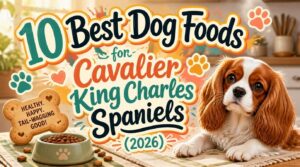
Cavalier King Charles Spaniels carry a quiet vulnerability most owners don’t discover until their vet mentions mitral valve disease—a condition affecting nearly half the breed by age five.
That statistic changes how you think about everything, including the bowl you fill twice a day. Food isn’t just fuel for a Cavalier; it’s one of the few variables you actually control.
Getting it right means matching precise calorie targets to a small frame, sourcing nutrients that support a heart already working against the odds, and choosing kibble sized for a jaw that’s built more for charm than for chewing.
Table Of Contents
- Key Takeaways
- Top 10 Cavalier Dog Foods
- 1. Honest Kitchen Chicken Small Breed Clusters
- 2. Nutro Ultra Chicken Lamb Salmon Adult Dog Food
- 3. JustFoodForDogs Beef Potato Wet Dog Food
- 4. Open Farm Chicken and Turkey Small Dog Food
- 5. Blue Buffalo Chicken Brown Rice Formula
- 6. Open Farm Senior Chicken Turkey Dog Food
- 7. Acana Lamb Pumpkin Dog Food
- 8. Blue Buffalo Chicken Digestive Care Dog Food
- 9. Portland Pet Food Fresh Dog Pouches
- 10. Natural Balance Low Calorie Dog Food
- Cavalier Nutrition Needs
- Health-Supporting Ingredients
- How to Choose Food
- Feeding and Switching Tips
- Frequently Asked Questions (FAQs)
- What’s the best food to feed my King Charles Cavalier?
- What healthy food to make Cavaliers?
- What can Cavalier King Charles not eat?
- How often should I feed my Cavalier King Charles Spaniel?
- What treats are suitable for Cavalier King Charles Spaniels?
- How much does quality Cavalier food cost monthly?
- What treats are safe for Cavalier spaniels?
- How often should Cavaliers eat each day?
- Do Cavaliers need wet or dry food?
- How long do Cavalier King Charles Spaniels live?
- Conclusion
Key Takeaways
- Nearly half of all Cavalier King Charles Spaniels develop mitral valve disease by age five, making heart-supporting nutrients like taurine, L-carnitine, and marine-sourced omega-3s a non-negotiable part of their daily diet.
- Calorie precision matters more in small breeds — a single extra pound on a 15-pound Cavalier represents nearly 7% of their body weight, so measuring portions by weight (not volume) is one of the simplest things you can do for their long-term health.
- Always look for a named meat as the first ingredient and an AAFCO nutritional adequacy statement on the label — without both, you can’t be sure the food actually meets your Cavalier’s complete daily needs.
- Switching foods too fast is a common mistake; a gradual seven-day transition (starting at 25% new food and building up) protects your Cavalier’s sensitive digestion and gives their gut time to adjust without stress.
Top 10 Cavalier Dog Foods
Finding the right food for your Cavalier doesn’t have to feel overwhelming. Each pick below was chosen with your dog’s heart health, small-breed metabolism, and sensitive digestion in mind. Here are ten options worth a closer look.
Each option also lines up with the broader guidance on best dog food for Cavalier King Charles Spaniels, where you’ll find deeper breakdowns on ingredients and serving sizes.
1. Honest Kitchen Chicken Small Breed Clusters
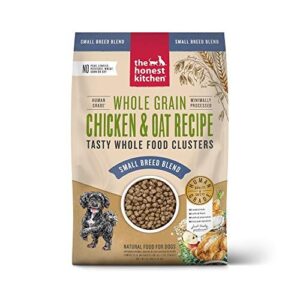
The Honest Kitchen Chicken Small Breed Clusters stand out because they’re made with human-grade ingredients — cage-free chicken first, followed by whole foods like eggs, carrots, and coconut oil. The cold-pressed, slow-roasted clusters are gentle on sensitive stomachs and easy to chew.
With 26.5% protein and 15.5% fat, plus L-carnitine and omega fatty acids, this formula promotes your Cavalier’s heart health and coat condition in one clean recipe.
| Best For | Small breed dogs with sensitive stomachs or dental issues who need clean, high-quality nutrition at every life stage. |
|---|---|
| Primary Protein | Chicken |
| Food Form | Dry Kibble |
| Life Stage | All Life Stages |
| Package Weight | 10 lbs |
| Grain Status | Whole grain (oats, barley) |
| Key Functional Ingredient | L-carnitine & omega fatty acids |
| Additional Features |
|
- Made with human-grade ingredients in human food facilities — no by-products, no GMOs, just real whole food
- Packed with L-carnitine and omega fatty acids to support heart health and a shiny coat
- Soft, easy-to-chew clusters that are gentle on sensitive tummies and aging teeth
- Pricier than most standard dog foods, so it’s a bigger ask on the budget
- Supply chain hiccups could mean occasional inconsistencies in availability or quality
- May be overkill cost-wise if your dog doesn’t have specific dietary sensitivities
2. Nutro Ultra Chicken Lamb Salmon Adult Dog Food
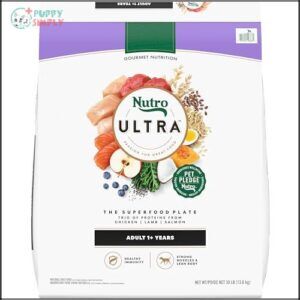
If whole-food sourcing matters to you, Nutro Ultra is worth a close look. This adult dry kibble pulls from three named proteins — chicken, lamb, and salmon — instead of leaning on a single meat source, which means a broader amino acid profile for your Cavalier’s muscle health.
With 25% crude protein and no corn, wheat, soy, or artificial preservatives, it’s a clean formula that also delivers omega-3 and omega-6 fatty acids for skin and coat support.
| Best For | Dog owners who want a multi-protein, whole-food formula for their adult dog’s muscle health, skin, and immune support. |
|---|---|
| Primary Protein | Chicken, Lamb, Salmon |
| Food Form | Dry Kibble |
| Life Stage | Adult |
| Package Weight | 30 lbs |
| Grain Status | Grain-free |
| Key Functional Ingredient | Omega-3 & 6 fatty acids |
| Additional Features |
|
- Three named proteins (chicken, lamb, salmon) give a broader amino acid profile than single-meat formulas
- Clean recipe — no corn, wheat, soy, or artificial preservatives
- Omega-3 and omega-6 fatty acids actively support skin and coat health
- Pricier than a lot of competing brands on the market
- The 30 lb bag can be awkward to lift and store on your own
- Single life stage formula, so it won’t work for households with puppies or seniors
3. JustFoodForDogs Beef Potato Wet Dog Food
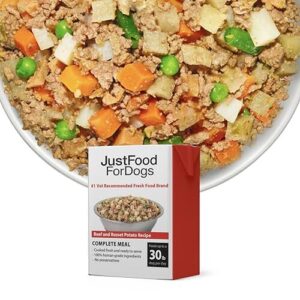
If your Cavalier struggles with chicken, JustFoodForDogs Beef and Russet Potato is a smart pivot. This gently cooked wet food uses human-grade ground beef and beef liver as its protein base, paired with russet potatoes, sweet potatoes, green beans, carrots, and peas.
It delivers 8.5% crude protein and 44 kcal per ounce — calorie-dense without being junk-heavy. It’s AAFCO-compliant for adult maintenance and shelf-stable, so travel won’t disrupt your dog’s routine.
| Best For | Dogs with chicken allergies or sensitive stomachs who need a complete, travel-friendly meal made from real, human-grade ingredients. |
|---|---|
| Primary Protein | Beef |
| Food Form | Wet Pate |
| Life Stage | All Life Stages |
| Package Weight | 12.5 oz |
| Grain Status | Grain-free |
| Key Functional Ingredient | Fully balanced nutrients |
| Additional Features |
|
- Made with 100% human-grade ingredients and gently cooked, so nutrients actually make it to your dog’s bowl intact
- Shelf-stable packaging means you can take it anywhere without worrying about refrigeration
- Works as a full meal or a topper, and it’s balanced for all life stages
- Texture can be inconsistent — sometimes thick, sometimes runny, which some picky eaters won’t love
- The packaging can be tricky to open and a little messy
- It costs more than your average kibble, which adds up fast if you’re feeding daily
4. Open Farm Chicken and Turkey Small Dog Food
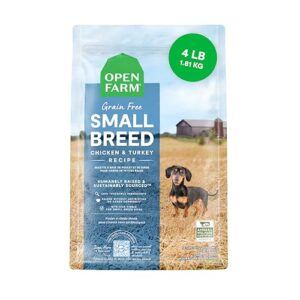
Open Farm’s Chicken and Turkey Small Dog Food is a solid pick if you want clean, traceable ingredients in a small-breed kibble. It’s grain-free, uses humanely raised chicken and turkey as named proteins, and skips the vague fillers. Functional extras like pumpkin and chicory root support digestion, while omega-3s help your Cavalier’s joints.
It’s AAFCO-approved for all life stages. The $28.99 price for 4 lbs runs high, but the sourcing transparency is worth it.
| Best For | Small breed dog owners who want clean, traceable ingredients and don’t mind paying a premium for quality. |
|---|---|
| Primary Protein | Chicken, Turkey |
| Food Form | Dry Kibble |
| Life Stage | All Life Stages |
| Package Weight | 4 lbs |
| Grain Status | Grain-free |
| Key Functional Ingredient | Chicory root & omega-3 |
| Additional Features |
|
- Humanely raised chicken and turkey as named proteins — no mystery meat
- Functional ingredients like pumpkin and chicory root actually support digestion
- Omega-3s help keep small dogs’ joints moving well
- $28.99 for just 4 lbs adds up fast
- The resealable bag may not hold up over time
- Picky eaters or sensitive dogs might not take to it
5. Blue Buffalo Chicken Brown Rice Formula
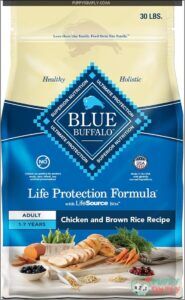
Blue Buffalo’s Life Protection Formula is a reliable, everyday option that fits most Cavalier budgets without sacrificing quality. Real deboned chicken leads the ingredient list, followed by chicken meal and wholesome grains — brown rice, barley, and oatmeal — for steady energy throughout the day.
If you’re weighing your options, this roundup of best organic dog foods for small breeds puts Blue Buffalo’s whole-ingredient approach in helpful perspective.
At 377 kcal per cup, 24% protein, and 14% fat, it meets your Cavalier’s adult maintenance needs. The signature LifeSource Bits deliver a targeted antioxidant, vitamin, and mineral blend. No corn, wheat, soy, or poultry by-products.
| Best For | Cavalier owners who want a clean, quality kibble at a reasonable price without overthinking the ingredient list. |
|---|---|
| Primary Protein | Chicken |
| Food Form | Dry Kibble |
| Life Stage | Adult |
| Package Weight | 30 lbs |
| Grain Status | Whole grain (brown rice, oatmeal) |
| Key Functional Ingredient | LifeSource Bits antioxidant blend |
| Additional Features |
|
- Real deboned chicken is the first ingredient, so you’re getting solid protein right off the bat
- LifeSource Bits add a nice antioxidant and vitamin boost that supports immune health and coat condition
- No corn, wheat, soy, or poultry by-products — a clean label most sensitive dogs do well on
- Costs a bit more than budget brands, so it adds up fast if you have a big eater
- The larger kibble size might be a tough chew for some smaller or older Cavaliers
- Packaging can look different than what you see online, which can be a little confusing at first
6. Open Farm Senior Chicken Turkey Dog Food
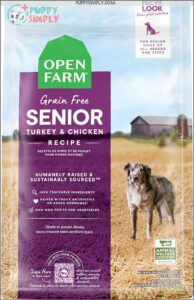
If your Cavalier is entering their golden years, this formula was built with them in mind. Open Farm Senior Chicken Turkey combines humanely raised chicken and turkey with green-lipped mussel for joint and mobility support — something aging Cavaliers genuinely need.
It’s grain-free, making it a solid pick for dogs with sensitivities. One caveat: the hard kibble texture can challenge older dogs with softer gums, so monitor chewing carefully.
| Best For | Senior dogs, especially breeds like Cavaliers, who need joint support and may have grain sensitivities. |
|---|---|
| Primary Protein | Chicken, Turkey |
| Food Form | Dry Kibble |
| Life Stage | Senior |
| Package Weight | 22 lbs |
| Grain Status | Grain-free |
| Key Functional Ingredient | Green lipped mussel & omega-3 |
| Additional Features |
|
- Humanely raised chicken and turkey give you a solid, high-protein base
- Green-lipped mussel is a natural win for hip and joint health in aging dogs
- Grain-free formula works well for dogs with corn, wheat, or soy sensitivities
- Hard kibble can be tough on older dogs with weaker teeth or softer gums
- Doesn’t soften up much even when soaked, so some seniors may struggle
- At 22 lbs, it’s a bigger bag — not ideal if your dog eats slowly or you have limited storage
7. Acana Lamb Pumpkin Dog Food
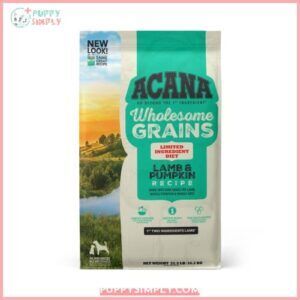
Few formulas work as hard as ACANA Wholesome Grains Lamb and Pumpkin for dogs with food sensitivities. Lamb is the single animal protein — a smart choice if your Cavalier reacts to common meats like chicken or beef.
At 371 kcal per cup, it fits a small breed’s energy needs without tipping into weight gain territory. Prebiotics, probiotics, and omega fatty acids round out a recipe that genuinely promotes digestion, skin, and coat from the inside out.
| Best For | Dogs with food sensitivities or picky appetites who need a single-protein, grain-inclusive recipe with digestive support. |
|---|---|
| Primary Protein | Lamb |
| Food Form | Dry Kibble |
| Life Stage | Adult |
| Package Weight | 22.5 lbs |
| Grain Status | Whole grain (oats, sorghum, millet) |
| Key Functional Ingredient | Prebiotics & probiotics |
| Additional Features |
|
- 60% high-quality animal ingredients with a freeze-dried coating — real nutrition, not filler
- Prebiotics, probiotics, and omega fatty acids work together to support digestion, skin, and coat
- Free from corn, gluten, soy, wheat, and potato — a solid pick for sensitive stomachs
- Pricier than most standard dog food options
- Kibble size might be too big for small or senior dogs
- Needs a slow transition to avoid digestive upset
8. Blue Buffalo Chicken Digestive Care Dog Food
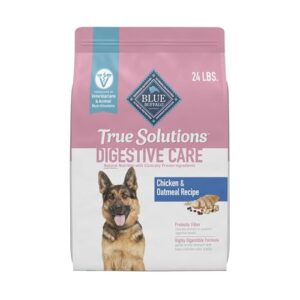
Gut troubles can sneak up on a Cavalier without warning. That’s where Blue Buffalo True Solutions Digestive Care earns its place. Real chicken is the lead ingredient, paired with clinically proven prebiotic fiber and oatmeal — a combo designed to calm sensitive stomachs and keep stools consistent.
No corn, wheat, soy, or poultry by-products means fewer triggers for reactive digestive systems. It’s formulated for adults, so save this one for after the puppy stage.
| Best For | Adult dogs with sensitive stomachs, frequent gas, or inconsistent digestion who need a clean, vet-formulated diet built around real protein. |
|---|---|
| Primary Protein | Chicken |
| Food Form | Dry Kibble |
| Life Stage | Adult |
| Package Weight | 24 lbs |
| Grain Status | No corn, wheat, or soy |
| Key Functional Ingredient | Clinically proven prebiotic fiber |
| Additional Features |
|
- Real chicken is the first ingredient, so you’re not paying for filler dressed up as food
- Clinically proven prebiotic fiber actually backs up the "digestive care" claim
- Free from corn, wheat, soy, and poultry by-products — fewer common triggers for reactive guts
- Needs a slow transition when switching over, so don’t expect overnight results
- Not suitable for puppies — adults only
- Packaging can look different from what you see online, which can be confusing at first
9. Portland Pet Food Fresh Dog Pouches
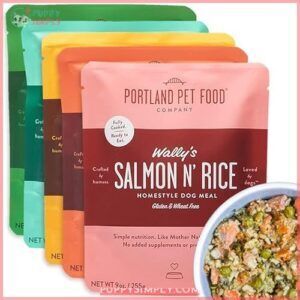
Sometimes the simplest pouches carry the most care. Portland Pet Food’s shelf-stable fresh pouches come in limited-ingredient recipes — think turkey with yams, salmon with rice, or chicken with pumpkin — all sourced and made in the USA with 11 or fewer ingredients per pouch.
For your Cavalier, these work beautifully as a nutrient-dense meal topper mixed into dry kibble. Unopened, they store for up to two years. Once opened, refrigerate and use within five days.
| Best For | Dog owners who want a clean, simple topper for picky eaters or dogs at any life stage — especially seniors needing extra calories. |
|---|---|
| Primary Protein | Varies by recipe |
| Food Form | Wet |
| Life Stage | All Life Stages |
| Package Weight | Not specified |
| Grain Status | Gluten-free |
| Key Functional Ingredient | Human-grade limited ingredients |
| Additional Features |
|
- Only 11 or fewer ingredients per pouch, all USA-sourced and human-grade
- Shelf-stable for up to two years, so easy to stock up without fridge space
- Mixes well with dry kibble to make meals more appealing for fussy dogs
- Pricier than most standard wet or dry food options
- High calorie density means it’s best used as a mixer, not a full meal
- Some batches have shown inconsistencies in texture or smell
10. Natural Balance Low Calorie Dog Food
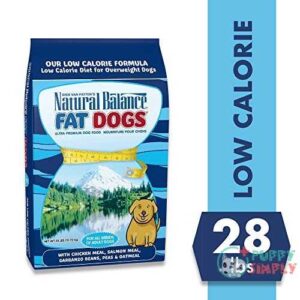
Weight-conscious Cavaliers have a reliable option in Natural Balance Fat Dogs. This dry kibble delivers just 293 kcal per cup — 25% fewer than standard maintenance formulas — making portion control genuinely manageable.
Chicken meal and salmon meal provide 25% crude protein while elevated fiber and L-carnitine help your dog feel full and maintain lean mass.
It’s grain-inclusive, affordable, and doesn’t require a prescription. Just keep in mind that the legume content may cause some flatulence in sensitive dogs.
| Best For | Overweight or weight-prone adult dogs across all breed sizes who need a lower-calorie diet without switching to prescription food. |
|---|---|
| Primary Protein | Chicken Meal, Salmon Meal |
| Food Form | Dry Kibble |
| Life Stage | Adult |
| Package Weight | 28 lbs |
| Grain Status | Contains barley |
| Key Functional Ingredient | L-carnitine & zinc |
| Additional Features |
|
- 25% fewer calories than standard formulas, making it easier to manage portions without cutting meals drastically
- Chicken and salmon meal deliver solid protein while L-carnitine helps dogs hold onto lean muscle during weight loss
- Grain-inclusive and budget-friendly — no vet prescription needed
- High fiber and legume content can lead to extra gas, especially in sensitive stomachs
- Contains copper, which may be a concern for copper-storage-prone breeds like Bedlington Terriers
- Weight loss results aren’t guaranteed and will vary from dog to dog
Cavalier Nutrition Needs
Cavalier King Charles Spaniels have some pretty specific nutritional needs — and getting them right makes a real difference in how long and how well your dog lives. From puppyhood through their senior years, what goes in the bowl needs to match where they’re in life.
Here’s a closer look at the five key nutrition areas every Cavalier owner should understand.
Small Breed Calorie Needs
Cavaliers are small dogs with surprisingly specific calorie needs. A typical adult weighing around 15 pounds needs roughly 430–530 kcal daily, calculated from resting energy and adjusted for age and activity. Here’s how that breaks down across life stages:
- Puppies under 4 months may need up to 594 kcal daily — nearly three times resting energy — to fuel rapid growth.
- Growing puppies over 4 months drop to about twice resting energy, around 468 kcal for a 5-kilogram pup.
- Neutered adults usually need 1.6 times resting energy — about 482 kcal for a 7-kilog dog.
- Intact adults run slightly higher at 1.8 times resting energy, closer to 542 kcal daily.
- Seniors often need 10–20% fewer calories as activity slows, dropping to roughly 385–434 kcal per day.
Portion accuracy matters more in a small breed. A single pound of excess weight represents nearly 7% of body mass in a 15-pound Cavalier — a significant burden their small frames weren’t built to carry.
In a 15-pound Cavalier, one extra pound is nearly 7% of their body weight — a burden their small frames weren’t built to bear
Protein and Fat Levels
Once you’ve dialed in daily calories, protein and fat need equal attention. AAFCO sets the floor: 18% protein for adult maintenance, 22.5% for growth. Most quality small breed foods land between 24–30% crude protein as fed — comfortably above minimums. High-quality protein from named meats delivers essential amino acids your Cavalier can’t produce alone.
| Life Stage | Protein Target | Fat Target |
|---|---|---|
| Puppy | 26–32% | 8.5%+ |
| Adult | 24–30% | 12–18% |
| Weight Control | 18–24% | 7–10% |
Fat level optimization matters too. Adult Cavaliers do well at 12–18% fat, but weight-prone dogs benefit from staying closer to the lower end. Dry matter analysis cuts through moisture differences between formulas — divide the nutrient percentage by dry matter content to compare foods fairly.
DHA for Puppies
If protein and fat give your Cavalier puppy a strong body, DHA builds the brain behind it. This omega-3 fatty acid — docosahexaenoic acid — becomes a structural part of neuronal membranes and retinal tissue. Look for fish oil or salmon oil on the ingredient label. These marine sources deliver preformed DHA puppies use directly, without inefficient conversion from plant-based fats. This nutrient is essential for healthy brain development.
- Eyes that sharpen as your puppy discovers the world around them
- A brain wiring itself for learning, bonding, and recognizing your face
- A foundation laid in weeks that promotes a lifetime of health
Senior Digestibility Needs
As your Cavalier King Charles Spaniel ages, digestion quietly becomes harder work. Their gut moves slower, absorbs nutrients less efficiently, and tolerates sudden changes poorly.
Named protein sources like chicken or turkey digest far more cleanly than formulas built on connective tissue or low-quality meat meal. Pair that with soluble fiber from pumpkin or chicory root, and you get steadier stools without diluting calories.
Pregnancy Feeding Support
Pregnancy quietly reshapes your Cavalier’s nutritional needs from the inside out. During the first five to six weeks, fetal growth stays small, so her meals don’t need much adjustment yet.
Energy demands climb sharply in the final trimester — that’s when high-quality protein and calorie density truly matter. Switch to an AAFCO-certified growth and reproduction formula and feed three to four smaller meals daily.
Health-Supporting Ingredients
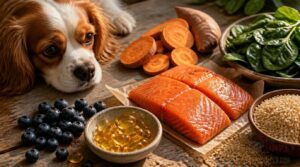
What your Cavalier eats goes beyond just keeping them full — the right ingredients actively protect their health. Cavaliers are prone to heart disease, joint problems, and digestive sensitivities, so certain nutrients do real, targeted work. Here’s what to look for in any food you choose.
Taurine and L-carnitine
Taurine and L-carnitine work quietly behind the scenes, keeping your Cavalier’s heart muscle contracting properly. Taurine concentrates in cardiac tissue, while L-carnitine helps heart cells convert fat into usable energy.
For a breed already predisposed to Mitral Valve Disease, having both nutrients present in the diet adds a meaningful layer of cardiovascular support — especially through named meats like beef, turkey, and fish.
Omega-3 Fatty Acids
Few nutrients punch above their weight quite like omega-3 fatty acids. EPA and DHA — the forms your Cavalier’s body actually uses — come most readily from marine sources like salmon oil, sardine, and anchovy oils, not plant ingredients.
Here’s what they support:
- Heart health through reduced cardiac inflammation
- Skin and coat condition by strengthening the skin barrier
- Brain and eye function via DHA concentration in neural tissue
- Joint comfort by helping regulate inflammatory responses
Flaxseed provides ALA, but dogs convert very little into usable EPA or DHA. Stick to foods listing marine oils early in the ingredient panel, and check that oils are protected with mixed tocopherols to prevent rancid oxidation.
Glucosamine and Chondroitin
Age-related cartilage wear is a genuine concern for Cavalier King Charles Spaniels as they reach their senior years. Glucosamine and chondroitin — two essential joint-supportive nutrients — help maintain the cushioning layer inside the hips, elbows, and shoulders.
| Ingredient | Common Source | Joint Role |
|---|---|---|
| Glucosamine HCl | Shellfish-derived glucosamine (shrimp, crab) | Builds cartilage glycosaminoglycans |
| Chondroitin sulfate | Bovine cartilage source | Maintains structural cartilage integrity |
| Green-lipped mussel | Marine shellfish | Delivers both compounds naturally |
| Poultry trachea | Connective tissue parts | Small natural joint compound contribution |
| Fish cartilage | Marine sources | Chondroitin with added omega-3 benefit |
Because small breed nutrition portions are modest, joint supplement dosage per cup matters. Wet food absorption labels can appear lower due to high moisture content — always compare on a dry matter basis.
Prebiotics and Probiotics
Your Cavalier’s gut is a living ecosystem — and the right food helps it thrive.
Prebiotics (like chicory root and beet pulp) feed beneficial bacteria, while probiotics such as Bacillus coagulans survive kibble processing better than fragile strains. Together in synbiotic formulas, they balance the gut microbiome, firm up stools, and support long-term digestive health in small, sensitive dogs.
Antioxidants for Immunity
Think of antioxidants as your Cavalier’s internal cleanup crew. Vitamin E (alpha-tocopherol) shields immune cell membranes from oxidative damage, while glutathione peroxidase — powered by selenium — breaks down harmful peroxides before they damage tissue.
Carotenoid conversion from carrots and pumpkin bolsters skin barriers, and anthocyanin benefits from blueberries add plant-based immune reinforcement. Together, this antioxidant synergy strengthens nutrient density in the best dog foods for Cavalier King Charles Spaniels.
How to Choose Food
Picking the right food for your Cavalier doesn’t have to feel overwhelming. A few key things on the label tell you almost everything you need to know. Here’s what to look for before you buy.
Named Meat First
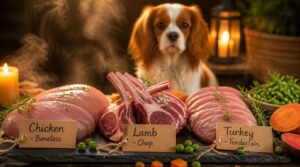
When scanning labels for the best dog food for Cavalier King Charles Spaniels, always look for a named animal protein — deboned chicken, deboned lamb, or turkey — as the first ingredient. This signals species specificity and ingredient transparency.
Keep in mind that fresh meat contains up to 75% moisture, affecting its listed weight before processing.
AAFCO Adequacy Statement
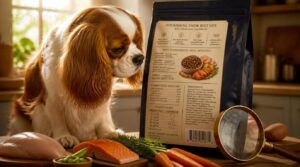
Once you’ve confirmed the first ingredient is a named meat, flip the bag over and find the nutritional adequacy statement. This small block of text tells you whether a food actually meets AAFCO’s nutrient profiles for your Cavalier’s life stage — or if it’s just a treat dressed up as a meal.
Look for one of these three signs:
- A label reading "formulated to meet AAFCO nutrient profiles" confirms lab-verified nutrition
- "Feeding trials using AAFCO procedures" means real dogs ate this food and stayed healthy — the industry standard
- "All Life Stages" designation covers puppies, adults, and pregnant dogs under one formula
Any bag missing this statement is meant for intermittent or supplemental feeding only — not a complete daily diet for your Cavalier King Charles Spaniel.
Limited-ingredient Diets
If your Cavalier shows signs of food sensitivity — chronic itching, loose stools, or recurring ear infections — a limited ingredient diet may be worth trying. These formulas use a single animal protein, like duck or salmon, paired with one carbohydrate, making it far easier to identify what’s causing the reaction.
Kibble Size and Texture
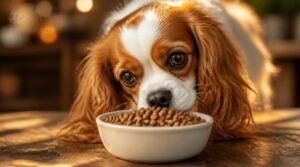
Once you’ve sorted out the protein and ingredients, don’t overlook kibble size. Mini kibble design matters for Cavaliers — their small mouths, commonly suited to pieces between 6 and 10 millimeters, make smaller pieces far easier to pick up and chew.
Bite hardness balance is worth checking too, since overly dense pellets can be uncomfortable, especially for dogs with sensitive gums.
Feeding and Switching Tips
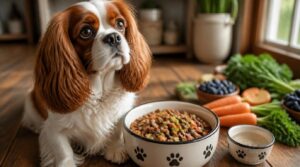
Feeding a Cavalier well goes beyond choosing the right bag of food. How you feed matters just as much as what you feed. These five practical tips will help you keep your dog healthy, comfortable, and at the right weight every day.
Measure Daily Portions
Measure portions by weight, not guesswork. A digital kitchen scale reading in 1-gram increments is your most reliable tool for a small dog like a Cavalier.
A 6 kg Cavalier needs roughly 429 kcal daily. If your food lists 400 kcal per cup, that’s just over one cup — but weigh it.
Keep treats under 10% of daily calories, and subtract them from meals.
Manage Healthy Weight
Keeping your Cavalier at a healthy weight is one of the kindest things you can do for their long-term health. Aim for a body condition score of 4 or 5 out of 9 — ribs easy to feel, waist visible from above. Safe loss runs 0.2 to 0.4 pounds weekly for most Cavaliers.
Support Sensitive Digestion
Many Cavalier King Charles Spaniels have sensitive stomachs that react quickly to rich or complex recipes. Three things that genuinely help:
- Gentle protein sources like chicken or turkey
- Low-fat formulas to reduce digestive strain
- Probiotics and prebiotics for a balanced gut
Split meals into two or three smaller servings daily, and consider a slow-feeder bowl if your Cavalier gulps food.
Transition Food Gradually
Rushing a food switch is one of the fastest ways to upset your Cavalier’s sensitive stomach. Follow a seven-day schedule using these mixing ratios:
| Day | Old Food | New Food |
|---|---|---|
| Days 1–2 | 75% | 25% |
| Days 3–4 | 50% | 50% |
| Days 5–7 | 25–0% | 75–100% |
Total daily portions stay the same throughout — you’re shifting ratios, not adding extra food. For life stage changes or veterinary diet switches, your vet may recommend a slower 10-day canine dietary management plan.
Monitor Stool and Appetite
Your Cavalier’s digestion tells a story — you just have to learn to read it. After any food switch, track stool consistency and frequency daily. Healthy stool is firm, brown, and formed. Soft, mucusy, or watery output signals a problem.
Watch appetite closely too — skipping one meal is a yellow flag; refusing food for 24 hours means call your vet.
Frequently Asked Questions (FAQs)
What’s the best food to feed my King Charles Cavalier?
The best food for your Cavalier depends on their age, weight, and health. Look for named meat first, heart-supporting nutrients like taurine, and portion-controlled calories between 350 and 550 kcal daily.
What healthy food to make Cavaliers?
Cooking for your Cavalier? Think of it as love made edible. Focus on named proteins, joint-supportive nutrients, and heart-healthy taurine — especially given their MVD risk — while keeping portions precise for their small frame.
What can Cavalier King Charles not eat?
Some foods are outright dangerous for your Cavalier. Chocolate, grapes, xylitol, onions, and alcohol are all toxic — even small amounts can cause serious harm or become fatal quickly.
How often should I feed my Cavalier King Charles Spaniel?
Funny enough, the answer changes as your dog grows. Puppies under 4 months need 4 meals daily. Adults do well on Seniors may need 3 smaller ones.
What treats are suitable for Cavalier King Charles Spaniels?
Stick to low-calorie training treats under 10% of daily calories. Try blueberries, carrot slices, or freeze-dried chicken pieces. Always avoid xylitol, grapes, chocolate, and onion — these are toxic to your Cavalier.
How much does quality Cavalier food cost monthly?
Monthly costs range from $25 for budget kibble to $300 for premium wet or raw diets. Most owners spend $40–$80 monthly on quality dry food.
What treats are safe for Cavalier spaniels?
Safe treats include plain carrots, blueberries, and cooked chicken. Avoid xylitol, grapes, chocolate, and salty meats — especially important given Cavaliers’ heart disease risk.
How often should Cavaliers eat each day?
Most Cavaliers thrive on two meals daily — morning and evening. Puppies under six months need three to four smaller meals. Seniors and sensitive stomachs often do better split across three portions.
Do Cavaliers need wet or dry food?
Neither is strictly necessary. Both wet and dry food can fully meet your Cavalier’s nutritional needs when labeled complete and balanced — what matters most is quality ingredients and accurate daily portions.
How long do Cavalier King Charles Spaniels live?
Most Cavaliers live 9 to 14 years, though some reach 17 or even Mitral valve disease shortens many lives, but ethical breeding, regular vet care, and proper nutrition can push well past the average.
Conclusion
A cardiologist once said the heart doesn’t fail overnight—it erodes, quietly, meal by meal. For Cavaliers, that truth runs both ways.
The right nutrition can’t rewrite their genetics, but it can slow what’s coming and strengthen what remains. Choosing the best dog food for Cavalier King Charles Spaniels isn’t about ideal—it’s about daily consistency. Every bowl you fill with intention is one more vote for a longer, healthier life spent right beside you.
- https://marleybones.com/blogs/news/best-dog-food-cavalier-puppy
- https://www.petmd.com/dog/breeds/cavalier-king-charles-spaniel
- https://www.thefarmersdog.com/breed/cavalier-king-charles-spaniel
- https://cavalierhealth.org/diets.htm
- https://judyscavaliers.com/the-best-diet-for-a-cavalier-king-charles-spaniel-a-complete-guide-to-keeping-your-king-charles-healthy-and-happy-in-2025