This site is supported by our readers. We may earn a commission, at no cost to you, if you purchase through links.

Your dog’s mouth harbors bacteria that, left unchecked, can lead to periodontal disease affecting up to 80% of dogs over three years old. This silent epidemic doesn’t just cause bad breath—it triggers systemic inflammation that can damage the heart, liver, and kidneys.
While professional cleanings remain the best practice, daily dental chews offer a practical defense between veterinary visits. The best dental chews for dogs combine mechanical scraping action with ingredients that shift oral bacteria toward healthier populations.
Understanding which products deliver genuine clinical benefits versus marketing promises helps you protect your dog’s health without emptying your wallet on ineffective options.
Table Of Contents
- Key Takeaways
- Best Dental Chews for Dogs: Top 10 Picks
- 1. Greenies Original Large Dog Dental Treats
- 2. Pedigree Dentastix Large Dog Dental Treats
- 3. Greenies Teenie Dental Dog Treats
- 4. Wag Dental Chews Large Dog
- 5. Blue Buffalo Large Dental Dog Treats
- 6. Dentalife Daily Oral Care Dog Treats
- 7. Ark Naturals Dental Chews Small Breeds
- 8. Dingo Dental Sticks Chicken Dog Treats
- 9. Virbac Veggident Tartar Control Chews
- 10. Greenies Dental Dog Treats Original Flavor
- Key Benefits of Dog Dental Chews
- How Dental Chews Support Oral Health
- Choosing The Right Dental Chew
- Safe Use and Dental Care Guidelines
- Frequently Asked Questions (FAQs)
- What are the best dog dental chews?
- Are dental chews suitable for puppies?
- Is dentalife a good dog chew?
- How do dog dental chews help a dog’s teeth?
- Do dog dental chews clean teeth?
- Can dogs eat dental chews?
- What is the best food for teeth?
- What are dog dental chews?
- Are dental chews good for puppies?
- Are dental chews a good substitute for dog food?
- Conclusion
Key Takeaways
- Daily dental chews with VOHC acceptance can reduce plaque by 14-30% and tartar by 26-50% in controlled trials, but they don’t replace brushing or professional cleanings—they’re meant to supplement your dog’s complete dental care routine.
- Periodontal disease affects up to 80% of dogs over three years old and triggers systemic inflammation that can damage the heart, liver, and kidneys, making preventive dental care essential for your dog’s overall health and longevity.
- Match chew size to your dog’s weight and supervise chewing sessions to prevent choking hazards, while accounting for the 50-90 calories per chew in their daily food portions to avoid weight gain.
- Look for products with proven ingredients like sodium tripolyphosphate for tartar control and avoid harmful additives like xylitol, BHA, BHT, and rawhide that can cause digestive blockages or toxicity in dogs.
Best Dental Chews for Dogs: Top 10 Picks
You want your dog to have a healthy mouth, but sorting through every dental chew option can feel overwhelming. The good news is that several products have earned their reputation through proven results and reliable ingredients.
Below, you’ll find ten dental chews that stand out for their effectiveness, safety, and ability to fit different dog sizes and needs.
1. Greenies Original Large Dog Dental Treats
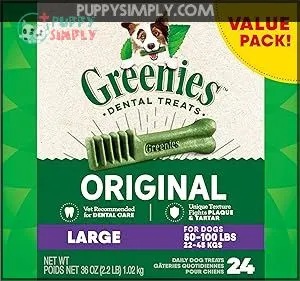
Greenies Original Large Dog Dental Chews stand out as a solid choice for dogs weighing 50 to 100 pounds. These treats hold VOHC Acceptance for both plaque and tartar control, backed by clinical studies showing considerably lower plaque and calculus compared to no-chew controls.
You’ll find them made with wheat flour, glycerin, and gelatin for a chewy texture that cleans down to the gumline. At around 145 calories per treat, you’ll want to adjust your dog’s daily food portions accordingly to maintain a healthy weight.
Best For: Dog owners with large breeds (50–100 lbs) who want a vet-recommended, VOHC-accepted dental treat that’s been clinically proven to reduce plaque and tartar buildup.
- Holds VOHC Seal of Acceptance and clinical studies show significant reductions in plaque and tartar compared to dogs not getting dental chews
- Chewy texture mechanically cleans teeth down to the gumline while freshening breath, and they’re made with digestible ingredients in USA facilities
- Nutritionally complete for adult dogs and can fit into a balanced diet when you account for the 145 calories per treat
- Price point is higher than basic dog treats, which some owners find hard to justify for daily use
- Contains wheat flour and wheat gluten, so they’re not suitable for dogs with grain allergies or sensitivities
- At 145 calories per treat, you’ll need to reduce your dog’s regular food portions to avoid weight gain
2. Pedigree Dentastix Large Dog Dental Treats
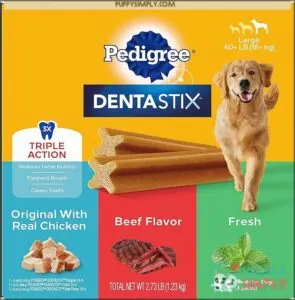
For dogs hitting the 40-pound mark, Pedigree Dentastix offers a budget-friendly alternative with proven results. The improved formulation has earned VOHC Acceptance for plaque control and tartar reduction, meaning it’s cleared the 15% efficacy threshold in controlled trials.
You’re looking at about 73 calories per stick, so factor that into your dog’s daily caloric intake. The X-shaped design works well for mechanical plaque removal, though you’ll still need to brush regularly.
Dentastix ingredients include rice flour, wheat starch, and sodium tripolyphosphate to help manage tartar buildup during chewing behavior.
Best For: Large-breed dog owners looking for a VOHC-approved dental chew that helps reduce plaque and tartar without breaking the bank.
- Earns VOHC Seal of Acceptance for plaque and tartar control, meaning it meets proven efficacy standards in controlled studies.
- X-shaped design mechanically scrapes plaque during chewing, reaching hard-to-access back teeth where buildup tends to happen.
- Budget-friendly option at around 73 calories per stick, making daily use affordable for most households with large dogs.
- Contains grain-based fillers like rice flour and wheat starch, which may not work for dogs with food sensitivities or allergies.
- Requires daily brushing and professional cleanings to truly manage periodontal disease—it’s a supplement, not a replacement.
- Aggressive chewers may gulp large pieces too quickly, creating choking or blockage risks if not supervised properly.
3. Greenies Teenie Dental Dog Treats

If you’ve got a toy or small breed between 5 and 15 pounds, Greenies Teenie Dental Chews bring VOHC Acceptance to pint-sized dogs. The Teenie size demonstrates up to 47% tartar reduction and 40% plaque reduction over 28 days when you give one daily.
Each treat carries about 26 calories, so watch that caloric load if your pup is snack-happy. Usage guidelines specify dogs at least six months old, and you’ll want to supervise chewing to make certain of proper contact time along the gumline.
Best For: Pet parents with toy or small-breed dogs (5–15 lbs) who want a vet-recommended daily dental treat that fits into a broader oral care routine without adding too many calories.
- VOHC-accepted with clinically proven results—up to 47% less tartar and 40% less plaque in 28 days when used daily
- Designed specifically for tiny mouths with a flexible, toothbrush-like texture that reaches the gumline during chewing
- Made with natural ingredients plus added vitamins and minerals, and more digestible than traditional rawhide chews
- At roughly 26 calories per treat, you’ll need to account for them in your dog’s daily calorie budget, especially for weight-conscious pups
- Some dogs wolf them down too fast, which cuts down on the actual chewing time needed for effective cleaning
- They cost more than generic dental treats and still don’t replace professional cleanings or regular brushing at home
4. Wag Dental Chews Large Dog
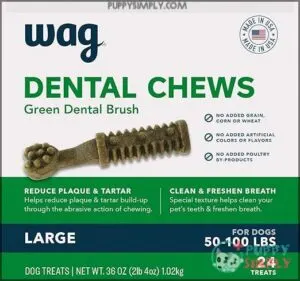
For dogs over 50 pounds, Wag & Bright Mighty Marrows collagen dental chews deliver a hard, long-lasting option that mechanically scrapes plaque and freshens breath with parsley. The beef collagen composition aids joints and digestion alongside oral care, though these chews don’t carry VOHC acceptance like some competing products.
Each large chew packs 270 kilocalories, so you’ll need to adjust daily food portions to keep your dog at a healthy weight. If your dog struggles with the hardness, soak the chew in warm water for five minutes before offering it.
Best For: Large dogs over 50 pounds who are experienced chewers and need a long-lasting dental treat that supports oral health, joint function, and digestion.
- Hard, collagen-based chew mechanically scrapes plaque and tartar while lasting longer than softer dental treats
- Contains parsley for natural breath freshening and supports joint, heart, and digestive health alongside dental care
- Made with beef gelatin and collagen, no artificial colors or flavors, and easily digestible compared to traditional rawhide
- High calorie content (270 kcal per chew) requires adjusting daily food portions to prevent weight gain
- Not VOHC-accepted like some competing dental chews, so clinical plaque reduction isn’t independently verified
- Very hard texture may be too tough for some dogs—requires soaking in warm water if your dog struggles with firmness
5. Blue Buffalo Large Dental Dog Treats
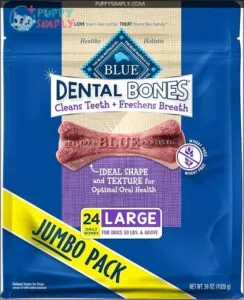
For large-breed owners seeking grain-free options, Blue Buffalo Dental Bones offer a rawhide-free alternative that relies on powdered cellulose and oat hulls to scrape plaque during chewing. Each large chew contains roughly 90 kilocalories, so you’ll want to factor that into your dog’s daily intake.
The ingredient analysis reveals potatoes as the primary carbohydrate, along with parsley and blueberries for breath-freshening. While these dog dental chews provide digestibility safety through plant-based ingredients, they haven’t earned VOHC acceptance, unlike some competing dental chews for dogs with independent testing.
Best For: Large-breed dog owners looking for a grain-free, rawhide-free dental chew that uses natural ingredients to help clean teeth, especially if their dog has sensitivities to common grains.
- Rawhide-free formula with plant-based ingredients makes it more digestible and safer than traditional rawhide chews
- Contains parsley and blueberries to help freshen breath naturally while providing antioxidants
- Available in multiple sizes to match your dog’s weight, with the large size specifically designed for dogs over 50 pounds
- Lacks VOHC certification, meaning it hasn’t been independently tested for plaque and tartar reduction like some competing brands
- Each large chew contains around 90 calories, which you’ll need to account for in your dog’s daily food intake to avoid overfeeding
- Some customers report the chews are too small or don’t last long enough for very large dogs, making them a less economical choice
6. Dentalife Daily Oral Care Dog Treats
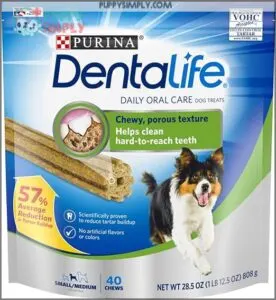
Purina DentaLife stands out among the best dental chews for dogs with VOHC acceptance, backed by data showing a 57% average tartar reduction. Each chicken-flavored stick features eight ridges that work down to the gumline, while thousands of air pockets create the ideal chewing mechanics for mechanical cleaning.
For dog dental care, you’ll feed one daily to dogs weighing 20–40 pounds at 100 kilocalories per piece. Ingredient analysis reveals sodium tripolyphosphate as the active tartar-control agent, contributing to remarkable palatability factors across breeds.
Best For: Dogs between 20–40 pounds who need daily tartar control and prefer a chicken-flavored chew that targets hard-to-reach back teeth.
- VOHC-accepted formula delivers a 57% average reduction in tartar buildup with daily use
- Eight-ridge design with porous texture effectively cleans down to the gumline during extended chewing
- Made in the USA without artificial colors or flavors, offering a safer option for long-term dental care
- Size may be too large for medium dogs and requires cutting for smaller breeds under 20 pounds
- At 100 calories per piece, daily treats can contribute to weight gain if regular meals aren’t adjusted
- Some customers report needing to continue weekly brushing despite daily use, suggesting it doesn’t fully replace manual cleaning
7. Ark Naturals Dental Chews Small Breeds
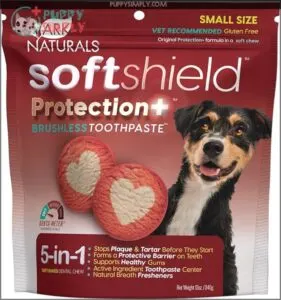
You’ll find Ark Naturals Protection+ dental chews designed specifically for small breeds weighing 8–20 pounds, earning VOHC certification through impressive clinical results.
The soft texture features ridges reaching between teeth, with a toothpaste center containing L-ascorbyl-2-polyphosphate and natural breath fresheners like cinnamon and clove.
Research demonstrates 15.2% plaque reduction and 78.4% tartar reduction in daily use.
However, you should note the 2024 recall for potential mold contamination, making fresh product verification essential before purchasing these otherwise effective dental care chews.
Best For: Small breed dog owners (8-20 lbs) looking for a VOHC-certified dental chew that’s clinically proven to reduce plaque and tartar with natural ingredients.
- Clinically effective with 15.2% plaque reduction and 78.4% tartar reduction backed by independent studies
- VOHC-certified and veterinarian-formulated with natural breath fresheners like cinnamon, clove, and vanilla
- Made in the USA without corn, soy, wheat, or artificial additives
- Subject to a 2024 voluntary recall due to potential mold contamination during shelf life
- Some customers report the chews are harder than expected despite being labeled as “soft”
- May be larger than ideal for the smallest dogs in the 8-20 lb range
8. Dingo Dental Sticks Chicken Dog Treats
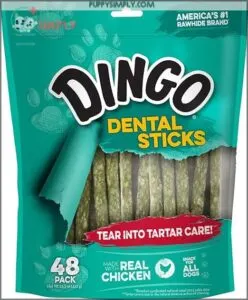
Dingo Dental Sticks Chicken Dog Treats feature rawhide-based construction with real chicken in the middle, creating solid palatability that keeps most dogs engaged. The baking soda and parsley seed combination targets breath freshness, while the chewing action provides mechanical plaque removal. These sticks deliver 30 calories each, representing manageable calorie content for daily use.
However, you should know they lack VOHC acceptance, and Harvard research confirms rawhide digestibility varies among individual dogs. The “Made in China” label and irradiation treatment raise ingredient safety considerations worth discussing with your veterinarian.
Best For: Dog owners looking for an affordable daily dental treat that combines chicken flavor with teeth-cleaning action, especially if their dog enjoys rawhide chews.
- Real chicken center makes these sticks highly palatable for most dogs, encouraging regular chewing that mechanically removes plaque
- Low calorie count at 30 calories per stick fits easily into daily treat allowances without disrupting your dog’s diet
- Baking soda and parsley seed ingredients work together to freshen breath while your dog chews
- Not recognized by the Veterinary Oral Health Council, meaning the dental benefits haven’t been independently verified through clinical testing
- Made in China with irradiation treatment, which some owners prefer to avoid when choosing pet products
- Rawhide base can pose digestive concerns or choking risks for certain dogs, requiring supervision during chewing
9. Virbac Veggident Tartar Control Chews

Virbac Veggiedent Tartar Control Chews earned dual VOHC acceptance for both plaque and tartar reduction, a rare distinction among dog dental chews. The proprietary Z-shape design extends chewing time and mechanically scrapes tooth surfaces down to the gumline.
Controlled trials showed significant reductions in plaque, tartar, and gingival bleeding compared to untreated dogs.
The vegetable-based Veggiedent ingredients exclude animal protein and wheat gluten, benefiting dogs with dietary sensitivities. You’ll need to factor in 24-105 calories per chew depending on size.
Some dogs resist the texture despite daily administration recommendations.
Best For: Dogs with plaque and tartar buildup whose owners want a vegetable-based dental chew that’s been clinically proven to work, especially if the dog has sensitivities to animal proteins or wheat gluten.
- Dual VOHC approval for both plaque and tartar control, with clinical trials showing significant reductions in plaque, tartar, and gingival bleeding compared to untreated dogs
- Vegetable-based formula without animal protein or wheat gluten makes it suitable for dogs with dietary sensitivities or allergies
- Z-shaped design increases chewing time and mechanically scrapes teeth and gumline more effectively than standard chew shapes
- Price point is higher than many competing dental chews, with some customers reporting fluctuating costs that affect long-term value
- Mixed reports of digestive issues including vomiting and diarrhea, particularly if dogs consume multiple chews at once or have sensitive stomachs
- Adds 24-105 calories per chew depending on size, requiring adjustment to daily food intake to prevent weight gain
10. Greenies Dental Dog Treats Original Flavor
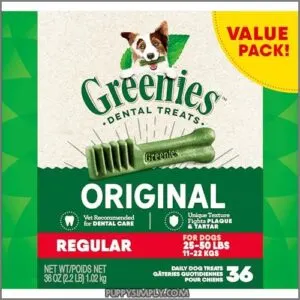
Greenies Dental Dog Treats Original Flavor earned VOHC Acceptance for both plaque and tartar control, with clinical trials documenting 47% less tartar and 40% less plaque accumulation in 28 days. The textured design mechanically cleans down to the gumline during chewing.
You’ll find size variations from Greenies Petite Dental Treats for smaller dogs up to Large for 50-100 lb breeds.
Veterinary opinion remains generally favorable despite documented choking hazards and gastrointestinal blockage risks when swallowed whole. Ingredient analysis reveals a wheat-based formulation with moderate calorie content—supervise your dog during chewing and follow size guidelines strictly.
Best For: Dog owners looking for a vet-approved dental treat that’s clinically proven to reduce plaque and tartar, especially if their dog falls between 25-50 lbs and needs daily oral care support.
- VOHC-certified with clinical proof of 47% less tartar and 40% less plaque in just 28 days
- Multiple size options available so you can match the treat to your dog’s weight and chewing style
- Freshens breath and supports gum health with ingredients that clean down to the gumline
- Documented choking hazards and potential for gastrointestinal blockages if swallowed whole or in large pieces
- May cause digestive issues like diarrhea or vomiting in dogs sensitive to wheat, glycerin, or artificial preservatives
- Pricier than basic dental treats and still requires regular brushing or professional cleanings for complete dental care
Key Benefits of Dog Dental Chews

Your dog’s dental health plays a bigger role in their overall well-being than you might think. Dental chews offer practical benefits that go beyond just freshening breath, working to address oral issues that can affect your dog’s quality of life.
Let’s look at the key ways these chews support your dog’s mouth and body.
Reducing Plaque and Tartar Buildup
Keeping your dog’s teeth clean starts with understanding how dental chews work against plaque and tartar. Daily use of quality chews can make a real difference—studies show dogs receiving specific dental chews experienced reductions of 12–17% in plaque and 20–36% in tartar compared to diet alone.
Here’s what you can expect from effective dental plaque removal:
- Mechanical scraping action removes food particles and bacteria
- Chew texture reaches surfaces brushing often misses
- Plaque control happens while your dog enjoys the treat
- Tartar control prevents hardened deposits on teeth
- Regular chew effectiveness depends on daily, consistent use
Preventing plaque and tartar through chew ingredients formulated for dental health gives your dog better oral hygiene between brushings. These chews can help reduce the risk of gum disease in dogs.
Freshening Breath and Improving Oral Hygiene
Bad breath in dogs isn’t just unpleasant—it signals bacteria producing sulfur compounds in your dog’s mouth. Daily dental chews tackle halitosis reduction by mechanically removing plaque and shifting oral bacteria toward healthier species.
Studies show chews can lower breath odor compounds by significant margins while supporting tartar prevention. A recent study showed a postbiotic ingredient reduced halitosis by 27%.
Look for products with VOHC acceptance to confirm your dog’s oral hygiene improvements are backed by clinical evidence, not just marketing promises.
Supporting Gum Health and Preventing Disease
Healthy gums are the foundation of oral hygiene and preventing dental disease in dogs. Dental chews deliver measurable gingivitis reduction—studies show they cut gingival bleeding while promoting microbiota balance that protects tissue.
When periodontal disease affects up to 100% of dogs examined under anesthesia, regular plaque reduction and tartar prevention through chews become essential tools supporting gum health and halitosis control in your dog’s daily routine.
Promoting Overall Health Through Oral Care
Your dog’s oral health shapes far more than just teeth and gums. Periodontal disease drives systemic inflammation that reaches the heart, kidneys, and liver—at least 80% of dogs over three show signs. Effective dental care through daily chews reduces this burden and fosters longevity improvement:
Periodontal disease affects at least 80% of dogs over three, driving systemic inflammation that reaches the heart, kidneys, and liver through chronic oral infection
- Protecting cardiovascular health from bacterial invasion
- Reducing renal consequences of chronic oral infection
- Improving metabolic interactions and overall wellness
How Dental Chews Support Oral Health
Dog dental chews aren’t just treats that keep your pup busy—they’re designed to actually work on plaque, bacteria, and gum health while your dog chews. The mechanical action combined with certain ingredients can make a real difference in your dog’s mouth.
Let’s look at how these chews support oral health and what the research tells us about their effectiveness.
Mechanical Removal of Plaque and Food Particles
Think of dental chews as mechanical scrubbers for your dog’s teeth. When your dog chews, the ridges and textures physically scrape away soft plaque and trapped food particles before they harden into tartar.
Chew texture and design features matter—studies show properly sized chews can reduce plaque by 15-17% over four weeks. Chewing duration and dog size influence how well this teeth cleaning actually works, though.
Impact on Oral Microbiota and Gum Health
Regular chewing reshapes your dog’s oral microbiome—the community of bacteria living in their mouth. Daily dental chews increase health-associated bacteria like Neisseria and Corynebacterium while reducing pathogenic genera linked to gum inflammation and halitosis.
This shift disrupts plaque biofilm formation and aids gingivitis reduction. Healthier microbiota composition means fresher breath and stronger gums, helping you maintain your dog’s oral health between professional cleanings.
Clinical Evidence for Dental Chew Effectiveness
Across controlled trials lasting 28 to 60 days, dogs receiving daily dental chews showed plaque reductions of 14–30% and calculus decreases of 26–50% compared to controls. Halitosis improvements reached 45–75%, while gingival bleeding dropped by 40–47%.
Products bearing the VOHC Seal of Acceptance meet independently verified standards, confirming dental chew effectiveness in preventing plaque and tartar when used consistently.
Choosing The Right Dental Chew
Not all dental chews are created equal, and picking the right one for your dog can feel overwhelming when you’re staring at an entire aisle of options. The best choice depends on your dog’s size, dietary needs, and whether the product has been tested to actually work.
Let’s break down the key factors you should consider to make an informed decision that keeps your dog’s teeth and gums healthy.
Ingredients and Nutritional Considerations

Your dog’s dental chew is only as good as what’s inside it. When scanning labels, check that protein sources—whether soy, pea, or meat meals—align with your pet’s needs and any allergies. Calorie content matters, too; some chews pack 70 to 90 calories per piece, so adjust meals accordingly.
- Natural ingredients like kelp or cellulose polish teeth without harsh chemicals
- Fiber content around 1–5% aids digestion and chew texture
- Artificial additives such as Red 40 or Yellow 6 raise health concerns in some studies
- Digestibility studies confirm vegetable-based options break down more easily than rawhide
A pet nutritionist can help you decode ingredients in dog chews and match formulations to your dog’s health profile, ensuring every chew furthers both dental care and overall well-being.
Size, Texture, and Breed-specific Options

Matching the right chew to your dog’s mouth is like fitting shoes—get it wrong and you risk choking hazards or jaw strain.
Dental chew sizes generally follow weight guidelines: Teenie for 5–15 lb dogs, Petite for 15–25 lb, Regular for 25–50 lb, and Large for 51+ lb breeds.
Chew hardness matters too; if you can’t indent it with your fingernail, it’s too rigid and may fracture teeth.
VOHC Seal of Acceptance and Vet Recommendations
The VOHC Seal of Acceptance is your best guarantee when shopping for dental chews. This registered seal means products passed rigorous testing—reducing plaque or tartar by at least 20% in controlled 30-day trials.
Veterinarians prioritize chew digestibility and seal integrity, so look for vet-recommended dental chews like Greenies and Virbac that meet strict VOHC requirements and deliver proven oral health benefits.
Avoiding Controversial or Harmful Ingredients

Beyond certifications, you need to watch what goes into the chew itself. Steer clear of synthetic preservatives like BHA, BHT, and ethoxyquin—they’re linked to digestive issues and potential cancer risk in dogs. Xylitol is downright deadly, triggering liver failure at tiny doses.
Harmful preservatives and toxic sweeteners to avoid:
- BHA, BHT, and TBHQ can disrupt enzyme production
- Xylitol causes hypoglycemia at just 0.03 g/kg body weight
- Propylene glycol may damage red blood cells over time
Rawhide dangers include choking and intestinal blockages since pieces swell in the gut. Grain-free concerns center on legume-heavy formulas possibly tied to heart disease, so balance is key. Safe alternatives use natural preservation and skip artificial additives entirely.
Safe Use and Dental Care Guidelines

Getting the most out of dental chews means using them the right way. You’ll want to know how often to offer them, what to watch for when your dog chews, and how they fit into a complete dental care routine.
Let’s walk through the practical guidelines that keep your dog safe while maximizing the oral health benefits.
Recommended Frequency and Portion Control
Most vets recommend giving your dog one dental chew daily, matched to their weight range—small chews for dogs under 25 pounds, medium for 25–50 pounds, and large for those over 50 pounds.
Because dental chews average 50–60 calories each, you’ll want to keep treats under 10% of total calorie intake and adjust main meals accordingly to prevent weight gain.
Monitoring for Side Effects or Allergies
Even quality chews can trigger allergic reactions or digestive issues in sensitive dogs. Watch for paw licking, ear infections, vomiting, or diarrhea after introducing a new product—up to 40% of dogs with skin allergies react to food ingredients.
If you notice choking hazards or symptoms like lethargy or blood in stool, stop the chew immediately and contact your vet for evaluation.
Integrating With Brushing and Professional Cleanings
Dental chews don’t replace tooth brushing—they support it. Veterinarians recommend brushing your dog’s teeth daily, with dental chews filling gaps between sessions to slow plaque buildup.
That’s why a solid dog dental care routine pairs both methods: brush at least three to four times weekly and offer a chew on off days.
Schedule professional dog dental cleaning every six to twelve months, adjusting frequency based on your home-care regimen and your veterinarian’s assessment of long-term outcomes.
Special Considerations for Puppies and Seniors
Because puppies under six months still have developing teeth, wait until permanent dentition arrives before introducing standard dental chews—softer puppy-specific treats work earlier under supervision.
Seniors face fracture risk from hard chews if enamel has worn thin, and metabolic conditions like kidney disease or pancreatitis may limit high-protein options.
Always follow VOHC guidance and discuss comorbid risks with your veterinarian.
Frequently Asked Questions (FAQs)
What are the best dog dental chews?
Chew choices can truly transform your dog’s dental health. The best dental chews for dogs blend safe chew ingredients, VOHC acceptance, and size options, delivering dental benefits with vet recommendations for effective dog dental treats and lasting oral care.
Are dental chews suitable for puppies?
Most veterinarians recommend waiting until your puppy reaches about six months of age before introducing dog dental chews.
At this point, adult teeth have emerged, digestive maturity improves safety, and chew hardness becomes appropriate for dental care.
Is dentalife a good dog chew?
Think of a shield protecting your dog’s smile—that’s what VOHC acceptance means. Purina DentaLife Chews earn that seal by reducing tartar buildup by 57%, with porous texture and eight ridges reaching plaque while staying calorie-conscious.
How do dog dental chews help a dog’s teeth?
Dog dental chews work through mechanical scraping action during chewing, which disrupts soft plaque before it hardens into tartar.
They also support healthier oral microbiota, reduce gingival inflammation, and help control bacteria that cause bad breath.
Do dog dental chews clean teeth?
Like a scrub brush for teeth, dental chews work through mechanical action—your dog’s chewing scrapes away plaque and food particles.
Clinical trials show they reduce tartar by 31–48% and freshen breath considerably.
Can dogs eat dental chews?
Yes, dental chews are safe for most healthy adult dogs when appropriately sized and given under supervision. They provide oral health benefits, but you’ll need to monitor caloric intake and watch for choking hazards.
What is the best food for teeth?
Nothing matters more for your dog’s teeth than what they eat daily. Low-sugar, nutrient-rich dog food with natural ingredients promotes dental health.
Dairy benefits and fibrous foods help reduce plaque through mechanical action.
What are dog dental chews?
Dental chews are edible products formulated to reduce plaque and tartar through mechanical scraping as your dog chews.
They support gum health, freshen breath, and help prevent periodontal disease when used alongside regular dental care.
Are dental chews good for puppies?
Most veterinarians recommend waiting until your puppy reaches 6 months old, when permanent teeth are in place. Before then, softer textures and lower-calorie treats help protect developing jaws and prevent digestive upset.
Are dental chews a good substitute for dog food?
No, dental chews aren’t a substitute for dog food. They lack essential nutrients required by AAFCO guidelines, contributing calories without balanced nutrition.
Overfeeding risks nutrient deficiencies. Veterinary advice recommends limiting treats to 10% of your pet’s daily intake.
Conclusion
What’s the real cost of ignoring your dog’s dental health? Beyond bad breath lies a cascade of preventable diseases that shorten lives and drain savings. The best dental chews for dogs offer daily protection between professional cleanings, but only when you choose products with clinical backing and VOHC approval.
Your dog depends on you to separate marketing hype from genuine results. Start with one chew daily, monitor their response, and watch their oral health transform over the coming weeks.
- https://www.petage.com/ark-naturals-reveals-results-of-clinical-trial-evaluating-reduction-in-canine-plaque-tartar/
- https://www.sciencedirect.com/science/article/abs/pii/S003452882400170X
- https://journals.sagepub.com/doi/10.1177/08987564211054225
- https://onlinelibrary.wiley.com/doi/abs/10.1111/jsap.12964
- https://www.vetinheights.com/wp-content/uploads/2013/08/VOHCAcceptedProductsTable_Dogs.pdf