
This site is supported by our readers. We may earn a commission, at no cost to you, if you purchase through links.
Picture two of history’s most capable working dogs—one built for the Italian countryside, one forged in Victorian fighting pits—and you start to understand what a cane corso pitbull mix brings to the table. This cross isn’t a marketing gimmick.
North American breeders began developing it deliberately in the 1990s, pairing the Corso’s guarding instinct with the Pit Bull’s athleticism and drive. What emerged was a dog that weighs anywhere from 50 to 120 pounds, learns fast, bonds hard, and demands genuine commitment from its owner.
Before you fall for the puppy photos, the full picture is worth knowing.
Table Of Contents
- Key Takeaways
- What is a Cane Corso Pitbull Mix?
- Cane Corso Pitbull Mix Appearance
- Temperament and Personality Traits
- Family Compatibility and Suitability
- Common Health Issues
- Exercise and Activity Needs
- Training and Socialization Tips
- Grooming and General Care
- Feeding and Nutrition Guidelines
- Finding and Adopting a Pit Corso
- Frequently Asked Questions (FAQs)
- Can Cane Corsos have peanut butter?
- Are Cane Corso Pitbull mixes legal everywhere?
- Do they drool or snore excessively?
- Can they tolerate hot or cold weather?
- What are their barking and guarding behaviors?
- Do they require specialized liability insurance coverage?
- Do Pit Corsos drool more than other breeds?
- How do Pit Corsos behave during thunderstorms?
- Can a Pit Corso live in an apartment?
- Do Pit Corsos get along with cats?
- Conclusion
Key Takeaways
- Cane Corso Pit Bull mix is a deliberately bred working cross — not a happy accident — combining the Corso’s deep-rooted guarding instincts with the Pit Bull’s athleticism, producing a dog that weighs 50–120 lbs, learns fast, and bonds fiercely.
- Early socialization in the first 14 weeks isn’t optional; it’s the single most important window for shaping a calm, confident adult dog that can live safely alongside kids, other pets, and strangers.
- This breed demands ownership costs — expect €10,000–€20,000 over a lifetime, plus the possibility of breed-specific insurance requirements and local legal restrictions that could affect where you live.
- health vulnerabilities — hip dysplasia, bloat, and cardiac issues — are manageable with genetic screening before you buy, consistent vet care, and smart daily habits like weight control and joint support.
What is a Cane Corso Pitbull Mix?

The Cane Corso Pitbull mix is one of those dogs that stops people in their tracks — powerful, loyal, and surprisingly misunderstood. To really get this breed, it helps to know where it came from and why it exists.
Its roots run deep — much like the breeds covered in this guide to protective and guardian dog breeds that shaped its lineage.
Here’s what you should know before we get into the details.
Breed Origins and Development
Think of the two ancient bloodlines as finally shaking hands. The Cane Corso carries Italian Mastiff Lineage stretching back to War Dog Heritage rooted in Ancient Molossian Roots — massive guardians that marched alongside Roman legions.
The American Pit Bull Terrier, shaped by Victorian Era Influence through English bull-and-terrier crosses, brought athleticism and tenacity into the mix.
Here’s how this Hybrid Genetic Mapping came together:
- Roman war dogs evolved into Italy’s foremost farm guardian
- English terrier lines refined bite strength and drive
- Cane Corsos entered the U.S. market in 1988
- North American breeders began the American Pit Corso cross in the 1990s
These breeds illustrate functional selective breeding practices.
Purpose and Popularity
So why are people so drawn to this designer breed? Simple — it’s the ideal two-for-one.
Guard Dog Appeal meets genuine family warmth in a single dog. Working Dog Versatility makes it equally at home on a backyard patrol or curled beside the couch.
Social Media Influence has accelerated breed popularity trends dramatically, showcasing athletic, well-trained individuals to millions of prospective owners. That said, responsible breeding practices and Owner Demographics matter — this cross genuinely needs experienced hands.
Common Names and Terminology
What you call this dog depends a lot on where you’re — and who’s selling. Most owners and breeders in North America land on "Pit Corso," but you’ll spot these breed label variants regularly:
- Pit Corso — The go-to shorthand across North America
- American Pit Corso — Flags the American Pit Bull Terrier lineage specifically
- Corso Pit mix — Common in casual listings and shelter profiles
- Cane Corso and Pitbull mix — The straightforward, no-frills descriptor
- F1 and F2 Generations — Labels describing first- or second-generation crosses
Pit Corso naming also shifts with size descriptors and coat color terms like brindle or fawn.
Cane Corso Pitbull Mix Appearance
No two Pit Corsos look exactly alike — and that’s honestly part of the appeal. Depending on which parent’s genes take the wheel, you might get a dog that leans more Cane Corso or more Pit Bull, with plenty of interesting combinations in between.
Here’s what you can usually expect regarding their physical appearance.
Head and Body Structure

This dog is built like a tank that also happens to be graceful. The broad skull, strong jaw, and deep chest aren’t accidental — they’re the sum of two powerful lineages. Skull proportions stay wide and heavy, jaw strength is formidable, and chest depth drops nearly to elbow level.
| Feature | Typical Range |
|---|---|
| Skull Width | 5.5–7 inches |
| Neck-Shoulder Alignment | Thick, smooth shift |
| Chest Depth | Elbow-level |
| Limb Structure | Straight, well-set legs |
Coat Types and Colors

Coat texture variants here run from sleek short coat to the occasional plush double layer — and both look striking.
Color marking patterns include:
- Solid black coat with a glossy, almost mirror-like finish
- Brindle pattern with dark tiger-striping over fawn or red
- White coat markings — usually chest or paws — on an otherwise pigmented base
Merle never appears in a legitimate mix. Watch for dull or patchy fur; those are health coat indicators worth flagging to your vet.
Size and Weight Range
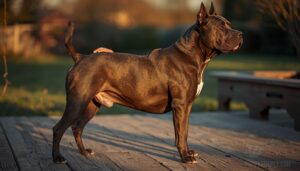
Size in this mix is genuinely unpredictable — and that’s not a flaw, it’s just genetics doing its thing.
That unpredictability makes understanding the breed’s full range even more useful — the Chinese Crested Powderpuff size and care guide breaks down what to realistically expect day to day.
Adult height variability runs from 20 to 28 inches at the shoulder, while weight conditioning factors push the scale anywhere from 50 to 120 pounds, with most landing between 70 and 115.
Growth milestones usually stabilize around 18–24 months, though generation size differences mean some dogs keep muscling up well after that.
Temperament and Personality Traits

The Cane Corso Pitbull mix has a personality that often catches people off guard — in the best way. Underneath that powerful exterior is a dog that’s deeply loyal, surprisingly affectionate, and sharper than most give it credit for.
Here’s what you can expect regarding temperament.
Loyalty and Affection
This mix is quietly, stubbornly devoted to you. Through eye contact that lingers a little too long, nose nudging your hand mid-conversation, and claiming their favorite cuddle spots beside you, they say everything without a word.
Predictable routines deepen the bond fast — same walk, same meals, same person.
- They stay with you room to room
- Affection grows calmer, not louder, over time
- Loyal temperament makes family compatibility surprisingly natural
Protective Instincts
Think of your Pit Corso as a guardian dog who’s always quietly reading the room. Threat Detection Cues kick in fast — stiff posture, steady staring, a low growl — all textbook Guarding Body Language before anything escalates. With solid Socialization Strategies early on, that protective behavior stays controlled.
| Behavior | Triggered By | Escalation Control |
|---|---|---|
| Instinctive blocking | Stranger approaching owner | Drops with calm command |
| Alert barking | Unusual sounds or movement | Redirects with training |
| Boundary standing | Unfamiliar entry | Settles after owner signals |
Owner Reinforcement Effects matter too — yelling or pulling actually amplifies their guarding instincts.
Intelligence and Trainability
This dog is wired to figure things out — and fast. Learning Speed here is real; with sharp Reward Timing and Cue Consistency, most pick up commands within weeks. Training and socialization requirements aren’t optional — they’re essential.
- Reward Timing shapes behavior quickly
- Cue Consistency prevents confusion
- Problem Solving keeps them engaged
- Impulse Control builds through dog obedience training
- Positive reinforcement outperforms correction every time
Family Compatibility and Suitability

So, you’re wondering if this dog actually fits into real family life — fair question. The answer depends on few things: how you live, who you live with, and what other animals share your space.
Here’s what you need to know before deciding if a Cane Corso Pitbull mix belongs in your home.
Behavior With Children
Cane Corso Pitbull mix can be wonderfully devoted to kids — but their muscular build means supervision strategies aren’t optional. Use Body Language Cues to catch stress signals early, and teach Safe Touch Rules before kids interact.
| Area | Risk | Solution |
|---|---|---|
| Jumping Prevention | Knockdowns during greetings | "Sit first" rule |
| Predictable Routines | Restlessness near children | Pre-play exercise |
| Guarding Instincts | Overprotective behavior | Early socialization |
Interaction With Other Pets
Living peacefully with other pets starts long before the first face-to-face meeting.
Scent Familiarization — swapping bedding between animals — builds familiarity without pressure.
Then Territory Introduction and Controlled First Meetings through a baby gate reduce confrontation.
Follow these socialization strategies for aggressive breeds:
- Separate feeding zones for Resource Guarding Management
- Short, calm barrier sessions
- Body Language Reading for stiff postures or freezing
- "Leave it" training near cats
- Gradual, supervised shared time
Adaptability to Home Environments
Once you’ve sorted the other pets, turn your attention to the home itself.
A Pit Corso adapts surprisingly well — but space, routine, and noise tolerance matter more than square footage alone. Apartments strain them; a yard helps.
Separation anxiety surfaces fast without structured schedules.
Designate indoor activity zones, add non-slip floor surfaces for those heavy pivots, and prep a calm visitor handling spot.
Consistent socialization shapes everything.
Common Health Issues

Like most large, powerful breeds, the Cane Corso Pitbull mix comes with a few health realities worth knowing upfront. Some of these are inherited, some are tied to sheer size, and a few are entirely preventable with the right care.
Here’s what you’ll want to keep on your radar.
Genetic Health Concerns
This mix inherits health risks from both sides of the family tree — and that’s not something to take lightly. Hip dysplasia and elbow dysplasia top the list, alongside gastric dilatation-volvulus (bloat), which can turn fatal fast in deep-chested dogs. Cardiomyopathy, neurologic disorders and eye issues round out the concerns.
Genetic health screening of both parents before you buy isn’t optional — it’s essential.
Lifespan and Longevity
With the right care, your Pit Corso can live 10 to 14 years — a solid run for a large mixed breed.
Five longevity factors that actually move the needle:
- Joint Health Management slows mobility decline
- Weight Control Strategies reduce metabolic strain
- Dental Care Impact prevents systemic inflammation
- Sleep Quality Effects support daily recovery
- Cardiac Screening Frequency catches early warning signs
Genetics load the gun — your choices pull the trigger.
Genetics determine the odds — how you raise your dog determines the outcome
Preventative Veterinary Care
Think of preventative care as your Pit Corso’s early-warning system. Starting at eight weeks, core vaccinations — distemper, parvovirus, and rabies — plus boosters every one to three years keep infectious threats at bay.
Annual wellness exams, lab screenings, and dental monitoring catch genetic health issues before they escalate. Don’t skip parasite control or hip dysplasia imaging; for this breed, consistent health screening protocols are genuinely life-extending.
Exercise and Activity Needs

This dog was built to move — and if you don’t give it an outlet, it’ll find one (usually involving your couch). A Cane Corso Pitbull mix needs more than a casual lap around the block to stay balanced and happy.
Here’s what a solid activity routine actually looks like for this breed.
Daily Physical Requirements
Your Pit Corso runs on roughly 60 to 90 minutes of daily exercise — split into two walks of 30 to 45 minutes each. That structure matters for joint health, especially in growing dogs where puppy activity limits protect developing growth plates.
Intensity balance is key: steady walking plus short bursts of fetch or hill work. Always prioritize heat management — skip midday outings when pavement scorches.
Mental Stimulation and Enrichment
Walking your Pit Corso is only half the job. This dog’s mind needs a workout too.
Puzzle feeders and interactive toys slow mealtime into a genuine problem-solving session, while scent work draws on instincts that go bone-deep. Rotate cognitive games, sensory variety, and short training sessions regularly — that consistency is what keeps destructive boredom from taking root and keeps your dog genuinely sharp.
Activities and Recommended Exercises
Variety isn’t just a nice-to-have for this dog — it’s the whole game. Your Pit Corso’s exercise and activity needs call for a smart mix of cardio, strength, and recovery built into your weekly rhythm.
- Structured Walk Varieties — alternate paces, surfaces, and directions daily
- Jogging Guidelines — short intervals on cool mornings, never on hot pavement
- Tug Fetch Conditioning — fetch sets plus brief tug bursts for endurance
- Strength Builder Games — sit-to-stand reps and low platform step-ups
- Cooldown Joint Care — slow walk finish, paw check, fresh water
Rotate these consistently and you’re covering exercise requirements that keep both body and mind genuinely satisfied.
Training and Socialization Tips
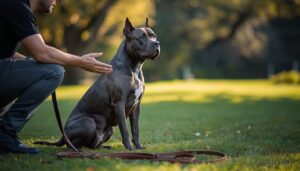
Training a Cane Corso Pitbull mix isn’t complicated, but it does require consistency from day one. These dogs are smart enough to test your limits — and confident enough to push them.
Here’s what actually works for shaping a well-mannered, socially balanced dog.
Early Socialization Importance
Your Pit Corso’s first 14 weeks are a narrow, irreplaceable window — what researchers call Puppy Social Windows — where early socialization leaves a permanent mark on behavior. Puppies exposed to diverse environments, people, and stimuli before 16 weeks show dramatically lower anxiety as adults and adapt far more easily to new situations.
Early life training for this mix means intentional, graduated exposure. Introduce one new surface, sound, or person at a time. Prioritize Positive Human Contact — calm handling, friendly strangers, kids with backpacks — so your pup learns people are safe. Controlled Dog Interactions with vaccinated, well-mannered dogs teach canine communication without overwhelming them.
Environmental Desensitization and Routine Exposure Training together build the confident, steady companion this breed genuinely can become.
Positive Reinforcement Methods
Positive reinforcement isn’t magic — it’s mechanics. The secret is Timing Precision: reward your Pit Corso within two seconds of the correct behavior, or the lesson blurs. Use Behavior-Specific Praise ("good sit," not just "good boy") so they know exactly what earned the treat. Build Reinforcer Variety — rotate between food, toys, and praise — and follow a smart Reward Schedule, rewarding frequently early, then tapering. Consistency Across Handlers seals everything together.
- Deliver treats or praise immediately after correct behavior
- Name the exact action during praise ("good down," "good stay")
- Rotate between food, toys, and verbal rewards to prevent boredom
- Start with frequent rewards, then gradually reduce as behavior becomes reliable
- Align commands and timing across every family member
Managing Stubbornness and Aggression
Even the best-trained Pit Corso can hit a stubborn streak — usually between 6 and 18 months. That’s where aggression management training earns its keep.
| Strategy | What It Does | When to Use |
|---|---|---|
| Trigger Identification | Spots food, space, or stranger-related reactions | Before situations escalate |
| Body Language Reading | Catches stiff posture, hard stares early | During daily interactions |
| De-escalation Techniques | Creates distance, lowers arousal fast | Mid-conflict moments |
Safe Boundaries and Pain Assessment round it out — because sometimes "stubborn" means "hurting".
Grooming and General Care

Good news — this dog’s grooming needs won’t take over your weekend. The Cane Corso Pitbull mix has a short, low-maintenance coat, but there are still a few basics you’ll want to stay on top of.
Here’s what routine care actually looks like for this breed.
Coat Maintenance and Bathing
Good news: this dog’s short coat is one of its most low-maintenance features. Brush weekly with a rubber curry brush — it removes loose hair, distributes natural skin oils, and doubles as mat prevention brushing between baths.
For bathing frequency, aim for every four to six weeks using a dog-specific shampoo; rinsing thoroughly prevents product residue management issues that cause skin irritation.
Always use coat drying methods that fully dry thick areas like the chest and armpits.
Dental, Nail, and Ear Care
The coat is easy — it’s details that catch new owners off guard. A solid Tooth Brushing Routine means brushing your dog’s teeth two to three times a week with dog-safe toothpaste; skip this, and periodontal disease becomes a real threat.
Nail Trimming Frequency matters too — every two to three weeks keeps discomfort at bay. Check ears weekly for Ear Infection Prevention, watching for Ear Inspection Signs like redness or odor.
- Brush teeth regularly; Dental Scaling Benefits show up in annual vet cleanings
- Trim nails before they curve and affect your dog’s gait
- Wipe outer ears gently — no swabs deep in the canal
Shedding and Cleaning Tips
Your Pit Corso’s short dense coat sheds moderately year-round — twice a year, it really goes for it. Rotating between a rubber mitt and a slicker brush (your two key Brush Types) manages most Pet Hair Capture before it hits your floors.
Weekly mopping with damp Floor Mopping Methods traps loose fur.
Swap HVAC Filter Changes monthly, and keep a Lint Roller Use handy for furniture.
Feeding and Nutrition Guidelines

Feeding a dog this size isn’t complicated, but it does take some intention — get it wrong and you’re either dealing with a lethargic couch potato or a dog bouncing off the walls.
What your Pit Corso needs at the bowl depends on its age, weight, and activity level.
Here’s what to know before you scoop.
Dietary Needs by Age and Size
Your dog’s nutritional needs shift like seasons — what fuels a bouncy 10-week-old puppy won’t cut it for a 7-year-old with stiff hips. Here’s how large breed nutrition breaks down by life stage:
- Puppy growth nutrition: ~40 calories per pound daily, with DHA for brain development
- Adult calorie balance: 20–30 calories per pound; a 70-lb dog needs roughly 1,400–2,100 daily
- Senior joint support: glucosamine, chondroitin, and omega-3s become essential
- Large breed control: watch the obesity risk — overfeeding accelerates joint damage fast
Feeding Schedule and Portions
Most adult Pit Corsos thrive on two measured meals daily — morning and evening — spacing them 8 to 12 hours apart helps maintain meal timing consistency and reduces bloat risk.
Puppies need three to four smaller meals through their growth phase, portioning stage.
Watch for portion adjustment signs like weight creep, and keep treats’ daily balance in check.
For a gradual food switch, mix old and new food slowly to avoid digestive upset.
Recommended Food Types and Supplements
Choose a premium large-breed kibble where real chicken, salmon, or turkey leads the ingredient list — your Pit Corso’s muscle mass depends on quality protein sources. Look for a balanced calcium-phosphorus ratio to protect those big bones long-term.
Joint support supplements like glucosamine and omega-3 benefits go hand in hand here, reducing inflammation before it starts.
Sensitive stomachs? Limited-ingredient diets work well.
Ask your vet about targeted dog diet supplements.
Finding and Adopting a Pit Corso

Finding the right Pit Corso starts with knowing where to look — and who to trust. Whether drawn to a breeder or hoping to give a rescue dog a second shot, each path comes with its own set of things to weigh.
what you need to know before making that call.
Choosing Reputable Breeders
Finding reputable breeders starts with one non-negotiable: Health Clearances Documentation for both parents — OFA or PennHIP certifications, not just a vet’s word.
Breeder Transparency Policies matter too; any ethical breeder welcomes a kennel visit.
Expect Veterinary Oversight records, a written health guarantee, and genuine post-adoption support.
Ethical Breeding Practices mean they’ll interview you just as hard as you’re interviewing them.
Adoption From Rescues and Shelters
Rescue organizations and shelter adoption can be a surprisingly rewarding path — and easier on your wallet. Groups like Cane Corso Rescue Inc, Pit Bull Rescue Center, and Petfinder usually charge $100–$600, with vaccinations and spay already handled. Expect application screening, a meet and greet, and sometimes home visit requirements before approval.
- Adoption fees often include microchipping and initial vet care
- Temperament testing helps match the right dog to your home
- Foster programs give you a realistic preview of the dog’s personality
- Application screening may involve reference and landlord checks
- Post adoption support keeps you covered through early adjustment bumps
Puppy Prices and Ownership Costs
Owning a Pit Corso isn’t cheap — but it’s budgeting honestly. Puppy prices generally run €800–€2,500 from reputable breeders, with champion lines pushing higher.
| Cost Category | One-Time Cost | Monthly Cost |
|---|---|---|
| Initial Purchase Price | €800–€2,500 | — |
| Veterinary Care Expenses | €200–€400 | €40–€90 |
| Monthly Food Budget | — | €40–€140 |
Training investment, pet insurance costs, and supplies add up — expect €10,000–€20,000 lifetime.
Frequently Asked Questions (FAQs)
Can Cane Corsos have peanut butter?
Yes, plain peanut butter is safe in small amounts — but always check for xylitol first. one ingredient is toxic.
Keep portions tiny to avoid fat-related issues and unwanted weight gain.
Are Cane Corso Pitbull mixes legal everywhere?
Not exactly — breed-specific legislation casts a wide net.
Pit bull–type mixes face bans, municipal ordinances, and import restrictions across 30+ countries, often regardless of AKC breed registration, DNA testing results, or individual temperament.
Do they drool or snore excessively?
Moderate drooling comes with the territory — drooping jowls and saliva management aren’t glamorous, but they’re manageable. Occasional snoring? Blame sleep position effects or airway anatomy, not drama.
Can they tolerate hot or cold weather?
Don’t let the muscular build fool you — this isn’t a weatherproof dog.
Short coat insulation runs thin, heat stress signs appear fast above 85°F, and cold paw protection matters once temperatures dip below 45°F.
What are their barking and guarding behaviors?
Think of your Pit Corso as a devoted sentry — alert bark triggers kick in the moment someone approaches your fence or front door, and they mean business.
Do they require specialized liability insurance coverage?
An ounce of prevention is worth a pound of cure.
Over 50% of major insurers exclude pit bull-type and guardian breeds from standard homeowners policies — so specialized breed-specific endorsements aren’t optional, they’re essential.
Do Pit Corsos drool more than other breeds?
Yes, but it depends on the individual dog.
Facial jowl structure and Cane Corso genetics drive saliva production differences — mealtime and exercise-induced drooling are most noticeable, not constant throughout the day.
How do Pit Corsos behave during thunderstorms?
Like a sentinel caught off guard, your Pit Corso may shake, hide, or pace during storms — storm anxiety signs driven by pressure sensitivity.
familiar safe spot and calm owner response work wonders.
Can a Pit Corso live in an apartment?
A Pit Corso can apartment-live — but owner commitment is non-negotiable. Meet its exercise requirements, manage noise, arrange your space smartly, and always check pet policies before signing that lease.
Do Pit Corsos get along with cats?
It depends on how early and how carefully you start. With proper Early Cat Introductions, Prey Drive Management, and Supervised Interaction Strategies, most Pit Corsos can coexist peacefully with cats.
Conclusion
The dog you bring home today shapes the household you’ll live in for the next decade. A cane corso pitbull mix doesn’t stay a manageable puppy for long—it grows into exactly what you build it to be.
Invest in early training, consistent boundaries, and genuine connection, and you’ll earn a loyal, steady companion.
Cut corners, and that same power works against you.
This breed doesn’t ask for ideal. It asks for commitment.