This site is supported by our readers. We may earn a commission, at no cost to you, if you purchase through links.

Your dog sniffs a fallen cabbage leaf off the kitchen counter and swallows it before you can react. Panic sets in—was that safe?
Raw cabbage sits in an interesting gray zone for dogs. It’s not toxic, but it’s not consequence-free either. Sulfur compounds in raw cabbage ferment in your dog’s gut, which can trigger serious gas and discomfort—sometimes worse than just an embarrassing smell.
The good news: small amounts of plain, raw cabbage are generally safe for most dogs and carry real nutritional value. Knowing the risks, the right preparation, and appropriate portion sizes makes all the difference.
Table Of Contents
- Key Takeaways
- Can Dogs Eat Cabbage Raw?
- Yes, Dogs Can Eat Raw Cabbage
- Is Raw Cabbage Good for Dogs?
- Raw Cabbage Risks for Dogs
- Safe Raw Cabbage Preparation
- How Much Raw Cabbage?
- Best Cabbage Types for Dogs
- Frequently Asked Questions (FAQs)
- What words do dogs love to hear the most?
- What happens if a dog eats too much cabbage?
- Can puppies eat cabbage?
- Can dogs eat purple cabbage raw?
- Can dogs eat red cabbage?
- How much cabbage should a dog eat?
- Can dogs eat Chinese cabbage?
- What is the best vegetable for dogs?
- Can a dog eat a whole head of cabbage?
- How much raw cabbage can dogs eat daily?
- Conclusion
Key Takeaways
- Raw cabbage is safe for dogs in small amounts (one to two tablespoons), but sulfur compounds cause gas and bloating, so always start with just a bite or two and watch your dog closely.
- Serve cabbage plain and chopped small — garlic, onion, salt, and oils aren’t just unnecessary, some are genuinely toxic to dogs.
- Cabbage brings real nutritional value — vitamin K, vitamin C, fiber, and beta-carotene — but it can’t replace a balanced diet and should only ever be an occasional treat, not a daily habit.
- Dogs with thyroid conditions, deep-chested breeds prone to bloat, or puppies need extra caution, and any repeated vomiting or watery stools after feeding cabbage means it’s time to call your vet.
Can Dogs Eat Cabbage Raw?

Raw cabbage is safe for dogs in small amounts, but there are a few things worth knowing before you toss a leaf into their bowl. How it’s prepared and how much you give makes a real difference. Here’s what you need to know about raw versus cooked cabbage and how to use it as an occasional treat.
In fact, raw cabbage offers dogs several surprising nutritional benefits that make it worth considering as a healthy, low-calorie snack.
Quick Safety Answer
Yes, raw cabbage is safe for dogs — but only in small amounts. A bite or two as an occasional treat won’t harm most healthy dogs.
That said, too much can trigger digestive issues like gas or loose stools. Always serve it plain, chopped small, and watch your dog closely after the first taste.
Raw Versus Cooked Cabbage
Both options are safe, but they affect your dog differently. Raw cabbage retains more heat-sensitive antioxidants and vitamin C, while cooking softens fiber and makes it gentler on canine digestion.
Lightly steaming can help increase the bioavailability of nutrients for your pet.
Here’s how they compare:
- Vitamin C stays higher in raw cabbage
- Vitamin K survives cooking well
- Cooked cabbage causes less gas for most dogs
- Raw pieces need smaller, finer chopping
Best Occasional Treat Use
Think of raw cabbage the way you’d think of any healthy snack — good in moderation, not a daily staple.
Raw cabbage is a healthy snack for dogs — best enjoyed in moderation, never as a daily habit
Dogs can eat cabbage raw as an occasional treat, meaning once or twice a week at most. It’s a low-calorie treat that fits naturally alongside other safe vegetable snacks for dogs, as long as you keep small amounts the rule, not the exception.
Yes, Dogs Can Eat Raw Cabbage

Raw cabbage is safe for your dog, but a few simple rules make all the difference. It’s not as straightforward as just tossing a leaf in the bowl, so knowing what to keep in mind helps you avoid any stomach trouble. Here’s what you should know before making cabbage part of your dog’s snack routine.
Safe in Small Amounts
A little raw cabbage goes a long way. Dogs can eat cabbage raw safely, but small amounts are key — think one tablespoon at most.
Raw cabbage is harder to digest than cooked, so even a well-meaning extra handful can trigger digestive issues. Every dog tolerates it differently, so watch your dog closely after the first taste.
Plain Cabbage Only
When you ask can dogs eat cabbage raw, the answer depends heavily on what’s on it — or rather, what isn’t.
Serve cabbage plain. That means no salt, butter, oil, garlic, or onions. These aren’t just unnecessary; some are genuinely dangerous:
- Salt disrupts fluid balance and stresses the kidneys
- Garlic and onions damage red blood cells, even in small amounts
- Butter and oils add fat that can upset digestion
- Flavored seasonings often hide toxic ingredients
Plain raw cabbage is the only safe version for dogs.
Not a Meal Replacement
Raw cabbage doesn’t fill the nutritional gaps your dog actually needs. Complete food bases cover protein requirement needs, healthy fats, and caloric intake that raw cabbage simply can’t match.
| Nutrient Need | Cabbage Provides | Dog Food Provides |
|---|---|---|
| Protein | Minimal | High |
| Fats | Trace | Balanced |
| Calories | Very low | Complete |
| Vitamins | Partial | Full range |
Use it as a small treat, not a replacement meal.
Start with just a teaspoon and watch for any tummy trouble, as outlined in this guide to feeding pears to dogs safely.
Watch Individual Tolerance
Every dog reacts differently to raw cabbage — what one dog eats easily, another won’t tolerate at all. Stool consistency and comfort in the hours after feeding are your best clues.
Dose-dependent responses mean tiny amounts may be fine while slightly larger portions cause gas or loose stools. Puppies are especially sensitive, so offer even less.
Is Raw Cabbage Good for Dogs?

Raw cabbage isn’t just safe for dogs in small amounts — it actually brings a few real nutritional perks to the table. Think of it as a crunchy little bonus rather than filler, one that quietly helps several areas of your dog’s health. Here’s a closer look at what your dog stands to gain.
Vitamin K Benefits
Cabbage quietly delivers Vitamin K, a nutrient your dog’s body depends on for blood clotting proteins that form stable clots when injury occurs.
Three key roles Vitamin K plays:
- Activates bone mineralization support proteins
- Controls vascular calcification in artery walls
- Maintains calcium homeostasis across tissues
That’s why even small amounts support your dog’s cellular renewal processes meaningfully.
Vitamin C Support
Vitamin C does quiet but important work inside your dog’s body. It helps protect immune cells from free radical damage and aids collagen synthesis — the structural protein that keeps connective tissue healthy and wounds healing properly. Think of it as a daily repair crew.
Red cabbage, in particular, packs a meaningful dose worth noticing.
Fiber for Digestion
Fiber does more than move things along. Raw cabbage contains both insoluble and soluble fiber, each playing a different role in your dog’s gut.
- Insoluble fiber bulks stool and improves regularity
- Soluble fiber forms a gel that steadies digestion
- Prebiotic fiber feeds beneficial gut bacteria
- Fermentation produces short-chain fatty acids that nourish the colon
It’s low-calorie support with real digestive health benefits.
Beta-carotene for Eyes
Raw cabbage contains beta-carotene, a compound your dog’s body converts into vitamin A — the nutrient behind healthy night vision and a stable eye surface.
It acts as an antioxidant, shielding delicate eye cells from free radical damage that builds up over time. That protection matters most for aging dogs, where oxidative stress quietly affects ocular tissue health.
Magnesium for Body Function
Cabbage also delivers magnesium, a mineral quietly running hundreds of processes behind the scenes. It acts as a cofactor for over 300 enzyme reactions, helps nerve signals travel, and keeps muscles contracting and relaxing correctly.
- Helps regulate heart rhythm stability
- Aids glucose metabolism and energy use
- Aids neuromuscular communication
- Contributes to immune system function
Small amounts, real benefit.
Raw Cabbage Risks for Dogs

Raw cabbage is safe for most dogs in small amounts, but it does come with a few risks worth knowing before you start sharing. Too much can cause more trouble than it’s worth, and some dogs are more sensitive than others. Here’s what to watch out for.
Gas and Bloating
Even a small handful of raw cabbage can leave your dog surprisingly gassy. That’s because bacterial fermentation in the colon breaks down undigested compounds from cabbage — producing hydrogen and methane as byproducts. The sulfur content makes this worse.
Bloating and flatulence are the most common complaints, especially if gas transit slows and pressure builds in the digestive tract.
Diarrhea or Vomiting
Gas isn’t the only discomfort cabbage can trigger. Too much raw cabbage can cause digestive upset — loose stools, vomiting, or both together. That combination risks rapid dehydration, especially in smaller dogs.
If your dog vomits repeatedly or passes watery stools more than twice, treat it seriously. Those are signs of gastrointestinal trouble that warrant a call to your vet.
Choking From Large Pieces
Cabbage leaves can be surprisingly slippery, and dogs that eat fast often swallow large chunks without chewing properly — a setup for airway obstruction.
Watch for these risks:
- Large pieces can lodge in the throat
- Slippery raw cabbage slides down quickly
- Fast eaters rarely chew thoroughly
- Small dogs face higher choking danger
- Firm raw textures don’t break apart easily
Always chop bite-sized pieces before serving.
Thyroid Concerns
Cruciferous vegetables like cabbage contain thiocyanate, a compound that can interfere with iodine uptake — and thyroid hormone production depends directly on iodine availability. In massive quantities, raw cabbage consumption may suppress thyroid function.
This risk is small with occasional, appropriately sized portions. But if your dog has a known thyroid condition, check with your vet before offering cabbage at all.
Bloat-prone Dog Caution
Some dogs carry a higher risk of gastric dilatation volvulus (GDV) — a life-threatening condition where the stomach fills with gas and twists. Deep-chested breeds like Great Danes and Weimaraners are especially vulnerable.
Raw cabbage produces gas, which can worsen that risk. If your dog falls into this category, talk to your vet before offering cabbage at all.
Safe Raw Cabbage Preparation
Prepping cabbage the right way makes all the difference between a safe snack and an upset stomach. Luckily, it doesn’t take much effort — just a few simple steps before you hand it over. Here’s what to do before serving raw cabbage to your dog.
Wash Leaves Thoroughly
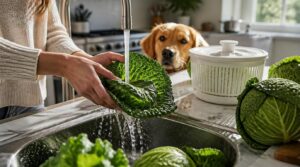
Before any raw cabbage reaches your dog’s bowl, rinse each leaf under cool running water. This removes dirt, pesticides, and surface microbes that cling to folds — especially on textured varieties like Savoy. Handle leaves gently to avoid bruising. After rinsing, use a salad spinner to dry them thoroughly, since lingering moisture encourages bacterial growth before serving.
- Separate leaves before rinsing
- Use cool, not warm, water
- Rinse each leaf individually
- Spin or pat completely dry
- Never store washed, undried cabbage
Remove Core and Stem
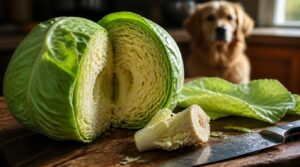
The tough center of a cabbage head deserves more attention than it gets. Remove the middle and stem completely before serving — these dense, fibrous parts are harder to chew, harder to digest, and more likely to break into large chunks your dog could gulp without chewing properly.
Leaving only the flat leaf tissue keeps the texture consistent and the serving size easier to control.
Chop Bite-sized Pieces
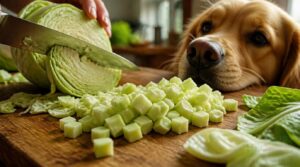
Once the center is gone, size is everything. Chop raw cabbage into small, bite-sized pieces — uniform cuts give your dog better chewing control and reduce the risk of gulping:
- Smaller pieces lower choking hazard prevention risks a lot
- Consistent sizing helps improved chewing consistency
- More surface area aids easier digestion
- Even cuts make uniform portioning simpler
Tiny pieces make canine nutrition safer and more manageable.
Serve Plain Only

Once you’ve got those pieces chopped, keep the bowl simple. Plain raw cabbage — nothing else. No salt, no oil, no butter. Think of it the same way you’d offer a baby their first solid food: pure, clean, and unaltered.
Garlic and onion are toxic to dogs, so even a light seasoning mix is off the table entirely.
Avoid Seasonings and Oils

Seasoning mixes are the quiet troublemaker here. Many contain salt, garlic, or onion powder — ingredients that can damage your dog’s red blood cells or spike their sodium intake dangerously.
- Salt raises sodium above safe levels
- Garlic and onion harm red blood cells
- Spicy additives irritate the digestive tract
- Vinegar and citrus cause stomach upset
- Oils increase pancreatitis risk
Plain cabbage only.
How Much Raw Cabbage?

Cabbage can be a great little snack for your dog, but portion size really does matter here. Too much, too fast, and you’re dealing with a gassy, unhappy pup. Here’s how to get the amounts right for your dog’s size and life stage.
Start With Tiny Portions
Think of the first taste of raw cabbage as a test run. Offer just a bite or two — nothing more.
That tiny amount lets you watch for gas, loose stool, or any sign of discomfort before committing to regular treats. If your dog does fine without issue, you’re in a good position to continue carefully.
Small Dog Serving Size
For small dogs, one tablespoon of raw cabbage is a reasonable upper limit per day. Chop it into bite-sized pieces to prevent choking — small breeds swallow faster and chew less.
- Keep portions to one tablespoon maximum
- Chop into small, manageable pieces
- Serve plain, no added seasonings
- Offer fresh water after feeding
- Count cabbage as part of daily calories
Raw cabbage is low-calorie, but moderation still matters.
Large Dog Serving Size
Large dogs can handle slightly more — up to two tablespoons of raw cabbage per day — but that’s still a treat, not a supplement. Because bigger dogs tend to gulp food quickly, chop pieces small to avoid choking.
Count cabbage against the day’s treat allowance. If stools loosen, cut back next time and monitor for a full day before serving again.
Puppy Portion Guidance
Puppies need even smaller amounts — half a tablespoon or less of finely chopped raw cabbage is plenty. Their daily calorie needs are low, so treats must stay within that 10% calorie cap to avoid weight gain.
Cut pieces very small. Puppies tend to gulp, and larger shreds are a choking risk.
Introduce cabbage gradually over three days, starting with just a pinch.
Monitor After Feeding
After your dog eats raw cabbage, watch closely for the first hour. Gas or bloating, vomiting, or loose stool are the clearest signs that the portion was too much. Check gums — pale or bluish color means urgent vet attention.
If any symptoms appear, stop feeding cabbage and wait a full day before reassessing.
Best Cabbage Types for Dogs
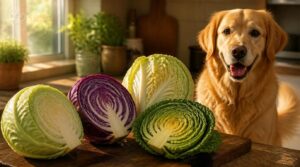
Not all cabbage is created equal, and the good news is your dog has more than one safe option to try. Different varieties bring slightly different nutrient profiles, so it’s worth knowing which ones make the best fit. Here’s a quick look at the types that are safe to share with your pup.
Green Cabbage
Green cabbage is the most familiar starting point for dogs new to this vegetable. It’s a cruciferous vegetable packed with vitamin K, polyphenols, and insoluble fiber that helps digestive health in dogs.
When chopped, glucosinolate breakdown releases sulfur compounds behind that sharp flavor. Served plain and with raw cabbage kept to small pieces, it’s a practical, low-calorie occasional treat.
Red Cabbage
Red cabbage packs a bigger nutritional punch than its green counterpart. Its deep color comes from anthocyanins — plant compounds linked to reduced inflammation — and it contains ten times more Vitamin A.
Soluble fiber helps gut bacteria, while potassium helps regulate fluid balance. The glucosinolate concentration is slightly higher, so keep portions small and always serve it plain and chopped.
Savoy Cabbage
Savoy cabbage stands out with its crinkled, ruffled leaves and mild, earthy sweetness — a gentler option than green or red varieties.
- Higher mineral content than standard cabbage
- Soft texture when cooked, holds shape well
- Low-calorie brassica family member
- Mild flavor dogs tend to accept easily
- Safe for occasional raw feeding in small pieces
Serve it plain and chopped small.
Napa Cabbage
Also called Chinese cabbage, Napa cabbage has a milder, slightly sweet flavor than Savoy — and most dogs find it easy to accept. Its tender, crinkled leaves and thick white ribs soften quickly when cooked, though the crisp raw leaves are safe in small pieces too.
It delivers magnesium, potassium, and vitamins A, C, and K with minimal calories.
Bok Choy
Bok choy rounds out this list as another dog-safe brassica vegetable worth knowing. It’s packed with vitamins C and K, calcium, magnesium, and antioxidant compounds called glucosinolates — which may offer anti-inflammatory support.
The stems are crunchy, so chop them small to keep things safe. Serve a few plain pieces as an occasional treat, nothing more.
Frequently Asked Questions (FAQs)
What words do dogs love to hear the most?
Dogs go absolutely wild for certain words — "walkies" tops the list, spiking heart rates to around 156 bpm. After that come "dinner," "treat," "get it," and "fetch" rounding out the top five.
What happens if a dog eats too much cabbage?
Too much cabbage can trigger gas, bloating, and diarrhea — sometimes vomiting. Raw cabbage is harder to digest, raising thyroid and GI risks over time. Keep portions small to avoid discomfort.
Can puppies eat cabbage?
Puppies can eat cabbage, but keep portions tiny — about half a teaspoon. Their digestive systems are still developing, so even a small amount can cause gas or loose stool. When in doubt, ask your vet first.
Can dogs eat purple cabbage raw?
Yes, purple cabbage is safe for dogs to eat raw in small amounts. Its antioxidant-rich profile edges out green cabbage nutritionally, though the denser fiber can trigger gas, so keep portions small.
Can dogs eat red cabbage?
Red cabbage is safe for dogs to eat in moderation. It delivers vitamin C, vitamin K, and anthocyanins — plant pigments with antioxidant properties. Serve it plain, in small amounts, to avoid digestive upset.
How much cabbage should a dog eat?
How much cabbage is actually safe? Size matters most — small dogs do well with 1–2 teaspoons, while larger dogs can handle 1–2 tablespoons. Keep it under 10% of daily calories.
Can dogs eat Chinese cabbage?
Chinese cabbage is safe for dogs in small amounts. Whether sold as napa cabbage or bok choy, it’s non-toxic and provides vitamin K, vitamin C, and fiber. Serve it plain, unseasoned, and only as an occasional treat.
What is the best vegetable for dogs?
The best vegetable is a bit of a moving target — it’s whichever dog-safe vegetable your dog tolerates well. Green beans, carrots, and zucchini are popular low-calorie snacks that suit most dogs and support digestive health for dogs.
Can a dog eat a whole head of cabbage?
A whole head of cabbage is far too much for any dog. Fiber overload can overwhelm the digestive system, causing serious gas or bloating. Stick to small, measured portions — moderation protects your dog.
How much raw cabbage can dogs eat daily?
More isn’t better here. Most dogs do well with 1 to 2 tablespoons of chopped raw cabbage per serving — larger breeds can occasionally go up to 3 tablespoons, but treat it as a snack, not a staple.
Conclusion
Cabbage can coexist calmly with your dog’s diet when you handle it right. Can dogs eat cabbage raw? Yes—but only in small, plain, well-chopped pieces that suit your dog’s size and tolerance.
The nutrients are real, the risks are manageable, and the preparation takes seconds. What matters most is starting small and watching closely. Your dog’s gut will tell you everything you need to know.
- https://www.rover.com/blog/can-my-dog-eat-cabbage
- https://www.petmd.com/dog/nutrition/can-dogs-eat-cabbage
- https://www.akc.org/expert-advice/nutrition/can-dogs-eat-cabbage
- https://palapets.com/blogs/dog-food-supplements/can-dogs-eat-cabbage
- https://wsava.org/global-guidelines/global-nutrition-guidelines