This site is supported by our readers. We may earn a commission, at no cost to you, if you purchase through links.

Your dog’s enthusiastic eyes light up at the sound of a treat bag, but that moment of joy can quickly turn into an uncomfortable evening of digestive distress. For dogs with sensitive stomachs, even the smallest training reward can trigger vomiting, diarrhea, or painful gas—transforming what should be a positive learning experience into a guessing game of “will this one upset their system?”
The challenge isn’t just finding treats your dog loves; it’s discovering options that won’t send their gut into rebellion. When you’re working on commands or behavior training, you need treats that deliver quick rewards without the aftermath, which means focusing on limited ingredients, gentle proteins, and formulas designed specifically for delicate digestive systems.
The right sensitive-stomach treats make training sessions productive and comfortable, letting you reinforce good behavior without worrying about what comes next.
Table Of Contents
- Key Takeaways
- What Makes a Training Treat Sensitive-Stomach Friendly
- Key Ingredients for Sensitive Stomach Treats
- Factors to Consider When Choosing Treats
- Top 7 Training Treats for Sensitive Stomachs
- Tips for Introducing New Treats Safely
- Training Strategies for Dogs With Sensitive Stomachs
- Frequently Asked Questions (FAQs)
- What are the best dog training treats for sensitive stomachs?
- What chews are safe for dogs with sensitive stomachs?
- What is the best snack for a sensitive stomach?
- How to train a dog with a sensitive stomach?
- Are there any treats specifically made for dogs with sensitive stomachs?
- Are there any treats that are easier to digest?
- What should I do if my dog has an adverse reaction to a treat?
- Can I make homemade training treats for sensitive stomachs?
- How long do sensitive stomach treats stay fresh?
- Are there treats safe for multiple food allergies?
- Conclusion
Key Takeaways
- Dogs with sensitive stomachs need training treats with limited ingredients, single-source proteins like turkey or bison, and hypoallergenic formulas that avoid common allergens such as wheat, soy, and dairy to prevent digestive upset.
- The best sensitive-stomach treats combine easily digestible carbohydrates like pumpkin or sweet potato with probiotics and prebiotics that support gut health while keeping calories low for frequent training rewards.
- Successful training requires careful portion control—keeping treats under 10% of daily calories, breaking them into pea-sized pieces, and monitoring your dog’s response through a treat diary to identify any adverse reactions.
- When introducing new treats, start slowly and consult your veterinarian if you notice persistent vomiting, diarrhea, or other digestive issues, as professional guidance ensures the treats match your dog’s specific nutritional needs.
What Makes a Training Treat Sensitive-Stomach Friendly

When your dog has a sensitive stomach, not all treats are created equal.
Some human foods like ice cream can trigger reactions—understanding which types are safe for dogs helps you avoid unnecessary digestive upset.
The right training treat can make a real difference in keeping your pup’s digestive system calm while you work on skills together.
Let’s look at what makes a treat truly gentle on sensitive tummies—so you can reward your dog without the worry.
Importance of Limited Ingredients
When your dog’s stomach is easily upset, ingredient simplicity becomes your best friend. A limited ingredient treat gives you clarity—you’ll spot potential allergens quickly and avoid hidden additives that disrupt digestion.
Here’s why this approach matters:
- Allergen Avoidance – Fewer components mean less chance of triggering sensitivities or intolerances.
- Gut Health Support – Simple, natural ingredients reduce the digestive burden during training.
- Nutrient Balance – Simplified formulas deliver consistent protein-to-fat ratios your dog can tolerate.
- Sourcing Transparency – Clean labels let you verify quality and minimize cross-contact risks.
Hypoallergenic, grain-free options with limited, high-quality ingredients protect sensitive stomachs while keeping training sessions productive. Understanding the significance of can help you make more informed choices for your dog.
Role of Hypoallergenic Formulas
Hypoallergenic formulas take limited ingredients one step further by eliminating wheat, soy, dairy, and common meat proteins that spark reactions. These treats use novel protein sources like rabbit or duck, reducing allergy risks while supporting gut health.
Some formulas include nutrient fortification with probiotics and vitamins, creating grain-free options that prevent flare-ups. You’re basically giving your dog’s digestive system a safe, predictable foundation during training.
For dogs with special dietary needs, it’s important to understand the principles behind hypoallergenic formula classification, which help guarantee the chosen treat minimizes allergenic potential.
Avoiding Common Allergens and Additives
Beyond selecting hypoallergenic formulas, you’ll want to scrutinize labels for wheat, corn, soy, and artificial colors—common culprits behind flare-ups.
Cross contamination during manufacturing can introduce hidden allergens, so choose brands with safe formulas and dedicated production lines. Natural ingredients and grain-free recipes minimize additive risks, giving your sensitive dog the ingredient screening and allergen awareness they deserve during training sessions.
Digestibility and Gut Health Benefits
Once you’ve eliminated allergens, the next piece of the puzzle is how well your dog’s system can actually process these treats. Easily digestible ingredients paired with probiotics create a foundation for strong gut health, letting digestive enzymes break down proteins and fats efficiently. That means better nutrient absorption and fewer tummy troubles during training.
Look for these gut health boosters:
- Probiotic benefits that balance intestinal flora
- Grain-free formulas for sensitive stomachs
- Digestive enzymes that improve breakdown
- Ingredients supporting overall digestive health
Key Ingredients for Sensitive Stomach Treats
When you’re scanning ingredient labels for your dog with a sensitive stomach, knowing what to look for makes all the difference. The right ingredients can help settle your dog’s digestion while still keeping training sessions effective and enjoyable.
Let’s walk through the key components that make treats both safe and appealing for dogs who need a gentler approach.
Single-Source Proteins (e.g., Turkey, Rabbit, Bison)

When your dog’s stomach is easily upset, single-ingredient muscle meat treats made from novel proteins like turkey, rabbit, or bison can be game-changers. These lean protein sources deliver essential amino acids without triggering common protein allergens that beef or chicken might cause.
Turkey and rabbit offer highly digestible options, while bison provides complete nutrition with minimal fat—all supporting your dog’s digestive health on a limited ingredient diet.
Easily Digestible Carbohydrates (e.g., Pumpkin, Sweet Potato)

Gentle carbs like pumpkin and sweet potato bring more than just energy to your dog’s training treats. Pumpkin offers about 8 grams of easily digestible carbohydrates per cup with fiber benefits that support gut health and regularity.
Sweet potato delivers roughly 27 grams per cup, blending soluble and insoluble fiber to stabilize digestion and provide nutrient-rich fuel your sensitive stomach pup can handle comfortably.
Probiotics and Prebiotics

Your dog’s digestive health thrives when you add live beneficial bacteria and fiber-rich compounds that feed them. Probiotics and prebiotics work together to restore microbiome balance and support canine gastrointestinal health in ways that matter during training.
- Probiotic benefits: Lactobacillus and Bifidobacterium strains help strengthen gut barrier function and ease sensitive stomach discomfort
- Prebiotic functions: Inulin and FOS feed beneficial bacteria, producing short-chain fatty acids that support colon health
- Synbiotic effects: Combining both creates enhanced colonization and longer-lasting digestive health improvements
- Grain-free compatibility: Many probiotic treats skip common allergens while delivering targeted gut support
- Dosing clarity: Look for treats with labeled CFU counts and specific strains for consistent results
Grain-Free and Gluten-Free Options
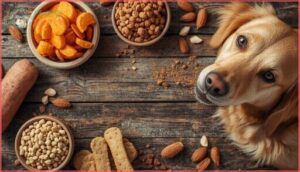
When wheat or gluten triggers your dog’s upset stomach, grain-free and gluten-free treats become essential training tools. These formulas swap traditional grains for gentle alternatives that won’t compromise digestive health or nutrient balance.
| Base Ingredient | Digestive Benefit | Common Use |
|---|---|---|
| Almond flour | Easy protein absorption | Soft chews |
| Tapioca starch | Gentle binding | Crunchy biscuits |
| Sweet potato | Natural fiber support | Training rewards |
| Chickpea flour | Sustained energy | Daily treats |
Grain-free options often include probiotics for added gut support, while gluten alternatives like quinoa deliver complete amino acids without irritation.
Factors to Consider When Choosing Treats

Picking the right training treat isn’t just about finding something your dog will gobble up—it’s about protecting their digestive system while making training effective.
You’ll want to think through several key factors before you toss a bag into your cart. Let’s walk through what really matters when you’re shopping for a pup with a sensitive stomach.
Ingredient Sourcing and Quality
You wouldn’t feed your dog mystery meat from an unknown source, right? The same logic applies to training treats.
Look for brands that practice supply chain transparency and ingredient verification—where suppliers provide documented origin information and undergo third-party audits. Quality control measures like batch testing, regulatory compliance checks, and sustainable sourcing practices guarantee you’re getting high-quality ingredients that are easily digestible, whether grain-free, packed with probiotics, or made from natural and organic pet food sources.
Treat Size and Texture for Training
Size matters more than you might think when training a dog with a sensitive stomach. Small bite-sized rewards—around 1 to 3 cm—keep sessions efficient without overloading digestion.
Soft and chewy treats dissolve quickly, reducing chew time and stomach stress, while grain-free and hypoallergenic treats with smooth texture options minimize GI upset. High palatability and moderate bite resistance guarantee your dog stays engaged without digestive consequences.
Nutritional Balance and Added Benefits
Beyond texture and size, you’ll want treats that actually nourish your dog during training. A balanced nutrient ratio—combining easily digestible carbohydrates with high-quality ingredients—fuels performance without triggering GI upset.
Look for these added benefits in sensitive stomach formulas:
- Energy boosters like B vitamins for sustained training sessions
- Probiotic support to maintain healthy gut flora
- Digestive enzymes that ease nutrient breakdown
- Healthy fats for steady energy release
- Grain-free options that reduce common allergen exposure
These features turn ordinary rewards into digestive health allies.
Consulting Your Veterinarian
Your veterinarian is your best partner in managing pet digestive health. They can run diagnostic tools to uncover underlying gastrointestinal health issues, recommend specific formulas based on medical advice, and tailor pet nutrition strategies to your dog’s unique needs.
Here’s when veterinary guidance matters most:
| Situation | Why You Need Veterinary Advice |
|---|---|
| Persistent vomiting or diarrhea | May signal chronic sensitive stomach conditions requiring health consultations |
| Food trial failures | Vet can identify hidden allergens affecting dog health and wellness |
| Unclear ingredient safety | Professional insight ensures pet digestive health isn’t compromised |
Top 7 Training Treats for Sensitive Stomachs
Now that you know what to look for, let’s talk about some treats that actually work for dogs with touchy tummies. Each option on this list has been chosen because it uses quality ingredients, avoids common triggers, and makes training easier without upsetting your dog’s stomach.
Here are seven training treats that can help you reward your pup while keeping their digestion on track.
1. Get Naked Digestive Dog Treats
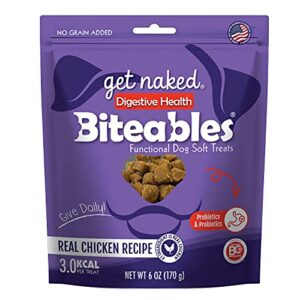
When your dog’s stomach feels like a minefield during training, Get Naked Digestive treats offer a thoughtful solution. These soft, chewy bites feature real chicken as the first ingredient, delivering quality protein your pup needs.
What sets them apart is the probiotic and prebiotic blend—specifically, Bacillus coagulans bacteria paired with chicory root extract—working together to support healthy gut flora. They’re grain-free and gluten-free, sidestepping common irritants while keeping calories low at about 3 kcal per treat. You can easily break them into smaller pieces for quick training rewards.
| Best For | Dog owners looking for a training treat that’s gentle on sensitive stomachs while supporting digestive health with probiotics and prebiotics. |
|---|---|
| Primary Ingredient | Chicken |
| Form | Chunk |
| Weight | 6 ounces |
| Made In | USA |
| Digestive Support | Probiotics & prebiotics |
| Special Diet | Grain-free |
| Additional Features |
|
- Real chicken as the first ingredient with added probiotics (BC30) and prebiotics (FOS) to support gut health
- Soft, chewy texture that’s easy to break into smaller pieces for training or mixing into food
- Grain-free and gluten-free formula with omega fatty acids, suitable for dogs at all life stages
- Treat size may be too small for larger dog breeds during training sessions
- Some dogs may not find the chicken flavor appealing despite the quality ingredients
- Packaging zipper seal can wear out quickly, making storage less reliable over time
2. Organic Pumpkin Dog And Cat Treats
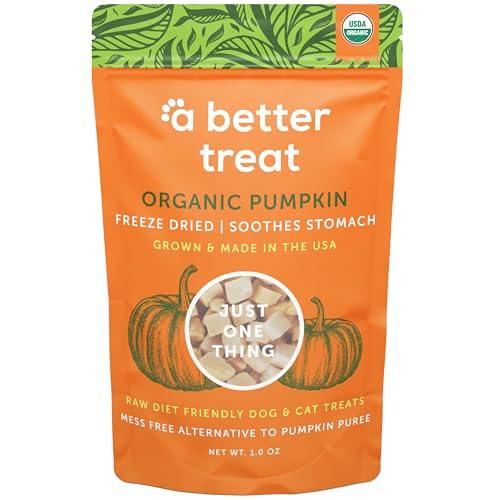
Pumpkin stands alone as the hero in these freeze-dried treats from A Better Treat—100% organic, no fillers, no surprises. Each chunk contains just 0.2 calories, making them perfect for repetitive training sessions without tipping the calorie scale.
The freeze-drying process locks in natural fiber and nutrients that soothe upset stomachs and support healthy digestion. They’re grain-free, certified USDA Organic, and made in an FDA-regulated US facility. You’ll find them lightweight and non-greasy in your treat pouch, though some picky eaters might find them a bit bland.
| Best For | Pet parents with dogs or cats who have sensitive stomachs, allergies, or need low-calorie training treats that double as digestive support. |
|---|---|
| Primary Ingredient | Pumpkin |
| Form | Chunk |
| Weight | 0.07 pounds |
| Made In | USA |
| Digestive Support | Organic pumpkin |
| Special Diet | Organic |
| Additional Features |
|
- Single-ingredient formula (100% organic pumpkin) with only 0.2 calories per treat, perfect for frequent training without weight gain
- Freeze-dried to preserve natural fiber and nutrients that help soothe upset stomachs and support digestion
- Non-greasy, lightweight chunks that won’t make a mess in your treat pouch or hands
- Bland taste and texture may not appeal to picky eaters who prefer stronger flavors or smells
- Higher price point compared to other treat options, with some customers finding limited value for the amount you get
- Single-flavor option might not provide enough variety for pets who get bored easily
3. Onward Hound Soft Bison Dog Treats
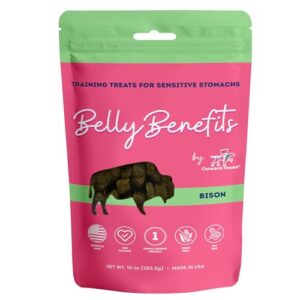
Bison brings something special to the table—a novel protein that sidesteps common allergens while staying gentle on delicate digestion. These soft, pellet-shaped treats clock in at just 3.5 calories each, letting you reward every sit and stay without guilt.
The prebiotic fiber promotes gut health, and the chewy texture works beautifully for puppies, seniors, and small breeds alike. Made in the USA without corn or soy, they’re designed specifically for training dogs with touchy tummies, though the molasses content won’t suit every sensitive system.
| Best For | Dogs with food sensitivities or allergies who need low-calorie training treats that won’t upset their stomachs. |
|---|---|
| Primary Ingredient | Bison |
| Form | Pellet |
| Weight | 10 ounces |
| Made In | USA |
| Digestive Support | Prebiotic fiber |
| Special Diet | Single-source protein |
| Additional Features |
|
- Only 3.5 calories per treat makes them perfect for frequent training sessions without weight gain
- Single-source bison protein avoids common allergens like chicken or beef
- Soft texture works great for puppies, seniors, and small breeds who struggle with hard treats
- Molasses ingredient may still trigger digestive issues in some sensitive dogs
- Not all dogs enjoy the bison flavor or soft pellet texture
- May not be suitable for dogs with specific allergies to eggs, peas, or potatoes
4. Blue Buffalo Dog Biscuits
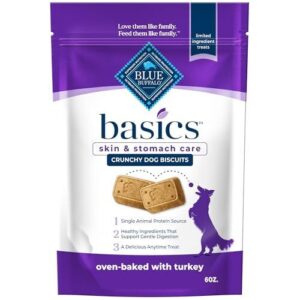
Turkey is the main attraction in these crunchy, bone-shaped biscuits, offering a gentle single-protein option for dogs who react poorly to chicken or beef. At 44 calories per piece, they’re sized for quick training rewards, with flaxseed adding omega-3s for skin support.
The natural grain blend—oats and barley—keeps digestion steady, while the firm texture helps scrub away plaque between sessions. They’re straightforward, reliable, and free from artificial preservatives, making them a solid pick for food-sensitive pups who need consistent training fuel.
| Best For | Dogs with food sensitivities who need a simple, single-protein training treat that won’t upset their stomach or skin. |
|---|---|
| Primary Ingredient | Turkey |
| Form | Dry |
| Weight | 6 ounces |
| Made In | USA |
| Digestive Support | Gentle digestion |
| Special Diet | No chicken/beef/dairy |
| Additional Features |
|
- Real turkey as the first ingredient with no common allergens like chicken, beef, dairy, or corn
- Omega-3s from flaxseed support healthy skin and a shiny coat
- Crunchy, oven-baked texture helps clean teeth while rewarding good behavior
- At 44 calories per biscuit, they’re higher in calories than some training treats
- Some dogs may not find the turkey and potato flavor appealing
- Limited availability in physical stores means you might need to order online
5. Purina Digestive Health Dog Treats
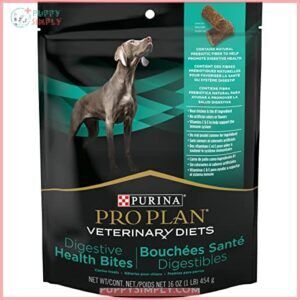
Real chicken leads the ingredient list in these soft, savory chews, paired with natural prebiotic fiber to nourish beneficial gut bacteria and support smooth digestion. They’re formulated without artificial colors or flavors, making them gentle on reactive stomachs, while vitamins C and E add immune support during training sessions.
The soft texture works well for dogs with dental sensitivity, and the small size lets you reward frequently without overloading your pup’s system—perfect for consistent, stomach-safe training.
| Best For | Dogs with sensitive stomachs or digestive issues who need gentle, vet-formulated treats that support gut health without triggering flare-ups during training. |
|---|---|
| Primary Ingredient | Chicken |
| Form | Chew |
| Weight | 16 ounces |
| Made In | Not specified |
| Digestive Support | Prebiotic fiber |
| Special Diet | Soft chews |
| Additional Features |
|
- Real chicken as the first ingredient with natural prebiotic fiber to promote healthy digestion and beneficial gut bacteria
- Soft, easy-to-chew texture ideal for dogs with dental sensitivity or older pups who struggle with hard treats
- Includes immune-boosting vitamins C and E, with no artificial colors or flavors that could upset sensitive systems
- Not suitable for dogs with chicken or grain allergies due to wheat bran and corn protein in the formula
- Some customers reported inconsistent product quality or packaging issues upon delivery
- Individual results vary—may not work for every dog’s specific digestive needs, and veterinary guidance is recommended
6. Whole Life Probiotic Dog Treats
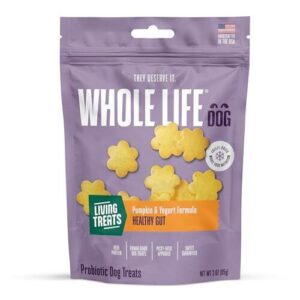
Greek yogurt’s live cultures deliver probiotics straight to your dog’s gut in these freeze-dried treats, supporting healthy digestion and relieving occasional tummy troubles like gas or loose stools. With just six natural ingredients—chicken, potato, pumpkin, yogurt, flaxseed, and apple—there’s nothing artificial to irritate sensitive systems.
The freeze-drying process locks in flavor and keeps those beneficial bacteria active until your pup crunches down. They break easily into smaller rewards, making them training-friendly for dogs who need gentle, gut-supporting snacks throughout the day.
| Best For | Dogs with sensitive stomachs or digestive issues who need gentle probiotic support through tasty, all-natural treats. |
|---|---|
| Primary Ingredient | Chicken |
| Form | Freeze-dried |
| Weight | 3 ounces |
| Made In | USA |
| Digestive Support | Live active cultures |
| Special Diet | Human-grade |
| Additional Features |
|
- Live active cultures from Greek yogurt support healthy gut bacteria and relieve gas, diarrhea, and constipation
- Only six simple, natural ingredients with no preservatives or artificial flavors
- Freeze-dried format locks in nutrients and flavor while staying shelf-stable
- May be too crunchy for small dogs without breaking them into smaller pieces
- Quality and consistency could vary between different batches
- Some dogs might be sensitive or allergic to specific ingredients like chicken or dairy
7. Freeze Dried Salmon Dog Treats
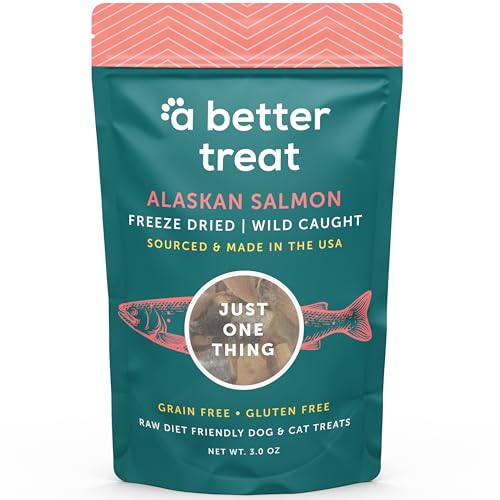
Wild-caught salmon brings omega-3s and protein in one pure ingredient, making these freeze-dried treats ideal for dogs who react to chicken or beef. At roughly 8 calories per piece, they deliver concentrated nutrition without overloading sensitive stomachs during training.
The crisp, light texture breaks easily for smaller rewards, and that natural fish oil promotes healthy skin and joints while EPA and DHA help reduce inflammation. You’re getting digestible amino acids with zero fillers—just straightforward fuel your pup’s belly can handle.
| Best For | Dogs with food sensitivities or allergies who need a single-ingredient, high-protein treat that supports skin, coat, and joint health. |
|---|---|
| Primary Ingredient | Salmon |
| Form | Raw |
| Weight | Not specified |
| Made In | USA |
| Digestive Support | Single ingredient |
| Special Diet | Gluten-free/grain-free |
| Additional Features |
|
- Pure wild-caught Alaskan salmon with no fillers, grains, or additives—just natural omega-3s and protein
- Breaks easily into smaller pieces for training or portion control, at around 8 calories per treat
- Safe for dogs with allergies, sensitive stomachs, or diabetes, plus supports healthy skin and joints
- Strong fishy smell that some pet owners might find off-putting
- Pricier than many conventional dog treats at $16.99
- Pieces may arrive crushed or contain tough salmon skin that’s harder to chew
Tips for Introducing New Treats Safely

When you find a treat that looks promising for your dog’s sensitive stomach, it’s tempting to offer it right away. But introducing new treats too quickly can backfire, triggering the very digestive upset you’re trying to avoid.
Here’s how to make the switch smooth and safe for your pup.
Monitoring for Adverse Reactions
When you introduce a new treat, watch your dog closely for the first 24 hours—reactions like vomiting or diarrhea signal trouble.
If you see hives, breathing issues, or persistent digestive upset, contact your veterinarian immediately. Early detection through careful observation protects dogs with sensitive stomachs and food allergies, ensuring your training sessions stay safe and effective.
Keeping a Treat Diary
Once you spot a reaction, the next step is treat tracking—a simple diary that protects your dog’s digestive health. Record each treat’s name, portion size, and any changes in stool or behavior within 24 hours.
This ingredient logging helps you connect specific proteins or additives to sensitive stomach issues, turning your training optimization into a science that keeps your pup comfortable and thriving.
Adjusting Based on Dog’s Response
Your diary reveals patterns—now act on them. If you notice digestion issues like soft stool or discomfort, cut the treat size in half or switch to a grain-free option with simpler ingredients.
Watch canine feedback closely: a wagging tail says keep going, while hesitation means slow your training pace. Reward timing matters too—space treats 60 to 80 seconds apart so stomach monitoring shows you what actually benefits your dog’s digestive health.
Training Strategies for Dogs With Sensitive Stomachs

Training a dog with a sensitive stomach takes a bit more planning than your typical reward-based session. You’ll want to keep portions small, stay consistent with your approach, and make sure those treats fit into your dog’s overall diet without causing digestive upset.
Here’s how to train effectively while keeping your pup’s stomach happy.
Using Small, Frequent Rewards
When you’re training a sensitive stomach dog, timing is everything. Give each reward immediately after the correct behavior—think small bites that disappear in seconds.
These frequent praise moments keep training momentum alive without overloading digestive health. Stick to grain-free dog training treats and watch calorie control closely. Short sessions with quick rewards build skills while protecting your pup’s belly from unnecessary stress.
Combining Treats With Positive Reinforcement
Treats alone won’t lock in new behaviors—you need to pair them with verbal praise, a happy voice, and maybe even a quick game. This layered approach to positive reinforcement keeps canine motivation high while protecting sensitive stomach issues.
Reward timing stays critical: deliver your grain-free dog training treats within two seconds, then add enthusiastic words. Training consistency across everyone in your household prevents confusion and promotes long-term dog health and wellness.
Avoiding Overfeeding During Training
Even brief training sessions can push your dog’s daily calorie limit if you’re not careful with treat portioning. Sensitive stomach dogs need special attention to feeding schedules and dietary balance to maintain dog health and wellness without triggering GI upset.
- Break grainfree dog treats into pea-sized pieces so reward strategies stay frequent yet light
- Track total calories from treats and reduce regular meals to preserve pet nutrition and diet equilibrium
- Consult your vet to set safe calorie control targets that protect digestive comfort
Incorporating Treats Into a Balanced Diet
You’ll safeguard your dog’s sensitive stomach by ensuring treats never exceed 10 percent of daily calories—that’s where smart meal planning and nutrient balance become essential.
Keep training treats under 10 percent of daily calories to protect your dog’s sensitive stomach while maintaining proper nutrition
Adjust regular portions downward when you add grainfree dog treats to honor canine nutrition principles and maintain calorie control. This feeding strategy respects dietary needs while supporting pet nutrition and diet stability, so training and digestive comfort coexist without compromise.
Frequently Asked Questions (FAQs)
What are the best dog training treats for sensitive stomachs?
Your dog’s digestive system deserves the same attention a telegraph operator gave to each careful message.
Look for single-source proteins like turkey or bison, pumpkin for fiber, and probiotics that support gut wellness naturally.
What chews are safe for dogs with sensitive stomachs?
When your dog has digestive issues, look for chews with single-source proteins like turkey or rabbit, gentle carbohydrates such as pumpkin, and probiotic benefits that support gut health without triggering gastrointestinal discomfort.
What is the best snack for a sensitive stomach?
When your pup’s tummy is on the fritz, lean proteins like turkey or rabbit paired with easily digestible carbs such as pumpkin make ideal gentle snack options that support gastrointestinal health without triggering upset.
How to train a dog with a sensitive stomach?
Training methods for sensitive dogs work best when you use tiny, healthy rewards after meals, alternate treats with praise, and keep sessions short.
Watch for gastrointestinal health signs and adjust portions carefully.
Are there any treats specifically made for dogs with sensitive stomachs?
Yes, many brands now craft treats specifically for sensitive stomachs, featuring limited ingredients, grain-free formulas, and probiotic benefits.
These products prioritize gut health and canine wellness while avoiding common dietary restrictions that trigger digestive upset.
Are there any treats that are easier to digest?
Soft, chewy treats with probiotics and simple proteins like turkey or bison digest more smoothly than hard biscuits.
Grain-free treats and pumpkin-based options also ease digestive issues, offering gentle ingredients that support sensitive stomachs effectively.
What should I do if my dog has an adverse reaction to a treat?
Stop the treat immediately and watch for vomiting, diarrhea, or swelling. Contact your veterinarian if symptoms persist beyond 12 hours or worsen—emergency care may be needed for severe gastrointestinal issues.
Can I make homemade training treats for sensitive stomachs?
You can absolutely make homemade treats for dogs with sensitive stomachs. Start with single-source proteins like turkey or rabbit, add pumpkin or sweet potato, avoid grain and common allergens, and test ingredients individually for safety.
How long do sensitive stomach treats stay fresh?
Think of freshness like a ticking clock—most sensitive stomach treats stay good for 6 to 12 months unopened, then 1 to 3 months after opening when stored properly in airtight containers.
Are there treats safe for multiple food allergies?
Yes—look for hypoallergenic options with novel proteins like rabbit or duck, grain-free formulas, and single-ingredient muscle meat treats.
Probiotic benefits support gut healing, while limited ingredients minimize food sensitivities and intolerances.
Conclusion
Will your next training session end in celebration or another round of digestive upset? That answer depends entirely on the choices you make today.
Armed with knowledge about limited ingredients, hypoallergenic formulas, and gentle proteins, you can confidently select the best training treats for sensitive stomachs. Your dog deserves rewards that strengthen their skills without weakening their gut—and now you have the roadmap to make that happen.