This site is supported by our readers. We may earn a commission, at no cost to you, if you purchase through links.

Your dog just gave you those eyes—the ones that make you feel guilty for eating anything within a five-foot radius. You’re holding a bowl of mashed potatoes, and now you’re wondering if sharing a spoonful would hurt. It’s a fair question, and more complicated than you’d expect.
Plain mashed potatoes aren’t toxic to dogs, but the version on your dinner table almost certainly has ingredients that are. The difference between a safe bite and a vet visit often comes down to what’s in the bowl—not the potato itself. Knowing exactly what to watch for makes all the difference.
Table Of Contents
- Key Takeaways
- Yes, Dogs Can Eat Plain Mashed Potatoes
- When Are Mashed Potatoes Unsafe?
- Can Dogs Eat Instant Mashed Potatoes?
- Why Raw Potatoes Are Dangerous
- How Much Mashed Potato is Safe?
- Are Mashed Potatoes Healthy for Dogs?
- Which Dogs Should Avoid Them?
- Signs Mashed Potatoes Upset Dogs
- How to Serve Them Safely
- Better Potato Alternatives for Dogs
- Frequently Asked Questions (FAQs)
- Can dogs eat mashed potatoes?
- Can dogs eat raw potatoes?
- Can dogs eat mashed sweet potatoes?
- Can dogs eat mash?
- Can dogs eat baked potatoes?
- Are mashed potatoes good for a dog?
- What happens if my dog eats a boiled mashed potato?
- Is it okay for dogs to eat butter?
- How much mashed potatoes can I give my dog?
- Are there any health benefits from giving my dog mashed potatoes?
- Conclusion
Key Takeaways
- Plain mashed potatoes are safe for dogs in small amounts, but only if they’re free of butter, garlic, onion powder, salt, and dairy — those add-ins are the real danger, not the potato itself.
- Raw potatoes contain solanine, a natural toxin that can cause vomiting, weakness, and neurological symptoms, so always cook potatoes thoroughly and cut away any green spots or sprouts before serving.
- Keep portions small — one to two tablespoons, a few times a week at most — and skip them entirely if your dog is diabetic, overweight, or on a prescription diet.
- Dogs showing vomiting, bloating, skin reactions, or unusual lethargy after eating mashed potatoes should be seen by a vet, since these signs point to digestive upset or, in worse cases, toxin exposure.
Yes, Dogs Can Eat Plain Mashed Potatoes

Good news — plain mashed potatoes are safe for dogs when prepared the right way. The key is in the details, and a few simple rules make all the difference. Here’s what to keep in mind before sharing a spoonful with your pup.
If you’re also wondering about dairy-based toppings, cheese safety for dogs is worth a quick read before you start mixing anything in.
Cooked Potatoes Only
Cooking potatoes before serving them to your dog isn’t optional — it’s essential. Raw potatoes contain solanine, a natural toxin that can cause serious harm. Heat breaks that down and makes the potato far safer and easier to digest. Properly prepared potatoes offer valuable micronutrient content for your pet.
Here are the best pet-friendly cooking methods:
- Boiling softens potatoes without adding any fat
- Steaming preserves nutrients and skips butter or oil entirely
- Baking plain works well if you skip all toppings
- Microwaving is quick, but avoid adding salt or dairy
- Mashing after cooking creates a smooth, easy-to-eat texture
Plain and Unseasoned
Once the potato is cooked, what you leave out matters just as much as what you put in. Plain means exactly that — no butter, no milk, no salt, no garlic or onion powder.
A homemade plain mash made with just cooked potato and water is the safest choice. That unseasoned consistency is what keeps it friendly for your dog’s digestive system.
Small Portions Matter
Even plain mashed potatoes can cause trouble if you serve too much at once. One to two tablespoons is a reasonable starting point for most dogs.
Here’s why keeping portions small actually helps your dog:
- Prevents weight gain from calorie-dense carbohydrates
- Reduces digestive upset like gas or diarrhea
- Limits sodium and additive exposure
- Controls blood sugar spikes
- Keeps nutrient balance intact
Occasional Treat Only
Keeping portions small is a great start — but how often matters just as much. Think of mashed potatoes the way you’d think of a training reward: something small, occasional, and meaningful.
Treat motivation works best when the treat stays special. Feeding it too often turns an occasional indulgence into a daily habit, which can quietly crowd out the balanced nutrition your dog actually needs.
When Are Mashed Potatoes Unsafe?

Plain mashed potatoes are fine, but the version on your dinner table is a different story. Most recipes load in ingredients that are genuinely harmful to dogs. Here’s what to watch out for before you share a spoonful.
Garlic and Onion Powder
Garlic and onion powder are two of the most dangerous ingredients you can accidentally serve your dog. Both belong to the Allium family, and even tiny amounts can destroy your dog’s red blood cells — a condition called Allium poisoning. The powder form is especially concentrated, making it far more potent than fresh garlic or onion.
Garlic and onion powder can destroy your dog’s red blood cells — even in tiny amounts
Always check your mashed potatoes before sharing.
Butter and Heavy Cream
{"annotations":null,"audio":null,"content":null,"function_call":null,"refusal":null,"role":"assistant","tool_calls":[]}
Cheese and Milk
Cheese and milk might seem harmless, but both can quietly upset your dog’s stomach. Most dogs are lactose intolerant, meaning they lack enough lactase — the enzyme that breaks down milk sugar — to digest dairy comfortably.
Here’s what that can look like:
- Loose stool or gas after a small taste
- Recurring bloating if dairy becomes a habit
- Skin itching linked to a dairy allergy
Cheese portion size matters too. Cheese is more concentrated than milk, so even a small cube delivers a bigger fat and protein hit. Milk fat content and dairy protein types like casein and whey affect how your dog’s gut responds — and not always gently.
Too Much Salt
Salt is easy to overlook, but it’s one of the biggest hidden risks in mashed potatoes for dogs. Even a modest amount can raise blood sodium levels, pull fluids out of tissues, and trigger dehydration risk before you notice anything is wrong.
Too much salt can also strain the kidneys and raise blood pressure — a real concern for dogs with heart or kidney conditions. A veterinarian will often flag sodium restriction immediately for those dogs.
Spicy Seasonings
Spicy seasonings don’t belong anywhere near your dog’s bowl. Capsaicin — the compound that gives chili peppers their heat — irritates a dog’s digestive tract fast. Even small amounts can cause:
- Drooling and stomach cramps
- Vomiting or watery diarrhea
- Visible discomfort and restlessness
Garlic, chives, and parsley are equally dangerous. Skip dill and any global spice blends too — they’re not worth the risk.
Can Dogs Eat Instant Mashed Potatoes?

Instant mashed potatoes might seem like a harmless shortcut, but the ingredient list tells a different story. Most store-bought mixes are loaded with things your dog really doesn’t need. Here’s what to watch for before you share any with your pup.
If you’re looking for a safer snack alternative, raw green beans for dogs are a crunchy, low-calorie option worth keeping on hand.
Check Ingredient Labels
The back of that box tells you more than the front ever will. Read the full ingredient list — not just the front label.
Ingredients appear in order by weight, so whatever’s listed first is present the most. Look for names like garlic powder, onion powder, or "spices," since these broad terms can hide toxic ingredients for dogs without making it obvious.
Hidden Salt Content
Even if the label seems mild, instant mixes pack hidden sodium. Manufacturers routinely add salt, sodium phosphates, and sometimes MSG to improve texture and shelf life. A single human-sized serving can carry far more sodium than a dog’s body tolerates safely.
That’s why plain homemade mashed potatoes — made with just potatoes and unsalted water — are always the safer choice.
Dairy-based Mixes
Many instant mashed potato mixes rely on dairy-based powder blends — things like milk powder, whey protein, or sodium caseinate — to recreate that creamy texture.
These ingredients include butterfat and lactose, which dogs often struggle to digest. That combination can trigger bloating, gas, or loose stools, especially in dogs already sensitive to dairy.
Artificial Flavors
Dairy isn’t the only concern. Instant mixes often list "artificial flavor" on the label — a catch-all term that can hide dozens of synthetic aroma compounds designed to mimic butter, cream, or sour cream.
The FDA doesn’t require manufacturers to disclose every ingredient inside that blend. Your dog could be reacting to something you can’t even identify by reading the bag.
Safer Homemade Option
So what’s the fix? Just make it yourself. Boil or bake a plain potato, mash it with nothing added, and you’re done. No hidden salt, no mystery flavors, no dairy. It takes about ten minutes and you know exactly what’s going into your dog’s bowl. That kind of ingredient control is something no instant packet can offer.
Why Raw Potatoes Are Dangerous

Raw potatoes are a different story from the cooked, plain kind you’d safely share with your dog. Before you let curiosity get the better of you, there are a few real risks worth knowing about. Here’s what makes raw potatoes genuinely dangerous for dogs.
Solanine Toxicity Risk
Raw potatoes carry a real chemical risk — solanine toxicity — that every dog owner should know about.
Here’s what makes it dangerous:
- Solanine is a plant alkaloid (glycoalkaloid) that naturally defends potatoes against pests
- Symptoms start within 2–24 hours — sometimes as fast as 30 minutes
- Smaller dogs face higher risk from the same portion size
- Cooking doesn’t fully eliminate solanine in already high-concentration potatoes
Green Potato Parts
That green tinge on a potato isn’t just cosmetic — it’s a solanine concentration warning. Green potato toxicity comes from plant alkaloids that build up when potatoes are exposed to light. Cooking doesn’t remove them.
Even a small green section can carry enough toxin to cause serious trouble for your dog. Always cut away all green parts before mashing.
Potato Skins and Sprouts
Skins and sprouts are two parts of the potato you should always remove. The skin concentrates Skin Glycoalkaloids — toxic compounds like solanine and chaconine — far more than the starchy interior does.
Sprouts are even riskier. Sprout Removal is non-negotiable because cooking won’t neutralize what’s inside them.
Here’s what raises the risk fast:
- Light Exposure during storage triggers sprouting and greening
- Potato sprouts grow from the eyes near the skin surface
- Poor Storage Practices accelerate toxic compound buildup
Always peel thoroughly and discard any sprouted potato entirely.
Symptoms of Poisoning
Solanine doesn’t announce itself quietly. Your dog may start with vomiting and diarrhea, then become lethargic — almost like the energy’s been pulled out of them.
Watch for breathing difficulty, coughing fits, or a sudden fever spike. More serious cases bring confusion, loss of coordination, or seizure episodes. Digestive upset often hits first, but neurological symptoms can follow fast.
When to Call Your Vet
Don’t wait to see if things "get better on their own." If your dog ate raw or green potato, call your vet immediately.
Watch for these urgent warning signs:
- Emergency breathing issues or collapse
- Abdominal bloating signs after eating
- Vomiting, diarrhea, or acting lethargic and weak
Poison ingestion alert — solanine counts. Your vet can advise on next steps before symptoms worsen.
How Much Mashed Potato is Safe?

Getting the portion right makes all the difference when sharing mashed potatoes with your dog. Too much of even a good thing can cause stomach trouble or tip the calorie balance in the wrong direction. Here’s what to keep in mind when deciding how much to offer.
One to Two Tablespoons
A good starting point is one to two tablespoons — that’s roughly 15 to 30 milliliters. It’s a small, treat-sized amount, not a meal. Use an actual measuring spoon for accurate portion measurement, because a heaped guess can easily double the serving.
After offering that amount, watch your dog closely. Any vomiting or loose stool means mashed potatoes don’t agree with them.
Treat Calorie Limits
Once you’ve measured that tablespoon, the next question is: how does it fit into your dog’s day overall?
Treats — including mashed potatoes — shouldn’t exceed 10% of daily caloric intake. That keeps meals balanced. If you’re giving potato as a treat, reduce your dog’s regular meal portion slightly to compensate. Ask your veterinarian to help you calculate your dog’s daily calorie budget if you’re unsure where to start.
Small Dogs Need Less
If you have a small dog, think of that one-to-two tablespoon guideline as a ceiling — not a starting point. Small dogs need even less. Their stomachs are smaller, their calorie margins are tighter, and even a modest starchy treat can shift their blood sugar more noticeably.
For toy breeds, a cherry tomato-sized piece of plain mashed potatoes is plenty.
Avoid Daily Feeding
Even a perfect portion loses its safety when it shows up every single day. Daily feeding of mashed potatoes quietly shifts them from an occasional treat into a dietary habit — and that’s where problems start.
- Your dog’s complete diet gets crowded out
- Nutrient gaps build slowly, almost invisibly
- Digestive health stability becomes harder to maintain
Keep it occasional. Your veterinarian would agree.
Watch Portion Frequency
Frequency matters just as much as size. Stacking small servings throughout the day adds up fast — even if each one looks harmless. Think of it like snacking: one chip is fine, but a handful every hour isn’t.
Space treats out; keep mashed potatoes to a few times weekly at most, and your dog’s calorie balance stays intact.
Are Mashed Potatoes Healthy for Dogs?

Plain mashed potatoes aren’t just a safe occasional treat — they actually bring a few real nutritional perks to the table. Nothing dramatic, but worth knowing before you decide how often to share them with your dog. Here’s what’s actually in that bowl that could benefit your pup.
Carbohydrates for Energy
Potatoes are a starchy root vegetable, and that starch is basically fuel in disguise. Your dog’s body breaks those complex carbohydrates down into glucose — the main energy source cells run on. That glucose either powers activity right away or gets tucked into glycogen storage in the liver and muscles for later. Each gram delivers four calories of energy.
Here’s what that carbohydrate journey looks like in your dog’s body:
- Starch from mashed potatoes breaks down into simple sugars during digestion
- Glucose enters the bloodstream, triggering blood sugar regulation
- Cells convert glucose into ATP, the molecule that actually powers movement and organ function
- Leftover glucose gets stored as glycogen for energy between meals
- When glycogen runs low, the body taps fat reserves next
In a balanced canine diet, carbohydrates like these support everyday energy needs — breathing, heart function, even brain activity. That said, mashed potatoes alone aren’t a complete pet nutrition solution. Think of them as a small energy boost, not a meal replacement.
Potassium for Muscles
Here’s something worth knowing: potatoes naturally contain potassium, an electrolyte your dog’s body genuinely needs. Potassium helps generate the electrical signals that tell muscles when to contract and when to relax. Without enough of it — a condition called hypokalemia — muscles can cramp, weaken, or behave erratically.
Plain mashed potatoes offer a small, food-based way to support that electrolyte balance between meals.
Fiber for Digestion
Potatoes carry a quiet bonus: dietary fiber. There are two kinds worth knowing — soluble and insoluble — and both do something useful.
Here’s what fiber actually does for your dog’s digestion:
- Soluble fiber slows sugar absorption by forming a gel in the gut
- Insoluble fiber adds stool bulk, keeping things moving regularly
- Fiber feeds beneficial gut bacteria, supporting a healthier gut microbiome
- Bacterial fermentation produces short-chain fatty acids that protect colon cells
- Together, both fiber types promote digestive regularity and comfort
Vitamin B6 Support
Here’s a nutrient worth noticing: potatoes contain vitamin B6, a water-soluble vitamin that quietly does a lot of heavy lifting in your dog’s body.
It assists amino acid metabolism — basically how your dog processes protein — and helps produce hemoglobin, which carries oxygen through the bloodstream. It also plays a role in immune function and keeping blood sugar balanced.
Not a Complete Meal
Think of mashed potatoes like a side dish at dinner — tasty, but not the whole meal. On their own, they can’t cover your dog’s nutritional needs.
There’s protein deficiency, essential fats missing, and real mineral gaps — especially calcium.
Dogs need complete canine nutrition from AAFCO approved foods. Plain mashed potato is a treat, not a replacement.
Which Dogs Should Avoid Them?

Plain mashed potatoes are fine for most healthy dogs, but not every dog is in that group. Some pups have health conditions that make even a small bite worth reconsidering. Here’s who should probably skip the mashed potatoes altogether.
Dogs With Diabetes
Diabetic dogs should skip mashed potatoes entirely. The carbohydrates digest quickly, causing sharp blood sugar spikes that make insulin management harder to maintain.
Even a small portion can disrupt the careful balance between insulin dosing, diet control, and glucose monitoring your vet has worked to establish. For diabetic dogs, consistency is everything — and mashed potatoes just aren’t worth the risk.
Overweight Dogs
Similar concerns apply to overweight dogs. Mashed potatoes add extra carbohydrates that can quietly push daily calories over the limit — and weight gain often sneak up fast when treats aren’t tracked.
A solid Weight Management Plan keeps carbohydrate intake in check. For dogs already carrying extra pounds, even a small spoonful works against the progress you and your vet are building together.
Sensitive Stomachs
Dogs with sensitive stomachs need extra thought here. Mashed potatoes can trigger digestive upset — bloating, gas, or diarrhea — especially during a first introduction.
Start with a tiny amount and watch closely. If symptoms appear, pull back and talk to your veterinarian. Bland, plain foods tend to sit easier, but even those aren’t guaranteed safe for every sensitive gut.
Puppies and Seniors
Both puppies and seniors have digestive systems that are still developing or slowing down, which makes plain mashed potatoes a risky choice. A puppy’s gut can react unpredictably, and an older dog’s metabolism isn’t as forgiving. Even a small portion can trigger digestive upset.
When in doubt, skip the potatoes and check with your vet first.
Prescription Diet Dogs
If your dog is on a prescription diet, mashed potatoes are a hard pass — even plain ones. These diets are carefully engineered to hit specific nutrient targets for conditions like kidney disease, digestive disorders, or food allergies. Slipping in an extra food can quietly throw off that balance.
- Carbohydrate levels are often precisely controlled
- Therapeutic fiber ratios support specific gut needs
- Protein and mineral content is condition-matched
- Your veterinarian’s feeding plan depends on consistency
Signs Mashed Potatoes Upset Dogs

Even plain mashed potatoes can cause trouble for some dogs, especially if their stomach isn’t used to them. Your dog can’t tell you something’s wrong, so you’ll need to watch for the signs yourself. Here’s what to look out for after feeding mashed potatoes.
Vomiting or Diarrhea
Vomiting or diarrhea after a new food is your dog’s digestive system saying something didn’t agree with it. Mashed potatoes can trigger gastrointestinal upset, especially on first introduction.
Vomiting often settles within a day, but diarrhea can linger a bit longer. Keep your dog well hydrated during recovery. If symptoms persist beyond 48 hours, call your veterinarian.
Gas and Bloating
Sometimes the trouble isn’t dramatic — it’s just a gassy, uncomfortable dog. Complex carbohydrates in mashed potatoes ferment in the large intestine, where gut bacteria break them down and release gases like carbon dioxide and methane.
- Swallowed air while eating too fast
- Fermentation of undigested starch by gut bacteria
- Altered gut motility trapping gas inside
If your dog looks visibly bloated, call your veterinarian.
Itching or Skin Changes
Skin reactions don’t always scream for attention — sometimes they just quietly itch. An allergic reaction to mashed potatoes can trigger redness, hives, or persistent scratching. Dairy-based additives are common culprits behind food intolerance responses in dogs.
| Symptom | Possible Cause | What to Watch |
|---|---|---|
| Itchy, red skin | Allergy itch triggers | Hives or welts |
| Dry, flaky patches | Starch sensitivity | Rough, scaly areas |
| Open sores | Scratching infection risk | Broken or bleeding skin |
Seek veterinary advice promptly if scratching won’t stop.
Lethargy or Weakness
A dog that seems "off" after eating mashed potatoes may be showing decreased alertness — slower to respond, less interested in play, just not quite themselves. This can stem from solanine exposure, digestive issues, or even a metabolic reaction to unfamiliar ingredients.
Watch for these warning signs:
- Unusual sluggishness or muscle weakness
- Reluctance to move or get up
- Fatigue patterns that worsen over time
Contact your veterinarian if lethargy persists.
Appetite Changes
A sudden shift in how hungry your dog seems is easy to miss. After eating mashed potatoes, disrupted ghrelin and leptin signals can throw off their normal hunger cues — they may seem disinterested in meals or oddly restless before eating. Watch for:
- Skipping meals or eating less
- Sudden increased hunger between meals
- Irregular meal timing patterns
These appetite changes deserve a vet conversation.
How to Serve Them Safely
Plain mashed potatoes can be a safe little treat for your dog — but how you prepare them makes all the difference. A few simple steps in the kitchen go a long way toward keeping things safe and stomach-friendly. Here’s what to do before that first spoonful ever reaches your dog’s bowl.
Boil or Bake Potatoes

Boiling and baking are both safe ways to prepare potatoes for your dog.
Boiling chunks takes roughly 12 to 15 minutes until fork-tender. Baking takes longer — around 45 to 60 minutes at 425°F — but produces a drier, less watery interior, which actually makes for a better mash texture.
Either method works well for canine health as long as you keep it plain.
Remove Skins and Green Spots

Once your potato is cooked, peel and trim it carefully. Potato skin holds higher concentrations of glycoalkaloids — natural compounds that aren’t safe for dogs. Then check for any green parts and cut those out generously, removing nearby tissue too.
Here’s what to watch for:
- Visible green spots anywhere on the flesh
- Soft, bruised, or moldy sections
- Any remaining potato skin fragments
This keeps your mashed potatoes safer.
Mash Without Additives

Now that you’ve trimmed the flesh down to clean, safe pieces, mashing is the easy part — but what you leave out matters most.
Keep it additive-free mash: just potatoes and a little water to reach a smooth, uniform texture. No butter, no milk, no salt, no seasoning. Plain mashed potatoes are the only version safe for dogs.
Cool Before Serving

Once your plain mashed potatoes are ready, don’t rush to the bowl. Cool before serving — always.
Set the container in a cooling water bath to bring the temperature down faster than leaving it on the counter. Stir occasionally so heat escapes evenly.
Here’s a quick checklist before serving:
- No steam rising from the surface
- Mash feels comfortably warm, not hot
- Texture has set and thickened slightly
- You can handle it safely without discomfort
Use as Food Topper
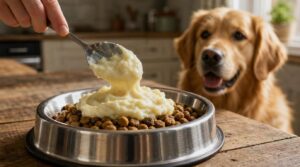
Now that your mashed potatoes are cooled and ready, the easiest way to serve them is as a food topper. Spoon a small tablespoon directly over your dog’s kibble and mix it in. The smooth texture coats the food evenly, which helps picky eaters clean the bowl.
Keep it plain, occasional, and always anchored to your dog’s regular, balanced meal.
Better Potato Alternatives for Dogs

If mashed potatoes feel like too much effort to prepare safely, you’re not alone — plenty of dog owners feel the same way. There are simpler, nutrient-rich options that are easier to serve and gentler on your dog’s stomach. Here are a few vet-approved picks worth adding to your rotation.
Plain Sweet Potatoes
Sweet potatoes are honestly one of the best plain cooked potatoes you can offer your dog. They’re packed with beta carotene, which converts to vitamin A, plus solid potassium levels that support healthy muscles.
- Aids digestion through dietary fiber and resistant starch
- Offers natural sweetness dogs genuinely love
- Rich in antioxidants and B vitamins
- Safe as an occasional vet-approved treat
Cooked Carrots
Cooked carrots are a surprisingly solid swap when you’re looking for safe vegetable options for dogs. Cooking actually boosts carotenoid bioavailability — meaning your dog absorbs far more beta-carotene from a softened cooked carrot than a raw one.
Aim for a tender, mashable texture, and skip added salt. One small caveat: if your dog has known food sensitivities, even cooked carrots can occasionally trigger a reaction.
Pumpkin Puree
Pumpkin puree is one of the gentler, more gut-friendly alternatives to mashed potatoes you can offer your dog. It’s naturally low in calories, rich in pumpkin fiber content, and a legitimate digestive health aid — veterinarians often recommend it for both loose stools and constipation.
Reach for canned puree with one ingredient only: pumpkin. It also delivers a solid vitamin A boost, supporting healthy vision and immune function.
Green Beans
Green beans are a surprisingly solid swap when you want something lighter than mashed potatoes. They’re nutrient-rich beans packed with vitamin C, fiber, and antioxidants — without the starchy calorie load.
- Low-calorie crunch dogs genuinely enjoy
- Easy to prepare — just boil or steam, no additives
- Safe across most bean varieties, including string and snap beans
Their digestive benefits make them a smart, vet-friendly option.
Vet-approved Dog Treats
Sometimes the simplest choice is also the safest. Vet-approved dog treats are formulated with your dog’s health in mind — transparent ingredients, balanced nutrition, and proper portioning built right in. They’re a trustworthy alternative to table food like mashed potatoes, especially if your dog has sensitivities.
Look for options with limited ingredients and clear feeding guidelines adapted to your dog’s size and age.
Frequently Asked Questions (FAQs)
Can dogs eat mashed potatoes?
Yes, plain mashed potatoes are safe for dogs in small amounts. Skip the butter, garlic, and salt. Stick to a tablespoon or two as an occasional treat, and always cook the potatoes thoroughly first.
Can dogs eat raw potatoes?
No, raw potatoes are unsafe for dogs. They contain solanine, a natural toxin that can cause vomiting, weakness, and serious digestive issues. Always cook potatoes thoroughly before sharing any with your dog.
Can dogs eat mashed sweet potatoes?
Mashed sweet potatoes are safe for dogs when plain and fully cooked. Skip the butter, salt, and dairy. Small portions only — they’re nutritious, but the extra carbs add up fast.
Can dogs eat mash?
Plain mash? It depends entirely on what’s in it. Plain cooked potato, served without garlic, onion, butter, or salt, is generally safe for dogs in small, occasional amounts.
Can dogs eat baked potatoes?
Dogs can eat baked potatoes — but only plain, fully cooked, and peeled. Skip the butter, salt, and toppings. Serve a small piece cooled to room temperature as an occasional treat.
Are mashed potatoes good for a dog?
Think of them as a small bonus, not a meal. Plain cooked potatoes offer dogs some energy and potassium, but nutritional benefits are modest. Vet-approved treats usually serve your dog better.
What happens if my dog eats a boiled mashed potato?
Most dogs handle a small amount just fine. You might notice mild stomach upset — loose stools or gas — but it usually passes quickly. If symptoms persist or worsen, call your vet.
Is it okay for dogs to eat butter?
Butter isn’t toxic to dogs, but it’s far from safe. Each tablespoon packs about 12 grams of fat, which can trigger vomiting, diarrhea, or even pancreatitis — especially in sensitive dogs.
How much mashed potatoes can I give my dog?
Keep it simple: plain, unseasoned mashed potatoes only. Small dogs get 1–2 teaspoons; medium dogs, 1–2 tablespoons; large dogs, up to 3 tablespoons. Offer occasionally — once or twice a week at most.
Are there any health benefits from giving my dog mashed potatoes?
Plain mashed potatoes offer modest perks. They provide quick energy from carbs, muscle support via potassium, and vitamin B6 for metabolism. Fiber aids digestion, making them a handy low-calorie training reward occasionally.
Conclusion
A single spoonful of the wrong mashed potatoes could turn a sweet moment into a stressful vet visit. So yes, can dogs eat mashed potatoes?
They can—but only the plain, cooked kind, in small amounts, and not every day. Skip the butter, garlic, and salt. Keep portions tiny. Watch how your dog responds.
The potato itself isn’t the problem; what’s mixed into it usually is. Simple choices protect the dog who trusts you most.