This site is supported by our readers. We may earn a commission, at no cost to you, if you purchase through links.
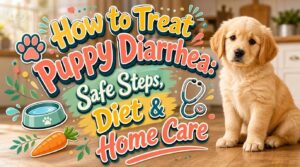
Puppy diarrhea has a way of turning a normal Tuesday into a very stressful one. One minute your pup is fine; the next, you’re cleaning up loose stool and wondering if this is serious.
Most cases clear up within a day or two with simple home care—but some need a vet, fast. The difference matters more than most new owners realize.
Color, consistency, and frequency of your puppy’s stool can tell you a lot about what’s happening inside. Learning how to treat puppy diarrhea starts with reading those signs correctly.
Table Of Contents
- Key Takeaways
- When Puppy Diarrhea is Emergency
- Common Puppy Diarrhea Causes
- Step-By-Step Home Treatment
- Best Bland Diet Foods
- Top 5 Puppy Diarrhea Supplies
- Veterinary Treatment Options
- Prevent Future Puppy Diarrhea
- Frequently Asked Questions (FAQs)
- How do you treat a dog with diarrhea?
- What are the recommended treatments for diarrhea in dogs?
- Why do puppies get diarrhea?
- Are probiotics good for dogs with diarrhea?
- What foods and treats are best for dogs prone to diarrhea?
- How much exercise should I give a puppy with diarrhea?
- Are probiotics or digestive enzymes helpful for diarrhea?
- How do I disinfect my home after a bout of infectious diarrhea?
- How long after diarrhea resolves should I wait to re-start training?
- Can teething contribute to puppy diarrhea?
- Conclusion
Key Takeaways
- Blood in the stool, repeated vomiting, lethargy, or pale gums mean: skip home care and call your vet immediately—these signs escalate fast in puppies.
- Most mild cases resolve with a 12–24 hour food pause, frequent small sips of water, and a bland diet of plain boiled chicken and white rice in a 1:2 ratio.
- Unvaccinated puppies are at serious risk for parvovirus, which can turn fatal within hours—vaccination and parasite prevention are your strongest long-term defenses.
- Stool color, consistency, and frequency are your best recovery tracker; black or tarry stools at any point mean you need a vet, not more home treatment.
When Puppy Diarrhea is Emergency

Most puppy diarrhea clears up with some rest and a bland diet — but not always. Sometimes it’s a sign of something serious that won’t wait. Watch for these red flags that mean it’s time to call your vet right away.
If your puppy’s stomach is already upset, switching to low-fat puppy food options can make that bland diet recovery much gentler on their digestive system.
Blood or Black Stool
If your puppy’s stool looks bright red or black and tarry, don’t wait — call a vet immediately.
- Bright red blood (hematochezia) points to lower GI bleeding
- Black, tarry stools (melena) signal upper GI bleeding — often more serious
- A foul smell alongside dark stool strongly suggests digested blood
Both warrant an emergency vet visit, not home care. Iron supplements cause dark stool.
Repeated Vomiting
Bloody stool is one red flag — but repeated vomiting alongside diarrhea is another sign that something serious may be happening.
When a puppy can’t keep water down, dehydration risk climbs fast. Watch for sticky gums, sunken eyes, or reduced urination.
Don’t attempt home care alone — call your vet.
Lethargy or Weakness
A puppy that’s suddenly quiet, slow to get up, or uninterested in play isn’t just tired — lethargy is a red flag. Combined with diarrhea, it can signal that the body is struggling to cope.
Watch for loss of coordination, reluctance to move, or a blank, disengaged look. These are signs a vet needs to assess right away.
Pale Gums or Dehydration
Lethargy isn’t the only warning sign to watch. Pale gums or dehydration can escalate just as fast.
Press your finger on your puppy’s gums, release, and count how long color returns — more than two seconds signals trouble.
Dry, tacky gums and slow skin tenting confirm fluid loss.
Get veterinary help immediately.
Unvaccinated Puppy Diarrhea
An unvaccinated puppy has no defense against parvovirus — and parvovirus hits fast. What looks like simple puppy diarrhea can turn life‑threatening within hours.
In unvaccinated puppies, parvovirus can turn simple diarrhea life-threatening within hours
The vaccination gap leaves their immune system wide open. Skip the wait-and-see approach here. Call your vet immediately, isolate your puppy from other dogs, and don’t attempt a bland diet alone as a fix.
Common Puppy Diarrhea Causes
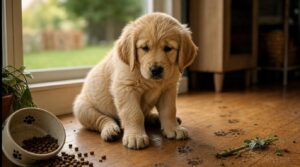
Diarrhea in puppies rarely shows up without a reason — something triggered it. Knowing the cause helps you respond faster and smarter. Here are the most common culprits to watch for.
Sudden Food Changes
A sudden food swap is like flipping a switch in the middle of a process — your puppy’s gut simply isn’t ready. Rapid diet shift is one of the most common triggers of puppy diarrhea.
Even a high-quality new food can cause loose stools if the switch happens too fast, because the digestive system needs time to adjust to new proteins, fat levels, and fiber sources.
Parasites and Worms
Intestinal parasites are among the sneakiest causes of puppy diarrhea. Roundworms, hookworms, whipworms, coccidia, and Giardia all disrupt the gut — and puppies pick them up easily through contaminated soil, infected feces, or even skin contact.
Hookworms, for instance, can burrow directly through your puppy’s paws.
A fecal parasite test confirms the culprit, since deworming works best when matched to the specific parasite.
Bacterial Infections
Bacteria like Salmonella, E. coli, and Clostridium are real troublemakers for puppies. These gram-negative bacteria can release endotoxin when disrupted, making symptoms hit harder and faster.
- Sudden watery diarrhea with abdominal discomfort
- Vomiting and nausea alongside loose stools
- Unexplained exhaustion or fever
- Swollen lymph nodes in severe cases
- Rapid dehydration from fluid loss
Parvovirus or Distemper
Two viral diseases stand above the rest regarding serious puppy diarrhea: parvovirus and distemper. Parvovirus hits fast — expect severe vomiting, bloody diarrhea, and rapid dehydration. Distemper casts a wider net, affecting the gut, lungs, and nervous system.
Both spread easily. Both can kill. Vaccination protocols are your puppy’s best defense — skip them, and the risk climbs sharply.
Garbage or Toxin Ingestion
Dogs are notorious for dietary indiscretion — eating garbage, spoiled food, or even dead animals they find outside. Garbage ingestion can trigger vomiting and watery or bloody diarrhea within hours. Some toxic substances go further, causing fever, weakness, or shock.
Watch for these warning signs after any suspected exposure:
- Bloody or watery stool that worsens quickly
- Vomiting paired with lethargy
- Loss of coordination or collapse
Step-By-Step Home Treatment
Most mild cases of puppy diarrhea can be managed at home with a few simple steps. You don’t need special equipment or a medical background — just consistency and close attention. Here’s what to do, in order.
Pause Solid Food Safely
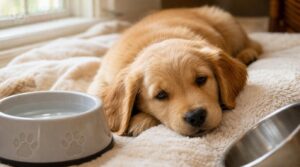
When your puppy has diarrhea, a short food pause gives the gut a chance to settle. Withhold solid food for 12–24 hours, but keep fresh water available the whole time.
Watch for lethargy or tacky gums — those signal dehydration.
Once stools start firming up, restart solids gradually with small bland portions rather than jumping straight back to a full normal meal.
Offer Frequent Water
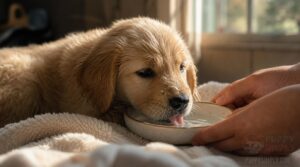
Once you’ve paused food, water becomes your puppy’s most important resource. Diarrhea drains fluids fast, so offer water frequently — small sips every few hours rather than a full bowl all at once. Small amounts reduce the chance of vomiting.
- Watch for clear, frequent urination as a sign hydration is improving
- Offer water every 2–3 hours if your puppy is alert
- Switch to an oral electrolyte solution if plain water isn’t enough
- Avoid forcing fluids if your puppy is too weak to drink
- Pale gums or skin that won’t bounce back means get to a vet
Use Bland Meals
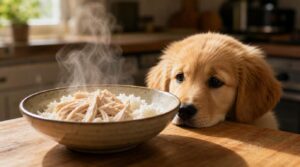
Once your puppy is ready to eat again, keep it simple. A bland diet gives the gut a chance to recover without extra stress.
The go-to bland food recipe is plain boiled chicken and white rice — nothing added. It is soft, low‑fat, and easy to digest. Skip any seasoning entirely.
That plain simplicity is exactly what an irritated digestive tract needs right now.
Feed Small Portions
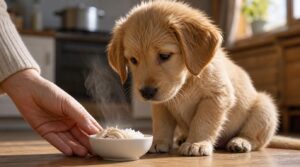
Think of each meal as a small test. You’re not just feeding your puppy — you’re checking how well the gut processes food right now.
Feed every 2–3 hours, offering only a few tablespoons of the boiled chicken and white rice mix. Small, frequent meals reduce gut strain far better than one or two larger servings.
Monitor Stool Changes
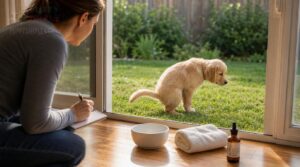
Watch the stool — it tells you how recovery is going. After each bowel movement, do a quick stool consistency check: is it still watery, or starting to firm up?
Note any mucus presence or black tarry stools—both of which need a vet call.
A simple daily bowel log tracking color, texture, and frequency makes vet communication faster and more accurate.
Best Bland Diet Foods
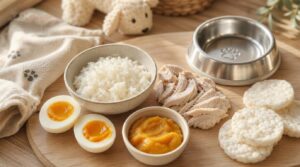
When your puppy’s stomach is upset, what you feed them matters just as much as when you feed them. A few simple, easy-to-digest foods can do most of the heavy lifting during recovery. Here are the best bland diet options to help settle things down.
Boiled Skinless Chicken
Boiled skinless chicken is the backbone of any bland diet for a puppy with diarrhea. It packs roughly 31 g of protein per 100 g with only about 3.6 g of fat — gentle on a recovering gut. Shred it fine, skip the salt, and serve it warm in small portions every few hours.
Plain White Rice
Plain white rice is the quiet workhorse of a bland diet. It’s easy to digest, naturally gluten-free, and low in fat — exactly what an upset puppy stomach needs.
Cook it plain with no salt or butter, using roughly 2 cups of water per cup of rice, simmered on low for 18–25 minutes.
Mix it with shredded chicken at a 2:1 rice-to-chicken ratio.
Canned Pumpkin Puree
A spoonful of plain canned pumpkin puree can do a lot of quiet work in a bland diet. Its soluble fiber absorbs excess water in the gut, which helps firm up loose stools.
Add about ½ teaspoon per meal — no more.
Always check the label: use plain puree only, never pumpkin pie filling, which contains sugar and spices that make diarrhea worse.
Low-fat Turkey
Turkey is another solid option when chicken isn’t available. Use skinless turkey breast — it’s lean, easy to digest, and gentle on an irritated gut.
Boil it plain—no seasoning, no butter. Shred it finely and mix it with white rice using the same 2:1 rice-to-protein ratio.
Keep portions small, and skip deli or packaged turkey, which often hides added salt.
Top 5 Puppy Diarrhea Supplies
Having the right supplies on hand makes home care a lot easier when your puppy’s stomach is off. A few simple products can help keep them hydrated and on the road to recovery. Here are five worth keeping in your puppy first-aid kit.
1. Mahatma Organic White Rice
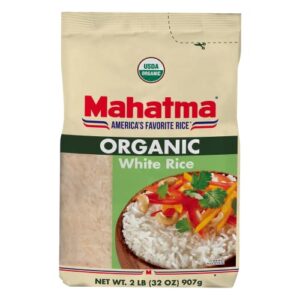
When your puppy’s stomach is off, plain white rice is one of the simplest tools you have. Mahatma Organic White Rice is a solid choice — it’s USDA Organic Certified, Non-GMO Project Verified, gluten-free, and free of preservatives or additives. Just one ingredient: rice.
It cooks in about 20 minutes on the stovetop and comes out fluffy and easy to digest. The mild, neutral flavor pairs well with boiled chicken for a gentle bland diet your puppy can tolerate.
| Best For | Anyone looking for a clean, no-fuss organic white rice that fits a wide range of diets — from busy weeknight cooking to gentle meals for a sick pet. |
|---|---|
| Primary Use | Bland diet base for digestive recovery |
| Form | Dry grain |
| Artificial Additives | None |
| Target User | Humans and pets |
| Digestive Support | Bland, easy-to-digest carb |
| Country of Origin | USA (USDA Organic certified) |
| Additional Features |
|
- Certified USDA Organic, Non-GMO, gluten-free, and preservative-free — just one ingredient, nothing extra.
- Cooks up light and fluffy in about 20 minutes, which is great for quick meals without much fuss.
- Works across a ton of recipes — grain bowls, soups, stir-fries, even rice pudding — and fits vegan, kosher, and gluten-free diets all at once.
- The 2 lb bag goes fast if you’re cooking for a bigger household and means more frequent trips to restock.
- Milder than jasmine or brown rice, so if you want something with more aroma or chew, this probably isn’t your pick.
- Costs a bit more per pound than conventional white rice, which adds up if you’re buying it regularly.
2. Native Pet Chicken Bone Broth Powder
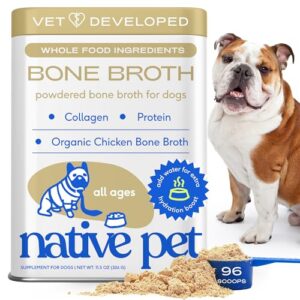
Rice covers the bulk of the bland diet — but hydration is where Native Pet Chicken Bone Broth Powder earns its place. Made with just three organic ingredients (chicken broth, chicken powder, and sweet-potato flour), it’s clean and gentle enough for a sensitive stomach.
Mix it with water and pour it over your puppy’s rice and chicken. It adds flavor, encourages drinking, and delivers collagen and amino acids to support recovery. At 96 servings per container, it goes a long way.
| Best For | Picky eaters, post-surgery recovery, or any dog (or cat) that needs a little extra hydration and a reason to finish their bowl. |
|---|---|
| Primary Use | Appetite stimulant and gut support |
| Form | Powder |
| Artificial Additives | None |
| Target User | Dogs and cats |
| Digestive Support | Gentle on sensitive stomachs |
| Country of Origin | USA (human-grade ingredients) |
| Additional Features |
|
- Only three organic ingredients — no fillers, no mystery additives, just clean and simple
- Collagen and amino acids make it genuinely useful for joint support and recovery, not just a flavor boost
- 96 servings per container means it lasts a while, softening the $39.99 price tag a bit
- Introduce it slowly — some dogs had stomach upset when owners jumped straight to full servings
- Cats can be hit or miss; a few reviewers said their cats wanted nothing to do with it
- Only comes in chicken flavor, so pets with poultry sensitivities are out of luck
3. Brutus Chicken Bone Broth for Dogs
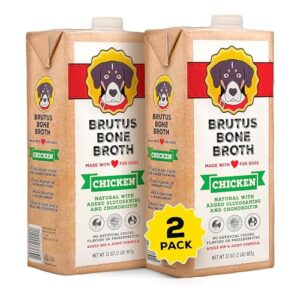
If Native Pet is your go-to powder, Brutus takes a different approach — it comes ready to pour. No mixing, no measuring. Just open the bottle and add it straight to your puppy’s bland meal.
This chicken bone broth is human-grade and low-sodium, making it a safe topper for a sensitive gut. It also includes added glucosamine and chondroitin, which support joint health during recovery. For picky eaters, the natural chicken flavor makes bland rice and chicken far more appealing.
| Best For | Adult and senior dogs who need joint support, extra hydration, or a tasty topper to make bland or therapeutic meals more appealing. |
|---|---|
| Primary Use | Hydration and joint support topper |
| Form | Liquid |
| Artificial Additives | None |
| Target User | Adult dogs |
| Digestive Support | Easy-to-digest nutrient topper |
| Country of Origin | USA (aseptic bottled) |
| Additional Features |
|
- Ready to pour straight from the bottle — no mixing or measuring needed
- Human-grade, low-sodium formula that’s gentle on sensitive stomachs
- Added glucosamine and chondroitin make it a solid pick for older dogs or breeds prone to joint issues
- Labeled for adult dogs only, so it’s not ideal for puppies without a vet’s okay
- Contains torula yeast, which could be a problem for dogs with yeast sensitivities
- Some customers have reported minor leaks or packaging damage during shipping
4. Pedialyte Unflavored Electrolyte Hydration Drink
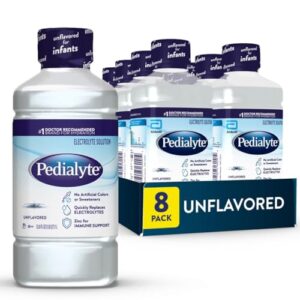
Brutus works great for meals, but what about between them? That’s where Pedialyte Unflavored earns its spot.
Designed for rapid rehydration, it contains three key electrolytes — sodium, chloride, and potassium — to replace what diarrhea strips away. The unflavored formula has no artificial colors or sweeteners, so it’s gentle on a sensitive stomach.
Offer small sips frequently, or mix a little into your puppy’s water bowl. It’s clinically shown to maintain hydration longer than water alone.
| Best For | Pet owners and families dealing with dehydration from illness, heat, or surgery recovery who need a clean, no-frills electrolyte solution. |
|---|---|
| Primary Use | Human rehydration solution |
| Form | Liquid |
| Artificial Additives | None |
| Target User | Humans |
| Digestive Support | Replaces fluids lost to diarrhea |
| Country of Origin | USA |
| Additional Features |
|
- Three essential electrolytes (sodium, chloride, potassium) that replenish what vomiting or diarrhea takes out
- No artificial colors or sweeteners — easy on a sensitive stomach
- Clinically shown to maintain hydration longer than water alone
- The subtle, water-like taste isn’t for everyone — some find it hard to drink
- 1-liter bottles can be tough to finish in time, which means potential waste
- Not a substitute for medical care when dehydration is severe
5. Vet Classics Pet A Lyte Electrolyte Solution
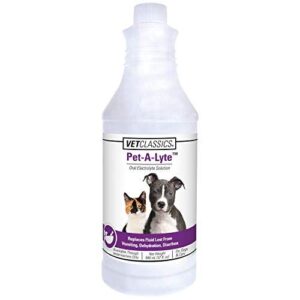
Pedialyte is a solid option, but if you want something formulated specifically for pets, Vet Classics Pet A Lyte is worth keeping on hand.
It contains sodium, potassium, chloride, and dextrose — a balanced mix designed to restore what diarrhea takes. The 32 oz bottle covers multiple episodes, and you can mix it into water or food for picky puppies. It’s NASC-audited and made in an FDA-registered facility. Just refrigerate after opening and use within 30 days.
| Best For | Pet owners who want a vet-formulated electrolyte solution to help dogs or cats bounce back from dehydration, vomiting, or diarrhea at home. |
|---|---|
| Primary Use | Pet oral electrolyte solution |
| Form | Liquid |
| Artificial Additives | None |
| Target User | Dogs and cats |
| Digestive Support | Restores electrolytes from diarrhea |
| Country of Origin | USA (FDA-registered facility) |
| Additional Features |
|
- Balanced electrolyte formula (sodium, potassium, chloride, glucose) designed specifically for pets — not repurposed from human products
- Flexible to give: mix into water, wet food, or use a syringe directly, which helps with picky or sick animals
- NASC-audited and made in an FDA-registered, cGMP-compliant facility, so you know what you’re getting
- The citrus/sulphur smell can be a dealbreaker — some pets flat-out refuse it
- Once opened, you’re on a 30-day clock and it needs to stay refrigerated
- Dosage instructions can get confusing for seriously ill pets, and it’s no substitute for a vet visit if things get bad
Veterinary Treatment Options
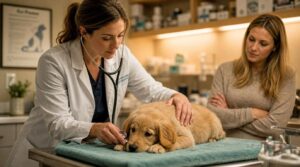
Sometimes home care isn’t enough, and your puppy needs a vet’s help to get better. What your vet does next depends on what’s causing the diarrhea in the first place. Here’s a look at the most common treatments you might expect.
Fecal Parasite Testing
If your vet suspects parasites, they’ll ask you to bring in a fresh stool sample. From there, fecal analysis can take several forms:
- Ova detection via microscopy spots worm eggs
- Antigen testing identifies Giardia in about 15 minutes
- DNA analysis catches parasites even when eggs aren’t visible
- Results guide the right antiparasitic medication
Bloodwork and Imaging
When home care isn’t cutting it, your vet may run a blood test to get a clearer picture. A CBC interpretation checks red and white blood cells, flagging anemia or infection. An electrolyte panel reveals fluid imbalances from ongoing diarrhea, while kidney markers show whether dehydration is stressing organ function.
| Test | What It Measures | Why It Matters |
|---|---|---|
| CBC | Red/white blood cells, platelets | Detects infection, anemia |
| Chemistry Panel | Kidney markers, liver enzymes | Flags organ stress |
| Electrolyte Panel | Sodium, potassium levels | Guides fluid treatment |
If labs aren’t enough, abdominal ultrasound or x-ray findings can reveal blockages or structural problems invisible to bloodwork alone.
Dewormers or Antibiotics
Getting the medication right matters more than acting fast. If parasites are the cause, your vet will prescribe a parasite-specific dewormer — fenbendazole for roundworms, praziquantel for tapeworms.
Bacterial infections call for targeted antibiotics instead.
Using the wrong one simply won’t work.
Overusing dewormers also risks drug resistance, so always follow your vet’s diagnosis before reaching for any treatment.
Fluids for Dehydration
Dehydration sneaks up fast in small puppies — they simply don’t have much fluid reserve to lose.
When diarrhea is severe, oral rehydration alone often can’t keep pace. That’s when a vet steps in with intravenous fluids or subcutaneous lactated Ringer’s solution to restore electrolyte balance quickly and safely.
Watch for these signs that your puppy needs clinical hydration therapy for dogs:
- Gums feel tacky or dry
- Skin tents when gently pinched
- Urine output drops noticeably
- Puppy seems weak or unresponsive
- Vomiting prevents keeping fluids down
At that point, oral rehydration solutions and home monitoring aren’t enough. Veterinary fluid administration is the only reliable fix.
Parvovirus Hospitalization
Parvovirus hospitalization is intensive by design. Your puppy will be placed under strict isolation protocol to protect other patients, since the virus spreads through feces easily.
The veterinary team delivers intravenous fluids to counter dehydration, uses antiemetics to control vomiting, and runs bloodwork to catch complications early.
Recovery nutrition restarts only once vomiting settles.
Prevent Future Puppy Diarrhea
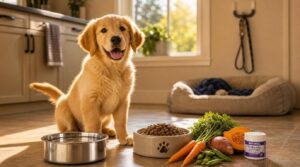
Most cases of puppy diarrhea are avoidable with a few consistent habits. Once your pup is feeling better, it’s worth putting some simple safeguards in place so you’re not back in the same situation a few weeks from now. Here’s what you can do to keep their stomach settled long-term.
Transition Food Slowly
One of the simplest ways to prevent diarrhea is a gradual mixing ratio — start with 25% new food and 75% old, then shift the balance daily over about seven days. Your puppy’s microbiome needs that adjustment time.
If loose stools appear, pause the increase and hold the current mix until symptoms clear, then continue.
Keep Vaccines Current
Vaccines are your puppy’s best defense against canine parvovirus and distemper — two diseases that cause severe, often fatal diarrhea. Follow your vet’s pet vaccination schedule closely, since timing between doses matters for building real immunity.
Keep a written record of each visit. If you miss a dose, ask about a catch-up plan rather than restarting.
Use Parasite Prevention
Keeping up with dog parasite prevention is just as important as vaccines.
Intestinal parasites in dogs — roundworms, hookworms, Giardia — can quietly cause recurring diarrhea even without obvious signs.
Use a monthly prevention schedule and always dose by your puppy’s current weight to avoid under- or over-dosing.
Watch for mild nausea after dosing, and ask your vet if diarrhea continues.
Secure Trash and Toxins
Puppies don’t distinguish between your trash and their toys. A lid trash bin with a stable base stops curious noses from reaching food scraps, wrappers, or chemical residues that trigger toxic ingestion.
Store household chemicals in leak-proof containers with original labels intact so you know exactly what your puppy contacted if something goes wrong. A childproof locked waste area adds the final layer.
Maintain Clean Living Areas
A clean kennel cuts your puppy’s diarrhea risk dramatically. Disinfect hard surfaces daily, wash soiled bedding on a hot cycle, and use separate cleaning tools for stool areas. Always wear gloves, then wash your hands immediately after.
Contain your puppy during cleanup, and keep fresh water bowls clean. Regular fecal tests help you stay ahead of recurring infections.
Frequently Asked Questions (FAQs)
How do you treat a dog with diarrhea?
Start with a short fasting period of 12–24 hours, then offer a bland diet and keep up hydration. Monitor stool changes closely, and contact your veterinarian if things don’t improve.
What are the recommended treatments for diarrhea in dogs?
Treatment starts with oral rehydration, a brief fast, then a bland diet of boiled chicken and rice. Probiotics, fluid therapy, and antibiotics are added only when a vet confirms the need.
Why do puppies get diarrhea?
A puppy’s gut is like a new kitchen—still learning what belongs there. Diet change, bacterial infection, viral infection, parasites, and food intolerance are the most common reasons diarrhea strikes young dogs.
Are probiotics good for dogs with diarrhea?
Probiotics can help, but they’re not a fix-all. For mild diarrhea from stress or diet shifts, gut microbiota support with strains like Enterococcus faecium may ease recovery. They won’t replace treatment for parasites or infections.
What foods and treats are best for dogs prone to diarrhea?
Think of your dog’s gut like a reset button — it needs simple inputs to recover. Stick to plain boiled chicken, white rice, and low-fat protein options when diarrhea strikes.
How much exercise should I give a puppy with diarrhea?
Keep exercise minimal. Short leash walks for bathroom trips only — no running or play. Rest helps the gut heal. If diarrhea worsens or you spot blood, skip walks entirely and call your vet.
Are probiotics or digestive enzymes helpful for diarrhea?
Both can help, but strain selection matters. Veterinary probiotics like FortiFlora support gut microbiome recovery, while digestive enzymes only help when poor digestion is the cause. Neither replaces fluids or targeted treatment.
How do I disinfect my home after a bout of infectious diarrhea?
Start by putting on disposable gloves. Wipe up stool with paper towels, bag them, and seal. Apply diluted bleach, let it sit five minutes, then clean with hot soapy water.
How long after diarrhea resolves should I wait to re-start training?
Wait until your puppy is fully symptom-free for at least 24 hours. Then resume activity gradually, starting at half intensity. If loose stools return, pause immediately and rest another day.
Can teething contribute to puppy diarrhea?
Yes, teething can play a role. Saliva swallowing, increased chewing objects, and dietary shifts during the teething timeline may upset a puppy’s stomach — though parasites or infection are more common culprits.
Conclusion
Picture your puppy back on the floor, tail moving, nose into everything—that’s the goal. Knowing how to treat puppy diarrhea means you can move from panic to action the moment something seems off.
Watch the stool. Offer bland food. Keep water close.
Most cases resolve quietly with simple care. But trust your instincts—if something feels wrong, call your vet.
You’re not overreacting. You’re just paying attention.