This site is supported by our readers. We may earn a commission, at no cost to you, if you purchase through links.

Somewhere between your first corgi cuddle and your third lint roller that week, the question hits: is this normal? It is.
Corgis shed—a lot and all year. That thick double coat that makes them look so impossibly fluffy? It’s also why your couch now has a fur upholstery upgrade you didn’t request.
Two times a year, during spring and fall, the shedding kicks into overdrive in what owners call a "blowout"—think daily shedding, but tripled. The good news is that most of it is manageable with the right routine, the right tools, and a realistic idea of what you’re signing up for.
Table Of Contents
- Key Takeaways
- Do Corgis Shed a Lot?
- Why Do Corgis Shed So Much?
- When Do Corgis Shed Most?
- What Affects Corgi Shedding?
- How Can You Reduce Shedding?
- Best Grooming Routine for Corgis
- Top 5 Corgi Shedding Products
- How to Manage Corgi Hair Indoors
- Frequently Asked Questions (FAQs)
- Are corgis hypoallergenic?
- Do Corgis shed a lot?
- When does a Corgi start shedding?
- Why is my Corgi shedding a lot?
- Are corgis high maintenance?
- Do corgis shed excessively?
- What are the cons of a corgi?
- Why are corgis not cuddly?
- Is there a way to reduce shedding in Corgis?
- Do Corgis shed more than other breeds?
- Conclusion
Key Takeaways
- Corgis shed year-round without breaks, with two major "blowouts" each spring and fall that can triple your normal cleanup load.
- Daily brushing with an undercoat rake is the single most effective habit — it can cut loose fur by up to 60% over time.
- Diet matters more than most owners realize: low-quality food and a lack of omega fatty acids directly worsen shedding.
- You can’t stop the shedding, but consistent grooming, good nutrition, and the right tools keep it from taking over your home.
Do Corgis Shed a Lot?
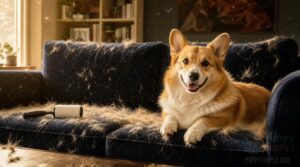
Yes, Corgis shed — a lot. That double coat does its job well, but loose fur comes with the territory.
That dense undercoat is the real culprit, and understanding how double-coated breeds shed their coats can help you stay ahead of the fluff.
Here’s what you actually need to know before your furniture disappears under a layer of fluff.
Quick Answer for Owners
Yes, Corgis shed — a lot. They’re a double-coated dog sitting firmly in the high-shedding category, and that’s just part of the deal.
The good news? Daily grooming with an undercoat rake cuts loose fur by up to 60% over a month.
Common challenges become manageable with the right success strategies and time savers. Owner experiences agree: consistency wins.
Year-round Shedding Level
Corgis shed all year — no off-season, no breaks. That double coat goes through continuous coat renewal, constantly pushing out old hair as new growth takes over. Indoor climate impact matters too: stable indoor temps can keep that cycle running at full speed, even in winter. Expect daily hair accumulation on furniture, clothes, and floors.
- Corgis shed every single day, not just seasonally
- Year-round allergen control matters for sensitive households
- Daily grooming keeps loose fur from taking over
- Indoor living removes natural seasonal "pause" triggers
- Owner coping strategies start with accepting the baseline shedding level
Seasonal Fur Blowouts
Twice a year, the daily shedding cranks up to something else entirely. Spring blowout (March–May) dumps the whole winter undercoat fast — we’re talking clumps, not strands.
Fall shedding hits September–November as the summer coat makes way for a denser one.
Blowout duration variations run two to four weeks. Watch for pre-blowout signs: patchy looseness, increased floor fur, restless scratching.
Pembroke Vs Cardigan Shedding
Both are double-coated breeds, but there’s a real Coat Texture Contrast between them.
The Cardigan Welsh Corgi carries a thicker, longer outer coat with a denser undercoat — more Shedding Volume Contrast than its cousin.
The Pembroke Welsh Corgi sheds consistently but shows clearer Seasonal Shed Variations.
Darker fur on either breed increases Color-Shed Visibility on furniture.
Different Grooming Tool Needs, same daily reality.
Are Corgis Hypoallergenic?
Short answer: no. Hypoallergenic Corgis aren’t a thing — full stop.
Here’s your Hypoallergenic Reality Check: pet dander, not fur, drives most reactions. Dog allergy dander comes from skin flakes and saliva, not the coat itself.
Beyond Fur Allergens, even low-shedding dogs trigger symptoms. Dander Dispersion Sources spread through furniture and air regardless. Allergy management helps, but there’s no guarantee.
Why Do Corgis Shed So Much?
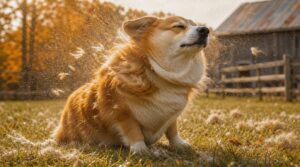
The short answer is biology — Corgis were built for outdoor work, and their coat reflects that. It’s a two-layer system designed to handle weather, dirt, and cold, and shedding is just part of how it maintains itself.
Here’s what’s actually going on under all that fluff.
Double-coat Structure
Think of your Corgi’s coat like a two-layer jacket — a tough outer shell of guard hairs forming the topcoat, and a soft, dense undercoat underneath. That dual-layer composition is classic genetic coat structure for a double-coated dog.
A Corgi’s coat is a two-layer jacket: tough guard hairs on top, soft insulating undercoat beneath
The color layer interaction between layers even changes how the coat looks in different light. Blame the fluffy gene impact if yours has extra-soft fur.
Dense Insulating Undercoat
That soft, fluffy layer under the guard hairs? That’s the thick undercoat doing all the heavy lifting. Its fiber structure traps air close to the skin — basic insulation mechanics, but wildly effective.
It thickens every winter and thins out each spring, even shifting with seasonal color changes. This renewal cycle is exactly why undercoat management matters.
An undercoat rake is your best friend here.
Coarse Protective Guard Hairs
Above that fluffy undercoat sits the topcoat — coarse, stiff guard hairs doing real work. These aren’t decorative. They’re your Corgi’s built-in armor.
- Moisture Resistance — moisture repellent guard hairs shed rain before it soaks through
- Abrasion Defense — coat layers block scrapes and debris from reaching skin
- Color Patterns — pigmentation lives in these guard hairs
- Guard Maintenance — regular brushing keeps the topcoat aligned and functional
Working-breed Coat Genetics
Corgis were built to work outdoors — and their genetics haven’t forgotten that.
Herding coat adaptations hardwired into breed-specific variants mean Corgis usually shed far more than other dogs. Follicle cycle genes drive that constant turnover, while coat color inheritance lives in those same hair structures.
As a doublecoated dog firmly in the high-shedding category, shedding isn’t a flaw. It’s the blueprint.
Natural Oil Protection
Their coat comes pre-loaded with built-in armor — sebum, the skin’s natural oil, plays a huge role in keeping fur water-repellent and resilient. But that protection needs fuel.
Here’s what bolsters it:
- Omega-rich fish oil strengthens the hair shaft
- Flaxseed delivers essential fatty acids daily
- Antifungal properties in natural oils guard damp undercoat
- Omega-3 fatty acids reduce seasonal shedding stress
- Safe dietary supplements for dogs keep coat care consistent
When Do Corgis Shed Most?

Corgis don’t really take breaks from shedding — but sometimes of year are a whole different level.
A few key moments in the calendar (and in your dog’s life) will have you questioning every clothing choice you’ve made.
Here’s when to brace yourself.
Spring Coat Blowout
Spring is peak shedding season — and it hits fast. As daylight increases, melatonin shedding triggers a signal to hair follicles to release the winter undercoat. This daylight hormonal cue kicks off the undercoat renewal process, usually lasting two to four weeks.
Daily brushing with an undercoat rake helps manage spring shedding before fur takes over your furniture. Post-blowout skin care keeps things healthy after the storm.
Fall Coat Blowout
Fall brings its own version of chaos. As days shorten, your Corgi’s double coat shifts gears — swapping the light summer layer for a denser winter undercoat. Sudden warm spells can stretch this out. Grab your undercoat rake daily.
- Shedding peaks late August through October
- Daylight shed triggers signal of the coat change
- Fall environmental factors affect shedding pace
- Fluffy gene effects may reduce intensity slightly
- Post-blowout coat care keeps skin balanced
Year-round Loose Hair
Even after the fall blowout calms down, don’t expect a break. Corgis shed year-round — no off-season. Year-round shedders through and through.
| Factor | Impact on Shedding | What You Can Do |
|---|---|---|
| Aging Coat Changes | Texture shifts over time | Brush daily, adjust tools |
| Genetic Fluffy Variants | Slightly less loose hair | Same routine still applies |
| Indoor Humidity Effects | Dry air loosens more fur | Run a humidifier |
| Dander Control Methods | Reduces airborne allergens | HEPA purifier helps |
| Coat Texture Analysis | Guards shed less than the undercoat | Use an undercoat rake |
Corgi shedding management is a year-round job. Expect loose hair on everything.
Climate and Temperature Changes
Temperature changes directly trigger shedding cycles. Global warming effects mean winters run warmer, which can throw off your Corgi’s seasonal shedding rhythm. Cold weather coat adaptation still happens — but the timing shifts.
Urban heat island impact makes city dogs shed unpredictably year-round. Climate impact on shedding is real. Climate-resilient grooming means staying consistent no matter what the weather does.
Puppy Coat Shedding
Around 6 to 10 months, Corgi puppies enter the Texture Shift Phase — swapping their soft puppy coat for a coarser adult double coat. This is your first real taste of Corgi fur season.
Seasonal Puppy Shedding can surprise new owners. Start your brushing routine early, grab grooming tools for double coats, and consider a shedding control shampoo.
Nutrition for Growth matters too — quality food promotes healthy coat development.
What Affects Corgi Shedding?
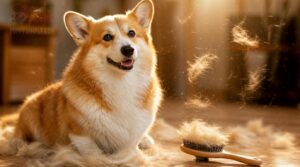
Shedding is normal for Corgis — but some things make it worse than it needs to be. A few factors can quietly push your dog’s coat into overdrive without you even noticing.
Here’s what’s worth paying attention to.
Poor Diet Quality
What you feed your Corgi shows up on your floor. A diet full of ultra-processed foods, added sugars, and limited food variety is basically malnutrition in disguise.
Low fruit grain shortage equivalents in dog food — think poor fiber and protein — weaken the coat fast.
Feed them a high-quality diet, because when you lower the quality of their food, shedding gets worse.
Low Omega Fatty Acids
Think of omega fatty acids as your Corgi’s coat insurance. Without enough Omega-3 and Omega-6, the skin barrier function breaks down — and the fur follows.
Key omega deficiency symptoms to watch for:
- Dull, brittle coat
- Dry, flaky skin
- Excessive shedding
- Slow wound healing
Boost coat health impact through dietary omega sources like salmon, flaxseed, or essential fatty acid supplements.
Stress and Anxiety
Stress hits your Corgi harder than you’d think. Anxiety triggers a cortisol spike that quietly disrupts skin health — and stress-induced shedding follows.
Behavioral signs like restlessness, licking, or hiding tell you something’s off. The gut-brain link makes it worse, affecting digestion and coat condition together. Stress-induced hair loss won’t fix itself, so vet advice on shedding always helps here.
Allergies or Parasites
Fleas, mites, and worms do more than cause discomfort — they wreck your Corgi’s coat. Flea allergies trigger allergic dermatitis, while mite infestations damage skin and cause patchy hair loss. Even worm symptoms can show up on the outside as dull, thinning fur.
Parasite allergens activate your dog’s immune system hard and fast. If the shedding looks sudden or patchy, get vet advice on shedding right away.
Hormonal Changes
Hormones quietly run the show. Pregnancy hormones cause heavy coats, then postpartum shedding hits like a switch flipped. Thyroid impact is real too — both high and low levels trigger excessive shedding. Puppy hormones shift around 6–10 months. Spaying impact often reduces hormonal hair loss long‑term.
- Hormonal imbalances in dogs can cause stress‑induced shedding
- Stress‑induced hair loss looks patchy and sudden
- Health issues causing hair loss need a vet, not guesswork
How Can You Reduce Shedding?
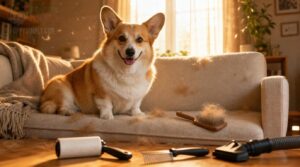
You can’t stop a Corgi from shedding — but you can absolutely get ahead of it.
A few consistent habits make a surprising difference in how much fur ends up on your couch, your clothes, and somehow on your coffee.
Here’s what actually helps.
Daily Brushing Routine
Brush daily — it’s the single best thing you can do for a double coat. Ten minutes with an undercoat brush, then five with a slicker brush. Simple routine, big results. Brushing benefits go beyond loose hair — you’ll spot skin issues early too.
| Brushing Routine | Routine Tips |
|---|---|
| Ideal Timing | Morning before walks |
| Undercoat Brush | 10 mins daily |
| Slicker Brush | 5 mins after |
| Puppy Brushing | Start at 8 weeks |
| Coat Monitoring | Check for mats weekly |
Proper Bathing Schedule
Brushing manages loose hair — but bathing seals the deal.
Bathe your corgi every two to three months. That’s your proper bath frequency. Overbathing strips natural oils and actually increases shedding (counterproductive, right?).
Pre-bath brushing benefits are real — always brush before the water runs.
Use high-quality shampoo, rinse thoroughly, and adjust for life stage: puppy bathing needs and elderly corgi baths differ.
Keep bath time stress low and calm.
High-protein Dog Food
What your corgi eats shows up in their coat. A high-quality diet with strong amino acid profiles keeps fur healthy and reduces excess shedding. Look for foods where animal protein leads the ingredient list.
- Protein sources like salmon, turkey, or duck offer digestibility benefits that your corgi’s coat actually needs
- Senior nutrition matters — older corgis need easily digestible protein to maintain coat health
- Sustainable options like insect-based proteins still deliver complete amino acid profiles
Fish Oil Supplements
Diet lays the groundwork, but fish oil takes it further. A good omega-3 supplement promotes skin hydration and softens the coat from the inside out.
Check the label for EPA and DHA amounts — those are the essential fatty acids doing the real work. Triglyceride forms absorb better than ethyl esters.
Start low to avoid loose stools (yes, that’s a thing).
Regular Vet Checkups
Sometimes, excessive shedding isn’t a grooming problem — it’s a health one. Regular vet checkups catch the stuff you’d never notice at home.
Your vet can help with:
- Early Health Detection — spotting parasites, allergies, or hormonal shifts driving hair loss
- Coat Health Assessments — evaluating dog skin health and coat quality during routine exams
- Preventive Care Plans — including Nutrition Consultations designed for your Corgi’s needs
Don’t skip the annual visit.
Best Grooming Routine for Corgis
Grooming a Corgi isn’t complicated, but the order you do things actually matters. A few simple steps, done consistently, make a real difference in how much fur ends up on your couch.
Here’s what a solid routine looks like.
Use an Undercoat Rake
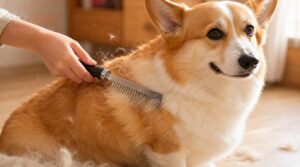
An undercoat rake is your secret weapon here. Those long, rounded teeth glide through your Corgi’s double coat, pulling loose undercoat without yanking guard hairs. Work in short strokes, shoulder to back, on a dry coat.
| What to Do | Why It Matters |
|---|---|
| Rake Selection | Pick 2–3 row stainless teeth |
| Rake Technique | Short strokes, coat grain only |
| Safe Raking | Skip irritated or inflamed skin |
| Rake Care | Clean teeth after every session |
Follow With Slicker Brush
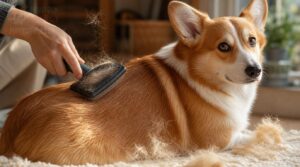
Once the rake does its job, grab your slicker brush — that’s your post-rake care step. Those fine steel bristles catch whatever the rake missed, smooth the guard hairs, and add a little shine enhancement that honestly makes your Corgi looks like it’s posing for a calendar. Short strokes, coat direction only. This two-tool brush sequence benefits your dog’s double coat more than either tool alone.
| Slicker Techniques | Why It Matters |
|---|---|
| Short, gentle strokes | Prevents skin irritation |
| Follow coat direction | Reduces tangle prevention issues |
| Light pressure only | Protects guard hairs |
| Clean bristles after | Extends brush life |
Brush More During Blowouts
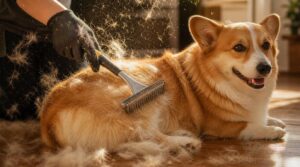
Blowout season is basically your Corgi’s way of redecorating your home — in fur. Double down on brushing now. Corgis shed triple their normal rate during coat blowouts, so your deshedding tool earns its keep here.
- Use section brushing strategies — small areas, not full sweeps
- Undercoat raking first loosens the bulk fast
- Dryer-brush combinations blow out what hands can’t reach
- Watch for hotspots — skin health monitoring matters most now
Avoid Shaving The Coat
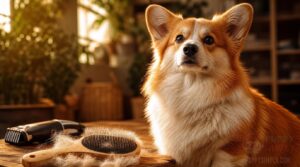
Shaving your Corgi’s double coat feels logical — less fur, right? Wrong.
It strips natural oil protection, leaves the skin vulnerable to sunburn and scrapes, and causes patchy, uneven regrowth that never fully recovers. Insulation loss risks real temperature problems year-round.
Skip the clippers. Your brushing routine and a good deshedding tool handle shedding without wrecking the coat that protects your dog.
Dry With High-velocity Dryer
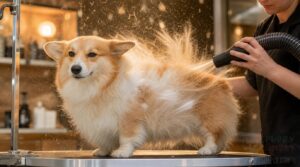
A high-velocity dryer is one of the smartest dog grooming tools you can own. After you bathe your corgi, it blasts loose fur out before it hits your couch.
Use nozzle techniques to target thick spots — behind ears, chest, haunches. Start low for quiet operation tips with nervous dogs.
Adjustable heat settings safety keeps skin protected. Blowout assistance during peak seasons makes undercoat removal genuinely faster.
Top 5 Corgi Shedding Products
The right tools make a real difference with Corgi shedding — and a few solid picks go a long way.
Whether you’re battling daily fur tumbleweeds or surviving a full blowout season, having the right brush, shampoo, and supplement in your corner helps.
Here are five products worth keeping in your grooming stash.
1. FURminator Gray Undercoat Grooming Rake Dogs Cats
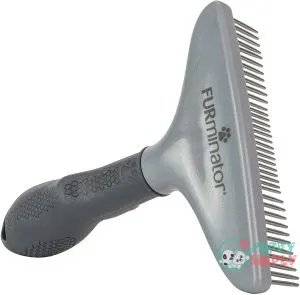
Most Corgi owners are surprised by how much a simple rake can change things. The FURminator Gray Undercoat Grooming Rake is built for exactly this — pulling loose undercoat out before it ends up on your couch.
Its rotating metal teeth reach through the guard hairs without scratching the skin, and the non‑slip handle keeps your grip steady.
At under 7 ounces, it’s light enough for daily use. Just don’t press too hard. Gentle strokes are all you need.
| Best For | Corgi, Golden Retriever, Husky, and other double-coat dog and cat owners who want to cut down on shedding without the daily battle. |
|---|---|
| Primary Use | De-shedding & detangling |
| Target Animal | Dogs & cats |
| Coat Benefit | Removes loose undercoat |
| Skin Benefit | Gentle massage sensation |
| Ease of Use | Ergonomic non-slip handle |
| Key Limitation | Teeth may bend or break |
| Additional Features |
|
- Rotating metal teeth pull out loose undercoat efficiently without scratching the skin
- The non-slip handle is comfortable to hold, even during longer grooming sessions
- At under 7 ounces, it’s light enough for everyday use and most pets tolerate it well
- Metal teeth can arrive bent or get misshapen over time, which may mean swapping it out
- Too much pressure can cut guard hairs or cause discomfort, so you have to stay mindful
- Loose hair tends to fly around during brushing, so expect a little cleanup afterward
2. Hertzko Self Cleaning Slicker Brush

Once you’ve raked out the bulk of the undercoat, a slicker brush finishes the job.
The Hertzko Self Cleaning Slicker Brush ($13.99) is the one most owners keep coming back to. Its fine, angled wire bristles lift surface fur and detangle without scratching skin.
The real win? One button click and the bristles retract, pushing all that collected fur right off. No picking hair out of the brush. Quick, clean, done.
Light enough to use daily without your hand complaining.
| Best For | Pet owners with dogs or cats who shed a lot and want a daily brush that’s quick to clean and easy on the hands. |
|---|---|
| Primary Use | Shedding control & grooming |
| Target Animal | Dogs & cats |
| Coat Benefit | Removes loose hair |
| Skin Benefit | Massages skin gently |
| Ease of Use | Self-cleaning push button |
| Key Limitation | Less effective on short hair |
| Additional Features |
|
- One-button self-cleaning makes fur removal instant — no picking bristles clean by hand.
- Fine, angled bristles detangle and lift loose fur without irritating your pet’s skin.
- Light at just 3.2 oz, so long grooming sessions don’t leave your hand aching.
- Less effective on short-haired dogs, so it may not be the best pick for that coat type.
- The brush head runs a bit large, which makes it awkward to use on very small cats.
- A few users have reported the handle breaking under heavy or aggressive use.
3. 4 Legger Organic Dog Shampoo
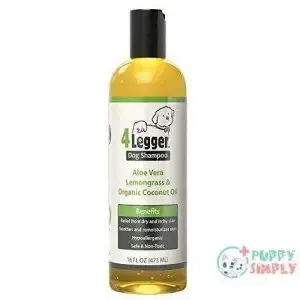
Bath time matters more than most owners think.
4-Legger Organic Dog Shampoo ($17.98, 16 fl oz) is USDA-certified organic — one of the few shampoos that actually earns that label. Organic aloe and lemongrass essential oil soothe itchy, dry skin while loosening dead undercoat during the wash. No sulfates, no parabens, no synthetic fragrance. Just clean ingredients that won’t strip your Corgi’s natural oils.
Fair warning: the lemongrass scent is strong. Some dogs mind it. Most don’t.
| Best For | Dog owners who want a clean-ingredient, USDA-certified organic shampoo for pets with itchy, sensitive, or allergy-prone skin. |
|---|---|
| Primary Use | Coat cleansing & soothing |
| Target Animal | Dogs |
| Coat Benefit | Softens & detangles coat |
| Skin Benefit | Soothes itchy dry skin |
| Ease of Use | Ready-to-use liquid |
| Key Limitation | Strong lemongrass scent |
| Additional Features |
|
- USDA-certified organic with no sulfates, parabens, or synthetic fragrances — genuinely clean formula
- Soothes dry, itchy skin and leaves the coat soft and shiny, often without needing a separate conditioner
- Concentrated and biodegradable, so a little goes a long way and it’s easy on the environment
- The lemongrass scent is strong — some pets (and owners) may find it overwhelming
- Thin, watery texture can feel slightly oily until fully rinsed and dried
- At $17.98, it costs more than most conventional dog shampoos, which adds up if you bathe frequently
4. Wellness Complete Health Small Breed Turkey Oatmeal

What goes in the bowl shows up in the coat. Wellness Complete Health Small Breed Turkey & Oatmeal gives your Corgi real protein — deboned turkey first, plus chicken meal and salmon meal — with omega-3 and omega-6 fatty acids built right in.
That combo directly feeds healthier skin and less shedding over time. No corn, wheat, or soy.
Small kibble, easy digestion. At 28% protein and 16% fat, it’s genuinely solid nutrition, not just pretty packaging.
| Best For | Small-breed adult dogs whose owners want a high-protein, grain-inclusive kibble that supports joints, coat health, and easy digestion — without corn, wheat, or soy. |
|---|---|
| Primary Use | Nutrition & coat support |
| Target Animal | Small-breed dogs |
| Coat Benefit | Omega fatty acids for coat |
| Skin Benefit | Antioxidants for skin health |
| Ease of Use | Small kibble, easy feeding |
| Key Limitation | Contains grains |
| Additional Features |
|
- Real animal proteins (deboned turkey, chicken meal, salmon meal) help maintain lean muscle and steady energy.
- Omega-3 and omega-6 fatty acids, plus glucosamine and chondroitin, work together for a healthier coat and better joint support.
- Small kibble size and added probiotics make it easy on little stomachs and digestive systems.
- Contains grains (oatmeal, barley, brown rice), so it’s not a fit if you’re going grain-free.
- Some bags arrive with excess dust and fine particles, which can feel like wasted product.
- Kibble is too small for medium or large dogs, so it’s strictly a small-breed option.
5. Zesty Paws Wild Alaskan Salmon Oil
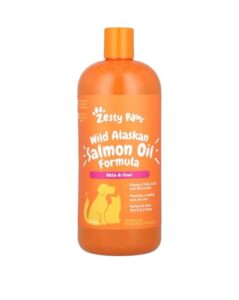
Fish oil is the easiest win in your anti-shedding toolkit. Zesty Paws Wild Alaskan Salmon Oil comes from wild-caught Alaskan salmon and pollock — real EPA and DHA, not filler oil.
Just pump it over their kibble. One pump per 10–20 lbs daily.
You’ll notice softer fur and less flaking within a few weeks. It’s NASC-certified, mixes in seconds, and most Corgis practically lick the bowl clean.
Refrigerate after opening, or it gets funky fast.
| Best For | Pet owners who want a simple, no-fuss way to boost their dog or cat’s coat health and reduce shedding with a daily food topper. |
|---|---|
| Primary Use | Coat & skin supplement |
| Target Animal | Dogs & cats |
| Coat Benefit | Shinier, softer coat |
| Skin Benefit | Reduces dandruff & dryness |
| Ease of Use | Precision pump dispenser |
| Key Limitation | Strong fish odor |
| Additional Features |
|
- Real wild-caught Alaskan salmon and pollock — quality EPA and DHA that actually supports skin, coat, and joints
- Super easy to use; just pump it over food and you’re done, no pills or convincing required
- NASC-certified, so you know it’s gone through a legit quality check
- The smell is strong — if your pet or your nose is sensitive, it can linger around the bowl
- Pump tips can drip and dry out, and the bottle has been known to leak during shipping
- Too much too fast can cause loose stools or an upset stomach, so you have to ease into the dosing
How to Manage Corgi Hair Indoors

Living with a Corgi means making peace with fur — on the couch, the carpet, your black pants.
The good news is a few simple habits can keep it from taking over your home. Here’s what actually works.
Vacuum Every Other Day
Corgi hair doesn’t wait for cleaning day. That’s why vacuum schedule benefits kick in when you commit to every other day. Remember that high‑traffic zones need frequent vacuuming to keep fur from building up.
A quality vacuum — ideally one vacuum made for dog hair — catches loose fur before it becomes tumbleweeds. Focus on surface-specific vacuuming for real results:
- Use pet hair attachments on upholstery
- Run edge passes along rugs
- Hit stairs with a handheld
- Swap filters monthly for vacuum care tips that sustain suction
Consistent vacuuming of pet hair this way is one of the best allergen reduction methods you’ll find.
Wash Bedding Weekly
Your bed is basically a fur magnet. Washing bedding weekly is one of the best allergen reduction methods for managing pet hair accumulation at home.
Use hot water washing when your fabric allows — around 60°C kills dust mites and dander fast. Pick a pet-safe detergent (fragrance‑free if anyone’s sensitive).
The bedding wash benefits are real: less hair buildup in house, cleaner sleep.
Use Furniture Covers
Your sofa didn’t sign up for this — but here we are.
Furniture covers are one of the smartest pet hair removal tips out there. Fitted, machine-washable options handle daily Corgi chaos with zero drama.
- Cover Material Types: Microfiber and canvas resist weaving fur deep into fabric
- Stain Resistance: Water-resistant covers cut cleaning frequency greatly
- DIY Options: Spare blankets work fine for seasonal use
Toss them in the wash. Done.
Try HEPA Air Purifiers
Floating pet dander is sneaky — you can’t see it, but your sinuses can. true HEPA filter captures 99.97% of particles, making it a serious ally against allergy to pet dander.
Check CADR ratings to match the unit to your room size. Multi-stage filtration manages odors too.
Swap filters on schedule, and place units near your Corgi’s favorite spots.
Keep Lint Rollers Handy
A lint roller is your last line of defense — and your first when you’re rushing out the door.
- Roller Storage Tips: Keep one near the front door, one by the couch.
- Surface-Specific Rolling: Use straight strokes on cushions, vertical ones on edges.
- Adhesive Sheet Care: Replace sheets when they stop grabbing.
- Travel-Friendly Rollers: Slim folding styles fit any bag.
Frequently Asked Questions (FAQs)
Are corgis hypoallergenic?
No. Corgis aren’t hypoallergenic — not even close.
They’re one of the high-shedding dog breeds, and all that fur spreads pet dander fast.
Allergic reactions to dogs are very real with Corgis.
Do Corgis shed a lot?
Yes — a lot. Corgis have two thick coats, making them among the high-shedding dog breeds year-round. Expect fur on everything. Daily. Always.
When does a Corgi start shedding?
Most Corgi puppies begin shedding between 6 and 10 months old, when the soft puppy coat gives way to a full adult double coat. Some start as early as 4 months.
Why is my Corgi shedding a lot?
double coat pup sheds a lot because of seasonal shedding cycles, trapped undercoat hair, stress‑induced shedding, or over‑bathing effects, stripping natural oils.
Climate coat changes and ineffective brushes make it worse.
Are corgis high maintenance?
Honestly? Kind of. They fall in the high-shedding category, need daily brushing, regular exercise, and health monitoring.
Groom your corgi weekly, bathe your corgi every few months, and budget for vet visits.
Worth it, though.
Do corgis shed excessively?
Their coat is waterproof — yet it won’t stop hair from landing on everything you own.
Corgis usually shed far more than other dogs, placing them firmly in the high-shedding category. Yes, excessively.
What are the cons of a corgi?
They’re adorable, yes. But corgis come with real cons: Back Health Risks, High Energy Needs, Stubborn Training, Costly Vet Bills, and Herding Instincts that surprise first-timers. Cute tax is high.
Why are corgis not cuddly?
Corgis aren’t aloof — they’re just wired differently. Herding Behavior, Energy Needs, and Independence Factors shape how they show love. Expect presence over cuddles. That’s just how they’re built.
Is there a way to reduce shedding in Corgis?
Yes — but you can’t stop it. Regular brushing, omega-3 fatty acids, and a solid bath schedule help reduce shedding noticeably. You’re managing a double coat, not curing it.
Do Corgis shed more than other breeds?
Short answer? Heavy shedders, year‑round commitment, and real grooming time.
Corgis usually shed far more than other dogs — double coat breeds like them rank high on shedding rankings among all dog breeds.
Conclusion
The dog that demands the most grooming is also the one you’ll never want to stop petting. That’s the corgi deal.
Do corgis shed? Relentlessly. With a solid routine—daily brushing, the right food, a good rake—it stays manageable.
The fur on your couch isn’t a problem to solve. It’s proof you’ve got one of the best dogs alive.
Stock up on lint rollers. You won’t regret a single strand.