This site is supported by our readers. We may earn a commission, at no cost to you, if you purchase through links.
Your dog spots a red bell pepper on the cutting board and suddenly becomes your most attentive kitchen companion. It’s hard to say no to that face—but before you hand over a slice, it’s worth knowing what you’re actually giving them.
Red bell peppers sit in a surprisingly good spot for dogs: low in calories, packed with vitamin C and beta-carotene, and completely free of capsaicin, the compound that makes spicy peppers dangerous.
The catch is preparation and portion size, which matter more than most pet owners realize.
Table Of Contents
- Key Takeaways
- Can Dogs Eat Red Pepper?
- Is Red Pepper Good for Dogs?
- Red Pepper Nutrition for Dogs
- Safe Red Pepper Serving Sizes
- How to Prepare Red Pepper
- Red Pepper Risks for Dogs
- Hot Peppers Dogs Should Avoid
- Unsafe Red Pepper Additions
- Top 3 Dog Food Pairings
- Frequently Asked Questions (FAQs)
- Can dogs eat red peppers?
- Is red bell pepper good for dogs?
- Can dogs eat orange peppers?
- Can dogs eat sweet peppers?
- What words do dogs hear best?
- What to do if your dog eats a bell pepper?
- Can dogs eat red peppers raw?
- What peppers are toxic to dogs?
- What happens if my dog eats crushed red pepper?
- Are red pepper flakes ok for dogs?
- Conclusion
Key Takeaways
- Red bell peppers are safe for dogs because they contain zero capsaicin, making them a low-calorie, nutrient-rich snack packed with vitamin C and beta-carotene.
- Always serve red pepper plain, seedless, and cut into small bite-sized pieces—seasonings, garlic, onion, and sauces turn a healthy snack into a real health risk.
- Portion size matters: treats should never exceed 10% of your dog’s daily calories, and serving size should scale with your dog’s weight to avoid stomach upset.
- Hot peppers—jalapeños, habaneros, cayenne, and similar varieties—are off-limits entirely, as their capsaicin irritates your dog’s mouth, throat, and digestive tract quickly.
Can Dogs Eat Red Pepper?

Yes, dogs can eat red bell pepper — and most pups actually enjoy the sweet crunch.
Just make sure to remove the seeds and stem first — you can find safe prep tips for dogs eating red bell peppers to keep things simple.
Before you toss your dog a slice, though, there are a few things worth knowing. Here’s what every dog owner should understand about red pepper and their pet.
Quick Safety Answer
Yes — dogs can eat red peppers safely. A few simple rules keep it that way:
- Toxicity check: Sweet red bell peppers contain zero capsaicin — completely non-toxic
- Portion ceiling: Treats stay under 10% of daily calories
- Allergy alert: Watch closely during any observation period after first feeding
- Prep caution: Plain only — no seasonings, ever
- Spicy foods toxicity: Hot varieties? Hard no.
When uncertain, consult your veterinarian. Moderation feeding guidelines make this a genuinely smart snack.
Red Bell Pepper Only
Dogs can eat red peppers—but only the sweet bell pepper variety. That’s the key distinction. Avoid spicy varieties entirely.
Red bell peppers derive their rich color from capsanthin content, a carotenoid responsible for deep pigments. This applies regardless of whether you choose organic or conventional options.
When purchasing, consider factors like seasonal harvest and storage longevity, but always prioritize bell peppers exclusively. Never offer spicy types to dogs.
Sweet Versus Spicy Peppers
Sweet bell peppers sit at zero on the Scoville Scale—meaning no capsaicin, no heat. That’s what makes them safe. In contrast, spicy varieties like jalapeños and habaneros contain capsaicin levels that can trigger real discomfort for dogs.
Sweet bell peppers contain zero capsaicin, making them safe for dogs — unlike jalapeños and habaneros, which cause real discomfort
- Bell peppers offer natural sugar without heat
- Flavor balance matters—sweet is safe, spicy isn’t
- Dogs can eat red peppers; hot peppers they can’t
Non-toxic in Moderation
Non-toxic doesn’t mean unlimited. Dogs can eat red peppers safely — but moderation is the key here. Individual sensitivity varies significantly, so one dog may tolerate a few pieces fine while another experiences stomach upset from the same amount.
Gradual introduction helps identify tolerance issues early. This approach allows owners to observe reactions and adjust portions accordingly.
Small, occasional servings prevent cumulative exposure from creeping past safe feeding guidelines. This practice ensures dogs enjoy red peppers without risking overconsumption.
Treat, Not Meal Replacement
Think of red peppers as a bonus, not a base. Dogs can eat red peppers as healthy treats for dogs — not meal replacements.
Calorie budgeting matters: treats should stay under 10% of daily intake. For training rewards, keep the serving size tiny.
Nutrient balance comes from complete meals, so scheduled treat breaks with portion monitoring keep things safe and simple.
Is Red Pepper Good for Dogs?

Red pepper isn’t just safe for dogs—it actually brings some real nutritional perks to the table.
Think of it as a snack that earns its place in your dog’s bowl for more than one reason.
Here’s what makes it worth reaching for.
Low-calorie Snack Option
Red peppers clock in at just 31 calories per 100 grams—making them one of the best low-calorie dog snacks around. For dogs watching their weight, that’s a big win. They work beautifully as fiber boosters and pair well with lean protein for balanced dog nutrition.
Keep portions small—portion control matters—and you’ve got a genuinely safe pet snack your dog will love.
High Water Content
Raw bell peppers are about 92% water—making them a natural Hydration Boost for your dog between meals. That high moisture doubles as a Moisture Digestion Aid, softening stools and helping things move along comfortably.
The Bulk Volume Effect means your dog feels satisfied on very few calories, a real win for low-calorie dog snacks.
Just watch piece size—wet, slippery chunks carry a Slippery Choking Risk for smaller dogs.
Vitamin C Support
One medium red pepper packs around 80 mg of vitamin C—more than enough to deliver real immune enhancement for your dog. Vitamin C promotes collagen production, aids in tissue repair, and provides robust oxidative stress defense against free radicals.
Vitamin C bioavailability from whole food sources like red peppers is excellent, making bell peppers a smart, simple addition to pet food safety. Preparing bell peppers for dogs ensures they benefit from these nutrients.
Beta-carotene Benefits
Beta-carotene is basically your dog’s quiet helper—working behind the scenes on Vision Support, skin health, and Immune Boost every time they crunch a piece of red bell pepper. When dogs eat bell peppers regularly, this compound converts into vitamin A, fueling Skin Radiance and Oxidative Protection at the cellular level.
- Aids healthy eyesight through vitamin A conversion
- Promotes a shinier coat and healthier skin
- Helps neutralize free radicals for cell protection
- May contribute to Joint Health by reducing oxidative stress
- The antioxidant content in red peppers makes beta-carotene benefits easy to deliver naturally
Antioxidants for Wellness
Think of antioxidants as your dog’s internal cleanup crew. Red bell peppers deliver a potent mix — beta-carotene, lycopene, quercetin, and capsanthin — all working together for phytonutrient synergy and cellular oxidative balance.
This combination provides free radical defense, helping protect cells from daily damage.
Combined with mineral cofactor roles and enzyme-based antioxidant support, the antioxidant content contributes to genuine immune support for dogs.
Red Pepper Nutrition for Dogs
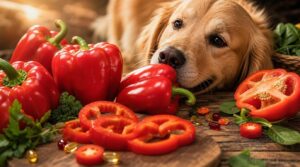
Red pepper isn’t just a colorful snack—it actually brings real nutritional value to your dog’s bowl. Knowing what’s inside helps you understand why it’s worth offering as an occasional treat.
This understanding highlights the importance of recognizing red pepper’s benefits beyond its appeal.
Here’s a closer look at what your dog gets, nutritionally speaking, with every crunchy bite.
Calories Per Serving
Red pepper is genuinely one of the best low-calorie dog snacks out there — just 31 calories per 100 g. That low-calorie density makes portion calorie calculation simple: a tablespoon of diced pepper barely moves the needle.
Still, serving size labels matter. For dog treat portion control, stick to the recommended dosage for your dog’s weight, and do not let calorie rounding impact your safe amount estimates.
Vitamins and Minerals
Beyond calories, the nutrient profile of bell peppers genuinely surprises people. Red peppers pack 80 mg of vitamin C — a water-soluble stability champion that aids your dog’s immune system — plus 157 µg of vitamin A from beta carotene; a fat-soluble vitamin stored in the body.
These vitamin-mineral interactions, including potassium and magnesium, reflect strong micronutrient ratios and solid mineral bioavailability for a simple snack.
Fiber and Digestion
Vitamins aren’t the whole story. Red peppers also offer dietary fiber that quietly aids your dog’s digestive health. Soluble fiber benefits gut bacteria through fermentation, producing short-chain fatty acids that strengthen the intestinal lining. The insoluble bulk effect helps stool move more easily.
Start small — gradual fiber introduction prevents fermentation gas management issues and GI upset, especially with raw versus cooked vegetables for dogs.
Potassium Content
Fiber isn’t the only quiet mineral working behind the scenes. Red peppers also deliver potassium — about 211 mg per 100 g — which aids muscle function and electrolyte balance in your dog. This offers real nutrient density from a tiny treat.
Keep portions small, though. Dogs with kidney considerations are especially sensitive to potassium levels, so moderation matters more than you’d think.
Helpful Antioxidants
What really sets red peppers apart is their antioxidant lineup. You’re getting quercetin power, lycopene defense, capsanthin boost, and lutein protection — all in one crunchy bite.
These compounds work alongside vitamin C and beta-carotene’s benefits to neutralize free radicals before they cause damage. That glutathione synergy helps your dog’s cells stay protected.
For real dog health benefits, the antioxidant properties here are hard to beat.
Safe Red Pepper Serving Sizes
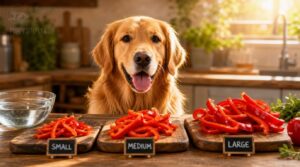
How much red pepper your dog can actually handle depends on their size—and getting that right matters more than most people realize. Too little means they miss out on the good stuff; too much can upset their stomach.
Here’s a simple breakdown by size to make things easy.
Small Dog Portions
Small dogs require the smallest pieces and amounts due to Weight-Based Scaling and their inherently tight Calorie Buffer Zone. Their Stomach Capacity Limits mean even slight excesses can cause digestive upset. For small breeds, precise portion control is critical to prevent rapid weight gain.
- Offer 1–2 Tiny Piece Portions (about 1 tablespoon diced)
- Keep red peppers as Frequency Adjusted Snacks — not daily
- Cut bite‑sized pieces under 1 cm for toy breeds
- Practice moderate feeding — never exceed 10% of daily calories
Medium Dog Portions
Most medium dogs (roughly 10 to 22 kg) can handle up to a quarter of a medium red pepper per serving. That’s about eight bite-sized pieces.
Calorie budgeting matters: portion scaling should reflect your dog’s body condition and activity adjustment. Less active dogs need moderate feeding and lower treat frequency.
Red peppers make safe pet snacks when dog size guides how much bell pepper dogs eat.
Large Dog Portions
Large dogs — those between 23 and 40 kg — can safely enjoy up to half a medium red pepper per serving. That’s a solid snack, but calorie scaling still matters.
Body score tracking helps you catch weight creep early, especially since activity adjustments shift calorie needs seasonally.
Follow dog dietary guidelines: offer red peppers in moderation, and use label measuring alongside meal frequency to keep portions consistent.
Giant Breed Portions
Giant breeds — think Great Danes or Mastiffs — can have up to ¾ of a medium red pepper per serving. Accurate measuring matters here because these dogs are joint-friendly calories candidates. Extra weight strains their frame fast.
Remove the seeds and stem, cut bite-sized pieces, and time it around meal timing for consistency.
Slow feeding helps, too.
Ten Percent Treat Rule
Red pepper counts toward your dog’s daily treat budget — and that budget has a hard cap. The ten percent treat rule means all treats combined, including red peppers, should stay under 10% of total daily calories. Think of it as a Daily Treat Log you mentally track.
Calorie tracking keeps Balanced Diet Integration intact, facilitates Treat Weight Management, and allows smart portion adjustment — ensuring healthy dog treats remain part of a sustainable diet in moderation.
How to Prepare Red Pepper
Two minutes matter when preparing red pepper for your dog. A little prep ensures the snack remains safe and enjoyable.
This quick process prevents hazards and enhances your pup’s experience. Crunchy snack preparation is simple but essential.
Before sharing, follow these steps to keep things secure and fun.
Wash Before Serving
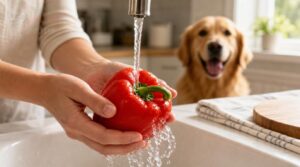
Prepping a raw bell pepper for your dog starts with one simple step — a cool water rinse. Run it under cold water before cutting anything. This removes surface dirt and keeps your food preparation methods safe from the start.
- Wash your hands first to avoid cross-contamination
- Use a separate prep area, away from raw meat
- Rinse gently — don’t soak
- Sanitize utensils before use
- Dry with a clean towel before slicing
Remove Seeds and Stems
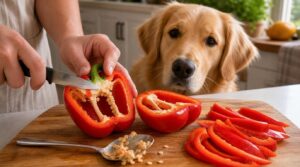
Once you’ve rinsed the pepper, begin by slicing around the crown and removing the stem using a small paring knife or similar tool. This initial step ensures easier access to the pepper’s interior.
Next, open the pepper along its ribs using the rib access method, then carefully scrape away the membranes with a spoon—membrane scrape techniques are crucial here for thorough cleaning. Properly disposing of seeds and stems is essential for safety.
Dogs can eat bell peppers safely only after all seeds and stems are fully removed, ensuring no choking hazards or toxic residues remain. Always prioritize meticulous preparation when sharing peppers with pets.
Cut Bite-sized Pieces
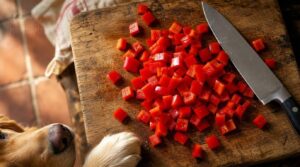
Now that seeds and stems are gone, cut the pepper into bite-sized pieces — roughly 1 to 2 cm each. Uniform piece size matters for chewing safety and portion accuracy.
Smaller cuts mean texture consistency bite to bite, and your dog won’t gulp down anything too large. They’re also easier to store.
Simple prep. Real food safety for pets.
Serve Plain Only
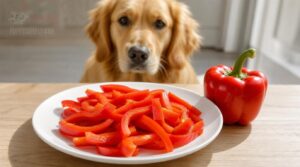
Plain is the goal here — no salt, no oil, no garlic, no sauces. Zero seasonings, full stop. Red peppers offer real nutrition on their own, so there’s no need to dress them up. Pure produce, served as bite-sized pieces, is exactly what works.
Unseasoned only, no added fats, no condiments — that’s the veterinarian advice worth following for genuine food safety for pets.
Raw Versus Steamed
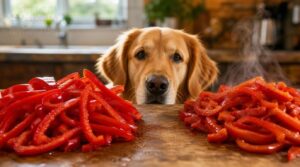
Both raw or lightly steamed options are safe choices. Raw consumption keeps vitamin C intact, while steaming causes some vitamin C loss and a slight antioxidant shift.
Gentle steaming offers texture softening and a digestibility boost, alongside better microbial safety for sensitive stomachs.
Regardless of preparation method, serve red peppers in moderation. Excess consumption raises gastrointestinal upset risk.
Red Pepper Risks for Dogs

Red pepper is safe for most dogs, but that doesn’t mean it’s completely risk-free. Feed too much, cut it wrong, or catch your dog off guard, and things can go sideways fast.
Here’s what to watch for.
Upset Stomach Signs
Too much red pepper can upset your dog’s stomach faster than you’d expect. Watch for these signs:
- Abdominal cramping or bloating discomfort — your dog may pace or hunch over
- Nausea and burping; sometimes with drooling
- Early satiety — refusing food after just a few bites, paired with a burning sensation in the gut
Gastrointestinal upset like this usually means you’ve overfed.
Vomiting or Diarrhea
If your dog vomits or has diarrhea after eating red peppers, that’s gastrointestinal upset indicating the portion was too large. Both symptoms cause fluid replacement to fall behind, leading to dehydration signs like lethargy and dry gums.
Diarrhea also triggers electrolyte loss, which affects stool consistency and energy levels. Pet diet moderation prevents such issues.
Persistent vomiting warrants vet intervention.
Gas From Overfeeding
Too much red pepper can turn your dog’s gut into a gas factory. Stomach stretching from oversized portions causes swallowed air and discomfort.
Fiber fermentation kicks in when undigested plant material feeds gut bacteria, producing gas as a byproduct. Sugar alcohols in mixed foods add to the problem.
Gut sensitivity means even safe foods can cause digestive upset without moderation in their diet.
Choking Hazards
Size matters more than you think. A piece that’s totally safe for a Labrador can become a real dog choking hazard for a Chihuahua — that’s breed size mismatch in action.
Watch for these red pepper prep mistakes:
- Skipping bite-sized pieces and leaving large chunks
- Serving stringy fibers or uncut raw vegetables to dogs
- Ignoring round food pieces that block small airways
- Rushing food preparation without removing stems for pets
- Fast eating with no supervision
Possible Allergic Reactions
Red pepper allergic reactions in dogs are rare — but they do happen. Watch for skin itching, hives, or sudden gastrointestinal upset like vomiting and diarrhea shortly after your dog eats.
In serious cases, respiratory distress or swelling can signal potential anaphylaxis. These symptoms require immediate attention, as they indicate a severe allergic response.
Food sensitivity reactions in dogs often appear within minutes. If you notice these signs, stop feeding red peppers and call your vet right away. Prompt action is critical to prevent complications.
Hot Peppers Dogs Should Avoid
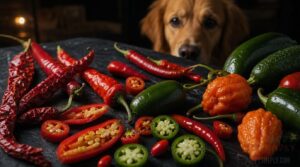
Red bell peppers are safe, but not all peppers deserve a spot in your dog’s bowl. Some varieties can seriously upset your dog’s stomach — or worse.
Here’s what to keep off the menu.
Jalapeños and Chilies
Jalapeños and chili peppers are a hard no for your dog. These hot peppers sit between 3,500 and 8,000 Scoville units—a real measure of pungency, not just a number. Their capsaicin metabolism causes digestive upset quickly: burning, vomiting, diarrhea.
Whether green or red from jalapeño ripening, the capsaicin stays. Chili breeding only amplifies heat.
Food toxicity in dogs doesn’t have to be dramatic to be harmful.
Habanero Pepper Risks
Habaneros take the heat several levels beyond jalapeños, ranging from 100,000 to 350,000 Scoville units. This isn’t just quirky food trivia—it’s a serious food toxicity concern for dogs.
Skin contact alone during meal prep can transfer capsicum oils directly to a dog’s eyes, causing real eye irritation. The risks associated with these intensely hot peppers are significant and avoidable.
Hot peppers of this intensity aren’t worth the risk.
Capsaicin Irritation
Capsaicin is the chemical behind all that heat in capsicums and spicy pepper varieties—and it doesn’t just sting. It triggers TRPV1 nerve activation, sparking a neurogenic inflammation cascade that floods tissues with irritation signals. This fat-soluble compound clings stubbornly to mucous membranes, making it difficult to clear.
Even small doses have a significant impact—the dose-response curve is steep. The irritation persists due to capsaicin’s fat-soluble nature, which binds tightly to mucous membranes.
Critically, capsaicin desensitization offers dogs no protective benefit. Unlike some irritants, repeated exposure does not reduce sensitivity, leaving dogs vulnerable to repeated discomfort.
Mouth Burning Symptoms
Your dog can’t tell you their mouth is on fire—but their behavior will. When capsaicin hits, watch for:
- Burning tongue and tingling sensation — pawing at the mouth, drooling heavily
- Dry mouth with metallic taste — refusing water despite obvious discomfort
- Whole mouth distress — whimpering, lip-licking, and upset stomach
Stick to red peppers for safe digestive health benefits.
Spicy Food Dangers
Spicy peppers don’t just upset your dog’s stomach—they can trigger acid reflux, capsaicin heartburn, and chronic gastric inflammation over time.
Even small amounts cause gastrointestinal upset, systemic sweating, and eye irritation if your pup rubs their face. Unlike safe red peppers, hot varieties rank among the most toxic foods for dogs.
If exposure happens, consult a veterinarian immediately.
Unsafe Red Pepper Additions
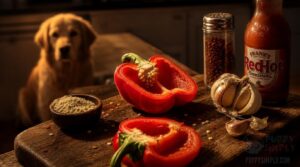
Plain red pepper is fine, but what you add to it isn’t always safe for your dog. Certain common kitchen ingredients turn a harmless snack into a real health risk.
Watch out for these unsafe additions before you share.
Garlic and Onion
Garlic and onion are two of the most dangerous things you can add to your dog’s food—full stop. Both belong to the Allium family, and Allium toxicity is real. Here’s why they’re off-limits:
- Sulfur compounds and allicin effects damage red blood cells, which causes anemia.
- Onion enzyme reactions release toxins when cut.
- Dose sensitivity means even small, repeated amounts can accumulate to dangerous levels.
Keep both out entirely.
Chives and Leeks
Chives and leeks carry Allium toxicity just like garlic and onion — their sulfur phytochemicals damage your dogs’ red blood cells over time.
Don’t let their mild reputation fool you.
Chives offer vitamin K benefits for humans, and leeks have useful water content and fiber differences from other vegetables.
However, vegetable toxicity in dogs makes both off-limits entirely.
Salt and Butter
Salt and butter seem harmless—but they’re a real problem for dogs. Even a tablespoon of salted butter packs about 82 mg of sodium, pushing dogs toward sodium overload quickly. Butter’s fat calories add up fast, risking digestive upset and weight gain. Skip the toxicity risks of salted butter entirely.
Serve red peppers plain—that’s where the health benefits of bell peppers shine, in moderation.
Oils and Sauces
Drizzling oil or sauce over red pepper might seem harmless—but it’s a trap. Even "healthy" oils add unnecessary fat, and sauces rarely qualify as pet-safe seasoning. For food preparation for pets, keep it simple:
- Skip coconut oil—fat overload disrupts digestion.
- Avoid emulsion-based sauces—emulsion stability hides harmful ingredients.
- No seasoning or salt in any form.
- Dressings contain fat-soluble compounds dogs don’t need.
Stuffed Pepper Ingredients
Stuffed red peppers look wholesome—but your dog can’t share dinner tonight. A classic filling packs ground turkey, brown rice, tomato sauce, Italian seasoning, mozzarella cheese, garlic, and onion. Each of those last two ingredients is toxic to dogs.
While red peppers offer real nutritional benefits—vitamin A, vitamin C, solid antioxidants—those benefits vanish the moment harmful seasonings enter the mix.
Plain only, always. Moderation matters.
Top 3 Dog Food Pairings
Red pepper is a great snack on its own, but it really shines when paired with the right dog food. Some brands complement its nutrients better than others—especially those made with whole ingredients your dog can actually use.
Here are three worth keeping in your rotation.
1. PetPlate Fresh Venison Dog Food
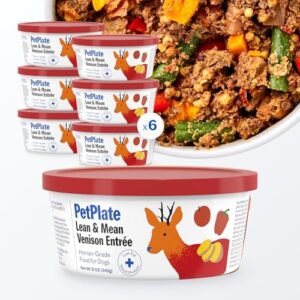
PetPlate’s Fresh Venison Dog Food is a smart pick if your dog already loves red bell pepper. Red bell peppers are actually one of the ingredients in this vet-designed recipe—so your pup gets those antioxidants built right into mealtime.
It’s made with human-grade venison, cooked in small batches, and frozen fresh. This ensures a convenient, wholesome option worth considering.
The formula is low-fat and easy on sensitive stomachs, with simple portioning: about 4 oz per 10 lb of body weight daily.
| Best For | Dogs with food sensitivities or allergies to common proteins like chicken or beef, especially picky eaters who need a digestible, nutrient-rich meal. |
|---|---|
| Artificial Additives | None |
| Life Stage | All life stages |
| Key Vegetable | Red bell peppers |
| Antioxidant Support | Fruits and vegetables |
| Digestive Benefit | Vet-formulated for digestion |
| Storage Type | Frozen/refrigerated |
| Additional Features |
|
- Made with human-grade venison in small batches—real, quality ingredients you can actually feel good about
- Vet-formulated with fruits, veggies, and omega-rich salmon oil to support digestion, immunity, and coat health
- Works as a complete meal or kibble topper, so it fits easily into whatever feeding routine you’ve got going
- At ~$70 for a 6-cup case, it’s a premium price that adds up fast, especially for larger dogs
- Needs freezer storage and careful thawing, which isn’t always practical—and shipping can sometimes arrive partially thawed
- Not grain-free (contains potatoes), so it may not work for dogs with sensitivities to starches
2. Fromm Salmon Sweet Potato Dog Treats
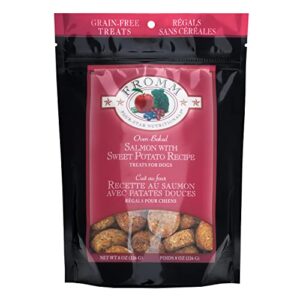
Fromm Salmon Sweet Potato Treats are an excellent choice for dog owners seeking a veggie-forward feeding routine. Each biscuit comes in at just 12 kcal, making them a guilt-free reward for frequent training or treats.
These treats prioritize quality, with real salmon as the first ingredient. Their oven-baked crunch not only satisfies chewing instincts but also helps scrub teeth as your dog enjoys them.
The formula contains no artificial additives, ensuring a wholesome snack. The resealable bag maintains freshness, preserving flavor and texture over time. However, owners should note the inclusion of chicken fat in case their pup has poultry sensitivities.
| Best For | Dog owners who want a low-calorie, wholesome treat for training or everyday rewards — especially those with pups at any life stage who thrive on real-food ingredients. |
|---|---|
| Artificial Additives | None |
| Life Stage | All life stages |
| Key Vegetable | Green bell pepper |
| Antioxidant Support | Salmon, sweet potato, apple |
| Digestive Benefit | Fiber-rich ingredients |
| Storage Type | Resealable bag |
| Additional Features |
|
- Real salmon as the first ingredient means quality protein your dog can actually use for muscle and tissue health.
- At just 12 kcal per treat, you can reward freely without worrying about the calories adding up.
- No artificial colors, flavors, or preservatives — just straightforward, clean ingredients.
- Contains chicken fat, so dogs with poultry sensitivities might not tolerate it well.
- Peas and legumes could be a concern for dogs with specific food sensitivities or grain-free diet needs.
- At $11.75 for under 8 oz, it runs pricier than a lot of comparable store-brand options.
3. Pawfect Natural Dog Food Topper
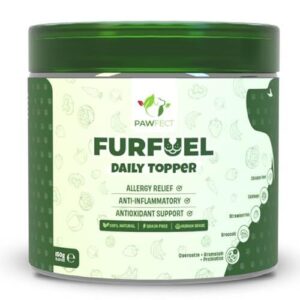
Pawfect’s Natural Dog Food Topper offers a comprehensive nutritional boost beyond single treats. This chicken liver-flavored powder enhances your dog’s regular meals with a blend of probiotics, bromelain, and an antioxidant mix — including quercetin, spinach, broccoli, and more.
The formula actively aids gut health, immune function, and coat condition while excluding artificial preservatives or fillers.
Application is simple: Just sprinkle it over food to integrate whole-food nutrition into their daily bowl.
For dogs already benefiting from red pepper’s natural antioxidants, this topper provides an additional layer of support, complementing their existing dietary antioxidants.
| Best For | Dogs needing everyday digestive and immune support, especially those prone to allergies or with sensitive stomachs. |
|---|---|
| Artificial Additives | None |
| Life Stage | All life stages |
| Key Vegetable | Spinach, broccoli |
| Antioxidant Support | Quercetin, strawberries, cabbage |
| Digestive Benefit | Probiotics and bromelain |
| Storage Type | Cool, dry place |
| Additional Features |
|
- Packed with real ingredients — probiotics, bromelain, and antioxidant-rich veggies that actually do something
- Super easy to use, just sprinkle it over whatever your dog already eats
- Grain-free and free of artificial preservatives, so you know exactly what’s going into their bowl
- It’s a supplement, not a meal — won’t replace balanced nutrition on its own
- Dogs sensitive to chicken liver or certain proteins might not tolerate it well
- Results can vary, and it hasn’t gone through veterinary medicinal approval
Frequently Asked Questions (FAQs)
Can dogs eat red peppers?
Yes, dogs can eat red bell peppers. They’re non-toxic, low in calories, and packed with vitamin C and beta-carotene.
Just keep portions small, serve them plain, and skip the spicy varieties entirely.
Is red bell pepper good for dogs?
Red bell pepper is genuinely good for dogs.
It’s low in calories, packed with vitamin C and beta-carotene, and high in water — a thirst-quenching, nutrient-rich snack your dog will likely love.
Can dogs eat orange peppers?
Dogs can eat orange bell peppers — they’re non-toxic, mild, and easy to digest. Remove seeds, skip seasonings, and serve small plain pieces. A safe, vitamin-rich little treat.
Can dogs eat sweet peppers?
Sweet peppers? Practically made for dogs. They’re non-toxic, low in calories, and packed with vitamin C and beta-carotene. Just serve them plain, seedless, and in small pieces.
What words do dogs hear best?
Your dog hears best at around 8,000 Hz—far above human range. Short, crisp words with sharp consonants like "sit," "come," or "treat" cut through clearly and get the fastest response.
What to do if your dog eats a bell pepper?
Most dogs handle bell peppers just fine. Remove any leftover seeds.
Watch for mild stomach upset over the next few hours, and call your vet if vomiting or diarrhea persists.
Can dogs eat red peppers raw?
Yes, your dog can eat raw red bell peppers.
Just rinse, remove the seeds and stem, and cut them into small pieces. Raw is perfectly fine — and most dogs actually enjoy the crunch.
What peppers are toxic to dogs?
Hot peppers are the real problem. Jalapeños, habaneros, cayenne, serranos, and ghost peppers all contain capsaicin — a compound that burns your dog’s mouth and upsets their stomach fast.
What happens if my dog eats crushed red pepper?
Crushed red pepper contains capsaicin, which irritates your dog’s mouth, throat, and stomach fast. Expect drooling, vomiting, or diarrhea within hours.
Mild cases clear up in about 24 hours—but call your vet if symptoms linger.
Are red pepper flakes ok for dogs?
Red pepper flakes aren’t safe for your dog. They’re concentrated capsaicin — the same "heat" that makes spicy food burn.
Even small amounts can irritate your dog’s mouth, stomach, and digestive tract.
Conclusion
Picture your dog waiting patiently while you slice a crisp red pepper—that moment doesn’t have to end with hesitation. Dogs can eat red pepper safely when it’s plain, properly portioned, and free of seeds. A few small pieces offer real nutritional value without the calories.
Just keep spicy varieties, seasonings, and sauces far from the bowl. Treat it like any good thing—a little goes a long way, and your dog benefits most when you are consistent.
- https://mywoof.com/blogs/articles/can-dogs-eat-bell-peppers-safe-healthy-delicious-ways-to-share-with-your-pup?srsltid=AfmBOookqkUpMEScsoE128nnAnxeib93BdJLc9Ld5kICrffslAIlmbJT
- https://www.harringtonspetfood.com/blogs/pet-advice/can-dogs-eat-peppers?srsltid=AfmBOoo7TcNCFi3O_tPvbpPx6uNN7ujMpsVFJaBKhEPQPYWB1XkrF01n
- https://www.akc.org/expert-advice/nutrition/can-dogs-eat-bell-peppers/
- https://www.poochandmutt.co.uk/blogs/can-dogs-eat/peppers?srsltid=AfmBOopUNPVijVOGRQnGGocoq-2gK7ZJqgDlR0Iqd1YnXeTbVxdpMUD_
- https://fourleafrover.com/blogs/natural-health/can-dogs-have-bell-peppers