This site is supported by our readers. We may earn a commission, at no cost to you, if you purchase through links.

You notice your dog’s nipples look larger than usual, and a quick worry crosses your mind. Is this normal after her heat cycle, or should you be concerned? Many dog owners face this exact situation, unsure whether nipple enlargement signals a temporary hormonal shift or something more serious.
The truth is, swollen nipples can stem from several causes—some perfectly natural, others requiring prompt veterinary attention. Understanding the difference between routine post-heat changes and warning signs helps you respond appropriately. Knowing what to expect during each stage of your dog’s reproductive cycle, how long enlargement usually lasts, and which symptoms demand immediate care puts you in control of your pet’s health.
Table Of Contents
- Key Takeaways
- What Causes Enlarged Nipples in Dogs After Heat?
- What Are The Stages of The Canine Reproductive Cycle?
- What Should My Dog’s Nipples Look Like During Each Stage?
- How Long Do Dog Nipples Stay Enlarged After Heat?
- What Should I Do if My Dog’s Nipples Stay Enlarged?
- How to Treat Swollen Dog Nipples After Heat?
- Frequently Asked Questions (FAQs)
- Why have my dog’s nipples gone big?
- Do dogs have swollen nipples?
- Why do dogs nipples get enlarged during pregnancy?
- Why do dogs nipples enlarge after a heat cycle?
- When do puppies get enlarged nipples?
- How long do enlarged nipples last in dogs?
- What should I do if my dog has enlarged nipples?
- Can a dog have enlarged nipples and not be pregnant?
- Why are my dog’s nipples getting big?
- Do big nipples mean a dog is pregnant?
- Conclusion
Key Takeaways
- Nipple enlargement after a dog’s heat cycle typically lasts 4 to 8 weeks due to progesterone and prolactin surges, with pseudopregnancy extending this timeline in nearly 90 percent of intact females.
- While hormonal changes cause normal swelling, persistent enlargement beyond 8 weeks or symptoms like discharge, heat, firmness, or asymmetry may signal mastitis, infections, or mammary tumors requiring immediate veterinary examination.
- Spaying before your dog’s first heat reduces lifetime breast cancer risk to just 0.5 percent, since about half of canine mammary tumors are malignant and risk climbs dramatically in intact females.
- Home monitoring through weekly gentle palpation of the entire mammary chain helps detect abnormal lumps early, while warm compresses and keeping the area clean can ease mild swelling during normal recovery.
What Causes Enlarged Nipples in Dogs After Heat?

When your dog’s heat cycle ends, her nipples may stay enlarged for several reasons that range from normal hormonal shifts to conditions requiring veterinary attention.
If you’re unsure whether your dog is fertile or still cycling, check out our guide on when dogs can get pregnant to understand her reproductive timeline.
The swelling you’re noticing isn’t always a cause for concern, but understanding what’s behind it helps you know when to worry. Let’s look at the most common causes of enlarged nipples after your dog’s heat cycle.
Hormonal Changes
After heat, your dog’s body navigates a symphony of hormonal changes that directly affect her mammary health.
Rising estrogen during early heat thickens nipple tissue and makes mammary glands more visible. Then progesterone surges after ovulation, driving the most dramatic nipple enlargement as it stimulates lobular growth and ductal branching for about two months.
This hormonal imbalance in dogs can trigger:
- Local growth hormone production that swells mammary tissue
- Persistent glandular thickness from repeated progesterone exposure
- Lactation or milk production even without pregnancy
Understanding these estrogen effects and the progesterone role helps you monitor what’s normal versus concerning.
For more insight into the stages and timing of the canine heat cycle, see this resource on the canine estrous cycle timeline.
Pseudopregnancy
When progesterone drops sharply four to nine weeks after your dog’s heat cycle, prolactin surges and creates what vets call pseudopregnancy. Your dog’s body acts pregnant even though no fertilization occurred.
She’ll develop swollen nipples in dogs, enlarged mammary glands, and may leak milk or clear fluid. Pseudopregnancy symptoms also include nesting behavior, mothering toys, restlessness, and sometimes irritability when you approach her “den.”
These hormonal imbalances are completely normal responses in intact females, though they can unsettle first-time owners. Most episodes resolve naturally within several weeks with basic mammary care—limiting nipple stimulation and monitoring for infection. Severe cases with heavy milk production or behavioral stress may need hormone therapy targeting prolactin levels to restore canine reproductive health faster.
Most intact female dogs show signs of false pregnancy after an estrus cycle, so recognizing the pattern can help owners provide supportive care.
Mammary Tumors
Unfortunately, mammary tumors are one of the most serious causes of nipple enlargement in female dogs. These firm lumps can appear along the mammary chain weeks or months after heat, ranging from pea-sized nodules to large masses that ulcerate and bleed.
About half of canine mammary gland tumors are malignant, so early detection through regular checks is your best defense. Breast cancer risk climbs dramatically in intact females—spaying before the first heat drops lifetime risk to just 0.5 percent.
Half of canine mammary tumors are malignant, but spaying before the first heat slashes breast cancer risk to just 0.5 percent
Mammary surgery and tumor removal offer the strongest chance for survival, especially when you catch small growths early and pursue prompt veterinary care.
Mammary Gland Hyperplasia
While mammary tumors demand urgent attention, some nipple swelling stems from a far less threatening cause. Mammary gland hyperplasia happens when mammary tissue reacts to progesterone surges after heat, creating firm but benign growths that feel smooth and movable under your dog’s skin.
Unlike mastitis, these swellings rarely cause severe pain or redness. Your veterinarian can distinguish hyperplasia from mammary tumors through fine-needle biopsy, ensuring swollen nipples receive proper veterinary care.
Spaying eliminates future hormone-driven episodes by removing the ovarian source, protecting your dog’s canine health long-term.
Infections or Abscesses
Bacterial invasions can transform a swollen nipple into a painful emergency. Mammary infections, especially mastitis, occur when bacteria multiply in milk-filled glands during pseudopregnancy or after heat.
Galactostasis—stagnant milk trapped inside—sets the stage for acute septic mastitis, where infected tissue turns hot, red, and tender. You’ll notice thick discharge, sometimes bloody or pus-like, oozing from the nipple.
Left untreated, abscesses form as pus pockets within the gland, causing fever and lethargy. Abscess treatment usually requires surgical drainage, antibiotics, and warm compresses.
Infection symptoms demand immediate veterinary care to prevent life-threatening sepsis and preserve your dog’s health.
What Are The Stages of The Canine Reproductive Cycle?
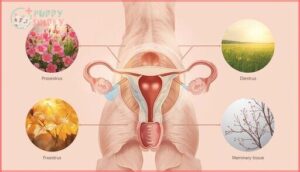
Your dog’s body moves through a carefully orchestrated Estrous Cycle that directly explains those nipple changes you’re seeing. The Canine Reproductive Cycle unfolds in four main stages, each with distinct hormonal shifts that affect your dog’s mammary tissue and overall Reproductive Health.
Proestrus marks the opening act of Heat Cycles, lasting roughly 6 to 11 days. During this stage, estrogen levels surge and prepare your dog’s body for potential Canine Pregnancy, though she won’t accept mating yet. Male dogs will show intense interest, but she’ll firmly refuse their advances.
Estrus follows as the true fertile window, usually spanning 7 to 10 days when ovulation occurs and Dog Pregnancy becomes possible. This is when she’ll stand for breeding.
Key Fertility Stages to track:
- Diestrus lasts about two months with elevated progesterone, whether or not Pregnancy occurs
- Anestrus provides a four-to-five-month resting period when hormones stay low and her body recovers
- The complete cycle repeats every 6 to 12 months in most intact females
What Should My Dog’s Nipples Look Like During Each Stage?

Your dog’s nipples shift in subtle but telling ways as she moves through each reproductive stage, and knowing what to expect at rest, during heat, and beyond can spare you worry. Between heat cycles, her nipples should lie flat against the belly with a pale pink or light brown Nipple Color and soft Nipple Texture, with no Discharge Types or hard lumps beneath. During proestrus and estrus, mild Nipple Swelling may appear as hormones rise, making the Mammary Gland tissue slightly fuller and the skin around each nipple a bit more flushed.
In diestrus, whether she’s pregnant or experiencing pseudopregnancy, Swollen Nipples become more pronounced, the areola darkens, and the Mammary Changes prepare for possible Lactation. Watch for these four key signs of healthy nipples across all Swelling Stages:
- Even symmetry along the mammary chain without one isolated nipple becoming much larger
- Smooth surface free of scabs, cracks, ulcers, or marble-like nodules
- No abnormal discharge such as blood, pus, or foul-smelling fluid at any stage
- Mild sensitivity during hormonal peaks, but never rock-hard, hot, or severely painful tissue
How Long Do Dog Nipples Stay Enlarged After Heat?

Your dog’s nipples usually stay enlarged for 4 to 6 weeks after her heat cycle ends, though Hormonal Imbalances can stretch this timeline to 8 or 12 weeks. Nipple Swelling Duration depends on whether she experiences pseudopregnancy, which affects about 89 percent of females and prolongs the Swollen Nipples considerably. Young adults often keep slightly fuller nipples permanently after their first heat.
- Mammary Gland Health rebounds as progesterone naturally drops
- Large breeds show more obvious Heat Cycle Effects than smaller dogs
- Repeated cycles gradually alter baseline nipple size over time
- Canine Hormone Balance dictates when tissues finally shrink back
What Should I Do if My Dog’s Nipples Stay Enlarged?
If your dog’s nipples remain swollen beyond eight weeks after heat, schedule a veterinary appointment to rule out mastitis, infection, or tumors. Your vet will examine each nipple and the entire mammary chain, checking for lumps, heat, or unusual discharge—key emergency signs that demand immediate attention.
Meanwhile, practice careful nipple monitoring at home by gently palpating the tissue weekly and noting any changes in size or firmness. This proactive health maintenance approach ensures early detection of nipple enlargement causes, protecting your dog’s long-term well-being and giving you peace of mind.
How to Treat Swollen Dog Nipples After Heat?

When swelling doesn’t resolve on its own, you’ll need a targeted treatment plan guided by your vet’s diagnosis of nipple enlargement causes like hormonal imbalances or mastitis. Here’s your action plan for swollen nipple treatment:
- Apply warm compresses gently for 5-10 minutes, three to four times daily, to improve circulation and ease post heat therapy discomfort.
- Practice thorough nipple care by cleaning the area with lukewarm water and keeping it dry to prevent infection.
- Follow veterinary guidance on antibiotics or medications if mastitis or other conditions are diagnosed.
- Remove mothering objects during pseudopregnancy to reduce stimulation and swelling naturally.
These home remedies, combined with professional oversight, address swollen dog nipples effectively and safely.
Frequently Asked Questions (FAQs)
Why have my dog’s nipples gone big?
Like a thermometer, your pet’s body signals shifts beneath the surface.
Hormonal imbalances during heat cycles trigger nipple swelling as estrogen and progesterone flood the mammary gland, preparing tissue for potential lactation.
Do dogs have swollen nipples?
Yes, swollen nipples are common in female dogs. Hormonal shifts during heat, pseudopregnancy, mastitis, and mammary tumors can all cause nipple swelling.
Persistent or painful enlargement warrants a veterinary examination for proper diagnosis.
Why do dogs nipples get enlarged during pregnancy?
Nature orchestrates notable changes when your dog expects puppies.
Pregnancy hormones like progesterone and prolactin trigger mammary gland development and increased blood flow, causing nipple swelling to prepare for lactation and nursing newborn pups.
Why do dogs nipples enlarge after a heat cycle?
After your dog’s heat cycle, her ovaries continue producing progesterone for six to eight weeks, stimulating mammary glands and causing nipple enlargement.
Rising prolactin levels trigger milk production readiness, creating swelling even without pregnancy.
When do puppies get enlarged nipples?
Most puppies show nipple swelling between 6 and 12 months as they reach puberty. Female dogs develop more noticeable nipple enlargement during their first heat when estrogen levels rise naturally.
How long do enlarged nipples last in dogs?
Most dogs show nipple swelling for four to eight weeks after heat cycles. Hormonal changes drive this enlargement, though false pregnancy can extend it.
If swelling persists beyond two months or worsens, seek veterinary guidance immediately.
What should I do if my dog has enlarged nipples?
Monitor your dog’s nipples daily for lumps, discharge, or pain. If swelling lasts beyond three weeks, shows redness, or your dog seems unwell, contact your vet promptly for examination.
Can a dog have enlarged nipples and not be pregnant?
Yes, enlarged nipples can appear without pregnancy.
A false pregnancy, hormone imbalance, mammary tumors, or mastitis all cause nipple swelling in non-pregnant dogs. A veterinary exam will pinpoint the exact cause.
Why are my dog’s nipples getting big?
Hormonal surges during heat cycles trigger nipple swelling as estrogen and progesterone increase blood flow to mammary glands.
Pseudopregnancy, mastitis, or mammary tumors can also cause enlargement requiring veterinary care for proper diagnosis.
Do big nipples mean a dog is pregnant?
Enlarged dog nipples don’t confirm pregnancy because false pregnancy, heat cycles, and hormonal shifts also trigger mammary gland swelling.
Veterinary care with ultrasound or palpation around day 25 provides reliable pregnancy confirmation.
Conclusion
Think of your dog’s body as a finely tuned instrument—each hormonal shift plays its note, and sometimes those notes linger longer than expected.
When dog nipples enlarged after heat, the timeline matters as much as the symptom itself. Most changes resolve within weeks, but persistent swelling, discharge, or pain signals trouble.
Trust your observations, document what you see, and never hesitate to call your veterinarian. Your watchful eye remains your dog’s best protection.
- https://weasypet.com/blogs/news/dog-heat-cycle
- https://vetster.com/en/wellness/how-to-recognize-the-symptoms-of-mastitis-in-dogs
- https://wagwalking.com/symptom/why-is-my-dog-swollen-nipples
- https://www.bluecross.org.uk/advice/dog/health-and-injuries/breast-cancer-in-dogs
- https://www.petmd.com/dog/general-health/do-male-dogs-have-nipples