This site is supported by our readers. We may earn a commission, at no cost to you, if you purchase through links.
Most dogs will eat cat food without hesitation—and most owners don’t think twice until the stomach gurgling starts at 2 a.m.
Cat food smells richer, tastes fattier, and sits in a bowl at nose level.
For a dog, that’s an open invitation.
A stolen bite won’t land your dog in an emergency clinic, but the nutritional gap between the two formulas is wider than it looks.
Cat food carries 30–45% crude protein and up to 20% fat—built for a cat’s metabolism, not a dog’s.
What happens in the short term is usually manageable.
What happens when it becomes a habit is a different problem entirely.
Table Of Contents
- Key Takeaways
- Can Dogs Eat Cat Food?
- Cat Food is Not Safe Long-Term
- Cat Food Vs Dog Food
- Why Dogs Like Cat Food
- Short-Term Effects on Dogs
- Long-Term Health Risks
- High-Risk Dogs Need Extra Caution
- What to Do After Ingestion
- Prevent Dogs Eating Cat Food
- Frequently Asked Questions (FAQs)
- What to do if my dog will only eat cat food?
- Why is cat food good for dogs?
- How often can dogs safely eat cat food?
- Are there any differences in the nutritional requirements between dogs and cats?
- Can puppies safely eat cat food occasionally?
- How does cat food affect senior dogs?
- Are there behavioral changes linked to eating cat food?
- How quickly does cat food affect digestion in dogs?
- Can puppies eat cat food safely?
- Does cat food affect dog behavior or energy?
- Conclusion
Key Takeaways
- A stolen bite of cat food won’t hurt your dog, but making it a habit puts real strain on its pancreas, kidneys, and liver over time.
- Cat food packs 30–45% protein and up to 20% fat — built for a cat’s biology, not your dog’s, and that mismatch compounds with every meal.
- Dogs with pancreatitis, kidney disease, or sensitive stomachs face serious risk even from small amounts, so prevention matters more for them than for healthy dogs.
- Keeping bowls separate — through elevated feeding stations, microchip feeders, or scheduled mealtimes — is the simplest way to protect your dog without overthinking it.
Can Dogs Eat Cat Food?
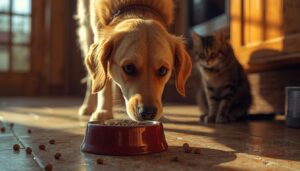
Yes, dogs can eat cat food — but that doesn’t mean they should. A stolen bite here, and there’s usually not an emergency, but the full picture is worth understanding.
That said, the full story on dogs eating cat food safely gets more nuanced the more often it happens.
Here’s what you need to know about when it’s fine, when it isn’t, and why cat food isn’t a substitute for your dog’s regular meals.
Yes, but Only Accidentally or Occasionally
Accidental ingestion happens in nearly every multi-pet home — a quick steal from the cat’s bowl isn’t a cause for panic. small bite once in a while rarely triggers serious health risks.
What matters most is owner awareness: how much was eaten, how often it’s happening, and monitoring post-exposure for soft stools or vomiting within 12 hours.
Why Cat Food Should Not Replace Dog Food
Cat food isn’t just "stronger" dog food — it’s built for a completely different species. The protein levels, fat content, and species-specific vitamins don’t match canine needs.
Regular feeding means your dog faces energy density excess, amino acid imbalance, and mineral ratio mismatch over time. That’s a recipe for gut microbiota disruption, obesity, and eventually pancreatitis caused by high-fat diets in dogs.
The higher fat content risk can quickly lead to pancreatitis in dogs.
When a Small Amount is Usually Not Dangerous
So your dog stole a few bites from the cat’s bowl. That’s usually not an emergency.
A small amount of cat food — judged by the Body Weight Ratio of what was eaten versus your dog’s size — normally causes only a Mild Gastrointestinal Response.
Watch for:
- Mild diarrhea or soft stool (Short-Lived Upset, resolving in 24–48 hours)
- clear Observation Period with no worsening symptoms
- Appetite returning to normal within the same day
- Tolerance improving with a bland diet before returning to vet-recommended dog food
The Threshold Quantity matters most. A tablespoon isn’t a meal. Monitoring symptoms closely tells you everything you need to know.
Cat Food is Not Safe Long-Term

Cat food isn’t just "different" from dog food — it’s built for a completely different animal. Feeding it regularly is like running your car on the wrong fuel: it might keep going for a while, but something’s going to break down.
Cat food fed to dogs is like wrong fuel in an engine — it may run for a while, but breakdown is inevitable
Here’s why long-term exposure to cat food is a real problem for dogs.
Cat Food is Formulated for Cats, Not Dogs
Think of cat food as a precision tool — built for obligate carnivores with species-specific amino acids, feline nutrient density, and mineral balance tailoring that simply doesn’t match canine dietary adequacy.
Regulatory formulation guidelines require each formula to meet the target species’ needs, not another’s.
That’s why the nutritional differences between dog and cat food aren’t minor tweaks — they’re fundamental biological mismatches.
Dogs Need Balanced Canine Nutrition
Your dog’s body runs on a very specific set of inputs — and cat food doesn’t deliver them correctly.
A complete and balanced diet built to AAFCO feeding guidelines covers everything canine nutritional needs demand:
- Essential Amino Acids from animal proteins to maintain muscle and tissue
- Ideal Fat Ratio calibrated to life stage nutrition and daily caloric needs
- Micronutrient Balance — vitamins and minerals in proportions that support normal function
- Protein levels matched to your dog’s age, weight, and activity
Nutrient requirements for dogs aren’t flexible.
Why Regular Feeding Creates Health Risks
Feed your dog cat food regularly, and the body starts paying a price it wasn’t built to handle. High-fat meals trigger an inflammatory cascade — taxing digestive enzymes, stressing the pancreas, and raising pancreatitis risk.
Metabolic overload follows: extra calories drive obesity, microbiome shift alters gut stability, and hormonal disruption affects appetite regulation. Over time, nutrient imbalance compounds quietly — until gastrointestinal upset becomes your new normal.
Cat Food Vs Dog Food
Cat food and dog food aren’t just different brands — they’re built for completely different animals. The gaps in protein, fat, vitamins, and minerals matter more than most people realize.
Here’s how they actually compare.
Protein Differences

Protein isn’t just a number on the bag — the amino acid profile and protein source quality tell the real story.
| Nutrient Factor | Cat Food | Dog Food |
|---|---|---|
| Crude Protein (dry matter) | 30–45% | 18% minimum |
| Taurine Added | Yes | No |
| Species-Specific Needs Met | Feline | Canine |
Cat food’s higher protein energy ratio can cause protein overload in dogs, stressing kidneys and liver over time.
Fat and Calorie Differences
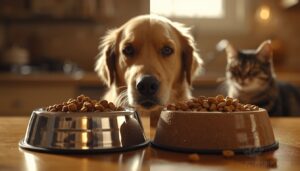
Fat is where the real Energy Density Contrast lives. Cat food carries 12–20% crude fat versus 8–12% in dog food — and since fat delivers 9 calories per gram compared to 4 from protein or carbs, that gap adds up fast.
| Factor | Cat Food | Dog Food |
|---|---|---|
| Crude Fat (dry matter) | 12–20% | 8–12% |
| Calories per gram of fat | 9 kcal | 9 kcal |
| Fat Calorie Ratio | Higher | Lower |
| Obesity Risk from Regular Use | Elevated | Baseline |
High-fat meals shift your dog’s macronutrient balance quickly. That calorie-dense food, eaten regularly, drives weight gain — even when portion sizes look similar.
Taurine, Vitamin A, and Arachidonic Acid
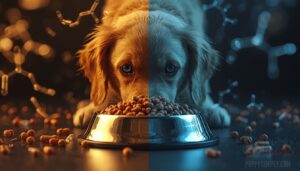
Cat food contains three nutrients dogs simply don’t need added: taurine, preformed vitamin A, and arachidonic acid.
| Nutrient | Cat Food vs. Dog Food |
|---|---|
| Taurine | Added for cats; dogs self-synthesize |
| Vitamin A‑Taurine Interaction | Taurine retinal interaction unique to feline vision |
| Vitamin A Aldehyde | Preformed; dogs convert from beta-carotene |
| Arachidonic Acid Pathways | Required for cats; dogs produce it independently |
| Taurine Lipid Oxidation | Promotes feline fat metabolism via PPARα |
These nutritional differences between dog and cat food matter.
Excess arachidonic acid alters lipid signaling.
Preformed vitamin A accumulates.
Health risks of dogs consuming cat food include disrupted nutrient balance — not just too much protein or fat.
Calcium and Phosphorus Balance
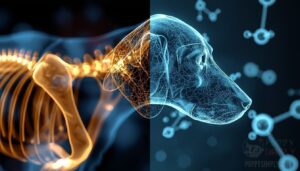
Mineral balance isn’t just a label detail — it’s a biological system. Cat food calibrates calcium and phosphorus for feline physiology.
That ratio doesn’t match AAFCO nutrient standards for pets built around canine needs.
| Factor | Dog vs. Cat Food |
|---|---|
| Calcium-Phosphorus Ratio | Canine-optimized vs. feline-calibrated |
| Bone Reservoir Impact | Imbalance mobilizes stored bone minerals |
| Kidney Reabsorption | Excess phosphorus stresses canine kidneys |
| Hormonal Regulation | PTH and Vitamin D Influence shift to compensate |
| Dietary Ratios | Species-appropriate diet prevents systemic strain |
Persistent dietary imbalance from cat food signals your dog’s parathyroid system to compensate — borrowing calcium from bone, increasing kidney workload. That’s not a short-term fix. It’s cumulative damage.
Fiber and Digestibility Differences
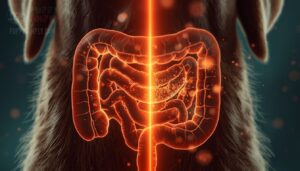
Bone mineral shifts from dietary imbalance don’t stop there. Fiber tells a similar story.
Cat food uses fiber structures calibrated for feline gut motility — not canine digestion. Insoluble fiber impact on dogs includes faster transit time modulation, which limits microbiome fiber utilization. Soluble fiber fermentation changes viscosity and nutrient absorption rates, contributing to gastrointestinal upset.
| Fiber Factor | Cat Food | Dog Food |
|---|---|---|
| Dominant Fiber Type | Insoluble-heavy | Balanced soluble/insoluble |
| Transit Time Effect | Accelerated motility | Moderate, controlled |
| Fermentation Behavior | Rapid, less stable | Slower, microbiome-supportive |
| Nutrient Absorption | Reduced enzyme contact | Optimized for canine gut |
| Digestive Health Risk | Higher GI disruption | Lower disruption risk |
These nutritional differences between dog and cat food compound quietly—each meal nudging your dog’s digestive health further from balance.
Why Dogs Like Cat Food
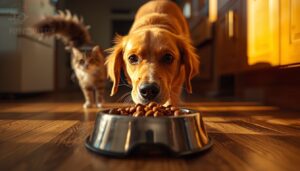
If your dog has ever made a beeline for the cat’s bowl, you’re not alone — and there’s a real reason behind it. Cat food hits differently for dogs, and it’s not just about being sneaky or stubborn.
Here’s what pulls them in.
Stronger Smell and Richer Taste
Your dog isn’t being greedy — cat food genuinely smells better to them. Here’s why:
- Volatile aroma release floods the air the moment the bowl hits the floor.
- Browning aroma development during processing creates deep, savory, meaty notes.
- Retronasal olfaction carries those flavor compound concentrations straight to the brain’s reward center while chewing.
Texture-driven aroma and a high protein diet seal the deal.
Higher Fat Content
Fat content is part of the pull.
Cat food delivers more fat per bite than most dog foods — and fat means flavor, satiety, and a richer mouthfeel, dogs find hard to resist.
High-fat meals also trigger Gastric Emptying Delay, slowing digestion in ways that can increase Pancreatic Enzyme Demand.
Over time, that strain raises real risk: Pancreatitis caused by high-fat diets in dogs is well documented, especially in overweight dogs.
Easy Access in Multi-Pet Homes
Opportunity makes the thief — and in a multi-pet household, cat food is rarely hard to find. Bowls left at floor level become open invitations.
Without Dedicated Feeding Stations, Pet Barrier Design, or Microchip Door Locks, feeding logistics break down fast.
RFID Gate Integration and microchip-activated feeders can prevent access by allowing only the registered cat through.
Scheduled Meal Timing removes the temptation entirely.
Curiosity, Hunger, or Food Stealing
Why does your dog keep going back to the cat’s bowl? It’s rarely random.
Scent Attraction pulls them in first — strong odors trigger Hunger Driven Foraging, especially when meals run late. Begging Cues escalate into outright food stealing. Resource Competition in multi-pet homes accelerates the behavior.
Once a dog eats cat food successfully, Learning Access kicks in — and preventive strategies become essential for sound behavioral management.
Short-Term Effects on Dogs
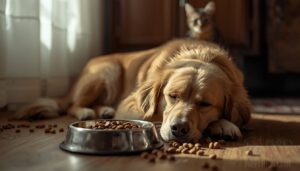
So dog got into the cat’s food — it happens more often than you’d think. The good news is that a single incident usually brings only mild, short-lived symptoms.
Here’s what you can expect to see in the hours that follow.
Soft Stool or Diarrhea
The most common short-term reaction is gastrointestinal upset — specifically soft stools or diarrhea appearing within 2–12 hours. Stool consistency shifts from firm to mushy or watery, sometimes with increased frequency patterns.
High-fat food triggers this response by overwhelming your dog’s digestive system.
Hydration risks are low after a single incident, but watch for urgent red flags: symptoms persisting beyond 48 hours need veterinary attention.
Vomiting After Eating Too Much
Stomach Overstretch happens quickly when your dog raids the cat’s bowl. High-fat meals pack more calories per bite, so the stomach fills quickly — then pushes back. Reflux pressure builds, triggering vomiting within hours.
Persistent nausea or repeated episodes raise dehydration risk. Blood in vomit is never normal.
After accidental cat food ingestion, these short-term effects signal the gastrointestinal upset has moved beyond mild.
Gas, Bloating, and Stomach Gurgling
Gurgling after cat food isn’t random — it’s your dog’s gut reacting to a meal it wasn’t built for. The high-fat content, fermentable carbohydrates, and unfamiliar protein load shift gut microbiota fast, while swallowed air compounds the pressure.
short-term signs include:
- Audible borborygmi (rumbling, gurgling sounds)
- Visible abdominal distension or bloating
- Increased flatulence tied to meal timing
- Digestive enzyme deficiency responses causing loose stool or diarrhea
- Mild abdominal pain without vomiting
Temporary Appetite Changes
After eating cat food, your dog’s appetite can swing both ways.
Post-ingestion nausea, vomiting, or diarrhea often trigger poor appetite and an energy-fatigue link that dulls hunger signals.
Some dogs, driven by stress-driven appetite shifts and the food’s rich scent, actually beg more.
Hormonal hunger shifts and the hydration-appetite effect both play roles — once the upset stomach settles, normal hunger usually returns.
Expected Recovery Timeline
Most dogs bounce back within 1–2 days after a one-time cat food incident.
Here’s what that recovery window generally looks like:
- Vomiting duration: resolves within 24 hours in mild cases
- Diarrhea resolution: soft stools firm up within 48 hours
- Stomach discomfort period: gurgling fades as digestion completes
- Hydration stabilization: normal drinking resumes within 1–2 days
Watch vet call timing carefully — symptoms of gastrointestinal upset persisting past 48 hours signal short‑term effects becoming long‑term risks.
Long-Term Health Risks

A single stolen bowl of cat food rarely causes lasting harm, but regular access is a different story. Over time, your dog’s body starts paying a real price for food that simply wasn’t made for it.
Here’s what repeated cat food consumption can do to your dog’s health.
Weight Gain and Obesity
Cat food’s caloric surplus adds up faster than you’d think. Each high-fat meal delivers more energy than your dog’s metabolic rate needs — and that energy imbalance becomes stored fat. Without portion control, weight gain sneaks in quietly.
Sedentary lifestyle dogs are especially vulnerable.
For senior or overweight dogs, this calorie-dense food accelerates obesity in dogs with far less effort.
Pancreatitis From High-Fat Food
Weight gain is just one part of the risk picture. High-fat meals push your dog’s pancreas past its dietary fat threshold — triggering enzyme overload, activating inflammatory pathways, and setting off pancreatic inflammation that can become life‑threatening.
Gallbladder stimulation increases bile flow, which worsens the cascade.
Repeated exposure can activate cell death mechanisms in pancreatic tissue.
Don’t let cat food become a habit.
Chronic Digestive Upset
Pancreatitis isn’t the only organ-level consequence. Chronic gastrointestinal upset follows a quieter but persistent pattern — symptoms that return week after week.
High-fat meals disrupt normal gut motility, reduce fiber intake, and trigger fermentation gas from carbohydrate imbalance. Nutrient malabsorption sets in. Bacterial overgrowth compounds the problem.
Vomiting and gastrointestinal distress stop being isolated events and become your dog’s new normal.
Kidney and Liver Strain
The gut isn’t the only system absorbing the damage. High protein levels push your dog’s liver and kidneys into overdrive — detoxification load increases, and metabolic byproduct accumulation follows.
The hepatorenal interaction matters here: liver strain can compromise kidney filtration directly.
Repeated cat food exposure risks toxic metabolite formation, organ toxic injury, and worsening chronic kidney disease or liver disease over time.
Nutritional Imbalances Over Time
Over months, the gaps compound quietly. Cat food doesn’t align with AAFCO nutrient standards for dogs — and daily shortfalls add up fast.
- Amino Acid Imbalance disrupts muscle maintenance and metabolic function
- Micronutrient Drift shifts fat-soluble vitamin levels stored in body tissue
- Energy Intake Excess drives gradual weight gain without obvious overfeeding
- Mineral Absorption Issues stem from mismatched calcium-phosphorus ratios
- Digestive Microbiome Shift develops as the gut adjusts to the wrong diet
High-Risk Dogs Need Extra Caution
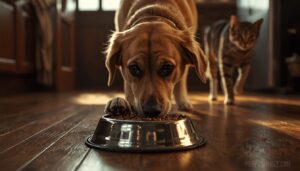
Most dogs handle an occasional cat food snack without much trouble—but for some, even a small amount can trigger a serious reaction. Certain health conditions and life stages make a dog far more vulnerable to the risks covered in the previous section.
If your dog falls into any of the following groups, extra caution isn’t optional.
Dogs With Pancreatitis History
If your dog has ever had pancreatitis, cat food is genuinely off the table. Recovery nutrition depends on low-fat feeding — cat food works against that directly. Even one rich meal can restart the inflammation cycle.
Watch for vomiting or abdominal pain after any accidental ingestion. Hydration monitoring matters here too. Veterinary follow-up isn’t optional for these dogs — it’s essential.
Senior Dogs
Senior dogs already walk a tightrope with digestion. Reduced appetite, dental issues, and joint stiffness can make them slower to eat — but no less likely to raid the cat bowl.
Vision changes mean they may not even realize what they’re eating. aging gut processes fat poorly, raising pancreatitis risk fast.
Frequent vet visits matter more than ever here.
Overweight or Obese Dogs
Extra weight already tips the scales toward trouble. In overweight dogs, poor exercise tolerance and metabolic inflammation create a body under constant stress. Caloric balance is already broken.
Add calorie-dense cat food or high-fat meals, and you’re accelerating weight gain and inviting dog pancreatitis caused by rich foods.
Body condition scoring helps you see the risk — visible fat deposits and lost waist definition tell you your dog can’t afford that cat bowl.
Dogs With Kidney or Liver Disease
When the liver or kidney is already struggling, cat food adds fuel to the fire. High protein load management becomes critical — excess protein increases kidney workload and disrupts fluid intake monitoring and electrolyte balance. The calcium phosphorus ratio stresses fragile systems further.
Health risks of dogs consuming cat food multiply fast here.
Medication interactions are also possible when nutrient supplementation from an unbalanced diet interferes with treatment plans.
Dogs on Prescription Diets
Prescription diets aren’t flexible — they’re precise. Your dog’s Renal Support Formula or Hydrolyzed Protein Allergy therapeutic diet has a specific Therapeutic Nutrient Target designed around its condition.
Cat food disrupts that completely. Whether your dog follows a Weight Management Protocol, Urinary pH Management plan, or pancreatitis-focused vet-recommended dog food, one unplanned meal matters.
Follow veterinary recommendations for accidental cat food ingestion immediately.
Dogs With Sensitive Stomachs
Sensitive stomachs don’t forgive surprise meals. Cat food’s high fat and unfamiliar proteins act as trigger ingredients, causing vomiting and digestive upset fast — sometimes within hours. Unlike gradual food transitions, this is an abrupt dietary hit. Clinical signs of food intolerance can flare without warning.
Probiotic supplementation guesswork and feeding schedule adjustments — just keep your dog away from the bowl entirely.
What to Do After Ingestion
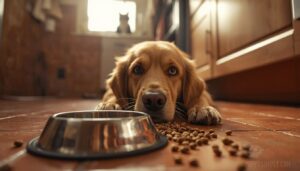
So dog got into the cat food — it happens more than you’d think. The good news is that a few straightforward steps can help you stay ahead of any trouble.
Here’s exactly what to do next.
Estimate How Much Was Eaten
Start with portion size estimation — it tells you how serious the situation is. Count missing scoops or weigh leftover kibble for a scoop volume estimate.
wet food? Note how much of the can is gone. A leftover weight check narrows it down fast.
Cat food is calorie-dense, so even a small amount of cat food can matter when you factor in weight-based calculation.
Provide Fresh Water
Once you’ve gauged how much was eaten, hydration becomes your next priority.
Set out a clean water bowl — washed with warm soapy water, rinsed well, and placed somewhere your dog can easily reach it.
Don’t use ice-cold water; room temperature sits easier on an upset stomach. Refill it often. Contamination prevention matters here: saliva builds up fast, especially when vomiting and diarrhea are possible.
Monitor Vomiting and Diarrhea
Once water is down, shift your focus to tracking symptoms. Note vomiting frequency and stool consistency every few hours — loose or watery stools within 12 hours are expected.
Watch hydration indicators like gum moisture and eye appearance.
Abdominal pain signs, including hunched posture or restlessness, mean something more serious is happening.
Most symptom timing resolves within 48 hours; beyond that, contact your vet.
Skip or Reduce The Next Meal Carefully
If your dog just raided the cat bowl, don’t panic — but do adjust the next meal intentionally. Portion control matters here. Skip or reduce that feeding to give the digestive system room to settle.
Follow these vet recommendations for accidental cat food ingestion:
- Skip the next meal if a large amount was eaten
- Reduce portion size for one feeding cycle
- Prioritize hydration monitoring over rushing food back
- Avoid treats during this window
- Reintroduce with bland diet recommendations — plain rice, boiled chicken
Meal timing and a calm environment support short-term effects recovery naturally.
Watch for Abdominal Pain or Lethargy
After the meal-skipping window, shift your focus inward — watch your dog closely.
Symptoms of gastrointestinal upset in dogs appear within hours of cat food overconsumption.
| Warning Sign | What to Watch |
|---|---|
| Hunched Stance | Tense, rigid belly posture |
| Lethargic Behavior | Unusual tiredness or weakness |
| Painful Vocalizations | Whining when belly is touched |
| Abdominal Swelling | Visibly bloated midsection |
Reduced playfulness, vomiting, and diarrhea signal pancreatitis risk. Don’t dismiss these symptoms of cat food overconsumption in dogs.
When to Call The Veterinarian
Some symptoms won’t wait. If your dog shows any of the following, call your veterinarian immediately:
- Persistent vomiting or severe diarrhea lasting beyond 24 hours
- Breathing difficulty, seizures, or collapse after ingestion
- Suspected poisoning alongside cat food consumption
- Signs of pancreatitis — hunched posture, extreme lethargy, or abdominal pain
These aren’t situations to monitor overnight. They’re veterinary emergencies.
Prevent Dogs Eating Cat Food

Keeping your dog out of the cat’s bowl takes a bit of strategy, but it’s very doable. A few simple changes to your feeding setup can make a real difference.
Here are the most effective ways to keep things separate.
Feed Cats on Elevated Surfaces
The simplest barrier between your dog and the cat’s bowl is height. Place the cat’s food on a stable platform — a cat tree shelf or countertop works well.
Aim for ideal height: level with the cat’s back, roughly 4 inches up.
Use whisker-friendly bowls to keep the clean feeding area tidy.
In multi-cat zones, consistent elevated surface placement keeps every meal organized and dog-proof.
Use Microchip or RFID Feeders
A microchip-activated feeder is one of the most reliable tools for multi-pet management. RFID pet feeder technology uses antenna detection to read your cat’s implanted chip or collar tag — opening only for registered pets through tag registration.
Lid timing control closes access once your cat walks away. Choose a model with power backup to keep it functioning consistently.
Dogs simply don’t qualify.
Separate Pets During Mealtimes
Separate feeding rooms remove the guesswork entirely. Closed doors block cross-access better than open-plan supervision alone.
If rooms aren’t an option, supervised meal monitoring keeps you in control — correct food-stealing the moment it starts, not after.
Adjust barrier height so your dog can’t reach across or sniff into the cat’s space.
Bowl distance placement and visual separation cues reinforce the boundary every meal.
Try Baby Gates or Door Props
Baby gates work well when closed doors aren’t practical. For gate placement tips in multipet households, hardware-mounted options beat pressure-mounted ones — they resist a determined dog’s pawing without shifting.
Mind the height and gap; a low bottom clearance stops counter surfing attempts at the cat’s bowl. Latch safety matters too — confirm full engagement each use. Door strap adjustments let cats slip through while blocking dogs entirely.
Store Cat Food Securely
Gates and barriers handle access during feeding — but what about the bag sitting on your shelf? Airtight containers are your next line of defense against counter-surfing dogs.
dry cat food in food-grade, airtight containers with tight-fitting lids. moisture control by keeping storage areas dry. clean scoops only, rotate stock regularly, and inspect for pests before each use.
Remove Leftovers After Meals
Even with secured containers, the bowl itself becomes a problem the moment your cat walks away. Plate cleanup timing matters more than most owners realize — residual food smell lingers on surfaces and pulls dogs right back.
Wipe feeding areas promptly, practice surface wiping routine after every meal, and use secure trash disposal so leftovers don’t become a second opportunity.
Use Scheduled Feeding Instead of Free-Feeding
Clearing the bowl cuts access—meal scheduling takes that further. Timed portions mean food only exists at set windows, not all day. That’s how you get real reduced food access.
- Divide daily amounts into two meals: morning and evening
- Keep bowls down for 15–20 minutes, then remove them
- Use portion control from the food label as your starting point
- Routine monitoring becomes easier when meals happen on a predictable schedule
- Scheduled feeding limits the moments your dog can steal cat food
Frequently Asked Questions (FAQs)
What to do if my dog will only eat cat food?
If your dog refuses dog food and only wants cat food, consult your vet first.
Behavioral training, gradual diet adjustment, flavor enhancement, and alternative protein sources with positive reinforcement can effectively shift this habit.
Why is cat food good for dogs?
Cat food isn’t exactly "good" for dogs — but its calorie-dense nutrition and high-quality protein source can offer a quick energy boost in a pinch.
The palatable aroma profile makes it a convenient emergency snack, nothing more.
How often can dogs safely eat cat food?
Once is usually fine. But "occasionally" means accidental, not scheduled.
There’s no safe Maximum Weekly Intake — frequency thresholds drop to zero for intentional feeding. Treat every exposure as a one-time event.
Are there any differences in the nutritional requirements between dogs and cats?
Yes — and they run deeper than most people realize.
Cats are obligate carnivores. Dogs are omnivores.
That single biological divide shapes everything: taurine needs, essential fatty acids, vitamin metabolism, and mineral ratios.
Can puppies safely eat cat food occasionally?
A small sample won’t cause an emergency, but puppy digestive sensitivity makes even occasional cat food risky.
Growth nutrition needs differ sharply from feline formulas — and that caloric density adds up fast.
How does cat food affect senior dogs?
Senior dogs face greater risk.
Metabolic slowdown, reduced kidney function, and weaker digestion make cat food’s high fat and protein load harder to handle — increasing weight gain and pancreatitis risk considerably.
Are there behavioral changes linked to eating cat food?
Yes, behavioral changes do occur. Post-Ingestion Restlessness, Bowel Discomfort Signals, and Altered Playfulness are common. Feeding Anxiety and Behavioral Conditioning can follow repeated access in any multipet household.
How quickly does cat food affect digestion in dogs?
Digestive onset is fast. Most dogs show canine gastrointestinal upset — vomiting, loose stool, or gas — within 2 to 12 hours.
Rapid fat impact drives that symptom latency. Transit time changes, then settles within 48 hours.
Can puppies eat cat food safely?
Once won’t hurt — but here’s the catch: puppy’s growth phase sensitivity makes repeated exposure genuinely risky.
Cat food’s metabolic energy density and nutrient profile simply don’t match puppy nutrient requirements.
Does cat food affect dog behavior or energy?
Yes, cat food can shift your dog’s energy and mood.
High-fat meals may trigger post-meal lethargy, behavioral restlessness, or hyperactivity spikes. Short-term effects include mood fluctuations and energy level shifts from metabolic issues and digestive discomfort.
Conclusion
Can dogs eat cat food once and survive? Almost always. But survival isn’t the standard worth aiming for.
Cat food is engineered for a different biology—higher protein, higher fat, a nutritional profile your dog’s liver and pancreas weren’t built to handle repeatedly.
One stolen bite is a footnote. A daily habit is a slow drain on your dog’s health.
Keep the bowls separate, the boundaries clear, and your dog eating food actually meant for them.
- https://www.petmd.com/dog/nutrition/can-dogs-eat-cat-food?utm_source=openai
- https://www.aafco.org/consumers/understanding-pet-food/selecting-the-right-pet-food/?utm_source=openai
- https://www.akc.org/expert-advice/nutrition/can-dogs-eat-cat-food/?utm_source=openai
- https://vcahospitals.com/health-associates/know-your-pet/pancreatitis-in-dogs?utm_source=openai
- https://www.merckvetmanual.com/digestive-system/the-exocrine-pancreas/pancreatic-abscesses-in-dogs-and-cats?utm_source=openai