
This site is supported by our readers. We may earn a commission, at no cost to you, if you purchase through links.

Most dogs don’t paddle instinctively the moment they hit water—that’s a myth worth dropping before your dog’s first swim. Some breeds take to it naturally, but plenty of others panic, sink their hindquarters, and exhaust themselves fighting the surface within seconds.
As a canine rehabilitation therapist, I’ve seen both ends of that spectrum, and the difference almost always comes down to preparation, not the dog.
Swimming offers dogs something few land-based activities can match: a full-body workout that barely touches their joints. Whether your dog is recovering from surgery, carrying extra weight, or just needs an outlet that won’t wreck their knees, the water can be a genuine real benefit—when you approach it right.
Table Of Contents
- Key Takeaways
- Benefits of Swimming for Dogs
- Is Swimming Safe for Your Dog?
- Teaching Your Dog to Swim
- Essential Dog Swimming Safety Tips
- Best Places for Dog Swimming
- Frequently Asked Questions (FAQs)
- Is swimming good for your dog?
- Is it OK for my dog to swim?
- How much swimming should a dog do?
- Is it better for dogs to walk or swim?
- What is the best type of life jacket for dogs who swim?
- How often should a dog swim for optimal health?
- Is swimming more beneficial for certain breeds of dogs?
- Are there any health risks associated with swimming for dogs?
- Are there any swimming classes available for dogs?
- How do I choose the best swimming facility?
- Conclusion
Key Takeaways
- Swimming gives your dog a full-body workout with almost zero joint impact, making it one of the best options for dogs that are overweight, aging, or recovering from surgery.
- Not every dog is built for the water — flat-faced breeds, short-legged dogs, and genuinely fearful pups need extra caution, or should skip it entirely until a vet weighs in.
- The key to teaching your dog to swim is starting shallow, keeping sessions under ten minutes, and letting your dog enter voluntarily — forcing it only builds fear that is hard to undo.
- Real safety means more than watching from the shore: life jackets, clean water checks, fatigue monitoring, and post-swim rinsing are habits every dog owner should treat as non-negotiable.
Benefits of Swimming for Dogs
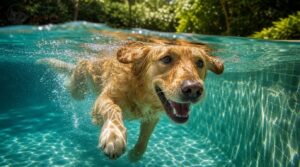
Swimming does more for your dog than just cool them off on a hot day. It’s one of the best full-body workouts they can get, and it’s surprisingly gentle on their body at the same time.
Whether you have a water-loving Lab or you’re still figuring out if your pup is a natural swimmer, checking out some of the top water-friendly dog breeds can help you set realistic expectations and get started on the right paw.
Here’s a look at what your dog actually gains every time they hit the water.
Low-Impact Exercise for Joint Health
Swimming takes weight off your dog’s joints in a way no land exercise can match. Water’s hydrostatic load reduction means hips, knees, and elbows aren’t absorbing repeated ground impact — making aquatic therapy for dogs especially valuable for aging or arthritic pups. Incorporating low-impact exercises improves flexibility can further support your dog’s joint health.
Low-impact exercise through water resistance conditioning delivers real joint health for dogs:
- Aquatic joint mobility improves with each smooth stroke cycle
- Buoyancy aids posture during temperature-controlled sessions
- Progressive duration build prevents overloading sensitive joints
- Hydrotherapy eases inflammation without sacrificing movement quality
- Dog swimming safety stays high since water absorbs the impact, not their joints
Cardiovascular Fitness and Endurance
Your dog’s heart works hard during every lap. That steady paddling is joint‑friendly cardio workout doing real aerobic conditioning work — building heart and lung capacity without pounding pavement.
With consistent Training Progression, Recovery Time shortens, Stroke Efficiency improves, and your dog stays active longer at the same pace.
| Swim Level | Heart Rate Monitoring Goal | Aerobic Conditioning Benefit |
|---|---|---|
| Beginner | Calm, steady rhythm | Builds base endurance |
| Intermediate | Sustained effort, brief rest | Improves low impact exercise tolerance |
| Expert | Longer sessions, faster recovery | Strengthens dog fitness overall |
| Hydrotherapy | Controlled, therapeutic pace | Provides dog conditioning safely |
| Dock Diving | Peak effort intervals | Maximizes cardiovascular output |
Muscle Strength and Mobility
Every paddle stroke your dog takes is doing double duty. The front legs work through natural Shoulder Flexion Drills, while the back legs generate Hindquarter Kick Power against the water’s resistance.
Meanwhile, Core Stabilization Exercises kick in just to keep your dog from rolling sideways.
This low impact exercise builds muscle strength and increases mobility through Joint Range Cycling — perfect for Senior dog mobility enhancement.
Weight Management Support
All that muscle-building work pays off on the scale, too. Swimming is a genuinely effective low impact workout for overweight dogs — burning calories without punishing joints. Pair it with Portion Control and smart Meal Timing, and you’ve got a solid dog fitness plan.
- Use Calorie Tracking to log swim days versus rest days
- Measure meals by weight for accurate Portion Control
- Feed after swimming, not before, for better Meal Timing
- Do Progress Weighing weekly under the same conditions
- Get Vet Guidance to set a realistic target weight
Mental Enrichment and Confidence Building
Beyond the physical gains, water time does something quieter — it builds your dog’s trust in the world.
Through Stepwise Exposure and Calm Handling, each small success rewires how your dog feels about new challenges.
Over time, these wins build real confidence—especially for breeds with physical limits, as explored in this guide to dog running speeds and breed-specific exercise needs.
Positive Water Associations formed through positive reinforcement, Playful Problem Solving, and Social Modeling support gradual exposure and desensitization to water for dogs, turning hesitation into dog swimming confidence and real dog anxiety reduction.
Is Swimming Safe for Your Dog?

Swimming is great for dogs, but it’s not automatically safe for every one of them. A lot depends on your dog’s breed, age, and health.
Here’s what to keep in mind before letting them take the plunge.
Breed-Specific Swimming Ability
Not all dogs are built for the water — and that’s not a flaw, just biology.
Breeds like the Labrador Retriever, Portuguese Water Dog, and Irish Water Spaniel carry strong breed-specific swimming ability thanks to webbed paws, water repellent coats, efficient body shape, and powerful muscle propulsion.
Breed predisposition matters, but even within the same breed, individual anatomy varies, so dog breed suitability for swimming is never a guarantee.
Puppies, Seniors, and Arthritic Dogs
Swimming gently helps dogs at every life stage — but puppies, seniors, and arthritic dogs need extra thought before diving in.
- Puppy Joint Care: Keep sessions under 10 minutes; growing cartilage needs protection from overexertion.
- Senior Mobility Support: Water’s buoyancy eases morning stiffness, making movement less painful.
- Arthritic Pain Relief: Canine aquatic therapy delivers joint-friendly cardio workout without hard-ground pounding.
- Gradual Water Acclimation: Introduce shallow areas first, always.
- Session Duration Limits: Watch closely — fatigue shows up fast.
Dogs That Should Avoid Swimming
Not every dog belongs in the water — and that’s perfectly okay.
Brachycephalic breeds like bulldogs and pugs struggle to keep their flat muzzles above the surface, making breathing dangerously hard.
Short-legged dogs tire quickly without reliable leverage.
Dogs in post-surgery recovery or with severe arthritis need a vet’s clearance first.
And if your dog genuinely fears water, forcing it only creates trauma, not confidence.
Signs of Fatigue or Stress
Your dog can’t tap out — so you have to read the signs for them. Watch for these three red flags:
- Weakness Signals — slowing down, uneven paddling, or sinking without effort to move forward.
- Breathing Changes and Body Posture — gasping, labored exhales, or a lifted, frozen head.
- Emotional Indicators — whining, panic, or sudden clinginess.
Overheating signs and hypothermia risk can look subtle, so never wait.
When to Ask Your Veterinarian
Some signs just shouldn’t wait. Call your vet if you notice persistent coughing, abdominal swelling, ear discharge, a skin rash, or diarrhea after swim sessions — especially if symptoms stick around past the first hour.
These can point to aspiration, infection, or toxic water exposure.
For dogs in postsurgical rehabilitation, senior dog mobility programs, or canine aquatic therapy, your vet should guide the entire dog hydrotherapy and rehabilitation exercise plan.
Teaching Your Dog to Swim
Teaching your dog to swim doesn’t have to be stressful — for you or for them. The key is taking it one small step at a time, letting your dog set the pace.
Here’s how to make the whole process feel safe and even fun.
Start With Shallow Water

Before your dog takes a single stroke, gradual immersion matters more than speed. A gentle entry through shallow water gives your dog bottom support — their paws maintain traction while they find their footing.
This natural depth adjustment lets confidence grow stroke by stroke. Think of it as wading before swimming.
Shallow starts are the foundation of real dog pool safety.
Use Treats, Toys, and Praise
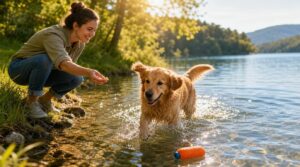
Once your dog feels steady in shallow water, positive reinforcement becomes your most powerful tool. Reward timing matters — deliver treats the instant your dog takes a confident step forward, not seconds later.
Keep treat size small so they swallow quickly and stay focused. Match toy selection to what genuinely excites your dog, and let your praise tone stay warm, calm, and encouraging throughout each session.
Keep First Sessions Short

Even the most treat-motivated dog has a short attention span near water. A simple Time Boxing Strategy keeps things manageable — aim for 5 to 10 minutes total, especially for a first-time puppy.
Use Short Swim Reps with built-in rest between tries, and always apply Calm Exit Timing, finishing while your dog still looks relaxed. That Positive Finish Cue makes the next session easier to start.
Support Your Dog’s Body Gently
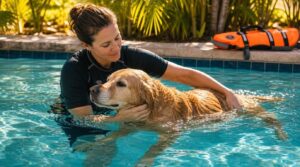
Once your dog is in short sessions, your hands become the real life jacket. Place one hand under the chest for Chest Support and the other beneath the hips for Hindquarter Stabilization — this keeps the dog posture while swimming balanced and relaxed.
Gentle Handling matters more than you’d think:
- Guide the Controlled Entry at shallow depth — no sudden drops
- Protect the tail; never grab it as a handle
- Keep Tail Protection in mind when pool gear is nearby
- Use dog flotation gear or a dog life vest for added security during gradual introduction to water for dogs
This mirrors canine aquatic therapy principles — steady, predictable contact builds trust.
Build Confidence Gradually

Think of confidence as a ladder — your dog climbs it one rung at a time. A Predictable Routine and Cue Consistency help your dog know what’s coming, so there’s less hesitation at the water’s edge.
Use a Stepwise Reward System for every small win, then allow Gradual Independence with Progressive Depth Increase only after success repeats. That’s Gradual exposure and desensitization to water for dogs done right.
Never Force a Dog Into Water

Forcing a dog into water never works — it only breaks trust and plants fear that can last for years. Voluntary Entry is the foundation of every stress‑free introduction. Watch their Body Language Cues closely and let them set the pace.
Forcing a dog into water breaks trust and plants fear; voluntary entry is everything
- Let your dog approach and enter on their own terms
- Use Positive Reinforcement — treats and praise — the moment curiosity appears
- Never throw, drag, or spray water at a hesitant dog
- Step back and try again later if discomfort shows
Trust Building and gradual introduction to water for dogs go hand in hand. Managing a dog’s fear of water starts with respecting their limits, building confidence in dogs around water one voluntary step at a time.
Essential Dog Swimming Safety Tips
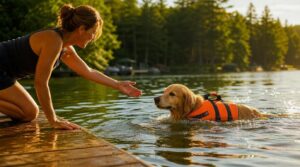
Even a calm swim can turn risky without the right precautions in place. The good news is that keeping your dog safe in the water doesn’t require a lot of complicated gear or rules — just a few key habits.
Here’s what every dog owner should know before heading to the water.
Choose a Proper Dog Life Jacket
A good dog life jacket is your dog’s first line of defense in the water.
When choosing the right flotation device for dogs, focus on four key things:
| Feature | What to Look For |
|---|---|
| Buoyancy Distribution | Foam panels across chest and belly |
| Fit Adjustability | Three or more adjustable straps |
| Visibility Features | Bright orange or yellow with reflective trim |
| Material Durability | Ripstop nylon, marine-grade foam |
| Rescue Grips | Shoulder-positioned grab grips plus D-ring |
Dog life vest fitting matters as much as the vest itself — you should fit two fingers under every strap.
Supervise Your Dog at All Times
Your dog deserves more than a glance between conversations. Active listening means staying close enough to catch a wobble before it becomes a crisis.
Step-in readiness keeps you positioned for a calm, fast response. Use calm guidance to redirect without panic.
Distance management and care rotation — check for fatigue often, monitor safe exits, and never look away.
Avoid Unsafe Water Conditions
Not all water is safe water — and your dog can’t read the warning signs. Before you let them splash in, scan for Algae Bloom Alerts and check for green scum, unusual odors, or murky color as part of basic Clarity & Odor Checks.
Storm Runoff Risks and Sewage Overflow Warnings spike after heavy rain, so stick to tested, approved spots.
Prevent Water Intoxication
Too much of a good thing is real — even water. Dogs can develop water toxicity when they gulp lake or pool water repeatedly between swims, diluting sodium in the blood.
Practice controlled drinking with timed water breaks: offer small amounts every 10 minutes, not free access. Post-swim monitoring matters too.
Watch for vomiting or sudden dullness, and consider electrolyte replacement for longer sessions.
Watch for Cold Water Risks
Cold water carries real risks beyond just shivering. Cold Shock Response can hit fast — your dog’s breathing and heart rate spike almost immediately, which drains energy faster than you’d expect. Rapid Core Cooling follows, weakening limbs and coordination, until Strength Loss makes staying afloat genuinely hard.
Keep water temperature at or above 100°F for safe dog water adaptation, and always cap sessions at ten minutes.
Use a Leash When Needed
A leash is connection to your dog when things shift unexpectedly. Choose corrosion-resistant materials that hold up to repeated water exposure, and think about leash length control before your dog ever reaches the water’s edge.
- Position the leash during entry leash positioning to steer first contact.
- Match leash clip types to your dog’s collar or life jacket D-ring.
- Keep slack minimal so it won’t tangle around legs mid-paddle.
- Practice rescue leash readiness by guiding tired dogs toward exit ramps calmly.
Best Places for Dog Swimming
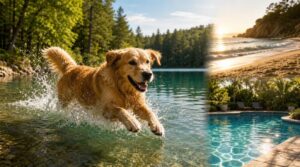
Finding the right spot for your dog to swim makes a bigger difference than most people expect.
Some dogs do best in calm, controlled spaces, while others thrive in open water with room to explore.
Here are the best places to think about, depending on your dog’s comfort level and needs.
Indoor Dog Swimming Pools
If you want year-round options regardless of weather, heated indoor pools are hard to beat. Many facilities offer non-slip flooring, thoughtful depth options for every size dog, and solid drainage systems for clean water between sessions.
At home, a foldable frame pool with durable PVC material gives you similar control. Either way, your dog gets safe, consistent swim time.
Dog-Friendly Lakes and Beaches
Natural water is a whole different adventure.
Germany has some great options — Lake Tegernsee’s Hundestrand Schorn near Rottach-Egern, Lake Chiemsee’s designated dog zones in Übersee and Chieming, and several Regional Dog Beaches along the North Sea coast.
Always check Lake Access Regulations and Water Quality Alerts before arrival.
Seasonal Swimming Availability varies, and Dog beach safety means knowing the rules before you go.
Backyard Pools and Kiddie Pools
If you’re not ready for a full outing, a backyard kiddie pool might be the perfect starting point.
Keep Pool Installation Tips simple: a flat, grassy surface with Non‑Slip Flooring around the edges does the job.
Add a Pet‑Friendly Pool Cover when it’s not in use, prioritize Shade and Sun Protection, and don’t skip Seasonal Storage Solutions when summer ends.
Canine Hydrotherapy Centers
Think of canine hydrotherapy centers as the physical therapy clinic of the dog world. These facilities use underwater treadmill design that controls water depth, speed, and water temperature control to match your dog’s exact recovery stage.
Therapist certification ensures hands-on guidance, while facility sanitation and session data tracking keep every visit safe and consistent.
For dogs rebuilding strength after surgery, canine aquatic therapy truly changes everything.
Dock Diving and Swim Classes
If your dog has energy to burn and loves the water, dock diving and swim classes might be your next move.
Dock diving training programs build skills week by week — starting with ramp entries and water retrieving before reaching full dock jumps.
Handler coaching sharpens your timing and cues, while structured class scheduling keeps progression training on track.
Safety considerations for canine swimming stay front and center throughout.
Post-Swim Rinsing and Drying Care
Every swim ends the same way — rinse, dry, check.
Start with a fresh lukewarm rinse right after exiting, paying close attention to coat rinse timing before chlorine settles in.
Follow a paw inspection routine between the toes, then dry ears thoroughly using gentle ear drying techniques.
The complimentary shower and drying station takes care of the rest, leaving you with a dry, happy, tired pup ready for home.
Frequently Asked Questions (FAQs)
Is swimming good for your dog?
Yes, swimming is genuinely good for your dog.
It’s a joint-friendly cardio workout that builds strength, helps weight management, and improves quality of life — all without the pounding stress that land exercise puts on its body.
Is it OK for my dog to swim?
For most dogs, swimming is perfectly fine — even great. It’s low-impact, builds strength, and promotes joint health.
That said, safety considerations for canine swimming matter, so your dog’s age, breed, and health always come first.
How much swimming should a dog do?
Think of it like a morning jog — start short and build steady. For most dogs, five to ten minutes works well at first, then gradually increase as fitness grows.
Is it better for dogs to walk or swim?
Both have real value.
Walking is great for daily routine and mental stimulation, but swimming offers better joint stress relief, faster endurance gains, and higher calorie burn — making it ideal for rehabilitation or low-impact fitness.
What is the best type of life jacket for dogs who swim?
Look for a dog life jacket with a solid buoyancy core under the chest, adjustable fit straps, reflective visibility trim, and reinforced grips — lightweight durability matters most for active swimmers.
How often should a dog swim for optimal health?
For most dogs, 1 to 3 sessions per week hits the sweet spot. Age-based frequency matters — seniors and pups need shorter, gentler sessions, while healthy adults can handle the upper end comfortably.
Is swimming more beneficial for certain breeds of dogs?
Yes — breed matters quite a bit.
Labrador Retrievers and Portuguese Water Dogs have natural coat buoyancy, cold water tolerance, and body structure that make swimming feel smooth, while flat-faced breeds often struggle just to stay afloat.
Are there any health risks associated with swimming for dogs?
Swimming does carry real health risks. Watch for Dry Drowning Risk, Algae Toxin Exposure, Chemical Skin Irritation, and water toxicity.
Hypothermia Danger and Ear Infection Susceptibility are also concerns worth knowing before your dog takes the plunge.
Are there any swimming classes available for dogs?
Absolutely — dog swimming lessons are widely available.
Whether your pup is a first-time puppy or a seasoned dock diver, group lessons, private sessions, and seasonal clinics with certified instructors make it easy to book your session confidently.
How do I choose the best swimming facility?
Look for clear water, certified staff, and a clean deck. Good temperature control and easy pool access matter too.
A well-run facility makes all the difference for your dog’s safety and comfort.
Conclusion
Every dog finds their own stride in the water—some leap headfirst, others need ten patient sessions before they trust it. That’s perfectly fine.
Swimming for dogs isn’t a race to the deep end; it’s a practice built on small wins, careful observation, and knowing your dog well enough to read their limits. Start shallow, stay close, and let confidence do the heavy lifting. When you get it right, the water becomes one of the best things you can offer them.
- https://www.petmd.com/dog/conditions/respiratory/c_dg_drowning?utm_source=openai
- https://www.akc.org/expert-advice/lifestyle/breeds-that-are-born-to-swim/?utm_source=openai
- https://www.vet.cornell.edu/hospitals/services/sports-medicine-and-rehabilitation?utm_source=openai
- https://www.dogster.com/lifestyle/do-dogs-naturally-know-how-to-swim
- http://www.teamworksdogtraining.org/