This site is supported by our readers. We may earn a commission, at no cost to you, if you purchase through links.

Your dog stares at your glass of coconut water like it holds the secrets of the universe. Maybe they’ve nudged your cup off the counter, or snuck a lap from your sports drink when you weren’t looking.
Dogs are curious creatures, and water isn’t always the most exciting thing in their bowl.
The good news? A handful of beverages beyond water can actually benefit your dog—some support gut health, others help with hydration after a hot afternoon at the park. Knowing which ones are safe and which ones can land you at the emergency vet makes all the difference.
Table Of Contents
- Key Takeaways
- What Can Dogs Drink Besides Water?
- Unsalted Broths Dogs Can Sip
- Milk and Dairy Alternatives
- Electrolyte Drinks for Dogs
- Fruit, Veg, and Herbal Drinks
- How Much Can Dogs Drink?
- Drinks Dogs Should Never Have
- Frequently Asked Questions (FAQs)
- What should a dog drink?
- Do dogs need water?
- What kind of water should a dog drink?
- What can a dog eat if he doesn’t drink water?
- Can dogs drink water besides water?
- What can a dog drink besides water?
- What can I give my Dog if he is dehydrated?
- Can dogs drink vegetable juice?
- Can a dog drink water if he eats coffee?
- What can I give my dog to drink instead of water?
- Conclusion
Key Takeaways
- Beyond water, dogs can safely enjoy unsalted broths, coconut water, kefir, and caffeine-free herbal teas—but always as small extras, not replacements for fresh water.
- Alcohol, caffeine, grape juice, and anything with xylitol are dangerous for dogs, even in tiny sips, so keep those well out of reach.
- Electrolyte drinks like unflavored Pedialyte or pet-specific powders can help after hot days or illness, but check labels carefully and loop in your vet before making them a habit.
- Portion size matters as much as what’s in the bowl—stick to a few tablespoons at a time, watch for loose stool or vomiting, and call your vet if something seems off.
What Can Dogs Drink Besides Water?

Water is your dog’s best friend, but it doesn’t have to be its only option. A few other drinks can safely round out its routine — when offered the right way.
For example, oatmeal made with lactose-free milk makes a gentle, occasional treat that hydrates and satisfies without upsetting your dog’s stomach.
Here’s what’s worth knowing before you fill that bowl.
Safe Beverage Categories
Your dog’s hydration doesn’t have to stop at plain water. Several safe beverages for dogs can add variety, encourage drinking, and even support health — think of them as low-additive hydration boosters, not replacements.
- Unsalted broths (chicken, beef, turkey)
- Electrolyte drinks like unflavored Pedialyte or coconut water
- Milk alternatives such as goat’s milk or kefir
Portion control guidelines matter with every option.
Why Water Still Comes First
All those safe beverages are great to know about — but fresh water is still your dog’s hydration baseline for a reason. It aids digestion, kidney support, and temperature regulation without adding sugar, salt, or anything extra.
Veterinary guidance consistently points to water first because digestive simplicity matters. Clean, fresh water keeps things steady and safe.
Everything else is a bonus.
When a Drink Should Be a Treat
Think of any drink besides water as a little bonus — not a regular pour.
Treat portion limits as keeping things safe, so stick to a few tablespoons at a time.
Always go through a gradual introduction phase and watch for GI signs like loose stool or gas.
Serve dog treat liquids at a comfortable temperature, and check with your vet if anything seems off.
Choosing Low-sugar, Low-salt Options
Label ingredient checks go a long way here. Look for no added salt and scan for hidden sweeteners like maltose or corn syrup.
DIY low-sugar broth, unsweetened almond milk, and unsweetened cashew milk all work well when kept plain.
Vet-approved electrolytes and unsalted herb infusions are solid picks too — just keep sodium low and always choose unsweetened.
Unsalted Broths Dogs Can Sip

Good news — broth is one of the easiest ways to give your dog a little something extra beyond plain water. Just a few simple rules keep it safe and genuinely beneficial.
Here’s what you need to know about the broths your dog can actually enjoy.
Chicken, Beef, and Turkey Broth
Chicken, beef, and turkey broth each bring something good to your dog’s bowl. Chicken is lighter in fat, while beef is richer — a natural Fat Comparison worth knowing. All three offer a solid Protein Benefits boost plus a Gelatin Boost as collagen breaks down during cooking.
Aroma Motivation, warm broth’s smell can coax even picky drinkers.
Just keep Sodium Control front of mind — always choose unsalted, dog-safe broth.
Research shows that gelatin improves gut is beneficial for canine digestion.
Homemade Broth Safety Rules
Making your own dog-friendly broth recipes is easier than you’d think — just follow a few key rules.
- Ingredient Rinsing — Rinse all bones and veggies under running water first.
- Simmer Temperature — Keep it between 185–205°F; never a rolling boil.
- Cooling Method — Use an ice bath to cool within one hour.
- Storage Labeling — Label containers with dates; refrigerate up to 4 days.
- Reheat Temperature — Warm to 165°F before serving.
Always use unsalted, low-sodium ingredients for a truly dogsafe broth.
Bone Broth as a Topper
Pouring a splash of dog-safe bone broth over dry kibble turns a boring meal into something your dog actually gets excited about.
It’s a simple protein boost — about 9 grams per cup — plus real collagen benefits and mineral content like potassium.
Stick to low sodium bone broth, serve it warm (never hot), and keep portions to a few tablespoons. Easy, practical, and genuinely good for them.
Using Broth to Encourage Drinking
Got a picky drinker on your hands? Try adding a splash of warm, low sodium bone broth to their water bowl.
The warm aroma benefits are real — dogs follow their nose first.
Start with a 1:3 dilution ratio and keep the offer short, around 20–30 minutes. It promotes electrolyte balance without replacing water.
When in doubt, veterinary guidance always helps.
Milk and Dairy Alternatives

Plain water isn’t the only liquid that can do your dog some good. A few dairy and dairy-free options are worth knowing about — some dogs tolerate them well, others don’t, so it pays to go carefully.
Here’s a quick look at what’s out there.
Goat’s Milk for Some Dogs
Goat’s milk sits in a gray area — some dogs handle it well, others don’t. The difference usually comes down to lactose sensitivity. While goat’s milk is easier on digestion than cow’s milk for many pups, it still contains lactose.
Here’s what to keep in mind:
- Pasteurization safety matters — always choose heat-treated over raw
- Calorie density is real — it adds up fast, especially for dogs on weight management plans
- Its micronutrient profile includes calcium, vitamin A, and B vitamins
- Introduce it slowly and watch for loose stool or gas
Why Cow’s Milk Can Upset Stomachs
Most adult dogs can’t properly digest cow’s milk — and the science explains why. Without enough lactase enzyme, this Enzyme Deficiency means lactose passes undigested into the large intestine.
There, Fermentation Gas builds up and Osmotic Diarrhea kicks in as water gets pulled in.
Some dogs also have a Protein Allergy reaction.
Either way, dog gastrointestinal upset follows fast.
Unsweetened Almond or Cashew Milk
Since cow’s milk is off the table, what about almond or cashew milk? These dairy-free milk alternatives are lactose-free — a win for canine digestion.
But check the label first:
- Protein Comparison: Both offer roughly 1g per cup — not a nutrition boost.
- Thickener Types & Brand Variability: Some contain gums or sea salt — sodium adds up fast.
- Vitamin Fortification: Added calcium and D aren’t always dog-friendly in larger amounts.
Stick to one tablespoon, unsweetened only.
Kefir and Probiotic Benefits
Kefir is a step up from plain nut milk — it’s a fermented drink packed with live bacteria and yeasts that support your dog’s gut microbiome. Think of it as a probiotic beverage with real muscle: it offers immune modulation, anti-inflammatory effects, and digestive enzyme boost.
It may even improve mineral bioavailability. Offer just a tablespoon a few times weekly.
Electrolyte Drinks for Dogs

Sometimes plain water just isn’t enough — especially after a hot walk or a bout of illness. That’s where electrolyte drinks can quietly save the day.
Here are a few worth knowing about.
Unflavored Pedialyte
When your dog is losing fluids fast — think vomiting or a hot afternoon run — unflavored Pedialyte can help restore dog’s electrolyte balance safely.
Its mineral composition includes sodium, potassium, and chloride, with a glucose ratio that facilitates quick absorption.
Label transparency matters here: always check for xylitol or artificial sweeteners.
For electrolyte supplementation in dog diets, veterinary guidance and basic safety precautions keep this a smart, occasional option.
Coconut Water for Mild Rehydration
Coconut water is another gentle option for mild rehydration. It’s naturally rich in potassium levels and offers some sodium content — a combo that quietly helps dog’s electrolyte balance after light activity.
Stick to sugar free options only, since added sweeteners can disrupt digestive tolerance. Offer a few tablespoons, watch how your dog responds, and always keep fresh water nearby.
Pet-specific Electrolyte Powders
Several brands now offer veterinary formulation powders made just for dogs — and they’re worth knowing about. These mixes usually cover electrolyte balance in dogs by including electrolytes like potassium, magnesium, and calcium, plus glucose balance support.
Just follow the mixing guidelines on the label and use the solution within a day for shelf life stability.
Always check with your vet before starting electrolyte supplementation in dog diets.
When Electrolytes Are Helpful
Electrolytes aren’t an everyday thing — they shine in specific situations. Think intense exercise recovery after a long hike, hot weather exposure on a sweltering afternoon, fever-related dehydration, or diarrhea-induced fluid loss.
These are the moments when canine electrolyte balance really matters.
An electrolyte solution for dogs helps restore what plain water can’t. Always use veterinary-directed supplementation to keep safe beverages for pets truly safe.
Fruit, Veg, and Herbal Drinks
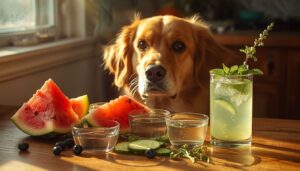
Beyond broths and electrolyte drinks, nature’s produce aisle has a few surprises for your pup. fruits, veggies, and herbal teas can double as occasional sips — as long as you know which ones are safe.
Here’s worth trying.
Diluted Cucumber or Carrot Juice
Think of cucumber or carrot juice as a gentle hydration supplement — mostly water with a little bonus nutrition. Diluted cucumber juice is low-calorie and revitalizing, while carrot juice offers a natural vitamin A boost. Both count as dog-safe liquids worth trying.
- Always dilute with plain water — no juice blends
- Skip added salt for a truly low sodium option
- Give a small taste test first to check for allergy risk
- Stop immediately if you notice loose stool or vomiting
Diluted Beet Juice in Small Amounts
Beet juice is one of those surprising dog-friendly hydration options that comes with real benefits — and a few quirks worth knowing.
The Nitrate Impact promotes cardiovascular health through nitric oxide production, while Betalain Pigment acts as a natural antioxidant. Just keep portions tiny and always dilute it.
| Factor | Undiluted | Diluted (Small Amount) |
|---|---|---|
| Sugar Load | Higher | Lower |
| Potassium Balance | Concentrated | Gentler |
| Urine Color Change | More likely | Less intense |
Offer diluted unsalted vegetable juice sparingly — a teaspoon is plenty.
Caffeine-free Herbal Teas
Herbal teas can be a gentle, calming addition to your dog’s routine — but only the right kind. Caffeine-free herbal teas like chamomile, peppermint, and ginger are among the safest dog-friendly hydration options.
Always check for potential toxic additives like sweeteners or essential oils. Brew weak, let it cool completely, and start with just a small sip to introduce new teas safely.
Cooling Drinks After Exercise
After a long run, your dog needs smart cooling — not just a full bowl dumped in front of them. Start with small sips of cold water or an ice slurry to trigger temperature-responsive cooling from the inside out.
Limited water intake right after exercise is actually safer than gulping. Coconut water or unsalted broth with light electrolyte supplementation can also gently support recovery.
How Much Can Dogs Drink?

Even the safest drinks can cause problems if your dog gets too much of them. Portions matter just as much as what’s in the bowl.
Here’s keep in mind before you pour.
Serving Sizes by Dog Size
Size matters concerning dog beverage portion control. A simple weight-based scaling rule works well: keep extras under 2–3% of your dog’s daily calorie intake.
Small dog limits are tight — just 1–2 tablespoons of broth or coconut water. Medium dog guidelines allow a bit more, while large dog portions can scale up slightly.
But more on that next.
How Often to Offer Each Drink
Now that you know how much to pour, timing matters too. Think of a simple rotation schedule: water daily, broth a few times weekly, and dairy alternatives only occasionally.
Frequency guidelines shift with the seasons — hot summer days may call for coconut water more often. Always follow your vet’s recommendation for drinks, especially if your dog has health-based limits like kidney or heart concerns.
Drinks as Supplements, Not Replacements
Think of those special drinks as a hydration supplements, not replacements for water. Broth, coconut water, and kefir provide caloric content and support electrolyte balance — but they’re meant as top-ups, not swaps.
Always check the ingredient label for hidden sugars or sodium, as these can undermine their benefits.
Nutrient timing matters: consume these drinks between meals, not instead of them, to optimize their role as supplements.
When to Stop and Call The Vet
Even safe drinks can tip into trouble. Stop offering any beverage and call your vet if you notice:
- Persistent vomiting or blood in stool after trying something new
- Labored breathing or sudden collapse
- Seizure activity or disorientation
- Signs of dehydration in dogs — dry gums, sunken eyes, lethargy
When in doubt, your vet’s advice beats any label claim.
Drinks Dogs Should Never Have
Not everything in your kitchen is dog-friendly, and some drinks can cause serious harm in just a few sips. Before you share your glass, it’s worth knowing which beverages are completely off-limits for your pup.
Here’s what to keep far out of their reach.
Alcohol and Caffeinated Drinks

Both alcohol and coffee are flat-out dangerous for dogs — no exceptions.
Caffeinated beverages like coffee trigger seizures and heart problems fast. Alcohol causes low blood sugar and breathing failure, even in tiny amounts. Caffeinated alcohol toxicity is especially tricky — caffeine masks alcohol impairment, raising the risk of accidental overexposure. If your dog gets into either, call your vet immediately.
Even a tiny sip of alcohol or coffee can trigger seizures, breathing failure, or worse in dogs
| Drink | Why It’s Harmful |
|---|---|
| Coffee | Caffeine toxicity in dogs causes seizures |
| Beer/Wine | Alcohol toxicity and low blood sugar in dogs |
| Energy drinks | Caffeine and alcohol toxicity in pets combined |
| Caffeinated mixers | Alcohol impairment masking leads to risky behavior boost |
| Any caffeinated beverage | Triggers tachycardia and nervous system damage |
Chocolate and Energy Drinks

Chocolate and energy drinks might seem harmless, but both carry serious risks for your dog.
Theobromine toxicity from hidden cocoa can damage their heart and nervous system quickly. Caffeine overdose from energy drinks adds another layer of danger — caffeine is dangerous for dogs even in small amounts.
sugar load worsens things too. Weight-based risk means smaller dogs are hit hardest. Never share these.
Grape Juice and Wine

Grape juice and wine might look harmless in your glass, but both are dangerous for dogs. Grape products carry a risk of kidney failure and can trigger oxidative toxicity that breaks down red blood cells — a condition called hemolytic anemia.
The sugar load adds GI irritation on top. Wine brings alcohol into the mix too.
Dose-dependent risk means even a small sip matters.
Xylitol, Added Sugar, and Salt
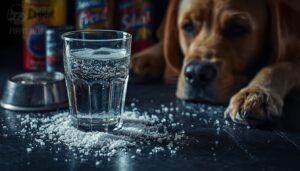
Some sneaky ingredients deserve a closer look. Xylitol — a sugar alcohol found in many "sugar-free" drinks — triggers a dangerous insulin surge in dogs, which can crash blood sugar and cause liver damage fast. That’s a Xylitol Toxicity Pathway you never want to see.
Added sugar and added salt aren’t safe either. Always check labels, and call your vet immediately if your dog drinks something suspicious.
Frequently Asked Questions (FAQs)
What should a dog drink?
Water is your dog’s best sip-kick. Fresh water should always be their go-to drink, supporting digestion, circulation, and temperature regulation all day long.
Do dogs need water?
Yes — absolutely. Fresh water is the foundation of your dog’s health.
Without it, canine dehydration sets in fast, throwing off digestion, circulation, and temperature regulation.
Veterinary guidelines on canine fluids are clear: water comes first, always.
What kind of water should a dog drink?
Think of your dog’s water like a clean glass you’d drink from yourself — fresh, odorless, and clear. Clean tap water from a treated supply works well for most dogs.
What can a dog eat if he doesn’t drink water?
If your dog skips the bowl, try moisture-rich snacks like cucumber slices or watermelon bites.
Wet kibble, frozen broth licks, and ice cube treats all sneak in hydration without a sip.
Can dogs drink water besides water?
Absolutely — and you might be surprised how many options exist.
From dog-safe liquids like unsalted broth to hydration alternatives for dogs like diluted coconut water, your pup’s bowl doesn’t have to be boring.
What can a dog drink besides water?
Your pup can sip more than plain water.
Safe hydration alternatives for dogs include unsalted broth, goat’s milk, and coconut water — all offered in small amounts alongside fresh water, never instead of it.
What can I give my Dog if he is dehydrated?
Start with fresh water in small, frequent sips. Ice cubes help slow gulping.
Unflavored Pedialyte or low-sodium broth can restore electrolytes. If he’s still refusing, call your vet — canine dehydration treatment shouldn’t wait.
Can dogs drink vegetable juice?
Yes, but only in tiny amounts. Plain, homemade unsalted vegetable juice is safest.
Commercial blends risk sodium toxicity, acidic upset, and fiber deficiency. Think of it as a rare sip — never a hydration alternative for dogs.
Can a dog drink water if he eats coffee?
Water won’t undo caffeine toxicity in dogs, but it may help by boosting urination frequency to flush caffeine out.
Always prioritize symptom monitoring and seek veterinary guidance if your dog shows restlessness or tremors.
What can I give my dog to drink instead of water?
Besides plain water, you can offer your dog unsalted broth, diluted coconut water, or caffeine-free herbal tea.
These dog-friendly hydration options work best as occasional supplements, never full replacements for fresh water.
Conclusion
The best thing you can do for a dog who loves variety is keep things boring—plain water, always available, always first. But what can dogs drink besides water means you’re ready when your pup needs a little extra something: post-hike electrolytes, a broth boost, or a probiotic sip.
Treat these options like seasoning, not the main course. A thoughtful pour here and there keeps tails wagging without sending you both to the vet.
- https://www.ncbi.nlm.nih.gov/pmc/articles/PMC6305449/
- https://pangovet.com/talk-to-a-vet-online-dog-ate-drank-something/?utm_source=dogster&utm_medium=article&utm_campaign=dog_eat_drink&utm_content=can-dogs-drink-anything-other-than-water
- https://pmc.ncbi.nlm.nih.gov/articles/PMC8226494/
- https://www.bbcgoodfood.com/health/nutrition/health-benefits-kefir
- https://www.healthline.com/nutrition/9-health-benefits-of-kefir?slot_pos=article_5&apid=40295511&rvid=66df0b36ce4f742cc05c75af38e0aa4440eb947578d15c190d10aebed06930e0