This site is supported by our readers. We may earn a commission, at no cost to you, if you purchase through links.

Your dog catches a whiff of the Parmesan you’re grating over dinner and locks eyes with you—that look. One tiny pinch won’t hurt, right?
The honest answer is more nuanced than a flat yes or no, and it depends on a few things worth knowing before you share.
Parmesan sits apart from most cheeses because the long aging process breaks down much of its lactose, making it easier on sensitive stomachs.
But its sodium content is surprisingly high, and that changes how much is actually safe.
The right portion, the right frequency, and knowing which dogs should skip it entirely make all the difference.
Table Of Contents
- Key Takeaways
- Can Dogs Eat Parmesan Cheese?
- Is Parmesan Cheese Safe?
- Parmesan Nutrition for Dogs
- Parmesan Risks and Side Effects
- Dogs Who Should Avoid Parmesan
- How Much Parmesan is Safe?
- How to Feed Parmesan Safely
- What to Do if Your Dog Overeats
- Frequently Asked Questions (FAQs)
- Can dogs eat Parmesan cheese?
- Can dogs eat cheese?
- Does Parmesan cheese have preservatives?
- Is Parmesan cheese the same as cheese?
- How often can I give my dog Parmesan cheese?
- Is Parmesan cheese safe for puppies?
- What are the signs of salt toxicity in dogs?
- Is Parmesan cheese better for dogs than other cheeses?
- Is pre-grated Parmesan safe for dogs?
- Can dogs eat parmesan cheese rinds safely?
- Conclusion
Key Takeaways
- Most adult dogs can have a tiny pinch of plain Parmesan once or twice a week, but its high sodium—around 1,100 mg per ounce—makes portion control non‑negotiable.
- Parmesan’s long aging process breaks down nearly all its lactose, making it easier on sensitive stomachs than most cheeses, though flavored or pre‑grated versions can hide toxic ingredients like garlic and onion.
- Puppies and dogs with heart disease, kidney disease, or a history of pancreatitis should skip Parmesan entirely, as even small amounts can worsen their condition.
- If your dog sneaks more than their fair share, watch for vomiting, excessive thirst, or lethargy within a few hours—and call your vet immediately if you see seizures, breathing trouble, or symptoms that don’t improve.
Can Dogs Eat Parmesan Cheese?

Yes, most adult dogs can eat a small amount of plain Parmesan without any trouble. But not every dog tolerates it the same way, and a few details really matter before you share a bite.
If you’re also wondering about other foods, this guide on what dogs can and can’t eat with pesto chicken is worth a quick look before sharing table scraps.
Here’s what you need to know.
Short Answer for Most Adult Dogs
Most adult dogs can eat small amounts of plain parmesan without a problem. That’s the brief safety summary — it’s not toxic, and adult dog tolerance is generally decent.
But moderate amounts matter here. The key risk highlights are sodium and fat, so think of it as a rare sprinkle, not a snack. One simple feeding rule: less is always safer.
Why Plain Parmesan is Different
Plain parmesan isn’t just any cheese. Aging influence plays a big role — the longer it ages, the more moisture reduction occurs, which concentrates both flavor and salt density.
That’s why a small sprinkle packs more punch than softer cheeses. With plain, hard Italian cheese, you also avoid four common dangers found in store-bought versions:
- Anti-caking additives
- Herb or spice blends
- Inconsistent regulatory standards
- Hidden sodium from flavored coatings
When Parmesan Becomes Unsafe
Even plain parmesan turns risky under certain conditions. Mold growth, rancid flavor from old grated cheese, and cross contamination from dirty surfaces all affect the safety of feeding parmesan cheese to dogs.
| Unsafe Situation | Why It’s a Problem |
|---|---|
| Greasy additions or sauces | Increases pancreatitis risk |
| High sodium content | Triggers kidney issues and heart problems |
| Spoiled or moldy cheese | Causes GI upset |
Is Parmesan Cheese Safe?

Safety really comes down to a few key factors. The type of cheese, how much you give, and how often it shows up in your dog’s bowl all make a difference.
Here’s what to keep in mind.
Low Lactose in Aged Cheese
Parmesan’s low lactose content comes down to science, not luck.
Several overlapping processes strip out nearly all the lactose before the cheese ever reaches your dog’s bowl:
- Aging Duration — longer ripening breaks down residual sugars
- Starter Cultures — bacteria convert lactose into lactic acid
- Whey Removal — draining curds eliminates lactose-rich liquid
- Moisture Loss — extended drying concentrates solids, reducing lactose measurably
That’s why lactose measurement in well-aged parmesan cheese registers near zero.
Plain Cheese Versus Flavored Cheese
When choosing Parmesan cheese for your dog, label matters more than you’d think. Plain Parmesan keeps its nutrient profile clean — no additive allergens, no sodium variation from herbs or spices.
Flavored versions, unlike plain goat cheese or simple aged options, can hide garlic or onion — both toxic to dogs.
Shelf life differences and flavor impact are secondary concerns.
Stick with plain.
Small Amounts Versus Regular Feeding
small pinch of Parmesan cheese once a week is very different from daily servings. small quantities keep sodium accumulation low and support fat load management — two things that matter a lot for sensitive dogs.
Keeping portions tiny also helps avoid the fat buildup that, over time, can quietly tip a dog toward obesity — a risk worth understanding before adding any rich food to their diet, much like the concerns around high-fat spreads.
tolerance testing before committing to a routine. moderation is key: fit Parmesan into your dog’s feeding schedule without disrupting caloric balance, or pushing sodium intake limits for pets prone to lactose intolerance considerations.
Implementing a portion controlled feeding approach helps maintain overall caloric balance.
Parmesan Nutrition for Dogs

Parmesan isn’t just a flavor boost — it actually brings a few nutrients to the table. Before you decide whether it belongs in your dog’s diet, it helps to know what’s really inside that little sprinkle of cheese.
Here’s a quick look at what matters most nutritionally.
Protein Content
One ounce of Parmesan delivers about 10 grams of protein — not bad for a pinch of cheese. That protein density comes from concentrated casein, a digestible protein your dog’s body can actually use for muscle maintenance and repair.
Think of it as a supplemental boost, not a primary protein source for dogs. Keep portions small to control intake without disrupting their balanced diet.
Calcium and Phosphorus
That tiny sprinkle of Parmesan cheese actually delivers 331 mg calcium and 190 mg phosphorus per ounce — both essential for bone mineralization and daily cellular function.
Together, they’re among the key nutritional benefits and risks of parmesan for dogs worth knowing:
- Calcium strengthens bones and teeth
- Phosphorus aids DNA and energy
- Both require hormonal regulation via parathyroid hormone
- Vitamin D role ties directly to how well your dog absorbs these minerals
- Kidney balance governs how much stays versus gets excreted
As calcium and protein sources for canine health, these minerals help — but only in small, occasional amounts.
Sodium and Fat Levels
Parmesan packs a surprising punch — about 1,100 mg sodium and 7.8 g fat per ounce.
That sodium threshold hits hard for small breeds, where even a sprinkle shifts their daily sodium intake considerably. Fat ratio matters too, since repeated high-fat treats raise caloric impact over time.
| Dog Size | Safe Amount | Key Risk |
|---|---|---|
| Small (≤10 lb) | ⅛ tsp | High sodium content per body weight |
| Medium (11–20 lb) | ¼ tsp | Fat content concerns with frequency |
| Large (21–50 lb) | ½ tsp | Breed sensitivity varies |
| Extra-large (>50 lb) | 1 tsp | Sodium toxicity in dogs with heart issues |
| All sizes | Once weekly | Seasoning additives in packaged blends |
Parmesan Risks and Side Effects
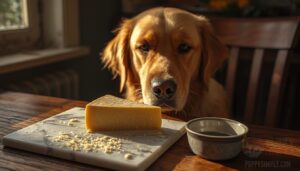
Parmesan isn’t toxic, but that doesn’t mean it’s without drawbacks. small amounts can cause real problems for some dogs, depending on their health and how their body processes dairy and sodium.
what to watch out for before you share a sprinkle.
Upset Stomach and Diarrhea
Too much Parmesan can leave your dog’s gut in chaos. The high fat content speeds up digestion, and that often means intestinal upset quickly.
Watch for:
- Vomiting or diarrhea within hours
- Loss of appetite and lethargy
- Signs of digestive issues like bloating or stomach cramps
Gentle Bland Diet, Probiotic Support, and Stool Monitoring help recovery. Dietary Fiber aids in restoring normal digestion.
Excessive Thirst and Dehydration
Salt doesn’t just make food tasty — it pulls water from your dog’s body. Parmesan’s high sodium content can trigger polydipsia signs like excessive thirst, increased urine output, and restlessness.
Fluid loss causes the body to activate hormonal regulation responses, pushing your dog to drink constantly. Dehydration treatment starts with fresh water and sodium reduction for pets, to ease kidney strain.
Weight Gain and Pancreatitis Risk
Fat adds up faster than you’d think. Parmesan is a high-calorie, high fat treat, and regular feeding quietly pushes your dog toward obesity risk.
Visceral fat inflammation then creates a ripple effect — insulin resistance impact, metabolic syndrome link, and gallbladder stone risk all follow.
That internal pressure raises pancreatitis risk substantially. Obese dogs face an obesity severity correlation with worse outcomes, so keep high-calorie treats rare.
Dogs Who Should Avoid Parmesan

Parmesan might be fine for many dogs, but it’s not a good fit for every pup.
Some dogs have health conditions or sensitivities that make even a small amount risky. If your dog falls into any of these categories, it’s best to skip Parmesan altogether.
Puppies and Young Dogs
Puppies should skip parmesan cheese entirely, even with its low lactose content. Their digestive system development isn’t ready for salty, fatty foods during this critical growth phase nutrition period.
A puppy’s impulse control training is already a challenge — the last thing you need is tummy trouble from too much sodium.
- Puppies lack enough lactase enzyme to handle dairy well
- High sodium disrupts their still-developing kidneys
- Fat content raises pancreatitis risk in young dogs
- Weight monitoring matters early — extra calories add up fast
- Low-sodium treat options like lean chicken work better
Dogs With Lactose Intolerance
Even with Parmesan’s low lactose, dogs with lactose intolerance can still react.
Lactase decline after puppyhood means some dogs simply can’t handle dairy — small amounts. Watch for intolerance symptoms like gas, loose stools, or vomiting within hours.
| Factor | Risk Level | Better Option |
|---|---|---|
| Lactase decline | High | Lactose free alternatives |
| GI monitoring | Moderate | Gradual feeding trials |
| Parmesan cheese | Variable | Cooked chicken |
Dogs With Heart or Kidney Disease
If your dog has heart or kidney disease, Parmesan is one treat to skip entirely. The high sodium disrupts fluid balance and can worsen swelling or lung congestion. Sodium restriction isn’t optional here — it’s part of the treatment plan. High-sodium cheese also creates medication interactions and strains renal health.
For dogs with heart or kidney disease, Parmesan’s high sodium isn’t a minor risk — it’s a treatment concern
Ask your vet about kidney-friendly treats and cardiac monitoring during routine checkups.
Dogs Prone to Pancreatitis
Some breeds — Miniature Schnauzers especially — carry a genetic predisposition to pancreatitis linked to elevated triglyceride levels. For them, the high fat in Parmesan cheese isn’t worth the risk.
Medication triggers like phenobarbital can compound that vulnerability. Stick to low-fat treats, choose dairy alternatives for dogs with pancreatitis, and stay consistent with symptom monitoring.
Parmesan’s nutritional benefits simply don’t outweigh the danger here.
How Much Parmesan is Safe?

Portion size is everything with respect to Parmesan and dogs. Too much, even once, can cause real problems — but the right amount depends on how big your dog is.
Here’s a simple breakdown to help you get it right.
Small-breed Portion Limits
Small dogs have tiny calorie budgets — and Parmesan adds up fast. Keep these weight-based guidelines in mind:
- Under 10 lbs: pinch-sized servings only (~1/8 tsp)
- Stay within your calorie cap calculation: treats max at 10% daily intake
- Watch the sodium threshold — small bodies feel it quickly
- Monitor hydration after each serving
- Offer no more than once weekly
Plain, low-sodium cheese in small amounts is always the safer call.
Medium and Large Dog Portions
Bigger dogs still need measured portions — don’t let size fool you into overdoing it. For medium dogs (11–20 lbs), keep parmesan to about ¼ tsp; large dogs (21–50 lbs) can handle up to ½ tsp.
Calorie allocation and sodium scaling both matter here.
Use portion measurement tools like a kitchen scale to avoid guessing.
A large amount raises fat ratio concerns and can trigger real health issues.
How Often to Offer It
Once or twice a week is the sweet spot for most healthy adult dogs — and even that calls for Weight‑Based Scheduling based on your dog’s size and daily calorie needs. Think of it as a tiny occasional sprinkle, not a standing habit.
Health‑Condition Timing matters too: hot weather or digestive stress calls for Seasonal Frequency Adjustments.
When in doubt, less is more.
How to Feed Parmesan Safely
Knowing your dog can have a little Parmesan is one thing — knowing how to offer it safely is another. A few simple habits make all the difference between a harmless treat and an upset stomach.
Here’s what to keep in mind before you sprinkle any on their bowl.
Use Only Plain, Grated Parmesan
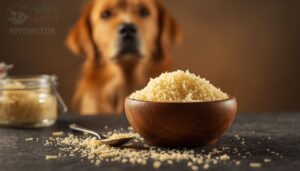
Plain grated parmesan cheese is your safest bet — but label verification matters.
Some store-bought options contain anti-caking agents like cellulose powder or potassium sorbate, which aren’t ideal for dogs.
That fine texture control actually helps with portion consistency, making it easier to sprinkle just a little. Always check for:
- Plain cheese ingredients only
- No added flavors or seasonings
- Dry, fresh texture for mold prevention
- Finely grated for even dispersal
- Sealed storage after each use
Avoid Garlic, Onion, and Spices
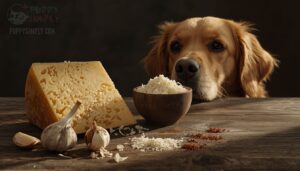
Label reading matters just as much as the cheese itself. Hidden garlic or onion powder can appear in "seasoned" blends without obvious naming.
These aren’t just spice irritants — onions and garlic are genuinely toxic to dogs, even in small amounts. Cross-contamination risks exist too, especially with shared production lines.
Avoid any Parmesan with added seasonings. When in doubt, plain means one ingredient: cheese.
Mix With Food or Use as a Treat
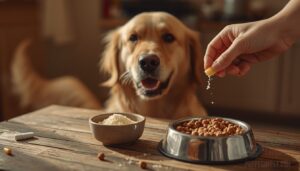
Once you’ve confirmed the cheese is plain, you have a few good ways to use it. A measured pinch portion works best — too much, and the calorie offset strategy falls apart fast.
- Meal topper: Sprinkle grated cheese lightly for flavor enhancement, balance without replacing balanced nutrition.
- Training reward timing: Offer a tiny bite right after the desired behavior.
- Supplement masking method: Press a small crumb around a pill to help your dog swallow it easily.
Watch for Reaction After First Serving

After the first serving, watch your dog closely for a few hours. Lip licking, pacing, restlessness, or extra drooling can be early signs of gastrointestinal upset. Vomiting onset often happens the same day.
Bowel changes like loose stool or more frequent trips outside signal lactose intolerance considerations.
Skin hives or facial swelling point to an allergic reaction — stop immediately and call your vet.
What to Do if Your Dog Overeats

Even with the best intentions, dogs sometimes sneak more than their fair share. If your dog got into the Parmesan, there are a few things you’ll want to watch for and do right away.
Here’s what to keep in mind.
Signs of Salt or Dairy Upset
Too much Parmesan can hit your dog’s gut fast. Watch for vomiting, diarrhea, and GI upset within a few hours.
Bloating, swelling, and abdominal cramping are signs the digestive system is struggling.
Flatulence and gas often follow dairy overload.
High sodium and sodium sensitivity can also trigger nausea signs, excessive thirst, and lethargy.
These symptoms tell you something’s off.
When to Call Your Vet
Most mild symptoms pass on their own, but some signs mean you need to consult with your veterinarian right away. Call immediately if you notice Seizure Activity, Breathing Distress, or signs of Suspected Poisoning.
Urinary Blockage or an Eye Injury also needs urgent care.
cheese-related gastrointestinal distress that worsen after a few hours, or potential health issues from high sodium in dogs like extreme lethargy, cannot wait.
What Foods and Drinks to Offer Next
After your dog settles, keep things simple and gentle. Fresh water should always come first — especially after something salty. If you’re out and about when it happens, a spill-resistant travel dog bowl makes it easy to offer that fresh water wherever you are.
Then ease back into food with these safe options:
- Plain boiled chicken, unseasoned
- Plain rice to calm the stomach
- Cooked carrots for a low-calorie crunch
- Low-sodium broth, unseasoned only
- Low-sodium, low-fat cheese as an alternative safe cheese for canine diets
Frequently Asked Questions (FAQs)
Can dogs eat Parmesan cheese?
Yes, adult dogs can eat plain Parmesan cheese in small amounts.
It’s low in lactose and works well as a Training Reward Value boost — just keep portions tiny, given the high sodium.
Can dogs eat cheese?
Most adult dogs can eat cheese in small amounts.
It’s not toxic, but it’s rich in fat and sodium, so treat it as an occasional snack rather than a daily habit.
Does Parmesan cheese have preservatives?
It depends on the type you buy. Block parmesan rarely has preservatives, but grated versions often contain cellulose, natamycin, or potassium sorbate. Check the label — "100% cheese" means fewer additives.
Is Parmesan cheese the same as cheese?
Parmesan cheese is a specific type of cheese — not just any cheese.
It’s Parmigiano-Reggiano, a hard and granular cheese governed by strict regional regulations, a unique milk source, and a lengthy aging process.
How often can I give my dog Parmesan cheese?
Stick to once or twice a week at most. Any more than that, and the sodium starts to add up fast.
Keep portions small, and always watch how your dog responds.
Is Parmesan cheese safe for puppies?
No, Parmesan cheese isn’t safe for puppies. Their developing digestive systems can’t handle the high sodium and fat well, and even low lactose can still upset a young pup’s gut.
What are the signs of salt toxicity in dogs?
Like a storm that starts with a drizzle, salt toxicity builds fast.
Watch for lethargy, loss of appetite, polyuria, polydipsia, ataxia, tremors, seizures, confusion, and unresponsiveness.
High sodium intake strains renal health and raises blood pressure.
Is Parmesan cheese better for dogs than other cheeses?
In some ways, yes. Parmesan’s low lactose and long shelf life make it a reasonable occasional pick.
But the high sodium tips the scale — lower-sodium options like mozzarella are often the smarter veterinary recommendation.
Is pre-grated Parmesan safe for dogs?
Pre-grated Parmesan often contains anti-caking agents and packaging additives from higher processing levels. These extras aren’t ideal for dogs.
grate a small amount fresh from a plain block instead.
Can dogs eat parmesan cheese rinds safely?
Parmesan rinds can be a choking danger, especially for small dogs. The rind texture hardness makes chunks hard to swallow safely.
mold presence check, cut into tiny pieces, and confirm there’s no additive contamination before offering any.
Conclusion
A Labrador named Benny once landed at the vet after his owner sprinkled Parmesan on his meals daily for a month—not critically ill, but bloated, thirsty, and carrying extra weight.
That’s the line most owners don’t see coming.
Yes, but only as an occasional pinch, not a habit.
Keep portions small, check the label for additives, and let your dog’s size and health history guide every decision.
- https://pangovet.com/talk-to-a-vet-online-dog-ate-drank-something/?utm_source=dogster&utm_medium=article&utm_campaign=dog_eat_drink&utm_content=can-dogs-eat-parmesan-cheese
- http://www.eatingwell.com/best-and-worst-foods-for-dogs-8682189
- http://www.healthline.com/nutrition/human-foods-for-dogs
- http://www.medicalnewstoday.com/articles/324453
- https://openprairie.sdstate.edu/cgi/viewcontent.cgi?article=4715&context=etd