
This site is supported by our readers. We may earn a commission, at no cost to you, if you purchase through links.

Your dog spots the coconut you’re cracking open and plants himself firmly at your feet, tail going like a metronome. Before you hand over a piece, it’s worth knowing what that white flesh actually does once it hits a dog’s digestive system.
Coconut meat sits in an interesting gray zone—non-toxic, yes, but dense with fat that can cause real problems for certain dogs. The good news is that fed correctly, it delivers fiber, minerals, and medium-chain triglycerides that support digestion and coat health.
Safe feeding comes down to the right dog, the right amount, and the right preparation.
Table Of Contents
- Key Takeaways
- Can Dogs Eat Coconut Meat?
- Is Coconut Meat Safe?
- Coconut Meat Nutrition for Dogs
- Health Benefits of Coconut Meat
- Risks of Feeding Coconut Meat
- How Much Coconut Meat to Feed
- How to Feed Coconut Meat Safely
- Which Coconut Products Are Safe?
- When Dogs Should Avoid Coconut
- When to Call Your Veterinarian
- Frequently Asked Questions (FAQs)
- Conclusion
Key Takeaways
- Coconut meat is safe for most dogs in small amounts, but its high fat content (33.5g per 100g) makes it a real risk for dogs with pancreatitis, kidney disease, or weight problems.
- Stick to fresh, plain coconut meat diced into pea-sized pieces, and keep treats under 10% of your dog’s daily calorie intake to avoid digestive upset or weight gain.
- Medium-chain triglycerides (MCTs) and lauric acid in coconut meat can support coat health, digestion, and energy — but these benefits only hold when portions stay small and gradual.
- If your dog vomits, develops diarrhea, shows skin reactions, or has trouble breathing after eating coconut, stop feeding it immediately and call your vet.
Can Dogs Eat Coconut Meat?
Yes, your dog can eat coconut meat — but a few simple rules make all the difference between a safe treat and an upset stomach. The good news is that fresh coconut is natural, non-toxic, and easy to prepare correctly.
Just be sure to skip the shells entirely — here’s why coconut shells are unsafe for dogs and what to watch out for when preparing this treat.
Here’s what you need to know before sharing a piece with your pup.
Yes, in Small Amounts
Yes, your dog can enjoy coconut meat — just keep portions small and timing intentional. Think of it like a bonus snack, not a daily staple.
A modest serving lets you practice stool observation over 24–48 hours and maintain energy balance in your pup’s diet. Owner logs and a quick veterinary check help you stay confident about moderation from the start.
Use Fresh, Plain Coconut Meat
Fresh, plain coconut meat is your safest starting point — no added sugar, salt, or flavorings. Texture preference matters here: the firm, moist flesh of fresh coconut meat cuts cleanly into small, dog-safe bites.
Follow basic preparation hygiene — rinse it, use clean utensils, and store leftovers sealed in the fridge.
Flavor pairings with dog-safe foods like plain chicken work fine, too.
A 45 g piece provides about 159.3 calories, making it a high density food.
Remove Shell, Husk, and Peel
Before that coconut meat ever reaches your dog’s bowl, prep matters.
Use the Eye Puncture Technique to drain water first — a screwdriver through two of the three dark eyes works cleanly. Then apply the Towel Cracking Method to crack the shell safely. Follow with your Dehusking Tools Guide to strip the fibrous husk, use Skin Peeling Tips to remove the brown layer, and finish with Splinter Trimming Safety to shave off any shell fragments clinging to the coconut flesh.
Is Coconut Meat Safe?

Good news — coconut meat isn’t toxic to dogs, but that doesn’t mean it’s completely free of caveats. Like a lot of tasty things, it works best in small amounts and only for the right pup.
Here’s what you need to know before adding it to your dog’s bowl.
Non-toxic for Most Dogs
For most dogs, coconut is nontoxic — no venom, no poison, just a whole food with real coconut benefits and a few coconut risks worth knowing.
Digestive Compatibility varies by dog, and Metabolic Tolerance depends on age, weight, and health history. Palatability Factors and Long-term Tolerance also differ. Watch for:
- Loose stool after first bites
- Unusual lethargy or gas
- Skin reactions suggesting Allergy Risk
- Vomiting within a few hours
Best as an Occasional Treat
Think of coconut meat as an occasional healthy snack rather than a daily staple. Keeping it within your dog’s calorie budget — treats shouldn’t exceed 10% of daily intake — helps you enjoy the coconut benefits without accumulating coconut risks over time.
Reward timing matters too: space portions out, track owner observation notes, and use it as a low-fat topper only occasionally.
High-fat Foods Need Caution
Coconut meat’s energy density is worth respecting — 100 g packs about 354 kcal and 33.5 g of fat.
Too much, too often, raises real concerns: obesity risk, metabolic inflammation, and even heart disease in vulnerable pups.
The fat content and pancreatitis risk alone make moderation non-negotiable.
Dogs already managing kidney strain or on weight-loss plans face the highest exposure to high fat diet risks.
Coconut Meat Nutrition for Dogs

Coconut meat isn’t just a tasty snack — it actually brings some real nutritional value to the table for your dog. A closer look at what’s inside helps you understand both the benefits and the limits.
Here’s what the nutrition profile looks like.
Calories and Fat Content
Raw coconut meat packs about 354 calories per 100 grams — that’s serious caloric density for a small treat. Nearly 33 grams of that fat, with medium chain triglycerides (MCTs) making up the bulk.
Because fat delivers 9 calories per gram, calorie tracking matters. Even a tablespoon adds up fast, and the fat content and pancreatitis risk connection is real for sensitive pups.
Fiber for Digestion
Every 100 grams of coconut meat contains roughly 9 grams of dietary fiber — a meaningful amount for dog digestive health.
Soluble fiber benefits your pup by softening stool and regulating consistency, while the insoluble fiber’s role keeps things moving through the gut.
Fermentable fiber also acts as a prebiotic, feeding beneficial bacteria for gut microbiome support and better intestinal health in dogs.
MCTs and Lauric Acid
About 33 grams of fat per 100 g of coconut meat comes largely from medium-chain triglycerides (MCTs) and lauric acid — two nutrients worth understanding.
- Rapid Metabolism: MCTs bypass normal fat digestion, heading straight to the liver for quick energy.
- Ketone Boost: That fast oxidation enhances Brain Support in senior dogs.
- Antimicrobial Action: Lauric acid (~45% of coconut fat) fights bacteria and fungi.
- Inflammation Control: These fats may calm minor inflammatory responses.
Potassium and Other Minerals
Coconut meat quietly delivers more than just fat. A 100 g serving provides potassium — a key electrolyte that helps maintain Electrolyte Balance, nerve signaling, and muscle contraction, including your dog’s heart.
Manganese contributes to Bone Mineralization, while copper and iron round out the Mineral Synergy in any nutritional analysis of raw coconut meat.
Together, these minerals help maintain Acid-Base Regulation and, with proper portioning, Kidney Electrolyte Management too.
Health Benefits of Coconut Meat

Coconut meat isn’t just a tasty snack for your pup — it actually brings some real nutritional value to the bowl. The nutrients packed into that white flesh can work in your dog’s favor in a few different ways.
Here’s a closer look at what coconut meat may do for your furry friend.
Supports Skin and Coat
One of the most noticeable perks dog owners report is a shinier, healthier coat within just a few weeks of adding coconut to their pup’s routine. Lauric acid’s antibacterial properties help calm minor skin irritation, while MCT’s anti-inflammatory action reinforces the skin barrier—much like zinc does from the inside out.
Coconut oil as a topical treatment for dogs also helps lock in moisture, making skin and coat health a real, measurable win.
May Aid Digestion
Beyond the coat, fresh coconut meat can also do quiet, steady work in your dog’s gut. Its fiber promotes stool bulk enhancement and a gut motility boost, keeping digestion moving without straining.
The medium-chain triglycerides (MCTs) are easier on the stomach than long-chain fats, reducing digestive upset. Natural moisture adds hydration support, and gradual feeding can encourage probiotic benefits for dogs over time.
Provides Quick Energy
Fresh coconut meat also offers a notable energy boost for dogs, thanks to its medium-chain triglycerides (MCTs). Unlike regular fats, MCTs absorb quickly and convert to usable fuel faster — making coconut a reasonable pre-workout snack before a walk or play session.
The calorie content of coconut is high, so small amounts support short-term stamina and rapid energy release without overloading your pup’s system.
May Help Senior Dogs
Senior dogs can get a surprising amount of support from small amounts of coconut meat. MCTs may even aid cognitive health — helpful when your older pup seems a little foggy.
Here’s where coconut can quietly support senior dog health:
- Joint Mobility Support – Calorie control prevents extra weight that strains aging joints
- Immune Maintenance – Lauric acid offers mild antibacterial support
- Digestive Comfort – Fiber helps regulate stool consistency
- Hydration Aid – Moisture content helps daily fluid intake
- Skin and Coat Health – MCTs promote a healthier coat within weeks
Risks of Feeding Coconut Meat

Coconut meat has real benefits, but it’s not without its downsides.
Like most good things, too much — or the wrong preparation — can cause problems for your pup.
Here are the key risks worth knowing before you share a piece.
Choking Hazards From Pieces
Coconut meat’s fibrous, stringy texture is a real choking hazard for dogs. Chunk size risks matter here — large or irregular pieces can wedge in the throat before your pup even realizes it’s stuck.
Stringy texture traps strands that bunch together rather than break apart.
Gulping speed danger rises with excited eaters.
Hand feeding control helps you monitor each bite closely.
Intestinal Blockage Risk
Even when your pup avoids choking, the danger doesn’t end there. Large piece obstruction is a real concern — tough, fibrous chunks can lodge further down, causing intestinal blockage.
Stringy bits tangle and clump, while inflammatory swelling and intestinal narrowing reduce the space that contents need to pass.
Dogs with adhesion formation or prior gut issues face even higher motility reduction risk. dice pieces small.
Pancreatitis Concerns
The pancreas is basically your dog’s fat-processing engine — and high fat content and pancreatitis risk go hand in hand. Fresh coconut meat’s medium-chain triglycerides can overload an already-inflamed pancreas, triggering a painful flare.
Coconut’s medium-chain triglycerides can overload an inflamed pancreas, turning a tasty treat into a painful flare
Watch for these acute flare signs after feeding:
- Vomiting or loss of appetite
- Hunched posture or belly tenderness
- Sudden lethargy
- Loose, greasy-looking stool
Fat load monitoring matters most for dogs with prior episodes. Veterinary screening before introducing coconut — and sticking to safe coconut serving sizes based on dog weight — can prevent serious setbacks.
Diarrhea and Stomach Upset
Too much fresh coconut meat, too fast, can hit your dog’s gut like a switch — loose stools often follow within 24–48 hours. Acute diarrhea duration generally stays short, but watch for persistent diarrhea signs beyond two weeks.
| Symptom | Timing | Action |
|---|---|---|
| Loose stools | 24–48 hrs | Reduce portion |
| Vomiting and diarrhea | 1–3 days | Withhold coconut |
| Electrolyte loss | Ongoing | Veterinary diagnostic tests |
Probiotic support helps restore balance during digestive upset.
Weight Gain From Extra Calories
Coconut meat’s calorie surplus risk is easy to overlook — 100 g packs, 354 kcal, with high fat content that your dog’s body stores quickly.
Here’s why the calorie density of treats adds up fast:
- Energy density drives fat storage even in small daily amounts
- Metabolic rate doesn’t automatically compensate for extra calories
- Obesity risk climbs when coconut exceeds 10% of daily intake
- Caloric density of treats stacks silently on top of regular meals
- Weight gain follows persistent surpluses, not single overindulgences
Use the portion guide to stay within safe limits.
How Much Coconut Meat to Feed

Getting the portion right makes all the difference when feeding your dog coconut meat. Too much, even of a good thing, can upset their stomach or tip the calorie balance in the wrong direction.
Here’s a simple breakdown to help you feed it confidently based on your dog’s size and tolerance.
Portion Sizes by Dog Weight
Weight-based scaling keeps portions safe and practical.
Extra-small dogs under 15 pounds do well with just 1 tablespoon of diced coconut daily. Small dogs can handle about 2 tablespoons, while medium dogs up to 60 pounds can receive roughly ¼ cup. Large dogs may get up to ⅓ cup.
Always factor in your dog’s activity level, body condition score, and meal frequency when adjusting.
Keep Treats Under 10%
Portion size is only half the picture. No matter how carefully you measure fresh coconut meat, the calories still count toward your dog’s daily total.
A simple rule to follow: treats shouldn’t exceed 10% of daily calories.
Treat Calorie Tracking and Portion Measurement Tools, like measuring spoons, help keep that balance honest.
Frequency Limiting Strategies and Body Condition Adjustments—paired with Owner Log Practices—protect against gradual, unnoticed weight gain.
Start With a Small Amount
Even if the math checks out, start smaller than you think you need to. That first serving should be a very tiny amount—half your target dose.
For smaller dogs, that’s often no more than a teaspoon.
Gradual introduction lets you observe initial reaction, monitor energy levels, and log feeding details before committing to regular safe serving sizes based on dog weight.
Adjust for Tolerance
Once you’ve logged a few feedings, let your dog’s digestion feedback guide the next step.
Loose stool? Pull back to a smaller amount.
Normal stool across several servings? Hold steady — no need to push higher.
That appropriate fat ratio matters more than hitting a target number.
Your observation period is the real data. Trust what your pup’s body tells you.
How to Feed Coconut Meat Safely
Knowing your dog can enjoy coconut is one thing — knowing how to serve it safely is another. A few simple habits make all the difference between a healthy treat and a trip to the vet.
Here’s what to keep in mind before you start.
Dice Into Tiny Pieces

Before your pup gets anywhere near that coconut meat, your knife work matters more than you’d think. Consistent dice — think pea-sized or smaller — keep choking hazards for dogs firmly off the table. Uniform bite size means every piece chews evenly, preventing blockage from large chunks.
knife hygiene, rinse the meat, and store leftovers promptly in the fridge.
Mix Into Regular Meals

Once your coconut is diced, mixing it directly into your dog’s regular meal is the smartest move. Texture integration matters — coconut blends more evenly into wet food than dry kibble alone. Think of it as portion balancing and nutrient distribution in one step.
- Stir coconut into the full meal for even flavor compatibility
- Mix at meal time to keep calories spread across the serving
- Follow safe coconut serving sizes based on dog weight
Introduce Gradually

Start slow — that’s the golden rule with any new food.
A Taste Acceptance Test means offering just half your target portion for the first week.
This Gradual Dose Escalation approach, combined with a 24–48 hour Observation Period, helps you track your dog’s Health Response before increasing anything.
| Small Portion Timing | What to Watch |
|---|---|
| Day 1 | Offer half the target amount |
| Day 2–3 | Pause; observe stool and energy |
| Day 4–5 | Repeat same small amount |
| Day 6–7 | Note any vomiting or gas |
| Week 2 | Increase only if all looks normal |
Veterinary consultation before introducing new foods to dogs with sensitive stomachs is always worth that one extra call.
Monitor Stool and Appetite

Once coconut is in the rotation, watch your dog’s stool using the Bristol Stool Scale — types 3 to 5 are your target.
Keep a simple Appetite Fluctuation Log noting meal times and intake. Meal Timing Correlation helps you spot digestive upset fast.
Track Gut Comfort Indicators like urgency or straining alongside Hydration Impact.
Persistent loose stools may signal gastrointestinal upset worth discussing with your vet.
Which Coconut Products Are Safe?
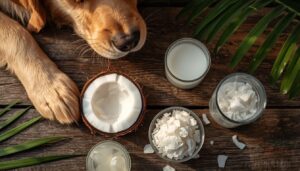
Not all coconut products are created equal regarding your dog’s safety. Some forms are perfectly fine in the right amounts, while others can do more harm than good.
Here’s what actually passes the test.
Plain Coconut Meat
Fresh, plain coconut meat — the white flesh you scoop straight from a cracked shell — is the safest form you can offer your dog. Its nutritional analysis of raw coconut meat shows real value: fiber, MCTs, and key minerals.
Store unused portions sealed in the fridge; shelf life runs about five days. Always remove the husk completely before serving.
Unsweetened Shredded Coconut
Unsweetened shredded coconut is a convenient alternative when fresh meat isn’t on hand. It delivers real health benefits of coconut for dogs — fiber, MCTs, lauric acid — without added sugar. Follow safe coconut serving sizes based on dog weight when using it in treat formulations.
- Storage Tips & Moisture Management: Seal opened bags airtight; refrigerate to prevent clumping.
- Crunchiness Impact & Dental Health: Dry shreds can be coarse — sprinkle small amounts onto wet food.
- Portion guideline: About 1–2 tablespoons max for medium dogs daily.
Small Amounts of Coconut Oil
A teaspoon carries more fat than it looks — about 39 calories of pure saturated fat per serving. That’s why coconut oil works best in moderation, measured with actual Measurement Tools like teaspoons, not poured freehand. Use virgin, cold-pressed oil only.
| Dog Size | Weight | Starting Dose | Target Dose | Key Concern |
|---|---|---|---|---|
| Extra-small | Under 15 lb | ⅛ tsp | ¼ tsp | Fat Tolerance |
| Small | 16–25 lb | ¼ tsp | ½ tsp | Weight Monitoring |
| Medium | 26–60 lb | ½ tsp | 1 tsp | Gradual Titration |
| Large | 61–90 lb | ½ tsp | 1 tsp | Calorie load |
| All sizes | Any | Room temp | Solid below 76°F | Temperature Stability |
Plain Coconut Water in Moderation
Plain coconut water offers a gentle electrolyte balance boost — potassium, magnesium, a little sodium — but it’s not just water. It carries natural sugar content too, so calories add up faster than you’d expect.
For hydration timing after exercise, a tablespoon or two works fine for most dogs.
Watch potassium moderation closely if your pup has kidney sensitivity, and always choose unsweetened, plain labels only.
When Dogs Should Avoid Coconut

Coconut isn’t a good fit for every dog, even in small amounts. Some health conditions make the risks outweigh the benefits, and it’s worth knowing where your pup falls before adding it to their bowl.
Here are the situations where it’s best to skip coconut altogether.
History of Pancreatitis
If your dog has a history of pancreatitis, raw coconut meat isn’t a smart choice. Managing pancreatitis risk with diet in dogs means limiting fat — and coconut’s high saturated fat can trigger a flare.
Even the medium chain triglycerides, studied since early enzyme assays in 1908, stress a compromised pancreas.
Skip coconut entirely for these pups.
Overweight Dogs or Weight-loss Diets
Coconut’s calorie density makes it a poor fit for overweight dogs or any pup on a weight‑loss diet. At 354 kcal per 100 g, even small amounts can quietly derail calorie budgeting. Body condition scoring helps track progress — and coconut works against it.
5 smarter swaps for weight management for pets:
- Crunchy cucumber slices
- Plain steamed green beans
- Low‑fat treats like blueberries
- Lean protein emphasis snacks
- Activity enrichment walks instead of food rewards
Dogs With Kidney Disease
Kidney disease changes everything about what your pup can safely eat. Raw coconut meat’s potassium load creates real problems for dogs already struggling with electrolyte monitoring and medication adjustments. Too much potassium can throw heart rhythms off entirely.
| CKD Concern | Why Coconut Is Risky |
|---|---|
| Phosphorus Management | Adds unneeded phosphorus load |
| Protein Quality | High fat competes with renal protein goals |
| Electrolyte Monitoring | Potassium levels may spike |
| Hydration Strategies | Coconut water additives are unsafe |
| Medication Adjustments | Fat content complicates absorption |
Skip it entirely.
Dogs With Sensitive Stomachs
Sensitive stomachs don’t forgive rich foods easily. Even a small amount of coconut meat can trigger digestive upset if introduced too fast.
Follow these Portion Control Techniques by dog size:
- Under 15 lb — 1 tbsp max
- 16–25 lb — 2 tbsp
- 26–60 lb — ¼ cup
- 61–90 lb — ⅓ cup
- Over 90 lb — consult your vet
Gradual Flavor Acclimation matters here. Start tiny, watch for loose stools, and consider Probiotic Support alongside Meal Timing Strategies to ease digestion.
When to Call Your Veterinarian

Most dogs handle small piece of coconut just fine, but sometimes something feels off and you’re not sure if it’s serious. Knowing when to pick up the phone and call your vet can make a real difference for your pup.
Watch for any of these signs after feeding coconut.
Vomiting After Eating Coconut
Vomiting right after your pup eats raw coconut meat — rapid onset vomiting within minutes — usually signals an allergic reaction or dose-dependent nausea from the high fat content.
Delayed GI reaction appearing hours later points more toward digestive upset.
Repeated vomiting across exposures suggests taste aversion or intolerance. Either pattern warrants a vet call, especially if you notice signs of hydration imbalance like dry gums or lethargy.
Diarrhea or Severe Gas
Loose stool or uncomfortable gas after raw coconut meat often points to digestive upset from its high fat load — a classic pancreatic stress sign. Track stool consistency closely over 24–48 hours.
If diarrhea persists or gas causes visible bloating, call your vet. Gradual dose increase and electrolyte management matter here.
When symptoms linger, low-fat alternatives and safe coconut serving sizes based on dog weight are worth discussing.
Swelling, Itching, or Hives
Skin reactions are classic signs of immune response gone sideways. If your dog develops swelling, itching, or hives after eating coconut, histamine release may be triggering skin inflammation — a hallmark of food allergies in dogs.
Watch for:
- Raised welts or "splotchy" patches with clearly defined borders
- Redness, itching, or puffiness around the lips or eyes
- coconut allergy in dogs, like dermatitis triggers on the belly or paws
Call your vet promptly. dog allergy test can confirm sensitivities, and managing coconut allergies and reactions in dogs early prevents allergic reactions from escalating.
Trouble Breathing or Collapse
This is the most urgent sign of all. If your dog collapses or struggles to breathe after eating coconut, you’re dealing with a potential emergency — think airway obstruction, hypoxia signs like blue or gray gums, or even cardiac arrhythmia from oxygen deprivation.
| Sign | What It May Indicate |
|---|---|
| Blue/gray gums | Hypoxia, dangerously low oxygen |
| Sudden collapse | Cardiac arrhythmia or shock |
| Gasping or wheezing | Airway obstruction or pulmonary edema |
Call your vet immediately.
Suspected Toxic Ingredient Exposure
If your pup got into sweetened coconut products, check the label fast — artificial sweetener xylitol and chocolate are both toxic foods for dogs. Symptoms aren’t always immediate; delayed systemic signs, gastrointestinal upset, skin irritation, eye contact reactions, or respiratory distress can all follow.
Safety considerations for feeding coconut to dogs start with ingredients. Call the ASPCA Animal Poison Control Center or Pet Poison Helpline right away.
Frequently Asked Questions (FAQs)
Can dogs eat coconut meat?
Yes, dogs can eat coconut meat safely in small amounts.
It’s non-toxic, but the high fat content and calorie density mean portion control matters just as much as the coconut meat itself.
Can dogs eat peanuts?
Dogs can eat plain, unsalted peanuts in small amounts. Skip salted, flavored, or honey-roasted varieties.
Always check peanut butter for xylitol toxicity — it’s dangerous. Portion moderation matters, as the high fat content raises pancreatitis risk.
Can overweight dogs eat coconut?
Think of coconut like a rich dessert — tempting, but not ideal for a dog already carrying extra weight.
Its high fat content and dense calories can quietly derail weight management in pets, so veterinary supervision and strict moderation matter most.
Can dogs eat coconut husks?
No, dogs shouldn’t eat coconut husk. It’s a real husk choking hazard and carries serious husk digestive blockage risk.
Stick to plain coconut meat instead — the husk’s coarse fibers cause husk fiber irritation and gut trouble.
Can dogs eat coconut oil?
Your pup can have coconut oil in small amounts — it’s non-toxic and packed with MCT Energy from medium-chain triglycerides and lauric acid, but too much fat risks stomach upset and weight gain.
Can dogs eat shredded coconut?
Yes, your dog can have unsweetened shredded coconut in small amounts. Skip sweetened shredded coconut entirely — added sugar causes digestive trouble. Stick to plain, and keep portions tiny.
How much coconut meat can I give my dog?
Less is genuinely more here. Stick to about 1 teaspoon of coconut flesh for larger dogs, less for smaller ones — calorie budgeting and the 10 treat rule keep portions safe.
Why can’t dogs eat coconut?
Coconut isn’t toxic, but its Saturated Fat Load and MCT Digestive Sensitivity can trigger digestive upset or pancreatitis in sensitive dogs.
Additive Toxicity Risks and Individual Health Variability make caution essential.
Can dogs eat frozen coconut chunks?
Frozen coconut chunks are safe in small, plain portions — just mind chunk size safety.
Thaw first for easier chewing, and treat them like any cold treat hydration snack: bite-sized, unsweetened, and infrequent.
Is it okay to eat raw coconut meat?
Raw coconut meat is generally safe for dogs in small amounts.
Watch for spoilage signs like sliminess or sour smell, store it refrigerated, and introduce gradually to test your dog’s digestive tolerance.
Conclusion
Coconut meat is both a reasonable treat and a real risk—that tension doesn’t disappear, but it does become manageable.
When dogs eat coconut meat in small, properly prepared portions, most healthy pups handle it well and may even benefit from the fiber and MCTs.
But for dogs with pancreatitis, kidney disease, or weight issues, the fat content tips the balance toward harm.
Know your dog’s health profile, keep portions honest, and let your vet guide the close calls.
- https://pangovet.com/talk-to-a-vet-online-dog-ate-drank-something/?utm_source=dogster&utm_medium=article&utm_campaign=dog_eat_drink&utm_content=can-dogs-eat-coconut
- https://petcorner.pangovet.com/pet-nutrition/dogs/fruits-vegetables-dogs-can-eat/
- https://apps.apple.com/us/app/dogmd-ai-pet-health-advisor/id6759178584
- https://www.tasteofthewildpetfood.com/articles/can-my-dog-eat-that/broccoli/
- https://en.wikipedia.org/wiki/Coconut