This site is supported by our readers. We may earn a commission, at no cost to you, if you purchase through links.
Sardines might seem like an odd treat to toss to your dog, but veterinarians and canine nutritionists have quietly championed this small fish for years—and for good reason.
Packed with omega-3 fatty acids, protein, and bone‑strengthening calcium, sardines deliver a surprising nutritional punch in a single tin.
The catch? Most cans sitting in your pantry are packed in olive oil, not water, and that distinction matters more than most dog owners realize. The oil changes the calorie count, the fat load, and how your dog’s digestive system processes each bite.
Knowing exactly what’s in that can—and how much to serve—keeps the benefits working in your dog’s favor.
Table Of Contents
- Key Takeaways
- Can Dogs Eat Sardines in Olive Oil?
- Nutritional Benefits of Sardines for Dogs
- Risks of Feeding Sardines in Olive Oil
- Best Types of Sardines for Dogs
- How Much Sardine Can Dogs Eat?
- How to Safely Feed Sardines in Olive Oil
- When to Avoid Sardines in Olive Oil
- Alternatives to Sardines in Olive Oil
- Frequently Asked Questions (FAQs)
- Can dogs eat sardines packed in olive oil?
- Can dogs eat sardines in water?
- Can dogs eat frozen sardines?
- Why do dogs eat sardines?
- Are There Any Risks to Feeding Your Dog Sardines?
- Can Dogs Eat Canned Sardines?
- What Other Canned Fish For Dogs Should I Consider?
- How Should I Go About Feeding Dogs Sardines?
- How Often Should I Feed Sardines to My Dog?
- How much sardine can a dog have?
- Conclusion
Key Takeaways
- Dogs can eat sardines packed in olive oil, but draining the oil first is a must—it cuts excess fat that can trigger digestive upset or pancreatitis, especially in breeds like Schnauzers and Cocker Spaniels.
- Water-packed sardines are the smarter everyday choice since they deliver the same omega-3s, protein, and calcium with nearly half the fat and lower sodium than oil-packed options.
- Portion size matters—small dogs should get no more than 1–2 sardines weekly, while larger dogs can handle 4–5, keeping sardines under 10% of total daily calories.
- Skip sardines in olive oil entirely if your dog has a sensitive stomach, a history of pancreatitis, or shows signs of fish allergy, like itching, vomiting, or hives.
Can Dogs Eat Sardines in Olive Oil?
Yes, dogs can eat sardines in olive oil, but there are a few things worth knowing before you open that tin.
Water-packed sardines are actually the safer bet, as explained in this guide to feeding dogs canned sardines—olive oil adds extra fat that some dogs don’t handle well.
Olive oil is generally safe for dogs in small amounts, though it does add extra fat that can be a problem for some pups.
Here’s what you should understand about safety, how olive oil compares to water-packed sardines, and what vets generally recommend.
Safety of Olive Oil for Dogs
Olive oil is generally safe for dogs in small amounts, and it actually brings some real perks — think healthier skin, a shinier coat, and better digestion. That said, safe feeding guidelines for dogs still call for moderation. Too much fat can upset digestion or trigger pancreatitis. Always follow proper dosage guidelines, watch for allergy monitoring signals like itching or loose stools, and keep sodium intake for dogs low by choosing plain varieties.
essential omega-6 fatty acid provides linoleic acid, which promotes skin health and overall well‑being.
Differences Between Sardines in Oil and Water
When comparing sardines in olive oil to sardines in water, the differences come down to calorie density, fat composition, and omega‑3 retention. Oil-packed sardines carry 220–310 kcal and 15–25g fat per can, versus roughly 190–210 kcal and 10–12g fat for water-packed.
Both preserve omega‑3 fatty acids well, but water keeps sodium levels lower and fat content leaner — making sardines in water the smarter, cleaner choice for your dog. For best nutrition, choose sardines with lower fat content in water.
Veterinary Consensus on Feeding Practices
Most vets agree sardines can work well as a supplement — not a staple.
Veterinary recommendations for fish supplementation focus on safe guidelines for feeding fish to dogs: follow portion guidelines based on weight, respect frequency limits of two to three times weekly, and always practice gradual introduction.
Health precautions matter too — check with your vet first if your dog has existing conditions. Oil draining before serving is non‑negotiable.
Nutritional Benefits of Sardines for Dogs

Sardines pack a surprising amount of nutrition into a tiny fish, and your dog can benefit from nearly all of it.
Beyond just being a tasty treat, they offer real, measurable health perks worth knowing about.
Here’s what sardines actually bring to the table for your dog.
Omega-3 Fatty Acids and Skin Health
Sardines punch well above their weight regarding skin and coat health. The omega‑3 fatty acids — specifically EPA and DHA — work through several anti‑inflammatory mechanisms that genuinely make a difference for itchy, dull‑coated dogs.
- Barrier Reinforcement: Strengthens the stratum corneum, locking in moisture and blocking allergens
- Ceramide Production: Boosts natural skin hydration, preventing dryness and flaking
- Itch Reduction: Calms histamine responses, easing scratching within 4–6 weeks
- Coat Glossiness: Transforms dull fur into shinier coats over roughly 90 days
- Natural Remedies: Sardines in Olive Oil deliver bioavailable omega‑3s supporting overall Dog Health and Wellness
Protein, Vitamins, and Minerals
Beyond omega-3s, sardines in olive oil are a surprisingly complete Protein Source, delivering all nine Essential Amino Acids your dog needs for muscle repair and immune support.
A 100g serving packs 25g of protein alongside standout micronutrients — B12 Benefits nerve health and prevents anemia, Niacin Metabolism converts fats into usable energy, and Selenium Antioxidant properties protect cells.
Calcium and Phosphorus together reinforce Phosphorus Bone Health, while vitamin D aids absorption.
Sardine Bones as a Calcium Source
Those tiny soft bones hiding inside a canned sardine are actually a calcium powerhouse. They deliver calcium and phosphorus in a bone mineral ratio close to 2:1, which closely mirrors what your dog’s own skeleton is made of.
For dogs who need extra joint support alongside those minerals, Green Roads pet CBD softgels offer a simple way to round out their daily wellness routine.
That structural similarity boosts calcium bioavailability, meaning your dog absorbs more of it. The nutrient synergy between these minerals enhances digestive absorption efficiently, making a simple sardine meal topper a smart, natural supplement formulation alternative.
Risks of Feeding Sardines in Olive Oil

Sardines in olive oil can be a great occasional treat, but they do come with a few real risks worth knowing. The extra fat and other factors mean it’s not quite as simple as cracking open a can and calling it a day. Here’s what to watch out for before you start sharing.
High Fat Content and Pancreatitis Risk
Here’s the hard truth: sardines in olive oil pack around 11.45 grams of fat per 100 grams, which easily blows past the fat thresholds recommended for dogs prone to pancreatitis.
That high fat content triggers a cholecystokinin trigger response, flooding the pancreas with enzymes it can’t handle.
Breeds with lipid sensitivity — Schnauzers, Yorkies, Cocker Spaniels — face real danger here.
Low-fat alternatives are always the smarter call for those dogs.
Potential for Digestive Upset
Even a small serving can flip your dog’s stomach fast. Digestive issues often trace back to oil residue effects slowing stomach emptying, rapid omega-3 influx throwing gut bacteria off‑balance, and stomach acid imbalance from the fish itself.
Watch for these signs after feeding:
- Loose stools within 6 hours
- Bloating or excess gas by hour 12
- Vomiting, especially in first‑time feeders
- Lethargy from overstimulated digestive enzymes
Mercury and Sodium Concerns
Sardines are actually one of the safest fish you can give your dog. As a Low-Mercury Fish, they feed on plankton rather than other fish, keeping low mercury levels well below Mercury Safety Thresholds at just 0.013 ppm.
Sardines are one of the safest fish for dogs, with mercury levels at just 0.013 ppm
Sodium is the bigger watch‑out. Olive oil cans can carry 200–400 mg per serving, but rinsing reduces sodium by up to 80 %, making low sodium servings easy to achieve with sodium intake guidelines in mind.
Best Types of Sardines for Dogs
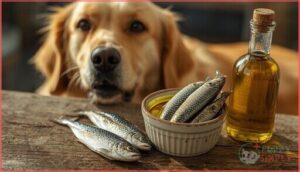
Not all sardines are created equal — and the type you pick really does matter for your dog’s health. Some options are safer, cleaner, and easier on your dog’s digestive system than others.
Here’s what to look for before you toss a tin in your cart.
Sardines in Olive Oil Vs. Water
Regarding Calorie Comparison and Fat Content Impact, the difference is significant. Oil‑packed sardines contain nearly double the fat of water‑packed ones — about 11 grams versus 5 grams per serving. Here’s what that means for your dog:
- Digestibility Issues are lower with water‑packed sardines
- Omega‑3 Bioavailability stays strong in both versions
- Dog health risks from pancreatitis favor water‑packed choices
- Portion sizing is easier with lower‑calorie water options
- Cost Efficiency often favors sardines in water
Avoiding Added Salt and Preservatives
Salt is where things get tricky. A single teaspoon of sodium can cause vomiting, tremors, or worse in smaller dogs.
When picking canned sardines in olive oil, always look for low-sodium cans and preservative-free labels — ideally “no salt added” options with under 100mg per serving. Rinsing techniques help too: a quick 10-second cold rinse removes surface salt. Brands like Wild Planet offer solid sodium-free alternatives worth keeping on hand.
Choosing Wild-Caught or Sustainably Sourced
Wild-caught sardines make a real difference for your dog’s health. Look for cans carrying MSC Certification — that blue label means the fishery uses responsible purse seine methods for bycatch reduction, seasonal harvesting, and stock health monitoring. It’s sustainable pet food you can actually trust.
Here’s what certified wild-caught sardines offer dogs:
- Higher omega-3 fatty acids than farmed alternatives
- Cleaner nutrition without chemical exposure
- Ethically sourced sardines in olive oil
- Traceable supply chains protecting ocean health
How Much Sardine Can Dogs Eat?

Even a healthy food can cause problems if you give too much of it.
With sardines, the right amount depends on your dog’s size, how often you’re feeding them, and what warning signs to watch for. Here’s what you need to know before adding sardines to your dog’s bowl.
Serving Size by Dog Weight
Portion size recommendations based on dog weight keep things simple.
Toy Dog Portions cover dogs under 10 pounds — think just ¼ to ½ of a small can weekly. Small Dog Portions for small dogs under 20 lbs allow up to one full can weekly. Medium Dog Portions scale up to three sardines per serving. Large Dog Portions for large dogs 50 lbs and over reach a full can or more.
Always factor in Caloric Adjustments, since olive oil versions run higher — drain first.
Frequency Recommendations
Once you’ve nailed portion sizing, timing matters just as much. Frequency recommendations shift based on age, diet type, and health status:
- Puppy Frequency — once weekly after 8–12 weeks
- Adult Timing — two to three times weekly
- Senior Scheduling — scale back to once weekly
- Raw Diet Frequency — small daily amounts work well
- Health-Based Frequency — pancreatitis‑prone dogs: twice monthly maximum
Stick to these windows for safe portions and smart dog weight management.
Signs of Overfeeding or Adverse Reactions
Even with the best intentions, too much of a good thing shows up fast. Watch for vomiting episodes, loose stools, or diarrhea signs after meals — these point to digestive upset from excess fat.
Pancreatitis symptoms include lethargy, hunching, and refusing food entirely.
Allergic skin reactions like redness or hives need immediate attention.
Steady weight gain indicators, plus excessive thirst from high sodium intake, are your clearest signals to pull back.
How to Safely Feed Sardines in Olive Oil
sardines are safe for your dog is one thing — serving them the right way is another.
A few simple steps make all the difference between a healthy treat and an upset stomach. Here’s how to do it right.
Preparation Methods (Draining Oil, Removing Bones)

Prep matters more than most people realize. Start with the Oil Draining Technique: open the can, tilt it over the sink for 30 seconds, then use Paper Towel Drying to blot the sardines in olive oil thoroughly.
Rinsing for Sodium reduction is smart too — a quick rinse cuts salt by roughly half. For Bone Extraction Steps, softened canned sardine bones are usually safe, but mash them lightly for smaller dogs.
Mixing With Dog Food

Mixing sardines in olive oil into your dog’s food is simple when you follow safe feeding practices.
- Portion Sizing: Small dogs get 1–2 sardines; large dogs get 4–5.
- Caloric Tracking: Keep sardines under 10% of daily calories.
- Texture Balance: Crumble over kibble for even flavor pairings throughout the bowl.
- Portion Timing: Limit to once or twice weekly for steady omega-3 fatty acids intake.
Homemade Treat and Topper Ideas

Making homemade dog treats with sardines is easier than you’d think.
Try these five options to add variety and nutrition to your dog’s routine.
| Treat Name | Key Ingredients | Best Use |
|---|---|---|
| Sardine Oat Bites | Sardines, oat flour, egg | Training rewards |
| Pumpkin Sardine Pops | Sardines, pumpkin puree, greens powder | Daily frozen snack |
| Parsley Sardine Crumbles | Sardines in olive oil, parsley, whole wheat flour | Food topper |
| Dehydrated Sardine Chips | Fresh sardines, no additives | Omega-3 boost treat |
Watch portion sizing and dosage recommendations for dogs carefully — even homemade dog treats count toward daily calories.
When to Avoid Sardines in Olive Oil

Sardines in olive oil aren’t the right fit for every dog, even if they’re generally safe.
Some dogs have specific health conditions that make this fatty, oily snack more trouble than it’s worth.
Here’s when you should skip sardines in olive oil altogether.
Dogs With Sensitive Stomachs
If your dog already struggles with a sensitive stomach, sardines in olive oil can tip the balance toward digestive upset. The extra fat content may trigger symptoms like vomiting, loose stools, or stress‑related gastritis, especially without a gradual diet change.
Skip the olive oil variety and explore low‑fat recipes or probiotic supplements to support gut health instead. A gentle feeding schedule matters here.
Dogs Prone to Pancreatitis or Obesity
Some breeds carry serious pancreatitis risk that makes olive oil sardines a bad idea. Miniature Schnauzers face three to five times higher risk, and even one fatty meal can trigger a dangerous attack. Fatty Diet Management and Weight Monitoring Strategies matter most for these dogs:
- Miniature Schnauzers – genetically elevated blood fats demand under 10% dietary fat
- Yorkshire Terriers – small but highly fat-sensitive
- Cocker Spaniels – nearly 3x pancreatitis risk, often silently chronic
- Labrador Retrievers – obesity-prone; extra fat content worsens outcomes
Choose Low‑Fat Treat Alternatives instead.
Allergic Reactions or Food Sensitivities
Fish allergies in dogs are more common than most owners realize.
Watch for skin itching, hives, or rashes on the belly and paws.
Gastrointestinal upset—vomiting, loose stools, or bloating—can follow quickly too.
Respiratory distress like wheezing or nasal discharge signals a stronger reaction.
Anaphylaxis signs such as facial swelling or collapse need emergency care.
If you suspect sensitivities, elimination diet testing over 8–12 weeks helps confirm the trigger.
Alternatives to Sardines in Olive Oil

If sardines in olive oil aren’t a great fit for your dog, you’ve got some solid options worth knowing about.
Whether it’s a sensitive stomach, weight issues, or just wanting a cleaner choice, there’s something on this list for every situation.
Here are the best alternatives to explore.
Sardines in Water or Fresh Sardines
Sardines in water are the safer swap if olive oil feels like too much for your dog. Water-packed sardines cut out the extra fat while keeping all the omega-3 fatty acids and health benefits intact.
Fresh sardines work too, but always cook them first — raw fresh concerns include the thiaminase enzyme, which breaks down vitamin B1. Follow the fresh caloric limit and water-packed safety guidelines for best results.
Fish Oil Supplements for Dogs
If whole sardines aren’t your dog’s thing, fish oil supplements are a clean, consistent omega-3 source worth considering.
Liquid fish oil mixes easily into food and allows precise EPA/DHA dosing — helpful for supporting dog joint health, skin, and coat health.
Soft-gel capsules offer measured amounts without mess.
Look for third-party quality testing on the label, confirming exact EPA and DHA milligrams per serving.
Other Safe Fish Options for Canines
Beyond sardines, several other fish round out your options nicely.
Salmon promotes joint health and delivers strong omega-3s — salmon oil works just as well if your dog skips whole fish.
Herring and mackerel omega-rich profiles make both solid dog food alternatives.
Cod lean protein suits weight-conscious dogs, while whitefish protein is gentle on sensitive stomachs.
low mercury fish and wild-caught sardines when possible.
Frequently Asked Questions (FAQs)
Can dogs eat sardines packed in olive oil?
Yes, dogs can eat sardines packed in olive oil — but moderation matters. Drain the oil first to reduce fat and support weight management tips, since excess fat raises digestive enzyme impact and pancreatitis risk.
Can dogs eat sardines in water?
Absolutely — water-packed sardines are the safest choice for dogs.
They deliver omega-3 fatty acids without the extra fat from olive oil, making them ideal for digestive benefits and everyday safe feeding practices for dogs.
Can dogs eat frozen sardines?
Frozen sardines are safe for dogs.
Freeze them for at least three weeks to eliminate parasites, then thaw in the fridge.
They retain omega-3 fatty acids and protein, with the same portion control rules applying.
Why do dogs eat sardines?
Scent Attraction kicks in first — their 300 million olfactory receptors lock onto that fishy aroma instantly.
Then Umami Appeal and Texture Preference seal the deal, while Nutrient Craving and Pack Instinct reinforce the habit.
Are There Any Risks to Feeding Your Dog Sardines?
Sardines come with potential risks worth knowing.
Pancreatitis triggers, allergic skin reactions, kidney strain, bone choking hazards, and calorie overload are real concerns — especially with digestive upset, sodium intake, and allergy considerations in sensitive dogs.
Can Dogs Eat Canned Sardines?
Yes, canned sardines are safe for dogs.
Choose varieties packed in water with no added salt.
They deliver omega-3 fatty acids that support skin and coat health, making them a smart, affordable option.
What Other Canned Fish For Dogs Should I Consider?
Beyond canned sardines, mackerel protein, salmon omega‑3, anchovy calcium, cod lean cuts, and herring sodium-free options all make smart picks. Just choose water-packed, unsalted varieties every time.
How Should I Go About Feeding Dogs Sardines?
Start small, drain the oil, and serve sardines as a topper or training reward.
Match portion sizing and dosage recommendations for dogs to your dog’s weight, and store leftovers sealed in the fridge.
How Often Should I Feed Sardines to My Dog?
Think of sardines like a weekly vitamin — effective in the right dose, risky in excess.
Feed two to three times weekly, adjusting for your dog’s weight, activity level, and veterinary monitoring guidance.
How much sardine can a dog have?
Portion sizing depends on your dog’s weight. Small dogs get 1–2 sardines weekly, medium dogs up to 3, and large dogs 4– Keep sardines in moderation, under 10% of daily calories.
Conclusion
Like an old apothecary weighing remedies on a brass scale, you’re balancing benefit against risk.
Can dogs eat sardines in olive oil? Yes—but drain the excess oil, watch the portions, and know your dog’s limits.
A small fish done right delivers real rewards: a shinier coat, stronger joints, and a dog who actually enjoys mealtime.
Choose wisely, serve occasionally, and that little tin becomes one of the smartest tools in your pet care routine.
- https://www.mfmaustralia.com.au/reasons-you-should-be-feeding-your-dog-sardines/
- https://omaspride.com/blogs/articles/sardines-for-dogs
- https://lyka.com.au/blog/sardines-a-mighty-nutritional-powerhouse-for-dogs
- https://wefeedraw.com/blog/can-dogs-eat-sardines
- https://www.petscare.com/en-ca/news/faq/are-sardines-in-olive-oil-okay-for-dogs