This site is supported by our readers. We may earn a commission, at no cost to you, if you purchase through links.
Imagine this: your puppy nails the pad every morning, then squats on the living room rug an hour later. Sound familiar? You’re not doing anything wrong, and neither is your pup.
So, do training pads work for potty training? The honest answer is "sometimes, and it depends." Pads can be a genuine lifesaver for apartment dwellers and rainy-day emergencies, but they can also send mixed signals that confuse a developing bladder and a still-forming brain.
Here’s how to know when pads help, when they backfire, and how to use them without accidentally training the wrong habit.
Table Of Contents
- Key Takeaways
- Do Potty Training Pads Work?
- Pros and Cons of Puppy Pads
- How to Use Training Pads
- Top 3 Potty Training Products
- Transition From Pads to Outdoors
- Frequently Asked Questions (FAQs)
- Do potty training pads work?
- What is the 10 10 10 rule for potty training?
- What actually works for potty training?
- What is a red flag for potty training?
- What age should puppy pad training officially begin?
- Can adult dogs still learn to use pads?
- How long does full pad training usually take?
- Should multiple pads be used in larger homes?
- Do training pads work for all dog breeds?
- Conclusion
Key Takeaways
- Puppy pads work best as a temporary bridge for apartment living, bad weather, and anxious puppies, not as a permanent replacement for outdoor training.
- Success depends on consistency: pick one pad location, use a single verbal cue, reward within seconds, and clean accidents with enzymatic cleaner to prevent repeat marking.
- Bladder control typically develops between 8-12 weeks, with full daytime continence by 4-6 months, so pad training timelines should match your puppy’s developmental stage.
- Transitioning outdoors works best through gradual steps: moving the pad toward the door, shifting it outside, and slowly shrinking its size over several weeks while keeping cues and rewards consistent.
Do Potty Training Pads Work?
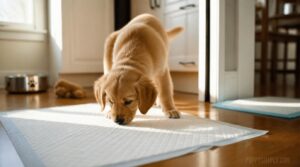
Short answer: yes, but with some real caveats worth knowing upfront. Whether pads work well for your puppy depends on a few key factors, not just whether you buy them. Let’s look at when they shine, when they backfire, and what your puppy’s age has to do with it all.
If you’re weighing the pros and cons, this guide to choosing the right puppy training pads for indoor training breaks down exactly when they’ll actually work for your pup.
When Pads Help Most
When does a puppy pad actually earn its keep? Usually when your pup already shows predictable potty patterns—right after waking, eating, or playing.
Pads shine for apartment living, overnight accident protection, and rough weather when outdoor trips feel impossible.
They’re also gentle for anxious puppies who freeze up outside.
Basically, pads work best with routine, not as a random backup plan.
When Pads Cause Confusion
Here’s the catch: pads aren’t foolproof. Misaligned pad placement confuses puppies fast, especially if it slides during play.
Common culprits include:
- Slippery floor hazards near the pad
- Conflicting verbal cues from different family members
- Scent cue variability after cleaning
- Surface texture confusion between pad and floor
- Multiple pads creating decision paralysis
Using these tools can reinforce indoor toileting habits that may be hard to unlearn later. Managing puppy accidents means fixing these small missteps before they become big habits in your potty pad training routine.
Indoor Versus Outdoor Goals
Fixing those small missteps only gets you halfway. The bigger question is: what’s the endgame, indoor potty or outdoor pottying?
Many families use puppy pads as a bridge, not a permanent fix. That’s smart for bad weather or long workdays. But bridging potty gaps only works if you’re coordinating environment cues, and balancing weather constraints, with a real plan to move outside eventually, managing energy levels along the way.
Puppy Age and Bladder Control
Timing that plan around biology helps. Most pups show real bladder control between 8 and 12 weeks, with a rough age-in-months-plus-one-hour hold-time rule.
Full daytime continence usually lands by 4–6 months; nighttime control lags behind.
Toy breeds, with faster metabolic rates, need more frequent breaks than larger breeds—so pad placement should flex with your puppy’s developmental stage.
Pros and Cons of Puppy Pads
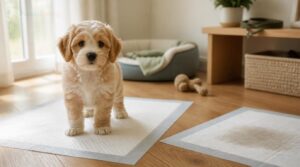
So are puppy pads actually worth it, or are you just trading one mess for another? Like most training tools, they come with real perks and a few honest downsides. Let’s break down what works, what doesn’t, and where things can go sideways.
Convenience for Apartment Puppies
Five flights up with no yard in sight? Puppy pads become your best friend. For studio and apartment dwellers, indoor potty solutions solve the "no elevator at 3am" problem nicely.
When you’re ready to transition, this guide on teaching puppies to use training pads shows how to gradually phase them out for good.
Smart setups include:
- A confined 20–36 sq ft playpen zone
- Vertical storage for leashes and absorbent pads
- Odor containment via activated carbon pads
- Non-skid flooring for quick, safe cleanup
Quiet routines also keep neighbors happy through shared walls.
Helpful During Bad Weather
When thunder rolls or snow piles up, is your puppy really going to hold it? Probably not. Weatherproof pad features—waterproof, non-slip, odor-resistant—keep your rain-day potty routine stress-free indoors.
Stormy weather training becomes easier when pads stay put and dry fast. Fewer wet accidents, less anxiety, and your accident prevention plan stays intact until skies clear enough for a real walk.
Risk of Rug Accidents
Ever notice how a rug’s texture feels just like grass to a curious puppy? That’s the trap. Textile texture hazards and rug edge curling invite confused sniffing, especially on slick floors near pad zones.
Add sprinting slips or cleaning residues, and accidents multiply. Protect indoor toilet training success: keep pads far from rugs, and stay quick with pet mess cleanup for solid accident prevention.
Odor and Cleanup Concerns
Let’s be honest: pee pads can make your whole living room smell like a locker room by day three. Ammonia builds fast with warmth and humidity, so enzyme cleaners matter more than fragrance sprays.
Choose pads with a strong absorbent center to limit spread, change them promptly to prevent bacteria growth, and crack a window—good ventilation keeps cleanup safer and odors from lingering.
Transition Challenges Outdoors
Here’s the catch: a pad-trained puppy often sees no difference between fake grass and your living room rug. Grass surfaces offer scent cues pads can’t replicate, while weather, terrain, and outdoor distractions (bugs, noises) create hesitation. Puppies used to soft, stationary pads may struggle with uneven ground or temperature extremes, delaying reliable outdoor housebreaking and prolonging your indoor pet toilet dependence.
A pad-trained puppy often can’t tell fake grass from your living room rug, making outdoor transitions slower than expected
How to Use Training Pads
Buying a puppy pad is the easy part, using it right is where most families stumble. Consistency matters more than any product feature, and that comes down to a few simple habits you’ll repeat daily. Here’s exactly how to set your puppy up for success, step by step.
Choose One Pad Location
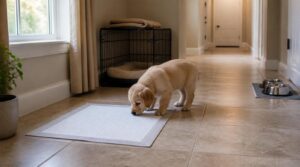
Picking one spot and sticking with it’s half the battle in housebreaking. and sticking with it’s half the battle in housebreaking. Best spots sit in low-traffic corners, away from food and water, with near crate access for nighttime needs. Choose flat, non-slip flooring so paws feel secure.
Avoid high-traffic hallways, and manage scent trail management by keeping cleanup consistent, this prevents confusion between your indoor pet toilet and everyday living space.
Follow a Potty Schedule

Once the spot’s set, timing does the rest. A potty training schedule built around your puppy’s routine—waking, eating, playing, napping—cuts down on guesswork.
Start with breaks every one to two hours, watching post-meal windows closely, then adjust frequency as bladder control improves. Keep a quick success log; patterns emerge fast when you’re consistent.
Use a Verbal Cue

Words work wonders here—but only if you pick one cue word and stick with it. "Potty time" or "go potty" works well; keep it short, calm, and consistent.
Timing the command matters most: say it right before elimination, not after. Consistency among caregivers prevents mixed signals, and avoiding cue overuse keeps its meaning sharp for real potty cues.
Reward Successful Pad Use
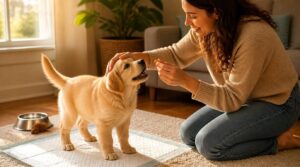
Timing is everything once your pup gets the cue right. Reward within seconds of elimination on the pad—delay it, and the connection fades fast.
- Praise immediately, warmly
- Offer a small treat
- Match rewards to preferences
As habits form, fade treats gradually but keep praise steady. This positive reinforcement builds lasting, reliable pad use—no punishment needed, just consistency.
Clean Accidents Properly
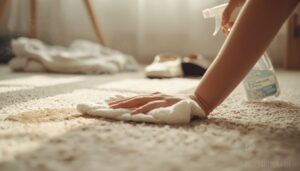
Accidents happen, even with great timing. When they do, skip the paper towel scrub—blotting, not rubbing, keeps the mess from spreading deeper into carpet or wood.
Grab an enzymatic cleaner; it breaks down odor molecules instead of masking them, which helps prevent repeat marking. Match your product to the surface, ventilate the room, and let it dry fully before deodorizing.
Top 3 Potty Training Products
Not all potty pads are created equal, and picking the right one can save you a lot of cleanup headaches. Some focus on odor control, others aim to make the outdoor move easier down the road. Here are three solid options worth considering for your puppy’s training routine.
1. Carbon Black Puppy Pee Pads
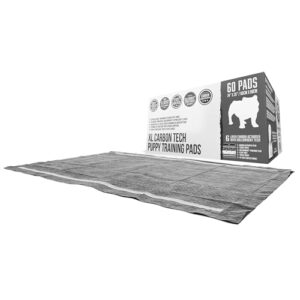
Carbon Black pads earn their spot on this list thanks to a six-layer build with Bullsorbent Polymer, which turns liquid to gel almost instantly, so there’s no pooling or tracking. The activated charcoal does double duty: it neutralizes odor and hides stains, handy if you’re squeamish about mess. Optional adhesive tabs keep pads put, even on walls for leg-lifters. At 24×35 inches and 60 per pack, they’re built for busy households. Just budget extra time removing sticky residue from floors.
| Best For | Pet owners housebreaking puppies, adult dogs, or cats—especially those in apartments or with male dogs prone to leg-lifting—who want reliable odor control without constant monitoring. |
|---|---|
| Material Type | Polyethylene and Polymer |
| Best For | Puppies, Adult Dogs, Cats |
| Apartment Suitability | Yes |
| Reusability | Disposable |
| Odor Control | Charcoal Odor Neutralizing |
| Weight | 5 Pounds |
| Additional Features |
|
- Six-layer Bullsorbent Polymer design converts liquid to gel almost instantly, preventing pooling and tracking
- Activated charcoal neutralizes odor and conceals stains for a cleaner look after use
- Optional adhesive tabs let you secure pads to floors or walls, making them versatile for leg-lifting male dogs
- Adhesive residue can be tough to remove and may require a warm wet towel or adhesive remover
- Extra-large sizing may not suit every breed, so fit depends on your pet’s individual size
- Sticky tape is only useful if you plan to anchor pads, adding a step for those who don’t need it
2. Reusable Artificial Grass Dog Potty Tray
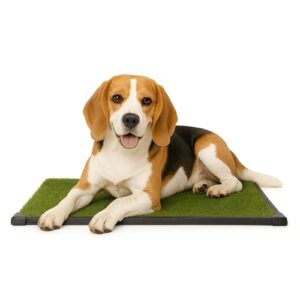
Three layers do the heavy lifting here: a grass mat on top, a plastic insert, then a collection tray below. Urine drains through, so paws stay dry and mess stays contained.
It’s fully washable, which means no repurchasing pads every week—just rinse, soap up, and reassemble. At roughly 25×20 inches and 4 pounds, it fits balconies or apartments nicely. Great for small breeds, though bigger pups may overwhelm the tray fast.
| Best For | puppies, small-breed dogs, elderly pets, or apartment and balcony living where outdoor access is limited. |
|---|---|
| Material Type | Synthetic Plastic Grass |
| Best For | Small Pets |
| Apartment Suitability | Yes |
| Reusability | Reusable |
| Odor Control | Standard |
| Weight | 4.1 Pounds |
| Additional Features |
|
- Three-layer drainage system keeps paws dry and messes contained
- Fully washable components make maintenance simple and cost-effective
- Compact size fits easily on balconies, patios, or small indoor spaces
- Only suitable for small-sized pets, not larger breeds
- Requires manual cleaning with soapy water rather than quick disposal
- Performance outdoors depends on weather exposure and surface stability
3. Fresh Patch Disposable Pet Grass Pee Pads
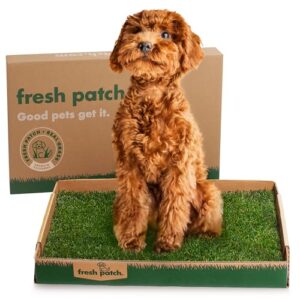
Grass grown right, no plastic pretending to be a lawn—that’s the appeal here. These pads use real hydroponic California grass, giving puppies familiar texture and scent for outdoor transitions later.
Sized 16×24 inches, they hold pets up to 15 pounds and need replacing every one to four weeks. The waterproof cardboard base contains moisture well.
One catch: the grass wilts eventually, so misting helps. Skip these if your pup loves digging or chewing—full disposal beats cleanup here.
| Best For | Apartment or condo dwellers with small pets under 15 pounds, including puppies in training or elderly pets who need an easy, low-mobility potty option. |
|---|---|
| Material Type | Real Hydroponic Grass |
| Best For | Small to Medium Pets |
| Apartment Suitability | Yes |
| Reusability | Disposable |
| Odor Control | Natural Odor Control |
| Weight | Lightweight (50% Lighter) |
| Additional Features |
|
- Real hydroponic grass offers a natural texture and scent that helps ease the transition to outdoor potty training
- Waterproof cardboard base contains moisture well, and the fully disposable design makes cleanup simple
- Extra-absorbent material helps control odor without relying on chemical-heavy pads
- Not suitable for large dogs or pets over 15 pounds
- Grass will wilt or brown over time and needs regular misting to stay fresh
- Not a good fit for pets that like to dig or chew, since they’ll tear through the grass quickly
Transition From Pads to Outdoors

So your puppy’s a pad pro now. Good news: moving from pad to patio doesn’t have to undo all that hard work. Here’s how to make the switch without any backyard confusion.
Move Pads Toward Door
Ready to head for the door? Once your puppy reliably uses the pad, shift it a few inches toward the exit every 2-3 days.
- Keep placement consistent between moves
- Transfer scent to the new spot so cues stay clear
- Leave 6-8 inches from the door frame
Track pad usage over 7-14 days, and watch for hesitation, that’s your cue to slow the routine down.
Shift Pads Outside Gradually
Once the pad sits right by the door, it’s time to cross the threshold. Set it just outside for short stretches, letting your pup feel grass or concrete underfoot, that surface texture shift matters.
Keep your cue word identical, indoors and out, to avoid confusion. Stick to a consistent routine, same times, same spot, and gradually stretch outdoor minutes as confidence builds.
Reduce Pad Size Slowly
Shrinking the pad works best in small steps, not sudden cuts. Trim about 20% every two weeks, keeping the same material so texture stays familiar.
- Track weekly usage
- Note any hesitation
- Pause if accidents rise
- Hold size 3–5 days if needed
- Resume once confident
If setbacks happen, that’s normal, not failure. Reassess each step before shrinking further.
Reward Grass Pottying
Timing matters here: praise or a treat within seconds of your pup finishing on the grass builds a stronger association than rewarding minutes later.
| Surface | Natural Texture | Odor Control |
|---|---|---|
| Real grass | High | Moderate |
| Artificial mat | Moderate | Built-in charcoal |
| Fake grass tray | Low-moderate | Antimicrobial layer |
Whether you choose an artificial grass mat or living sod, consistent rewards make outdoor transitions stick.
Watch for Potty Signals
Rewards work best when you catch the moment, and that means learning your pup’s tells.
- Physical movement cues: circling, sniffing, or sudden squatting
- Behavioral shifts: quiet focus or restless pacing
- Post-meal timing, since most pups need to go shortly after eating
Consistent housetraining routines paired with preemptive accident prevention beat cleanup every time. Spot the signal, guide them outside, and canine behavior modification becomes second nature.
Frequently Asked Questions (FAQs)
Do potty training pads work?
Think of pads as training wheels, not the destination. Given a puppy’s small bladder capacity and quick metabolic rate, pads genuinely help prevent indoor messes during early house training—especially handy for apartment living—before graduating to full outdoor habits.
What is the 10 10 10 rule for potty training?
Simple math: ten minutes outside, a ten-foot potty zone, then ten minutes of supervision indoors. Pair it with a consistent verbal cue and repeat often—this quick cycle builds strong elimination habits fast, whether you’re using puppy pads or heading straight outdoors.
What actually works for potty training?
Consistency wins, hands-down: a fixed routine timing, quick positive reinforcement, and watching readiness signs beat any single tool.
Whether you choose disposable or reusable puppy pads, success depends on patience—plus accounting for your breed’s metabolic differences along the way.
What is a red flag for potty training?
Watch for frequent accidents despite consistency, refusal to use the pad, or sudden regression—these hint at bladder control issues or emotional barriers. Also flag urinary symptoms like burning or foul smell, which need a vet’s evaluation before continuing training.
What age should puppy pad training officially begin?
Somewhere around 8 to 12 weeks marks the sweet spot, once feeding routines settle and basic bladder capacity kicks in. Toy breeds may start a touch earlier than large-breed pups, whose developmental stages naturally lag a few weeks behind.
Can adult dogs still learn to use pads?
Old dogs can learn new tricks. Adult learning potential is real—dogs pick up puppy pads with consistent cues, rewards, and one fixed spot. Just watch for senior bladder signaling changes or incontinence, which may need a vet check first.
How long does full pad training usually take?
Most pups need 2 to 4 weeks for basic mastery, with real progress showing by day Younger puppies and larger breeds may take longer, since bladder control and consistency both affect how quickly canine housebreaking clicks into place.
Should multiple pads be used in larger homes?
Yes, especially in bigger houses. Multi-floor distribution with 2-4 pads prevents long dashes across the house, curbs hallway accidents, and keeps odor concentration manageable. Just watch your pad density—too many spots confuses puppies more than it helps.
Do training pads work for all dog breeds?
Breed size matters here: toy breeds have faster metabolism and smaller bladders, needing more frequent trips, while terriers often show quicker pad acceptance due to natural digging instincts.
Large breeds need bigger pads, and paw-sensitive pups do best with softer surfaces.
Conclusion
A pad-trained puppy is like a student who only studies with the TV blaring: the habit works only in one narrow setting.
So, do training pads work for potty training? Yes, but only as a bridge, never a final stop. Pick one spot, stay consistent, and shrink that pad as outdoor trips take over.
Your pup isn’t confused by nature; he’s confused by mixed signals. Stay patient, stay clear, and dry floors will follow.
- https://www.animalhumanesociety.org/resource/potty-pad-training-your-dog
- https://www.petsmart.com/learning-center/dog-care/the-pros-and-cons-of-puppy-pads
- https://vcahospitals.com/know-your-pet/house-training-your-puppy
- https://thedogstop.com/blog/should-you-use-puppy-pads-for-potty-training-your-dog-experts-answer
- https://www.petmd.com/dog/general-health/how-to-potty-train-a-puppy