
This site is supported by our readers. We may earn a commission, at no cost to you, if you purchase through links.

Most dog owners grab whatever leash is hanging by the door. It works—until it doesn’t.
A leash that’s too long gives a reactive dog enough runway to reach another animal before you can react. Too short, and your dog walks stiff and frustrated, which creates its own set of problems on the sidewalk.
Leash length shapes every walk—how much control you have, how comfortable your dog feels, and how fast you can respond when something goes sideways. The good news? There’s a clear answer for most dogs, and it comes down to three things: your dog’s size, where you’re walking, and what behavior you’re working on.
Table Of Contents
Key Takeaways
- A 4–6 foot fixed leash is the best all‑around choice for most dogs, balancing control with enough slack for natural movement and sniffing.
- Leash length should flex with your environment: shorten to 3–4 feet on busy city streets and extend to 6–10 feet in parks or open spaces.
- Your dog’s size and pulling behavior guide your final pick, with toy breeds needing 4 feet, large breeds 6 feet, and reactive or strong pullers always kept on the shorter end.
- Long lines of 15–30 feet are powerful training tools for recall, stay, and scent work, but only under close supervision — never leave a dog unattended on it.
A 4–6 Foot Leash is Best

For most everyday walks, a 4–6 foot leash hits the sweet spot between control and freedom. It keeps your dog close enough to manage safely while still giving them room to move naturally. Here’s why trainers consistently recommend it — and what makes it work so well.
If you’re still figuring out what gear to start with, this guide to dog leashes for first-time owners breaks down exactly what to look for before your first walk.
Best Everyday Length
For most daily walks, a 4–6 foot leash hits the sweet spot. It keeps your dog close enough to guide safely through sidewalk traffic, yet gives them room to sniff and move naturally.
Fixed-length leashes work best here — they maintain consistent, predictable tension and hold up far longer than retractables. That reliability makes a real difference when you’re out every single day.
Safe Walking Control
Control comes down to how you hold things, not just leash length. Hold the leash close to your body, palm up, so your wrist stays neutral through sudden stops.
Square your shoulders to your dog for quicker direction changes. Stay alert for parked cars, opening doors, and crossing foot traffic. At dusk or night, wear reflective gear and clip a reflective collar on your dog for added visibility. Always consider wear reflective clothing to boost visibility during night walks.
Enough Sniffing Freedom
Good leash handling means nothing if your dog can’t stop and smell the roses. Scent exploration isn’t just fun, it sharpens your dog’s mind and calms nervous energy.
A 4–6 foot leash gives just enough slack for nose work without losing your grip.
- Reward calm sniffing with praise
- Allow brief detours off the path
- Keep slack loose, not dragging
- Redirect gently from distractions
- Save long lines for open fields
Works for Most Dogs
Whether your dog is a tiny Chihuahua or a stocky Lab, a 4–6 foot leash does the job well. It covers most breeds and temperaments without needing a swap for different settings.
That medium leash versatility means one standard dog leash works for casual strolls, neighborhood errands, and park visits alike — keeping everyday walking safety consistent without overcomplicating your routine.
Fixed Leash Preferred
Regarding leash length selection, fixed-length leashes win for everyday use. They give you consistent tension feedback the moment your dog drifts too far, and that predictable boundary setting helps dogs learn faster.
Fewer moving parts means better hardware durability standards and less to manage on a busy sidewalk — a real confidence boost for beginners.
Why Leash Length Matters

The leash you choose shapes every walk you take with your dog. Getting the length right affects how much control you have, how safe your dog stays, and how enjoyable the experience is for both of you. Here’s why it makes such a big difference.
Better Handler Control
Think of your leash as a communication line — the shorter and tighter it is, the clearer your messages get through.
A 4–6 foot leash keeps your dog in your response zone, so verbal cues and hand signals land instantly. Three habits that sharpen control:
- Stop walking when your dog pulls
- Reward calm within two seconds
- Use a front-clip gear to redirect lunging
Safer Street Walks
City streets don’t forgive hesitation. A short leash of 3–4 feet gives you the split-second control you need when a car door swings open or a cyclist cuts the curb.
At crosswalks with pedestrian countdown signals, you want your dog tight beside you — not drifting three feet ahead into a turning vehicle’s path.
Less Tangling Risk
A fixed-length leash is your best defense against the lamppost wrap-around scramble. Longer lines loop and catch; a 4–6 foot leash stays taut and predictable.
Braided nylon resists snagging, and a swivel clasp stops line twists before they start. Rounded metal hardware removes snag points, so your walk stays smooth instead of turning into a knot-untangling session mid-sidewalk.
Easier Dog Training
The right leash length quietly shapes how fast your dog learns. A 4–6 foot leash keeps your dog close enough to reward with a treat the moment they do something right — and timing is everything with positive reinforcement.
Short, focused sessions work best when you’re not fighting a tangled line. Less chaos means clearer cues, calmer responses, and quicker progress.
More Comfortable Walks
A well-chosen leash makes the whole walk feel easier — on you and your dog. 4–6 foot leashes reduce arm strain and let you move naturally without constant corrections.
Pair that with moisture-wicking socks, cushioned footwear, and a short warm-up walk, and you’ll both settle into a comfortable rhythm from the first block.
Best Length by Dog Size

Your dog’s size plays a bigger role in leash choice than most people realize. A length that works perfectly for a Chihuahua can feel like a tightrope for a Great Dane. Here’s what trainers recommend based on size.
Toy Dogs: 4 Feet
Toy and mini breeds — anything under 10 pounds — do best on a 4-foot leash.
That short leash keeps them within about 1.2 meters of you, which is close enough to steer them away from feet, curbs, and other dogs. It still gives them room to sniff without drifting into trouble.
For small toy/mini breeds, this is the appropriate leash length every time.
Small Dogs: 4–5 Feet
Once you move past toy breeds, small-to-medium dogs — those weighing 10 to 50 pounds — have a bit more energy to burn.
A 4–5 foot leash controls that well:
- Keeps them close on busy urban sidewalks
- Allows a comfortable sniffing radius without wandering
- Reduces tangling around storefronts and street furniture
- Helps quick corrections during dog walking near crowds
That extra foot makes a real difference.
Medium Dogs: 5–6 Feet
Medium dogs — roughly 35 to 65 pounds — need a little more room than small breeds. A 5–6 foot leash hits the sweet spot for neighborhood walking safety, giving your dog enough slack for ideal sniffing distance without surrendering control.
| Walking Area | Recommended Length |
|---|---|
| Urban streets | 5 feet |
| Neighborhood strolls | 5–6 feet |
Standard leashes are six feet long for good reason — they work.
Large Dogs: 6 Feet
Step up to the 50–100 pound range and six feet becomes the go-to. Standard leashes are six feet long for a reason — they give large breeds enough room to sniff while keeping you in control.
- Limits pulling momentum on turns
- Suits most daily walking environments
- Reduces hand fatigue with a padded grip handle
- Aids basic scent work practice
- Choose durable nylon or leather for strength
Giant Dogs: Wider Leash
Once your dog tips past 100 pounds, length isn’t the main concern anymore—width is. For a large Giant breed, leash width matters more than length at this point.
Go with 1 to 1.25 inches of sturdy nylon or leather. That extra webbing spreads tension across the chest instead of yanking the neck, giving you better grip security and a touch of shock absorption when they lunge.
Best Length by Walking Area

Where you walk your dog matters just as much as their size. A leash that’s perfect for a quiet sidewalk can feel all wrong on a crowded street or open trail. Here’s how to match your leash length to the place you’re headed.
Busy Streets: 3–4 Feet
Picture squeezing past a food cart while your dog beelines for a stranger’s ankle — chaos? In packed urban dog walking, a 3–4 foot leash keeps leash control tight, protecting against:
- Lampposts
- Trash bins
- Bike racks
- Curb edges
- Crossing crowds
Short leashes shrink the traffic buffer zone, support pedestrian flow management, and meet sidewalk clearance needs when street furniture safety matters most.
Neighborhoods: 4–6 Feet
Six in ten dog owners do their daily walks right on residential sidewalks, so getting this length right matters more than you’d think.
A short leash 4 to 6 feet gives you real leash control without choking your dog’s freedom. Tree canopies and quieter streets make these blocks safer than busy avenues, so the appropriate leash length here favors comfort over tight restriction — supporting relaxed, everyday walks through tree-lined neighborhoods.
Parks: 6–10 Feet
Ever notice how dogs light up in parks? A 6–10 foot leash lets dog exploration flourish in safe sniffing zones, while park design features keep playgrounds and water features off-limits.
- Wildlife buffer safety near ponds and hedges
- Multiuse paths shared with cyclists and strollers
- Pet-friendly amenities like benches and water stations
Longline leashes and open-space recall practice wait for trails.
Trails: 10+ Feet
Trails reward dog exploration with room to roam. A long leash of 10 feet or more lets your dog range while you control the line, especially through multiuse corridor safety zones shared with cyclists and hikers.
Trail surface maintenance and vegetation clearing keep footing solid near scenic overlooks. On accessible paths, that extra length lets dogs sniff freely and explore.
Open Fields: Longline
Open fields are where freedom really shows up. A 10 to 20 foot longline gives your dog room to roam while you keep control. Use a body strap, not a collar, to protect their neck from sudden stops.
This setup is great for scent work and recall training. Watch for field distractions, check the line for wear, and always supervise closely.
Short Leashes for Better Control

Sometimes a longer leash just isn’t the right call. Certain dogs and certain moments need you to shorten up and take charge. Here’s when a short leash works best.
Reactive Dogs
When your dog reacts to triggers, a 4-foot leash gives you fast control. Identifying triggers and reading body language—stiff tail, hard stare—lets you act before arousal spikes. Shorten the leash, redirect focus, and use positive reinforcement to reward calm choices.
- Lunging at strangers
- Barking at passing dogs
- Freezing mid-stride
Short leashes build thresholds and confidence, calm step at a time.
Strong Pullers
Strong pullers need that same short leash, but for managing high stamina and redirecting pull energy. A front-clip body vest prevents neck strain and improves impulse control better than a flat collar.
| Leash Type | Best For |
|---|---|
| 4-ft fixed leash | Pull prevention |
| Front-clip body vest | Reduced pulling |
This combo gives you steady dog walking control — smart leash selection for dogs that pull, consistently.
Crowded Sidewalks
City high-traffic sidewalks turn small slips into real risks fast. A short leash keeps your dog close to you, clear of:
- Pedestrian bottleneck risks near corners
- Sidewalk furniture hazards like signs
- Street vendor congestion at carts
- Personal space boundaries with strangers
That appropriate leash length keeps urban flow patterns smooth and dog walking control steady.
Street Crossings
Crossing a street puts your dog next to moving traffic, so a short leash keeps control tight when seconds matter. Watch for crosswalk visibility and pedestrian signal timing before you step off the curb.
Median refuges and accessible curb ramps offer safe pause points mid-crossing. A 3–4 ft leash keeps your dog at your side, not darting ahead into danger.
Puppy Manners
While your puppy still tests and learns the rules, a 4-foot leash keeps lessons simple and safe every day.
Polite greetings, calm socialization exposure, and bite inhibition all click faster when leash training keeps your pup close. This same routine helps house training, grooming readiness, and steady obedience training—the building blocks of solid dog behavior for the long haul ahead.
Long Leashes for Training

Long leashes open up a whole new world of training possibilities once your dog has the basics down. They give you room to work on the skills that really need distance — the kind you just can’t practice on a standard 6-foot leash. Here’s how trainers put them to use.
Recall Practice
Longline leashes — usually 15–30 feet — are the go-to tool for recall training. They give your dog room to move while keeping you in control.
Three steps to build a reliable recall:
- Start close, reward with high-value rewards
- Add distance gradually through distance progression
- Practice in new spots for distraction management
Short, spaced training sessions work best — five to ten minutes, a few times weekly.
Stay Commands
Once your dog masters recall, longlines also sharpen stay commands. Pair the cue with a visible palm signal, then add distance progression slowly.
A clear release cue timing prevents confusion with other commands. Practice position versatility training—sit, stand, down—while managing excitement distractions like passing dogs. This obedience training step, paired with appropriate leash length and leash usage, builds real-world control.
Scent Work
Ever watch a dog "read the wind"? That’s scent work in action, and a long leash gives your dog room to do it.
A 15–30 ft longline allows odor discrimination training without losing control. Your dog follows the scent plume, working hide placement strategies while you stay anchored nearby.
- Birch, anise, or clove target odors
- Shifting air currents
- Low-lying scent pools
- Confident nose-down searching
- A handler holding steady, calm leash tension
Open-space Freedom
Open fields simply hand your dog true long leash freedom, letting exploration unfold like self-organized dialogue with no fixed agenda.
This voluntary participation keeps curiosity calm, balancing autonomy with steady, gentle control.
| Setting | Ideal Length |
|---|---|
| Open field | 8–10 ft |
| Trail edge | Longline |
That’s the ideal leash length for open-space leash work — enough rope for calm, emergent, dog-led wandering and discovery.
Supervised Use Only
A longline without a designated handler nearby is a recipe for trouble.
Keep these protocols in mind:
- Stay within immediate reach at all times
- Use a front-clip body vest to reduce sudden lunge force
- Establish an emergency stop plan before starting
- Keep the line from crossing your body to avoid wraparound risks
- Never exceed 30 feet unsupervised
Supervision isn’t optional — it’s the whole point.
Puppy Leash Length Guide

Puppies need simple, consistent rules from day one, and the leash you choose plays a bigger role than most people expect. A few key habits early on can set your pup up for a lifetime of calm, enjoyable walks. Here’s what works best when you’re just getting started.
Start With 4 Feet
For puppies, a 4-foot leash is the right starting point. It gives you ideal reach without creating too much slack to manage.
Your pup stays close enough for correction timing to actually work, and you can redirect quickly if they wander toward a hazard. It also sets clear boundary expectations early — close enough to sniff, not so far they forget you’re there.
Use Lightweight Materials
Length sorted, now think about what the leash is actually made of. For puppies, lightweight nylon or soft webbing is ideal — heavy leather leads or thick rope can feel cumbersome on a small neck and make handling awkward for you too.
A simple flat nylon leash stays flexible, dries fast, and won’t weigh your pup down mid-walk.
Avoid Retractable Leashes
Retractable leashes might seem like a fun upgrade, but they’re one of the worst choices for puppies. The mechanical failure risk alone is reason enough to skip them — the cord can jam mid-walk, giving your pup a sudden burst of uncontrolled freedom near traffic. They also make training signal consistency nearly impossible when the boundary keeps shifting.
Stick with a fixed leash.
Practice Loose Walking
Once you have a fixed leash in hand, loose leash walking is the next skill to build. Walk at a steady, moderate pace and keep your shoulders relaxed — tension travels straight down the leash to your pup.
- Hold slack, not strain
- Reward your pup for staying close
- Pause when the leash tightens
- Resume only when your puppy settles
Reward Calm Behavior
When your puppy walks without pulling, reward within 1–3 seconds — that timing is everything. A soft eye, loose tail, and relaxed posture are your green light. Say "easy" or "settle," then deliver a treat.
Rotate between praise, gentle petting, and food so your pup doesn’t tune out one reward type. Keep sessions to 2–5 minutes to avoid overstimulation.
Leash Types and Lengths
Not all leashes are built the same, and the type you choose matters just as much as the length. Each style comes with its own strengths, limits, and best-use situations. Here’s a look at the most common options and what you need to know about each one.
Standard Fixed Leashes
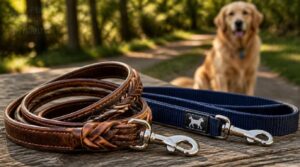
A standard fixed leash is the most reliable tool you can own. Most run four to six feet in nylon or leather, with rust-resistant metal clips and reinforced stitching at stress points.
Nylon cleans easily with a rinse; leather lasts longer with occasional conditioning. Check the clip and seams regularly. A worn snap or fraying handle can fail when you need control most.
Short Traffic Leashes

When city traffic closes in, a short traffic leash — usually 12 to 18 inches — keeps your dog right at your side.
- Grip the secondary handle, positioned 6–8 inches from the collar, near doorways or crossings
- Choose Biothane for waterproof, easy-clean urban durability
- Reduces urban tangling on city high-traffic sidewalks
- Allows rapid reining during sudden movements
- Reinforces calm behavior during dog training leash sessions
The dual-handle design puts control exactly where you need it.
Longlines and Check Cords
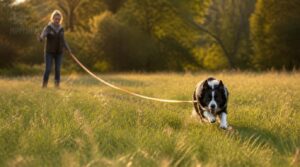
When you need your dog to practice recall at a distance, a longline is the right tool. These long leashes — usually 15 to 30 feet — give dogs controlled freedom during outdoor obedience drills and scent work without letting them disappear.
Always keep the line off the ground when possible. Supervised use only — never leave a dog unattended on a longline.
Retractable Leash Risks
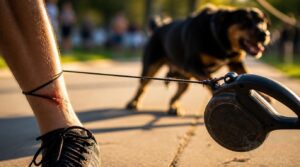
Retractable leashes look convenient, but they come with real trade-offs. The thin cord can snap under sudden tension, and a jammed locking mechanism won’t stop a dog mid-sprint. That cord can also wrap around your legs or a bystander’s, causing cuts or falls.
For most walks, a fixed 4–6 foot leash gives you far more reliable control.
Slip Lead Limits

Slip leads work differently than a standard leash — the loop tightens when your dog pulls. That neck pressure can restrict breathing, especially in brachycephalic breeds like Bulldogs or Pugs.
Avoid slip leads if your dog:
- Has a respiratory or throat condition
- Is a young puppy
- Lunges or pulls hard
- Walks unsupervised
- Has never used one with a trainer
They’re training tools, not everyday gear.
Choosing Your Dog’s Leash

No two dogs are exactly alike, and the right leash really comes down to a few key factors specific to your dog and your daily routine. Thinking through size, behavior, materials, and where you walk can make a big difference in how smooth your walks actually feel.
Here’s what to keep in mind when picking the best leash for your dog.
Match Your Dog’s Size
Your dog’s size should guide your first leash choice. Toy breeds under 10 pounds do well on a 4-foot leash, while small-to-medium dogs fit a 4–5 foot option. Medium and large dogs generally need 5–6 feet.
Weight alone doesn’t tell the whole story. Measure chest girth and neck circumference, then compare against the brand’s size chart for the best fit.
Consider Pulling Behavior
Size tells you where to start. Pulling behavior shapes the final choice.
If your dog lunges at distractions, keep it on a 4-foot leash for fast control. Three pulling patterns to watch:
- Reactive lunges — use a short fixed leash
- Scent-driven pulls — pair it with a front-clip body vest
- Excitement buildup — practice stop-and-redirect cues mid-walk
Choose Safe Materials
Once you’ve settled on a length, the material matters just as much. Reach for solid nylon or polyester webbing with reinforced stitching — it holds up through rain, concrete, and daily wear.
Hardware should be nickel-plated or stainless steel to resist rust. Avoid PVC-coated leashes, especially in summer heat.
A padded handle reduces fatigue on longer walks, and reflective stitching keeps you both visible after dark.
Add a Front-clip Harness
The right leash works even better when paired with a front-clip vest. The chest attachment point redirects your dog’s pulling into a turn rather than a straight-ahead lunge, giving you far more control without a fight.
Look for padded chest panels, adjustable straps, and rust-resistant hardware. Two fingers should fit snugly under every strap.
Adjust by Environment
Think of your leash length as a dial, not a fixed setting. On city high-traffic streets, dial down to 3–4 feet for quick control. In a park, open it to 6–10 feet. Wet pavement or ice? Shorten up — your footing matters as much as your dog’s. Let the environment decide.
Treat your leash length like a dial: tighten for city streets, loosen for the park, and let the environment decide
Frequently Asked Questions (FAQs)
Is a 5 foot or 6 foot leash better?
Both work well for most dogs. A 5-foot leash gives tighter control on busy sidewalks, while a 6-foot leash suits relaxed suburban walks where your dog can sniff without pulling you off balance.
Can two dogs share one leash safely?
Yes, two dogs can share one leash, but only if both walk calmly on their own first. Use a leash coupler, not a retractable, and stick to 4–6 feet for control.
How often should a dog leash be replaced?
Daily walkers wear leashes out fast; occasional walkers wear them out slowly. Replace nylon leashes every 1–3 years and leather every 2–5. Check hardware monthly and swap any leash the moment it frays or snaps.
Are colored or reflective leashes better for nighttime walks?
Reflective leashes are the safer choice for night walks. They bounce headlights back to drivers from over 100 meters away, giving cars time to slow down — something a colored leash simply can’t match in low light.
Should leash length change as a puppy grows?
Yes, leash length should grow with your puppy. Start at 4 feet, then move to 6 feet as they build focus and confidence. Gradual transitions support healthy walking habits without overwhelming them.
Conclusion
The right leash isn’t just a piece of equipment—it’s the handshake between you and your dog on every walk.
Knowing what length leash is best for dogs comes down to three things: your dog’s size, where you’re walking, and what you’re working on.
A 4–6 foot leash controls most situations well. Short when control matters. Longer when freedom aids the training. Pick the right length, and every walk gets easier.
- https://2houndsdesign.com/blogs/blog/best-dog-leash
- https://www.pawsandreflect.blog/p/how-we-use-a-retractable-leash-responsibly
- https://www.redbarn.com/blogs/blog/the-ultimate-guide-to-choosing-the-best-dog-leash
- https://news.orvis.com/dogs/long-vs-short-dog-leashes-choose
- https://www.rayallen.com/the-ultimate-guide-to-best-dog-leash-leads-lines-for-k9-working-dogs