This site is supported by our readers. We may earn a commission, at no cost to you, if you purchase through links.
Your dog sits perfectly on cue, and you reach into your pocket for a treat—three seconds pass, maybe four. That window already closed. The synaptic connection between the behavior and the reward begins degrading within two seconds, a constraint documented repeatedly in operant conditioning research dating back to Skinner’s variable-ratio studies. What your dog actually learned in those extra seconds depends entirely on what happened during them—a glance away, a shift in weight, a sniff toward the ground.
Timing isn’t a training tip. It’s the mechanism. Knowing how quickly to reward good behavior separates handlers who build reliable responses from those who accumulate well-meaning confusion in their dogs.
Table Of Contents
- Key Takeaways
- Reward Good Behavior Immediately
- Choose Rewards Your Dog Loves
- Match Rewards to Behavior
- Reinforce New Behaviors Often
- Fade Treats Without Losing Progress
- Frequently Asked Questions (FAQs)
- How can you get rewarded for good behavior?
- How to reward a man for good behavior?
- Can punishment ever replace rewards in training?
- How do you reward multiple dogs simultaneously?
- Should reward timing differ for puppies vs. adults?
- How often should training sessions happen each week?
- What if your dog ignores all available rewards?
- Conclusion
Key Takeaways
- You’ve got about two seconds after marking a behavior to deliver the reward, since waiting any longer means you risk reinforcing whatever your dog happens to be doing at that moment instead.
- A clear marker word like "yes" pinpoints the exact instant your dog gets it right, closing the gap between action and reward even if the treat takes a second longer to arrive.
- Bigger challenges deserve bigger payoffs, so save your jackpot treats for tough distractions and save the small stuff for cues your dog already knows cold.
- Once a behavior is solid, switch to rewarding it randomly instead of every time, since that unpredictability is actually what makes the habit stick for good.
Reward Good Behavior Immediately
Timing is everything in dog training — the moment you hesitate, the lesson blurs. Your dog’s brain is wired to connect rewards to whatever just happened, which means a two-second delay can reinforce the wrong thing entirely. Here’s exactly what you need to do to nail that critical window every time.
Even a one-second delay can cut your dog’s learning rate by more than half, which is why mastering precise reward timing for dog training is the single biggest skill you can develop as a trainer.
Mark The Exact Behavior

Think of a marker word as a surgical instrument — its power lies in precision, not volume.
The instant your dog sits, the moment their bottom hits the floor, you say "yes." That single word closes the decision window, telling your dog exactly which action earned the reward.
Without it, you’re reinforcing a blur of behaviors, not the one that matters.
Reward Within Seconds

Once that marker word lands, the clock is already running — and you’ve got roughly two seconds before your dog’s brain moves on to the next thing.
Reward latency is everything. Behavioral research consistently shows that immediate reinforcement produces the strongest synaptic connections between action and consequence.
- Treat in hand before you ask for the behavior
- Deliver reward within two seconds of marking
- Move toward your dog — don’t wait for them to come to you
- Timing precision closes the feedback loop completely
- Practice until the delivery feels automatic, not deliberate
Avoid Rewarding Late
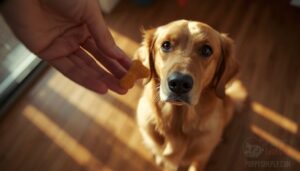
Miss that two-second window and you’re not failing at timing — you’re accidentally training a completely different behavior, and your dog has no idea why the treat showed up at all.
Sit down. Treat lands during a sniff? That’s now reinforced. Contingency errors like this create unintended learning fast. Every second of reinforcement delay weakens signal clarity. Protect immediate reinforcement ruthlessly — your reinforcement schedule only works when reward latency stays near zero.
Use a Clear Marker Word
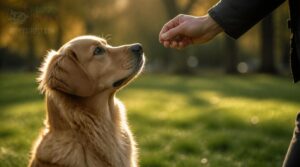
You can close most of that timing gap before it ever opens by giving your hands a head start — that’s exactly what a marker word does. "Yes" or a clicker fires instantly, marking the precise moment behavior occurs. The treat can follow seconds later.
Signal consistency matters more than word choice. Pick one cue, use it every time, and your dog’s auditory reinforcement system does the rest.
Keep Treats Ready
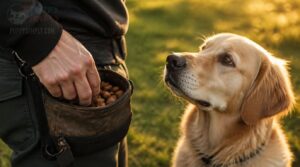
Without treats on hand, your marker word becomes a promise you can’t keep fast enough. Treat Pouch Essentials solve this: bite sized portions, premeasured reward dosing, zero fumbling. Choose options offering mess prevention tips—nothing crumbly, nothing sticky.
Backup supply planning matters too; running dry mid-session breaks contingency of reward. Reward timing stays immediate, specific, consistent—the engine driving every reinforcement technique and reward schedule variability you’ll later introduce.
Choose Rewards Your Dog Loves

Timing gets the reward to the brain fast enough to matter, but the reward itself still has to be worth working for. Not every dog values the same currency, and matching reward type to individual preference maximizes motivational impact. Here’s what actually moves the needle.
Some dogs go wild for a piece of chicken, others light up for a tennis ball — understanding what truly excites your dog is just as critical as reward timing and training technique choices.
High-value Training Treats
Not all treats command the same power over a dog’s brain.
Meat-based effectiveness drives faster cue association than grain-based snacks, with aroma intensity—especially from freeze-dried or slightly warmed options—triggering quicker focus. Texture matters too: soft, moist treats boost palatability, while jerky extends engagement.
Rotate flavors to prevent satiation, keep treats bite-sized for rapid reinforcement, and prioritize nutritional balance for sustainable training momentum.
Incorporating high‑value treats boost learning can dramatically improve training speed.
Praise and Happy Voice
Your voice is a training tool you’re almost certainly underestimating. Effort-based verbal praise — delivered with sharp, upbeat inflection immediately after the behavior — activates the same reward pathways as food.
- Say "Yes! Good sit!" not "Good dog"
- Match your tone to the moment: bright and quick
- Process-specific feedback reinforces what your dog actually did
- Avoid flat, generic praise — timing and energy are everything
Favorite Toys
Not every dog is food-driven—and for those dogs, a favorite toy is currency.
Durable rubber chew toys, plush squeakers, or high-bounce fetch balls can trigger the same dopaminergic response as a treat.
Match the toy to the behavior’s intensity: reserve the highest-value toy for major progress moments, and rotate options to prevent habituation from killing its power.
Play as a Reward
A thirty-second game of tug fires up the same reward circuitry as a fistful of treats—minus the calorie count. Tug, fetch, or chase work because they tap social play benefits, not just physical release.
Match game type to your dog’s personality, keep sessions tight, and end on a win. Deliver play instantly—reward timing matters as much here as with any treat.
Life Rewards
Open the door. Toss the ball. Let her sniff that fascinating patch of grass three minutes longer. These everyday moments work because they’re natural reinforcement—no fabricated currency required.
The power lies in routine integration: behaviors practiced for treats finally transfer into real life, proving generalization isn’t theoretical. Pair access with brief praise, and you’ve fused social interaction into practical context—reinforcement that doesn’t end when the treat pouch does.
Match Rewards to Behavior

Not every behavior deserves the same payoff, and treating them as equal weakens the signal you’re sending. Reward magnitude needs to track effort and difficulty, or your dog learns the wrong lesson entirely. Here’s how to calibrate what you give for what you get.
Big Effort, Better Reward
When your dog finally holds a stay through a squirrel sprinting past the window, a single kibble crumb just won’t cut it. Effort-reward alignment demands you scale magnitude to match the challenge.
- High distraction = jackpot treats
- Moderate effort = standard rewards
- Easy wins = light praise
Calibrating incentive value this way sharpens behavior modification, proving your dog’s hardest work always earns the biggest payoff.
Simple Cues, Smaller Reward
Not every cue deserves a jackpot — ask for a sit your dog’s nailed a thousand times, and a modest treat keeps the reward economy honest. Inflated payouts for easy work cheapen the signal-reward connection.
| Cue Type | Reward Size |
|---|---|
| Sit | Tiny treat |
| Down | Tiny treat |
| Touch | Verbal praise |
| Look | Verbal praise |
| Stay (easy) | Small treat |
Micro-reward timing matters more than size here — precision beats magnitude.
Calm Behavior Rewards
Here’s where most owners get it backwards: that quiet, settled dog lying calmly at your feet deserves just as much reinforcement as the flashy obedience cues, yet calm behavior gets ignored ninety percent of the time simply because it doesn’t demand your attention.
Catch the calm, mark it quietly. Drop a treat between paws, low and slow — no clapping, no hype. A murmured "good" beats excited praise; low-arousal rewards prevent re-triggering excitement. This non-verbal calm reinforcement teaches stillness itself as the winning behavior, not just the cue that preceded it.
Difficult Distractions
Now compare that quiet living-room sit-stay to asking the same dog to hold position while a squirrel bolts across the yard — the effort isn’t remotely equal, so the payoff shouldn’t be either.
High distraction demands jackpot rewards and zero feedback latency. Sensory overload narrows focus fast, so redirect attention with your highest-value treat, delivered the instant eyes return to you. Sudden interruptions test reinforcement schedules hardest; reward generously here, and you’ll command focus amidst chaos others can’t touch.
New Skills Need More
Brand-new skills demand continuous reinforcement — every correct rep earns a reward, no exceptions.
Initial learning intensity is high; the brain’s wiring it for the first time.
Reward schedules stay tight here, with immediate and specific feedback preventing novelty fatigue.
Master early, fade later.
Skill acquisition speed depends on this front‑loaded consistency before you ever introduce reinforcement fading.
Reinforce New Behaviors Often

New behaviors don’t stick on a handshake deal—they need repetition, and they need it on a continuous schedule before anything else works. Skip a rep, and you’re teaching gaps instead of skills. Here’s how to build that consistency without burning out you or your dog.
Reward Every Correct Response
Momentum is built, not wished into being. Every correct response your dog offers deserves a reward during early learning — full stop.
This consistent reinforcement spikes success frequency, cementing the cue-behavior link fast. Skip one correct attempt, and you’ve introduced doubt.
Reliability comes from pattern reinforcement: reward now, reward always, until the behavior’s locked in.
Practice Short Sessions
Rarely does volume beat precision. Five sharp reps targeting one cue outperform twenty scattered ones — fatigue erodes timing, and timing is everything.
Defining success before you start means knowing your stopping point.
- Crisp focus
- Sustained drive
- Lasting mastery
Control the environment, mind the clock, and quit while the dog’s still hungry for more. That’s momentum you control.
Repeat in Different Places
A "sit" learned only in your kitchen isn’t a skill yet — it’s a context-bound memory trace, fragile the moment the floor changes. True generalizing learned skills demands deliberate exposure: driveway, park, vet lobby. Each location strips away familiar cues, forcing genuine contextual stimulus control rather than environmental guesswork.
Practice reward timing consistently across settings. Location-based consistency in reinforcement builds a command that survives chaos, distraction, and real-world unpredictability.
Prevent Accidental Rewards
Every time you sneak that dog a treat for jumping up because, well, he’s just so darn cute about it, you’re quietly training the exact behavior you swore you’d never tolerate. This is high contingency error — the reward signal lands on the wrong action.
Precision in the timing of reward separates real behavior modification from accidental chaos. Watch your hands. Watch your timing.
Sloppy reward contingencies build the monster you’re trying to tame.
Stay Consistent Daily
Rules without rhythm collapse. Train at the same daily windows — morning, evening, whenever fits — so cue-to-reward timing stays predictable, not random.
Standardizing reward criteria matters as much as scheduling it. Use consistent cue signals, identical markers, same hand shape, every session.
Track behavior tracking notes daily. Watch for managing session fatigue — stop before focus breaks. Consistency builds mastery; chaos builds confusion.
Fade Treats Without Losing Progress

Continuous reinforcement built the behavior, but it can’t be the endgame, not if you want it to stick. The dog’s brain doesn’t know when "always" became "sometimes," and that uncertainty is exactly what keeps the response alive long after the steady paycheck stops. Here’s how you make that shift without your dog ever feeling shortchanged.
Switch to Random Rewards
Once your dog reliably sits, stays, or comes on command, it’s time to stop paying out every single time—because, paradoxically, treating less often is what locks the behavior in for good. This is the slot-machine effect: unpredictable payouts create stronger extinction resistance than predictable ones.
Rewarding your dog less often is what locks behavior in for good — unpredictable payouts build stronger habits than predictable ones
- Reward every 2nd-3rd correct response, randomly
- Never reward two failures in a row
- Keep timing unpredictable, not patterned
- Increase variable-ratio spacing gradually
- Watch for maintaining durability under distraction
Keep Using Praise
Treats fade — but your voice doesn’t have to.
When you reduce food rewards, effort-based verbal praise becomes your most powerful remaining tool. Say "yes, good sit" immediately after the behavior, matching your tone to the moment: calm for relaxation, bright and upbeat for energetic responses. Your body language reinforces it — lean in, hold eye contact, stay consistent.
Social reinforcement sustains behavior long after treats disappear.
Reward Best Responses
Not every correct response deserves the same reward — and once you start thinking like a behavioral engineer, you’ll realize that selectively reinforcing your dog’s sharpest, most precise performances is exactly what drives lasting mastery.
Reward magnitude matters. Reserve your highest-value treats for the fastest, cleanest responses — a lightning sit, a perfect heel under distraction.
- Immediate precision signals mastery
- Selective rewards sharpen criteria
- Mediocre responses get praise; first-rate ones get steak
Contingency precision is your tool for sculpting behavior, not luck.
Use Real-life Rewards
Beyond the treat pouch lies something far more powerful — the world your dog already wants.
Life rewards are activity rewards hiding in plain sight: the leash snap before a walk, the door opening to the yard, the toss of a favorite toy.
These aren’t just treats — they’re behavioral reinforcement woven into daily existence, requiring zero tokens and producing durable compliance.
Avoid Stopping Suddenly
Cutting rewards abruptly is the fastest way to collapse a behavior you’ve spent weeks building.
Gradual reward fading — shifting from continuous to variable reinforcement — preserves movement momentum without the extinction cliff. Reduce treat frequency incrementally, substituting praise and life rewards. Intermittent reinforcement then sustains the behavior longer, because unpredictability, not abundance, drives persistence.
Frequently Asked Questions (FAQs)
How can you get rewarded for good behavior?
Mark the exact moment your dog succeeds, then reward within two seconds. That tight window — behavior, marker, treat — is where real learning happens. Miss it, and the message blurs.
How to reward a man for good behavior?
Specific, effective verbal praise works best: name what he did right immediately. Pair it with social rewards—genuine acknowledgment, a favor returned—adapted to his preferences.
This balances tangible incentives with building intrinsic motivation, strengthening long-term relationship reinforcement through consistent positive reinforcement.
Can punishment ever replace rewards in training?
Punishment can suppress a behavior — but it can’t teach a replacement. Reinforcement builds skill; punishment builds avoidance. For lasting behavioral change, rewards remain irreplaceable.
How do you reward multiple dogs simultaneously?
Two dogs, one trainer—it sounds impossible until you master dual-hand delivery: separate hands, separate praise, separate timing. Direct targeted verbal praise toward the dog that earned it, preventing accidental reinforcement and managing competition behaviors before they start.
Should reward timing differ for puppies vs. adults?
Yes — timing precision matters more for puppies. Their shorter attention spans mean delayed rewards easily reinforce the wrong behavior. Adult dogs tolerate slightly more lag, but consistent timing prevents behavior drift in both.
How often should training sessions happen each week?
Like a muscle that grows stronger through regular use, daily short sessions outperform infrequent marathons. Aim for three to five minutes, twice daily. Consistency beats duration — your dog retains more through frequent, focused repetition.
What if your dog ignores all available rewards?
Your dog may be overstimulated or satiated — not stubborn. Check distraction levels, skip the meal before sessions, and test higher-value rewards. Underlying health issues can also suppress motivation entirely.
Conclusion
Pavlov didn’t own a clicker, but he understood exactly what you’re now putting into practice: the gap between behavior and consequence is precisely where learning either lives or dies.
Knowing how quickly to reward good behavior isn’t a stylistic refinement—it’s the foundational architecture of trust.
Mark the moment, close the window, and repeat with clear intention.
That precision, stacked session after session, builds something guesswork never could: a dog who genuinely understands you completely.