This site is supported by our readers. We may earn a commission, at no cost to you, if you purchase through links.
Most dog owners assume that a treat handed over within a few seconds of good behavior is close enough—and that assumption quietly unravels months of training. The behavior-reward window closes at three seconds, and anything delivered after that moment teaches your dog something different from what you intended. A sit earns a treat, but if your dog shifted weight or glanced away before the reward arrived, that’s what got reinforced.
Treat timing during training sessions is the skill that separates handlers who wonder why their dog "knows the command at home but ignores it outside" from those who build reliable, confident behavior anywhere. Precision here isn’t perfectionism—it’s the clearest communication you can offer your dog.
Table Of Contents
Key Takeaways
- The three-second rule is non‑negotiable: reward your dog within that window or you’re accidentally reinforcing whatever they did next, not the behavior you want.
- A clicker or consistent marker word acts as a bridge between the right moment and the treat, giving your dog a clear, unmistakable signal that removes all guesswork.
- Where you deliver the treat matters as much as when—rewarding in position, at the handler’s body level, keeps your dog stable and prevents bad habits from sneaking in through the back door.
- As your dog’s skills grow, shifting from constant treats to random rewards actually strengthens motivation, because unpredictability keeps them engaged in a way that guaranteed food never can.
Why Treat Timing Matters

Treat timing isn’t just a detail—it’s the difference between a dog who truly understands what you’re asking and one who’s just guessing. Get it wrong by even a few seconds, and you’re accidentally teaching the wrong thing. Here’s why timing is the foundation everything else is built on.
Nail the basics before anything else by following treat timing best practices for dog training that take the guesswork out of every reward.
Reward Within Three Seconds
When your dog nails the right move, the clock starts ticking. You’ve got a three-second reinforcement window to deliver that treat, and every second beyond it weakens the connection. Quick rewards sharpen learning pace, reduce confusion, and build lasting habits.
Think of it as a feedback loop: tight timing means your dog learns faster, with fewer mixed signals along the way.
positive reinforcement methods are the foundation of effective timing strategies.
Prevent Accidental Reinforcement
Tight timing doesn’t just teach fast—it also protects your dog from learning the wrong thing.
Accidental reinforcement happens when your treat lands a second too late, rewarding whatever your dog did after the target behavior. That split-second delay is all it takes to reinforce a sit-break, a glance away, or a paw shuffle instead of the position you wanted.
Mark Behavior Clearly
This is where a marker changes everything. A precise marker isolates the target behavior from whatever comes before or after it, giving your dog a clean, unmistakable signal that says that — right there — is what earned the reward. Without it, you’re leaving the interpretation up to them, and dogs are remarkably creative guessers.
A precise marker tells your dog exactly what earned the reward, leaving nothing open to interpretation
Keep Sessions Focused
A sharp marker means nothing if the session around its chaos.
Structured focus blocks — capped at 25 minutes — keep your dog mentally fresh and your timing precise. Use a visible timer, silence distractions, and enter each session with one clear goal. Focused, disciplined sessions produce faster results than long, wandering ones.
Mark Before You Treat
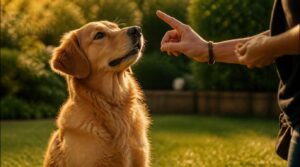
A marker is the bridge between the moment your dog gets it right and the treat that follows—and without it, your timing is just guesswork. Think of it as your way of drawing a clear line around exactly the behavior you want, so your dog never has to wonder what earned the reward. Here’s how to build that system the right way.
Use a Clicker
A clicker is one of the most reliable tools you can add to your training sessions. Unlike verbal cues, the click is always identical — same pitch, same duration, every time — which removes any ambiguity your dog might otherwise experience. That consistency alone makes it far more efficient than your voice during fast-moving skill drills.
If you’re ready to upgrade your sessions, picking the right tool matters — check out this guide to the best clicker for dog training to find one that fits your hand and lasts through serious repetition.
Here’s why it earns its place:
- Pinpoints behavior instantly — the click captures the exact moment your dog gets it right, well within that critical 1–3 second window.
- Frees your hands — you can hold the clicker in one hand and position treats in the other, keeping session pacing smooth and uninterrupted.
- Works through distractions — that distinct audible sound cuts through environmental noise far more reliably than a spoken word.
Keep small, consumable treats nearby so the reward follows the click without fumbling. If your clicker sticks or misfires, stop immediately — a false click teaches the wrong lesson. Have a backup ready, or pause the session rather than push through. Training efficiency depends on the marker being trustworthy every single time.
Choose a Marker Word
Not every trainer has a clicker on hand, and that’s perfectly fine — a well‑chosen marker word does the job just as effectively when used consistently.
Pick something short, neutral, and distinct: "yes" and "nice" are popular choices because they’re crisp, easy to say without emotional fluctuation, and unlikely to appear in your everyday conversation mid‑session.
Mark The Exact Moment
Timing is everything — and in dog training, "exact" means within one to two seconds of the behavior starting. The moment your dog’s hindquarters touch the ground during a sit, that’s your mark window.
Miss it by even a beat, and you’re reinforcing whatever comes next. Train yourself to spot the behavior onset, not the completion, and your sessions will sharpen immediately.
Treat After The Marker
The marker is a promise — the treat is the payoff. Once you’ve marked the behavior, deliver the treat within a consistent gap, usually a fraction of a second, so your dog learns to anticipate what follows a correct action. That predictability reduces hesitation and keeps training flow tight, session after session.
Time Treats by Training Stage

Treat timing isn’t one-size-fits-all — it shifts depending on where your dog is in the learning process. The stage you’re training in actually determines how often you reward, when you deliver the treat, and how long you hold back. Here’s how to match your timing to each phase of training.
New Cue Timing
When you introduce a brand-new cue, calibrating cue onset precisely is everything. Align your mark to the very first moment your dog performs the behavior — not a beat before, not after. Keep the cue brief and clear to minimize cognitive load, so your dog isn’t overwhelmed while processing something unfamiliar. A cluttered environment invites mistakes, so manage distractions deliberately.
If performance plateaus, reassess your timing immediately.
Shaping Behavior Quickly
Shaping a new behavior fast demands rapid reinforcement rates — think 10–15 treats per minute or more. At this stage, timing is everything:
- Click and reward every small approximation
- Keep sessions short and focused
- Deliver treats while the behavior is still happening
- Raise criteria only after three clean repetitions
High-frequency reward bursts accelerate skill acquisition without overwhelming your dog.
Practicing Known Cues
Once your dog knows a cue reliably, the rules shift. Reducing reward frequency becomes your main lever — not eliminating treats, but spacing them out intentionally.
Consistent cue wording and identical stimuli prevent mixed signals that quietly erode a skill you’ve already built. Keep your ask the same every time, and your dog’s response stays sharp.
Building Longer Duration
Once your dog knows a cue reliably, duration becomes the next frontier. Work in gradual increments — two seconds, then four, then six — before adding complexity.
Fatigue sets in fast, so keep sessions under five minutes and rotate environments to build real generalization.
Consistent conditions, matched with smart training load management, turn short holds into lasting endurance.
Reducing Treat Frequency
Once duration is solid, it’s time to wean off constant treats. Shift to random rewards — sometimes reward the third rep, sometimes the seventh. Your dog stays engaged because food might come, not because it always does. Mix in praise and brief play so motivation doesn’t hinge on food alone.
Place Treats for Better Results
Where you deliver the treat matters just as much as when you deliver it. A well-timed reward placed in the wrong spot can break a dog’s position, encourage bad habits, or muddy the message you’re trying to send.
These placement strategies will sharpen every repetition and keep your dog focused on doing the right thing.
Reward in Position
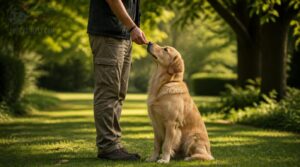
Where you deliver the treat matters just as much as when. Reward in position means offering the treat at the exact spot the behavior occurred — no repositioning required.
Keep it at handler body level to discourage jumping, and allow a brief pause before presenting it. That small pause prevents reward crowding and keeps your dog in a stable, focused stance.
Avoid Luring Too Long

Luring is a useful starting tool, but lean on it too long and you’ve built a hand-follower, not a trained dog. Lure dependency quietly replaces the cue itself. Watch for these warning signs:
- Your dog stares at your hand, not your face
- Responses collapse without visible food
- Cue generalization stalls across new environments
Fade the lure fast — prompt briefly, then train independently.
Reset Between Repetitions

After each rep, pause and reset fully before starting the next. Standardizing your starting conditions prevents momentum carryover and keeps every repetition technically clean.
This brief mental and physical reset — a breath, a reestablished stance — maintains consistency across your session, helps accurate progress tracking, and protects technique as fatigue builds.
Quality reps beat rushed ones every time.
Keep Treats Ready
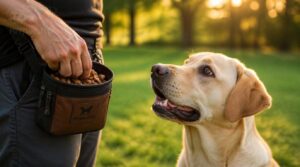
Having treats instantly available isn’t just convenient — it’s the difference between a reward that works and one that arrives too late to matter.
Before your session starts, pre-portion your treats into a quick-access training pouch, choosing bite-sized, uniform pieces that won’t crumble or slow you down. Fresh, consistent treats keep motivation steady and your active time truly productive.
Prevent Jumping or Grabbing

Jumping and grabbing usually signal one thing: your dog’s excitement is outpacing their self-control. Withhold the treat the moment a paw lifts or a mouth reaches forward — then wait.
- Mark calm body posture the instant all four paws stay grounded.
- Reward only during genuine stillness, not frantic anticipation.
- Slow your pacing when excitement climbs; reset before continuing.
Fade Treats Without Losing Motivation

At some point, your dog doesn’t need a treat every single time — and that’s actually a good thing. The trick is stepping down the rewards without watching your dog’s enthusiasm step down with them. Here’s how to make that shift work in your favor.
Reward Every Correct Try
When your dog is just learning something new, reward every single correct try. This isn’t generosity — it’s strategy.
High reinforcement frequency builds a strong action–reward association from the start, maximizing learning efficiency and speeding up error correction. Consistent reinforcement at this stage keeps motivation high and gives your dog a clear, confident understanding of exactly what earns the treat.
Switch to Random Rewards
Once your dog reliably obeys a cue, shift to random rewards — not because you’re being stingy, but because unpredictability is genuinely more powerful. Variable schedules trigger stronger dopamine responses, keeping motivation high and behavior resistant to extinction.
- Reward roughly one in three tries
- Vary the gap between rewarded repetitions
- Keep your dog guessing — in a good way
- Monitor engagement; increase density if focus drops
- Never go so long between rewards that frustration builds
Chain Simple Cues
Chaining simple cues is where random rewards start working harder for you.
Instead of treating every individual sit or down, link two or three cues together before delivering a single reward.
Train each link separately first — that’s backward chaining at its foundation — then connect them into a smooth, predictable sequence your dog can anticipate and follow with confidence.
Add Praise and Play
Once you’ve chained those cues together, praise becomes your secret weapon for keeping motivation alive without relying on treats alone. Phrases like "Good sit-down!" or "Excellent focus!" — specific, enthusiastic, and calm — reinforce exactly what your dog did right.
Follow that immediately with 5 to 15 seconds of play, then move smoothly back to the next cue.
End on Success
That praise-and-play rhythm sets you up perfectly for the most important moment of any session: ending on success.
Define exactly what a successful final trial looks like — a clean sit, a solid stay, one accurate recall — so you always know when to stop. Finishing on a correct, reinforced response leaves your dog confident, motivated, and ready to come back tomorrow.
Frequently Asked Questions (FAQs)
Can treat type affect how fast dogs learn?
Yes, treat type absolutely affects learning speed. High-value rewards like meat or cheese drive faster responses than dry kibble, because stronger motivation means your dog works harder — just watch your caloric intake limits across sessions.
Does treat timing differ between puppy and adult dogs?
Timing shifts slightly with age. Puppies need treats within seconds due to shorter attention spans, while adult dogs tolerate modest gaps. Both benefit from fast, precise delivery when learning something new.
How do emotions impact a dogs reward response?
A dog’s emotional state directly shapes how it receives and interacts with rewards. Stress reduces engagement, while positive affect sharpens focus. Your handler energy and reward quality both influence motivation and how eagerly your dog learns.
Should treats vary based on distraction levels outside?
Outside, the rules change. Higher distraction means your dog needs more frequent rewards to stay engaged, so adjust your treat rate upward and keep success high before fading rewards again.
Can overfeeding treats during training cause health issues?
Overfeeding treats, even in small amounts, creates a daily calorie surplus that quietly adds up. Extra weight strains joints, raising arthritis and mobility risks over time — consequences no training win is worth.
Conclusion
Like a photographer who captures the perfect shot by anticipating the moment rather than chasing it, your precision with treat timing during training sessions is what determines what your dog truly learns versus what it only seems to understand.
Every millisecond of delay sends its own unintended message.
Tighten that window, commit to marking behavior clearly, and you’ll stop wondering why your dog hesitates—and start building the reliable, confident partner you’ve been working toward.
- https://manorveterinaryhospital.com/2025/03/15/effective-dog-training-tips
- https://advancedcaninetechniques.com/2012/01/timing-patience-consistency3-keys-to-successful-training
- https://www.bauserspettraining.com/4-strategies-for-reward-based-dog-training
- https://joyofdogsports.fi/2026/03/foundations-of-dog-training-part-1-reward-and-timing
- https://mjspettrainingacademy.com/read/rate-of-reinforcement