
This site is supported by our readers. We may earn a commission, at no cost to you, if you purchase through links.

That tiny click sound carries more weight than most owners realize. Dogs can’t connect a treat to something they did three seconds ago, their brains move too fast for that kind of delay. But a click? It happens instantly, right when the behavior occurs, and that timing changes everything.
Clicker conditioning for dogs works because it speaks the language dogs actually understand: cause and effect, happening in real time. No fumbling for treats, no confused looks, no guessing games. Once your dog learns that click means "yes, that exact thing," training stops feeling like a struggle and starts feeling like a conversation. Grab your clicker, because you’re about to build that connection step by step.
Table Of Contents
- Key Takeaways
- What is Clicker Training and Why It Works
- Essential Tools for Clicker Training
- How to Charge The Clicker
- Step-by-Step Clicker Training Process
- Tips for Successful Training Sessions
- Frequently Asked Questions (FAQs)
- How long should clicker training sessions be?
- How to condition a dog to a clicker?
- Whats the difference between luring, shaping, and capturing?
- How many clicks per minute should shaping sessions have?
- Can a single clicker offer multiple functions or settings?
- How does clicker training affect a dogs confidence levels?
- Conclusion
Key Takeaways
- Clicking the instant your dog does something right works because dogs link cause and effect in real time, not three seconds later.
- Before training begins, you need to "charge" the clicker by clicking and treating 20 times in a row so your dog learns click always equals reward.
- Once your dog responds reliably to the click, add a verbal cue right before the action, then gradually build duration and distance one step at a time.
- Keep sessions short (5-10 minutes), only click when you’re ready to reward immediately, and fade out the clicker slowly once behaviors are solid.
What is Clicker Training and Why It Works

Clicker training might look like a simple little tool, but there’s real science behind that click.
That little click works because it taps into how dogs naturally learn, and exploring the benefits of clicker training for puppies can help you see why it’s so effective early on.
You’re about to see why dogs respond so fast to it, what makes the timing so important, and how it stacks up against older training methods. Stick with these next few points, and you’ll understand exactly why this small device works so well.
The Science of Conditioning
Ever wonder why a simple click works so well? It’s classical conditioning—pairing a neutral sound with food until your dog’s brain links the two. The clicker becomes a conditioned reinforcer, sparking the same excitement as a treat.
Layer in operant conditioning, where behavior and consequence connect, and clicker training turns animal learning into a clear, positive reinforcement system dogs enjoy. This method helps in building strong positive associations to reduce stress.
Why Timing Matters Most
In clicker training, timing is everything—true marker training depends on it. Instant marker precision tells your dog exactly which action earned the reward; a reward delay blurs that message.
This consistency and timing drives behavior shaping timing, reinforces cue timing consistency, and reflects session length effects, all rooted in operant conditioning’s positive reinforcement loop—immediate, clear, and confidence-building for your dog.
Benefits Over Traditional Methods
Compare clicker training to old-school methods today, and the difference jumps out. You get faster learning gains because dogs know exactly which action worked.
Positive reinforcement and reward-based training mean reduced stress levels—no fear, no force. Dogs gain enhanced confidence building, improved communication clarity, and this behavioral modification approach assists diverse training applications, from basic dog obedience to modern tricks.
Essential Tools for Clicker Training
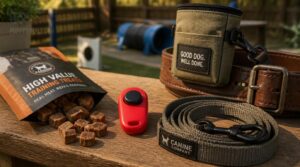
Before you teach your dog a single behavior, you need the right gear in your hands. The tools you choose can make or break your training sessions, so it’s worth knowing what actually works. Here’s what you’ll need to get started.
Choosing The Right Clicker
The right clicker is your most important piece of gear. Sound quality matters first — you want a short, crisp click your dog notices without flinching. Consider these key factors:
- Hand comfort for precise, fumble-free timing
- Durability to withstand daily, repeated pressing
- Size and portability for easy carry anywhere
- Backup markers for sound-sensitive or hearing-impaired dogs
The Coachi Multi-Clicker offers adjustable volume, making it a smart choice.
Once your dog links the sound with rewards, you can follow this step-by-step clicker training guide to build on that foundation.
High-Value Training Treats
Not every treat earns that kind of focus. High-value treats are your clicker training secret weapon — aromatic, soft, and small enough to keep the pace moving. Think roast chicken, freeze-dried liver, or cheese. These Meat Flavor Power options beat plain kibble every time, especially in distracting environments where your dog’s nose is pulling attention everywhere else.
Soft Bite Rewards matter because your dog needs to eat fast and refocus. Pea-sized pieces work even for large breeds — you’re rewarding behavior, not filling a bowl. This keeps your positive reinforcement rhythm strong without your dog losing interest mid-session.
Use a Treat Rotation Strategy to prevent boredom. When one treat loses its spark, switch flavors. For training treats for puppies, choose Calorie Controlled Snacks so reward counts don’t quietly tip the daily calorie balance. Reserve your strongest Aroma Boost Treats for recall or tough new behaviors — save the best for the hardest moments.
Treat Pouches and Target Sticks
Good gear makes the difference between a smooth session and constant fumbling.
A treat pouch with quick access — like the Coachi Treat Pouch or Coachi Treat Bag — clips to your belt, keeping both hands free. Look for magnetic or open-mouth closures, divided compartments, and machine-washable fabric.
Pair it with a telescopic target stick to guide your dog precisely without bending down constantly.
Alternatives to a Clicker
Not everyone has a clicker nearby — and that’s fine. A verbal marker like "yes" works just as well, provided you say it the same way every time. Finger snaps, whistle cues, or even a clicky pen are solid alternatives.
For deaf dogs, a hand signal or light tap marks the moment just as clearly.
How to Charge The Clicker
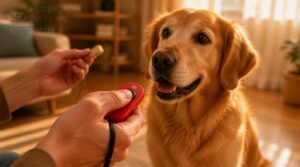
Before your dog can learn anything from the clicker, it needs to understand what that sound actually means. Right now, the click is just a noise — your job is to turn it into a signal that tells your dog something good is coming. Here’s exactly how to make that happen.
Setting Up a Quiet Space
Think of this step as setting the stage before the curtain goes up. Your dog can’t focus if the environment is working against you.
Choose a low-distraction room with minimal foot traffic, muffled outside noise, and soft surfaces to absorb sound. Keep the layout simple, the lighting dim and warm, and the space tidy. That calm foundation makes everything easier.
Pairing The Click With Treats
Now you’re ready to make the clicker mean something. This step is called loading the clicker, and it’s simpler than it sounds.
Do 20 repetitions: click once, then immediately hand over a small, soft treat. That’s it. No cues, no commands. You’re just building one clear promise — click always means treat.
Click once, treat once, twenty times over—one simple promise that click always means treat
- Click once, treat once.
- Keep treats small and soft.
- Deliver within two seconds.
- Repeat 20 times.
- Stay consistent every session.
Signs Your Dog is Charged
How do you know charging the clicker worked? Watch your dog’s body. After several rounds of clicker training, a charged dog often shows a stiff body posture, a fixed intense gaze on your treat hand, and even a high rigid tail.
Some pups pace rapidly or lose training focus completely, too excited to think. That’s positive reinforcement doing its job; just dial sessions back if arousal spikes.
Step-by-Step Clicker Training Process
Your clicker is charged, and your dog already knows that sound means something good is coming. Now it’s time to put that connection to work in real training. Here’s how the process unfolds, step by step.
Mark The Desired Behavior

Snap that click the instant your dog’s bottom hits the floor. Click Timing Precision turns a random moment into a clear lesson.
- Click sound first, then reward
- One click per correct action
- Capture spontaneous behaviors instantly
- Keep marker consistency rock-solid
This Reward Sequence builds trust, marks the behavior precisely, and strengthens positive reinforcement through reliable cue association.
Add a Verbal Cue

Once your dog sits reliably from the click alone, it’s time to add the cue. Say "sit" once, right before the action — that’s proper cue placement. Pause, let your dog respond, then click.
Early cueing teaches dogs to tune out words, so wait for reliability first. With clean cue timing and clarity, your verbal cue becomes a meaningful signal, not background noise.
Build Duration and Distance

With your cue solid, build duration and distance—but not both at once. Use one-second increments for holds, then add distance separately:
- Start with a 1-second hold, click, then treat.
- Mix patterns—10, 9, 5, 2 seconds—to stay unpredictable.
- Step back gradually; lower duration first.
- Return before rewarding, then proof in distractions.
Keep sessions short, timing tight, and reinforcement consistent.
Fade Out The Clicker

Once your dog nails the cue in different spots, it’s time to fade the clicker. Don’t quit cold—reduce clicks gradually, rewarding every second response, then every third. The click still predicts treats, keeping its value strong.
Shift focus to your verbal cue or hand signal; that’s your new control point. If things slip in a tougher setting, bring the clicker back briefly to rebuild clarity.
Tips for Successful Training Sessions

You’ve got the steps down, but a few small habits make all the difference between a dog that’s engaged and one that’s confused. Good clicker training isn’t just about the tool, it’s about how you use it session after session. Here are some tips that’ll keep your training on track and your dog excited to learn.
Keep Sessions Short and Frequent
Shorter sessions beat marathons every time. Five to ten minutes keeps your dog focused, enthusiastic, and ending on a win. Try squeezing in three quick rounds daily, before meals or after walks, so clicker training fits naturally into your routine.
Frequent practice builds consistency and timing, sharpens reward precision, and keeps attention sharp. Think little and often, not long and rare.
Only Click When You Can Reward
Always treat the click sound as a promise. Reward Timing Precision means the click and treat work together, never apart.
- Prep treats before training.
- Click only when ready.
- Deliver the reward immediately.
- Keep click consistency every session.
Treat Readiness plus Immediate Delivery protects Marker Reliability, the backbone of positive reinforcement training.
Reducing Distractions Gradually
Once your dog nails a behavior in a low-distraction environment, add challenges slowly. Watch body language: lip licking or looking away signals it’s getting hard.
Use threshold distance management by starting farther from triggers, then try gradual distance increase in small steps. This progressive distraction introduction keeps clicker training effective. Adjust session length if your dog seems overwhelmed, shorter is better than pushing too far.
Common Clicker Training Mistakes
Even seasoned trainers slip up sometimes, and that’s okay. Here are five mistakes to watch for:
- Timing errors – clicking too early or late confuses your dog.
- Treat delivery delays weaken the click-reward link.
- Inconsistent marking muddies positive reinforcement dog training.
- Cue confusion from repeated commands stalls shaping behaviors.
- Reinforcement gaps break trust in your marker word.
Fix these, and your reinforcement schedules click into place.
Frequently Asked Questions (FAQs)
How long should clicker training sessions be?
Funny thing: timing really is everything, both in comedy and dog training. Keep sessions short, 3 to 10 minutes depending on your dog’s age, several times daily, and always end on success to prevent fatigue and keep motivation high.
How to condition a dog to a clicker?
Run clicker loading sessions in a quiet space: click, then deliver a treat immediately. Repeat 10–20 times with consistent tone to charge the clicker. This conditioning builds reward-based training, sharpens dog focus, and sets up positive reinforcement techniques for real progress.
Whats the difference between luring, shaping, and capturing?
Funny enough, your dog already uses all three daily. Luring vs shaping: luring guides with a treat, shaping rewards small steps. Capturing benefits real behaviors, like sitting naturally—just click and reward.
How many clicks per minute should shaping sessions have?
Aim for 15 clicks per minute, about one every 4 seconds, during shaping sessions. This reinforcement schedule keeps your dog engaged and guessing correctly. Once they nail it consistently, raise your criteria slightly, slowing the rate as harder steps get learned.
Can a single clicker offer multiple functions or settings?
Not really, no. A dog clicker stays a single-purpose marker—box, wrist strap, or button clicker all just click. The Coachi MultiClicker adds volume control, but multi-button setups and dual-mode switching belong to presentation devices, not training tools.
How does clicker training affect a dogs confidence levels?
Talk about a paws-itive shift! Confidence grows when your dog earns rewards through its own choices. This control over rewards, rooted in animal psychology, builds self-efficacy, reduces fear, and shapes braver, more curious behavior through positive reinforcement.
Conclusion
That click is a tiny key unlocking a whole new conversation with your loyal dog. Once you’ve worked through clicker conditioning for dogs, you’ll notice something shift: your dog starts watching you, waiting, trying eagerly. That’s not obedience; that’s partnership.
Keep your sessions short, your timing sharp, and your rewards meaningful. The clicker eventually fades, but the trust it built stays forever. You taught your dog a language, and together, you’re finally speaking it fluently.
- https://www.shadybrookvet.com/puppy-and-kitten-center/clicker-training-basics
- https://www.instructables.com/Overview-of-training-types
- https://clickertraining.com/stay-until-released
- https://nwaschoolfordogs.com/what-is-clicker-training
- https://cvm.msu.edu/vetschool-tails/clicker-training-for-humans-how-immediate-feedback-improves-learning