This site is supported by our readers. We may earn a commission, at no cost to you, if you purchase through links.
Most dogs have significant periodontal disease by age three—and many of their owners assume the daily bowl of kibble is doing its part to prevent it. That assumption is understandable. Crunchy food feels like it should scrub teeth clean, the same way you’d expect rough food to work on your own.
But a dog’s bite works differently, and kibble shatters on contact before it reaches the gumline where plaque actually accumulates. The idea that dry dog food cleans teeth isn’t a simple yes or no—it’s more about understanding what dental disease needs to be stopped and why food alone rarely stops it.
Table Of Contents
Key Takeaways
- Dry kibble shatters before it reaches the gum line, so it cannot remove the plaque where dental disease actually starts.
- About 70% of dog dental disease hides below the gum line, which means you won’t catch it without veterinary X-rays and professional cleanings.
- Daily tooth brushing is the single most effective thing you can do at home, and VOHC-approved chews are the best supplement when brushing is not enough.
- Food is just the foundation—without a full routine including vet cleanings and proven dental products, your dog’s teeth are losing ground quietly every day.
How Dog Dental Disease Starts
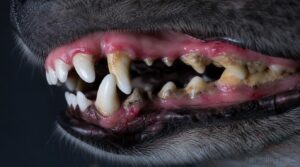
Dental disease in dogs usually starts quietly, long before you notice bad breath or a lost tooth. Most of it builds in places you can’t easily see, which makes it easy to miss until things get serious.
Diet plays a bigger role than most owners realize, and choosing dog food that supports dental health can slow that buildup before the damage starts.
Here’s what’s actually happening in your dog’s mouth — and the warning signs worth knowing.
Plaque Versus Tartar
Plaque is a soft biofilm that coats your dog’s teeth within hours of eating — and that’s actually good news, because soft means removable. The trouble starts when you miss it.
If left alone for just a few days, the mineralization process kicks in and plaque hardens into tartar. At that point, no amount of mechanical cleaning or abrasive kibble will fix it. Early intervention is everything.
Gumline Problem Areas
Even after tartar forms, the gumline is where things get worse fast. Dental plaque and food impaction collect right where teeth meet a dog’s gums — a margin easily missed during brushing.
Bleeding gums and receding gums are early warnings of gingivitis tipping toward periodontal disease. An uneven gumline further complicates cleaning, allowing gumline cavities to quietly develop.
Hidden Below-Gum Disease
What starts at the gumline often continues beneath it. About 70% of dental disease in dogs hides below the surface — invisible without X‑rays. Subgingival plaque settles into periodontal pockets, where anaerobic bacteria thrive without oxygen and drive gum tissue breakdown silently.
Seventy percent of dog dental disease hides silently below the gumline, invisible without X-rays
Owners should watch for early bleeding gums as an initial warning sign of periodontal disease. That’s what makes periodontal disease in dogs so deceptive:
- Tartar mineralizes under the gumline
- Periodontal pockets deepen gradually
- The oral microbiome shifts toward harmful bacteria
- Tooth mobility signals severe bone loss
Signs Owners Often Miss
Most signs of gum disease fly under the radar. Bad breath is usually the first clue owners notice — but because it builds gradually, it’s easy to dismiss.
Tooth discoloration near the gumline, gum redness, and mouth pawing often get blamed on aging or allergies. These symptoms are frequently overlooked or misattributed to less serious causes.
Chewing asymmetry — favoring one side — quietly signals real discomfort well before any obvious crisis appears. This subtle behavior change highlights the importance of early detection.
Dry Dog Food Helps, but Not Enough
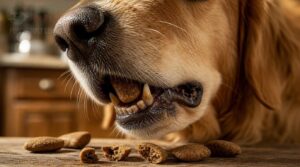
Dry kibble does offer some dental benefit — just not nearly as much as most people think.
The way dogs eat, the shape of the food, and where plaque actually forms all work against it.
Here’s a closer look at what’s really happening.
Kibble’s Limited Scraping Action
Kibble does offer some mechanical cleaning, but the abrasive action is modest at best. Most pieces shatter on contact, so fragmentation reduces scrubbing before the surface abrasion limit can accomplish meaningful cleaning.
For a more effective alternative, VOHC-approved dental treats and home care tips can fill the gap that kibble alone simply can’t close.
Adding pressure inconsistency from bite to bite, short chewing time constraints, and low edge contact frequency further diminishes effectiveness. These factors collectively result in limited cleaning, which is simply not a replacement for actual dental care.
Why Dogs Swallow Kibble
Here’s a hard truth: most dogs aren’t actually chewing their kibble.
Instinctive gulping — rooted in wolf-pack competition — drives dogs to swallow fast rather than chew thoroughly.
Mealtime anxiety, food competition with other pets, and brachycephalic anatomy all reduce chewing cycles further.
Kibble design and texture also play a role; small, uniform pieces slide down easily.
The result? Minimal mechanical cleaning where your dog needs it most.
Dry Food Versus Wet Food
Many owners wonder whether switching to wet food might help their dog’s teeth. It won’t — and here’s why the comparison matters:
- Moisture Impact: Wet food’s high water content softens texture, reducing chewing frequency
- Saliva Production: Dry kibble triggers more chewing cycles, mildly boosting saliva production
- Mechanical Cleaning: Neither format reliably removes plaque at the gumline
- Nutrient Formulation: "Complete and balanced" doesn’t mean dental protection
Your feeding schedule and food type both influence dog dental plaque formation, but dry kibble’s dental effect is modest at best.
Why Tartar Still Forms
Even when you feed dry dog food daily, tartar buildup keeps happening — and saliva is partly to blame. Saliva mineral content, rich in calcium and phosphate, continuously calcifies any persistent subgingival biofilm that isn’t disrupted. Incomplete plaque removal, high starch intake, and irregular oral hygiene all accelerate this cycle.
| Driver | What Happens | Result |
|---|---|---|
| Saliva minerals | Calcify lingering biofilm | Hardened tartar |
| High starch content | Feeds plaque bacteria | Faster buildup |
| Abrasive food texture | Fails to reach gumline crevices | Dog dental plaque formation persists |
Why Regular Kibble Falls Short
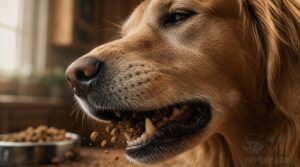
The "crunchy kibble cleans teeth" idea sounds reasonable, but the science tells a different story.
Most standard kibble simply doesn’t do enough mechanical work where it matters most. Regular kibble keeps falling short.
Shattering Instead of Scrubbing
Think of kibble like a cracker — it shatters, it doesn’t scrub. This fracture timing matters: once dry dog food breaks apart, saliva softening kicks in fast, turning fragments mushy before any real mechanical teeth cleaning happens. The dry kibble dental effect is genuinely limited by kibble texture itself.
- Kibble fractures into crumbs, not cleaning edges
- Saliva softens fragments within seconds of shattering
- Chew force differs by dog size and habit
- Fragment trajectory misses plaque-prone surfaces consistently
- Contact duration ends the moment your dog swallows
Missed Back Teeth
Your dog’s back teeth take the brunt of chewing, yet they’re often the last to benefit from mechanical teeth cleaning. Posterior plaque accumulation happens fast in molars’ groove retention zones and interproximal gaps where dry dog food never reaches.
Gum recession zones and root surface exposure make dental plaque removal even harder.
A solid dog dental hygiene routine can’t rely on food texture and dental health alone.
Carbs and Plaque Bacteria
Standard kibble also carries a hidden chemical problem. Most dry food is loaded with refined carbohydrates, and fermentable carbohydrates are exactly what plaque bacteria thrive on.
High glycemic index impact from starchy fillers triggers a plaque pH drop after every meal, ramping up acid production and biofilm polymer formation. That carbohydrate impact on teeth quietly accelerates subgingival microbial shift, making dental plaque removal even harder over time.
Chewing Habits Vary
Not every dog chews the same way. Some show a clear side preference, grinding food on one side while barely touching the other. Others rush through meals with a rapid chewing cadence that barely allows proper bolus formation before swallowing. Stress-related chewing, pain, or habit can all shift jaw load distribution dramatically.
Your dog’s individual chewing habit variability means dry kibble contacts different teeth differently — sometimes barely at all.
- Favors one side, leaving opposite teeth unscraped
- Swallows large pieces with minimal chewing activity
- Rushes eating due to anxiety or competition
- Avoids certain teeth because of hidden soreness
- Ignores chew toys for dogs, preferring to gulp food whole
What Actually Cleans Dogs’ Teeth
So if kibble can’t do the job on its own, what actually does?
The good news is that you have several proven options to keep your dog’s teeth clean and their gums healthy. Here’s what the evidence actually confirms.
Daily Tooth Brushing
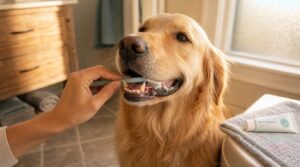
Nothing outperforms daily tooth brushing for keeping your dog’s mouth healthy. When done consistently, it removes plaque before it hardens into tartar — and that window closes fast.
| Brushing Element | What to Do |
|---|---|
| Brushing Frequency | Once daily, ideally after meals |
| Correct Brush Angle | 45° toward the gumline |
| Two-Minute Duration | Cover all surfaces thoroughly |
| Soft Bristle Choice | Gentle on gums and enamel |
| Full-Mouth Coverage | Don’t skip back molars |
Use pet toothpaste only — never human toothpaste. A quick tooth brushing demonstration from your vet makes the whole routine much easier to start.
VOHC-Approved Dental Chews
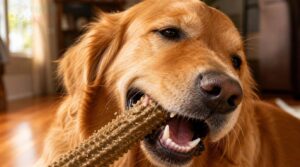
Brushing covers a lot of ground, but it doesn’t have to stand alone. VOHC-approved dental chews — certified by the Veterinary Oral Health Council through rigorous safety screening and clinical reduction rates — add real mechanical scrubbing through smart texture engineering.
Look for the VOHC seal, follow size guidelines for your dog’s weight, and ensure consistent owner compliance to make these chews a genuine part of preventive dental care. This approach maximizes overall dog dental health benefits.
Veterinary Dental Cleanings
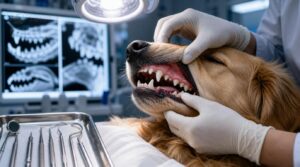
Even daily brushing can’t remove hardened tartar — that requires professional dental cleanings. A veterinary dental exam under anesthesia includes:
- Full mouth exam with dental charting
- Dental radiographs to assess hidden root disease
- Subgingival scaling to clear deposits below the gumline
- Periodontal probing and treatment planning for affected teeth
Veterinary dentistry catches what you simply can’t see at home.
Dental Toys and Treats

Dental chews and chew toys can be a meaningful part of your dog’s routine — if you choose wisely. Look for VOHC-approved dental treats with texture ridges that physically scrape plaque off tooth surfaces.
Size appropriateness matters: a treat your dog swallows whole does nothing. Some dental chews also include enzyme additives that slow tartar formation.
Always practice supervised chewing, and replace toys showing wear to maintain toy durability and safety.
Safe Crunchy Snacks

Some crunchy snacks genuinely support oral health — when chosen carefully. Hardness levels matter most: too soft and there’s no scraping action, too brittle and you risk chipping teeth. Look for these four qualities:
- Ridge design that contacts tooth surfaces
- Additive-free formulas without xylitol or garlic
- Breed-specific portions that encourage chewing, not gulping
- Controlled treat frequency to avoid excess calories
Choosing Better Dental Food

Not all dog food is created equal for dental health. Some options are genuinely better for your dog’s teeth, and knowing what to look for makes a real difference.
Here’s what to keep in mind when choosing a dental-focused diet.
Veterinary Dental Diets
Not all dry kibble is created equal. Special dental diets like Prescription Diet Canine Td and Purina Dental Health for Canines use prescription ingredients—including long insoluble fibers and polyphenol additives—engineered to scrape teeth rather than shatter on contact.
Some breed-specific formulas even integrate joint support for larger dogs, combining dental care with additional health benefits.
Long-term compliance matters most, so these diets work best when fed daily rather than occasionally.
VOHC Seal Meaning
The VOHC Seal isn’t just a marketing badge — it’s your shortcut to evidence-backed dog dental care. The Veterinary Oral Health Council awards this certification only after a product completes two clinical trials, each showing a 15% reduction in plaque or calculus, with an average of at least 20% across both.
Safety requirements cover oral tissue safety and toxicity standards.
Look for it on dental chews and dry dog food alike.
Kibble Size and Texture
Size and texture matter more than most owners realize. Larger kibbles with greater bite thickness and crunch hardness force more chew cycles before breaking, improving mechanical plaque removal. Pellet diameter, surface porosity, and break pattern all influence how effectively food particle size works against tooth surfaces.
This is purely mechanical cleaning — no kibble, regardless of texture, delivers chemical cleaning the way enzymatic products do.
Avoiding Cooked Bones
Cooked bones might seem like a natural chewing option, but the risks outweigh any dental benefit. Heating makes bones brittle, creating bone splinter hazards that cause mouth trauma, choking risk, and gastrointestinal obstruction if fragments travel deeper.
Even supervised chewing can’t guarantee safety. The brittle nature of cooked bones means fragments can break off unpredictably, posing serious health threats.
Stick to pet-safe chew alternatives bearing the VOHC seal — they deliver real mechanical cleaning without the risk of splintered bones.
Ask Your Veterinarian
Your veterinarian can do more than confirm what’s working — they can catch problems you can’t see. During an exam, they’ll assess gum health, check for pain signs, and walk you through individualized home routine steps that match your dog’s needs.
From professional cleanings to vet recommendation on dry kibble, dental chews, and follow-up schedule planning, specialized vet dentistry guidance makes all the difference.
Frequently Asked Questions (FAQs)
Can water additives help reduce my dogs plaque?
Water additives can modestly support dog dental care by interfering with plaque biofilm formation.
Xylitol-based options showed roughly a 5% reduction in plaque scores, making them a useful oral hygiene adjunct — not a replacement.
At what age should dental care routines start?
Start at first tooth eruption—typically around eight weeks. For most puppies, daily brushing from day one builds an early brushing habit.
Your first vet visit should occur by the six-month marker.
How often should dogs receive professional dental cleanings?
Most dogs do well with professional cleanings once a year, but breed-specific frequency, senior dog interval, and disease history impact that schedule.
Your vet sets vet-guided timing based on your dog’s actual mouth, ensuring a tailored approach to dental care.
Are dental sprays or gels effective for dogs?
Dental sprays and gels can help slow plaque buildup, but antiseptic ingredients like chlorhexidine only reach surfaces the applicator touches.
Application coverage is limited, and clinical studies’ size is often too small to draw firm conclusions.
Conclusion
Kibble has never truly held a candle to a proper dental routine, and the science backs that up completely. Does dry dog food clean dogs’ teeth? Marginally—but not enough to prevent the disease quietly developing below your dog’s gumline.
Daily brushing, VOHC-approved products, and regular veterinary cleanings are what actually move the needle.
Think of food as the foundation, not the finish line. Your dog’s mouth deserves a full plan, not a half-measure.
- https://www.wellpets.com/blog/how-diet-impacts-your-dogs-dental-health/
- https://www.dogfoodadvisor.com/choosing-dog-food/dry-dog-food-cleaner-teeth/
- https://evangersdogfood.com/dog-food-myths-does-kibble-help-clean-your-dogs-teeth/?srsltid=AfmBOorOjBA4xxVcVulRokMYs51PLkVhPObRwDjWYSV-emRtorkdhwmi
- https://www.petmd.com/blogs/nutritionnuggets/dr-coates/2014/august/dry-food-and-dental-disease-dogs-31920
- https://www.animalmedicalcenterofchicago.com/seven-dental-myths-for-pets/