
This site is supported by our readers. We may earn a commission, at no cost to you, if you purchase through links.

Beagles fool a lot of people. That short, smooth coat looks low-maintenance—almost uncomplicated—until you find hair on your black pants, your couch cushions, and somehow your coffee mug. The truth is, Beagle’s short coat shedding rivals that of many long-haired breeds, and most owners don’t see it coming.
Beneath that sleek surface sits a dense undercoat designed to regulate your dog’s body temperature year-round, and it sheds constantly to do its job.
Knowing why that happens—and what actually helps—makes the whole thing far more manageable than it first appears.
Table Of Contents
Key Takeaways
- Beagles have a dense two-layer coat that sheds year-round, which makes sleek short fur actually more work than it looks.
- Brushing weekly during calm periods and daily during spring blowouts is the single most effective way to keep loose fur under control.
- Diet matters as much as grooming—omega-3s, quality protein, and steady hydration directly reduce how much hair your Beagle drops.
- Sudden bald patches, redness, or rapid coat changes are not normal shedding and deserve a vet visit sooner rather than later.
Why Short-Coated Beagles Shed

If your beagle leaves a trail of fur on every couch and carpet, you’re not imagining it — there’s a real reason behind all that shedding.
Understanding what’s actually driving it — from seasonal cycles to diet — can help you get ahead of it, as this breakdown of the most common reasons dogs shed so much explains.
It comes down to how their coat is actually built. Here’s what’s going on beneath that short, smooth surface.
Double Coat Structure
Even though your beagle’s coat looks short and simple, there’s actually a two-layer system working underneath. The guard hair function is to block dirt, debris, and UV rays, while the undercoat manages insulation. Together, these primary and secondary hairs create airflow channeling between layers — that layer interaction is what makes beagles shed more than you’d expect:
- Guard hairs form a weather-resistant outer shell
- The undercoat traps warm air close to the skin
- Seasonal growth phases shift the undercoat’s density
- Both layers regulate temperature year-round
Short Hair, Heavy Shedding
That double-coat system is exactly why beagles shed far more than their short fur suggests. Both layers drop hair year-round, not just during seasonal shedding. Because with beagles, short hair definitely doesn’t mean light shedding.
Stress shedding, hormone imbalance, nutrient deficiency, flea infestation, and dry indoor air can all make it worse.
Regular brushing is your best defense. Hormonal issues such as hypothyroidism related shedding can intensify hair loss in beagles.
Outer Coat Protection
Your beagle’s outer coat does more than just look sleek. Think of it as a built-in raincoat — short yet dense coat hairs weave together to form a durable fabric that blocks moisture, dirt, and wind. It also locks in beneficial oils that keep the skin balanced and support coat health.
Here’s what that outer layer actually does:
- Repels light rain like a natural waterproof seals system
- Breathable lining effect lets air circulate, preventing overheating
- Reinforced stitching-like hair density resists damage from brush and branches
- Adjustable hood equivalent: dense neck fur shields against cold drafts
- A soft brush glides through it easily, lifting surface debris without stripping oils
Dense Insulating Undercoat
Beneath that sleek outer layer lies the real reason your beagle leaves fur everywhere — a soft, dense undercoat built for thermal regulation. Tiny fibers with a smaller fiber diameter pack tightly together, creating air microcavities that trap warmth close to the skin.
Genetic density variation means some beagles shed more than others, but seasonal thickness shifts affect every one.
| Undercoat State | Effect on Shedding |
|---|---|
| Dense winter coat | Minimal daily shedding |
| Active spring shed | Heavy fur release |
| Thinned summer coat | Moderate, steady loss |
Puppy-to-adult Coat Changes
Around 4 to 6 months, your beagle’s soft puppy coat begins giving way to a coarser adult double coat — and that shift isn’t always pretty. Texture Development happens unevenly, with Guard Hair Emergence creating a patchy, fuzzy look for weeks.
This Shedding Spike Phase is a normal dog seasonal coat change. Expect increased beagle shedding as the undercoat fills in.
The coat evolution completes near 12 months.
Beagle Seasonal Shedding Cycle

Beagles don’t shed randomly — their coat follows a real rhythm tied to the calendar. Two main shedding windows happen each year, and knowing when to expect them makes a big difference.
Brushing more frequently during those peak windows pays off, and the right brushing routine for your dog’s coat type can cut down on loose fur significantly.
Here’s how each phase plays out.
Heavy Spring Coat Blow
Spring triggers a natural hormone reset in your Beagle, initiating a full spring fur blowout that often surprises first-time owners. This shedding process typically lasts four to six weeks, with clumps accumulating rapidly.
Watch for these signs during peak shedding:
- Loose undercoat releasing in soft clumps
- Increased hair on furniture and floors
- Coat feeling thinner temporarily
- Temperature stress worsening indoor air quality
Using a deshedding tool helps manage undercoat removal during this intense period.
Lighter Fall Shedding
Fall shedding is gentler than spring, but don’t let that fool you. Your Beagle follows a gradual shedding timeline as the summer coat releases and a denser winter undercoat grows in.
Heat-seeking behavior pulls them toward warm spots indoors, so furniture fur build-up climbs steadily. The influence of indoor heating also triggers a skin dryness rise, thus making consistent undercoat removal and basic shedding control techniques especially worthwhile.
Daylight-driven Coat Changes
Your Beagle doesn’t check a calendar — it reads the sky. Photoperiod signaling, meaning the daily shift in light exposure timing, is what drives seasonal coat change far more than temperature.
As daylight grows longer, seasonal hormone shifts push spring shedding into full gear. When days shorten, the winter coat grows back. That’s the rhythm your dog naturally follows.
Indoor Shedding Patterns
If your home feels like it’s snowing fur year-round, indoor lighting effects and HVAC dryness are likely part of the problem. Forced-air systems spread fur shedding across every room through airflow distribution, while dry heat irritates skin and loosens more hair.
Fabric traps fur fast on couches and beds — your hotspots for seasonal shedding.
Consistent cleaning frequency keeps it manageable.
Warm-climate Shedding
Living somewhere warm doesn’t mean your beagle skips seasonal shedding — daylight versus temperature is the real driver here. Even in Florida or Arizona, longer days still trigger coat blowouts.
Humidity effects can loosen hair faster, and heat stress disrupts normal shedding patterns.
Keep up with hydration and skin health, use dog coat oils, and remain consistent with shedding management year-round.
Best Brushing Routine for Beagles
Brushing your Beagle doesn’t have to be complicated, but doing it right makes a real difference in how much fur ends up on your couch. The key is matching your routine to what your dog’s coat actually needs, whether it’s a calm week or peak shedding season.
Here’s what a solid brushing routine looks like from start to finish.
Weekly Maintenance Brushing
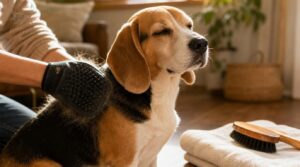
Keeping up with weekly brushing makes Beagle shedding much easier to manage. Aim for one to two short sessions per week — that’s your sweet spot for regular brushing without overdoing it.
Here’s a simple weekly routine to follow:
- Brush Timing – Pick a calm moment, not after exercise
- Tool Rotation – Alternate a rubber curry mitt and boar-bristle brush
- Pressure Control – Use light, steady strokes to avoid skin irritation
- Skin Check – Scan for redness or flaking as you go
- Stress-free Sessions – Keep it short, positive, and consistent
Daily Peak-season Brushing
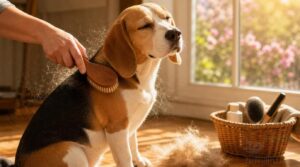
When spring arrives, that weekly routine isn’t quite enough anymore. Peak seasonal shedding calls for daily brushing—ideally a Morning Brushing Ritual to establish a consistent rhythm your Beagle learns to expect.
| Daily Goal | Why It Helps |
|---|---|
| 5–10 min brush frequency | Controls loose undercoat before it spreads |
| Positive Reinforcement after sessions | Builds trust and reduces resistance |
Fur Collection Tracking helps identify when shedding peaks, allowing adjustments to your dog’s coat brushing techniques. Tool Sanitization between sessions is critical—dirty brushes re-deposit debris. Consistent brushing during seasonal shedding maintains a calmer home environment and keeps your Beagle comfortable.
Brush Neck to Tail
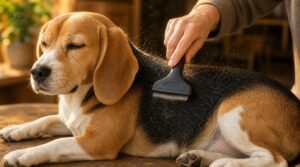
Once you’ve got that daily rhythm down, technique matters just as much as frequency. Follow these dog coat brushing techniques in order:
- Neck Start Line — begin here, brushing with the direction of hair growth
- Shoulder Flow Direction — angle your soft brush toward the back
- Back Body Coverage — use overlapping rows for full coverage
- Hip Hinge Shift — shorten strokes near the rear
- Tail Base Sweep — finish gently outward
This keeps beagle shedding controlled and your deshedding tool working efficiently.
Rubber Mitts and Bristles
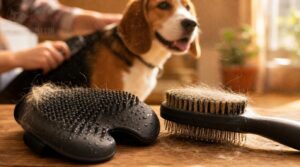
Once your brushing strokes flow from neck to tail, the right tool makes all the difference. A rubber curry mitt is ideal for Beagle shedding and short fur. Its Water‑Resistant Surface works wet or dry, while the Massage Benefits enhance circulation.
Choose a Dual‑Side Design featuring a soft rubber brush on one side and a rubber brush with large bristles on the other, offering flexible bristle density.
Easy Cleaning is a standout advantage—simply rinse and go.
Undercoat Tools for Shedding
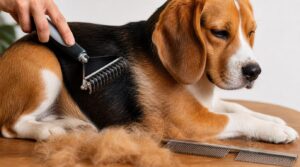
A good deshedding brush reaches the undercoat layer where most loose fur hides—something a rubber grooming mitt cannot achieve. For effective undercoat management, prioritize tools with these features:
- Rake Tooth Design: 12–24 curved prongs that glide through dense fur
- Double-Sided Comb: Wide teeth plus fine teeth for multi-purpose finishing
- Ergonomic Handgrips: Reduces wrist strain during longer sessions
The FURminator’s de-shedding blade mechanics lift loose hair cleanly without cutting the topcoat. Proper tool maintenance—cleaning tools after every use—keeps the teeth sharp and safe.
Bathing Short-Coated Beagles Properly
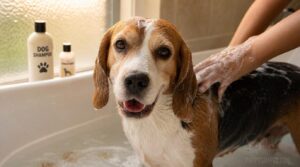
Bathing your beagle isn’t complicated, but doing it right makes a real difference for their coat and skin.
A few simple habits — the right shampoo, a light conditioner, and a gentle drying routine — can cut down on shedding and keep your dog comfortable. Here’s what works.
Bathe Every Three Weeks
Every three weeks is the sweet spot for bathing your beagle. This frequency maintains coat cleanliness without stripping natural oils that protect their skin. Adjust timing as needed—for instance, bathe immediately if your dog rolls in mud.
| Situation | Recommended Action |
|---|---|
| Normal activity | Bathe every 3 weeks |
| Visibly dirty or smelly | Bathe earlier than scheduled |
| Peak shedding season | Seasonal bath frequency increases slightly |
| Over-bathed skin | Extend interval, monitor for dryness |
Thorough rinsing is critical to avoid shampoo residue risks, particularly in the dense undercoat. For floppy-eared breeds, ear moisture management is vital—keep water out of the ear canal during baths.
Use Oatmeal Dog Shampoo
Oatmeal shampoo is one of the smartest choices for beagle’s shedding management. Unlike dog shampoo vs. human shampoo comparisons, where human formulas strip natural oils, oatmeal shampoo nourishes your dog’s skin barrier and delivers real itch relief. Look for fragrance-free options for sensitive skin.
Here’s why it works:
- Colloidal oatmeal improves moisture retention and reduces dry, brittle hair.
- Gentle conditioning boost leaves the coat softer and easier to brush.
- Fragrance-free formulas protect dog coat health without triggering reactions.
Add Light Conditioner
After shampooing, a light conditioner does quite, effective work. Think of it as a shedding ease aid — it softens guard hairs, helps detangle loose fur, and makes your next brush-out noticeably easier.
Conditioner Application Timing matters: apply it to mid-lengths for mid-length moisture, leave it in for one to three minutes, then rinse clean.
| What It Does | Why It Helps |
|---|---|
| Reduces static and roughness | Smoother coat, easier brushing |
| Lightweight oil benefits absorption | No greasy residue on short coats |
| Fragrance-free formula option | Safer for sensitive Beagle skin |
Choose a fragrance-free formula with lightweight oils to support dogs’ coat health without clogging follicles — a small step that pays off during regular grooming.
Low-heat Drying Method
After rinsing, a low-heat dryer is your best friend for managing Beagle shedding. High heat dries out the coat and skin, so keep temperatures gentle — below what feels hot on your wrist. Brush during drying to pull loose fur before it hits your furniture.
This simple step improves coat condition, aids in grooming frequency, and leaves your Beagle’s coat noticeably smoother.
Avoid Harsh Grooming Tools
Harsh tools can do more harm than good on a Beagle’s sensitive skin. Slicker brushes with stiff steel teeth risk brush burn, so swap them out for gentler options — a soft-bristled baby brush, rubber curry mitt, or silicone brushing gloves.
Opt for smooth clippers and stainless steel tools with rounded edges as safer choices. Maintain a consistent tool cleaning routine to prevent skin irritation between sessions.
Reduce Excessive Beagle Shedding

Sometimes good grooming isn’t quite enough, and the real fix starts from the inside out. What your Beagle eats, how hydrated they are, and what’s happening beneath their coat all play a bigger role in shedding than most people realize.
For beagles, shedding is an inside job — diet, hydration, and skin health matter more than grooming alone
Here are the key areas worth looking at to help bring excessive shedding under control.
Improve Coat Nutrition
What your beagle eats shows up directly in their coat. A high-quality diet built on Protein Quality and Zinc Copper Balance provides essential support for strong hair follicles.
Three nutrients worth prioritizing are:
- Vitamin A Boost for healthy skin cell turnover
- Antioxidant Protection to shield skin fats from damage
- Adequate Hydration to prevent dry, brittle shedding
Balanced dog food ensures all three requirements are met.
Add Omega-3 Support
Good nutrition lays the foundation, but omega-3 fish oil takes coat health a step further.
Daily omega-3 supplementation — specifically EPA and DHA from marine sources — reduces skin inflammation and can noticeably cut shedding volume within six weeks.
| Omega-3 Source | Key Benefit |
|---|---|
| Fish oil (EPA/DHA) | Reduces inflammation, aids skin moisture |
| Flaxseed/chia (ALA) | Plant-based option, less direct coat impact |
| Quality supplements | Consistent, concentrated omega-3 dosage |
| Fatty fish (salmon, sardines) | Natural whole-food marine source |
Choose a quality supplement label listing EPA and DHA amounts specifically — that’s your reliability indicator.
Prevent Dry Skin
Omega-3s work best when your beagle’s skin isn’t already parched. Dry skin breaks the coat from the root, making beagle shedding worse than it needs to be.
- Use lukewarm water baths — hot water strips natural oils fast
- Apply post-bath moisturizing with a light conditioner while skin is still damp
- Choose gentle cleansers — fragrance-free, oatmeal-based formulas only
- Run a humidifier for indoor humidity control during dry winter months
- Prioritize adequate hydration — fresh water available all day, every day
Watch for Bald Patches
Not all shedding is just shedding. Sometimes, smooth skin or thinning hair can signal deeper issues—such as thyroid disorders, skin conditions, or stress-related hair loss in dogs.
| Red Flag Signals | What to Watch |
|---|---|
| Patch location patterns | Round bald spots on back or neck |
| Scalp sensations | Redness, crusting, or itching near patches |
If a beagle’s coat health changes rapidly, call your vet.
Check Allergies and Parasites
Allergies and parasites can quietly drive excessive shedding from the inside out. Conditions like Flea Allergy Dermatitis, Mange Infestation, and Ear Yeast Infection trigger dog skin irritation, rapidly worsening coat health.
Environmental allergens—such as pollen and dust mites—cause allergic dermatitis, while intestinal parasites compromise overall body condition. These hidden factors exacerbate shedding and skin issues.
Regular dog dander removal, consistent skin health checks, and prompt veterinary consultation are critical to preventing these culprits from escalating. Proactive care ensures long-term coat and skin wellness.
Frequently Asked Questions (FAQs)
Can spaying or neutering affect beagle shedding?
Yes, it can — but not dramatically. Post‑surgery coat changes and recovery stress hair loss may cause temporary excess shedding. Weight gain’s impact on skin health also matters.
Thyroid screening advice applies if hormonal shedding shifts persist unusually long.
How does aging change a beagles coat?
As your beagle gets older, grey hair appears first on the muzzle, coat thinning follows, dry skin increases, and hair regrowth slows.
Watch for health flag signs like sudden bald patches.
Do beagles shed more after giving birth?
After giving birth, your beagle will likely shed more than usual. The hormonal shedding surge tied to postpartum changes is normal.
But watch for patchy spots or skin irritation, which deserve a quick vet check.
Is beagle shedding hereditary across different bloodlines?
Shedding in beagles runs in families. Genetic Shedding Variation and Bloodline Shedding Patterns mean some lineages shed more heavily than others.
Inherited Coat Density from selective breeding and dog breeding standards shapes your beagle’s coat from day one.
Conclusion
Funny how the dog that looks easiest to maintain ends up teaching you the most about consistency. Beagle’s short coat shedding isn’t a problem to solve once and forget—it’s something you manage week after week, season after season.
But when you understand the double coat, stay on top of brushing, feed for skin health, and catch warning signs early, you’re not fighting your Beagle’s biology anymore. You’re working with it.
- https://www.beaglepro.com/beagle-shedding
- https://www.fitwarm.com/blogs/news/do-beagles-shed-the-comprehensive-guide-to-beagle-shedding?srsltid=AfmBOorR-Y0KU1r2ZEDfCTt13u8whyMzYQx2GgBQmA_DmlPtEGsA-8lD
- https://www.groomers-online.com/how-to-groom-a-beagle-i442?srsltid=AfmBOoqVAGboDG7uD9yP9AtTYhRlV0NcuPd-lXwDeVTBZqDAXvseY0pT
- https://www.riverviewgrooming.com/post/how-to-master-beagle-shedding-season-with-these-at-home-grooming-essentials
- https://www.waggel.co.uk/blog/post/do-beagles-shed