This site is supported by our readers. We may earn a commission, at no cost to you, if you purchase through links.
Every spring, your dog becomes a walking lint roller—fur on the couch, fur in your coffee, fur you’ll still find in July. It’s not a health crisis. It’s biology running exactly on schedule.
Seasonal coat changes in dogs are driven primarily by daylight length, not temperature, which surprises most owners who blame the weather. As days grow longer, hormonal shifts signal the body to shed winter insulation and rebuild.
Understanding what’s actually happening beneath all that fur helps you groom smarter, spot warning signs early, and stop fighting a process that’s doing its job.
Table Of Contents
Key Takeaways
- Your dog sheds because of shifting daylight, not temperature — the eyes detect longer days and trigger hormones that release the winter coat.
- Double-coated breeds like Huskies shed in dramatic waves because their densely packed follicles all let go at once, while single-coated dogs shed gradually year‑round.
- Good nutrition — especially protein, omega‑3s, and zinc — directly shapes how strong and healthy your dog’s coat grows back after each shed.
- Bald patches, persistent itching, or uneven hair loss aren’t normal shedding — they can signal parasites, allergies, or hormonal issues that need a vet’s attention.
What Are Seasonal Coat Changes?
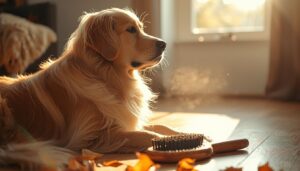
Every dog owner has noticed it — clumps of fur on the couch, extra hair on your clothes, and a brush that fills up faster than usual.
If you’re wondering whether you’re brushing enough (or too little), this guide on how often you should brush your dog breaks it down by breed and coat type.
Seasonal coat changes are a normal part of your dog’s biology, but understanding what’s actually happening makes it much easier to manage.
Here’s what you need to know.
How Dogs Adapt Their Coats Through The Year
Your dog’s coat isn’t just fur — it’s a finely tuned system. Through seasonal coat changes, their circadian rhythm and thermoregulatory hormones quietly signal follicles to adjust undercoat growth rate based on photoperiod or shifting day length.
When light spectrum influence shortens days, seasonal metabolic shifts kick in, building a dense double coat undercoat for temperature regulation before winter fully arrives.
Understanding photoperiod driven shedding cycles helps owners anticipate coat changes.
Why Spring and Fall Shedding Often Increases
Spring and fall shedding spikes because of photoperiod-driven coat changes — your dog’s follicle renewal cycle responding to shifting daylight, not temperature. Here’s what’s actually happening:
- Exogen phase activation pushes old hair out.
- Thyroid hormone modulation speeds the reset.
- Undercoat density reset replaces the full insulating layer.
- Cortisol stress impact can increase hair loss during transitions.
That’s why brushes fill up fast those months.
Normal Seasonal Shedding Versus Excessive Hair Loss
Knowing the difference between seasonal shedding and excessive shedding can save you a lot of worry. Normal shedding spreads evenly across the coat — your dog still looks full and comfortable.
A simple Pull Test Evaluation tells you a lot: loose hairs lift easily, and Hair Regrowth Timing stays on track.
Watch for Skin Integrity Signs like redness or bald patches — those point to coat health problems worth checking.
How Long Seasonal Coat Changes Usually Last
Most seasonal shedding cycles run about three to eight weeks. Spring shedding span generally kicks off around March, while autumn coat buildup begins around September.
Northern breeds like Huskies may stretch closer to six weeks.
Indoor year‑round shedding blurs these windows — artificial light disrupts the light‑driven timeline, softening the photoperiod signal.
Climate‑influenced length varies too; colder regions often push the shedding cycle longer.
How Daylight Affects Dog Shedding

Most people assume temperature is what tells a dog’s body to grow or shed its coat — but that’s not quite right. The real driver is daylight, and the way it shifts throughout the year sets off a chain of hormonal changes that control your dog’s entire coat cycle.
It’s not the cold that tells your dog to shed — it’s the light
Here’s what’s actually happening beneath all that fur.
Photoperiod as The Main Shedding Trigger
Your dog’s coat doesn’t follow the thermometer — follows the clock. Through retinal light detection, your dog’s eyes track daily light and dark hours, feeding signals into a circadian hormone rhythm that drives photoperiod-driven coat changes.
Latitude daylight variation matters too: dogs in northern climates experience bigger light swings, triggering sharper seasonal coat change than dogs near the equator.
Photoperiod, not temperature, runs the schedule.
Melatonin and Prolactin Changes in Coat Cycles
Two tiny hormones run the whole show. As days lengthen, the melatonin signaling cascade slows — your dog’s pineal gland produces less melatonin, triggering a light-driven hormonal shift that raises prolactin levels.
This prolactin seasonal rhythm signals follicles to release the winter coat.
The pituitary hormone interplay and hormonal feedback loop within this circadian rhythm is what drives hormonal regulation of canine fur through each photoperiod shift.
Why Indoor Lighting Can Affect Shedding Patterns
Your home’s lighting matters more than you might think. Artificial light — especially cool, blue-toned bulbs left on into the evening — extends your dog’s perceived "day," disrupting melatonin production and throwing off photoperiod-driven coat changes.
Indoor dogs often shed in smaller, irregular waves instead of clear seasonal peaks.
Evening Light Duration, switching to Warm Light benefits your circadian rhythm awareness, and preserving a true Darkness Gap help restore more predictable shedding patterns.
Temperature Versus Daylight in Seasonal Coat Changes
Daylight is the primary signal — temperature plays a supporting role. Think of it as a hierarchy: photoperiod-driven coat changes set the schedule, while temperature thresholds fine-tune the response.
Cold snaps can accelerate undercoat growth, but daylight still leads. Latitude influence matters too — sharper day-length shifts trigger stronger shedding cycles.
Even microclimate impact creates a seasonal timing lag, meaning urban dogs may shed weeks differently than rural ones.
Single Coats Versus Double Coats
Not all dogs are built the same regarding their coats, and that difference matters a lot during shedding season.
Whether your dog has a single coat or a double coat shapes how much fur you’ll find on your couch — and how you should care for it.
what you need to know about how each coat type works.
How Single-coated Dogs Shed Seasonally
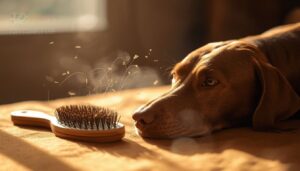
Single-coated breeds don’t do dramatic "coat blowouts" — their hair follicle renewal runs as a steadier, more even process year-round. That said, hormone shifts triggered by changing day length still influence seasonal coat density, even without a thick undercoat underneath.
Breed genetics influence how noticeable this is, but for most single-coated breeds, seasonal shedding is gradual and temperature-independent.
Regular brushing keeps coat health on track.
How Double-coated Dogs Grow and Lose Undercoat
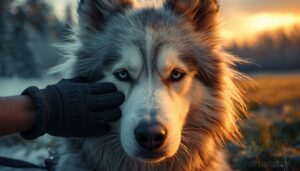
precise hormonal regulation timing system — follicle activation cycles kick in as daylight shifts, not temperature. Photoperiod-driven coat changes signal the undercoat to grow denser in winter, then release in spring.
Undercoat density genetics determine how dramatically this happens.
Avoid clipping; clipping impact recovery can take months.
Regular brushing with an undercoat rake facilitates seasonal undercoat renewal effectively.
Guard Hairs and Undercoat Functions
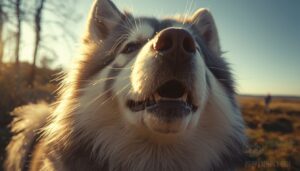
Guard hairs and the undercoat each play a distinct role — think of them as a two-person team.
- Water Repellency & UV Shielding: Guard hairs form a physical barrier that deflects rain and filters UV exposure before it reaches your dog’s skin.
- Dirt Filtration: They trap debris on the surface, keeping the undercoat cleaner between grooming sessions.
- Thermal Insulation: The soft undercoat beneath traps air pockets close to the skin — that’s what drives thermal insulation mechanisms in canine coats.
- Air Ventilation: Together, both layers support airflow, preventing overheating while maintaining undercoat density.
Why Double-coated Breeds Shed More Heavily
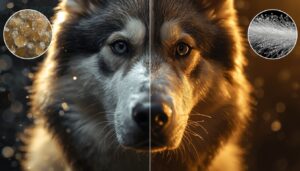
That two-layer system explains everything about why your Husky leaves a fur blanket on the couch each spring.
| Follicle Synchrony | Double-Coated Breeds | Single-Coated Breeds |
|---|---|---|
| Mass simultaneous shedding | Gradual, steady release | |
| Cold-Adaptation Genes | Amplified undercoat growth | Minimal seasonal response |
| Genetic Coat Density | High — dense undercoat | Low — one uniform layer |
| Undercoat Airflow Tradeoff | Dramatic seasonal drop | Subtle year-round shift |
| Thermal Insulation Mechanics | Layered air-trapping system | Single-layer regulation |
Heavy shedders like Huskies and German Shepherds carry cold-adaptation genes that pack follicles tightly — when seasonal shedding hits, those follicles release all at once.
Breed-Specific Seasonal Shedding Patterns

Not every dog sheds the same way, and breed plays a huge role in what you’ll find on your couch each spring. Some dogs blow their coats dramatically twice a year, while others barely seem to notice the seasons changing at all.
Here’s how different breeds commonly handle seasonal shedding.
Heavy Seasonal Shedders Like Huskies and Shepherds
If you own a Husky or German Shepherd, you already know what coat-blowing means — that twice-yearly avalanche of fur that defies every vacuum. These heavy shedders carry double coat genetics engineered for serious thermal insulation, and when daylight shifts in spring and fall, seasonal shedding kicks into overdrive.
Here’s what to expect:
- Clumps of undercoat releasing for weeks at a time
- Furniture covered despite daily undercoat rake sessions
- Fur volume forecasting becoming part of your seasonal routine
- Omega-3 support helping minimize inflammation during high seasonal energy demands
Moderate Shedders Like Labradors and Golden Retrievers
Not every dog turns your home into a fur storm twice a year.
Moderate shedders like Labradors and Golden Retrievers land somewhere in between — their double coat and undercoat density mean shedding volume peaks in spring and fall, but it’s manageable.
Regular brushing two to three times weekly, omega-3 fatty acids for skin support, and consistent grooming frequency keep seasonal shedding under control.
Low-shedding Breeds and Subtle Coat Changes
Low-shedding breeds like Poodles, Bichons, and wire-coated terriers don’t shed the same way heavy shedders do — but subtle seasonal coat changes still happen.
Curly coat maintenance and wire coat stripping are key to managing loose hair that stays trapped instead of falling out.
Don’t confuse low-shedding genetics with hypoallergenic — it’s a common misconception. Seasonal curl variation can tighten or loosen, so your grooming tools for coat maintenance still matter year-round.
How Climate and Lifestyle Affect Breed Shedding
Where your dog lives shapes how — and when — they shed. Indoor dogs exposed to seasonal HVAC use and stable indoor temperature fluctuations often shed more evenly year‑round, losing those sharp spring and fall peaks.
Air humidity levels affect how loose hair clings to the coat.
Owner activity patterns and stress‑induced shedding can also blur natural photoperiod cues that normally drive breed‑specific shedding and climate adaptation.
Grooming During Seasonal Coat Changes
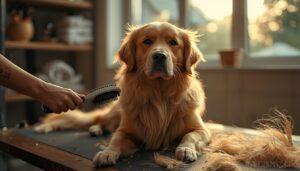
Shedding season doesn’t have to mean fur on everything you own. The right grooming routine makes a real difference — both for your dog’s coat health and your sanity.
Here’s what actually helps during peak shedding periods.
Best Brushes for Loose Undercoat Removal
Not all brushes are created equal — and choosing the right one makes shedding season far less overwhelming.
Here are three reliable options based on coat type and skin sensitivity:
- Deshedding tool (like the FURminator) — stainless steel construction offers excellent tool material comparison value; ergonomic handle design reduces fatigue.
- Slicker brush — fine wires with brush cleaning mechanisms built in; great for medium coats.
- Rubber curry brush — gentle silicone option ideal for sensitive skin; easy rinse-clean.
Regular brushing with the right tool dramatically cuts loose undercoat accumulation.
Daily Brushing During Peak Shedding Seasons
During peak shedding seasons, brushing frequency really matters. Aim for daily sessions using your deshedding tool, working calmly from head to tail.
Gentle handling keeps your dog comfortable and cooperative.
After each session, do a quick post-brush inspection — check the skin for redness or irritation.
Keep your seasonal tool maintenance consistent: clean the brush mid-session so it keeps pulling loose fur effectively.
Bathing to Loosen Dead Hair Safely
A bath does more than clean — it loosens dead hair that regular brushing and deshedding tools can’t fully reach. Aim for a bath every 4–6 weeks using gentle lathering with a deshedding shampoo.
Apply it with even shampoo application across the coat, rinse thoroughly, then finish with a low-heat dryer.
Always handle the dry coat first — brush before bathing, never after.
Preventing Mats, Tangles, and Skin Irritation
Mats don’t just look messy — they pull at your dog’s skin and quietly cause real irritation.
During shedding season, regular brushing with a slicker brush keeps matted fur from forming. Focus your Regular Mat Inspections behind the ears, armpits, and collar line.
Use Detangling Spray on stubborn knots, start at the ends, and work inward.
Friction Reducing Collars, proper Towel Drying, and Skin Hydration Techniques round out your defense.
When Professional Deshedding Helps
Sometimes home brushing just can’t reach the dense underlayer — that’s where professional deshedding services shine. A groomer using Deep Undercoat Extraction techniques removes what your slicker brush misses entirely.
Book with Seasonal Timing Strategy in mind:
- Schedule during peak spring or fall coat blow
- Request Allergy-Safe Tools if your dog has sensitive skin
- Use Stress-Free Grooming approaches for anxious dogs
- Repeat every 6–8 weeks for heavy shedders
Nutrition for Healthy Seasonal Coats

What your dog eats directly affects how well their coat responds to seasonal changes. The right nutrients can mean the difference between a dull, brittle coat and one that’s healthy and resilient year-round.
Here’s what to focus on regarding feeding for coat health.
Protein and Amino Acids for Strong Hair
Every strand of your dog’s coat is built from keratin — and keratin needs protein to form. Amino acids like cysteine and methionine create the structural bonds that keep hair strong and resilient.
Animal protein sources deliver the right amino acid ratios your dog can’t produce alone. Consistent protein intake matters most during shedding season, when follicles are actively rebuilding new coat.
Omega-3 Fatty Acids for Skin Support
Protein builds the hair shaft — but omega-3 fatty acids protect the skin underneath it. EPA and DHA, found in fish oil sources, work through anti-inflammatory pathways to calm redness and reduce irritation. They also support skin moisture retention by strengthening the skin barrier.
Whether you choose oral supplement benefits or topical omega-3 products, consistent daily intake makes the real difference for skin and coat care.
Zinc and Essential Nutrients for Coat Quality
Omega-3s set the stage, but zinc takes the next step — supporting keratin synthesis so each hair shaft actually grows strong. Think of trace mineral synergy as your dog’s behind-the-scenes crew.
Dietary zinc sources like meat and eggs aid zinc absorption enhancers naturally found in whole-food diets. Paired with vitamin E and protein, zinc helps regulate fur density regulation through every seasonal shift.
Hydration and Skin Barrier Health
What your dog drinks matters more than most people realize. Good hydration keeps the skin’s natural moisture retention in balance, while essential fatty acids and omega-3s support Barrier Lipid Support from the inside out.
Without enough natural oils and NMF Boost, TEWL Reduction suffers — meaning the skin loses water faster, turns dry and tight, and Ceramide Enrichment becomes harder to maintain naturally.
Signs of Nutrition-related Coat Problems
When nutrition falls short, your dog’s coat is usually the first place to show it. Watch for these warning signs:
- Dull Color Shift — fur looks faded or develops a reddish tinge
- Brittle Hair — strands break easily instead of flexing
- Dry Flaky Skin — scaling worsens after brushing
- Patchy Hair Loss and Slow Regrowth — thinning areas don’t bounce back
Boosting essential fatty acids — especially omega-3 and omega-6 — is often the first step in nutritional support for healthy coat restoration.
When Coat Changes Signal Problems

Seasonal shedding is normal, but sometimes your dog’s coat is trying to tell you something more. Not every bald patch or itchy spot comes down to the time of year.
Here’s what to watch for when the coat changes go beyond typical seasonal patterns.
Bald Patches or Uneven Hair Loss
Not all bald patches mean your dog is just "blowing coat." Seasonal shedding happens in waves, but if you’re noticing sharply edged spots — especially repeating in the same areas — that points toward something else.
Alopecia areata patterns, mange mite infestation, flea allergy dermatitis, Cushing’s disease signs, hypothyroidism, or self-induced hair pulling can all cause uneven hair loss.
Normal seasonal loss doesn’t leave open skin or worsen daily.
Excessive Itching, Redness, or Flaky Skin
Itching that won’t quit isn’t seasonal shedding — it’s your dog’s skin asking for help. Several conditions look similar but need different care:
- Flea Allergy Dermatitis and Allergic Dermatitis cause hot spots, redness, and intense scratching
- Yeast Overgrowth or Ringworm Infection produce flaky, scaly patches with a musty odor
- Dry Skin Barrier breakdown and Contact Irritant Reactions strip natural oils, causing dry skin and irritation
Parasites, Allergies, and Skin Infections
Scratching that outlasts shedding season is often a red flag. Parasites, allergies, and skin infections can all mimic normal coat changes — but they won’t resolve on their own.
| Condition | Key Signs |
|---|---|
| Flea Allergy Dermatitis / Mange Infestation | Hot spots, flea dirt, patchy hair loss |
| Ringworm Outbreaks / Yeast Overgrowth | Scaly patches, musty odor, broken hairs |
| Bacterial Hot Spots / Allergic Dermatitis | Red, weeping sores, intense itching |
Hormonal Issues Affecting Coat Cycles
Sometimes, hormones are the hidden culprit behind coat problems that won’t quit. When the endocrine system misfires, it overrides normal photoperiod-driven coat changes entirely.
- Thyroid Imbalance / Hypothyroidism — Slows metabolism, dulling the coat and causing diffuse thyroid hormone-related hair thinning across the trunk and tail.
- Cortisol Alopecia / Cushing’s Disease — Chronically elevated cortisol disrupts melatonin signaling, producing a woolly, uneven coat that worsens over time.
- Spay Coat Changes, Gonadal Alopecia & Adrenal Hormone Imbalance — Gonadotropin shifts after spaying or adrenal sex-hormone irregularities can trigger symmetric truncal hair loss unrelated to season.
When to Contact a Veterinarian
Hormonal imbalances don’t always announce themselves loudly — sometimes a worsening coat is your dog’s quiet way of asking for help. Here’s when to stop waiting and call your vet:
| Warning Sign | What You Might See | Action |
|---|---|---|
| Sudden Hair Loss | Bald patches appearing within days | Vet consultation promptly |
| Persistent Skin Redness | Inflamed, hot, or scabby skin | Schedule evaluation |
| Bleeding Skin Lesions | Open sores or oozing patches | Contact vet urgently |
| Fever with Shedding | Hot ears, shaking, weakness | Seek immediate care |
| Unexplained Weight Loss | Thinning body alongside coat loss | Rule out hypothyroidism or Cushing’s disease |
These health signs of coat problems — especially health issues linked to excessive shedding — deserve professional eyes, not a wait-and-see approach.
Frequently Asked Questions (FAQs)
What three meats should dogs avoid?
This question falls outside the scope of this article. For dog nutrition guidance, please consult your veterinarian directly.
Can stress trigger abnormal shedding in dogs?
Yes, stress can trigger abnormal shedding. Cortisol impact on hormonal regulation of canine fur disrupts growth cycles fast.
Acute stress shedding tied to environmental triggers like fireworks may need veterinary assessment if behavioral signs or excessive shedding persist.
Do spayed or neutered dogs shed differently?
Like swapping out a light bulb, spaying or neutering changes the hormonal wiring — but your dog’s seasonal shedding rhythm mostly stays intact, still driven by photoperiod cues and breed coat type.
Can supplements speed up seasonal coat transitions?
Supplements can’t skip the shedding phase, but they support your dog’s skin through it. Omega-3s, zinc, and protein for keratin production help coat quality — not timing.
Does age affect how heavily dogs shed?
Age does affect shedding.
Senior follicle efficiency declines, age-related hormone shifts disrupt thyroid hormone regulation, and geriatric coat thinning can make elderly dog shedding look heavier — even when less hair is actually falling out.
Are certain coat colors linked to shedding intensity?
Coat color doesn’t drive shedding intensity. That’s a color perception bias at work. Genetics, coat type, and your dog’s shedding cycle matter far more than pigment or melanin influence.
Conclusion
What if all that fur on your couch is actually proof that your dog’s body is working exactly as it should? Seasonal coat changes in dogs follow a rhythm older than any breed standard—driven by daylight, guided by hormones, and built for survival.
Your job isn’t to stop it. It’s to support it: brush consistently, feed well, and watch for warning signs.
Know the difference between biology and a problem, and shedding season becomes manageable.
- https://www.scenthound.com/dogblog/how-your-dogs-coat-changes-with-the-season?rq=summer
- https://www.roundwoodvets.co.uk/single-post/seasonal-shedding-in-dogs
- https://www.embracepetinsurance.com/waterbowl/article/dogs-and-seasonal-shedding
- https://editiondog.com/blogs/paws-the-word/understanding-canine-fur
- https://www.dreamdogz.ie/a-deeper-look-into-the-coats-role-in-the-dogs-thermal-regulation/