This site is supported by our readers. We may earn a commission, at no cost to you, if you purchase through links.
Most dogs tolerate nail trims better when tool fits both the nail and the handler’s hand—yet most owners grab whichever clipper came with the grooming kit without a second thought. That mismatch explains a lot of the splintered nails, quick-nicks, and anxious dogs that end up in the clinic.
Guillotine and scissor dog nail clippers work through fundamentally different cutting mechanics, and those differences aren’t cosmetic. Nail thickness, breed size, and how steady your grip is under pressure all determine which design gives you a clean, controlled cut rather than a crush.
Knowing tool belongs in your hand changes the whole experience—for both of you.
Table Of Contents
Key Takeaways
- Guillotine clippers work best for small breeds with thin nails because the fixed slot guides each cut cleanly, while scissor-style clippers handle the thicker, harder nails of medium and large dogs far more effectively.
- Blade sharpness isn’t optional — dull blades crush the nail instead of slicing it, which is the most common cause of splitting, quick exposure, and post‑trim bleeding.
- Matching your clipper to nail thickness matters more than brand or price; using the wrong tool for the job raises injury risk for your dog regardless of your technique.
- For dark or thick nails, trimming in 1/16‑inch increments and inspecting the cut surface after each pass is the most reliable way to avoid nicking the quick.
Guillotine Vs. Scissor Clippers
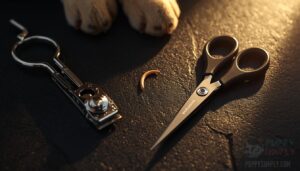
Choosing between guillotine and scissor clippers isn’t just a personal preference — it actually affects how comfortable and safe the trim is for your dog. Both tools work differently in your hand and against the nail, and those differences matter more than most people expect.
Understanding which dog nail clipper type suits your dog’s nail size and your skill level can make the difference between a stressful session and a smooth one.
Here’s what sets them apart.
Key Design Differences
Though they both trim the same nail, guillotine clippers and scissor-style clippers couldn’t work more differently. Guillotine clippers use a fixed horizontal blade that slides through a slot, while scissor-style clippers pivot two stainless steel blades together like shears.
Slot width options and blade angle variability set them apart immediately.
| Feature | Guillotine Clippers | Scissor-Style Clippers |
|---|---|---|
| Blade Angle Variability | Fixed | Adjustable |
| Grip Texture Design | Ergonomic non-slip grips | Ergonomic non-slip grips |
| Material Coating | Stainless steel blades | Stainless steel blades |
| Pivot Tension Settings | None | Adjustable pivot |
| LED Light Option | Rare | Sometimes included |
How Each Tool Grips The Nail
The grip is where these tools truly split. A guillotine’s nail slot geometry locks your dog’s nail into a fixed channel—slot snugness controls everything. Scissor-style clippers depend on blade contact and clamp force consistency between the two stainless steel blades.
| Grip Factor | Guillotine | Scissor-Style |
|---|---|---|
| Nail slot geometry | Fixed channel | Open jaw |
| Clamp force consistency | Spring-driven | Hand-pressure driven |
| Precision cuts on nail thickness | Best for thin nails | Handles thicker nails |
| Handle surface texture | Ergonomic nonslip grips | Ergonomic nonslip grips |
Main Pros and Cons of Each Style
Each style has real trade-offs worth knowing. Guillotine clippers win on blade replacement cost and tool portability — replacement blades run just a few dollars. The user learning curve is gentler too, since the fixed slot guides your cut.
Scissor-style clippers offer precision cuts on thicker nails, but demand more hand pressure, raising the risk of nail crushing or nail splitting if blades dull.
| Factor | Guillotine Clippers | Scissor-Style Clippers |
|---|---|---|
| Cost Efficiency | Lower blade costs | Higher upfront investment |
| Noise Level | Minimal click | Slightly louder snap |
| Nail Splitting Risk | Higher if misaligned | Lower with sharp blades |
Quick Comparison of Results
Results come down to technique and nail type.
Guillotine nail clippers deliver fast, single‑motion cuts with solid result consistency on thin nails, though nail fragmentation risk rises if alignment slips.
Scissor-style clippers offer better trim accuracy and edge cleanliness on harder nails.
You can simplify such product comparisons using Asana’s side‑by‑side visualization tool.
| Result Factor | Guillotine | Scissor-Style |
|---|---|---|
| Bleeding Risk | Moderate | Lower with gradual cuts |
| Nail Fragmentation | Higher if misaligned | Lower with sharp blades |
How Each Clipper Works
Knowing how your clippers actually work makes every trim safer and more predictable. The mechanics behind guillotine and scissor-style tools are different in ways that genuinely affect your results.
Here’s a closer look at how each one operates.
Guillotine Blade and Slot Mechanism
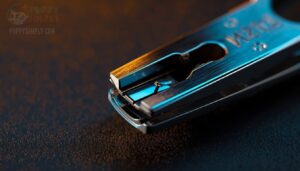
The guillotine clipper works through a precise blade-and-slot system — your dog’s nail sits inside the aperture, and squeezing the handle drives a hardened steel blade downward along machined guide rails.
Slot Tolerance Precision keeps lateral drift to fractions of a millimeter, while Guide Rail Lubrication prevents binding.
Blade Retention System pins everything securely, and the Blade Counterweight Design ensures rapid, clean descent every time.
Together, these features help prevent the crushing or pinching that makes trims stressful—especially if you’re still refining your dog nail trimming technique.
Scissor-style Pivot and Cutting Action
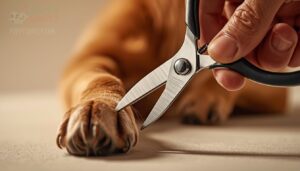
Unlike the guillotine’s straight-down action, scissor-style clippers convert your squeeze into shearing force through a central pivot — and that mechanical elegance gives you real control. The Spring Return Mechanism keeps blades ready between cuts, while Pivot Tension Adjustment lets you fine-tune responsiveness. Lever Ratio Optimization, Ride Line Smoothness, and Blade Edge Geometry all work together to deliver precision cutting through stainless steel blades.
- Pivot Tension Adjustment — balances blade feel against cutting responsiveness
- Spring Return Mechanism — automatically reopens blades for consistent, repeatable cuts
- Ride Line Smoothness — reduces friction so your hand doesn’t fatigue mid-session
- Lever Ratio Optimization — multiplies force so thick nails don’t require excessive hand strength
Ergonomic non‑slip grips reinforce control and accuracy throughout.
Why Blade Alignment Matters
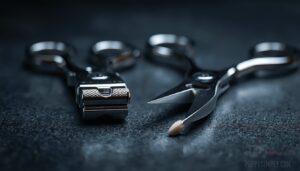
Blade alignment might seem like a small detail, but it shapes everything about your trim. When stainless steel blades meet the nail at the correct angle, you get consistent kerf size, reduced nail splitting, and accurate nail shaping with every pass.
Proper alignment also minimizes vibration, extends blade life, and enables precision cutting — making your ergonomic design and safety guard features actually work as intended.
How Cut Direction Affects Nail Shape
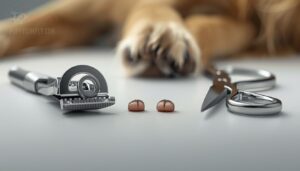
The direction you cut matters more than most people realize.
straight-across cut gives you a flatter, uniform edge — great for snag prevention strategies on active dogs. Angling slightly toward the tip creates a curved tip that mimics natural nail shape.
Scissor-style clippers handle bevel shaping techniques well, while guillotine clippers excel at consistent angle vs. straight cuts, reducing nail splitting and nail crushing risk.
Which Dogs Fit Each Clippler
Not every clipper works for every dog, and size is just the starting point. Nail thickness, breed, and even age all play a role in which tool will actually do the job well.
Here’s how to match the right clipper to your dog.
Best Choice for Small Breeds
For small dogs and toy breeds, guillotine nail clippers are usually your best option.
Their compact, travel-friendly size makes one-hand operation simple, and minimal finger pressure is all you need for a clean cut.
Low noise keeps sensitive dogs calm, and the nail slot gives you a clear nail view so you’re always cutting in the right spot.
Best Choice for Medium and Large Dogs
Medium and large dogs come with thicker, harder nails that demand real blade strength and handle leverage behind every cut. Scissor-style clippers are generally the better fit here — their pivot action lets you apply controlled pressure without crushing the nail, which keeps nail splitting prevention front and center.
Tool weight matters too, since a heavier, well-balanced clipper reduces hand strain during longer sessions with bigger breeds.
Thick Nails Versus Thin Nails
Nail thickness and nail hardness aren’t just cosmetic details — they’re health indicators that reflect keratin density, nutritional impact, and even growth rate. Here’s what that means for your clipper choice:
- Thick nails need scissor-style clippers for controlled pressure.
- Thin nails clip cleanly with guillotine clippers.
- Mismatched tools raise injury risk from crushing or splitting.
Puppy Nail Trimming Needs
Puppies need patience as much as they need the right tool. Their nails are soft and thin, so scissor-style clippers offer gentle, controlled cuts, while guillotine clippers work well for quick trims on smaller breeds.
Short frequent sessions with positive reinforcement build trust fast. Always keep styptic powder nearby — puppy nail growth is rapid, and even careful clipping can nick the quick.
| Factor | Guillotine Clippers | Scissor-Style Clippers |
|---|---|---|
| Nail Thickness | Thin, soft nails | Thin to medium nails |
| Session Style | Short frequent sessions | Short frequent sessions |
| Desensitization Techniques | Gradual pressure increase | Gradual pressure increase |
| Quick Risk | Moderate with misalignment | Lower with controlled angle |
| Positive Reinforcement | Essential after each trim | Essential after each trim |
Toy Breed Nail Considerations
Toy breeds bring their own set of challenges. Their nails curve sharply, so Nail Curvature Control matters more than speed. Scissor-Style Clippers give you the angle adjustment needed for those tiny curved tips, while Guillotine Clippers work well when the nail fits cleanly into the slot.
Key factors to keep in mind:
- Paw Pad Sensitivity means lighter pressure and careful Desensitization Steps before each session
- Ergonomic Handle Size and Tool Weight Balance reduce hand fatigue on small, fidgety paws
- Trimming in small slivers keeps you safely away from the quick
Safety Tips to Avoid The Quick
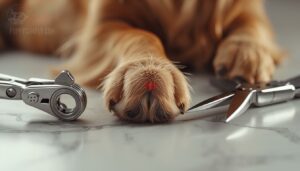
Cutting the quick is the part most dog owners dread, and honestly, it’s easier to avoid than you’d think.
simple habits make all the difference between a clean trim and a stressful one.
Here’s what you need to know before you pick up those clippers.
Spotting The Quick in Light Nails
Light-colored nails are genuinely your best advantage when trimming. Through the nail plate’s natural transparency, you can spot the pinkish quick zone before you ever get close to it.
Hold a flashlight under the nail for better quick visibility — the LED light on some scissor clippers does this automatically. Using the incremental trim method, shave about 1 mm at a time, stopping when that rosy glow appears.
Trimming Dark Nails in Small Steps
Dark nails don’t have to feel like guesswork. Using incremental trimming, take off just 1/16 to 1/8 inch at a time — with either guillotine or scissor-style clippers — and inspect the cut surface after every slice.
Follow these three steps:
- Apply backlit illumination from beneath the nail
- Cut at an upward angle, using layered cutting strokes
- Finish with post-cut filing to smooth edges
Why Guards Can Limit Precision
Safety guards sound reassuring, but they can quietly work against you.
Guard Alignment Issues arise when Guard Material Deformation shifts the blade’s position, making a precision cut harder to land. Guard Visibility Obstruction blocks your view of the nail tip — a real Guard Slip Risk with Guillotine or ScissorStyle Clippers. Guard Wear Effects compound over time, turning a helpful feature into a liability.
When to Use Styptic Powder
Even with the best nail trimming safety habits, post‑trim bleeding happens. Keep styptic powder within arm’s reach whenever you’re using Guillotine and Scissor Clippers.
For quick bleeding control, apply it immediately using this application technique:
- Press a small pinch directly onto the bleeding spot
- Hold firm pressure for 5–10 seconds
- Repeat once if needed for emergency clotting
- Begin bleeding assessment — if it continues, veterinary escalation is necessary
Common Quick-cut Mistakes
quick-cut mistakes come down to three things: rushing, dull blades, and poor alignment. Blunt blade edges crush rather than slice, forcing you to apply inconsistent pressure that splits the nail.
Rushed trimming skips the small-sliver approach entirely, which is where overcutting the quick happens most.
A misaligned cut ignores the nail’s natural curve, making nail quick bleeding almost inevitable.
Slow down, use sharp blades, and always follow the nail’s angle.
Cutting Speed, Comfort, and Control
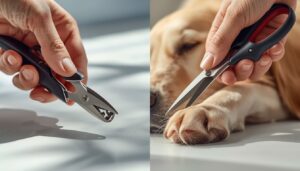
Once you’ve got the safety side handled, the next question is how each clipper actually feels to use in real time.
Speed, grip comfort, and how much control you have over the cut all play a bigger role than most people expect.
Here’s what to know before you pick up either tool.
Speed Differences Between Tool Types
Guillotine clippers win on raw snap duration — a single blade through the slot takes roughly 0.4 to 0.6 seconds per nail.
Scissor-style clippers require more blade travel and user rhythm to complete each cut, usually 0.6 to 1.2 seconds.
When comparing guillotine and scissor clippers for speed, guillotine tools reset faster between nails, making multi-nail sessions noticeably quicker overall.
Hand Fatigue and Grip Comfort
Extended sessions reveal a clear comfort gap between the two clipper styles.
Guillotine clippers with ergonomic nonslip grips and low-profile handle shapes distribute pressure evenly, reducing hand fatigue noticeably. Rubberized vibration pads and textured grip patterns absorb repetitive impact, while adjustable spring force lets you match resistance to your hand strength.
Scissor-style models with weighted blade housing and ergonomic plastic-coated grips also perform well, but require slightly more sustained squeeze effort.
Precision for Rounded Nail Tips
Rounded nail tips demand more than just a sharp blade—they need the right blade curvature and angle adjustment working together. Scissor-style trimmers for thick nails excel here, letting you follow the nail’s arc with micro trimming passes.
Guillotine-style trimmers for precision cuts work well on thinner nails, though fixed slots limit your angle. Consistent grip pressure and ergonomic nonslip grips keep each precision cut steady and controlled.
Clean Cuts Versus Nail Crushing
Blade sharpness is where clean cuts versus crushing nails truly separate these tools. Dull blades on either style increase crushing risk and nail bed trauma.
Here’s what determines cut integrity:
- Edge Smoothness improves with sharp stainless-steel blades
- Pressure Distribution stays lower with guillotine-style trimmers for precision cuts
- Scissor-style trimmers for thick nails reduce splitting on dense nails
- Alignment prevents lateral crushing
- Maintenance preserves both styles equally
Stress Levels for Dogs During Trimming
Beyond the cut itself, how your dog behaves during the session matters just as much.
Watch for Body Language Signals like pinned ears, tucked tail, or excessive panting — these are Early Pause Cues signaling dog nail anxiety.
Sound Sensitivity and Restraint Pressure both escalate stress fast.
Environmental Predictability, desensitization training, and counterconditioning help when handling anxious dogs during grooming.
Price, Durability, and Brand Features
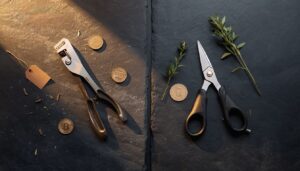
Price and durability matter just as much as how a clipper actually cuts.
The good news is that both guillotine and scissor styles cover a wide range of budgets without sacrificing quality. Here’s what to look for across the key features.
Typical Price Range for Each Style
Budget tiers for dog nail clippers are pretty straightforward.
Guillotine clippers run $5–$12 for basic models, $15–$25 mid-tier pricing, and $30–$45 for premium options. Scissor styles start around $7–$15, climbing to $35–$60 professional-grade.
Regional variance matters too — online vs store prices differ noticeably, with online retailers often undercutting pet supply chains by several dollars.
Budget considerations shouldn’t compromise blade quality.
Blade Material and Sharpness Retention
The steel in your clipper does more work than you’d think. Stainless steel blades resist corrosion and hold a reliable Stainless Steel Edge through dozens of sessions.
Carbon Steel Hardness cuts sharper initially but demands more upkeep. Premium tools use Powder Metallurgy Durability and Heat Treatment Impact for lasting precision.
Look for:
- Durable stainless steel blades with quality hinge construction
- Surface Coating Benefits that reduce friction and slow dulling
- Blade replaceable designs extending your tool’s lifespan considerably
Handle Grip and Ergonomic Design
A good grip matters more than most people realize.
Ergonomic nonslip grips with Rubber Textured Coating keep your fingers steady even when hands are damp.
Silicone Overlays and Vibration Damping inserts reduce fatigue during longer sessions.
Anatomical Contours align naturally with your finger pads, while Adjustable Grip Size options accommodate different hand sizes — making ergonomic nail clippers genuinely practical for consistent, controlled trimming.
Safety Guards, Lights, and Files
Some clippers pack in more than just a blade. Safety guard compatibility varies by brand, so check that your model’s guard fits snugly — Guard Maintenance Alerts on certain designs signal when it’s loose.
LED Illumination Benefits are real: integrated safety lights with solid Light Battery Life help you spot the quick clearly.
Integrated Filing Grit, usually 100–180, smooths jagged edges after each cut.
Replaceable Parts and Long-term Value
Think of your clipper as a long-term investment. Models with replaceable stainless steel blades dramatically lower your cost per use over time — hardened steel retains sharpness two to three times longer than basic blades.
Check compatibility charts before buying replacement parts, and review warranty coverage details carefully.
Maintenance kit benefits include extra springs and blades.
Budget-friendly picks like Resco even offer lifetime warranty protection.
Choosing Your Best Dog Nail Clipper
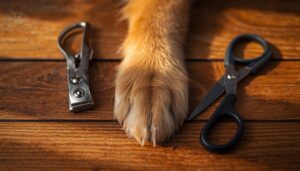
Picking the right nail clipper comes down to a few practical factors that are easy to work through once you know what to look for. Your dog’s nail thickness, size, and personality all play a role in which tool will actually work for you.
Here’s what what to think about before you buy.
Match The Clipper to Nail Thickness
Nail thickness is the deciding factor most owners overlook. Fingernails average 0.5–0.7 mm; dog toenails often reach 1.2 mm—a real difference in cut force required.
Dog toenails can be twice as thick as human fingernails — and most owners never account for that
Match your tool accordingly:
- Slot Width Matching – Guillotine-style trimmers need a slot that fits the nail snugly without binding.
- Adjustable Slot Design – Some guillotine models let you resize the aperture for thin nail handling.
- Blade Gap Adjustment – Scissor-style clippers allow screw‑tightening for precise jaw clearance requirements.
- Thick Nail Handling – Scissor-style clippers provide the leverage guillotine designs can’t match on dense nails.
- Nail Thickness Scale – Use the pink quick line on light nails to gauge depth before each cut.
Choose Based on Dog Size and Temperament
Your dog’s size and temperament together tell you everything. Small breed comfort calls for lightweight guillotine clippers—less bulk, less stress.
For medium-large dogs, scissor-style offers the large dog grip and jaw strength that thicker nails need.
Anxious dog handling works better with slow, steady scissor cuts, while playful dog speed favors guillotine tools.
Senior dog ease? Go scissor-style—low effort, gentle control.
When a Grinder May Work Better
clippers just aren’t the right fit. For anxious dog comfort, dremel-style nail grinders offer low noise operation that feels far less startling than a sudden snap.
Rotary nail grinder benefits include:
- Gradual nail reduction through incremental shaping passes
- Heat buildup control with short, steady strokes
- Smooth, rounded tips without crushing
alternatives to clippers work especially well on thick or dark nails.
DIY Grooming Versus Professional Trimming
Home trims let you manage Time Management on your schedule, and the Tool Investment pays off quickly compared to recurring grooming fees — that’s a real Cost Comparison win.
With practice, Skill Development builds Owner Confidence fast.
Choosing the Right Dog Nail Clipper suited to your dog’s nail type, whether you’re weighing differences between guillotine and scissor style clippers or exploring Ergonomic Features of Modern Dog Nail Clippers, makes DIY dog nail care for owners genuinely straightforward.
Final Buyer Checklist for Dog Owners
Before you buy, run through this quick checklist:
- Match the clipper to nail thickness — Guillotine-style trimmers for precision cuts on thin nails, scissor-style trimmers for thick nails on larger breeds.
- Check Ergonomic Features of modern dog nail clippers and portability weight for travel use.
- Review Warranty Length, cleaning simplicity, and any included accessory kit.
- Compare User Feedback against your budget considerations when buying dog nail trimmers.
Frequently Asked Questions (FAQs)
How often should I trim my dogs nails?
Most owners are surprised to learn nails need trimming every three to four weeks.
Active dogs wear them down naturally, but indoor dogs don’t—so check weekly and adjust your dog nail care schedule accordingly.
Can I use human nail clippers on dogs?
Human clippers aren’t built for dog nails. Blade thickness and size incompatibility mean they crush rather than cut cleanly, increasing quick visibility issues and anxiety. Always use pet-specific tools.
How do I desensitize my dog to clipping?
Start in a calm environment. Let your dog sniff the clippers, then pair each paw handling step with treats. Gradual exposure and short sessions turn clipping anxiety into confidence fast.
What grooming tools complement nail clippers?
Nail files smooth rough edges after clipping, while nail brushes clear away debris. Keep sanitizing wipes nearby for clean tools, and always have Kwik Stop Styptic Powder within reach.
How do I know if my dogs nails are too long?
If your dog’s nails click on hard floors, that’s your first sign they’re too long. Visible overgrowth, paw angle changes, and gait changes confirm it’s time to trim.
Conclusion
What’s the real difference between guillotine and scissor dog nail clippers if you never match the tool to the dog in front of you?
Size, nail thickness, and your own grip under pressure—these aren’t minor details. They’re what separate a clean cut from a crushed nail and a calm dog from a stressed one.
Pick the clipper that fits both the nail and your hand, and every trim becomes something neither of you has to dread.
- https://courses.drbuzby.com/
- https://pawsafe.com/blogs/dog-healthcare/how-often-to-trim-dog-nails
- https://groomroom.ae/blog/how-often-should-i-trim-my-dogs-nails-grooming-tips-by-breed/
- https://www.petscare.com/en-au/news/faq/how-to-tell-if-dogs-nails-need-trimming
- https://devildogpetco.com/blogs/the-devil-dog-blog/dog-nails