This site is supported by our readers. We may earn a commission, at no cost to you, if you purchase through links.

Every spring, Golden Retriever owners brace for what can only be described as a fur blizzard—clumps of undercoat collecting on furniture, clothes, and somehow inside the refrigerator. It feels chaotic, but there’s real biological logic behind it.
Double-coated breeds carry two structurally distinct layers of hair, each with its own growth cycle, purpose, and shedding pattern.
Most owners manage the mess without ever understanding the mechanism. Once you do, double coat shedding goes from frustrating mystery to predictable process—one you can actually work with.
Table Of Contents
- Key Takeaways
- What Double Coat Shedding Means
- How a Double Coat Works
- Why Double-Coated Dogs Shed Heavily
- When Seasonal Coat Blowing Happens
- What Affects Shedding Intensity
- Normal Shedding Vs Hair Loss
- Best Brushes for Double Coats
- Brushing and Bathing Schedule
- Can You Reduce Shedding?
- Why Shaving Double Coats Backfires
- Frequently Asked Questions (FAQs)
- How to reduce shedding in double-coated dogs?
- What is the hardest breed of dog to groom?
- Does spaying or neutering affect shedding patterns?
- Can stress trigger abnormal coat blowing episodes?
- Do double-coated dogs shed more after pregnancy?
- Which supplements specifically reduce excessive undercoat shedding?
- Does swimming or frequent water exposure worsen shedding?
- Conclusion
Key Takeaways
- Your dog’s double coat sheds in two distinct layers—guard hairs stay put while the dense undercoat releases in waves, triggered by daylight shifts and hormonal cues, not just temperature.
- Shaving a double-coated dog doesn’t reduce shedding—it destroys the coat’s insulation, exposes skin to sunburn, and causes uneven, texture-altered regrowth that can take nearly a year to recover.
- Indoor living disrupts the natural shedding cycle by removing light and temperature cues, turning two clean seasonal blows into a year-round steady drip of fur.
- Diet, omega-3 fatty acids, and consistent brushing with the right tools—undercoat rake, slicker brush, deshedding tool—are the most effective ways to manage shedding volume without fighting your dog’s biology.
What Double Coat Shedding Means
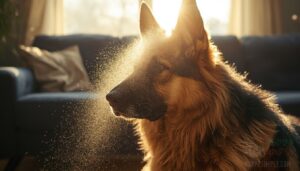
If you own a German Shepherd, you already know the fur is everywhere — on the couch, your clothes, your coffee. But understanding why that happens makes it a lot easier to manage.
It’s just part of life with this breed — but knowing why German Shepherds shed so much helps you stay one step ahead of the fur.
Here’s what you need to know about how a double coat actually works and sheds.
Guard Hairs Vs Undercoat
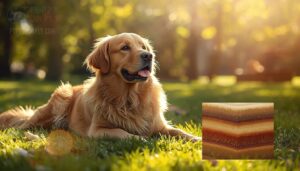
Think of your dog’s coat as a two-layer system — each part doing a different job.
- Guard hairs provide durability and repel water, dirt, and UV rays
- The undercoat delivers warmth by trapping air close to the skin
- Guard hair durability keeps the outer shell tough through every season
- Undercoat warmth fades naturally during warm months — that’s the seasonal length shift
- Shaving creates skin exposure risk and alters regrowth texture permanently
Guard hairs also provide moisture barrier protection, shielding skin from dampness.
Why Double Coats Shed Differently
Double coats shed the way they do because two layers follow completely separate rules. Guard hairs cycle slowly. The undercoat turns over fast — especially when environmental cue like shifting daylight or temperature triggers hormonal influence that signals follicles to release.
| Factor | Effect on Shedding |
|---|---|
| Seasonal Light Cycle | Triggers undercoat release timing |
| Hormonal Influence | Accelerates follicle turnover |
| Coat Layer Interaction | Guard hairs stay; undercoat sheds first |
| Metabolic Rate | Affects how quickly new coat grows |
| Environmental Cue Response | Initiates coat blow in double-coated breeds |
Continuous Shedding Vs Seasonal Shedding
Not all shedding follows the same clock. Outdoor dogs respond to photoperiod influence and hormonal regulation that sync follicle synchrony across the coat — producing dramatic seasonal shedding cycles in German Shepherds. Indoor dogs, softened by indoor climate effects, often shed in a steadier drip year-round.
Here’s what drives each pattern:
- Photoperiod shifts trigger synchronized undercoat release
- Hormonal regulation controls follicle timing
- Indoor temps blur shedding season peaks
- Nutrition impact shapes overall hair cycle speed
Why “blowing Coat” Happens
"Blowing coat" isn’t random — it’s your dog’s body hitting a temperature threshold and flipping an insulation switch.
A seasonal hormonal shift, partly driven by melatonin regulation and changing daylight, tells follicles to release the old undercoat all at once. That synchronized dump is what produces those dramatic tufts.
The spring coat blow and fall coat blow each follow this undercoat shedding cycle, driven by airflow dynamics and seasonal demand.
How a Double Coat Works
Your dog’s coat isn’t just fur — it’s actually a finely tuned system with two distinct layers, each doing a specific job. Understanding how those layers work together explains a lot about why your German Shepherd sheds the way it does.
Here’s what each part of that double coat is actually doing.
Outer Coat Protection From Weather and Dirt

Your dog’s outer coat is basically a built-in raincoat. Those stiff guard hairs create a weather-resistant top layer that manages water shedding, UV shielding, and wind barrier duties all at once.
Dirt repulsion happens naturally too — surface oil retention keeps grime on the hair shaft, not the skin. The protective outer guard hair takes the hit so your dog doesn’t have to.
Undercoat Insulation in Cold Weather

Think of the undercoat as your dog’s personal thermal layer. Those fine, dense hairs create an air pocket loft close to the skin — trapping warm air and slowing heat loss.
That’s the heat retention mechanism working quietly underneath. The wind barrier effect from guard hairs keeps that insulation loft maintenance intact, so cold weather protection stays reliable as long as the undercoat remains largely undisturbed.
How The Coat Helps in Warm Weather
When summer arrives, the double coat doesn’t work against your dog — it shifts roles entirely.
Shedding the dense undercoat improves airflow enhancement near the skin, letting heat dissipate instead of building up. UV guard hairs stay in place, blocking direct sun exposure.
Meanwhile, moisture evaporation becomes easier through the thinned layer. Ventilation mechanics improve naturally as the summer coat adjustment completes.
Natural Temperature Regulation Explained
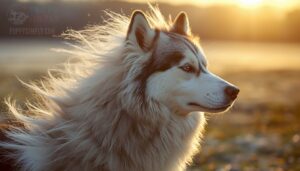
Your dog’s body runs a surprisingly complex thermostat. The hypothalamus setpoint triggers automatic responses — vasodilation response pushes warm blood toward the skin in heat, while shivering heat production kicks in when temperatures drop.
The double coat amplifies all of this:
- Thermal insulation in dogs traps warmth in cold climates
- Heat dissipation in double-coated breeds improves through seasonal undercoat thinning
- Behavioral heat strategies, like shade-seeking, work alongside coat function
Brown fat thermogenesis adds another quiet layer of cold-weather protection.
Why Double-Coated Dogs Shed Heavily
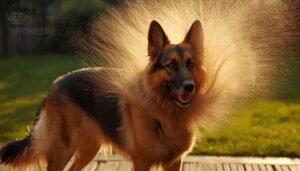
If it feels like your German Shepherd sheds enough fur to knit a second dog, you’re not imagining it. There’s real biology behind why double-coated breeds shed so much more than others.
The right tools matter too—dog grooming clippers designed for thick double coats can make a real difference in managing all that fur without damaging the undercoat.
A few key factors drive that volume, and understanding them makes everything else click.
The Hair Growth, Rest, and Shedding Cycle
Every hair on your dog’s body follows the same four-step cycle: growth (anagen), phase (catagen), rest (telogen), and release (exogen). Understanding the double coat shedding cycle starts here.
Anagen duration determines how long fur grows before catagen phase slows things down. Then telogen timing kicks in — a quiet pause before exogen release finally pushes old hair out. Follicle phase balance keeps this constant.
Why Undercoat Releases in Large Amounts
The undercoat doesn’t just drift out hair by hair — it releases in waves. Seasonal photoperiod shifts and thermoregulatory signals tell follicles to let go simultaneously, which is why your floor looks like a fur storm overnight.
Hormonal triggers tied to changing daylight accelerate this process.
Skin barrier integrity and metabolic rate also influence how cleanly that undercoat releases, making some coat blows far heavier than others.
Breed Genetics and Shedding Volume
Genetics load the dice on how much fur ends up on your couch. The SD locus — shaped by MC5R variants and RSPO2 furnishings — directly controls shedding volume through additive gene interaction. One MC5R copy shifts output moderately; two push it higher.
Breed mix impact matters too: mixed lines inherit unpredictable combinations, so breed-specific shedding patterns don’t always hold.
Your dog’s coat is written in its DNA.
Why Some Dogs Seem to Shed Year-round
Your dog’s DNA sets the volume — but your home keeps it running.
Indoor life quietly disrupts seasonal shedding cycles in German Shepherds. Stable temperatures, artificial lighting schedules, and air conditioning remove the daylight and temperature cues that normally trigger coat changes. The result? Year-round shedding instead of two clean bursts.
These factors quietly sustain continuous hair loss:
- Indoor Humidity drops with forced-air heating, drying skin and loosening more fur
- Lighting Schedules from artificial light blur seasonal coat change timing
- Parasite Infestations from fleas or mites drive scratching that accelerates abnormal shedding
- Diet gaps — especially low fatty acids — weaken the understanding German Shepherd double coat structure relies on
- Owner Anxiety from routine disruptions can raise stress hormones, pushing more hairs into the shedding phase
When Seasonal Coat Blowing Happens
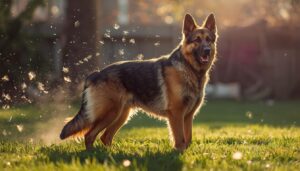
Your German Shepherd doesn’t shed randomly — there’s a real pattern behind it. Twice a year, the coat goes into full release mode, and knowing when that happens makes all the difference.
Here’s what drives each phase.
Spring Coat Blow Explained
Spring arrives, and suddenly your German Shepherd looks like a walking snowstorm of fur. This is the seasonal coat blow — and it’s triggered by photoperiod influence, not just warmth. Longer days signal an endocrine shift that releases the dense winter undercoat in clumps.
| What Happens | What You’ll Notice |
|---|---|
| Undercoat density change | Wool-like tufts everywhere |
| Environmental cue timing | Shedding begins mid-spring |
Start deshedding tools now.
Fall Coat Blow Explained
Fall works differently than spring. As days shorten, melatonin levels rise — that seasonal hormone shift tells your dog’s body to drop the summer coat and build something denser for winter. Once temperatures hit a certain threshold, the undercoat removal kicks into full gear.
Watch for these fall shedding season signals:
- Dense clumps releasing from the undercoat
- Stress-related shedding layered on top of seasonal coat blow
- Furniture covered faster than usual
- Grooming strategies to manage heavy shedding becoming immediately necessary
How Long Heavy Shedding Lasts
Most owners are surprised by how long it actually runs. The typical blow period lasts three to four weeks at peak intensity — but the full heavy shedding duration, including the gradual taper, can stretch six to eight weeks.
Seasonal timing variance is real too. Understanding the double coat shedding cycle means accepting that spring shedding season and autumn shedding season rarely follow a clean calendar.
Why Indoor Dogs Shed Differently
If your dog lives mostly indoors, don’t expect shedding to follow a tidy spring-fall schedule. Artificial lighting and constant HVAC airflow disrupt seasonal light exposure and shedding timing, keeping the coat in a slow, steady release instead of one big blow.
Carpet fur buildup and static electricity on synthetic flooring make it look worse.
Indoor climate effect on shedding is real — and year-round.
What Affects Shedding Intensity
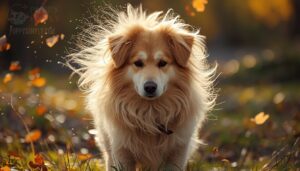
Not every dog sheds the same amount, even within the same breed. handful of factors quietly shape how heavy or light that shedding gets throughout the year.
actually driving the difference.
Climate and Seasonal Temperature Shifts
Climate quietly rewires your dog’s shedding calendar. Warmer winters mean reduced Winter Chill Reduction signals, while Spring Warmth Advancement triggers coat blows earlier than expected. Autumn Cooling Delay pushes fall shedding later.
Regional Temperature Divergence means coastal dogs shed differently than inland ones. Heat Wave Duration can stress the coat cycle further. The Impact of climate on dog shedding patterns is real — and it’s shifting.
- Earlier spring blows catching you off guard.
- Delayed fall shedding stretching into winter.
- heavy shed weeks mid-summer.
- Coastal dogs shedding more evenly year-round.
- sharper, compressed coat blows.
Daylight Exposure and Indoor Living
Light controls more than your mood — it shapes your dog’s shedding rhythm too. Seasonal light cycles act as biological cues, triggering coat blows.
But indoor living disrupts that signal. Window placement, surface reflectance, and blinds glare all affect how much natural light your dog actually receives.
Dogs with limited daylight exposure often shed more evenly year-round rather than in distinct seasonal waves.
Age, Hormones, and Overall Condition
Your dog’s age tells a story — and the coat often reveals it first. As dogs get older, several internal shifts quietly change how much fur ends up on your floor.
- Thyroid Influence — hypothyroidism slows follicle activity, making health conditions that affect shedding harder to spot.
- Sex Hormone Impact — declining hormones reduce coat density and resilience.
- Adrenal Stress Effects — unstable cortisol disrupts normal skin barrier function.
- Follicle Aging — older follicles exit rest phases slowly, widening the shedding window.
A low Body Condition Score compounds these hormonal changes. Understanding the double coat shedding cycle means recognizing when a dog’s health check for shedding is overdue.
Stress and Sudden Shedding Changes
Stress hits the coat harder than most people expect. When acute shock triggers — a move, illness, or sudden change — telogen effluvium shifts more follicles into rest at once.
You won’t see it immediately; shedding peaks weeks later. Stress hormone impact and inflammatory pathways can worsen itching and skin reactivity too.
If it doesn’t resolve, rule out thyroid problems, allergies, or other health conditions that affect shedding.
Normal Shedding Vs Hair Loss
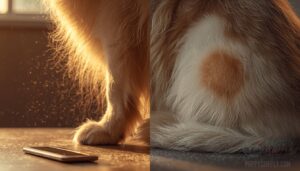
Not all shedding means something’s wrong — but some signs do deserve a second look. Knowing the difference can save you a lot of unnecessary worry or catch a real problem before it gets worse.
Here’s what to watch for.
Signs of Healthy Seasonal Shedding
Seasonal shedding looks a lot more predictable than owners often expect. Your dog keeps a steady appetite, normal energy, and normal skin tone — no redness, no scabs.
The intact coat may thin where you brush most, but even fur density returns after the blow. Mild itchiness from loose hairs is fine; it shouldn’t worsen or linger.
| Sign | Healthy Shedding | Concern |
|---|---|---|
| Skin | Normal tone, no sores | Red, flaky, or scabbed |
| Fur | Even loss across coat | Patches or bald spots |
| Behavior | Normal appetite and energy | Restless, scratching constantly |
Patchy Shedding and Bald Spots
Healthy shedding stays even.
Patchy hair loss — actual bald patches — is different.
Conditions like telogen effluvium, canine allergies, or thyroid disease in dogs can trigger uneven loss fast.
Alopecia areata creates defined round spots.
Traction alopecia follows repeated pressure points.
Scalp infection in dogs shows scaly, inflamed skin alongside patchy hair loss.
| Pattern | Likely Cause | Key Clue |
|---|---|---|
| Round bald patches | Alopecia areata | Clean-edged, unscarred skin |
| Scaly, broken hairs | Scalp infection | Inflamed follicles visible |
| Thinning along pressure zones | Traction alopecia | Matches contact points |
Itching, Redness, and Skin Irritation
Patchy spots raise one flag. Itching and redness raise another.
When your dog won’t stop scratching, skin irritation is usually driving it — inflammatory mediators from allergies, parasites, or bathing irritants trigger that response fast.
| Sign | Likely Trigger |
|---|---|
| Red, inflamed patches | Allergic contact reaction |
| Hot spots with oozing | Excessive scratching, friction chafing |
| Dry, flaky skin | Dry skin management needed |
When to Call Your Veterinarian
Some skin signs don’t wait. If your dog shows blue gums, sudden vomiting, seizure activity, or a urinary blockage alongside abnormal shedding, call your veterinarian immediately.
| Symptom | Possible Cause |
|---|---|
| Rapid hair loss with redness | Allergies or bacterial skin infections |
| Shedding spike with lethargy | Thyroid disorders or hormonal shifts |
| Persistent cough with coat changes | Systemic health issues that cause abnormal shedding |
Best Brushes for Double Coats
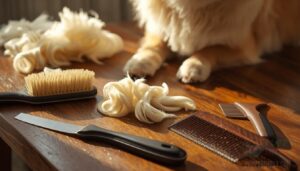
Not every brush works the same on a double coat — the wrong one just pushes fur around without pulling anything out. Picking the right tool makes a real difference in how much loose hair actually leaves your dog’s body.
Here’s what works and why.
Slicker Brushes for Loose Surface Fur
A slicker brush is your first move in any solid grooming routine. Its fine stainless steel pins — often Teflon coated for smooth glide — lift loose fur from your dog’s topcoat without disturbing the undercoat beneath.
Pin density optimization matters here: more contact points mean less skin pressure.
Look for an ergonomic handle design and a self-cleaning mechanism to keep sessions quick and consistent.
Undercoat Rakes for Dense Shedding
Once your slicker brush clears the surface, an undercoat rake does the real work. With stainless steel double-row teeth and a wide head, it reaches the dense underlayer, a surface tool simply can’t touch.
Look for these features in a quality rake:
- Pin spacing — closely set teeth filter out more loose fur per stroke
- Wide head — covers more ground on larger dogs
- Double-row teeth — lifts twice the undercoat per pass
- Ergonomic handle — reduces wrist strain during longer sessions
- Tapered pins — penetrate deeply without scratching skin
Work it into your grooming routine using slow, consistent strokes from neck to tail.
De-shedding Tools and Safe Use
De-shedding tools like the FURminator take things a step further than your slicker brush or undercoat rake.
The key is using Rounded Edge Guards to protect skin while working through dense fur.
Follow basic Tool Pressure Guidelines — light, controlled strokes only.
Pay attention to Sensitive Area Handling around the belly and armpits.
Finish with Post-Groom Drying, and practice solid Tool Cleaning Hygiene after every session.
When a High-velocity Dryer Helps
A high-velocity dryer isn’t just for drying — it’s one of the most effective undercoat removal techniques you can add to your dog coat maintenance routine. Targeted Airflow Penetration pushes deep into the coat, blasting out loose fur, your deshedding tool can’t always reach.
- Minimized Matting Risk — airflow separates clumped fur before it tightens
- Faster Grooming Turnaround — fewer passes, less time on the table
- Allergen Reduction Post-Bath — loose dander exits the coat, not your furniture
- Drying Temperature Control — most velocity dryers let you adjust heat safely
Brushing and Bathing Schedule
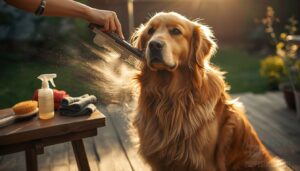
Grooming a double coat isn’t complicated, but timing matters more than most owners realize. Get the schedule right, and you’ll stay ahead of the shedding instead of chasing it.
Here’s what that looks like week to week.
Daily Brushing During Coat Blow
During coat blow, daily brushing isn’t optional — it’s your frontline defense. Work in sections using an undercoat rake, lifting fur in manageable zones rather than tackling the whole coat at once.
Always brush with a light grooming spray; lubricated brushing prevents friction and keeps your dog comfortable.
Pause for skin comfort checks as you go.
Consistent deshedding brushes and gentle tool pressure make the grooming schedule actually manageable.
Weekly Upkeep Outside Shedding Season
Between shedding seasons, 2–3 sessions weekly keep things manageable. Your grooming schedule doesn’t need to be intense — just consistent.
- Regular brushing with a slicker brush or undercoat rake removes loose surface fur before it covers your furniture
- Skin Moisture Checks during each session help you catch dryness or irritation early
- Home Fur Management stays easier when Tool Station Organization keeps everything in one accessible spot
Also weave in Ear Cleaning Routine and Paw Pad Trimming weekly.
How Often to Bathe a Double Coat
Bathing fits right alongside your brushing routine — but the timing matters. For most double coat breeds, every 6 to 8 weeks works well as a baseline for your proper bathing schedule.
Bathing interval guidelines stretch to 12 weeks for dogs that stay clean. Bathe more often for allergy control bathing, or bathing after swimming.
Overbathing strips oils, so skin oil preservation keeps grooming frequency balanced.
Drying Techniques That Remove Trapped Fur
Drying pulls just as much shed fur as brushing does — if you do it right.
Start with towel patting, blotting back and sides first rather than rubbing. Then run a low-heat dryer using steady airflow direction into the coat.
Brush while drying, section by section. Sectional drying lets a deshedding tool or undercoat rake lift released fur before it re-tangles and mats.
Can You Reduce Shedding?
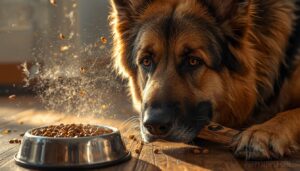
You can’t stop a German Shepherd from shedding — but you can make it a lot more manageable. The right habits, from what’s in the bowl to who’s holding the brush, actually make a real difference.
what works.
What Grooming Can Realistically Improve
Let’s be honest — you won’t stop shedding entirely, but smart grooming strategies to manage heavy shedding make a real difference.
Regular brushing and an undercoat rake pulls dead fur before it lands on your sofa. A deshedding tool during coat blow speeds up the process.
You also gain mat prevention, coat shine, odor control, skin health benefits, and even stress relief for your dog.
Diet Quality and Coat Condition
What you feed your dog shows up in their coat.
High-quality protein supplies the amino acids hair follicles need to stay productive. Essential fatty acids — omega-3 and omega-6 fatty acids — keep skin supple and shedding normal. A solid trace mineral mix, along with Vitamin A support, fills gaps that drain coat health.
Poor gut absorption quietly undoes even the best dog nutrition for coat.
Omega-3s, Hydration, and Skin Support
Fish oil does a lot of quiet work here. Omega-3 benefits go straight to the skin — EPA and DHA strengthen skin barrier lipids, which lock in moisture and reduce inflammation. That anti-inflammatory effect means less irritation and less reactive shedding.
Aim for 100–200 mg per 10 lb of body weight daily.
Pair fish oil supplementation with omega-3 and omega-6 fatty acids in food, and hydration support follows naturally.
Professional Grooming Vs DIY Care
Professional grooming brings something DIY approaches genuinely can’t replicate: appointment consistency, proper safety protocols, and tool sterilization between clients. Groomers spot early skin issues you’d likely miss at home.
That said, home grooming tools work well between visits if you’ve put in the skill training.
Think of professional deshedding services and treatments as the reset button — and your daily brushing as maintenance. Cost comparison aside, both matter.
Why Shaving Double Coats Backfires

Shaving a double-coated dog seems like a logical fix for shedding — but it’s likely to make things worse, not better. The coat is doing a lot more work than most people realize, and removing it disrupts that entire system.
what actually happens when you shave a double coat.
Loss of Insulation and Weather Protection
Shaving your double-coated dog strips away a system that took nature thousands of years to perfect. Those two layers work like structural insulation — the guard hairs block water intrusion pathways while the undercoat resists air leakage, bypass, and thermal bridging effects.
Shaving a double-coated dog dismantles thousands of years of natural insulation in a single grooming session
Remove them, and you eliminate your dog’s cold climate adaptation entirely. Condensation risks rise, weatherproofing degrades, and the coat’s core temperature regulation collapses.
Increased Sunburn and Overheating Risk
Without that coat, your dog’s skin faces direct UV exposure — and that’s a real problem. The double coat insulation benefits go beyond warmth; guard hairs actively block UV rays and support heat dissipation in double-coated breeds. Shave them off, and sunburn risk climbs fast.
Watch for these consequences:
- Skin barrier protection disappears, leaving raw skin vulnerable
- Thermal regulation breaks down, raising heatstroke prevention concerns
- Hydration strategies become critical as dehydration worsens heat strain
Uneven Regrowth and Texture Changes
When the coat grows back, don’t expect an even result. Follicle restart happens at different rates across the body, so you’ll notice patchy lengths and a shaft shape shift — new hairs often feel finer, sometimes frizzier.
Color shift is common too, with some patches appearing lighter or darker.
Matting clumping follows easily if brushing lapses.
Full undercoat regrowth timeline can stretch close to a year.
Safer Trimming Options for Heavy Coats
If you want less bulk without losing protection, there are smarter moves than partial shaving. Try thinning shears technique to reduce density while keeping guard hairs intact.
Blunt tip scissors work well near paws and ears. Know the guard comb limits — they snag on packed coats.
Deshedding tool use and undercoat rake sessions remove loose fur safely. When in doubt, professional grooming services protect double coat function best.
Frequently Asked Questions (FAQs)
How to reduce shedding in double-coated dogs?
You can’t stop shedding, but you can manage it.
Regular brushing with an undercoat rake, omega3 and omega6 fatty acids, a seasonal bathing routine with deshedding shampoo, and controlled indoor temperature all make a real difference.
What is the hardest breed of dog to groom?
Bergamasco Sheepdog tops the list. Komondor corded coat and Puli rope hair demand constant forming. Afghan Hound silk tangles fast. Cocker Spaniel matting around ears is relentless.
Does spaying or neutering affect shedding patterns?
Spaying or neutering can subtly shift shedding patterns through Sterilization Hormone Impact and Follicle Phase Alteration, but genetics still drive volume.
Post Surgery Shedding often reflects Recovery Stress Influence more than permanent Hormonal Cycle Shift.
Can stress trigger abnormal coat blowing episodes?
Yes. Stress triggers cortisol-induced shedding by pushing follicles into early resting phases. Anxiety-related itching and behavioral grooming disruption worsen visible fur loss beyond normal seasonal patterns.
Do double-coated dogs shed more after pregnancy?
Like a spring storm arriving early, postpartum shedding can feel sudden and intense.
Hormonal coat shift after whelping triggers a postpartum undercoat surge as your dog’s body resets — yes, double-coated dogs often shed more after pregnancy.
Which supplements specifically reduce excessive undercoat shedding?
Fish Oil Supplementation, Zinc Trace Minerals, Vitamin E Boost, MSM Hair Support, and Myo-Inositol Complex all target excessive undercoat shedding by strengthening the skin barrier and improving overall dog coat health from within.
Does swimming or frequent water exposure worsen shedding?
Swimming doesn’t directly trigger true shedding, but chlorine irritation and saltwater roughness dry out the skin, increasing breakage and post-swim grooming loss. Rinse your dog after every swim.
Conclusion
fur on your couch isn’t a problem—it’s proof that your dog’s coat is doing exactly what it evolved to do. Once double coat shedding explained becomes second nature to you, the seasonal blizzard shifts from chaos to clockwork.
You stop fighting biology and start working with it. The right brush, a consistent routine, and a little patience transform shedding season into something almost manageable. Almost.
Your vacuum, however, may never fully recover.
- https://www.akc.org/expert-advice/health/tips-for-grooming-german-shepherd/
- https://zoeta-dogsoul.com/health-wellbeing/dog-coat-science/
- https://dogdiscoveries.com/curiosity/discovering-6-functions-of-guard-hairs-in-dogs
- https://pupguide.net/what-are-guard-hairs-on-dogs/
- https://www.petdrugsonline.co.uk/pet-advice/ultimate-guide-to-dog-coat-types