This site is supported by our readers. We may earn a commission, at no cost to you, if you purchase through links.
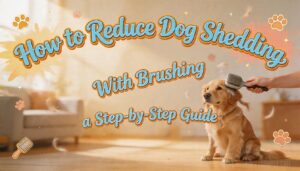
The average dog sheds between 50 and 100 hairs per hour—and that number climbs fast when brushing falls off the schedule. Most owners notice the fur on the couch before they notice the thinning on their dog’s coat, which means the real problem starts long before the vacuum comes out.
Brushing isn’t just about keeping your home cleaner; it actively pulls loose hair before it falls, distributes skin oils that strengthen each strand, and gives you an early look at anything unusual hiding under the coat.
The right brush, used on the right schedule, can cut visible shedding considerably within a few weeks.
Table Of Contents
- Key Takeaways
- Identify Your Dog’s Coat Type
- Choose The Right Brush
- Set Up a Calm Brushing Space
- Prep The Coat Before Brushing
- Brush in The Right Order
- Follow a Shedding Control Schedule
- Is It Shedding Season?
- Pair Baths With Brushing
- Support Coat Health From Within
- Top 3 Brushes to Try
- Frequently Asked Questions (FAQs)
- Conclusion
Key Takeaways
- Matching your brush to your dog’s coat type — rubber curry for short, slicker for long or curly, undercoat rake for double coats — cuts visible shedding far more effectively than any single all-purpose tool.
- Brushing against the grain first loosens trapped dead hair, then following the coat’s natural direction collects it cleanly, and keeping sessions to 5–10 minutes prevents skin irritation.
- Diet does half the work that brushing can’t: high-quality animal protein builds stronger hair follicles, and daily omega-3s reduce the skin inflammation that triggers excess shedding in the first place.
- Double-coated breeds like Huskies and German Shepherds need daily brushing during spring and fall blowouts — skipping sessions during peak shedding lets dense undercoat pack into mats that no brush can easily reverse.
Identify Your Dog’s Coat Type

Before you grab a brush, you need to know what kind of coat you’re actually dealing with. Not every dog sheds the same way, and the differences matter more than you might think.
If you’re curious whether your pup falls into a lower-maintenance category, medium-sized dogs that don’t shed much might surprise you with how different their grooming needs really are.
Here are the five main coat types and what each one means for your brushing routine.
Short-haired Coats and Steady Shedding
Short-haired breeds like Beagles shed steadily all year — not in one big wave, but in a constant, quiet stream. Those fine hairs turn up on your clothes, couch, and car before you notice them piling up. That’s why shedding control starts with knowing your coat type.
Brush your dog regularly with a rubber curry brush, and dog’s coat maintenance becomes genuinely manageable. Incorporating a daily brushing routine can substantially reduce shedding.
Medium-haired Coats and Weekly Buildup
Medium-haired breeds like Labrador Retrievers sit in an interesting middle ground — their coat looks manageable, but weekly buildup sneaks up fast. That fur, usually one to two inches long, traps loose hair underneath while looking clean on top. A midweek brush check catches this early.
- Focus feathered area care around ears and paws for ear paw debris buildup
- Use a slicker brush for coat density management and seasonal oil distribution
- Follow a brush selection guide for regular brushing of medium-haired breeds and shedding control
Long-haired Coats and Mat Risk
Long-haired breeds take mat risk to another level. Fine, silky strands create friction zones behind the ears, in the armpits, and around collars — areas where hidden tangles form close to the skin before you notice anything feels off.
Poor moisture management after baths or rain speeds this up fast. Static build makes it worse.
Regular brushing with a slicker brush is your best defense against skin irritation and matting.
Double-coated Breeds and Undercoat Blowouts
Double-coated breeds like Huskies, German Shepherds, and Samoyeds are a different challenge entirely. Their undercoat blowouts hit hard — usually spring and fall — releasing waves of dense, woolly fur all at once.
Watch for these Seasonal Shedding Indicators:
- Clumps releasing easily during brushing
- Visible tufts lifting from the coat
- Sudden increase in daily fur on furniture
An undercoat rake manages this best.
Curly or Wavy Coats That Trap Loose Hair
Curly and wavy coats are sneaky — loose hair doesn’t fall to your floor, it stays trapped inside the curl pattern. That’s Hair Retention Science in action.
Without Targeted Area Brushing, especially around ears, armpits, and the muzzle, those hidden strands twist into tight mats fast.
A slicker brush paired with Specialized Comb Use catches what you’d otherwise miss.
Choose The Right Brush
The brush you pick matters more than most people realize — use the wrong one and you’re just pushing hair around. Every coat type has a tool that actually works with it, not against it.
Here’s what you need to know before you start.
Rubber Curry Brushes for Short Coats
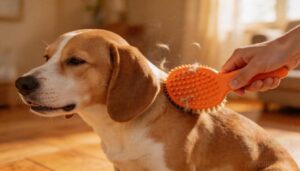
For short-haired breeds like Beagles or Boxers, a rubber curry comb is honestly one of the most underrated dog grooming tools out there. Its rubber tooth density is soft enough to deliver real skin massage benefits without scratching, and the grip comfort design keeps it steady in your hand.
Use it on wet or dry coats, and clean it regularly mid-session so it keeps pulling loose fur efficiently.
Undercoat Rakes for Double-coated Dogs
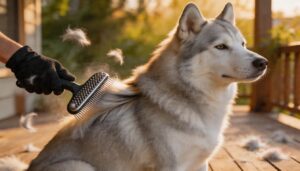
If your dog is a Husky, Malamute, or German Shepherd, an undercoat rake is the one deshedding tool worth investing in. It’s built specifically for double-coated breeds.
- Stainless steel pins with rounded tips reach the dense underlayer without scraping skin
- Tooth spacing varies by model — wider for heavy coats, narrower for finer undercoat removal
- Ergonomic grips with spring-mounted heads and non-slip grips keep pressure even throughout the session
Slicker Brushes for Long or Curly Coats
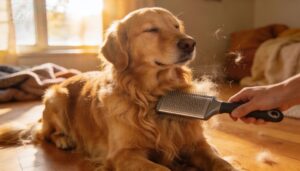
For long coats and curly coats, a slicker brush is your best friend. Fine wire pins with good pin flexibility glide through tangles without yanking.
Look for an ergonomic handle, a brush shape that curves with your dog’s body, and a self-cleaning mechanism to save time. Use light pressure and short strokes — proper brushing technique and pressure control make shedding reduction tips actually work.
Why The Wrong Brush Increases Shedding Mess
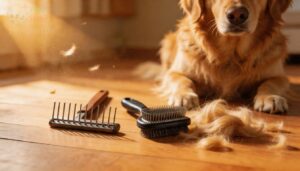
wrong brush is like mopping with a sponge — it just pushes the mess around. Poor tool-to-coat matching causes uneven pull, brush clogging, and hair scattering across your floors.
For double-coated breeds, skipping an undercoat rake leaves dead fur trapped below.
Slicker brushes on short coats? That’s a recipe for skin irritation and mat formation.
Choosing appropriate brushes for different coat types, with correct brush pressure, actually removes hair instead of redistributing it.
When to Use More Than One Brush
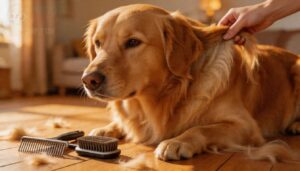
One brush rarely does the whole job — especially with double-coated breeds. Layered coat strategy means matching each tool to what that layer actually needs.
- Use an undercoat rake first to pull dense, dead undercoat
- Follow with slicker brushes to smooth the topcoat
- Time your tool change timing between passes, not at the end
- Run a comb verification step to catch hidden tangles
- Do a seasonal tool swap when blowout shedding peaks
Dual brush technique isn’t extra work — it’s smarter grooming.
Set Up a Calm Brushing Space
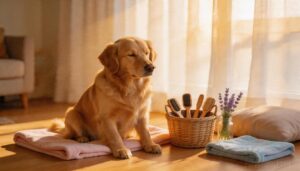
Before you brush a single strand of fur, the space you choose matters more than most people think. A calm, contained setup makes the whole session easier — for you and your dog.
Here’s what to think about before you get started.
Pick an Easy-to-clean Brushing Area
Where you brush matters almost as much as how you brush. Pick a spot with waterproof flooring or lay down slip-resistant mats with drainage-friendly design so fur and water stay contained.
Easy-wash materials like EVA foam tiles make cleanup simple — just wipe or shake them out.
portable cleanup setup keeps lint rollers and your vacuum within arm’s reach every session.
Brush Outdoors When Possible
Taking your session outside is one of the smartest moves for shedding control. Yard Surface Prep matters — a dry patio or driveway makes cleanup easy.
Outdoor Light Visibility helps you spot mats, ticks, and skin changes you’d miss indoors. Pick a calm, low-traffic spot for Noise Reduction, and choose a still day — Wind Management keeps loose fur from scattering everywhere.
Keep Treats Ready for Positive Reinforcement
Once you’ve found your outdoor spot, treats become your next best tool. Positive reinforcement in grooming turns brushing from a battle into a routine your dog actually looks forward to.
Before you brush your dog, do your pre-session treat prep:
- Clip a treat pouch to your waist for immediate reward delivery
- Stock it with low-calorie treats under 5 calories each
- Reserve an extra treat for especially calm moments
- Use variable reward timing once regular brushing feels familiar
Start When Your Dog is Relaxed
Treats are ready — now pick the right moment. Calm timing tips make a real difference here.
A dog that just finished a walk or settled after quiet play shows relaxed body cues: soft eyes, loose posture, easy breathing. That’s your window.
Gentle handling techniques land better when your dog isn’t already wired. Stress signal detection starts before you even pick up the brush.
Check The Coat Before You Begin
Before you pick up that undercoat rake, run your hands through the coat first — it tells you everything.
- Coat Texture Assessment: Feel for rough, sticky, or clumped sections signaling poor dog coat health.
- Mats and Tangles: Check ears, legs, and collar areas where knots hide first.
- Skin Sensitivity Test: Press lightly for flinching, redness, or sore patches.
- Parasite Spotting: Look for flea dirt, especially on the belly and tail base.
- Seasonal Shedding Signs: Double-coated breeds show loose, fluffy undercoat lifting away in clumps.
Regular brushing starts here — with your hands, not the brush.
Prep The Coat Before Brushing
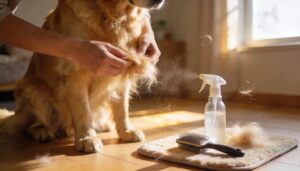
Before you pick up the brush, a little prep work goes a long way toward a smoother, more effective session. Think of it as laying the groundwork — it helps you catch problems early and keeps your dog comfortable from start to finish.
Here’s what to do before you take a single stroke.
Remove Surface Dirt and Loose Fur First
Before your brush even touches the coat, a quick dry coat sweep makes a real difference. Loose fur and dry dirt cling together — clear that layer first, and your rubber brush or slicker brush glides through cleanly.
Pre-brush debris removal means better loose fur capture with every stroke.
| Step | Tool | Why It Helps |
|---|---|---|
| Surface hair lift | Rubber brush | Grabs loose hair before it spreads |
| Initial dirt extraction | Slicker brush | Clears debris from outer layers |
| Loose fur capture | Lint rollers | Catches remaining surface fur fast |
Regular brushing stays efficient when you start clean.
Check for Tangles, Mats, and Sensitive Spots
Once the surface is clear, slow down and actually feel the coat. Mat detection methods start with your fingers — run them all the way to the skin, pressing gently to catch hidden undercoat mats before your undercoat tool does.
Three sensitive spot signs to check:
- Flinching or pulling away when touched
- Firm, bumpy patches under the outer layer
- Tangle spotting tips reveal knots behind ears, armpits, and under the collar
Inspect for Fleas, Redness, or Bald Patches
Before you reach for the brush, take a closer look — this quick check can catch real problems early.
| Signal | Where to Look | What It Means |
|---|---|---|
| Flea Dirt Test | Neck, tail base, groin | Active flea problem |
| Skin Redness Mapping | Back, lower body | Allergic dermatitis risk |
| Bald Patch Patterns | Rear, inner thighs | Abnormal shedding trigger |
Itch Behavior Signs like biting or restlessness often point to fleas, allergies, and skin conditions before you spot visible damage.
These are your Vet Referral Triggers — redness, crusting, or hair loss affecting skin health in dogs, which needs a professional eye.
Make Sure The Coat is Fully Dry
A damp coat is a trap — brushing wet hair stretches and weakens strands, hides tangles near the skin, and packs loose fur into tight mats.
Start with a towel pre-dry, then finish using a high-velocity dryer on a low-heat setting, with section-by-section drying from skin to tips. Air-only drying works too; just takes longer.
Your regular brushing and hair coat maintenance only deliver real results on a completely dry coat.
Clean The Brush Before Each Session
A dirty brush is basically grooming in reverse — you’re putting debris right back onto your dog’s coat. Before each session, pull out trapped hair with your fingers or a comb, then rinse the tool with warm, soapy water to clear oil buildup.
- Use mild soap or pet-safe shampoo as your go-to Oil Removal Technique for rubber brushes, slicker brushes, and grooming gloves
- Apply Sanitizing Solutions designed for dog grooming tools to reduce bacteria between deep washes
- Follow a consistent Brush Hygiene Routine — remove hair, wash, rinse, repeat
- Practice smart Tool Drying Methods: air-dry bristles facing down so moisture doesn’t collect in the base
- Keep Bacterial Prevention Tips simple: never store a damp grooming glove or slicker brush in a closed bag
Brush in The Right Order
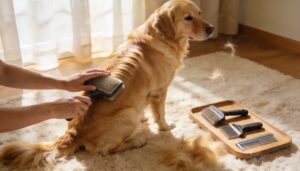
Brushing in the right order makes a real difference — it’s not just back and forth until the fur stops flying. There’s a simple sequence that loosens dead hair without irritating your dog’s skin, and it works for just about every coat type.
Here’s how to work through it.
Start With Gentle, Short Strokes
Keep your first passes short and light. Brief passes with gentle pressure let you feel what’s happening under the coat without irritating the skin.
| Signal | What To Do |
|---|---|
| Skin looks red | Stop, give a treat |
| Brush flattens | Ease up immediately |
| Dog pulls away | Pause, reward, resume |
Rhythmic strokes with treat intervals make the whole session easier on both of you.
Brush Against Growth to Loosen Hair
Once your short strokes feel comfortable, flip your technique. The Reverse Brushing Technique works by bending the hair shaft angle upward, creating airflow between layers and freeing trapped loose hair before it hits your couch.
Light Brush Pressure Management matters here — gentle passes lift undercoat without scraping skin. For proper brushing methods for different coats, this step makes every slicker brush pass more effective.
Follow With The Coat’s Natural Direction
After loosening dead hair against the grain, now brush with it.
Hair Whorl Awareness matters here — your dog’s coat flows differently across the chest, sides, and rear, so Brush Angle Adjustments keep each Final Grain Pass smooth.
Use Pressure Lightness and follow Sectional Flow:
- Glide with natural growth, not against it
- Lighten pressure as you go
- Adjust your angle at the shoulders and flanks
- Collect lifted fur cleanly off the surface
Work Section by Section Across The Body
Once you’ve followed the grain, work through the coat in zones — Head & Neck first, then Thorax & Abdomen, Back & Spine, Tail & Hindquarters, and finally Legs & Paws. This keeps you from doubling back over the same spots.
For double coat dogs, an undercoat rake or slicker brush helps you stay methodical, pulling loose fur completely from each section before moving on.
Clean The Brush Mid-session
As hair builds up in the bristles, your brush loses its grip — so pause mid-session to wipe bristles on a paper towel or use a brush comb to clear the bundle. Check hair buildup every few minutes, especially with a rubber brush or grooming glove.
A quick mid-session rinse keeps your hair removal tools working at full strength throughout.
Stop Before The Skin Gets Irritated
Knowing when to stop is just as important as knowing how to start. Watch for skin pink signs — redness, warmth, or your dog pulling away — and ease up immediately. Good pressure control means light strokes, not scrubbing.
- Stop the moment skin looks flushed or tender
- Keep session time limits to 5–10 minutes max
- Switch grooming tools if one causes repeated irritation
- Let comfort indicators, like relaxed posture, guide your pace
Follow a Shedding Control Schedule
Brushing works best when it’s consistent, not just occasional. How often you brush depends entirely on your dog’s coat type, and getting that frequency right makes all the difference in keeping loose fur under control.
Here’s a simple schedule to follow based on what your dog is actually working with.
Short-haired Dogs: 1–2 Times Weekly
Short-haired breeds are actually low-maintenance compared to most — brushing your dog just 1–2 times weekly hits the sweet spot for hair loss reduction. Stick to light brush pressure control and keep sessions under 10 minutes for owner relaxation tips that make it feel easy.
Track your grooming routine weekly, and you’ll notice skin health monitoring becomes second nature with short-haired breeds.
Medium-haired Dogs: 3–4 Times Weekly
Medium-haired breeds shed more than you’d expect — and skipping sessions lets loose fur pile up fast. A 3–4 times weekly shedding control routine keeps that buildup manageable.
For feathering area focus, pay extra attention to ears, legs, and collar lines where tangles start early. Your slicker brush manages most of it well.
- Brush feathered areas first
- Monitor allergy trigger zones for redness
- Track hydration for skin dryness
- Watch exercise-induced shedding after active days
Owner consistency tips make the biggest difference with medium-haired breeds.
Long-haired Dogs: Daily or Every Other Day
Long-haired breeds don’t forgive skipped days — loose hair tangles fast, especially behind the ears and under the collar. Your shedding control routine should include brushing daily or every other day to stay ahead of mats.
A slicker brush manages most undercoat maintenance well.
Keep sessions to 5–10 minutes, and coat moisture management plus humidity control help make each grooming time management session noticeably easier.
Double-coated Dogs: Daily During Peak Shedding
Double-coated breeds like Huskies and German Shepherds shed heavily twice a year — and when that undercoat starts blowing, daily brushing isn’t optional.
Shedding tool effectiveness peaks when you’re consistent, so grab your undercoat rake every day during spring and fall.
Pair that routine with stress reduction through daily exercise boost and humidity regulation indoors, and you’ll actually stay ahead of the fur.
Keep Sessions to 5–10 Minutes
Daily brushing keeps double-coated dogs manageable, but every session should stay between 5 and 10 minutes. That’s your sweet spot for pressure control and reading your dog’s mood before they check out.
- Set a timer — it keeps you focused and consistent
- Use quick sectioning to cover back, sides, legs, and tail
- Watch for shifting or licking as your stop signal
- Repeat short sessions often for a consistent routine
Is It Shedding Season?
Shedding season can feel like your dog is leaving a trail everywhere it goes, and that’s not just bad luck — it’s biology. Double-coated breeds especially go through dramatic coat changes in spring and fall that catch a lot of owners off guard.
what to watch for and how to stay ahead of it.
Spring Coat Blowouts in Double-coated Breeds
If your Husky or German Shepherd suddenly looks like they’re leaving fur everywhere, it’s not a fluke — it’s a spring coat blowout. As daylight length increases and temperature transitions signal warmer months ahead, hormonal changes trigger undercoat release timing in double-coated breeds.
That dense winter layer sheds in clumps, so daily brushing with an undercoat rake is your best move right now.
Fall Shedding and Undercoat Changes
Fall works differently.
Instead of dumping a winter coat, your dog sheds lighter summer fur to make room for a thicker undercoat — that dense, insulating layer built for cold weather.
Photoperiod influence drives this shift; shorter days send hormonal triggers that kickstart the cycle.
It begins around September and can run well into November.
When to Increase Brushing Frequency
Once that fall undercoat shift kicks in, your brushing schedule needs to shift too. Hormonal Coat Changes, Allergy Shedding, Flea-Triggered Hair Loss, Age-Related Shedding, and Post-Exercise Hair Loss can all push shedding beyond seasonal norms — and the frequency guidelines for brushing different breeds matter here.
Bump sessions when you notice:
- More fur than usual on floors or furniture
- Visible thinning or bald patches appearing
- Your dog scratching or biting at the coat
- Dull, dry fur after seasonal changes
- Clumps coming out mid-brush faster than normal
Signs Normal Seasonal Shedding is Ending
The heavy wave is finally breaking. You’ll notice a reduced brush load — no more giant clumps on every pass — and an even coat texture that lies flatter and looks less patchy.
Home hair reduction kicks in too, so vacuuming feels less urgent. Calm skin condition and a steady shedding pattern signal that proper brushing methods for different coats have paid off.
How Indoor Dogs May Shed Year-round
If dog lives mostly indoors, don’t expect a clean seasonal pause. Artificial light impact and temperature stability disrupt natural seasonal cues, keeping dog coat maintenance active all year.
Humidity control and air quality management also play a role. That’s why creating a shedding control routine for indoor dogs — using proper brushing methods for different coats — matters every single month.
Pair Baths With Brushing
Bath time and brushing work better together than either does alone. Pairing the two turns a regular grooming routine into one of the most effective ways to get loose fur under control.
Here’s exactly how to do it right.
Brush Before Bathing to Loosen Dead Hair
Always brush your dog before bath time — skipping this step is like mopping a floor before sweeping it. Pre-bath timing matters because water tightens tangles and locks loose fur deeper into the coat.
Use proper brush angle optimization and gentle pressure control to lift dead hair first. Brush outdoors if you can for easy environmental hair containment. It’s one of the most effective grooming techniques to control shedding.
Use a Dog-safe De-shedding Shampoo
Not all shampoos are created equal — and using the wrong one can make shedding worse. Pick a deshedding shampoo with solid ingredient safety: look for aloe, oatmeal, or omega fatty acids, and skip parabens or harsh sulfates.
Shampoo pH balance matters too, since canine skin differs from ours. Follow proper bathing frequency and product selection for shedding control with these steps:
- Apply using the right application technique — lather from neck to tail, avoiding eyes.
- Follow dilution guidelines if using a concentrated formula (some allow up to 10:1 water ratio).
- Pair your deshedding shampoo with a dog conditioner for softer, easier-to-brush fur.
Rinse Thoroughly to Avoid Skin Irritation
Rinsing is where most bath mistakes happen. Use lukewarm water — not hot, not cold — and spend more time rinsing than you did lathering.
Focus on targeted rinse areas like the chest, armpits, belly, and between the toes, where residue loves to hide. Watch for residue detection signs: scratching, redness, or a lingering shampoo smell means you’re not done yet.
Dry The Coat Completely After The Bath
Leaving your dog even slightly damp is a fast track to bacterial growth and dry skin. Start with the Towel Absorption Technique — press microfiber towels firmly against the coat instead of rubbing.
For double-coated breeds, High-Velocity Dryer Use with proper Temperature Control Settings cuts drying time substantially.
Always verify Skin Dryness Verification by running fingers down to the skin before finishing.
Brush Again to Remove Loosened Fur
Once your dog’s coat is fully dry, that’s the perfect moment to brush your dog one more time. Bathing lifts and loosens hair that the first pass never reached — second pass catches it before it hits your floors.
Use a slicker or bristle brush, work gently through small sections, and watch for any redness.
Loose hair capture doing exactly what it should.
Support Coat Health From Within

Brushing does a lot of the heavy lifting, but what your dog eats plays a bigger role in shedding than most people realize.
A coat that’s well-nourished from the inside is stronger, less brittle, and naturally easier to manage.
Here’s what to focus on regarding feeding and supporting dog’s coat health.
Feed High-quality Protein for Stronger Hair
Your dog’s coat is mostly made of protein, so a balanced diet with strong Animal Protein Preference makes a real difference.
Focus on these Protein-rich Food Sources:
- Chicken or fish for Essential Amino Acids
- Eggs for complete, Digestible Protein Levels
- Beef for protein plus iron
Consistent Balanced Meal Timing keeps hair follicles steady and strong.
Add Omega-3s for Skin and Coat Support
Protein builds the hair, but omega-3s keep the skin underneath healthy enough to hold it.
EPA Benefits include calming irritated skin, while DHA Sources like salmon, sardines, and fish oil directly support coat texture.
Here’s a quick look at Supplement Forms and Dosage Guidelines:
| Supplement Form | What to Know |
|---|---|
| Liquid fish oil | Easy to mix into food |
| Soft chews | Great for picky dogs |
| Capsules | Precise dosage control |
| Fish-based diet | Built-in omega fatty acids |
For Storage Tips, keep oils away from heat and light — they go rancid fast.
Maintain Daily Water Intake
Omega-3s feed the skin, but water keeps it from drying out underneath. Aim for one ounce of water per pound of body weight daily — that’s your baseline. Hydration and skin health in dogs are more connected than most people realize, and dry skin means more shedding. Build smart habits with these water intake tips:
- Set up Multiple Water Stations around the house
- Practice Hydration Monitoring by tracking daily intake
- Prioritize Water Bowl Hygiene with daily refills and rinses
- Adjust for Seasonal Hydration Needs — hot days mean more drinking
- Keep Fresh Water Access consistent during walks and travel
Use Vet-approved Supplements When Needed
Not every dog needs a cabinet full of supplements — but when your vet spots a real gap, the right product has a noticeable effect.
Omega-3 Supplements top most vet-recommended diet lists because the role of omega fatty acids in skin and coat health is well-documented.
Look for the NASC Quality Seal, ask about Glucosamine Joint Support or Probiotic Gut Health if needed, and always flag Vitamin D Safety before stacking nutritional supplements for dogs.
Combine Nutrition With Regular Brushing Results
Brushing alone won’t fix shedding if your dog’s diet is working against you. Think of it as a two‑part system: protein‑fueled coat strength from high‑quality protein keeps hair anchored, while omega‑3 lubrication from a high‑quality diet rich in omega fatty acids reduces inflammatory shedding. Dietary timing matters too — coat improvements show within 4–12 weeks.
Brushing manages shedding, but a protein-rich diet with omega-3s fixes it from within
Here’s how integrating grooming and diet for ideal coat health works:
- Protein first — animal-based protein builds keratin, making each strand less brittle during brushing.
- Omega-3 supplement daily — reduces skin inflammation that triggers excess hair release.
- Water Intake — at least 1 oz per pound of body weight prevents dry‑skin shedding.
- Supplement Synergy — pairing vet‑approved supplements with the importance of regular brushing for hair loss reduction amplifies results using proven dietary strategies for a healthy dog coat.
Top 3 Brushes to Try
With the right brush, shedding becomes something you manage instead of something that controls you. Not every brush works for every dog, so the tool really does matter.
Here are three worth keeping on your radar.
1. Chris Christensen Big G Slicker Brush
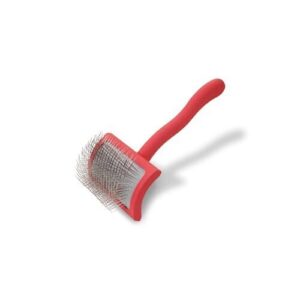
If you groom a dense or curly coat, the Chris Christensen Big G Slicker Brush is worth every penny of its $56.99 price.
Its extra-long angled steel pins reach deep into thick coats, and the 30% higher pin density means you pull more hair per stroke.
The cushioned, ergonomic handle cuts fatigue fast — perfect for long sessions with Doodles, Poodles, or Bernedoodles.
| Best For | Professional groomers, show exhibitors, and owners of thick- or curly-coated breeds like Doodles, Poodles, and Bernedoodles who want faster, more comfortable grooming sessions. |
|---|---|
| Price | $56.99 |
| Coat Suitability | Double/thick coats |
| Ergonomic Handle | Non-slip curved grip |
| Shedding Reduction | Yes |
| Detangling Ability | Fine mats and knots |
| Warranty | 6-month manufacturer |
| Additional Features |
|
- Extra-long angled pins dig deep into dense coats, pulling more loose hair per stroke and cutting grooming time significantly.
- 30% more pins than a standard slicker brush means fewer passes to get the job done.
- The cushioned, ergonomic handle is easy on your hands — great for long sessions or anyone with limited grip strength.
- At around $57, it’s a tough sell for casual pet owners when budget brushes do the basics for half the price.
- The high pin density can feel overwhelming to sensitive dogs, especially around the face, paws, or underarms.
- A few buyers have raised concerns about packaging authenticity, so it’s worth buying from a verified retailer.
2. RUBOLD Pet Safe Undercoat Rake
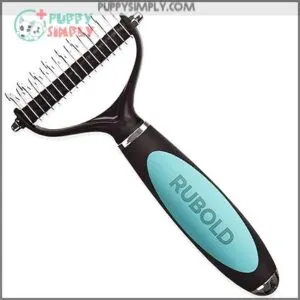
If your dog has a dense double coat, the RUBOLD Fur Premium Undercoat Rake is a smart pick. Its dual-sided design gives you 9 teeth for stubborn mats and 17 teeth for faster deshedding — one tool, two jobs.
The rounded outer edges keep grooming pain-free, even on sensitive skin. At just 3.7 oz, it won’t tire your hand out either.
| Best For | Dog and cat owners with medium- to long-haired breeds who deal with heavy shedding, matting, or have limited grip strength or hand fatigue. |
|---|---|
| Price | Not listed |
| Coat Suitability | Medium/long coats |
| Ergonomic Handle | Non-slip ergonomic grip |
| Shedding Reduction | Yes |
| Detangling Ability | Dense mats and undercoat |
| Warranty | Lifetime satisfaction guarantee |
| Additional Features |
|
- Dual-row metal teeth lift and separate dense undercoat without yanking — gentle enough for sensitive skin, allergies, or scar tissue
- At 3.7 oz with a non-slip ergonomic handle, it’s easy to use even if you deal with carpal tunnel or hand fatigue
- Backed by an unconditional lifetime guarantee, so there’s zero risk if it doesn’t work out
- Internal edges are sharp — careless handling can nick your fingers or irritate thin skin areas like your pet’s belly or ears
- A bit too bulky for tight spots like a cat’s groin or a dog’s undercarriage, so you’ll likely need a smaller tool for those areas
- Less effective on very short or fine coats, and won’t replace a professional groomer when matting is severe
3. Hertzko Flexible Double Sided Slicker Brush
For tight spots like ears and paws, the Hertzko Flexible Double Sided Slicker Brush earns its place.
The flexible head bends with your dog’s body, so the bristles stay in contact instead of glancing off.
Both sides tackle loose fur and light tangles, and at $9.99, it’s an easy addition to your kit — especially for smaller breeds or multi-pet households.
| Best For | Small breeds, multi-pet households, and anyone who needs to groom tricky spots like ears, paws, and facial hair without fighting their pet the whole time. |
|---|---|
| Price | $9.99 |
| Coat Suitability | All coat types |
| Ergonomic Handle | Standard handle |
| Shedding Reduction | Yes |
| Detangling Ability | Light to moderate tangles |
| Warranty | Not listed |
| Additional Features |
|
- The flexible head bends to follow your pet’s body, so the bristles actually stay in contact and do their job
- Double-sided design gives you versatility — one side for everyday brushing, the other for working through lighter tangles
- At $9.99, it’s a low-risk grab that works on cats, dogs, and even faux-fur household items
- Not built for heavy-duty mats — thick double coats (think doodles or poodles) will need a proper de-matting rake
- A few users have had the flexible head or pad come loose after light use, so durability isn’t its strongest suit
- The flexible head can feel a little wobbly when you’re trying to do detailed, precise work in tight areas
Frequently Asked Questions (FAQs)
Can brushing help with stress-induced shedding?
stress shedding like a wave that’s already coming — you can’t stop it, but brushing helps you catch loose hairs before they scatter everywhere, making the mess far more manageable.
Do grooming gloves work as well as brushes?
Grooming gloves are great for short coats and bath time, but they can’t match a brush for deep shedding control.
Think of gloves as a daily touch-up tool, not a replacement.
How does indoor humidity affect dog shedding?
Here’s a coincidence worth noting: the same dry winter air that chaps your lips is quietly drying out your dog’s skin, making loose fur fall faster and coating more of your furniture.
When should abnormal shedding prompt a vet visit?
Take your dog to the vet if shedding comes with bald patches, redness, a bad odor, or constant scratching.
Those signs mean something more than a normal seasonal shedding is going on.
Does regular exercise reduce excessive coat loss?
Yes, regular exercise helps reduce stress-related shedding by improving circulation and supporting healthier hair follicles.
It won’t stop normal coat cycles, but an active dog generally has overall coat condition.
Conclusion
Imagine a home with less dog hair, achieved by mastering how to reduce dog shedding with brushing.
Regular brushing removes loose fur, distributes skin oils, and strengthens your dog’s coat.
By following these steps and using the right tools, you’ll enjoy a cleaner home and a healthier, happier dog, with noticeable results in just a few weeks of consistent brushing practice.
- https://www.pawparentacademy.com/blog/best-dog-brush-for-shedding
- https://www.dogster.com/dog-health-care/best-dog-brushes-for-shedding
- https://www.businessinsider.com/guides/pets/best-dog-brush
- https://www.rover.com/blog/how-to-brush-dog/
- https://www.doglyness.com/blogs/news/tips-to-control-and-reduce-dog-shedding