This site is supported by our readers. We may earn a commission, at no cost to you, if you purchase through links.
Most dogs plateau not because they’ve hit a ceiling, but because their owner has. The gap between a dog that sits on command and one that heels through a crowded park, ignores distractions on cue, or nails a ten-step trick chain is almost always a training consistency problem—not a dog problem.
That’s where dog training apps for higher-level obedience and tricks have started pulling real weight.
The best ones don’t just hand you a video library; they give you structured programs, built-in timing tools, and in some cases, direct access to credentialed trainers who can watch your dog work and tell you exactly where your timing broke down.
Knowing which app fits your goals—and your dog’s current skill level—makes the difference between steady progress and spinning your wheels.
Table Of Contents
Key Takeaways
- Most dogs plateau because their owners lose consistency, not because the dog has hit its limit — and the right app closes that gap with structured programs and real trainer feedback.
- Dogo leads for overall advanced obedience, Puppr wins for trick variety, and GoodPup is your best bet when you need live, one-on-one accountability with a credentialed trainer.
- The features that actually move the needle are built-in clicker tools, video-based step-by-step lessons, progress tracking, and adaptive difficulty — not just a big library of content.
- Annual plans from Dogo or Puppr run about $99.99/year and offer the best value for serious training, but switch to a professional trainer when behavior issues escalate beyond what any app can safely handle.
Best Apps for Advanced Training
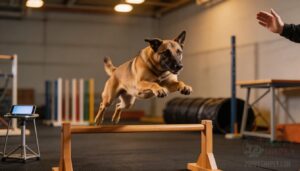
Not every dog training app is built for serious work, but a few genuinely rise to the level that higher-level training demands. The best ones combine structured skill progression, real trainer access, and tools that keep you and your dog moving forward.
For older dogs with specific needs, exploring dog training apps designed for senior dogs can help you find tools that adapt routines to slower paces and age-related limitations.
Here’s what’s worth your time.
Dogo as The Best Overall Pick
Dogo earns its spot as the best overall dog training app because it’s built for dogs that are ready to go beyond the basics. With video lessons covering 100+ tricks, clicker precision tools, and five structured programs, it offers higher-level trick training for adult dogs through positive reinforcement that scales with your dog’s ability.
Breed compatibility, motivation mechanics, and app stability make it a reliable daily partner.
The system also provides mental stimulation for dogs, keeping them engaged during owners’ busy days.
Puppr for Advanced Tricks and Variety
Puppr takes sophisticated trick training for adult dogs to a different level.
Its trick pack variety spans circus-style moves, agility, and even handstands, with video instructions breaking each skill into clear sub-steps.
You can set cue customization for hand signals and verbal markers, track skill mastery metrics, and keep session length to a focused 5–10 minutes.
Adaptive difficulty keeps experienced dogs genuinely challenged.
GoodPup for One-on-one Coaching
If tricks are where Puppr shines, real accountability comes from GoodPup’s one-on-one training model. Weekly sessions pair you with a live trainer through video lessons built around your dog’s specific goal plans.
Trainer vetting ensures you’re working with credentialed professionals. Between sessions, in-app messaging keeps momentum going. And with a money-back guarantee backing it all, owner confidence isn’t just encouraged — it’s protected.
Pupford Academy for Deeper Skill Building
Where GoodPup delivers personal accountability, Pupford Academy goes deep on skill refinement. It’s built for owners who want real structure, not just tips.
Three things set it apart:
- Custom Practice Plans with Distraction Management Drills and Impulse Control Modules
- Real-World Skill Integration through targeted video lessons
- Skill Mastery Metrics inside a full progress tracking dashboard
Custom training programs and enhanced trick training for adult dogs round it out.
EveryDoggy, Woofz, and GoDog Alternatives
Not every dog owner needs one-on-one coaching.
EveryDoggy covers 70 guided sessions and 80-plus tricks, with a built-in clicker and Audio Cue Tools that keep higher-level training sharp.
Woofz adds Smartwatch Cue Reminders, Offline Lesson Access, and Multi-Dog Profiles — useful if you’re managing more than one dog.
GoDog keeps it simple at $4.99/month.
All three are solid dog training apps worth comparing against Pupford.
Best Apps by Training Goal
Not every dog — or owner — trains for the same reason, and the right app depends on what you’re actually working toward.
Whether you’re teaching basic commands or managing a hyperactive pup, understanding when puppies naturally start to calm down can help you set realistic goals and choose tools that actually fit your dog’s stage of life.
Whether you want rock-solid obedience, flashy tricks, or help smooth out problem behaviors, there’s a fit for you.
Here’s how the top apps stack up by training goal.
Advanced Obedience and Reliability

Real-world testing separates reliable dogs from trained ones.
Enhanced obedience means your dog holds a stay for 90 seconds in a crowd, executes an emergency stop command within half a second, and completes multi-cue chaining without hesitation.
Apps like Dogo support this through structured training progression, impulse control drills, and weather and terrain adaptation, keeping your dog’s behavior modification goals measurable and consistent.
Trick Training and Circus-style Skills

Once your dog masters reliability, circus-style skills become the next frontier. Puppr leads here with over 100 lessons covering handstands, ring spinning, and prop choreography. Its video-based dog training lessons and gamified learning keep sessions engaging for adult dogs ready for higher-level trick training.
- Juggling basics broken into step-by-step cues
- Balance beam drills for body awareness
- Miming performance sequences with visual prompts
- Dog agility training modules
- Interactive dog training app rewards for progress
Behavior Support Alongside Obedience

Obedience and behavior support aren’t separate goals — they work together.
Zigzag and Woofz build proactive environment strategies and teach replacement behaviors through positive reinforcement, helping you address barking or anxiety alongside sit-stay work.
Functional assessment tools identify triggers, while caregiver collaboration and behavior tracking keep everyone consistent.
Video feedback and professional trainer support through apps add emotional regulation guidance when reactivity or frustration surfaces mid-session.
Puppy-to-advanced Training Progression

From puppy basics to higher-level trick training for adult dogs, the best apps mirror how real skill develops. Short sessions build focus duration, scaling week by week, while key checklists mark each consolidation phase — sit to stay to off-leash recall.
Distraction gradual increase and impulse control drills keep progress honest.
Clicker training and video instruction make each step clear and repeatable.
Best Fit for First-time Vs Experienced Owners

First-time owners lean on guided onboarding and gentle progress nudges — Pupford and Zigzag do this well.
Experienced handlers want adaptive difficulty, data-driven insights, and on-demand one-on-one coaching to push complex trick training for adult dogs further. Woofz and Dogo deliver that personalization.
Community mentorship, expert recommendations, and smart interface design meet both groups where they’re.
Features That Improve Training Results

The app you pick matters, but how it’s built matters just as much. Certain features make the difference between a dog that learns fast and one that stalls out after a few sessions.
Here’s what to look for.
Step-by-step Video Lessons
What separates a good app from a great one is how it teaches, not just what it teaches. The best video-based dog training lessons follow a clear lesson structure — introduction, demonstration, pause, practice, then recap.
Great apps don’t just teach more — they teach better, with structure that guides every step
Visual markers highlight exactly what your dog is doing right. Cue synchronization pairs verbal and on-screen prompts together. Adaptive difficulty lets you progress at your dog’s pace, making video instruction genuinely effective for higher-level trick training for adult dogs.
Built-in Clicker and Whistle Tools
Apps like Dogo and Puppr don’t make you carry a separate clicker. The built-in clicker and whistle tools handle both precision marking and distance cues in one place — solid training versatility for sophisticated trick training for adult dogs.
Sound profile customization, durability and comfort, and user accessibility all matter here.
Clean the speaker regularly; that’s your main maintenance tip to keep timing sharp.
Live Chat and Video Trainer Feedback
A built-in clicker marks the moment well, but a virtual dog trainer reviewing your actual footage takes things further.
Live chat and video chats let you submit sessions and receive trainer feedback with labeled frame ranges and real-time corrections tied to exact timestamps.
Feedback timing matters — notes arrive within 12–24 hours.
Privacy controls let you keep video instruction sessions household-only.
Progress Tracking, Reminders, and Badges
Knowing your dog cleared a goal is satisfying — seeing it plotted on a Goal Timeline makes it real.
A Streak Visualization shows your consistency at a glance, while Adaptive Reminder Logic adjusts alerts based on skipped or completed sessions, keeping your training schedule automation tight.
The Badge Release System rewards reliability benchmarks.
Your Gamified Points Dashboard turns every session into measurable momentum through clear training metrics.
Community Sharing and Motivation
Training alongside others sharpens your focus fast. Apps like Dogo and Puppr offer an Instagram-like community where in-app community and video sharing keep you accountable through real Progress Milestones.
- Feedback Circles surface honest, constructive input from fellow handlers
- Peer Coaching Pods connect you with others refining the same skills
- Community Challenges and Mentor Spotlights fuel motivation through gamified rewards
This private support community of pet parents makes consistency contagious.
Personalized Plans and Skill Pathways
Every dog starts somewhere different — that’s where Baseline Assessment and Skill Gap Mapping come in.
The app profiles your dog’s current abilities, then builds a training curriculum around real gaps.
Adaptive Lesson Sequencing adjusts difficulty as your dog improves, while Goal-Driven Milestones keep progress tracking clear and rewarding.
Customization Controls let you shape individualized dog training programs around your dog’s pace, turning higher-level trick training for adult dogs into a structured, achievable path.
Pricing, Trials, and Platform Support
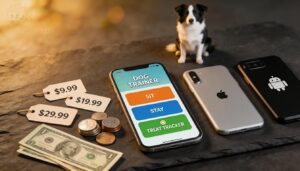
Before you commit to any app, it helps to know exactly what you’re paying for. Prices range from completely free to nearly $200 for lifetime access, and the platform your phone runs on can narrow your options fast.
Here’s a breakdown of what each pricing model covers and which devices are supported.
Free Vs Premium Dog Training Apps
Free apps give you a real starting point — basic commands, a built-in clicker, and simple reminders — but ad interruptions mid-session can break your dog’s focus fast.
Premium subscriptions remove that friction and enable clicker customization, offline lesson download, and AI video analysis. You also get support priority when issues come up.
For higher-level obedience goals, free vs paid dog training app subscriptions are a decision worth making early.
Monthly, Annual, Weekly, and One-time Pricing
Pricing structures vary more than most people expect. Monthly subscriptions run $9.99–$12.99, while annual subscriptions drop that cost substantially — Dogo and Puppr both land at $99.99/year.
Good Pup’s weekly video sessions bill at $29.99 weekly. One-time licenses like Pup to Date offer clean value at $3.99.
Check auto-renewal settings, watch for introductory discounts, and confirm prorated refunds before committing.
What Free Trials Actually Include
Most free trials run seven days, though Pocket Puppy School gives you a full 30-day free course with personal trainer access. Trial Feature Access generally covers core training videos, Onboarding Tutorials, and progress tracking.
Watch for Support Tier Limits and Data Usage Caps that quietly restrict premium service features. Cancellation Reminders at least 48 hours before renewal — specialized training shouldn’t come with surprise charges.
IPhone, Android, and Apple Watch Compatibility
Most top dog training apps run on both Android and iOS, but a few details are worth knowing before you download. iPhone compatibility is smooth for apps like Pup to Date, which also adds Apple Watch support for real-time reminders. Android alternatives like Wear OS watches fill that gap well.
- Dogo, Puppr, and GoodPup offer full Cross-Platform Sync on Android and iOS
- Apple Watch pairs only with iPhone — Android users won’t get watch features
- Pup to Date is iOS-only with Apple Watch Store integration
- Bluetooth Limits affect clicker responsiveness on older devices
- App compatibility with Android and iOS varies — always check before subscribing
Best Value for Advanced Obedience Practice
Regarding value, Dogo’s annual plan at $99.99 gives you the best feature-pricing ratio for higher-level obedience practice — that’s roughly $0.27 per day.
Puppr matches that price with a strong cost per lesson across 100+ lessons.
GoodPup’s premium subscription runs $30 weekly, which makes sense only if one-on-one coaching directly helps your higher-level training programs and goals.
How to Choose The Right App
Picking the right app comes down to more than just price or star ratings. The details that matter most — training philosophy, trainer credentials, and how well the features match your dog’s current level — vary from one app to the next.
Here’s what to look at before you commit.
Positive-reinforcement Methods to Prioritize
Not all dog training apps are built the same — prioritize ones rooted in positive reinforcement techniques. The best apps use these four methods:
- Immediate Timing — rewards land within seconds of correct behavior
- High Value Rewards — tougher tasks get better treats
- Variable Reward Schedules — keeps motivation strong long-term
- Behavior Specific Plans — individualized reinforcement for each command
Ethical reward sourcing and reward-based training keep complex trick training for adult dogs safe and effective.
Trainer Credentials and Veterinary-backed Content
Positive reinforcement only works when the person teaching it actually knows what they’re doing. That’s why credential transparency matters.
Look for apps built with accredited trainer badges, evidence-based protocols, and veterinary review panels.
Dogo and Good Pup both carry veterinary-backed dog training content. A board-certified veterinary behaviorist behind the curriculum signals that veterinary safety standards shaped every lesson — not guesswork.
Matching App Features to Your Dog’s Goals
Credentials matter, but so does fit. The best app for your dog isn’t the flashiest one — it’s the one built around your actual goals.
Look for Skill Trees, Goal Templates, and Adaptive Difficulty that shift as your dog improves. Data Insights and Performance Capture help you spot what’s working.
Individual dog training programs with structured training modules make sophisticated trick training for adult dogs far more consistent.
When an App is Enough for Training
For most owners, an app covers everything you need when your setup already works in your favor. A calm home routine, owner consistency, and basic cue reliability are your green lights.
An app is likely enough if:
- Your dog manages low risk behaviors well
- Short daily sessions of 5–10 minutes fit your schedule
- You want sophisticated trick training for adult dogs
- Video feedback replaces a personal trainer adequately
When to Work With a Professional Trainer
Sometimes app hits its ceiling — and that’s your cue to call in a professional trainer. Motivation Gaps, Injury Modification needs, or Escalating Behavioral Issues affecting safety all point beyond any dog training curriculum an app can offer.
Higher-level Trick Complexity, Tailored Breed Plans, or consulting veterinary behaviorists for behavior issues also warrant a dog behaviorist.
Higher-level trick training for adult dogs with real behavioral stakes needs hands‑on expertise.
Frequently Asked Questions (FAQs)
Which app is best for teaching dog tricks?
Puppr takes the crown here.
Its 100-plus video-based dog training lessons, audio cue integration, and lesson customization flexibility make it the top interactive dog training app for expert trick training for adult dogs.
What is the 7 7 7 rule for dogs?
The 7-7-7 rule covers seven surfaces, seven social introductions, seven sounds through noise desensitization, seven toys via toy rotation, and seven daily skill sessions — each building confidence through a consistent training reinforcement schedule and progress tracking.
What is the 3-3-3 rule for dog training?
The 3-3-3 rule maps a dog’s Adjustment Timeline into three stages: a 3-day Decompression Phase, a 3-week Routine Establishment period, and a 3-month Confidence Building goal — a practical framework for setting realistic expectations.
What advanced tricks can I teach my dog?
You can teach your dog to Kiss Target, Heel Weave through cones, Fetch Named items, Roll Over, Kneel into a bow, and respond to a Speak Cue — all solid higher-level trick training for adult dogs.
Can older dogs learn advanced tricks with apps?
Yes, older dogs can.
Short sessions, Micro‑Step Progression, and Reward Value Optimization keep them engaged.
Cognitive Enrichment through app-based tricks enhances mental sharpness, while Senior Joint Safety ensures Adaptive Session Length protects aging bodies throughout complex trick training.
Do training apps work for anxious or reactive dogs?
They can with realistic expectations.
Short sessions, gradual desensitization modules, and positive reinforcement help anxious dogs progress safely. Real-time feedback loops and safety threshold guidelines build owner confidence without pushing reactive dogs past their limits.
How long before a dog masters a new command?
It depends on Command Complexity and Age Pace. Simple cues take 1–2 weeks. Higher-level trick training for adult dogs needs 4–8 weeks, with consistent Session Frequency and precise Reward Timing.
Conclusion
Regarding high‑level dog training, the right tools can make all the difference. Think of dog training apps for high‑level obedience and tricks as your co-pilot on the journey to mastery.
By using structured programs, expert feedback, and built‑in tools, you’ll release your dog’s full potential. Choose an app that aligns with your goals and your dog’s needs, and watch steady progress unfold.
Consistency is key; find an app that keeps you on track.