This site is supported by our readers. We may earn a commission, at no cost to you, if you purchase through links.
Most dog owners assume the ingredients list on the back of a kibble bag tells the whole story. It doesn’t.
Some of the most common additives in commercial pet food—BHA, xylitol, artificial dyes—have no business being in your dog’s bowl, yet they show up in products sold at every major retailer.
Meanwhile, a handful of whole foods sitting in your kitchen right now could genuinely support your dog’s joint health, digestion, and immune function. Knowing which non-toxic foods dogs can safely eat, and which ingredients to cut entirely, changes how you feed your dog for the better.
Table Of Contents
- Key Takeaways
- Non-Toxic Foods Dogs Can Eat
- Toxic Ingredients Dogs Should Avoid
- How to Choose Safer Dog Food
- Top 9 Non-Toxic Dog Foods
- 1. CARNA4 Air Dried Chicken Dog Food
- 2. Bark Whiskers Dehydrated Beef Veggie Dog Food
- 3. Honest Kitchen Chicken Oat Dry Dog Food
- 4. Nutro Ultra Adult Dry Dog Food
- 5. The Honest Kitchen Dehydrated Beef Dog Food
- 6. Open Farm Grain Free Dog Food
- 7. Wild Earth Golden Rotisserie Vegan Dog Food
- 8. JustFoodForDogs Joint Skin Support Dog Food
- 9. Natural Balance Sweet Potato Venison Dog Food
- Switching Dogs to Safer Foods
- Frequently Asked Questions (FAQs)
- Conclusion
Key Takeaways
- Ingredient lists don’t tell the whole story — additives like BHA, xylitol, and artificial dyes hide in plain sight on shelves at every major retailer, and cutting them out genuinely changes your dog’s health trajectory.
- Whole foods already in your kitchen — cooked chicken, blueberries, carrots, plain oatmeal — can safely support your dog’s digestion, joints, and immune function when served plain, portioned right, and kept under 10% of daily calories.
- Some everyday foods attack your dog at a cellular level: garlic and onions destroy red blood cells, grapes and raisins can trigger sudden kidney failure with no safe dose threshold, and xylitol causes dangerous insulin crashes even in tiny amounts.
- Switching to a cleaner food requires a 7–10 day transition (start at 75% old food, ease to 100% new), and matching the formula to your dog’s age, size, and activity level matters far more than most owners realize.
Non-Toxic Foods Dogs Can Eat

Not every food in your kitchen is off-limits for your dog — quite a few are actually good for them. The key is knowing which ones are safe and how to serve them right.
Oatmeal, for example, is one of those surprisingly dog-friendly options — just check how to safely serve cooked oatmeal to dogs to get portions and prep right.
Here’s what you can feel confident adding to your dog’s bowl.
Lean Proteins Like Chicken, Turkey, and Salmon
For high-quality protein sources, skinless chicken breast, turkey, and salmon are hard to beat. Each delivers excellent amino acid balance and an impressive digestibility rate—your dog’s gut will thank you for.
Salmon adds omega-3 fatty acids — supporting joints, coat, and brain health.
Choose human-grade, clean dog food options, and keep your cooking method simple: plain, unseasoned, cooked.
Dog-safe Fruits Like Apples, Blueberries, and Bananas
Fruits can round out a clean dog food routine beautifully — as long as you prep them right. Apples (core and seeds removed), blueberries, and bananas are all nontoxic and packed with antioxidant power and fiber benefits.
Wash everything, cut to bite-size pieces, and skip any sweeteners. Small portions only — think treats, not meals.
Dog-safe Vegetables Like Carrots, Green Beans, and Squash
Vegetables work just as well — carrots, green beans, and squash all deliver real fiber benefits and digestive support with almost no calories.
Stick to simple cooking techniques: steam or lightly cook them plain, no salt or oil. Chop everything small for choking prevention.
Raw squash and large carrot chunks are harder to digest, so keep portions modest and introduce them gradually.
Plain Snacks Like Yogurt, Oatmeal, and Popcorn
Beyond veggies, a few pantry staples double as dog-friendly snacks — if you’re careful about what’s in them.
- Probiotic yogurt — plain, unsweetened only, promotes digestive health benefits naturally
- Fiber oatmeal — cooked with water, cooled before serving
- Low-sodium popcorn — air-popped, no butter, salt, or seasonings
- Snack storage tips — refrigerate yogurt portions; keep popcorn in airtight containers
- Human-grade ingredients — skip anything with artificial preservatives or xylitol
Portion Control and Moderation for Treats
Even safe snacks add up fast. Treats should never exceed 10% of your dog’s daily energy requirement — for a 500 kcal/day dog, that’s just 50 kcal for your calorie budget.
Prioritize low-calorie treats and training bites during high-frequency sessions. Space treat timing across the day, monitor weight weekly, and always check ingredient lists to avoid toxic additives hiding in seemingly harmless snacks.
Toxic Ingredients Dogs Should Avoid
Not everything in your dog’s bowl is as harmless as it looks. Some ingredients sneak into commercial foods under names that sound almost scientific — and that’s exactly the problem.
Here’s what you actually need to watch out for.
Artificial Preservatives Like BHA, BHT, and Ethoxyquin
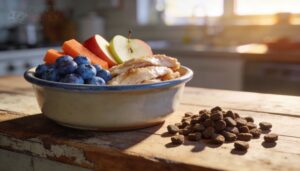
BHA, BHT, and ethoxyquin are artificial preservatives that work through antioxidant mechanisms — slowing oxidative rancidity in fats to extend shelf life. Sounds useful, right? But these toxic additives in pet food come with real health impact risks. Here’s what you should know:
They’ve been linked to allergic skin reactions in pets.
- BHA and BHT are endocrine disruptors linked to carcinogenic concerns.
- Ethoxyquin faces stricter regulatory limits than most pet owners realize.
- All three prioritize shelf-life extension over your dog’s wellbeing.
- Safer alternative preservatives like vitamin E and rosemary extract exist.
Artificial Colors Like Red 40, Yellow 5, and Yellow 6

Your dog’s kibble doesn’t need to look pretty — yet here are Red 40, Yellow 5, and Yellow 6 doing exactly that. These synthetic azo dyes serve zero nutritional purpose. FDA color regulations permit them, but that doesn’t mean they’re safe long-term. Studies link them to hyperactivity concerns and hypersensitivity reactions.
| Dye | Also Known As | Concern |
|---|---|---|
| Red 40 | Allura Red AC | Carcinogen contamination (benzidine) |
| Yellow 5 | Tartrazine | Allergic reactions, DNA damage |
| Yellow 6 | Sunset Yellow | Hypersensitivity, behavioral effects |
| All three | FD&C certified | Labeling transparency gaps |
| Safer swap | Natural alternatives | Turmeric, beet juice, annatto |
Demand better labeling transparency — and choose brands skipping artificial colors entirely.
Xylitol, Corn Syrup, and Added Sweeteners

Sweeteners are where "sugar-free" becomes a trap.
Xylitol Toxicity is no exaggeration — even tiny amounts trigger dangerous insulin surges in dogs, causing blood sugar crashes and liver damage.
Corn Syrup Impact is subtler but real: empty calories, weight gain, metabolic stress. Check Sugar Alcohol Labels carefully — anything ending in "-ol" warrants scrutiny.
- Xylitol appears in gums, mints, and "keto" snacks
- Corn syrup hides as glucose syrup on ingredient lists
- Sugar Alcohol Labels often obscure xylitol in blends
- Sweetener Detection Techniques: scan for "-ol" suffixes immediately
- Natural Sweetener Alternatives like small banana pieces work safely
Garlic, Onions, Grapes, Raisins, and Chocolate

Some foods don’t just upset a dog’s stomach — they attack the body at a cellular level. Recognizing these toxic mechanisms early — and keeping these foods out of reach — is your first line of defense.
Garlic and onions damage red blood cells through sulfur compounds, triggering Heinz body anemia even in cooked form.
Grapes and raisins can cause sudden kidney failure with no reliable dose threshold.
Even a small amount of grapes or raisins can trigger sudden, irreversible kidney failure in dogs
Chocolate’s theobromine overstimulates the heart and nervous system.
How to Choose Safer Dog Food

Reading a dog food label shouldn’t feel like decoding a chemistry exam, but knowing what to look for makes all the difference.
A few key markers separate genuinely safer options from clever marketing. Here’s what to check before you buy.
Real Meat as The First Ingredient
The first ingredient tells you a lot. When you see "chicken" or "salmon" listed first, that’s the largest component by weight — and it matters.
Animal proteins deliver the amino acid profile dogs actually need, with fatty acid composition that helps skin and coat.
Look for human-grade ingredient sourcing and meat processing methods that preserve palatability.
That’s how non-toxic dog food starts.
AAFCO Complete and Balanced Statements
Once you’ve confirmed real meat leads the list, flip to the AAFCO nutritional adequacy statement. That small block of text is your regulatory compliance checkpoint. It tells you the food meets nutrient profiles for a specific life stage — puppy growth or adult maintenance — and that the manufacturer substantiated that claim.
Without it, pet food labeling guidelines mean nothing. Always match the life stage claim to your dog’s actual age.
Guaranteed Analysis for Protein and Fat Levels
Next, scan the guaranteed analysis panel. That minimum protein guarantee isn’t a fixed number — it’s a floor. The actual amount could be higher. Fat works the same way.
Here’s the catch: comparing kibble to wet food straight up is Fat Percentage Misinterpretation in action. Moisture skews everything.
Use Dry Matter Conversion to get an honest as fed vs dry comparison across foods.
Natural Vs Organic Label Claims
Labels like "natural" and "organic" don’t mean the same thing — not even close. Here’s how certification thresholds actually break down:
- 100% Organic – every ingredient certified organic
- Organic – at least 95% organic by weight
- Made with Organic Ingredients – 70% minimum
- Natural – no synthetic ingredients, minimal processing, zero USDA verification
- No seal – below 70% organic; can’t label the whole product organic
"Natural pet food" sounds reassuring, but consumer perception often outpaces reality. Organic dog food carries actual synthetic prohibitions — no GMOs, no sewage sludge, no irradiation. Seal eligibility matters. Know your food labeling guidelines before trusting the marketing.
Limited-ingredient and Allergy-friendly Formulas
If your dog reacts to complex formulas, limited ingredient diets strip things back to basics — one protein, one carb, done. Single protein recipes make allergy testing synergy actually work, because you’re isolating variables.
Grain-free carbs like sweet potato keep things simple, while some formulas use brown rice instead.
Merrick, for example, caps their recipes at ten ingredients. Fewer fillers, no artificial preservatives, real ingredient transparency.
Packaging Concerns Like PFAS and Contaminants
Even the bag itself can be a hazard. PFAS migration from fluorinated coatings into kibble is a real concern — some commercial packages tested as high as 590 ppm total fluorine (Kibbles ‘n Bits, per EWG).
Watch for:
- PFAS-lined bags (look for PFAS-free claims)
- Heavy metal leaching from recycled packaging materials
- Brands with third-party testing protocols
- Sustainable packaging certified free of fluorinated coatings
Top 9 Non-Toxic Dog Foods
Finding a dog food you can actually trust isn’t as hard as it sounds — you just need to know where to look. These nine brands consistently deliver clean ingredients, honest labels, and real nutritional value.
Here’s what made the cut.
1. CARNA4 Air Dried Chicken Dog Food
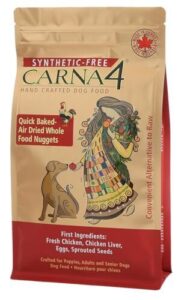
CARNA4 skips the usual kibble shortcut entirely. Instead of extruding ingredients under high heat, it quick-bakes fresh chicken, chicken liver, and whole eggs, then air-dries them to lock in live enzymes and probiotics.
The organic sprouted seed blend — barley, flaxseed, lentils, peas — does the work of synthetic vitamin premixes normally would. Each batch is tested for pathogens and aflatoxins.
At around $10 per pound, it’s not cheap, but you’re getting a whole-food formula with no fillers, no mystery meals, and no artificial additives.
| Best For | Dogs with sensitive stomachs or owners who want a clean, whole-food kibble without synthetic additives or mystery ingredients. |
|---|---|
| Primary Protein | Chicken |
| Food Form | Dry Kibble |
| Life Stage | All Life Stages |
| Grain Free | No |
| No Artificial Additives | Yes |
| Digestive Support | Probiotics & Enzymes |
| Additional Features |
|
- Made with real, recognizable ingredients — fresh chicken, eggs, liver — and no vitamin premixes or fillers
- Live probiotics and enzymes from the sprouted seed blend support gut health and firmer stools
- Works for all life stages and breeds, and it’s a solid raw-food alternative without the refrigeration hassle
- At around $10/lb with shipping, it’s significantly pricier than most kibbles
- The hard, dense nuggets can be tough for senior dogs or those with dental issues
- Limited to online purchasing, and some dogs lose interest in it over time
2. Bark Whiskers Dehydrated Beef Veggie Dog Food
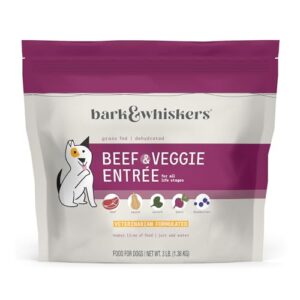
Five whole-animal proteins — beef, heart, liver, kidney, and bone — make up the foundation of Bark & Whiskers’ dehydrated formula. That’s not filler padding a label; that’s a genuinely complete amino acid profile in every serving.
Toss in organic squash, spinach, and blueberries, and you’ve got real food your dog can actually use.
Rehydrate the 3 lb bag, and it yields about 12 lbs of finished meals. Vet-formulated, AAFCO-compliant, and free of artificial anything — it’s a smart pick, especially as a topper if the price stings.
| Best For | Dog owners who want a high-protein, minimally processed meal or topper — especially those with picky eaters or dogs dealing with digestive issues. |
|---|---|
| Primary Protein | Beef |
| Food Form | Dehydrated |
| Life Stage | All Life Stages |
| Grain Free | No |
| No Artificial Additives | Yes |
| Digestive Support | Organ Meats & Fiber |
| Additional Features |
|
- Five whole-animal proteins (beef, heart, liver, kidney, bone) give your dog a naturally complete amino acid profile
- One 3 lb bag rehydrates into about 12 lbs of food — great for travel or keeping on hand for emergencies
- Vet-formulated and AAFCO-compliant, so it works for any breed, age, or size
- Premium price makes it tough to use as a sole diet for most budgets — many owners treat it as a topper instead
- Serving guidelines can run low, and some dogs lose weight if it’s their only food source
- A small number of dogs experience stomach upset, so introduce it gradually
3. Honest Kitchen Chicken Oat Dry Dog Food
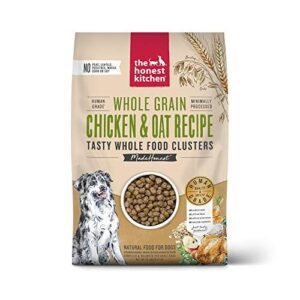
The Honest Kitchen’s Chicken & Oat formula does something most dry foods don’t — it starts with cage‑free chicken and actually means it. Oats, carrots, eggs, barley, and chicken liver round out a genuinely clean ingredient list, with no artificial preservatives, fillers, or GMOs in sight.
Salmon oil and flaxseed cover your dog’s omega needs, while added probiotics keep digestion steady.
It works for puppies, adults, and nursing moms alike.
Just add warm water, and dinner’s ready.
| Best For | Dogs at any life stage — especially pups with sensitive stomachs or food allergies who need clean, wholesome ingredients. |
|---|---|
| Primary Protein | Chicken |
| Food Form | Dehydrated Clusters |
| Life Stage | All Life Stages |
| Grain Free | No |
| No Artificial Additives | Yes |
| Digestive Support | Whole Food Clusters |
| Additional Features |
|
- Real, human-grade ingredients like chicken, eggs, and carrots — no fillers or artificial anything
- Works for every life stage, from puppies to nursing moms
- Super easy to prep — just add warm water and you’re done
- It’s pricier than most dry dog foods on the market
- Some dogs hit a gassy patch when switching over, so transition slowly
- A few buyers have noticed powdery buildup at the bottom of the bag that their dogs tend to ignore
4. Nutro Ultra Adult Dry Dog Food
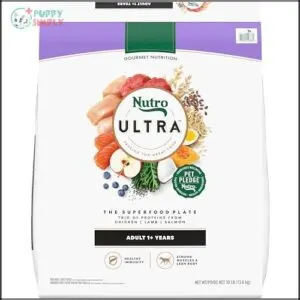
Nutro Ultra packs three proteins — chicken, lamb, and salmon — into one bowl, which gives your dog a more complete amino acid profile than single-protein kibbles.
Whole grains like brown rice, oats, and sorghum keep digestion steady, while chia seeds and flaxseed cover omega-3 and omega-6 needs.
The 14-superfood blend, including kale, blueberries, and carrots, adds real antioxidant value.
No corn, wheat, soy, or chicken by-product meal.
If your dog has grain sensitivity, though, check that ingredient list carefully before committing.
| Best For | Adult dogs who thrive on variety — especially those needing multiple protein sources, a shinier coat, or a digestive boost from real whole foods. |
|---|---|
| Primary Protein | Chicken, Lamb & Salmon |
| Food Form | Dry Kibble |
| Life Stage | Adult Only |
| Grain Free | No |
| No Artificial Additives | Yes |
| Digestive Support | Beet Pulp & Fiber |
| Additional Features |
|
- Three quality proteins (chicken, lamb, salmon) give your dog a fuller amino acid profile than most single-protein kibbles
- The 14-superfood blend — think kale, blueberries, carrots — brings real antioxidant and immune support
- Clean label: no corn, wheat, soy, or chicken by-product meal, and non-GMO to boot
- It costs more than most standard dry dog foods, which adds up fast on a 30 lb bag
- Contains grains (barley, oats, sorghum, brown rice), so dogs with grain sensitivities may not do well on it
- Formulated for adults only — not a fit for puppies, seniors with special needs, or dogs on a vet-prescribed diet
5. The Honest Kitchen Dehydrated Beef Dog Food
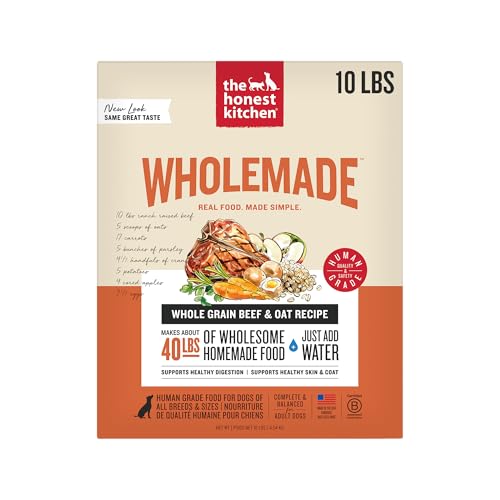
Think of this one as a pantry staple that actually earns its shelf space. The Honest Kitchen’s dehydrated beef formula is made with 100% human-grade ingredients — ranch-raised beef, organic oats, barley, flaxseed, carrots, and apples — processed in a human food facility.
No meat meals, no artificial preservatives, no fillers. Just add warm water and you’re done.
At $88.44 for a 10.5 lb bag that reconstitutes to roughly 40 lbs, the value adds up fast.
| Best For | Senior, less-active, or weight-conscious adult dogs whose owners want a clean, whole-food diet without the fuss of raw feeding. |
|---|---|
| Primary Protein | Beef |
| Food Form | Dehydrated |
| Life Stage | Adult & Senior |
| Grain Free | No |
| No Artificial Additives | Yes |
| Digestive Support | Whole Grains & Fiber |
| Additional Features |
|
- Human-grade ingredients — real beef, organic oats, fruits, and veggies with zero fillers or artificial preservatives
- Stretches surprisingly far — one 10.5 lb bag rehydrates into about 40 lbs of food
- Flexible feeding — works as a complete meal, a kibble topper, or mixed with homemade food
- Premium price tag that can sting if you’re feeding a large dog every day
- Some picky dogs aren’t fans of the texture — a few owners describe it as "sawdust-like"
- Higher carb content can cause constipation in small or sensitive dogs, so you may need to tweak the water ratio
6. Open Farm Grain Free Dog Food
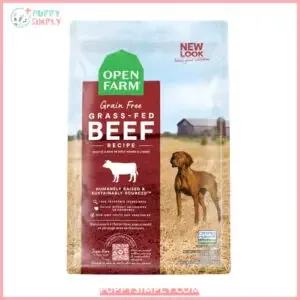
If you want real transparency, Open Farm delivers. Their Grass-Fed Beef kibble lists actual beef first — not "meat meal" or mystery protein — sourced from Certified Humane farms with traceable origins.
Non-GMO sweet potato, pumpkin, and coconut oil round out the formula. Omega-3s come from ocean whitefish meal, supporting coat and joint health.
Crude protein runs 26–32%, with no artificial preservatives or colors. It’s grain-free, suitable for all life stages, and honestly, the ingredient label reads like something worth trusting.
| Best For | Dog owners who want full ingredient transparency and are willing to pay a premium for ethically sourced, grain-free kibble that works for dogs at any life stage. |
|---|---|
| Primary Protein | Grass-Fed Beef |
| Food Form | Dry Pellet |
| Life Stage | All Life Stages |
| Grain Free | Yes |
| No Artificial Additives | Yes |
| Digestive Support | Pumpkin & Coconut Oil |
| Additional Features |
|
- Real grass-fed beef is the first ingredient — no mystery proteins or fillers
- Non-GMO fruits, veggies, and superfoods like pumpkin and coconut oil support digestion and coat health
- Suitable for all life stages, so you won’t need to switch foods as your dog grows
- Pricier than most dog food brands on the market
- Some dog owners find the smell stronger than expected
- Occasional quality control complaints have been reported by a small number of buyers
7. Wild Earth Golden Rotisserie Vegan Dog Food
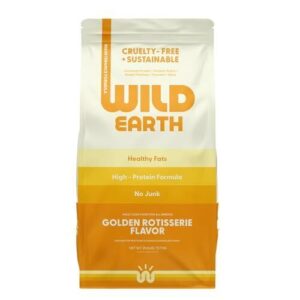
Not every dog needs meat to thrive. Wild Earth’s Golden Rotisserie kibble proves that — built on barley, brown rice, sweet potato, and dried yeast, with taurine and L-carnitine added for heart support.
Protein sits around 23%, fat and fiber are balanced, and flaxseed covers your omega needs.
It’s a solid pick if your dog struggles with meat-based allergies.
One caveat: store it carefully, because the oils can turn rancid if the bag sits open too long.
| Best For | Dogs with meat, dairy, or wheat allergies — and owners who want a more sustainable, plant-based option without sacrificing complete nutrition. |
|---|---|
| Primary Protein | Plant-Based (Yeast) |
| Food Form | Dry Kibble |
| Life Stage | All Life Stages |
| Grain Free | No |
| No Artificial Additives | Yes |
| Digestive Support | Flaxseed & Ancient Grains |
| Additional Features |
|
- Clean ingredient list built on whole grains, sweet potato, and flaxseed — great for sensitive stomachs
- Added taurine and L-carnitine give real heart and metabolic support
- Lower environmental footprint than traditional meat-based kibble
- Oils can go rancid fast if the bag isn’t sealed and stored properly
- Pricier than most conventional dry dog foods
- Some dogs just won’t take to the plant-based taste or smell
8. JustFoodForDogs Joint Skin Support Dog Food
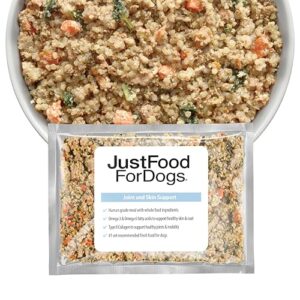
If your dog needs more than just clean ingredients — say, creaky joints or a coat that won’t quit flaking — JustFoodForDogs Joint & Skin Support steps up. It’s frozen, preservative-free, and built on pork, quinoa, kale, and marine microalgae oil, with glucosamine sulfate added for real joint support. Human-grade ingredients, gently cooked.
Vets actually use this brand in clinical trials, which says something.
At $97.99 for a 7-pack, it’s a splurge — but for a dog with skin or mobility issues, it’s worth considering.
| Best For | Dogs dealing with joint stiffness, skin irritation, or a dull, flaky coat — especially adults who need a cleaner, more digestible diet. |
|---|---|
| Primary Protein | Pork |
| Food Form | Frozen Cooked |
| Life Stage | Adult Only |
| Grain Free | No |
| No Artificial Additives | Yes |
| Digestive Support | 40% More Digestible |
| Additional Features |
|
- Real glucosamine, marine microalgae oil, and flaxseed work together to support joints and improve coat health from the inside out
- Human-grade ingredients, gently cooked — about 40% more digestible than kibble, which is a big deal for sensitive stomachs
- Vet-recommended and used in clinical research, so it’s not just marketing fluff
- At $97.99 for a 7-pack, it’s a steep ask — especially if you have a big dog or more than one
- Needs freezer space and advance thawing, and once it’s open, you’re on the clock to use it
- Pork-based formula rules it out for dogs with pork sensitivities or specific protein restrictions
9. Natural Balance Sweet Potato Venison Dog Food
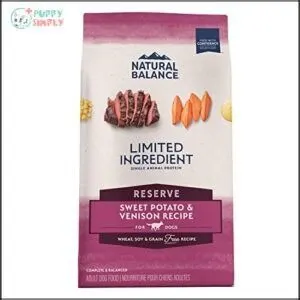
For dogs on the simpler end of the spectrum — fewer ingredients, fewer triggers — Natural Balance Sweet Potato & Venison is worth a look.
It’s grain-free, single-protein (venison), and leans on sweet potato for digestible fiber and steady energy. No artificial preservatives, no corn, no soy.
The guaranteed analysis shows 20% protein minimum and 10% fat, solid numbers for a sensitive-stomach formula.
At $27.98 for 4 lbs, it’s affordable, especially if your dog has been cycling through food reactions.
| Best For | Dogs with food sensitivities, allergies, or digestive issues who need a simple, single-protein diet with limited common allergens. |
|---|---|
| Primary Protein | Venison |
| Food Form | Dry Kibble |
| Life Stage | All Life Stages |
| Grain Free | Yes |
| No Artificial Additives | Yes |
| Digestive Support | Sweet Potato Fiber |
| Additional Features |
|
- Single venison protein source keeps ingredient triggers low — great for dogs with known food allergies
- Grain-free formula with sweet potato offers digestible fiber that’s gentle on sensitive stomachs
- No artificial colors, flavors, or preservatives, and Natural Balance does batch-to-batch safety testing
- Some dogs still experience loose stools or GI upset, and batch consistency has been flagged in reviews
- At $27.98 for just 4 lbs, the price per pound runs higher than most standard dry foods
- Despite being "limited ingredient," the formula actually contains 30 ingredients — peas and canola oil included, which can still trigger reactions in some dogs
Switching Dogs to Safer Foods

Switching your dog to a cleaner food doesn’t have to be stressful — it just takes a little planning. A few practical steps can make the whole process smoother for both of you.
Here’s what to know before you get started.
7. to-10-day Food Transition Plan
Switching foods too fast is one of the most common mistakes people make — and your dog’s gut pays the price. Follow this ratio adjustment schedule over 7 to 10 days, keeping feeding consistency and meal timing locked in throughout.
| Day | Mix Ratio |
|---|---|
| 1–3 | 75% old / 25% new |
| 4–6 | 50% / 50% |
| 7–9 | 25% old / 75% new |
| 10 | 100% new food |
Stool monitoring and appetite observation daily keep your switching timeline on track.
Signs of Food Intolerance or Allergies
Watch your dog closely after switching — reactions don’t always show up immediately. Itchy skin, hives, or facial swelling point toward a true allergy, while digestive upset like gas, bloating, or diarrhea usually signals intolerance.
Respiratory distress is rare but serious. Many symptoms are delayed reactions appearing hours later. If symptoms persist, consider a dog allergy testing kit before resuming the new food.
Choosing Foods by Age, Breed, and Activity
Age, size, and activity level matter more than most owners realize.
Puppy calorie needs are higher than adult requirements — growth demands nutrient-dense, age-specific organic diets.
Senior joint support becomes a priority as mobility slows.
Small breed kibble sizing helps tiny dogs chew safely.
High-energy or working dogs need activity-based feeding with high-quality protein sources to sustain performance without weight swings.
Mixing Commercial Food With Safe Fresh Add-ins
Adding fresh food to kibble sounds simple, but nutrient balance shifts the moment you do. Keep add-ins to 10% or less of the meal — enough for variety without disrupting calorie adjustment or the guaranteed analysis on the label.
Prioritize food safety handling: use clean bowls, refrigerate perishables fast, and watch stool consistency closely. Softer stools often mean you’ve added too much.
When to Ask a Veterinarian for Guidance
Your vet isn’t just for emergencies — but some situations can’t wait. Call immediately if you notice:
- Persistent vomiting or severe diarrhea, especially with blood
- Breathing difficulty, sudden collapse, or loss of consciousness
- Poisoning signs — drooling, tremors, or seizures after eating
- Sudden appetite or energy changes that feel "off"
For ongoing pet nutrition safety and diet planning, a veterinary nutritionist formulation beats guesswork every time.
Frequently Asked Questions (FAQs)
What foods are non toxic to dogs?
Roughly 70% of U.S. households own a dog — yet most people don’t realize how many everyday foods double as safe, nourishing treats.
Cooked chicken, salmon, carrots, blueberries, and plain oatmeal are all fair game.
What is the 7 7 7 rule for dogs?
The 7-7-7 rule maps a dog’s adjustment in stages: 7 days for first week adjustment, 7 weeks building people exposure and sound desensitization, and 7 months for full confidence building.
Can dogs eat raw food safely at home?
Raw feeding for dogs can work, but bacterial contamination, nutrient balance gaps, and bone hazards are real risks.
Veterinary guidance and safe handling practices matter. Without both, even well-intentioned raw diets can backfire quickly.
How do heavy metals end up in dog food?
Heavy metals enter dog food through ingredient sourcing, processing contamination, mineral additives, and even water used in manufacturing.
Arsenic, cadmium, and lead levels shift with batch variability — making food contaminants monitoring genuinely important.
Are vegan dog foods nutritionally complete and balanced?
Yes — properly formulated vegan and plant-based dog food can be nutritionally complete.
Look for AAFCO feeding guidelines compliance, taurine fortification, L-carnitine inclusion, algae-derived DHA, and synthetic amino acids ensuring full micronutrient bioavailability.
How does organic dog food differ from natural?
Organic means third-party audits, strict ingredient sourcing rules, GMO prohibition, and animal welfare standards — all verified through certification. "Natural" has no such oversight. Two "natural" foods can differ wildly.
Conclusion
Imagine your dog’s bowl as a canvas, where every ingredient paints a picture of health or harm. By choosing non-toxic foods dogs can safely enjoy, like lean proteins and dog-safe fruits, you’re taking control of their well-being.
Cut out artificial preservatives, colors, and sweeteners that do more harm than good. With informed choices, you can nourish your loyal companion with confidence, creating a masterpiece of vitality—one meal at a time, every day.