This site is supported by our readers. We may earn a commission, at no cost to you, if you purchase through links.
A mat doesn’t start as a mat. It starts as a missed brushing session, a damp coat left to air dry, or a collar rubbing the same patch of fur day after day. By the time you notice it, what began as a small tangle has tightened into a dense knot pulling against your dog’s skin.
For long-haired breeds, this happens faster than most owners expect—sometimes within days. Long hair dog matting isn’t just a cosmetic problem; severe mats restrict movement, trap moisture, and hide skin infections.
Knowing how to remove them safely, and stop them from returning, makes grooming far less stressful for both of you.
Table Of Contents
- Key Takeaways
- Why Long-Haired Dogs Get Matted Hair
- Where and How Mats Form on Dogs
- Essential Tools for Dematting Long Hair
- Step-by-Step Guide to Removing Mats
- Preventing Matting in Long-Haired Dogs
- Frequently Asked Questions (FAQs)
- How to prevent matting in long haired dogs?
- Should I cut off my dog’s matted fur?
- How to fix extremely matted dog hair?
- Is matted hair painful for dogs?
- Can matting affect my dogs behavior or mood?
- How do I groom a dog that hates brushing?
- Are certain mat-prone areas harder to treat?
- What age do dogs start developing severe mats?
- Is mat removal covered by pet insurance plans?
- Conclusion
Key Takeaways
- Mats form silently from friction, moisture, and skipped brushing — by the time you feel one, it’s already pulling against your dog’s skin.
- Certain spots like the collar line, armpits, and behind the ears mat faster than anywhere else, so those are the places to check first every single time.
- Damp fur is your biggest enemy — always dry your dog thoroughly after baths or wet walks, and brush as you go to stop tangles from locking in.
- When a mat sits tight against the skin and won’t budge, don’t force it — that’s the moment to hand things off to a professional groomer before it becomes painful.
Why Long-Haired Dogs Get Matted Hair
Matting doesn’t happen overnight — it builds up quietly until it becomes a real problem for your dog.
Catching it early — and knowing how to wash a dog with matted fur — makes a huge difference before tangles turn into tight, painful knots.
A few key factors make long-haired dogs especially vulnerable, and knowing them helps you stay one step ahead. Here’s what’s actually working against you.
Common Causes of Matting
Matted dog hair doesn’t happen overnight — it builds up quietly. Four things drive most matting cases:
- Friction Issues from collars and harnesses rubbing repeatedly
- Moisture trapped after baths or rainy walks
- Shedding seasons leaving loose hair tangled in the topcoat
- Skipped grooming sessions letting small knots tighten into stubborn mats
Your dog’s coat health depends on catching these early.
Breeds Most at Risk
Some dogs are just built for matting — it’s not your fault, it’s their coat. Poodles, Doodles, and Portuguese Water Dogs top the list for curly coat issues.
Shih Tzus, Maltese, and Yorkies struggle with long hair problems around the ears and legs. Even double-coated breeds like Huskies need consistent coat maintenance tips to stay mat-free.
Know your dog’s type — it changes everything about detangling and dog grooming. To learn more about specific mat prevention techniques for breeds, explore resources dedicated to proper coat care.
Environmental and Seasonal Factors
Your dog’s coat doesn’t mat in a vacuum — the world outside plays a bigger role than most owners realize. Climate effects, seasonal shedding, and outdoor hazards all quietly work against your grooming routine.
- Humidity control matters: wet coats tangle twice as fast
- Salt air in coastal areas worsens long-haired dogs’ matting
- Spring and fall spike shedding and matting prevention demands
- Cold temps create brittle fur and trapped undercoat
- Mud, debris, and allergens bind hair together fast
Adjust your dog hair maintenance seasonally — your grooming routine should shift with the weather. It’s important to think about how directly impact your dog’s grooming needs and coat health.
Seasons like shedding-heavy spring and dry winter call for different approaches, so brushing up on long-haired dog washing and bathing techniques can help you stay ahead of coat issues before they start.
Where and How Mats Form on Dogs

Mats don’t just appear randomly — they tend to show up in the same spots, for the same reasons, every time. Knowing where to look and what triggers them puts you way ahead of the problem.
Here’s what you need to watch for.
High-Friction Areas Prone to Matting
Some spots on your dog are basically mat magnets. Collar friction wears down the neck fur, while ear matting builds fast behind floppy ears. Armpit tangles and leg mats form wherever skin meets skin during movement.
| Area | Main Cause |
|---|---|
| Collar line | Constant rubbing |
| Behind ears | Friction and moisture |
| Armpits/legs | Movement and humidity |
Daily detangling in these zones prevents matted dog hair from becoming a painful dematting job.
Impact of Shedding and Moisture
Two things speed up matting faster than anything else: shedding seasons and moisture. When your dog’s coat gets wet — from rain, a swim, or bath time — damp strands curl and lock together as they dry. Humidity makes it twice as bad. Here’s what to watch for:
- Dead undercoat fur traps against the skin during heavy shedding
- Wet dog hair tangles tighten as the coat air-dries
- Curly and wavy coat textures mat faster with moisture
- Humidity effects accelerate matting, especially in double-coated breeds
- Skipping detangling after baths turns small knots into stubborn mats
Use a moisturizing shampoo, dry thoroughly, and brush before the coat fully sets for better matting prevention and shedding control.
Signs Your Dog’s Hair is Matting
Catching matting early saves you a lot of grief. Run your fingers through your dog’s coat regularly — you’re feeling for clumps, resistance, or dampness that won’t dry out.
Skin irritation, hair breakage, and a dull coat condition are all warning signs. If your dog flinches, licks, or smells off near a spot, that’s matted dog hair demanding attention before detangling becomes a real grooming challenge.
When your dog flinches, licks, or smells off near a spot, matting is already demanding your attention
Essential Tools for Dematting Long Hair

Having the right tools on hand makes all the difference between a stressful dematting session and a smooth one. You don’t need a full professional kit, but a few key items will help you work through knots safely and without hurting your dog.
Here’s what you’ll want to have within reach before you start.
Brushes and Combs for Matted Hair
Having the right detangling tools makes all the difference. A slicker brush breaks up early tangles before they tighten into mats, while mat rakes reach deep into dense coats without damaging the topcoat.
Follow up with a wide-tooth comb to check your work, then use finishing combs for a smooth finish. Pin combs and dematting dog brushes round out your essential kit.
Detangling Sprays and Conditioners
A good detangling spray is like a hall pass for stubborn knots — it slips between tangled strands so your tools can actually do their job. When choosing detangling products, look for gentle formulas with natural ingredients:
- Leave-in conditioning sprays like BioSilk’s silk protein mist add shine while dematting
- Lavender-scented detanglers like Dood Woof work especially well on curly, Doodle-type coats
- Lightweight conditioner types like The Stuff keep coats manageable between sessions
When to Use Scissors or Clippers
Sometimes a brush just won’t cut it — literally. When mats are too tight to work through, switching to scissors or clippers is the right call. Smart tool selection makes mat removal safer and less stressful for your dog. Use grooming shears with blunt tips for sensitive spots, and clippers with a comb attachment for larger areas.
| Situation | Best Tool |
|---|---|
| Small, loose tangles | Slicker brush or comb |
| Mats near eyes or paws | Blunt-tip grooming shears |
| Large body mats | Clippers with comb guard |
| Skin-tight severe matting | Professional groomer |
| General dematting sessions | Dematting comb + detangling spray |
Step-by-Step Guide to Removing Mats
Removing mats doesn’t have to be a battle — it just takes the right approach and a little patience. The key is working through it in a specific order so you don’t cause more pain or damage the coat.
Here’s exactly how to do it, from start to finish.
Preparing Your Dog for Dematting
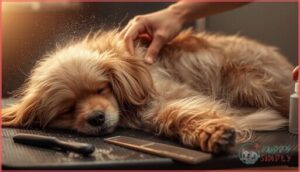
Before you start dematting, a little prep goes a long way. Do a quick coat inspection to find every mat, then choose your tools based on how dense the tangles are.
Set your dog up on a grooming table, offer treats, and speak calmly — a relaxed dog makes detangling so much easier. Mist matted dog hair lightly with a detangling spray and let it soak for five minutes before you begin.
Gentle Detangling Techniques

Once the detangler has soaked in, work in small sections — never tackle the whole mat at once. Use your fingers first to gently split it apart, then follow with a wide-tooth comb from the ends upward.
These gentle detangling techniques protect the coat and keep your dog calm. For long-haired dog care, patient mat removal beats rushing every time.
Tips for Reducing Discomfort and Stress
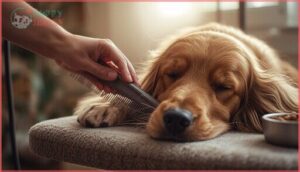
Keep the space quiet and calm — that alone does more for stress reduction than most dog grooming tips combined. Speak softly, pause often, and offer treats throughout dematting. A gentle touch near the skin prevents pulling, and short sessions prevent overwhelm.
For long-haired dog care, relaxation techniques like slow breathing and breaks turn a tense detangling moment into something your dog can actually tolerate.
Preventing Matting in Long-Haired Dogs

Removing a mat is only half the battle — keeping them from coming back is where the real work begins. The good news is that prevention mostly comes down to a few consistent habits.
Here’s what actually has an impact for long-haired dogs.
Establishing a Grooming Routine
Consistency is everything regarding mat prevention for long-haired dogs. A solid grooming routine keeps detangling manageable before mats take hold.
Brush silky coats daily and thick or double coats three to four times weekly. Work in sections using a slicker brush, and schedule regular trimming every six to eight weeks. That rhythm protects the coat year-round.
Bathing and Drying Best Practices
Bathing your long-haired dog every four to six weeks strikes the right balance — clean coat, natural oils intact.
Use a sulfate-free shampoo suited to their coat type, rinse thoroughly, then pat dry with a microfiber towel instead of rubbing. Finish with a low-heat pet dryer, brushing as you go.
Damp hair mats fast, so never skip the drying step.
Nutrition and Coat Health Maintenance
What your dog eats shows up in their coat. A balanced diet rich in healthy fats — especially omega benefits from fish oil — keeps long-haired dogs’ fur smooth and less prone to tangling.
Nutrient deficiency often shows as dullness or excessive shedding before matting sets in. Add coat supplements with biotin or omega-3s, and your dog nutrition and diet routine becomes your best coat maintenance tool.
When to Seek Professional Grooming
Some dogs simply need more than home care can offer. Breeds like Poodles and Shih Tzus benefit from professional grooming every six to eight weeks — their coats demand specialized dog grooming techniques that go beyond a regular brush-out.
If mats sit tight against the skin, don’t wait. A skilled dog groomer manages safe mat removal, offers professional advice, and keeps your canine grooming and coat maintenance on track.
Frequently Asked Questions (FAQs)
How to prevent matting in long haired dogs?
Preventing matting starts with Daily Brushing, Coat Conditioning, and Regular Trimming every 6–8 weeks.
Gentle Detangling sprays help with knots, while consistent Mat Prevention grooming tips keep longhaired dogs tangle-free and comfortable year-round.
Should I cut off my dog’s matted fur?
Sometimes cutting is the safest mat removal method, especially when mats are too tight for dematting techniques.
Fur cutting risks are real — scissors near skin require steady hands and serious caution.
How to fix extremely matted dog hair?
Fixing extremely matted dog hair feels like untangling a lifetime of knots overnight.
Start from the ends, use a detangler, and work upward slowly with proper dematting tools for safe mat removal.
Is matted hair painful for dogs?
Yes, matted dog hair is genuinely painful. Matting discomfort comes from hair tangles pulling tight against the skin, causing skin irritation, restricting movement, and even triggering canine anxiety — pain detection is often missed until it’s severe.
Can matting affect my dogs behavior or mood?
Like a pebble stuck in your shoe, matting creates relentless discomfort that quietly reshapes your dog’s mood and canine behavior — triggering matting anxiety, behavioral changes, irritability, and avoidance that owners often mistake for attitude.
How do I groom a dog that hates brushing?
Start with short touch-only sessions — no brush, just your hands. Build trust before introducing tools.
Pair every brush stroke with treats to turn canine anxiety into fearless brushing through consistent desensitization methods.
Are certain mat-prone areas harder to treat?
Particularly problematic mat-prone zones — behind the ears, underarms, and collar areas — demand extra patience.
Sensitive skin care matters most here, as high friction management and careful dematting techniques prevent pain during detangling.
What age do dogs start developing severe mats?
Severe mats often appear between 9–18 months, during the puppy coat shift. That’s when loose puppy fur tangles with incoming adult growth — a critical window in canine hair care that demands consistent attention.
Is mat removal covered by pet insurance plans?
Mat removal costs rarely fall under standard pet insurance coverage. Most insurers classify it as cosmetic, not medical.
Check your policy exclusions carefully — some wellness add-ons do cover routine dog care and canine maintenance services.
Conclusion
The irony of long hair dog matting is that the coat you work so hard to keep beautiful can quietly become your dog’s biggest source of discomfort—right under your hands. Every brushing session you skip is a knot that forms, tightens, and pulls.
But every session you keep is an act of care your dog feels. Stay consistent, catch tangles early, and grooming stops being a battle. It becomes something your dog actually leans into.
- https://outleash.com/grooming-hygiene/brushing-coat-care/matting-in-dogs-how-to-prevent-detangle-and-when-to-stop/
- https://pawledger.org/understanding-matted-dog-hair-causes-prevention-safe-removal/
- https://pangovet.com/talk-to-a-vet-online-dog-preventative-wellness/?utm_source=hepper&utm_medium=article&utm_campaign=dog-preventative-wellness&utm_content=home-remedies-for-matted-dog-hair
- https://thegroomerywaco.com/pet-care-corner/understanding-matting-what-causes-it-and-how-to-prevent-it
- https://pethubusa.com/dogs/keep-your-dogs-fur-from-matting/