This site is supported by our readers. We may earn a commission, at no cost to you, if you purchase through links.

A dirty crate bed doesn’t just smell bad—it becomes a breeding ground for bacteria, mites, and mold that can trigger skin infections, respiratory issues, and digestive problems in your dog. Most pet parents underestimate how quickly grime, dander, and moisture accumulate in these confined spaces, especially when dogs spend hours sleeping, drooling, and shedding inside.
The good news: keeping your dog’s crate bed fresh doesn’t require expensive products or hours of scrubbing. With a few daily habits and the right techniques for deep cleaning, you’ll create a healthier space that protects your pup from preventable health issues while extending the life of your crate.
Table Of Contents
- Key Takeaways
- Why Keeping Your Dog Crate Bed Clean Matters
- Daily Cleaning Tips for Dog Crate Beds
- Deep Cleaning Methods for Crate Beds
- Odor Control and Sanitization Strategies
- Cleaning Tips for Different Crate Materials
- Frequently Asked Questions (FAQs)
- How to keep a dog bed smelling fresh?
- How to keep a dog crate smelling fresh?
- How do I keep dirt out of my bed from dogs?
- How often should I replace the crate bed?
- Can I use a steam cleaner on bedding?
- What if my dog has chronic accidents inside?
- Are waterproof liners worth the extra cost?
- How do I clean a bed thats falling apart?
- Conclusion
Key Takeaways
- Daily habits like shaking out bedding, wiping surfaces, and airing the crate for 10–15 minutes prevent bacteria buildup without requiring major time or effort.
- Deep cleaning every few weeks with enzymatic cleaners and hot-water washing removes 99% of allergens and kills parasites that cause skin infections and respiratory issues.
- Different crate materials need tailored approaches—plastic handles hose-downs and bleach, wire requires gentle scrubbing to protect coatings, and fabric needs machine washing on low heat.
- Baking soda and enzymatic cleaners neutralize odors at the molecular level instead of masking them, while proper ventilation and humidity control below 50% stop mold growth.
Why Keeping Your Dog Crate Bed Clean Matters
A clean crate bed isn’t just about appearances—it’s about keeping your dog healthy and comfortable.
A quality bed also helps maintain hygiene by providing a washable surface that protects against dirt and odors—discover more about how the right bed enhances your dog’s crate experience.
Dirt, bacteria, and trapped moisture can lead to skin irritations, respiratory issues, and unwanted pests.
Dirt, bacteria, and moisture trapped in crate beds trigger skin irritations, breathing problems, and pest infestations in dogs
Understanding why regular cleaning matters helps you protect your dog’s well-being and create a space they actually want to rest in.
Health and Hygiene Benefits
A healthy environment starts with clean living, and pet sanitation directly protects your dog’s well-being. Disease prevention through regular hygiene practices shields your pup from infections and irritants.
Here’s how dog crate cleaning promotes pet health and hygiene:
- Reduces bacteria that trigger skin infections, hotspots, and dermatitis
- Lowers dander and allergens for easier breathing
- Minimizes flea and mite transmission risks
- Prevents mold growth and respiratory irritation
- Aids faster recovery from skin or digestive issues
Reducing Odors and Allergens
Odor control starts with odor neutralization—enzymatic cleaners break down organic compounds at the source, while baking soda combats acidic and basic smells overnight. Allergen removal through weekly hot-water washing reduces dander by 99 percent.
Add air purification with HEPA filters, fabric sanitizing with pet-safe disinfectants, and moisture control below 50 percent humidity. Incorporating air filtration strategies for allergens can further improve your dog’s crate environment. Together, these steps transform your dog’s crate into a fresher, healthier retreat.
Preventing Parasites and Infections
Dog crate sanitization guards against parasites and infection prevention. Dirty bedding harbors roundworms, Giardia, and bacteria that threaten dog health and hygiene.
Here’s your defense plan:
- Disinfect weekly with pet-safe cleaners to kill eggs and larvae
- Schedule vet checks annually to screen for hidden parasites
- Practice pet hygiene by washing hands after crate cleaning
- Monitor outdoor risks and wash bedding after exposure
Clean crates mean healthier pups.
Regular sanitizing prevents bacteria buildup that could harm your border collie rottweiler mix during their crate training journey.
Daily Cleaning Tips for Dog Crate Beds
You don’t need to scrub the entire crate from top to bottom every single day—that would drive anyone crazy.
A few quick habits can keep things fresh without eating up your time. Here’s what to focus on when you’re doing your daily check-in.
Removing Soiled Bedding and Debris
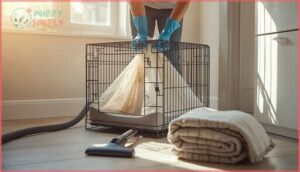
Start your daily cleaning routine by pulling out any damp or soiled linens right away—use gloves and a sealed bag to keep things tidy. Pick up solid debris with your hands or a vacuum, then shake bedding outdoors to release trapped hair and dirt.
This simple step prevents odors from settling in and keeps your dog’s space fresh between deeper washes.
Quick Wipes and Surface Maintenance
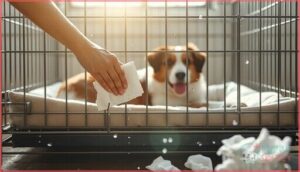
Grab a pre-moistened wipe to tackle crate surfaces in seconds—each one covers about 1 to 2 square feet, so you can freshen hard floors, plastic walls, and metal trays without mixing solutions. Choose pet safe products labeled non-toxic, and let disinfectant wipes sit briefly for proper surface sanitizing. For more on the different advantages and hazards of various wipes, see these surface wipes safety tips.
This daily cleaning habit keeps your dog’s space hygienic between deeper scrubs:
- Use soft or coarse wipes depending on how much grime you need to lift.
- Wipe down plastic crates with citric acid or vinegar-based formulas.
- Treat stainless steel trays gently to avoid scratches.
- Spot-clean fabric bedding with enzymatic wipes for organic stains.
- Seal packaging after each use to maintain wipe effectiveness.
Ventilating The Crate
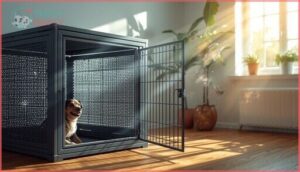
After wiping surfaces, prop open the door for 10 to 15 minutes so fresh air circulation flushes out moisture and stale smells.
Airflow design in modern crates features perforated panels and vent slots 2 to 6 mm wide, promoting crate aerodynamics that lift humidity and reduce bacteria.
Breathable materials in ventilation systems transform your dog crate into a healthier space, making odor control and pet hygiene easy daily habits.
Deep Cleaning Methods for Crate Beds
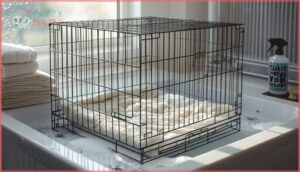
Every few weeks, your dog’s crate needs more than a quick wipe-down—it needs a thorough scrub to tackle grime, bacteria, and odors that daily cleaning misses.
A deep clean involves disassembling the crate, washing every component, and sanitizing all surfaces from top to bottom. Here’s how to tackle each step so your pup’s space stays fresh and healthy.
Gathering The Right Cleaning Supplies
Before you dive into a deep clean, you’ll want the right arsenal at your fingertips. Stock up on pet safe cleaners like enzymatic cleaners for organic stains, a mild all-purpose cleaner for daily upkeep, and baking soda or vinegar as eco-friendly options.
Keep microfiber cloths, non-abrasive sponges, and a handheld vacuum in your cleaning toolkit—organized supply storage makes this routine easy.
Washing Bedding and Removable Covers
You can’t skip washing those covers if you care about dog health and hygiene. Pull off removable crate liners and check care labels before tossing them in—warm to hot water works wonders for killing germs and lifting odors.
Here’s your straightforward cleaning routine:
- Pre-treat fresh stains with enzyme detergent and let sit 10 minutes
- Use pet-friendly detergent on gentle to warm washing cycles
- Air dry or tumble on low heat to protect fabric care
- Rotate two covers so one dries while the other’s in use
Scrubbing and Rinsing The Crate Interior
Once bedding’s out, interior scrubbing addresses the grime your pup leaves behind. Use a nylon brush with pet-safe enzymatic cleaners or mild soap in warm water—scrub corners for 20 to 30 seconds each.
Rinse from top to bottom until no suds remain, then wipe dry with microfiber cloths. Proper crate sanitizing and rinse techniques prevent residue buildup, keeping dog crate cleaning safe and odor control effective.
Cleaning Removable Trays and Accessories
Trays trap stubborn residue and bacteria, so wash them with pet-safe soap and warm water after every soiling incident—ideally within two hours. Scrub gently to avoid scratching, rinse until suds disappear, then dry completely with a towel before reinserting.
For accessories like mats, check care labels and machine wash on hot cycles. Proper tray maintenance and sanitizing tips keep dog crate cleaning effective, supporting odor control and crate maintenance for pet owners.
Odor Control and Sanitization Strategies
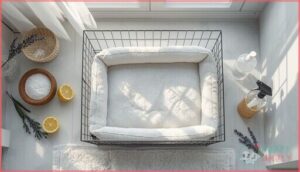
Even the cleanest crate can develop stubborn smells over time, especially if accidents happen or moisture gets trapped in bedding.
Tackling odors means more than just masking them—you need to break down the bacteria and molecules causing the problem in the first place. Here’s how to keep your dog’s space fresh and properly sanitized without harsh chemicals.
Using Enzymatic and Pet-Safe Cleaners
When dealing with stubborn urine or feces odors, enzymatic cleaners break down the organic molecules that fuel those smells.
These pet-safe products use proteases and lipases to convert waste into water and carbon dioxide, targeting odors at the source rather than masking them. Choose biodegradable, chlorine-free formulas, apply generously to damp the area, then let them sit for the recommended time before wiping clean.
Baking Soda and Natural Deodorizers
For natural odor control between washes, baking soda offers powerful deodorizing benefits without harsh chemicals. Sprinkle a light layer on bedding, let it sit for 15 to 20 minutes, then shake or vacuum off the residue.
You can also blend it with cornstarch and a drop of pet-safe lavender oil for gentle freshening techniques. Place open containers near—not in—the crate to absorb lingering smells naturally.
Proper Drying and Ventilation
After absorbing odors, the next step centers on airflow management and moisture control. Proper ventilation systems prevent mildew while supporting your dog’s health through effective drying techniques.
- Position two opposing fans to create cross ventilation, replacing air every 5 to 10 minutes around the dog crate.
- Pair airflow with a dehumidifier set to 40 to 50 percent humidity for faster sanitization and odor removal.
- Maintain room temperature at 68 to 72 degrees to speed evaporation without warping crate materials or affecting your dog.
Cleaning Tips for Different Crate Materials
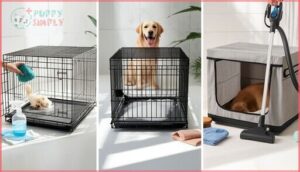
Not all crates are built the same, and that means your cleaning approach needs to flex a bit depending on what you’re working with.
Plastic, wire, and fabric crates each have their quirks—some can handle a good hose-down, while others need a gentler touch. Here’s how to tackle each type without damaging the materials or leaving residue behind.
Plastic, Wire, and Fabric Crates
Each crate type needs its own cleaning approach. Plastic models tolerate broad agents—mild detergents or diluted bleach—and you can hose them down easily. Wire frames need gentle scrubbing with non-abrasive sponges to protect powder coatings, while fabric versions require machine or hand washing on low heat.
Here’s a quick crate material comparison for dog crate maintenance and pet odor control:
| Crate Type | Best Cleaning Method |
|---|---|
| Plastic | Hose down, scrub with soap, rinse thoroughly |
| Wire | Disassemble, wipe bars, avoid abrasives |
| Fabric | Machine wash covers, air dry frame |
| All Types | Air dry completely before reuse |
Regular crate cleaning boosts dog health and crate durability.
Washing and Drying Bedding Materials
Toss white cotton covers into the machine on a hot cycle if they’re white cotton, or stick with warm water for colors to keep them vibrant. Pre-treat visible stains, add baking soda to neutralize pet odors.
Then run an extra rinse for thick items. Tumble dry on low heat or line dry outside—sunshine naturally disinfects while you protect fabric integrity and extend your dog’s bedding lifespan.
Choosing Pet-Safe Cleaning Products
Check labels for EPA Safer Choice certification—that’s your green light for pet safe disinfectants that won’t irritate paws or lungs.
Plant-based cleaners and enzymatic cleaners tackle organic messes without harsh chemicals, while fragrance free options prevent respiratory distress in sensitive dogs.
Look for eco friendly products with clear ingredient lists, and always choose pet safe cleaners designed specifically for pet-friendly cleaning routines.
Frequently Asked Questions (FAQs)
How to keep a dog bed smelling fresh?
Nothing smells worse than a stale dog bed radiating musty funk into your living room.
Wash bedding weekly, sprinkle baking soda inside to absorb moisture, and use enzymatic cleaners for persistent pet odors.
How to keep a dog crate smelling fresh?
Vacuum weekly, sprinkle baking soda on bedding, use enzymatic cleaners on accidents, and maintain airflow with Fresh Air Strategies—pet odor control starts with routine sanitization and Natural Cleaners that neutralize ammonia without irritating your dog’s nose.
How do I keep dirt out of my bed from dogs?
A washable bed liner acts like a shield, trapping dirt before it reaches the mattress.
Wipe your dog’s paws after walks, brush regularly, and use a moisture-catching mat outside the crate entrance.
How often should I replace the crate bed?
Replace your dog crate bed every 12 to 24 months with normal use.
Swap sooner if odors persist after washing, fabric tears appear, or foam flattens—material durability and bed hygiene directly impact your dog’s health and comfort.
Can I use a steam cleaner on bedding?
Steam cleaning packs a punch when sanitizing bedding—just test a hidden spot first.
Most fabrics handle low-moisture steam well, but memory foam needs caution. Dry thoroughly to prevent mold and maintain pet safety.
What if my dog has chronic accidents inside?
If chronic accidents persist, schedule a vet visit to rule out medical causes like urinary tract infections or incontinence.
Meanwhile, use enzymatic cleaners for urine odor removal and revisit crate training tips to address accident patterns.
Are waterproof liners worth the extra cost?
If your dog soils the crate daily, waterproof liners can cut laundry costs and prevent deep staining.
They usually pay for themselves in one to two months through reduced bedding changes.
How do I clean a bed thats falling apart?
If your bed’s falling apart, patch small tears with fabric repair glue, replace worn cushions, and reinforce weak seams.
Severely damaged beds pose safety risks—consider replacement to maintain proper crate cleaning and dog crate maintenance standards.
Conclusion
You don’t need to spend hours on this—five minutes of daily upkeep makes all the difference. Shake out bedding, wipe down surfaces, and air out the crate between uses.
When you pair these quick habits with a weekly deep clean, you’ll prevent the buildup that causes health issues and odors. Learning how to keep dog crate bed clean protects your dog from infections, allergens, and parasites while keeping your home fresher and more inviting.