
This site is supported by our readers. We may earn a commission, at no cost to you, if you purchase through links.

You reach for a treat just as your dog nails the perfect sit, but by the time you fumble through your pocket, the moment’s gone—and so is their focus. Training moves at the speed of your dog’s attention span, and every second you spend digging for rewards is a missed opportunity to reinforce good behavior.
Treat pouches solve this fundamental timing problem by putting rewards exactly where you need them: instantly accessible at your hip. When you can deliver a treat within one to two seconds of the desired behavior, your dog makes the connection between action and reward with crystal clarity. This simple piece of equipment transforms scattered training sessions into focused, productive work that builds skills faster and strengthens the bond between you and your dog.
Table Of Contents
- Key Takeaways
- Why Treat Pouches Improve Training Sessions
- How Treat Pouches Enhance Learning Efficiency
- Key Features of Quality Treat Pouches
- Types of Treat Pouches Available
- Effective Training Techniques Using Treat Pouches
- Choosing The Right Treat Pouch
- Cleaning and Maintaining Your Treat Pouch
- Overcoming Common Treat Pouch Challenges
- Advanced Applications for Treat Pouches
- Long-Term Benefits of Treat Pouches
- Frequently Asked Questions (FAQs)
- Can you use a treat pouch for training?
- Is it better to train dogs without treats?
- Can treat pouches help with leash training walks?
- Are treat pouches suitable for puppy socialization classes?
- Do treat pouches work for training aggressive dogs?
- Can treat pouches be used for cat training?
- How do treat pouches affect dogs meal schedules?
- Conclusion
Key Takeaways
- Treat pouches solve the critical timing problem in dog training by delivering rewards within one to two seconds of correct behavior, which is essential for dogs to make clear connections between actions and rewards.
- Hands-free access to treats allows trainers to maintain focus on guiding their dog’s position, managing the leash, and delivering cues without interrupting the flow of training sessions.
- Quality treat pouches should feature durable materials like nylon or leather, secure attachment systems, waterproof properties for easy cleaning, and appropriate capacity based on your training needs and dog size.
- Beyond immediate training benefits, consistent use of treat pouches strengthens the owner-pet bond through reliable positive reinforcement and creates lasting behavioral patterns that endure well beyond individual training sessions.
Why Treat Pouches Improve Training Sessions
Training your dog becomes smoother when you’re not fumbling through pockets or juggling treats in one hand. A treat pouch changes the game by keeping rewards within reach exactly when you need them.
The right training treat pouch for agility keeps your hands free and your dog’s attention locked in during fast-paced courses.
Here’s how wearing one transforms your training sessions into more effective, enjoyable experiences.
Instant Access to Rewards
Treat pouches deliver instant feedback when your dog responds correctly, placing rewards right at your fingertips for quick delivery. That speed matters because even a two-second delay can weaken the connection between action and reward.
Treat pouches deliver instant feedback that strengthens training, because even a two-second delay weakens the connection between action and reward
With immediate reinforcement through efficient training tools, you’ll see faster mastery of new behaviors. Timely reinforcement turns every session into productive, reward-based training that builds momentum and confidence.
For trainers, understanding the value of real-time reward systems can help refine learning and engagement during sessions.
Hands-Free Training Benefits
When your hands stay free, you can focus fully on guiding your dog’s position, managing the leash, and cueing behaviors without fumbling for treats. That’s where hands-free design transforms training flow—immediate rewards happen on your terms, not after awkward pauses.
- Trainer mobility improves when both hands guide body positioning and leash control
- Reward timing sharpens as you deliver instant rewards without interrupting the session
- Positive reinforcement feels fluid during rapid-fire cues and complex sequences
- Training sessions maintain momentum, keeping your dog engaged and responsive throughout
Creating Positive Training Associations
Your dog begins to link the pouch with good things—treats, praise, success. That’s positive reinforcement training in action.
When reward timing stays sharp and your reward system remains consistent, behavior association forms faster. This reward-based learning builds motivation techniques that stick, turning behavioral modification into something your dog actually looks forward to.
Training consistency becomes the foundation for lasting change. Incorporating positive training principles helps reinforce the bond between you and your dog while making the process more enjoyable for both.
How Treat Pouches Enhance Learning Efficiency

Training works best when your dog connects the right behavior with reward in real time. A treat pouch keeps you ready to mark those moments instantly, which makes all the difference in how quickly your dog learns.
Let’s look at three specific ways that quick access to treats sharpens your training results.
Faster Behavior Reinforcement
You’ll notice a dramatic difference when your reward hits within one to two seconds of the correct action. Immediate Feedback through HandsFree access creates stronger neural pathways, letting your dog connect behavior with consequence instantly.
This Reward Timing follows core Reinforcement Theory—quick Positive Reinforcement accelerates Fast Learning and precise Behavior Shaping. Your RewardBased Learning system becomes a powerful tool when Immediate Reinforcement happens seamlessly.
Consistent Reward Delivery
Consistency in Reward Timing transforms your Training Sessions into predictable patterns your dog can trust. When you use a Treat Pouch with reliable Delivery Systems, you’re applying core Reinforcement Theory—every correct action earns the same Positive Reinforcement.
This HandsFree approach to RewardBased Training builds Behavior Motivation through dependable outcomes, boosting Training Efficiency by eliminating the guesswork that slows progress.
Improved Timing and Accuracy
Perfect Reward Timing separates good sessions from great ones, and a Treat Pouch delivers that edge. With Immediate Reinforcement at your fingertips, you’ll achieve sharper Cue Alignment—matching the exact moment your dog completes the behavior.
This Training Precision strengthens Behavioral Consistency through accurate Positive Reinforcement, transforming Reward-Based Training into a finely tuned process that builds reliable skills faster.
Key Features of Quality Treat Pouches
Not all treat pouches are created equal, and the right features can make the difference between smooth training sessions and constant frustration.
When you’re shopping for a pouch, you’ll want to focus on a few key elements that directly impact how well it performs in real-world training situations. Let’s look at the features that separate quality pouches from the ones that’ll end up in your junk drawer.
Material Options and Durability
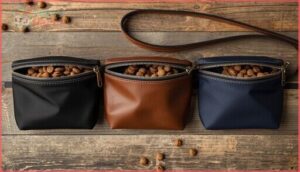
You want your dog training treat pouch to withstand daily use without falling apart. Nylon pouches offer excellent material durability with tear resistance exceeding 1000 flex cycles, while leather options provide a classic look that resists cracking through months of wear.
Heavy-duty polyester blends excel in wear resistance, maintaining their integrity through 500+ cleaning cycles, making them smart fabric choices for serious trainers.
Clip-on and Belt Attachment Designs

Your clip-on treat pouch attaches instantly to belts up to 2 inches wide, giving you quick access during training sessions.
Belt mounts position the pouch at your hip for stability, while quick release levers let you detach with one finger press.
Look for locking mechanisms that prevent accidental drops—spring-loaded clips and safety slides keep your pet training accessories secure through every directional change.
Waterproof and Easy-Clean Properties

You’ll save time and hassle when your treat pouch sheds water like a duck’s back. Training outdoors means dealing with rain, puddles, and muddy paws—waterproof materials keep treats dry and ready.
Look for these easy-clean features:
- PVC coated nylon that dries in 15 minutes after spills
- Polyurethane coatings that repel oils and stains
- Machine washable fabrics maintaining water resistance through 50 washes
- Wipeable surfaces for quick cleanup between sessions
- Seam-sealed construction preventing leaks at stress points
Size and Capacity Considerations
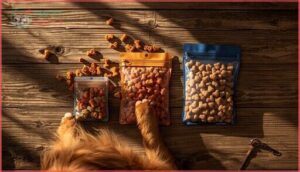
Your treat pouch won’t do you much good if it can’t hold enough rewards for an entire training session. Compact designs range from 4 to 6 inches tall, while capacity limits vary based on treat volume and density.
| Pouch Sizing | Typical Treat Volume |
|---|---|
| Small (50-100 pieces) | Short drills with pups |
| Mid-size (200-300 treats) | Standard training sessions |
| Large (150-250 per hour) | Extended sessions with big breeds |
| Multi-compartment | 2-3x more without bulk |
| Slim-line | Fits under jackets |
Most trainers find mid-sized pouches offer the best balance between convenience and capacity during dog training—you’ll carry enough treats without extra weight throwing off your rhythm.
Types of Treat Pouches Available

Once you know what features matter most, it’s time to look at the different styles of treat pouches on the market. Each type has its own strengths, and the right choice depends on how you train and where you spend most of your time.
Let’s break down the main options so you can find what works best for you and your dog.
Nylon Lightweight Pouches
If you’re looking for a treat pouch that won’t weigh you down during training sessions, nylon pouches are your best bet. These lightweight designs usually weigh just 2 to 4 ounces yet hold 1 to 2 cups of treats.
Ripstop nylon material delivers impressive durability while maintaining wearable comfort, and you’ll find most options priced between $10 and $25.
Durable Leather Options
For trainers who value longevity and aesthetic appeal, leather treat pouches deliver unparalleled durability. With proper maintenance, these options withstand daily training sessions for years, developing a distinctive patina over time. You’ll usually invest $25 to $60 depending on craftsmanship.
- Reinforced seams and heavy-duty belt loops guarantee secure wear
- Single compartment designs offer quick treat access
- Material durability copes with rough outdoor conditions
- Leather craftsmanship creates a professional training accessory
- Proper care extends the pouch’s functional lifespan
Canvas Multi-Purpose Pouches
Canvas multi-pocket designs bridge durability and convenience for varied dog training techniques. You’ll appreciate holding 1 to 3 cups of treats while organizing essentials in separate compartments.
These pouches fold flat for compact storage between training sessions, and you can wash them to maintain hygiene. Available in forest green, tan, or navy with sturdy hardware, they offer practical treat pouch benefits at reasonable prices.
Insulated and Scent-Proof Designs
When high-value rewards matter most, insulation materials and scent proofing become your training allies. You’ll preserve freshness during lengthy outdoor sessions while maintaining odor control that prevents distractions.
These designs commonly include inner dividers for separating different treats, with magnetic or zipper closures enabling quick access. Thermal retention keeps rewards appetizing, and prices range from 20 to 50 USD depending on features—delivering tangible treat pouch benefits for effective training techniques.
Effective Training Techniques Using Treat Pouches
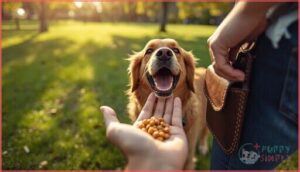
Having a treat pouch clipped to your belt is just the beginning—you need to know how to actually use it during training sessions.
The right techniques will help you reward behaviors at the perfect moment and keep your dog engaged without creating treat dependence. Let’s look at four proven methods that’ll make your training sessions more effective and enjoyable for both of you.
High-Value Treat Selection
The treats you choose can make or break your training session. When you’re working with your dog, high-value rewards like cooked chicken, turkey, or cheese grab attention even in distracting environments.
Keep these essentials in mind:
- Select soft, quickly-consumed bites for faster reward delivery
- Choose strong aroma selections that maintain focus
- Match treat texture to your dog’s chewing speed
- Monitor nutrient content to avoid overfeeding
- Size rewards as small nibbles for frequent reinforcement
Your treat pouch becomes most effective when filled with rewards your dog can’t resist.
Variable Reinforcement Schedules
Consistency matters, but predictability can work against you.
Variable reinforcement schedules keep your dog guessing when the next reward arrives, building stronger learning patterns through operant conditioning.
Instead of treating every sit, you’ll reinforce on a variable ratio—maybe the second response, then the fifth, then the third.
This reward timing strategy leverages reinforcement theory, maintaining motivation while reducing treat dependence over time.
Pairing With Clicker Training
A clicker‘s sharp click marks the exact moment your dog nails the behavior, and your treat pouch delivers the reward instantly—that’s training synergy at its best.
Here’s how clicker timing and your pouch create powerful reinforcement strategies:
- Click once when the desired behavior happens
- Reach into your treat pouch within one second
- Deliver the reward while your dog connects the dots
- Repeat across training sessions to build behavior shaping
- Adjust your reward marking as skills develop
This combination strengthens positive reinforcement through training consistency.
Multi-Environment Training Applications
Your dog needs to respond in every setting—not just in your quiet living room. Training across parks and sidewalks with your treat pouch builds environment adaptation through consistent positive reinforcement.
Variable rewards help during terrain training when distractions spike. Cross training across outdoor sessions strengthens behavior generalization, and your pouch keeps outdoor training smooth whether you’re traversing mud or crowded dog parks during real-world scenarios.
Choosing The Right Treat Pouch
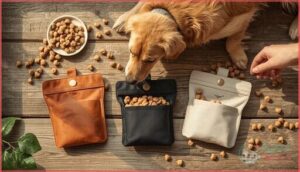
Not all treat pouches are created equal, and finding the right one can make or break your training sessions.
The pouch you choose should work with your approach, fit your dog’s needs, and handle the treats you’re using. Let’s look at three key factors that’ll help you pick the perfect match.
Assessing Your Training Style
Before you invest in any treat pouch, take a moment to map out your training needs and handler preferences. Do you prefer quick access or more control during reward systems?
If you train outdoors frequently, you’ll want a rugged design for those training environments. One-handed operation matters when you’re juggling a leash, clicker, and your dog’s attention simultaneously during training sessions.
Matching Pouch to Dog Size
Your dog’s size directly impacts which pouch design will work best during training sessions. Compact designs suit small breeds without crowding your space, while larger dogs need pouches that hold around two cups of treats.
Check that the opening lets you grab rewards quickly, and choose adjustable straps to keep the pouch balanced on your waist—especially when working with strong pullers.
Considering Treat Type Compatibility
Your pouch should accommodate everything from kibble to soft rewards without cross-contaminating flavors. Look for dividers or inner pockets that separate different treat types, and confirm the closure keeps training sessions fresh.
A waterproof lining protects against moisture, while odor-resistant materials give you scent control—so your dog reacts to cues, not just what’s hidden in your pocket.
Cleaning and Maintaining Your Treat Pouch

Your treat pouch works hard during training sessions, collecting crumbs, moisture, and oils from treats. Without regular maintenance, it can become a breeding ground for bacteria or develop unpleasant odors that distract your dog.
Let’s walk through the essential care steps that will keep your pouch clean, functional, and ready for every training session.
Regular Inspection and Care
Treating your pouch maintenance routine as a training tool itself keeps your gear ready when you need it most. Regular wear monitoring helps you catch problems before they interrupt your sessions, so you can focus on your dog instead of fumbling with a failing zipper.
- Check your pouch exterior for tears or loose stitching after every 10 training sessions
- Test the belt clip for rust or bending, especially after exposure to sweat
- Verify interior pockets still hold their shape when loaded with treats
- Inspect seams by gently tugging corners to make sure they’re not separating
- Record inspection dates in a simple log to track replacement signs
Proper Cleaning Methods
Once you’ve spotted those wear signs, it’s time to clean. Daily sanitizing with mild detergents and warm water protects your treat pouch without stripping water resistance. Skip the bleach—it degrades fabric protection over time.
Rinse thoroughly, air dry completely, and your pouch stays ready for action. For odor control between cleaning treat pouch sessions, a pinch of baking soda works wonders.
Storage Best Practices
After cleaning, where you stash your treat pouch between training sessions matters more than you’d think. A cool, dry drawer keeps fabric fresh and prevents mold from sneaking in.
Follow these storage solutions for reward management:
- Empty all treats before storing to avoid oil stains
- Hang the pouch to maintain shape and airflow
- Keep it separate from dirty gear to preserve cleanliness
Smart treat organization means your pouch stays ready when you need it.
When to Replace Your Pouch
Wear reveals itself through subtle signs you shouldn’t ignore. Replace your treat pouch when zippers split, stitching unravels, or persistent odor lingers after two cleanings.
Material degradation appears as cracking leather, fraying canvas seams, or weakened nylon coating. Most pouches need replacement after 6 to 12 months of daily training sessions.
Catching these pouch wear signs early prevents mid-session mishaps and maintains hygiene standards your dog deserves.
Overcoming Common Treat Pouch Challenges

Even the best training tool comes with a learning curve, and treat pouches are no exception. You might run into a few hiccups as you get started, but most challenges have straightforward solutions.
Let’s look at the most common issues trainers face and how you can tackle them with confidence.
Managing Treat Dependence
You don’t want your dog working only for food reward, right? That’s where smart treat rationing comes in. Limit your daily reward count and use variable reward schedules to keep motivation high without creating dependence prevention issues.
Alternate treats with praise during training sessions, and gradually shrink portion sizes. This approach maintains positive reinforcement while building true behavior modification through consistent reward timing and balanced reward systems for pets.
Preventing Unwanted Scent Distractions
Strong treat odors can undermine your training sessions by triggering unwanted dog behavior before you even reach for a reward. Effective scent control keeps your positive reinforcement timing accurate and your reward systems for pets on track.
- Store treats in airtight containers between sessions to minimize odor management issues
- Choose scent proofing pouches with proper airflow design to contain smells
- Rotate treat storage locations to prevent scent associations
- Clean your treat pouch regularly to maintain fresh scent control
Using Pouches for Multiple Dogs
Training multiple dogs simultaneously can turn treat distribution into a free-for-all if you’re not organized. Color-coded pouches work brilliantly for multi dog strategies, letting you keep each dog’s rewards separate and scent control tight.
Sanitize your treat pouch between training sessions to prevent scent transfer, and establish a clear routine where only one pouch comes out per dog. This reward management approach keeps your sessions focused and fair.
Advanced Applications for Treat Pouches

Once you’ve mastered the basics, your treat pouch becomes a powerful tool for more specialized training scenarios. You can use it to develop complex skills like scent work, make playtime more productive, and help your dog respond reliably no matter where you’re.
Let’s look at three ways to take your training to the next level.
Scent and Tracking Training
Your treat pouch becomes essential during scent trails and nose work exercises, where reward timing makes or breaks progress. When your dog indicates a scent marker correctly, you’ll need instant access to high-value treats without fumbling.
During tracking techniques, this training tool lets you deliver positive reinforcement at the precise moment your dog follows the trail, strengthening scent discrimination skills across all training sessions.
Incorporating Into Play Sessions
Blending play with practice transforms your dog training sessions into something your dog actually looks forward to. With your treat pouch ready during games, you can reward good behavior instantly—think fetch that includes a sit-stay before the toss.
These playful learning techniques turn interactive play tools into powerful reward timing strategies, building positive reinforcement habits through fun training exercises that strengthen your pet training results naturally.
Generalizing Behaviors Across Environments
Once your dog masters a skill at home, that behavior needs to stick in the park, at the vet, and beyond.
Your treat pouch becomes your consistency anchor—offering positive reinforcement across different environmental cues helps behavior transfer naturally.
Through contextual learning and smart reinforcement strategies, these generalization techniques turn fragile training sessions into reliable animal behavior you can count on anywhere.
Long-Term Benefits of Treat Pouches

Using a treat pouch isn’t just about making your training sessions easier in the moment. Over time, you’ll notice how it shapes your dog’s behavior and strengthens the relationship between you.
Let’s look at three ways treat pouches create lasting benefits that go well beyond basic obedience.
Building Stronger Owner-Pet Bond
Consistency creates the foundation every dog owner needs for a lasting emotional connection. When you reach for your treat pouch during each session, you’re not just rewarding behaviors—you’re building trust through reliable positive reinforcement and relationship strengthening.
- Daily training routines become bonding exercises that teach your dog to count on you
- Immediate rewards during play therapy sessions deepen your pet owner relationship
- Gentle, predictable interactions transform basic pet parenting into meaningful partnership
Maintaining Training Consistency
Your treat pouch becomes the anchor that keeps every session aligned with your goals. When you clip it on at the same spot and deliver rewards within two seconds of correct behavior, you’re building consistent cueing and reward timing that dogs count on.
This training consistency transforms random successes into reliable patterns.
| Training Element | With Treat Pouch | Without |
|---|---|---|
| Reward Timing | Within 2 seconds | Delayed, inconsistent |
| Session Structure | Standardized routine | Variable approach |
| Environment Control | Focused, distraction-managed | Unpredictable conditions |
Creating Lasting Positive Behaviors
When training consistency meets deliberate positive reinforcement, you’re not just teaching tricks—you’re wiring lasting behavioral patterns your dog carries for life. Reward systems that pair cue and treat in under a second create neural pathways that stick, turning motivation techniques into second nature through canine behavior modification.
- Your dog automatically sits before crossing streets without prompting
- Recall becomes instant even with squirrels nearby
- Loose-leash walking replaces pulling on every walk
- Calm greetings replace jumping on visitors
- Focus stays sharp around distractions you once avoided
That’s positive conditioning building rewarding positive behaviors that endure beyond the pouch.
Frequently Asked Questions (FAQs)
Can you use a treat pouch for training?
Yes, you can absolutely use a treat pouch for training sessions. It keeps rewards accessible, speeds up reinforcement timing, and frees your hands to guide your dog through cues and commands effectively.
Is it better to train dogs without treats?
Food isn’t the only tool in your toolkit—praise and play and other reward alternatives absolutely work. But for most training sessions, treats paired with positive reinforcement deliver faster, sharper results than treat-free methods alone.
Can treat pouches help with leash training walks?
Absolutely—a treat pouch keeps rewards within arm’s reach during walks, letting you reinforce calm walking and proper heel position instantly.
Hands-free access means you’ll maintain smooth leash training sessions without fumbling for treats.
Are treat pouches suitable for puppy socialization classes?
Treat pouches are absolutely perfect for puppy socialization classes. They give you instant reward timing during class dynamics, keep your hands free for safe handling, and support consistent pet training while maintaining pouch hygiene between sessions.
Do treat pouches work for training aggressive dogs?
Pouches excel in aggressive dog training because they provide rapid, one-handed access to rewards, enabling immediate positive reinforcement when your dog displays calm behavior near triggers while keeping your focus on distance and body language management.
Can treat pouches be used for cat training?
Yes, cat training pouches work well for feline behavior modification when you choose a smaller design that facilitates quick treat dispensing and one-handed operation, making reward systems efficient during brief training sessions with your pet.
How do treat pouches affect dogs meal schedules?
When you use a treat pouch during training sessions, you’ll need to account for those extra calories by reducing kibble at mealtime.
Tracking your dog’s daily intake helps maintain proper caloric balance and steady feeding schedules.
Conclusion
That small pouch clipped to your waist becomes more than training gear—it’s a bridge between intention and action, letting you capture each fleeting training moment before it slips away.
The benefits of wearing a treat pouch during training extend beyond convenience; they create consistency, sharpen your timing, and transform scattered efforts into meaningful progress. With rewards always within reach, you’re not just training commands—you’re building trust, one perfectly timed reinforcement at a time.