This site is supported by our readers. We may earn a commission, at no cost to you, if you purchase through links.

You strip the sheets, blot the mattress, and wonder what you did to deserve this. Waking up to a wet bed is one of those dog-owner moments nobody warns you about—and it happens more often than you’d think.
The reasons range from a simple bladder infection to anxiety, territorial marking, or a training gap you didn’t know existed.
Some causes clear up with a vet visit and a prescription. Others take a closer look at your dog’s daily routine, emotional state, or sleeping arrangements.
Knowing which one you’re dealing with changes everything about how you respond.
Table Of Contents
- Key Takeaways
- Why Dogs Pee on Beds
- Medical Causes to Rule Out
- Urinary Tract Infection (UTI)
- Bladder Stones and Painful Urination
- Diabetes and Increased Thirst
- Kidney Disease and Frequent Accidents
- Urinary Incontinence in Spayed Females
- Cushing’s Disease and Hormonal Imbalance
- Medication Side Effects, Including Steroids
- When Blood, Odor, or Straining Matters
- Vet Tests: Urinalysis, Blood Work, Imaging
- Stress, Anxiety, and Marking
- Training and Routine Problems
- How to Stop Bed Peeing
- Schedule a Vet Visit First
- Use Positive Reinforcement for Outdoor Peeing
- Add More Frequent Bathroom Breaks
- Restrict Bedroom Access When Unsupervised
- Clean Urine With Enzyme-based Cleaners
- Calm Over-arousal and Reduce Stress Triggers
- Support Senior Dogs With Ramps and Easier Access
- Should You Punish Your Dog if They Pee?
- How to Protect Your Bed From Dog Pee
- When to Call a Trainer or Behaviorist
- Top 5 Products That Help
- Frequently Asked Questions (FAQs)
- How do you train a dog to stop peeing on your bed?
- Why does my dog pee on my Bed?
- Why does my dog’mark’ Me by peeing at me?
- Can a dog stop peeing on a bed?
- Should I punish my dog for peeing on my bed?
- Why does my dog pee on the bed?
- How to identify the reasons why my dog is peeing on the bed?
- Why does my dog urinate so much?
- Why do people pee on the bed?
- What does it mean when my dog peed on my bed?
- Conclusion
Key Takeaways
- Before blaming bad habits, rule out medical issues first — UTIs, diabetes, kidney disease, and hormonal imbalances can all make it physically impossible for your dog to hold its bladder.
- Stress, anxiety, and territorial marking are just as likely to be behind the behavior as any health problem, especially if accidents happen when you’re away or guests arrive.
- Enzyme-based cleaners aren’t optional — if you don’t fully break down the urine scent, your dog’s nose will keep leading it back to the same spot.
- Punishment never works here and usually makes things worse, so stick to positive reinforcement, consistent potty breaks, and restricted bed access until the habit is truly gone.
Why Dogs Pee on Beds
Finding a wet spot on your bed is frustrating, but it’s also your dog’s way of telling you something’s off. The reasons range from medical issues to emotions to simple training gaps.
Whether it’s a small damp patch or a bigger puddle, spotting why your dog pees in their sleep can help you figure out if it’s a quick fix or a vet visit.
Here’s what’s usually behind it.
Why Soft, Scent-filled Beds Attract Urine
Your bed is practically irresistible to a dog with a full bladder. The grass-like texture of soft bedding feels familiar underfoot, the absorbent memory foam locks in scent fast, and your own odor cue makes it feel like prime territory.
Urine marking behavior thrives here. Dog bed accidents keep repeating because retained scent signals "toilet."
Enzyme cleaners break that cycle. Research shows that neutering reduces marking by up to 80% in intact males.
Peeing on Your Bed Vs. The Dog’s Own Bed
Where your dog chooses to pee actually tells you something. Your bed pulls them in through owner’s scent preference and sleep surface temperature — it smells like you and feels warm. Their own bed? Less emotionally loaded.
Key differences often come down to:
- Owner-dog bonding intensity
- Bed location accessibility
- Dog bedding material and familiarity
Your bed wins on all three. In many cases, inappropriate indoor urination stems from underlying issues.
Accidents, Incontinence, or Marking
Not every wet spot tells the same story.
Your dog peeing on your bed could mean three very different things: a simple accident, urinary incontinence in dogs, or marking their territory.
Age-related muscle weakness, breed predisposition in spayed females, or the need for hormone therapy all point to medical causes of indoor dog urination.
Environmental scent control matters for marking.
Context separates the three.
Do Dogs Pee on Beds on Purpose?
Yes, sometimes it’s completely intentional. Territorial marking behavior is driven by a real hormonal marking drive — intact males hit beds purposefully up to several times weekly.
There’s also the scent camouflage theory at play: dogs blend their scent with yours through pack odor integration, basically claiming shared space.
Adolescent rule-testing around 9–14 months adds another layer, with deliberate leg-lifting marking on furniture to test boundaries.
Why It May Start All of a Sudden
When it happens out of nowhere, that’s often your first clue that something real has changed.
Hormonal fluctuations, acute pain episodes, or a sudden diet shift can all flip a well-trained dog’s bathroom habits overnight.
Environmental stressors like a new pet or move, medication changes, even a UTI — these are common medical causes of inappropriate urination in dogs that deserve a closer look fast.
Medical Causes to Rule Out
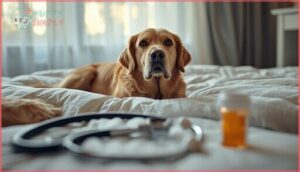
Before assuming it’s a behavior problem, it’s worth asking whether something medical is going on. Several health conditions can make it physically impossible for a dog to hold their bladder — no matter how well‑trained they are.
Some dogs can’t hold their bladder no matter how well-trained they are — rule out medical causes first
Here are the most common medical causes to check with your vet.
Urinary Tract Infection (UTI)
A UTI might be the simplest explanation for why your dog keeps peeing on your bed. Bacterial pathogens — most often E. coli — travel up the urethra and inflame the bladder, turning normal urinary control into a losing battle.
These are classic signs of dog bladder infection worth watching for:
- Cloudy or foul-smelling urine
- Frequent straining with little output
- Blood-tinged urine (pink or red)
- Sudden indoor accidents on soft surfaces
Medical causes of indoor dog urination like this respond well to antibiotics, but antibiotic resistance is real — so your vet will likely request a urine culture first to target the right treatment. Preventive hygiene and fluid therapy support recovery too.
Bladder Stones and Painful Urination
Bladder stones are basically mineral deposits that harden inside your dog’s bladder, and stone composition determines whether treatment means dietary management, medical dissolution, or surgical removal. Urine acidification can break down certain stone types.
When those rough edges scrape the bladder wall, urination becomes painful — pushing some dogs to seek softer, more private spots like your bed. Bloody or interrupted urine flow is key warning signs.
Diabetes and Increased Thirst
Diabetes cranks up thirst and urination like a faucet you can’t turn off. Insulin deficiency means your dog’s body can’t process glucose properly, so it spills into urine — a process called glucose polyuria.
That diabetic dehydration drives polydipsia, and all that extra fluid has to go somewhere.
Blood sugar monitoring catches this early.
Affecting roughly 1 in 300 dogs, uncontrolled diabetes makes bed accidents almost inevitable.
Kidney Disease and Frequent Accidents
Failing kidneys quietly flood your dog’s system before you notice anything wrong. Early CKD signs include polyuria and polydipsia — lots of dilute urine, lots of drinking. Once specific gravity drops below 1.030, the kidneys are losing their grip on water balance. Renal hypertension and reduced dietary phosphorus become priorities fast.
Watch for:
- Pale, watery urine
- Constant thirst
- Weight loss
- Low energy
- Indoor accidents increasing gradually
Urinary Incontinence in Spayed Females
Spaying saves lives, but it comes with a trade-off some owners don’t expect.
Low estrogen after surgery weakens urethral muscle tone — a condition called urethral sphincter incompetence — and urine leaks out during rest or sleep. It’s one of the most overlooked medical causes of dog bedwetting.
Phenylpropanolamine therapy helps 85–90% of cases.
Large breeds and early spay timing risk makes certain dogs, like Dobermans and Rottweilers, especially vulnerable.
Cushing’s Disease and Hormonal Imbalance
Hormones can quietly sabotage bladder control too. Cushing’s disease — one of the sneakier hormone imbalances behind medical causes of dog bed urination — floods the body with cortisol.
Whether it stems from a pituitary tumor or adrenal tumor, the result is similar:
- Relentless thirst and urination
- Weaker bladder control during rest
- More frequent indoor accidents, including on your bed
ACTH stimulation test confirms it. Trilostane management and ongoing cortisol monitoring keep it controlled.
Medication Side Effects, Including Steroids
Sometimes the culprit is sitting right in your medicine cabinet. Corticosteroids like prednisone are among the sneakier medication side effects — they drive thirst up fast, which means more urine, which means more accidents on your bed.
appetite spikes, immune suppression risk, blood glucose elevation, and even skin atrophy can all follow. If dog recently started steroids, that timing matters.
When Blood, Odor, or Straining Matters
Steroids aside, some symptoms demand same-day attention. Urgent Hematuria Signs — blood in urine — are never normal, even if your dog seems fine. Watch for:
- Pink or red urine pointing to a Urinary Tract Infection or urinary stones
- Foul Odor Indicators suggesting bacterial infection or concentrated urine
- Painful Dysuria Symptoms like repeated squatting with little output
- Obstructive Urinary Blockage — straining with no urine is an emergency
Don’t wait it out.
Vet Tests: Urinalysis, Blood Work, Imaging
Your vet will likely start with a urinalysis — collected via cystocentesis sampling for the cleanest, most accurate read.
Urine specific gravity tells them how well your dog’s kidneys concentrate urine.
A blood chemistry panel and complete blood count flag infections, diabetes, or kidney trouble.
Abdominal ultrasound, X-rays, or MRI round out the picture when lab work points somewhere deeper.
Stress, Anxiety, and Marking

Not every accident is about a weak bladder or a health problem. Sometimes the real culprit is stress, fear, or a dog who’s just trying to communicate something.
Here’s what emotional and behavioral triggers actually look like.
Territorial Marking on Shared Sleeping Spaces
Your bed isn’t just furniture to your dog — it’s a scent library. Understanding territorial marking in dogs starts here: beds absorb your smell deeply, making them prime targets for territory reinforcement strategies.
In multi-pet households, urine marking behavior and territory in dogs intensify through multi-pet competition. Scent marking dynamics and owner scent integration drive this, not spite.
Bed access management helps break the cycle.
Separation Anxiety and Alone-time Accidents
When your dog only pees on the bed during alone time, separation anxiety is likely driving it. stress-induced urination is a panic response, not defiance. Many dogs read pre-departure cues — keys, shoes, your bag — and spiral before you even leave.
Gradual desensitization, counterconditioning drills, a secure confinement setup, and anxiety-reducing music can all support dog anxiety management and reduce behavioral reasons for dogs peeing on beds.
Fear Urination From Guests, Noises, or Change
Some dogs don’t need much to feel overwhelmed — a stranger walking in, a crack of thunder, or even rearranged furniture can trigger stress-induced urination.
Fearful guest interaction, loud sound phobia, and sudden change stress all share the same root: fear and anxiety that bypass bladder control entirely.
Watch for submissive urination cues like tail-tucking or cowering.
Desensitization training, calm greetings, and consistent dog anxiety management help reduce these behavioral reasons for dogs peeing on beds.
Excitement Urination During Greetings or Play
pure joy it’s causes the puddle. Excitement urination happens when overexcitement pushes your dog’s bladder past its limit—during greetings or playtime arousal triggers, the body just reacts.
dog’s greeting body language: loose, wiggly, happy. That’s your cue.
Calm greeting techniques like ignoring your dog until they settle, paired with sit/settle training and positive reinforcement, make a real difference.
New Pets, Moves, and Routine Disruption
A new pet or a move to a new home can flip your dog’s world upside down fast. Scent Transfer Management matters here — unfamiliar smells trigger marking, especially on shared bedding.
Schedule Stabilization Strategies, like consistent potty breaks and feeding times, reduce house training regression. A Supervised Adjustment Period with Boundary Training Techniques limits access to the bed while Environmental Cue Consistency helps your dog resettle.
Why Anxious Dogs Choose The Bed
Your bed is basically a comfort magnet for an anxious dog. It carries your scent — that’s pure scent reassurance to them. Safe haven association kicks in fast, and stress proximity behavior turns your mattress into their emotional bedding attachment headquarters.
Signs of this comfort zone habit include:
- Clinging to your bed when alone
- Stress-induced urination while resting there
- Separation anxiety accidents on your side specifically
- Resistance to calming aids for dogs elsewhere
Signs The Behavior is Emotional, Not Medical
Emotional peeing often follows a pattern you can actually track. Trigger-linked accidents — peeing only when guests arrive, during a storm, or right after you leave — point to stress and anxiety rather than a physical problem.
You’ll also notice pacing and whining beforehand, small spot marking instead of a full puddle, and a dog that seems calm after urination with no pain indicators whatsoever.
Training and Routine Problems

Sometimes the issue isn’t medical or emotional — it’s simply a training gap or a routine that’s fallen apart. Dogs are creatures of habit, and when the schedule breaks down, accidents happen.
Here are the most common training and routine problems that lead to bed-peeing.
Incomplete House Training
If your dog never got consistent house training from the start, the bed becomes fair game. Puppies left unsupervised can’t learn the rules.
Without close observation skills to catch pre-elimination signals — sniffing, circling, squatting — you’ll miss every teachable moment.
Reward timing matters too; positive reinforcement only works immediately after outdoor elimination.
Breed size challenges mean small dogs need even more patience and repetition.
Irregular Potty Breaks and Missed Signals
Even with solid house training foundations, missed signals and patchy schedules quietly undo everything.
Dogs standing within three feet of an exit door for over ten minutes are actively communicating urgency — yet owners miss this 83% of the time.
Skipping one midday break raises bed-peeing risk by 45%.
Schedule consistency and owner vigilance aren’t optional extras; they’re the whole game.
Puppy Bladder Limits and Nighttime Accidents
Missed schedules hurt, but puppies face a different challenge — their bladders simply aren’t ready yet.
- At 8–10 weeks, puppies need a potty break every 1–2 hours
- By 3–4 months, bladder development milestones allow longer overnight stretches
- Nighttime routine consistency reduces accidents more than daytime training alone
- Late water access increases dog peeing on bed incidents
- Positive reinforcement training after each successful outdoor trip builds lasting habits
Senior Dogs Forgetting Potty Habits
As your dog ages, the brain changes too. Senior dog cognitive decline and toileting issues often go hand in hand — memory impairment can make a once-reliable dog forget where the potty spot even is.
Routine disorientation, bladder muscle weakness, and age neuropathy all quietly stack up. That’s why dog peeing on bed becomes more common with age-related urinary problems.
| Sign | Likely Cause | What to Do |
|---|---|---|
| Wet bedding after sleep | Urinary incontinence | Vet check, waterproof cover |
| Wandering before accidents | Routine disorientation | Consistent schedule, more breaks |
| Damp hind legs | Bladder muscle weakness | Environmental accessibility support |
Feeding and Water Timing Mistakes
Timing matters more than most owners realize. inconsistent meal schedule or late night feeding can push elimination right into your dog’s sleep window — and onto your bed.
Excessive evening water, especially after exercise, does the same.
Removing water an hour before bed and finishing the last meal three to five hours earlier helps reduce urinary frequency and dog bedwetting overnight.
Crate Training Issues That Worsen Accidents
Crate training done wrong can quietly set your dog up to fail. A crate that’s too large lets them sleep in one corner and pee in another — proper crate size matters.
Limited crate duration prevents stress-induced urination from bladder overload.
Avoid crate punishment association, since fear breeds anxiety or stress, and that worsens incontinence in dogs.
Bare crate flooring and gradual crate introduction both reduce accidents substantially.
Reinforcing The Behavior by Accident
Your reaction to an accident teaches your dog more than you realize. Rushing over, scolding, or cleaning while they watch can all feed an Attention Reinforcement Loop — making bed-peeing feel rewarding.
- Scolding as Reward still counts as attention
- Inconsistent Owner Response creates confusing mixed signals
- Accident Cleanup Mistakes leave scent trails that invite repeats
- Unintentional Praise after redirecting reinforces the wrong lesson
- Calm, enzyme-based cleanup plus positive reinforcement techniques in dog training break the cycle
How to Stop Bed Peeing
Once you know what’s behind the behavior, you can actually do something about it. The fix isn’t always the same — it depends on whether the root cause is medical, emotional, or a training gap.
Here’s what works.
Schedule a Vet Visit First

Before anything else, get your dog to the vet. A sudden change in a house-trained dog is often your first clue that something medical is brewing.
Build a quick pre-visit documentation note: when accidents happen, how much urine, and whether your dog drinks more than usual. That urgent symptom checklist speeds up veterinary diagnosis — ruling out a urinary tract infection, incontinence, or other medical causes of dog bedwetting first.
Use Positive Reinforcement for Outdoor Peeing

Once your vet gives the all-clear, positive reinforcement techniques in dog training become your most powerful tool. Reward timing is everything — praise and a high value treat must happen within seconds of your dog finishing outside.
- Use a consistent cue like "go potty" every single time
- Offer immediate praise paired with small, soft treats
- Begin treat fade only after the habit is solid
Add More Frequent Bathroom Breaks
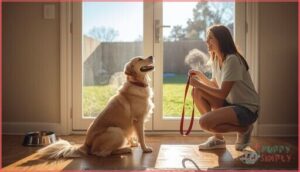
Rewards work best when the timing is right — and so does the bathroom schedule.
Puppies need Puppy Potty Timing breaks every one to two hours, while adult break intervals stretch to every four to eight hours.
Senior nighttime trips matter, too.
Use this quick guide:
| Dog Stage | Recommended Schedule |
|---|---|
| Puppy (awake) | Every 1–2 hours |
| After water/meals | Within 30 minutes |
| Post Play Potty | Immediately after activity |
| Adult | Every 4–8 hours |
| Senior | Every 4–6 hours, plus overnight |
Water intake scheduling also helps — offer water at consistent times so you can predict when your dog needs to go out.
Restrict Bedroom Access When Unsupervised
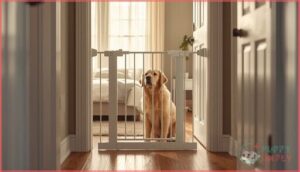
If the schedule alone isn’t cutting it, blocking bedroom access when you’re not watching makes a real difference. Dogs can’t pee on what they can’t reach.
- Install pressure-mounted gates in doorways
- Use automatic door closers so nothing slips open
- Add elevated interior latches, dogs can’t paw down
- Try crate pen integration for larger safe zones
- Use smart motion sensors to catch sneaky attempts
Clean Urine With Enzyme-based Cleaners

Blocking access helps, but the smell left behind is just as big a problem. Dogs have a nose roughly 40 times stronger than yours — if urine odor lingers, it’s basically a "pee here again" sign.
Enzymatic cleaners work by targeting odor molecules directly, not just masking them. The key is saturation depth — the cleaner must soak through fabric layers to reach the full stain. Dwell time management matters too; let it sit before blotting.
| Factor | Why It Matters | Quick Tip |
|---|---|---|
| Saturation Depth | Urine soaks deep into padding | Soak, don’t just spray |
| Dwell Time Management | Enzymes need time to work | Wait 10–15 minutes minimum |
| Surface Compatibility | Not all formulas suit all fabrics | Check the label first |
Probiotic enzyme blends keep breaking down residue even after the initial treatment. For cleaning methods to eliminate urine odor completely, choose an enzymatic urine cleaner over standard sprays — they actually fix the problem.
Calm Over-arousal and Reduce Stress Triggers
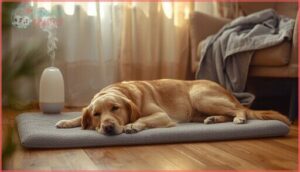
Even after the smell is gone, a stressed dog will find another reason to mark. Stress-induced urination often comes down to a dog whose nervous system never fully settles. Try these four steps:
- Use Calm Cue Training to teach a "go to your mat" behavior
- Practice Low Intensity Play to keep arousal threshold management in check
- Try pheromone diffusers or a Thundershirt as calming aids for dogs
- Apply Environmental Desensitization and a Predictable Routine to reduce anxiety or stress daily
Support Senior Dogs With Ramps and Easier Access
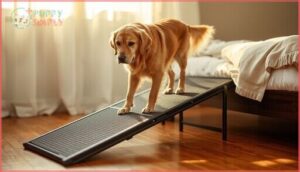
As dogs age, bladder control slips — and struggling to reach the floor after sleeping doesn’t help. A dog ramp cuts joint stress by up to 50%, supporting senior dog mobility while reducing the urgency that triggers accidents.
Age-related bladder control loss in senior dogs pairs with pain, so easier access matters.
| Ramp Feature | Why It Matters |
|---|---|
| Non-slip Traction | Prevents slipping on carpeted or wooden ramps |
| Adjustable Incline | Matches your bed height safely |
| Ramp Safety rails | Keeps arthritic dogs steady |
| Joint Relief angle | Gentle slope reduces hip strain |
| Ramp Training steps | Builds confidence with treat rewards |
Should You Punish Your Dog if They Pee?
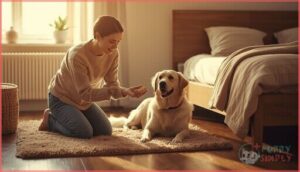
No — punishment won’t fix this, and here’s why it backfires every time.
- Punishment Timing fails fast: Dogs connect consequences only within 3–5 seconds of the act.
- Fear Conditioning creates hiding: Scolded dogs sneak off to pee indoors undetected.
- Submissive Urination increases: Yelling triggers appeasement leaking, making accidents worse.
- AVSAB Guidelines are clear: Aversives damage trust without improving behavior modification outcomes.
- Positive Reinforcement wins: Rewarding outdoor elimination outperforms stress-induced urination punishment every time.
How to Protect Your Bed From Dog Pee

While you’re working through the "why," your bed still needs protection. Waterproof mattress covers are your first line of defense — they block urine before it soaks in.
Layer absorbent bed pads on top for multi-layer protection. Pet gate barriers limit unsupervised access.
Elevated dog beds redirect your pup entirely. Enzyme cleaners handle any accidents that sneak through.
When to Call a Trainer or Behaviorist
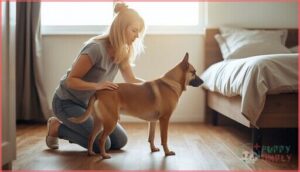
Sometimes you need to call in backup — and there’s no shame in that.
Unresolved accidents after weeks of consistent effort, a sudden behavior change, or signs of multi-dog conflict are all signals that trainer intervention is needed. A dog trainer or dog behaviorist brings anxiety trigger mapping and behavior modification techniques you simply can’t Google.
- Accidents persist despite a solid routine
- Behavior shifted suddenly after a life event
- Your dog shows fear, guarding, or aggression near the bed
- Multiple dogs are competing or marking together
A behavior expert makes the difference.
Top 5 Products That Help
Once you’ve tackled the root cause, a few practical products can make a real difference in your day-to-day routine. These picks cover everything from anxiety relief to cleanup, so you’re not stuck guessing what to try next.
Here are five worth keeping on your radar.
1. Outward Hound Dog Smart Treat Puzzle
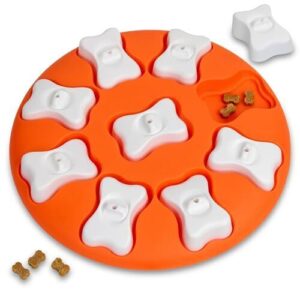
The Outward Hound Dog Smart Treat Puzzle gives an anxious or bored dog something productive to do instead of obsessing over your bed. It holds up to half a cup of kibble across nine compartments, so you can use it as a slow feeder or a focused mental workout.
The bone-shaped covers are easy enough for beginners but still engaging. Ten to fifteen minutes with this puzzle can genuinely take the edge off a restless dog — and a calmer dog has fewer accidents.
| Best For | Dog owners who want to ease their pup into puzzle toys, especially anxious or easily bored dogs of any age or size. |
|---|---|
| Primary Use | Mental stimulation |
| Safety Rating | Food-safe materials |
| Easy Maintenance | Dishwasher safe |
| Target User | All dog sizes |
| Price Range | Budget-friendly |
| Anxiety Solution | Reduces boredom |
| Additional Features |
|
- Holds up to half a cup of kibble, so it works as both a puzzle toy and a slow feeder at mealtime
- Multiple ways to adjust the difficulty, making it easy to grow with your dog as they get better at it
- Simple to clean and made from food-safe plastic, so no stress about what your dog is chewing on
- Not a great fit for aggressive chewers — the pieces need regular inspection for damage
- It slides around on the floor and can get noisy, so you’ll want to keep an eye on your dog while they use it
- Slobber builds up fast on the covers, which can make them slippery and harder for your dog to move
2. ThunderShirt Small Dog Calming Vest
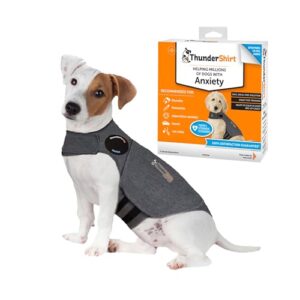
Anxiety-driven accidents respond well to pressure therapy — and that’s exactly what the ThunderShirt delivers. It wraps gently around your dog’s torso, mimicking a reassuring hug without any sedation. Your dog stays alert but noticeably calmer.
More than 85% of pet parents report real improvement in stress-related behaviors, including indoor accidents. It’s drug-free, machine-washable, and takes seconds to put on.
For small dogs dealing with fear-based or excitement urination, this vest can meaningfully reduce the urge to go at the wrong moment.
| Best For | Small dog owners (5–15 lb) dealing with anxiety-triggered behaviors like accidents, reactivity, or fear responses during storms, fireworks, or vet visits. |
|---|---|
| Primary Use | Anxiety relief |
| Safety Rating | Drug-free formula |
| Easy Maintenance | Machine washable |
| Target User | Dogs 5–15 lbs |
| Price Range | Mid-range |
| Anxiety Solution | Pressure therapy |
| Additional Features |
|
- Drug-free and easy to use — no training needed, just wrap and go
- Over 85% of pet parents saw real improvement in stress-related behaviors
- Machine-washable, lightweight, and comfortable enough for extended wear
- Sizing can be tricky, especially for dogs at the edges of the weight range
- Some dogs only get partial relief and may still need additional support
- Prolonged wear can cause chafing, so daily use should be kept to a reasonable window
3. Sivio Pink Cat Cotton Weighted Blanket
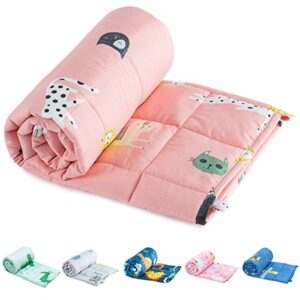
Pressure works in more ways. While the ThunderShirt wraps your dog, this 5-pound cotton weighted blanket can help settle a restless child — or a lightweight adult — sharing the space.
It’s filled with evenly distributed glass beads that deliver gentle, calming pressure, and the breathable cotton keeps things from getting too warm.
Machine washable, soft on both sides, and sized at 36 by 48 inches, it’s practical for everyday use.
A small but thoughtful addition to a calmer sleep environment.
| Best For | Parents of kids aged 3 and up (or lighter adults) who want a simple, chemical-free way to ease anxiety or nighttime restlessness. |
|---|---|
| Primary Use | Sleep improvement |
| Safety Rating | OEKO-TEX certified |
| Easy Maintenance | Machine washable |
| Target User | Children 30+ lbs |
| Price Range | Budget-friendly |
| Anxiety Solution | Deep pressure stimulation |
| Additional Features |
|
- 100% OEKO-TEX certified cotton on both sides — breathable and free of harmful chemicals
- Glass beads are evenly distributed, so the weight stays consistent and doesn’t bunch up
- Machine washable and holds up well after repeat washes
- At 5 lbs, it may feel too light for bigger kids or adults who need more pressure
- No removable cover, so you’re washing the whole blanket every time — drying can take a while
- Only comes in one pattern, so it’s not for everyone style-wise
4. Adaptil Dog Calming Diffuser Kit
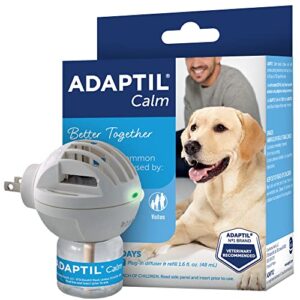
Stress is often the root of bed-peeing, and the ADAPTIL Calm Home Diffuser addresses it at the source.
It releases a synthetic version of the calming pheromone mother dogs naturally produce — odorless to you, but deeply reassuring to your dog.
Just plug it in, and it quietly works around the clock, covering up to 700 square feet.
Each refill lasts about 30 days.
Simple, drug-free, and vet-recommended — a low-effort addition to a calmer home.
| Best For | Dog owners dealing with anxiety-driven behaviors like accidents, barking, or stress from loud noises and being left alone. |
|---|---|
| Primary Use | Stress reduction |
| Safety Rating | Veterinarian recommended |
| Easy Maintenance | Monthly refill needed |
| Target User | Dogs, all sizes |
| Price Range | Mid-range |
| Anxiety Solution | Pheromone calming |
| Additional Features |
|
- Drug-free and odorless to humans — easy to run 24/7 without disrupting the rest of the household
- Vet-recommended and clinically tested, so it’s not just a gimmick
- Super low maintenance — plug it in and swap the refill once a month
- Results vary a lot from dog to dog — some owners don’t notice much difference
- One diffuser only covers 700 sq ft, so bigger homes may need multiple units
- Not a fix on its own — works best paired with actual behavior training
5. Rocco Roxie Enzyme Stain Odor Eliminator

Once the pheromones are working, you’ll still need to deal with any accidents that happened before. Rocco & Roxie’s enzyme cleaner is the go-to fix.
The bio-enzymatic formula actually breaks down urine at the molecular level — not just masks it — so your dog won’t keep sniffing out the same spot and returning for an encore.
Spray it on, let it sit 30 to 60 minutes, and it treats carpet, bedding, upholstery, even mattresses. Safe for pets and kids. $20 for 32 oz.
| Best For | Pet owners dealing with repeat accidents, especially those with dogs who tend to re-mark the same spots. |
|---|---|
| Primary Use | Odor elimination |
| Safety Rating | Non-toxic, pet-safe |
| Easy Maintenance | Spray and dry |
| Target User | Pets and children |
| Price Range | Mid-range |
| Anxiety Solution | Odor re-marking prevention |
| Additional Features |
|
- Enzyme formula actually breaks down the odor source instead of just covering it up — so pets stop going back to the same spot
- Works on almost any surface: carpet, upholstery, mattresses, hardwood, even car interiors
- Non-toxic and safe around kids and pets, no harsh chemicals to worry about
- Set-in or older stains may only partially come out — it’s not a miracle worker on neglected messes
- Not a disinfectant, so it won’t kill bacteria or viruses
- At $20 for 32 oz, it’s pricier than basic cleaners, and the gallon size jumps to around $120
Frequently Asked Questions (FAQs)
How do you train a dog to stop peeing on your bed?
Start with a vet visit to rule out medical issues.
Then add consistent potty breaks, positive reinforcement after outdoor pees, enzyme cleaner on accidents, and restrict bed access until the habit is fully broken.
Why does my dog pee on my Bed?
Your dog pees on your bed due to medical issues, anxiety, marking, or incomplete training. Soft, scent-filled bedding feels like a safe, familiar spot — and sometimes that’s reason enough.
Why does my dog’mark’ Me by peeing at me?
Your dog may be claiming ownership over you — especially after you’ve been around other animals or people.
It’s their way of saying "mine" through scent, more common in intact dogs, but possible in any.
Can a dog stop peeing on a bed?
Yes, most dogs can stop peeing on the bed. With the right vet care, consistent training, and a clean routine, many owners see real improvement within a few weeks.
Should I punish my dog for peeing on my bed?
No — punishing your dog for peeing on your bed is like scolding someone for sneezing. It doesn’t teach them anything useful, and it usually makes the problem worse.
Why does my dog pee on the bed?
Your dog peeing on the bed usually comes down to one of three things: a medical issue, an emotional trigger, or a training gap; Figuring out which one is the key.
How to identify the reasons why my dog is peeing on the bed?
Pinpointing the cause starts with observation. Track when accidents happen — during sleep, after greetings, or while alone — then note any stress, routine shifts, or new symptoms like straining or blood.
Why does my dog urinate so much?
Frequent urination usually points to something medical — a UTI, diabetes, kidney disease, or bladder stones. Each condition drives up how often your dog needs to go, sometimes urgently.
Why do people pee on the bed?
Bedwetting happens when the brain doesn’t wake up fast enough to respond to a full bladder. Deep sleep, low antidiuretic hormone levels, stress, UTIs, and diabetes are common culprits.
What does it mean when my dog peed on my bed?
It usually signals one of three things: a medical issue, an emotional trigger like stress or anxiety, or a gap in training.
A vet visit helps you figure out which one you’re dealing with.
Conclusion
Ever wonder why your dog chooses your bed? The truth lies in a mix of biology, emotion, and habit—each case as unique as your pet.
Whether it’s a hidden UTI, anxiety’s silent grip, or a training gap, understanding why my dog pees on my bed transforms frustration into action. With patience, vet guidance, and specific solutions, you’ll rebuild trust and protect your space.
Remember: your dog isn’t acting out of spite. They’re communicating. Listen closely, respond wisely, and you’ll both sleep soundly again.