This site is supported by our readers. We may earn a commission, at no cost to you, if you purchase through links.

Over half of all pet dogs in the United States are overweight—and most owners don’t realize their dog has a problem until a vet intervenes. The signs are subtle: a slightly rounder belly, a little less enthusiasm on walks, ribs you can no longer feel.
What begins as a few extra pounds quietly accelerates joint damage, strains the heart, and shaves years off a dog’s life.
The solution? Targeted homemade dog food recipes for weight loss offer complete control over protein, fat, and fiber—eliminating fillers, guesswork, and mystery ingredients.
Table Of Contents
- Key Takeaways
- Signs Your Dog Needs Weight Loss
- Key Nutrients for Weight Loss Recipes
- Calculating Your Dog’s Calorie Needs
- Best Lean Proteins for Homemade Dog Food
- Fiber-Rich Vegetables and Healthy Carbs
- Homemade Dog Food Recipes for Weight Loss
- Safe Preparation and Storage Practices
- Customizing Recipes for Your Dog
- Monitoring Progress and Adjusting Diet
- Common Homemade Diet Mistakes to Avoid
- Frequently Asked Questions (FAQs)
- Is homemade dog food better for weight loss?
- What can I make for my dog to lose weight?
- What ingredients should be in homemade dog food?
- What vegetable helps dogs lose weight?
- What homemade food can dogs eat everyday?
- How do I safely store homemade dog food recipes?
- Can I use homemade dog food recipes for puppies?
- How do I identify food allergies in my dog?
- Can I add fruits to my dogs homemade food recipes?
- How often should I consult with my veterinarian?
- Conclusion
Key Takeaways
- Over half of U.S. dogs are overweight, and catching it early — through rib palpation, waist checks, and abdominal tuck — is the difference between a simple fix and years of joint and heart damage.
- Effective homemade weight-loss meals are built on 90–120g of lean protein per 1,000 kcal, fat below 10% dry-matter basis, and 15–20% fiber-rich vegetables to control hunger without inflating calories.
- Your dog’s daily calorie target starts with one formula — 70 × weight(kg)^0.75 — then drops to 60–80% of maintenance, adjusted by activity level and reassessed every two to four weeks as weight changes.
- Homemade diets fail most often through unbalanced macros, skipped supplements, and treat calories that don’t get counted — so weigh every portion, log every bite, and consult your vet before and throughout the plan.
Signs Your Dog Needs Weight Loss

Spotting weight gain in dogs isn’t always obvious — it creeps up slowly, and most owners don’t notice until it’s a problem.
By the time you notice, the weight’s often been piling on for months — these early dog obesity warning signs and prevention tips can help you catch it before it becomes a real health issue.
Carrying extra weight puts real strain on your dog’s joints, heart, and overall lifespan. Here’s what to watch for.
Recognizing Overweight in Dogs
Spotting extra weight early puts you in control. Start with a Waist Check — viewed from above, your dog should have a clear narrowing behind the ribs. No visible waist? That is your first clue. These Body Condition cues are foundational for canine weight management.
Move to Rib Palpation next: light pressure should reveal ribs easily. If you are pressing hard and still guessing, fat pads are hiding them. This step ensures fat is not obscuring the ribcage.
Check the side profile too — an Abdominal Tuck should slope upward, not hang flat. A sagging abdomen indicates excess weight, while a defined tuck reflects a healthier condition.
Monitoring your dog’s weight loss progress is critical for their overall health. Consistent checks using these methods help maintain optimal body condition.
Health Risks of Excess Weight
Once you’ve confirmed your dog is carrying extra weight, the stakes become clear fast. Joint damage starts quietly—excess load grinds down cartilage, accelerating arthritis.
Metabolic issues follow: insulin resistance builds, pushing diabetes risk higher. Cardio strain forces the heart to work overtime, raising blood pressure.
Liver problems emerge as fat accumulates around organs. Breathing difficulties develop, disrupting sleep and oxygen levels.
Canine weight management isn’t vanity—it’s survival. Preventing obesity in dogs can add up to 2.5 years to their life.
Managing your dog’s weight isn’t about looks — it’s about adding years to their life
Consulting Your Veterinarian
Those health risks make one thing non-negotiable: vet consultations before you change anything. Bring your dog’s current food brand, daily portions, and treat list — every calorie counts.
Your vet will:
- Set a realistic target weight and timeline
- Calculate exact daily calories using ideal body weight
- Recommend vet-approved dog diets with proper nutrient balance
- Schedule follow-up rechecks to keep the weight loss plan on track
Veterinary guidance isn’t optional here — it’s the foundation of safe, healthy feeding.
Key Nutrients for Weight Loss Recipes
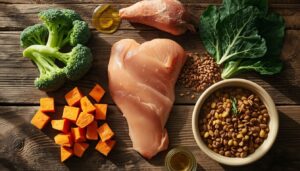
What you put in the bowl matters just as much as how much you serve. Getting the macros right — protein, fat, and fiber — is the real foundation of any effective weight loss recipe.
Here are the three nutrients you’ll want to build every meal around: protein, fat, and fiber.
Importance of High Protein
Protein is your dog’s muscle insurance policy during weight loss. Aim for 90–120g per 1,000 kcal — a protein-prioritized, nutrient balance that prevents lean tissue from disappearing alongside fat. A high-protein, animal-based diet triggers satiety signals, reducing begging episodes and improving mealtime management. Amino acids from lean proteins actively rebuild tissue daily.
- Muscle preservation keeps joints protected as weight drops
- Satiety signals reduce accidental overfeeding
- Consistent protein intake stabilizes daily nutrient balance
This approach ensures joint protection and stable nutrient intake, supporting overall health during weight loss.
Choosing Low-Fat Ingredients
Fat is where hidden calories quietly accumulate. To maintain homemade dog food below 10% fat on a dry-matter basis, prioritize lean protein sources like skinless chicken, cod, or 95% lean ground beef. Smart fat swaps make this achievable.
| Ingredient | Protein (per 100g) | Fat (per 100g) |
|---|---|---|
| Skinless chicken breast | 26g | 3g |
| Cod fillet | 20g | 1g |
| 93% lean ground beef | 24g | 7g |
Practice reading nutrition labels—ingredient fat limits matter. Incorporate low-fat dairy like plain fat-free yogurt to add calcium without excess fat.
Role of Fiber in Satiety
Fiber does more than add bulk — it’s a biological lever for appetite control. Soluble fiber absorbs water, creating stomach stretch that activates fullness receptors, while slower emptying extends satiety well past mealtime. Gut fermentation produces short-chain fatty acids, triggering satiety hormones like GLP-1 and PYY.
- Soluble fiber affects slow gastric emptying
- Stomach stretch signals fullness receptors
- Gut fermentation drives hormone release
- Satiety hormones suppress appetite post-meal
- Fiber’s role in dog satiety reduces intake by up to 27%
Aim for 15–20% fiber in high-fiber blends using fiber-rich vegetables.
Calculating Your Dog’s Calorie Needs
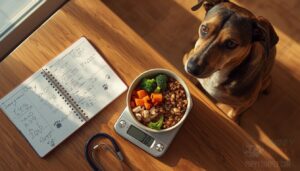
Getting the calories right is honestly where most homemade weight loss plans succeed or fail.
It’s not guesswork — there’s a simple formula vets use to find your dog’s actual daily target.
Here’s what you need to work through, step by step.
Assessing Ideal Body Weight
Think of your dog’s ideal weight as a moving target — not a fixed number on a scale. Use the Body Condition Score system: on a 9-point scale, 4–5 is the sweet spot.
Perform the Rib Check Method by feel — you should detect ribs under a thin fat layer.
Combine this with Waistline Assessment, Frame Size Evaluation, and Breed Weight Standards to refine your approach.
These methods collectively help determine accurate dog calorie needs for maintaining a healthy weight.
Daily Calorie Requirements
Once you know your dog’s ideal weight, calculate their Resting Energy Requirement: 70 × weight(kg)^0.75. That number serves as your anchor for Daily Kcal Targets. For weight loss, aim for 60–80% of maintenance calories—a controlled deficit that burns fat without sacrificing muscle.
- Track the recipe’s energy density per meal, not just volume
- Build a Treat Calorie Budget—treats count toward daily totals
- Use Meal Split Planning to divide portions across two feedings for steadier portion control for dogs
Adjusting for Activity Level
Activity level reshapes your dog’s calorie needs by 20–40%. Daily activity swings matter more than most owners realize. Use activity multipliers to guide portion adjustment and calorie management in dogs:
| Activity Level | Calorie Multiplier |
|---|---|
| Rest Day Portions | 0.8× RER |
| Light Lifestyle Movement | 0.9× RER |
| Moderate Exercise Intensity | 1.0× RER |
| Vigorous Canine Exercise Integration | 1.4× RER |
Seasonal activity shifts and routine changes demand dog diet customization. Misclassifying a couch dog as active stalls progress fast.
Best Lean Proteins for Homemade Dog Food

Protein is the engine behind your dog’s weight loss — it preserves muscle while calories drop, and the wrong source can quietly undermine the whole plan.
Not all proteins are created equal, though; fat content, digestibility, and variety all matter more than most owners realize.
Here’s what to know before you start building your dog’s bowl.
Chicken, Turkey, and Fish Options
Lean protein is the backbone of effective dog weight loss strategies — and your options here are solid. Skinless chicken breast benefits your dog with 31g protein and just 3.6g fat per 100g cooked. For a turkey cut comparison, breast edges out chicken slightly at roughly 29g protein and only 2g fat. White fish choices like cod deliver about 82 kcal per 100g — ideal for larger portions without blowing calorie targets. Here’s how to use each smartly:
- Chicken breast — remove skin completely; it’s a vet-approved diet staple for high-protein, low-fat meals for dogs.
- Turkey breast or ground turkey — slightly leaner than chicken; excellent for calorie-restricted homemade dog food recipes.
- Cod or tilapia — ultra-lean white fish choices with nearly zero fat; great volume without excess calories.
- Salmon — fatty fish tradeoffs matter here; limit portions since fat runs ~6g per 100g, though omega-3s support metabolism.
- Water-packed tuna — convenient, affordable lean protein source for dogs; drain thoroughly before serving.
Always cook poultry and meats thoroughly — raw samples carry serious pathogen risks.
Beef and Liver Considerations
Beef fits well into lean protein sources for dogs, but cut selection matters. Opt for 90/10 or 95/5 ground beef to maintain low fat levels without compromising protein density. Always trim visible fat before cooking.
Liver offers heme iron density and vitamin B12, making it valuable for preventing deficiencies. However, vitamin A balance is non-negotiable, as excess retinol accumulates rapidly, risking toxicity. Limit organ meat portions to small, controlled amounts: ~1 oz daily for small dogs, 2–3 oz for large breeds. Treat liver as a supplement, not a staple.
Pair lean beef and spinach for a low-fat meal that meets micronutrient needs. Veterinary oversight is strongly recommended before incorporating organ meats regularly.
Protein Rotation Strategies
Don’t let your dog get stuck eating the same protein for months. Single-Protein Cycles — rotating 3–4 lean protein sources for dogs across a 12-week plan — broaden amino acid coverage and reduce sensitivity risks.
Weekly Protein Switches work best with Shift Schedule Planning: introduce each new meat over 5–7 days.
- Keep fat and fiber consistent across each swap
- Track reactions — itchiness, stool changes, ear issues — for Sensitivity Response Tracking
- Follow Rotation Consistency Rules: one variable at a time
- Maintain AAFCO compliance independently per recipe
Fiber-Rich Vegetables and Healthy Carbs
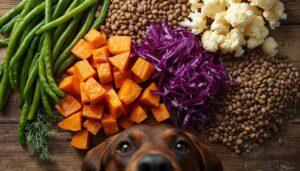
Carbs often get a bad reputation in weight loss circles, but for dogs, the right ones can actually work in your favor. Fiber-rich vegetables and smart carbohydrate choices help your dog feel fuller longer — without piling on extra calories.
Here’s what you’ll want to include.
Safe Vegetables for Dogs
Several fiber-rich vegetables earn a place in homemade dog food recipes for weight loss, and knowing which ones work best makes all the difference. Carrots serving tips matter here: slice them small and steam for better digestibility.
Green bean snacks add satisfying bulk with almost no calories, while cucumber hydration benefits are real, too.
For leafy greens, moderation is key, and cruciferous veggie limits apply: portion spinach and broccoli carefully.
Always skip onions and garlic—both are toxic, full stop.
Pumpkin and Sweet Potato Benefits
Carrots and green beans are solid choices — but pumpkin and sweet potato bring a different level of nutritional firepower to weight loss meals. Plain canned pumpkin contains just 26–34 kcal per 100g, making it a smart way to boost meal volume when your dog needs to feel full without extra calories. Sweet potato, at 86 kcal per 100g, requires tighter portion control but delivers nearly twice the protein of pumpkin.
Both ingredients offer significant nutritional advantages:
- Vitamin A Support — Beta carotene converts to vitamin A, directly aiding immune function, skin health, and corneal integrity.
- Carotenoid Antioxidants — Orange pigments protect cells from oxidative stress during calorie restriction.
- Fiber’s Role in Satiety — Slows digestion, keeping hunger at bay longer.
- Potassium Balance — Supports muscle function and normal heart rhythm.
- Recipe Flexibility — Both work seamlessly in dishes like lean turkey and pumpkin mashes or cod and sweet potato stews.
Limit pumpkin to 10% of your dog’s daily intake. Always avoid pie filling, as hidden sugars can quietly sabotage progress.
Low-Glycemic Carbohydrate Choices
Not all carbs are created equal — and for weight loss, carbohydrate selection for dogs matters more than most owners realize.
Glycemic Index Basics come down to this: slower-digesting, complex carbohydrates stabilize blood sugar and keep hunger more subdued between meals. Glycemic Load Control goes one step further, accounting for both carb quality and portion size together. The texture of carbohydrates also matters — less-processed whole-food carbs digest slower, producing gentler glucose curves.
| Carb Source | Glycemic Benefit | Role in Homemade Dog Food Recipes |
|---|---|---|
| Legume Carb Choices (lentils, chickpeas) | Low GI; fiber-rich | Protein + satiety support |
| Whole Grain Picks (oats, barley) | Steady energy release | Glycemic control base |
| Green peas | Moderate fiber; low starch | Volume without calorie load |
| Sweet potato (limited) | Vitamin A; controlled portions | Flavor + micronutrient boost |
| Brown rice (minimal) | Lower GI than refined grains | Occasional grain filler |
Aim for legumes and oats as your primary low-glycemic carbs for dogs, keeping portions controlled and always consulting your vet before finalizing any carbohydrate sources in a structured weight-loss plan.
Homemade Dog Food Recipes for Weight Loss
These three recipes are a good place to start — each one is built around lean protein, low fat, and ingredients that actually keep your dog full. They’re simple enough to make on a weeknight, but nutritionally dialed in for real weight loss.
Pick the one that fits your dog’s preferences and what you’ve already got in the kitchen.
Lean Chicken and Veggie Bowl
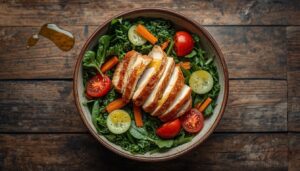
Skinless chicken breast is one of the cleanest lean proteins you can put in your dog’s bowl — low in fat, high in protein, and easy to prepare. Build the base with mixed greens like spinach or shredded kale, then layer in a Crunchy Veggie Mix of carrots, cucumber, and cherry tomatoes.
Texture variety prevents boredom and promotes satiety. This vet-approved, high-protein, low-fat meal stays under 200 kcal per serving — but always add AAFCO-compliant supplements. Chicken and veggies alone won’t cut it nutritionally.
Fish and Greens Weight Loss Stew

Cod is your go-to here — roughly 20–25g of protein per cooked portion, with minimal fat and a satisfying flaky fish texture dogs enjoy. Build the stew around a tomato broth base using low-sodium stock to keep sodium levels in check. Your leafy greens blend — spinach, kale, or chard — adds 3–5g of fiber per cup, naturally cutting total intake.
- Broth thickening options: Purée legumes or vegetables instead of cream
- Safe vegetable choices for dogs: Spinach, kale, and tomatoes work well here
- Vet-approved dog diets: Only 6% of homemade dog food recipes meet full nutritional standards without professional oversight
Always consult your vet before serving.
Turkey and Pumpkin Protein Mash
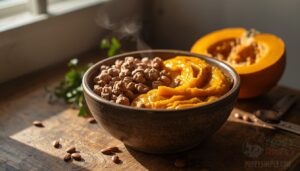
Ground turkey delivers 23–25g of protein per 100g, making it the backbone of any serious dog weight loss plan.
This Turkey-Pumpkin Ratio mash pairs lean turkey and pumpkin for a Moisture Boost that stretches volume without spiking calories. Pumpkin’s fiber enhances satiety, while the smooth Mash Texture Benefits dogs with dental sensitivity.
As Palatability Enhancers go, this hits the mark. High-protein low-fat meals for dogs don’t get more practical — just add vet-approved supplements to close nutritional gaps.
Safe Preparation and Storage Practices

Getting the recipe right is only half the job — how you prepare and store it matters just as much.
Sloppy handling can undo all that nutritional work, fast.
Here’s what you need to know to keep every meal safe from kitchen to bowl.
Cooking Methods to Preserve Nutrients
How you cook matters as much as what you cook. Steaming vegetables preserves water-soluble vitamins far better than boiling — minimal nutrient loss occurs due to minimal water contact. Gentle microwaving and low-heat poaching work well for proteins, keeping nutrient density intact without added fat. Quick sautéing with a light oil aids fat-soluble vitamin absorption.
For homemade dog food preparation, smart roasting concentrates flavor; just keep temperatures moderate to protect omega-3s.
Cooling, Portioning, and Storing Meals
Cool meals within two hours after cooking — bacteria multiply fast between 40°F and 140°F. Use rapid cooling methods, such as Shallow Container Storage, to accelerate heat dissipation.
Refrigerate at or below 40°F; use within 3–5 days. For freezing dog food batches, divide into individual meal portions immediately. Label containers with meal dates for rotation.
Verify fridge-freezer temperatures with a thermometer to ensure safety.
Preventing Bacterial Contamination
Storage done right is only half the battle — contamination starts at the cutting board.
Follow these homemade dog food safety non-negotiables:
- Handwashing Protocols: Scrub hands with soap for 20 seconds before and after touching raw ingredients
- Separate Prep Tools: Use dedicated cutting boards for meat versus produce — never swap them
- Surface Sanitizing: Wipe countertops with a 10% bleach solution immediately after use
- Safe Ingredient Thawing: Thaw frozen proteins in the fridge, never on the counter
- Water Source Hygiene: Rinse all produce under clean, uncontaminated running water only
Customizing Recipes for Your Dog

No two dogs are exactly alike — and your recipes shouldn’t be either.
Whether you’re dealing with food sensitivities, a senior dog slowing down, or a puppy still growing, small adjustments make a big difference. Here’s how to tailor your dog’s meals to fit their specific needs.
Ingredient Substitutions for Allergies
Food allergies don’t have to derail your dog’s weight loss plan. Smart substitutions keep recipes safe without sacrificing nutrition.
| Allergy Type | Safe Swap |
|---|---|
| Novel Protein Swaps | Venison or duck for beef/chicken |
| Dairy-Free Alternatives | Coconut yogurt or coconut oil |
| Egg-Free Binders | Pumpkin puree or mashed sweet potato |
| Grain-Light Replacements | Tapioca, rice flour, or pumpkin |
For nut-free options, sunflower seed butter works well. Always change one ingredient at a time — it’s the only way to pinpoint what your dog actually tolerates in low-allergen dog food options.
Adjusting Portions for Size and Age
Getting the ingredients right is only half the battle — dog portion control is where most homemade diets quietly fail. Size and life stage change everything.
Key considerations include:
- Puppy Portion Shifts are dramatic: puppies need two to three times more calories per pound than adults, then taper as they approach maturity.
- Adult Maintenance Portions center on caloric balance — match intake to activity, not habit.
- Senior Meal Reductions matter: older dogs usually need 20–25% fewer calories as metabolism slows.
- Small Breed Portions require higher calorie density per ounce — they burn faster.
- Large Breed Servings need volume-controlled, fiber-rich blends to prevent overeating.
Reassess every two to four weeks using weigh-ins and body condition scoring.
Adding Supplements Safely
Canine dietary supplements fill what whole foods miss, but pet nutritional supplementation only works when dosed correctly. Aim for 800–1,000 mg calcium per pound of boneless food, and 20–55 mg EPA+DHA per pound of body weight for omega-3s.
Preventing nutritional deficiencies means respecting dose limits — vitamin D toxicity hits at surprisingly small amounts. Prioritize single-supplement trials, check for medication interactions, and insist on quality certification.
Veterinary oversight isn’t optional here.
Monitoring Progress and Adjusting Diet
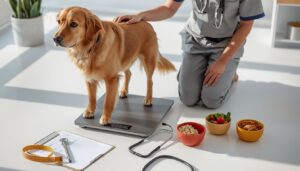
Starting your dog on a homemade weight-loss diet is only half the work — the other half is paying close attention once you do. Progress isn’t always linear, and what works in week one might need tweaking by week six.
Here’s what to watch for as you go.
Tracking Weight Loss Results
You can’t manage what you don’t measure — and with dog weight loss progress tracking, that’s not just a saying, it’s your roadmap. Start Weekly Weigh-Ins at the same time each week, under consistent conditions. Target 1–2% weekly loss; anything faster risks muscle, not just fat.
- Pair weight data with Girth Measurements at the waist and chest to catch fat loss your scale might miss
- Use Progress Photos from front, side, and rear angles — dated and consistent — to document body composition shifts
- Keep Feeding Logs for 3–5 days to spot hidden calorie creep and sharpen portion accuracy
Combine these into Weight Loss Trends, and dog body condition scoring confirms what the numbers suggest.
Modifying Recipes Over Time
As your dog sheds pounds, its calorie needs shrink — so recalibrate every three months using their updated weight. If progress plateaus, trim daily intake by 5–10% and recheck within four to six weeks.
Change Tracking keeps your recipe rotation honest: log every protein substitution, note Cooking Time Tweaks, and confirm Moisture Balance when swapping ingredients. This ensures consistency and safety in dietary adjustments.
Introduce new foods over one to three weeks to avoid digestive upset. Gradual transitions help maintain your dog’s comfort while adapting to ingredient changes.
A periodic dietary balance check with Nutrient Recalibration ensures Texture Preservation and long-term safety. This practice keeps ingredient rotations effective and aligned with your dog’s evolving needs.
Recognizing Signs of Nutritional Deficiency
Even the most carefully crafted homemade dog food can fall short of canine nutritional requirements. Watch for these nutritional deficiencies before they compound:
- Low Energy Signals: Unusual lethargy or reduced play hints at vitamin D or B12 gaps
- Coat Texture Changes: Dull, flaky, or thinning fur points to omega-3 or zinc shortfalls
- Digestive Warning Signs: Chronic diarrhea or appetite loss may indicate cobalamin deficiency
- Frequent Infection Clues: Recurring skin or stomach infections suggest compromised immunity from inadequate vitamins and minerals for dogs
- Delayed Healing Signs: Slow-closing wounds reveal gaps in balanced homemade dog nutrition
Consult your vet immediately if you spot any of these.
Common Homemade Diet Mistakes to Avoid
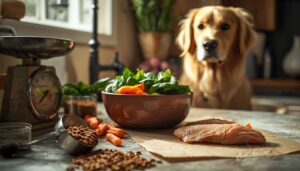
Even with the best intentions, homemade diets can go sideways fast — and your dog pays the price.
Most mistakes fall into a few predictable patterns that are easy to fix once you know what to watch for.
Here are the most common ones to keep on your radar.
Unbalanced Macronutrients
Cutting calories isn’t enough — macronutrient ratio errors can quietly undermine everything. Studies show 94% of homemade diets fall short of AAFCO standards, with calcium imbalances, micronutrient dilution, and protein imbalance effects topping the list.
Excess fat burden raises adiposity and stresses organ function; poor carb quality disrupts gut absorption. High-protein, low-fat meals for dogs must still include fat-soluble vitamins — fat isn’t optional.
Balanced homemade dog nutrition requires precise calorie control across all three macros, not just one.
Unsafe Ingredients and Toxic Foods
Some ingredients don’t just cause discomfort — they kill. Prioritize dog food safety practices by eliminating these threats immediately:
- Toxic Additives: Xylitol, chocolate, and caffeine trigger acute crises.
- Allergen Hazards: Onions and garlic destroy red blood cells.
- Heavy Metal Risks: Contaminated fish or rice introduce arsenic and mercury.
- Pesticide Dangers: Unwashed produce carries neurotoxic organophosphate residues.
- Unsafe Herbs: Essential oils and herbal extracts stress canine kidneys.
Zero exceptions on safe dog food ingredients.
Overfeeding or Underfeeding
Portion size drift sneaks up quickly—you think you’re feeding the same bowl, but treat calorie accounting is skipped, and suddenly your caloric deficit disappears. Meal frequency shifts and calorie density variance quietly compound this issue.
Use a kitchen scale, enforce a consistent feeding schedule, and log every topper to regain control. These steps eliminate guesswork and ensure accuracy in portion management.
Monitoring your dog’s weight loss progress weekly prevents food leftovers and bias from derailing results. This consistent oversight keeps the plan on track, avoiding stalls entirely.
Frequently Asked Questions (FAQs)
Is homemade dog food better for weight loss?
Homemade dog food can be the single most powerful weight loss tool you’ll ever give your dog — but only when calorie control, nutritional balance, and owner compliance stay consistent.
What can I make for my dog to lose weight?
Start with lean chicken breast or turkey paired with green beans and pumpkin — high-protein, low-calorie combinations that curb hunger without excess fat, supporting steady, vet-approved weight loss through precise portion control.
What ingredients should be in homemade dog food?
Lean proteins anchor everything — chicken, turkey, or fish for muscle support.
fiber-rich vegetables like carrots and pumpkin, calcium sources, vitamin mixes, omega-3 additions, and probiotic boosters for genuinely balanced, low-calorie nutrition.
What vegetable helps dogs lose weight?
Green beans are your best bet.
They’re low-calorie, fiber-rich, and fill the bowl without inflating calories — a straightforward green beans advantage that fits neatly into vet-approved diets for steady, safe weight loss.
What homemade food can dogs eat everyday?
Every day, your dog needs a balanced meal: roughly 40% lean protein like chicken or turkey, 50% low-calorie vegetables, and 10% grains — all vet-approved and AAFCO-compliant.
How do I safely store homemade dog food recipes?
Cool cooked meals within two hours, then transfer to airtight containers — refrigerate below 40°F for up to five days or freeze at 0°F for three months.
Always label with the date.
Can I use homemade dog food recipes for puppies?
No — weight-loss homemade dog food recipes aren’t built for puppies. Growing dogs need precise Calcium Phosphorus Balance, Essential Amino Acids, and Growth Phase Calorie targets.
Without Veterinary Monitoring Protocols, you risk Puppy Bone Health damage. Consult your vet first.
How do I identify food allergies in my dog?
Watch for nonseasonal itching around paws, ears, and belly — plus recurring ear infections or vomiting. A symptom diary pinpoints patterns.
Elimination trials using novel proteins remain your most reliable path to trigger identification.
Can I add fruits to my dogs homemade food recipes?
Yes — but treat fruit like a seasoning, not a side dish. Apples and blueberries add fiber and natural sweetness with modest calories.
Avoid grapes entirely.
Always remove seeds, measure portions, and count every bite toward daily totals.
How often should I consult with my veterinarian?
Schedule a follow-up within one to two weeks of starting any weight loss plan.
After that, routine wellness schedule visits every three to six months keep your dog’s progress — and health — on track.
Conclusion
Every bowl you prepare from here forward tells a story—one where you chose quality over convenience, and your dog’s future over quick fixes. These homemade dog food recipes for weight loss aren’t just meals; they’re the architecture of a longer, healthier life.
Watch waistline slim, the joints loosen, the tail wag harder.
You hold the ingredients, the portions, the power.
That’s not a small thing—that’s everything.
- https://ctv.veeva.com/study/dietary-fiber-effects-on-the-microbiome-and-satiety
- https://ecole-intuit-lab.com/news/header.php?id=7-high-protein-snacks-that-f6863d4236cf&v=sp
- https://pmc.ncbi.nlm.nih.gov/articles/PMC6360548/
- https://www.bohrium.com/paper-details/the-role-of-dietary-fibers-in-regulating-appetite-an-overview-of-mechanisms-and-weight-consequences/817359266070396931-3744
- https://www.todaysdietitian.com/fiber-fibers-link-with-satiety-and-weight-control/