This site is supported by our readers. We may earn a commission, at no cost to you, if you purchase through links.
Your dog’s grooming routine doesn’t have to cost the earth—literally. Traditional pet care products often contain harsh chemicals that wash down drains into waterways, while plastic packaging piles up in landfills. Meanwhile, those same synthetic ingredients can irritate your dog’s skin, leaving you with a scratching, uncomfortable pet.
Eco-friendly dog grooming offers a better path forward, using natural tools and biodegradable products that are gentler on your dog’s coat and kinder to the planet. From bamboo brushes to organic shampoos, sustainable grooming practices reduce chemical exposure, conserve water, and cut waste without sacrificing the quality care your furry friend deserves.
Table Of Contents
- Key Takeaways
- Essential Eco-Friendly Dog Grooming Tools
- Natural Shampoos and Conditioners for Dogs
- Water Conservation Techniques in Dog Grooming
- Sustainable Dog Grooming Practices at Home
- Benefits of Eco-Friendly Dog Grooming
- Frequently Asked Questions (FAQs)
- What is the best material to wear dog grooming?
- What is a holistic dog groomer?
- Can a dog be groomed without a bath?
- How can environmental damage be minimised in a dog grooming environment?
- How can I find eco-friendly dog treats?
- Are there eco-friendly dental kits for dogs?
- What are some eco-friendly flea prevention methods?
- Are there eco-friendly options for nail trimming?
- How do I educate myself on eco-friendly dog grooming?
- How often should I groom my dog eco-friendly?
- Conclusion
Key Takeaways
- Switching to natural grooming tools like bamboo brushes and biodegradable shampoos reduces your dog’s exposure to harsh chemicals while cutting down on plastic waste that ends up in landfills and waterways.
- Water-saving techniques such as low-flow shower heads, efficient bathing methods, and spot-cleaning between baths can cut water use by more than half without compromising your dog’s cleanliness.
- Natural ingredients like colloidal oatmeal, aloe, and organic oils work better for your dog’s skin and coat health than synthetic products, which studies show leave toxin levels ten times higher in pets.
- Eco-friendly grooming saves you money over time through durable tools that last years, refillable products that cost up to 80% less per bath, and supporting sustainable businesses that prioritize both pet health and environmental protection.
Essential Eco-Friendly Dog Grooming Tools
Switching to eco-friendly grooming tools doesn’t mean compromising on quality or effectiveness. The right tools can actually improve your dog’s coat health while reducing your environmental footprint.
Here are the essential sustainable grooming tools every dog owner should consider.
Natural Brushes and Combs
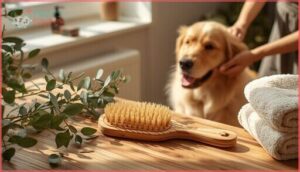
Switching to natural brushes and combs made from bamboo, wood grips, or boar bristles can transform your dog’s grooming routine. These materials reduce allergen exposure and material safety concerns linked to synthetic plastics. Natural bristles are gentler on sensitive skin while still detangling effectively.
Regular grooming helps to remove mats, tangles, and loose hair, but you can also use undercoat rakes for thick fur. You’ll lower eco-impact, support sustainable pet grooming, and enjoy better brush ergonomics—making every session easier on both you and your pup.
Bamboo and Wooden Grooming Tools
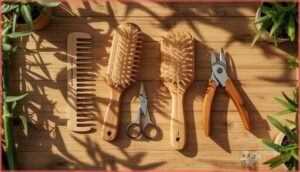
Bamboo and wooden grips bring sustainable materials straight into your grooming kit. Look for FSC-certified options that guarantee responsible wood sourcing and bamboo durability—some bamboo matures in just 3–5 years compared to decades for hardwood.
You’ll appreciate the grip ergonomics during long sessions, and when you pair natural bristle materials with these eco-friendly grooming tools, you extend tool lifespan while cutting plastic waste. Using natural oils like coconut oil can further benefit your dog’s coat. Natural grooming helps maintain healthy skin.
Key benefits include:
- Renewable bamboowood grips that grow faster than traditional timber
- Enhanced grip and comfort during extended grooming
- Biodegradable components that break down naturally
- Durable construction reducing frequent replacements
- Certified sustainable pet grooming aligned with forest standards
Biodegradable and Recyclable Materials

When you choose grooming products with biodegradable ingredients and recyclable packaging, you’re joining a shift that’s already doubled the use of recycled materials in pet care over recent years. Packaging Environmental Impact matters—the pet industry generates hundreds of millions of pounds of plastic waste annually.
Sustainable materials and biodegradable products break down naturally, while recyclable formats keep bottles out of landfills, protecting the planet your dog explores every day.
Durable Multi-Use Tools

Multi-purpose tools solve two problems at once—they reduce clutter and cut down on manufacturing waste. A self-cleaning slicker brush or an all-in-one clipper with interchangeable heads provides multiple grooming needs over years, not months.
- Material Lifespan: Bamboo-wood grips and recycled plastics outlast cheap alternatives
- Design Longevity: Replaceable heads extend tool life indefinitely
- Cost Efficiency: One adaptable grooming device replaces several single-use items
- Reduced Waste: Fewer purchases mean less packaging in landfills
Ecofriendly grooming tools and sustainable pet grooming practices make your routine simpler and greener.
Natural Shampoos and Conditioners for Dogs
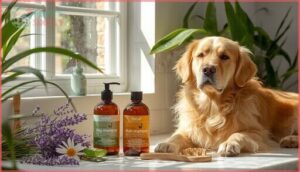
Switching to natural shampoos and conditioners is one of the easiest ways to make your dog’s grooming routine gentler on their skin and the planet. These products skip the harsh chemicals found in conventional brands and rely on plant-based ingredients that actually nourish your dog’s coat.
Here’s what to look for when choosing eco-friendly bath products.
Organic Ingredients for Coat Health
Organic ingredients like colloidal oatmeal and aloe work wonders for your dog’s skin and coat health. Oatmeal benefits include soothing irritation and moisturizing dry fur, while aloe properties help hydrate each hair shaft.
Jojoba oil mimics natural sebum, calendula effects support healing, and chamomile uses extend to calming inflamed skin.
These natural ingredients in organic grooming products nourish without harsh chemicals, giving your dog a softer, shinier coat.
Biodegradable Formulas
When you switch to biodegradable formulas with natural ingredients, you’re choosing shampoos that break down into water and carbon dioxide within six months—meeting testing standards that protect waterways from aquatic toxicity. Market growth in ecofriendly dog grooming products reflects consumer guidance toward safer choices.
Look for biodegradable products that feature:
- At least 90% ingredient breakdown in soil environments
- Natural shampoo surfactants passing OECD biodegradability tests
- Organic oils replacing synthetic petroleum derivatives
- Third-party certifications verifying environmental claims
- Labels specifying proper wastewater disposal methods
Essential Oils for Skin Benefits
When diluted properly in carrier oils, essential oils like lavender and chamomile can soothe minor skin conditions and reduce itching in dogs with dermatitis.
However, toxicity risks are real—undiluted tea tree oil has poisoned dogs with as little as seven drops.
Always follow dilution guidelines, avoid mucous membranes and broken skin, and watch for allergy signs like redness or welts after application.
Water Conservation Techniques in Dog Grooming
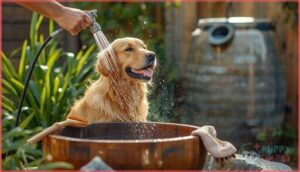
Grooming your dog doesn’t have to drain gallons of water. With a few smart adjustments, you can keep your pup clean while conserving one of our most precious resources.
Here are some practical ways to cut back on water use without cutting corners on care.
Efficient Bathing Methods
A well-planned bathing routine can cut water use by more than half. You don’t need expensive equipment to make a real difference—just smarter techniques and a few adjustments to your process.
- Recirculating systems allow one mobile groomer to bathe six dogs using just 10 gallons total, averaging under two gallons per dog.
- Dilution ratios of 32:1 (water to shampoo) create low-viscosity solutions that rinse faster and reduce product waste.
- Shower attachments with flow rates of 1.8 gallons per minute conserve water while maintaining cleaning effectiveness.
- Bathing sequence matters—turn off taps during lathering, use bucket methods for small dogs, and wipe excess suds before final rinse.
- Salon strategies like grouping appointments and training staff to shut off water promptly minimize waste across multiple baths.
These water conservation practices work with ecofriendly shampoos and natural shampoos, including shampoo bars, to create a truly sustainable grooming routine.
Waterless Shampoo Alternatives
Waterless alternatives—dry shampoo, foam sprays, and grooming wipes—promise water conservation and low-waste convenience, but they come with functional limitations and toxicity concerns. Some aerosol products contain propellants contaminated with benzene, a known carcinogen.
Organic options using plant-based ingredients offer safer choices for spot-cleaning between baths. Remember, waterless methods absorb surface oils but don’t replace thorough washing.
A shampoo bar paired with minimal water remains your best bet for true cleanliness.
Low-Flow Shower Heads and Nozzles
Low-flow showerheads cap flow at 2.0 gallons per minute, cutting water use by roughly 20% and saving 3 to 4 gallons per eight-minute rinse. That’s meaningful water conservation in any pet grooming routine. You’ll also see energy reduction from heating less water, trimming utility bills by $50 yearly.
These fixtures meet WaterSense performance standards, so spray coverage stays strong. Policy context favors them, and sustainable grooming benefits from every gallon saved.
Greywater Recycling for Garden Use
Beyond low-flow fixtures, you can take water conservation further by recycling bath runoff for your garden. Greywater safety depends on plant-compatible, low-sodium shampoos free of boron and bleach.
Direct flows to ornamental beds through simple subsurface systems—never let pets drink recycled water or let it pool on the surface.
Check local legal restrictions before installing any system design for environmental protection.
Sustainable Dog Grooming Practices at Home
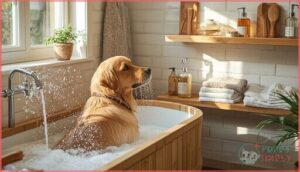
Grooming your dog at home doesn’t have to drain resources or fill up your trash bin. Small changes in your routine can cut waste, save water, and keep your pup looking great.
Here are four practical ways to make your at-home grooming more sustainable.
Spot-Cleaning Between Baths
Between full baths, spot-cleaning keeps your dog fresh without disrupting their skin microbiome. Localized cleaning with waterless shampoos or eco-friendly wipes targets paws and dirty patches while protecting natural oils.
For a low-waste pet grooming routine, try:
- Biodegradable/compostable wipes for quick touch-ups
- Reusable cloths dampened with diluted apple cider vinegar
- Baking soda sprinkled and brushed through to absorb odors
This approach reduces environmental impact while supporting healthier skin.
Eco-Conscious Drying Methods
After cleaning, how you dry your dog matters for both coat health outcomes and energy conservation. Air-drying benefits include zero electricity use—skip high-wattage dryers that consume up to 110 kWh yearly.
Instead, use natural fiber towels like microfiber or bamboo; they’re highly absorbent and replace thousands of disposables. This low-waste pet grooming routine encourages sustainable pet care while keeping skin healthy.
Natural De-Shedding Techniques
Managing your dog’s shedding doesn’t require harsh chemicals—just the right natural grooming products and consistency. Brushing frequency matters: short-haired dogs need two to three sessions weekly, while long or double coats benefit from daily attention, especially during spring and fall.
Tool selection is key for sustainable dog grooming. Undercoat rakes work better than standard combs for thick coats, and bamboo-handled brushes remove loose hair while redistributing natural oils across dog skin and coat.
Reusable Grooming Cloths and Towels
Switching to reusable cloths cuts waste in your low-waste pet grooming routine. Creating reusable grooming wipes from sustainable materials like organic cotton or microfiber reduces annual paper towel use by over 2,000 sheets.
Towel absorbency matters—shammy-style options remove 50% more water per use.
While microfiber pollution is a concern during washing, using filter bags mitigates environmental impact. This economic context benefits both your wallet and low-waste pet care routine.
Benefits of Eco-Friendly Dog Grooming

Switching to eco-friendly grooming isn’t just about being kind to the planet—it’s about giving your dog the healthiest care possible. You’ll notice real differences in your dog’s skin and coat, and you’ll feel good knowing you’re making choices that protect both your pet and the environment.
Let’s look at the key benefits that make sustainable grooming worth the switch.
Healthier Skin and Coat
When you groom your dog with natural products, you’re tapping into something special—regular brushing stimulates natural oil production that moisturizes skin and delivers a healthy coat with improved coat shine.
Studies in veterinary dermatology show reduced skin irritation and lower dermatitis rates in dogs using eco-friendly routines. This approach aids allergy prevention while strengthening pet skin and coat health naturally.
Reducing Chemical Exposure
Because traditional grooming products often contain harsh chemicals that can trigger skin irritations and allergic reactions, switching to natural ingredients reduces chemical exposure for your dog. Recent biomonitoring studies detected tenfold higher toxin levels in dogs groomed with synthetic products, highlighting the need for safer alternatives:
Switching to natural grooming products reduces your dog’s chemical exposure—studies show synthetic products leave toxin levels ten times higher
- Pesticide alternatives eliminate organophosphate residues from flea treatments
- VOC reduction prevents respiratory irritation in enclosed grooming spaces
- Allergen avoidance stops contact dermatitis before it starts
- Waterless decontamination removes contaminants without added surfactants
- Paraben-free formulas lower preservative burden on your pet’s system
Environmental Impact Reduction
Every bath you give your dog ripples outward into the environment. By choosing sustainable grooming practices, you directly tackle water conservation, plastic reduction, and chemical runoff. Low-waste routines shrink your carbon footprint while protecting waterways from harmful residues.
Here’s how eco-friendly choices reduce environmental impact:
| Environmental Factor | Sustainable Grooming Benefit |
|---|---|
| Water use | Save up to 15 gallons per bath with efficient methods |
| Plastic waste | Biodegradable packaging cuts 39 pounds annually per dog |
| Chemical runoff | Natural formulas prevent aquatic ecosystem disruption |
| Energy consumption | Air-drying and waterless shampoos lower utility demand |
| Waste minimization | Reusable tools and refillable products reduce landfill burden |
Adopting these sustainable practices means you’re grooming with purpose, turning routine care into meaningful environmental action that benefits both your pet and the planet.
Cost Savings and Supporting Sustainable Businesses
Sustainable grooming doesn’t just protect the planet—it protects your wallet. Durable bamboo brushes last two to three times longer than plastic, while refillable shampoos slash packaging waste and per-bath costs by up to 80%.
Here’s how your ethical spending creates real economic advantages:
- Tool longevity: Quality natural brushes spread initial costs over years of reliable use
- Refill benefits: Concentrated formulas reduce packaging and lower long-term product expenses
- Local economy: Supporting sustainable businesses keeps revenue in your community
- Market growth: The eco-friendly pet sector is expanding toward $85.9 billion by 2035
- Fair labor practices: Ethical companies often provide transparency and worker protections
When you choose green products, you’re investing in both your dog’s health and a thriving sustainable business landscape.
Frequently Asked Questions (FAQs)
What is the best material to wear dog grooming?
Like Teflon for fur, tightly woven synthetic fabrics such as polyester and nylon offer enhanced hair-resistant properties while providing waterproof apparel for wet grooming tasks.
Though eco-considerations now favor bamboo blends and recycled materials for sustainable grooming practices.
What is a holistic dog groomer?
An integrative dog groomer prioritizes your pet’s complete wellness by using natural products, stress-free grooming techniques, and behavioral considerations.
They focus on health monitoring and often collaborate with integrative veterinarians for integrated pet health care.
Can a dog be groomed without a bath?
Absolutely—and it’s easier than you might think! Brushing importance and waterless efficacy shine here.
Bath-free benefits include natural deodorizers and water conservation in grooming, supported by veterinary guidance, market growth, and ecofriendly dog grooming practices using natural dog grooming products that minimize water usage.
How can environmental damage be minimised in a dog grooming environment?
You can reduce environmental impact by choosing biodegradable products, installing low-flow fixtures for water conservation, switching to energy-efficient dryers, and adopting sustainable grooming practices that prioritize waste reduction and chemical alternatives throughout your operations.
How can I find eco-friendly dog treats?
Skip single-use wrapped snacks and look for sustainable dog treats with insect-based or plant-first ingredients, compostable packaging options, and brand transparency. Certifications matter—or try DIY treats using healthy diet ingredients for pets.
Are there eco-friendly dental kits for dogs?
Yes, eco-friendly dental kits for dogs include bamboo toothbrushes, plant-based chew ingredients, and compostable wipes. Look for sustainable dog grooming kit packaging and waterless options that support pet dental hygiene while reducing environmental impact.
What are some eco-friendly flea prevention methods?
You can control fleas naturally with proper home hygiene, beneficial nematode flea control in your yard, diluted essential oil safety protocols on bedding, and IGR effectiveness for prevention.
Always combine natural pest repellents for pets strategically.
Are there eco-friendly options for nail trimming?
Nail care fits naturally into your low-waste pet care routine. Recycled clippers and grinder efficiency reduce waste, while safe formulations support eco-friendly pet grooming. Sustainable integration makes these tools essential for sustainable pet care.
How do I educate myself on eco-friendly dog grooming?
Start by researching ingredient lists on shampoo bottles and checking brand transparency through company websites.
Join community forums for expert advice on choosing eco-friendly pet products, or explore DIY options to build sustainable grooming habits.
How often should I groom my dog eco-friendly?
Veterinary guidelines recommend bathing healthy dogs every four to eight weeks, though breed differences and coat condition matter.
Active dogs may need spot-cleaning between full baths to extend intervals, conserving water while supporting skin health through sustainable grooming habits.
Conclusion
Every little bit helps in protecting the planet your dog calls home. By switching to eco-friendly dog grooming, you’re choosing natural tools, biodegradable products, and water-saving techniques that benefit your pet’s health and the environment.
These small changes reduce chemical runoff, cut plastic waste, and keep your dog’s coat healthier. Your grooming routine becomes part of the solution, proving that caring for your furry companion and the earth can go hand in hand.
- https://www.grandviewresearch.com/industry-analysis/pet-grooming-services-market
- https://www.marketreportanalytics.com/reports/dog-grooming-products-208466
- https://americanpetproducts.org/news/latest-pet-ownership-and-spending-data-from-appa-reveals-continued-strength-of-national-pet-industry-in-the-face-of-economic-uncertainty
- https://www.daysmart.com/pet/blog/pet-industry-trends-2/
- https://www.forbes.com/sites/dennismitzner/2023/08/08/pet-care-companies-bank-on-sustainability-as-consumer-trends-shift/