
This site is supported by our readers. We may earn a commission, at no cost to you, if you purchase through links.

A family dog isn’t just a pet—it’s the difference between a child learning empathy through gentle interactions or developing fear after an unpredictable incident. Research shows that patient dog breeds reduce antisocial behavior in children by 30%, but choosing the wrong match can create stress for everyone in your home.
The truth is, not all dogs tolerate the noise, sudden movements, and boundary-testing that come with raising kids. Temperament matters more than popularity, and traits like bite inhibition and trainability directly impact your child’s safety.
Understanding which dog breeds are good with kids means looking beyond cute faces to assess patience scores, energy requirements, and developmental compatibility with your family’s specific needs.
Table Of Contents
- Key Takeaways
- Key Traits of Kid-Friendly Dog Breeds
- Top Large Dog Breeds for Children
- Best Medium and Small Breeds for Kids
- Choosing The Right Breed for Your Family
- Safety Tips for Kids and Family Dogs
- Frequently Asked Questions (FAQs)
- Are dogs good for kids?
- Which dog breed is best for a family with young children?
- Which dogs have good behavior around children?
- What breeds of dogs are aloof to children?
- What is the most kid friendly dog?
- What is the #1 nicest dog breed?
- What is the safest dog breed?
- What are cute dogs kid friendly?
- How much exercise do these kid-friendly breeds require?
- Are these breeds suitable for families with allergies?
- Conclusion
Key Takeaways
- Temperament matters more than breed popularity—look for dogs with high patience scores, bite inhibition, and trainability rather than choosing based on appearance, since patient breeds reduce antisocial behavior in children by 30%.
- Match your dog’s size and energy level to your children’s ages and your family’s lifestyle, because 60-77% of bite injuries in young kids involve the head or face due to height alignment with medium to large dogs.
- Golden Retrievers and Labrador Retrievers consistently rank as the safest family dogs due to their gentle temperament and over 90% obedience success rates, though they still require active supervision since most bites happen when adults are present but not watching closely.
- Early socialization between 3-14 weeks is critical for preventing aggression, and teaching children to recognize stress signals like lip licking, yawning, and tucked tails prevents 75% of bite incidents before they happen.
Key Traits of Kid-Friendly Dog Breeds
Not every dog is cut out for family life, and choosing the right breed starts with understanding what truly matters.
The best kid-friendly dogs share specific traits that make daily interactions safer and more rewarding for everyone.
Let’s look at the key characteristics that help you identify which breeds will thrive in your home.
Temperament and Patience
Patience is the cornerstone of safe interaction between dogs and children. Breeds with gentle temperaments consistently show better stress reduction outcomes and emotional reciprocity with kids. When selecting a dog, look for breeds that demonstrate inhibitory control and considerate behavior around young family members: The Cavalier King Charles Spaniel is known as a great companion dog breed.
- Golden Retrievers score 6.2 out of 7 on patience tests
- Labradors maintain tolerance ratings above 90%
- Bernese Mountain Dogs report 83% positive child interactions
- Patient breeds reduce child antisocial behavior by 30%
Trainability and Intelligence
Trainability matters because it shapes how quickly your dog can learn the rules that keep kids safe. Breeds with high heritability traits for obedience—like Poodles and Labrador Retrievers, with trainability scores around 73%—master commands in under five repetitions.
That learning speed translates to reliable responses during unpredictable moments with children, making training impact one of the most protective factors in your household. According to Coren’s breed rankings, these breeds excel in working and obedience intelligence.
Energy Levels and Playfulness
Energy level shapes whether your dog can keep up with active kids or overwhelm toddlers. Most family breeds need 30 to 120 minutes of daily exercise, with Labrador Retrievers and Boxers requiring 60 to 90 minutes to stay behaviorally stable. Match breed activity to your family lifestyle:
- Low-energy breeds suit quieter households
- Moderate breeds balance playtime and downtime
- High-energy dogs need structured family activities
- Playful temperaments encourage outdoor exercise
Active dogs thrive when exercise requirements align with your routine.
Size and Physical Compatibility
Your dog’s size directly impacts how safely they’ll interact with your children. A 3-year-old stands around 95 cm tall, placing their face near the head of many medium-sized dogs. Because of this alignment, 60 to 77% of bite injuries in young kids involve the head or face.
Consider matching breed proportions to your child’s developmental stage:
| Dog Weight Range | Best Child Age Match |
|---|---|
| Under 10 kg | 8+ years (fragile, defensive) |
| 10–25 kg | 3–12 years (sturdy, manageable) |
| 25–40 kg | 5+ years with supervision |
| Over 40 kg | School-age, trained families |
Medium breeds (10–30 kg) balance robustness during play with manageable strength for adult handling, reducing injury severity from accidental collisions.
Safety and Bite Inhibition
Bite inhibition—a dog’s ability to control jaw pressure—shapes every interaction with children. Puppies develop this restraint during their socialization window (up to 12–16 weeks), learning soft-mouth habits through consistent training methods.
Breeds with natural gentleness still require supervision and early reinforcement. Child safety depends less on breed legislation than on your commitment to teaching both dog behavior boundaries and children’s respectful handling from day one.
Top Large Dog Breeds for Children
Large dogs often make wonderful family companions when you’re looking for a loyal, gentle pet that can keep up with active kids. These breeds tend to have the patience and temperament that work well in busy households, though they do need space to move around comfortably.
Here are five large dog breeds that consistently rank among the safest and most kid-friendly options for families.
Labrador Retriever: Loyal and Gentle

Labrador Retrievers top the list of family dogs, but they need proper supervision. Despite their gentle demeanor, Labradors accounted for 13.72% of bite incidents nationwide, with children aged 0–5 at highest risk.
This doesn’t mean you should avoid child-friendly dogs—it means supervision needs matter. With training and injury prevention strategies, Labrador temperament shines, making them excellent dog breeds for children.
Golden Retriever: Patient and Tolerant

Golden Retrievers consistently rank among the top five family dogs for children, thanks to their gentle temperament and high emotional intelligence. When properly socialized, they rarely show aggression toward kids and demonstrate remarkable bite inhibition during play.
National adoption reports confirm they’re one of the safest child-friendly dogs for homes with children under 10, maintaining positive family interactions through their tolerant and protective nature.
Bernese Mountain Dog: Calm and Affectionate

If you’re looking for gentle giants, Bernese Mountain Dogs earn top marks for their docile, patient behavior in households with multiple children. Behavioral studies show they rarely exhibit social anxiety or aggression when included in family routines, and their low dominance tendency results in fewer bite incidents compared to similar-sized breeds.
Their receptive disposition makes them excellent family dogs, even for first-time owners with young kids.
Collie: Protective and Friendly
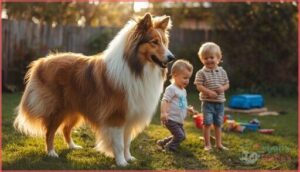
Collies combine protective instincts with a patient temperament that makes them ideal family dogs, especially for homes with toddlers and elementary-aged children. Breed evaluation studies confirm they tolerate rough play better than most large dogs, and surveys reveal high breed satisfaction among Collie owners.
- Naturally alert to threats, quickly notifying you when children need attention
- Gentle play style reduces accidental injuries during active family integration
- Non-aggressive behavior ensures safe companionship for toddler compatibility
- Basic socialization yields a devoted, protective companion your kids can trust
Boxer: Playful and Energetic

Boxers bring abundant energy and playful nature to family dogs, making them popular companions for school-aged children who can match their enthusiasm. Their muscular build requires structured exercise needs, but they show considerable patience and protectiveness during supervised play.
Boxer temperament shines with obedience training, which tackles training challenges and confirms child compatibility. Their energetic, devoted personality makes them excellent choices for active households with older children.
Best Medium and Small Breeds for Kids

Not every family has room for a full-sized retriever, and that’s completely fine. Medium and small breeds can be just as patient, playful, and kid-friendly as their larger cousins.
Here are five excellent options that fit well into apartments, townhomes, or houses with limited yard space.
Beagle: Curious and Even-Tempered
If you’re drawn to a merry companion with floppy ears, the Beagle temperament might win you over. These family dog breeds score 4 out of 5 with young children and weigh a manageable 9–11 kilograms. Consider these child-friendly dog traits:
- Even-tempered and gentle demeanor
- Pack-oriented nature suits multi-child homes
- Playful energy requires supervision with toddlers
- Socialization importance ensures reliable behavior
- Exercise needs and training challenges demand consistency
Child supervision remains essential during their exuberant puppy phase.
Cavalier King Charles Spaniel: Affectionate and Adaptable
Smaller families with young children often appreciate the Cavalier King Charles Spaniel’s 5–8 kilogram frame and exceptionally affectionate temperament. These gentle companions actively seek cuddles and petting, creating natural opportunities for family interaction.
Their patient response to kids’ excitement, combined with adaptability to apartments or houses, makes them ideal child-friendly dogs when play stays supervised and training reinforces calm greetings.
Boston Terrier: Friendly and Low-Maintenance
When apartment living limits your space, the Boston Terrier’s compact 11-kilogram frame and affectionate temperament shine. This breed’s gentle play style and patient nature support safe interactions with young children when you provide supervision.
Their loyalty and trainability simplify establishing child-friendly boundaries, while minimal grooming needs appeal to busy families. These family-friendly dogs combine playfulness with careful behavior around kids, making them popular companions.
Poodle: Intelligent and Hypoallergenic
If your child sneezes around most dogs, Poodles offer hypoallergenic benefits through their low-shedding coat. Standard Poodles tolerate vigorous play with older children, while Miniature versions suit smaller hands.
Their remarkable intelligence and training ease help you establish safe boundaries quickly. Regular grooming needs are offset by their gentle patience and reliable behavior around kids, making them consistently popular family-friendly dogs.
Border Terrier: Upbeat and Hardy
With a sturdy frame built for active play, Border Terriers thrive in households where energetic children enjoy outdoor family activities. Their friendly temperament and trainable intelligence respond well to obedience skills that support safe interactions.
These small terriers often display protective instincts toward kids, though you’ll still need consistent child supervision and early socialization to maintain positive, controlled behavior throughout the home.
Choosing The Right Breed for Your Family
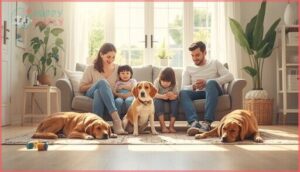
Picking the right dog isn’t just about falling in love with a breed—it’s about finding one that fits your family’s real-world needs. You need to think about your kids’ ages, how much space you have, and whether anyone in your home has allergies.
These four factors will help you narrow down your options and choose a dog that will thrive in your household.
Matching Breed to Children’s Age
Your child’s age matters more than you might think when picking dog breeds for children. Toddler-safe breeds like Golden Retrievers tolerate unpredictable behavior, while preschooler playmates such as Beagles match energetic curiosity. School-age companions, including Collies, thrive on training activities. Teen-friendly dogs like German Shepherds bond with maturing handlers.
Understanding dog breed temperament and breed life stages ensures your childfriendly dog breeds choice fits now and later.
Space and Activity Requirements
Large dog breeds like Labradors need ample indoor space—at least 18 square feet—plus outdoor access for 1–2 hours of daily exercise. Active families with yards suit their energy level best.
Small dogs adapt to tighter quarters but still require walks and play to stay healthy.
Matching breed adaptability to your home size and family dynamics prevents stress and keeps everyone safe.
Allergy and Grooming Considerations
About 12% of people older than six show allergic reactions to dog allergens found in dander and saliva, not hair alone—so “hypoallergenic breeds” don’t guarantee relief.
Low-shedding dogs like Poodles keep dander attached to fur longer, reducing allergen load.
Weekly bathing cuts airborne Can f 1 by 84%, and frequent brushing removes loose coat during shedding seasons, making grooming frequency your best defense against dog breeds and allergies.
Training and Socialization Needs
Early socialization before 14 weeks sets the foundation for a dog’s relationship with your children—after that window closes, withdrawal reactions intensify. Six-week puppy classes greatly reduce fear and aggression in adult dogs. Consistent commands and positive reinforcement accelerate learning while strengthening your bond.
Family involvement matters for behavioral outcomes:
- Weekly dog training sessions reduce social fearfulness by 44%
- All members using the same cues prevent confusion
- Dogs trained with treats retain commands longer than punishment-based methods
Regular dog socialization with children, other pets, and diverse environments builds adaptability and lowers separation anxiety throughout your dog’s life.
Safety Tips for Kids and Family Dogs

Even the most patient, well-trained dog can react unexpectedly if a child accidentally crosses a boundary. Creating a safe environment requires more than choosing the right breed—it means teaching both your kids and your dog how to coexist respectfully.
The following guidelines will help you build routines that protect everyone in your home and reduce the risk of misunderstandings or injuries.
Supervision and Setting Boundaries
Active supervision means more than being in the same room. Research shows that over 80% of pediatric dog bites happen when adults are present but not watching closely.
You need to set physical boundaries like baby gates and create temporal rules—no child-dog contact during meals or rest times.
Watch for stress signals and limit interactions immediately when your dog shows stiff posture or avoidance.
Teaching Children Respectful Interaction
Setting boundaries keeps kids safer, but you also need to teach them how to interact respectfully. Studies show 72% of dog bite prevention programs include lessons on body language, resulting in measurable safety gains.
Age-appropriate lessons work best—children aged 7–10 retain respectful interaction guidelines 44% better than younger kids.
Teach gentle handling, empathy training, and consistent practice so your children recognize stress signals and give dogs space when needed.
Early Socialization and Consistent Training
Respectful interaction sets the stage, but puppies need structured exposure early on. The socialization window between 3–14 weeks shapes behavior outcomes for life—dogs introduced to varied people, environments, and children during this period develop lower aggression rates and better adaptability.
Involve your children in age-appropriate dog training sessions to strengthen bonds, improve cooperation, and reduce undesirable behaviors like jumping. Consistent routines benefit everyone’s long-term wellbeing.
- Start puppy socialization between 3–14 weeks for best behavior outcomes
- Enroll in professional puppy classes for controlled, positive interactions
- Include children in training sessions using the same commands
- Practice positive reinforcement with praise and rewards
- Maintain consistent routines to prevent behavior regression
Recognizing Stress Signals in Dogs
Even with steady training, your dog can’t always tell you when they’re overwhelmed. Subtle stress signs—lip licking, yawning, or tucked tails—appear in over 75% of anxious dogs, but only 60% of owners recognize them. Teaching kids to spot these signals prevents bites before they happen. If your dog yawns repeatedly or backs away, give them space immediately.
Most dog owners miss the subtle stress signals—like lip licking or yawning—that appear before 75% of bites happen
| Behavioral Sign | What It Looks Like | What to Do |
|---|---|---|
| Lip Licking & Yawning | Frequent tongue flicks, exaggerated yawns unrelated to sleep | Remove child from dog’s space; allow dog to retreat |
| Lowered Body Posture | Crouched stance, tucked tail, flattened ears | Stop interaction immediately; don’t force contact |
| Whining or Trembling | High-pitched vocalizations, visible shaking | Identify stressor (noise, crowding); create quiet zone |
| Panting or Drooling | Heavy breathing without heat or exercise | Check for loud noises or overstimulation; reduce activity |
| Proximity-Seeking | Dog presses against you during chaos | Comfort dog; limit children’s access until calm returns |
Frequently Asked Questions (FAQs)
Are dogs good for kids?
While dogs require careful supervision, children in dog-owning families show 23% fewer emotional difficulties, increased physical activity, and stronger social skills.
However, allergy risks and proper training around child-friendly dogs remain essential safety considerations.
Which dog breed is best for a family with young children?
Labrador Retrievers and Golden Retrievers consistently lead recommendations for young children due to their gentle temperament, trainability, and patience.
Both breeds show over 90% obedience success and minimal bite incidents in pediatric populations.
Which dogs have good behavior around children?
Like Lassie protecting Timmy, the best child-friendly dogs show patience, bite inhibition, and calm temperament.
Labrador Retrievers, Golden Retrievers, and Beagles excel with proper training, supervision, and early socialization around children.
What breeds of dogs are aloof to children?
Breeds like Akitas, Chow Chows, and Shar-Peis display natural aloofness toward children. Basenjis show wariness around young kids, while Afghan Hounds prefer calm environments.
These dog breeds require careful supervision and early socialization for safety.
What is the most kid friendly dog?
Golden Retrievers and Labrador Retrievers consistently rank as the most child-friendly dogs because of their ideal temperament, trainability, and bite inhibition. Both breeds thrive with proper child supervision and early training importance.
What is the #1 nicest dog breed?
Regarding overall gentleness and family-friendly temperament, the Labrador Retriever consistently ranks first. Their affectionate nature, trainability, sociability, and patience with children make them the ideal example for kid-friendly dogs.
What is the safest dog breed?
No single breed is universally safest. Golden Retrievers, Labrador Retrievers, and Cavalier King Charles Spaniels consistently rank high in temperament testing and low in bite statistics, but supervision and training effectiveness remain essential regardless of breed.
What are cute dogs kid friendly?
Many dog breeds for kids combine adorable looks with gentle temperaments. Popular child-friendly dogs like Cavalier King Charles Spaniels, Beagles, and Golden Retrievers offer both small breed cuteness and proven safety around children through patient, affectionate personalities.
How much exercise do these kid-friendly breeds require?
Exercise needs vary considerably by breed. Labrador and Golden Retrievers need 60–90 minutes daily, while Beagles require less.
Puppies follow a five-minute-per-month-of-age guideline.
Consistency matters for maintaining healthy energy levels across all life stages.
Are these breeds suitable for families with allergies?
Unfortunately, no breed is truly telegraph-proof against allergies. Low-shedding dog breeds like Poodles reduce dander spread, but allergen production persists.
Early exposure and management strategies—grooming, HEPA filters—help childfriendly dogs coexist with allergy risk in families.
Conclusion
The right dog doesn’t find you—you find it through careful research and honest assessment of your family’s rhythm. Choosing dog breeds that are good with kids means prioritizing temperament over trends, patience over popularity.
Your child’s safety depends on matching breed traits to your household’s energy, space, and supervision capacity. When you invest time in this decision, you’re not just adding a pet—you’re welcoming a guardian who’ll shape how your children understand loyalty, gentleness, and responsibility.
- https://www.whole-dog-journal.com/lifestyle/the-best-family-dogs/
- https://www.northcobbanimalhospital.com/site/blog/2024/05/15/best-dog-breeds-kids
- https://www.petmd.com/dog/general-health/friendliest-dog-breeds
- https://care.choc.org/dog-bite-study-shows-youngest-kids-most-at-risk-which-breeds-inflict-the-most-severe-injuries/
- https://habri.org/pressroom/20220329/