
This site is supported by our readers. We may earn a commission, at no cost to you, if you purchase through links.
The Rottweiler Lab mix sounds like a contradiction at first—half teddy bear, half guard dog.
But owners of this breed will tell you that the combination makes a lot of sense once you’ve lived with one.
These dogs, often called Labrotties, pull the best from both parents: the Labrador’s warmth and the Rottweiler’s loyalty.
What you get is a dog that loves your family fiercely and takes that job seriously.
They’re not the right fit for everyone, but for the right owner, they’re special.
Understanding their traits, needs, and quirks makes all the difference.
Table Of Contents
- Key Takeaways
- What is a Rottweiler Lab Mix?
- Rottweiler Lab Mix History
- Rottweiler Lab Mix Appearance
- Coat Colors and Shedding
- Rottweiler Lab Mix Temperament
- Family and Pet Compatibility
- Training and Socialization Needs
- Exercise and Mental Enrichment
- Grooming and Daily Care
- Health, Diet, and Lifespan
- Frequently Asked Questions (FAQs)
- What is the best diet for a Rottweiler Lab Mix?
- Are Rottweiler Lab Mixes prone to barking?
- How much space does a Rottweiler Lab Mix need?
- How often should a Rottweiler Lab Mix go to the vet?
- Are Rottweiler Lab Mixes good with cats?
- Can a Rottweiler Lab mix handle cold weather?
- How much does a Rottweiler Lab mix cost?
- Do Rottweiler Lab mixes bark a lot?
- Are Rottweiler Lab mixes good for emotional support?
- How long do Rottweiler Lab mixes stay puppies?
- Conclusion
Key Takeaways
- Labrottie blends the Lab’s friendly warmth with the Rottweiler’s loyal protectiveness, making it a devoted family dog that genuinely takes its guardian role to heart.
- Early socialization and consistent positive reinforcement training aren’t optional — they’re what keep this big, smart, strong-wired dog safe and balanced around kids, strangers, and other pets.
- Joint problems like hip and elbow dysplasia, plus bloat risk from that deep chest, mean proactive vet care and healthy weight management are the two biggest things you can do to protect your dog’s long-term health.
- This mix needs at least 80 minutes of daily exercise plus regular mental enrichment — skip either one, and you’ll meet the chewed‑up couch version of your dog pretty quickly.
What is a Rottweiler Lab Mix?

The Rottweiler Lab mix — often called a Labrottie — is what happens when two of the most beloved dog breeds in the world have puppies together. You get the Lab’s warmth and the Rottweiler’s loyalty wrapped up in one big, soulful dog. Here’s what you should know before we get into the details.
If you’re curious about what daily life with one actually looks like, this complete Labrottie breed guide covers everything from temperament to training.
Labrottie Breed Overview
The Labrottie — a cross between a Labrador Retriever and Rottweiler — is a large dog breed built for both heart and hustle. This family-oriented, loyal dog blends the best of two worlds. Here’s what makes them stand out:
- Labrottie overview: muscular, athletic, and deeply devoted
- Puppy development: shaped early by training rewards and social skills
- Health monitoring: joint support is key for this large breed
- Temperament: protective yet warm with the people they love
Their typical adult weight range is 70–115 pounds.
Rottweiler and Lab Parents
To understand the Labrottie, you need to know both parents. The Labrador Retriever brings friendliness and sociability, while the Rottweiler contributes confident guarding instincts. Together, they create a loyal, family-orientated dog with a strong work ethic.
| Trait | Labrador vs. Rottweiler |
|---|---|
| Temperament | Friendly vs. Protective |
| Primary Role | Retriever vs. Guard dog |
Designer Dog Background
The Labrottie is what’s known as a designer dog — a purposeful cross between two purebreds, not an accidental mix. Breeders first created this hybrid in the 1990s in the United States, aiming to blend the Lab’s warmth with the Rottweiler’s steady confidence.
- Crossing two purebreds can introduce hybrid vigor, which may reduce certain inherited health risks
- Puppies in the same litter can vary noticeably in size, coat, and energy
- Reputable breeders screen both parents for health issues before breeding
Registry Recognition Status
The Labrottie isn’t recognized by the American Kennel Club, so it has no official breed standard.
That said, several designer registries do acknowledge it — including the International Designer Canine Registry, the American Canine Hybrid Club, the Designer Dogs Kennel Club, and the Dog Registry of America. Think of these as informal memberships rather than official stamps of approval.
Rottweiler Lab Mix History

The Labrottie didn’t just appear out of thin air — it has roots that stretch back centuries. Understanding where this mix comes from helps you appreciate what makes it tick. Here’s a quick look at the history behind both sides of its family tree.
United States Origins
The Rottweiler Lab mix is a true product of the 1990s, born during a wave of deliberate designer dog breeding in the United States. Here’s what shaped its American origins:
- First bred in the 1990s as a planned hybrid
- Not recognized by the American Kennel Club
- Listed by the American Canine Hybrid Club
- Gained popularity alongside other designer breeds
Labrador Retriever Lineage
The Lab’s story begins far from American suburbs — it traces back to St. John’s water dogs in Newfoundland, rugged working dogs bred to retrieve fish and haul nets in icy Atlantic waters.
British hunters brought them over in the 1820s, refining the breed through crosses that emphasized retrieving drive and trainability, eventually producing the Labrador Retriever most people recognize today.
Rottweiler Working Roots
While the Lab was out hauling nets in Newfoundland, the Rottweiler was doing something entirely different — driving cattle across rugged German terrain. Tracing back to Roman drover dogs, the breed was built for endurance, loyalty, and guarding.
In Germany, they pulled heavy meat carts and protected livestock near butcher yards. Those working dog instincts — bold, watchful, dependable — still run deep today.
Why This Mix Exists
So why put a Rottweiler and a Labrador together? Simple—breeders wanted the best of both worlds. The Lab brings warmth and friendliness; the Rottweiler brings loyalty and a natural protective instinct.
First bred in the 1990s in the US, this mix was designed to be a flexible guard-companion that fits equally well into active family life and a watchdog role.
Rottweiler Lab Mix Appearance
One of the first things people notice about the Rottweiler Lab mix is just how striking it looks. This hybrid pulls physical traits from both parents, so no two dogs look exactly the same. Here’s what you can generally expect regarding size, build, and structure.
Height and Weight Range

Most Rottweiler Lab mixes settle somewhere between 22 to 27 inches tall at the shoulder, with males often pushing toward the higher end.
Training a Rottweiler Lab mix is very manageable with the right approach—positive reinforcement techniques for large and aggressive dog breeds work especially well for channeling their size and energy into good behavior.
Weight commonly lands in the 70 to 115 pounds range, though some males tip past 120 pounds.
Growth usually peaks around 12 to 18 months, and good nutrition and regular exercise play a real role in where your dog lands within that range.
Muscular Athletic Build
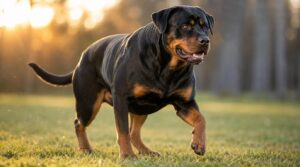
This dog is built like a small tank — and that’s not an exaggeration. The muscular athletic build comes straight from both parents’ working dog lineage, combining the Rottweiler’s dense chest and shoulders with the Labrador’s powerful hindquarters. That rear‑drive strength drives fast acceleration, while the deep chest gives room for strong lung capacity during high‑energy play.
Core strength and joint alignment work together to keep movement smooth and efficient, even through quick turns or repeated fetch sessions. When your dog stays well‑conditioned, you’ll notice clear muscle definition across the shoulders and thighs — a visible sign of a healthy, active large breed doing exactly what its body was designed for.
Head and Tail Shape
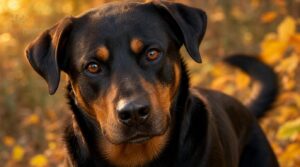
Beyond that powerful frame, the Labrottie’s head and tail shape is just as distinctive. The skull is broad and strong, with a gentle wedge silhouette from above, a medium muzzle, and wide‑set, alert eyes.
The tail is sturdy at the base and carried level — expressive but controlled, waving warmly when happy and rising calmly when attentive.
Male Versus Female Size
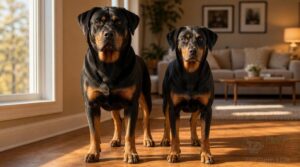
Male Labrottles generally stand 24 to 27 inches tall and can tip the scales past 100 pounds, while females usually settle a few inches shorter and stay under 100 pounds.
That height gap and weight variance matter when choosing a dog that fits your home and lifestyle.
Males also carry greater bone density and a broader frame overall — sturdy, solid, and built like they mean it.
Coat Colors and Shedding
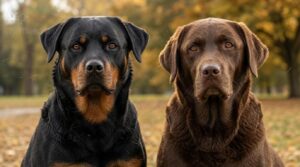
One of the first things people notice about a Rottweiler Lab mix is the coat — it can look surprisingly different from dog to dog. The color your pup inherits depends on which parent’s genes take the lead, and there are some really beautiful combinations in the mix.
Here’s a look at the most common coat colors and what you need to know about shedding.
Black and Tan Coats
The black and tan pattern is perhaps the most striking coat this mix can inherit. You get a bold, two-tone look — deep black as the base, with rich tan markings sitting above the eyes, across the muzzle, chest, and legs.
Here’s what makes those markings pop:
- Color contrast stays clean — tan never bleeds into black
- Eyebrow spots give your dog an almost expressive, "talking with their eyebrows" look
- Chest and leg detailing creates symmetry that turns heads on walks
- Tan shade varies from warm fawn to deep rust, even between littermates
That double coat keeps the colors looking sharp, and weekly brushing helps maintain natural coat shine in both tones.
Solid Black Coats
Some Labrottie pups skip the two-tone look entirely and come out a solid, deep black from nose to tail. This coat pulls from the Labrador side of the family tree and looks sleek and bold in any light.
The short, dense double coat holds color well — good color fastness means it stays rich even after repeated washes and regular outdoor adventures.
| Care Factor | What to Know |
|---|---|
| Dust management | Black fur shows lint easily; keep a lint roller handy |
| Grooming routine | Weekly brushing maintains the coat’s natural sheen |
That same dense weave that gives the coat its depth also means shedding is real — don’t let the uniform color fool you.
Chocolate and Gray Coats
Two of the rarest coat surprises in this mix are chocolate and gray — and both turn heads.
Chocolate coats come from the Lab’s recessive brown gene pairing with the Rottweiler’s base, producing shades from warm milk chocolate to deep espresso. In sunlight, you’ll often catch reddish mahogany undertones flickering through.
Gray coats are rarer still, caused by a dilution gene softening black or chocolate pigment into cool slate or soft dove tones.
Here’s what both coats share:
- Tan point markings may appear on the muzzle, chest, and eyebrows
- Seasonal shedding peaks twice yearly, needing more frequent brushing
- Occasional conditioning keeps brown and gray guard hairs shiny and healthy
Double Coat Texture
Beneath every Labrottie’s sleek exterior lies a hardworking double coat built for real life. The soft undercoat insulation traps air close to the skin, regulating your dog’s temperature year-round.
Above that, guard hair protection forms a weather‑resistant barrier, repelling moisture and dirt. Together, these coat layer functions keep your dog comfortable whether they’re splashing through puddles or napping in a cool breeze.
Seasonal Shedding Changes
Your Labrottie doesn’t shed randomly — day length triggers the process. As daylight shifts each season, the pineal gland adjusts melatonin output, signaling follicles to release old hair weeks before temperatures actually change.
Shedding peaks hit hardest in spring and fall. Indoors, consistent artificial lighting can blur these cues, so you may notice a steadier, year-round shed instead of dramatic seasonal dumps.
Rottweiler Lab Mix Temperament

The Rottweiler Lab mix has a personality that’s equal parts warmth and watchfulness — which makes them fascinating but also a little complex to live with. You’re getting two very different parent breeds in one dog, so the temperament can vary quite a bit depending on which side wins out. Here’s what you can generally expect.
Loyal and Protective Nature
Think of this dog as a family-oriented loyal dog that takes its job seriously. Your Rottweiler Lab mix carries strong guard instincts — quietly watching doorways, positioning itself between you and strangers, and staying alert without losing its cool. That’s not aggression; it’s devotion.
A Rottweiler Lab mix doesn’t guard out of aggression — it guards out of devotion
With proper protective socialization early on, this natural bodyguard channels those instincts into calm, proportionate protection your whole family can trust.
Friendly Labrador Influence
The Lab side of this mix is like a ray of sunshine cutting through the Rottweiler’s intensity.
Your Labrottie naturally offers emotional support and warmth, helping reduce stress at home through steady affection and a wagging tail. This friendly influence also makes the dog a natural family companion, encouraging kids to develop empathy and patience through supervised, gentle daily interaction.
Stranger Wariness Risks
The Rottweiler’s protective instincts don’t disappear just because a Lab’s friendliness softens them. Stranger wariness is real in this mix, especially without early socialization.
Watch for whale-eye, freezing, or lip-licking — these are stress signals, not stubbornness. A stranger looming or reaching overhead can trigger retreat or growling.
Calm, structured introductions prevent that wariness from hardening into reactivity.
Same-sex Dog Intolerance
Same-sex dog intolerance can catch owners off guard. This mix may get along fine with dogs of the opposite sex but clash with same-sex dogs — especially as it reaches social maturity.
Hormonal influence, resource competition, and size advantage all pile on fast.
Two intact males or females sharing a home are a recipe for tension.
Prey Drive Possibilities
Closely linked to same-sex tension is another trait worth knowing: prey drive. Both Rottweilers and Labs carry working-dog instincts — one a guard dog and herder, the other built for water rescue and retrieval. Together, they can produce a dog that locks onto moving targets fast.
- Movement triggers the predatory motor sequence almost automatically
- The chase itself is self-reinforcing — dopamine makes it feel rewarding
- Squeaky toys, running kids, or darting cats can all spark pursuit
- Drive management through structured play helps redirect the impulse safely
Family and Pet Compatibility
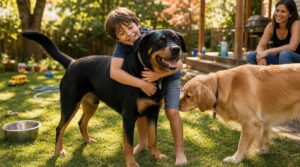
A Rottweiler Lab mix can be a wonderful family dog — but only in the right home. Before you bring one into your life, it’s worth knowing what kind of environment actually sets this dog up to thrive. Here’s what to keep in mind.
Best Owner Experience Level
This mix is genuinely best suited for experienced dog handlers. It carries the Lab’s warmth and the Rottweiler’s guarding instincts — a combination that needs calm, consistent leadership to stay balanced.
If you’re a first-time owner, that dual nature can feel overwhelming fast. Established daily routines and real-time commitment aren’t optional here; they’re what keep this dog happy and manageable.
Children and Supervision
A Rottweiler Lab mix can be good with children, but size and strength matter.
Always supervise young children closely — especially toddlers — and keep sessions calm and predictable. Teach kids to read the dog’s body language and step in early if either side looks stressed.
With consistent boundaries and active oversight, this dog can thrive as a loving family pet.
Other Dogs and Cats
With good early socialization, a Rottweiler Lab mix can get along well with other pets. Early cat introductions during puppyhood make a real difference — the younger, the better.
Always supervise first meetings with cats, and watch for resource guarding around food or toys. Some individuals with a high prey drive may simply do better in a dog-only home.
Apartment Living Challenges
Honestly, a Rottweiler Lab mix and apartment living are a tough match. At 70 to 115 pounds with serious energy levels, this dog needs room to move.
Limited floor space, noise complaints from heavy paws on shared floors, and strict breed-specific pet policies make things complicated.
Don’t forget pet deposits and monthly fees — they add up fast.
Secure Yard Needs
A fenced-in yard is practically essential for this breed. Aim for a fence at least 6 feet high — their size and protective behavior mean a shorter fence won’t cut it.
Double-latch, self-closing gates prevent accidental escapes.
Keep the ground even, well-drained, and shaded, with fresh water nearby.
Remove toxic plants and lock away chemicals.
Training and Socialization Needs
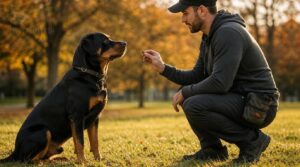
Training a Rottweiler Lab mix isn’t hard, but it does take consistency from day one. This dog is smart and enthusiastic to please, which works in your favor — as long as you stay patient and clear. Here’s what to focus on to set your pup up for success.
Early Puppy Socialization
The critical socialization window for your Labrottie puppy falls roughly between 3 and 12 weeks old — and missing it can make confidence‑building much harder later. Start as soon as your pup settles home.
Introduce new people, sounds, and surfaces gradually, keeping each session short and calm. Watch their body language closely, and always let curiosity lead the way.
Positive Reinforcement Training
Positive reinforcement is the most effective method here: reward the behavior you want the moment it happens, and your dog learns fast. A clicker or marker word pinpoints exactly what earned the treat, cutting through confusion instantly.
Keep treats small so sessions flow without long pauses. Gradually reward less often once a behavior sticks.
Impulse Control Commands
A big, clever dog with no rules is a handful — and this mix has plenty of both size and smarts. Impulse control commands like "wait," "leave it," "take it," and "drop it" give your dog a framework for self-regulation. Start with low-value items and short durations, then gradually raise the challenge as confidence builds.
Permission-based feeding and door gating are two easy daily habits that reinforce the same lesson: good things come after you pause, not before. These small routines stack up fast, turning an excitable pup into a dog that checks in with you before acting.
Leash Manners
Once impulse control clicks, leash manners are the natural next step. A Rottweiler Lab mix can reach 115 pounds, so loose leash walking isn’t optional — it’s how walks stay enjoyable for both of you. Use a front-clip gear for better steering, reward calm walking with high-value treats, and pause the moment tension hits the leash.
- Feeling your dog walk calmly beside you builds real trust
- Short, rewarding sessions make walks something you both look forward to
- Consistent practice turns chaotic pulling into peaceful daily walks
Preventing Problem Behaviors
Prevention starts with structure. A predictable daily schedule — same wake times, meals, and training windows — tells your dog what to expect, so frustration behaviors, like barking and chewing, rarely take root.
When boredom sneaks in, enrichment rotation keeps things fresh. Swap puzzle toys regularly, add scent games, and you’ve quietly redirected energy before it becomes a problem.
Exercise and Mental Enrichment
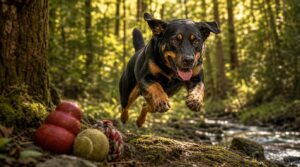
A Rottweiler Lab mix has energy to burn — and a brain that needs just as much of a workout as its body. Without enough of both, you’ll start noticing the chewed furniture and the 3 a.m. zoomies pretty quickly. Here’s what a solid exercise and enrichment routine actually looks like for this breed.
Daily Activity Needs
Your Rottweiler Lab mix needs at least 80 minutes of daily exercise to stay balanced and happy. Here’s what a solid daily plan covers:
- Morning movement to burn energy before the heat builds
- Mental stimulation through puzzle toys or scent games
- Scheduled rest periods so muscles and joints recover properly
- Fresh water available before and after every activity session
Walking and Fetch
Walking and fetch are two of the easiest ways to hit that 80-minute daily target. A brisk morning walk sets the tone, and swapping routes keeps your dog’s nose and brain engaged.
For fetch, start with short, controlled throws and build a reliable "drop it" cue so the game flows smoothly without turning into a tug-of-war.
Swimming and Tug Games
Swimming is a natural fit for this mix — both parent breeds have a history with water work, so pool safety and gradual acclimation matter from day one. Start shallow, use a life jacket early on, and build toward 5–15 minute swim sessions.
For tug, keep rounds to 60–90 seconds with a firm release cue to reinforce control.
Puzzle Toys and Scentwork
Puzzle toys and scentwork are some of the best mental workouts you can give this mix. Try a snuffle mat or treat-dispensing toy to keep that busy brain focused. You can even DIY it — hide treats in a rolled towel or cardboard box maze.
Build difficulty gradually by adding more hiding spots as your dog gets confident.
Heat Safety Tips
This breed runs hot — literally. With a dense double coat and at least 60 minutes of daily exercise needed, heat stress is a real risk.
Schedule walks in the morning or evening, never midday.
Always bring water, find shaded rest spots, and never leave your dog in a parked car, even briefly.
Grooming and Daily Care
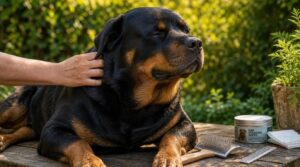
Grooming a Rottweiler Lab mix isn’t complicated, but it does need to be consistent. Their dense double coat and floppy ears mean a few simple habits can save you a lot of trouble down the road. Here’s what a solid daily care routine actually looks like.
Weekly Brushing Routine
Your Labrottie’s dense double coat needs brushing at least twice a week — and daily during peak shedding seasons in spring and summer.
Use a soft-bristle brush or slicker brush, holding it at a gentle angle to work through the undercoat without irritating the skin.
Short, calm sessions with praise and a treat afterward keep grooming stress‑free and something your dog actually looks forward to.
Bathing Every 4–8 Weeks
Your Labrottie’s water-resistant double coat doesn’t need frequent baths — every 4 to 8 weeks is just right. Washing too often strips the natural oils that keep skin healthy and fur soft.
Use lukewarm water and a dog-safe shampoo, and rinse thoroughly to avoid residue buildup. Towel dry well afterward, since trapped moisture can cause skin irritation under that dense fur.
Ear Cleaning Needs
Those drop ears are cozy little moisture traps — and that’s not a good thing. After baths or water play, dry the outer ear gently with a soft cloth to cut down on dampness that invites infection.
Here’s what to watch for:
- Persistent ear odor — a sign something’s brewing
- Redness or swelling — stop cleaning and call your vet
- Pus-like discharge — always needs professional attention
For routine cleaning frequency, a gentle wipe of the visible outer ear every few weeks works well. Use vet-approved ear drops only — skip hydrogen peroxide or alcohol, which can irritate. And never insert cotton swabs into the canal; they push wax deeper and can cause real damage.
Nail and Dental Care
Once ears are sorted, nails and teeth are next on the list.
Trim your dog’s nails every few weeks — cut too close to the quick, and you’ll hit a nerve and blood vessel, which hurts. Use dog-specific nail clippers, then smooth edges with a file.
For oral hygiene, brush their teeth two to three times weekly using pet-safe toothpaste to control plaque buildup.
Health, Diet, and Lifespan

Keeping your Rottweiler Lab mix healthy long-term comes down to a few key things you can actually control. From joint care to what goes in their food bowl, the choices you make daily really do add up. Here’s what you need to know about their health risks, diet, and lifespan.
Average Life Expectancy
Most Rottweiler Lab mixes live around 9 to 12 years, though some reach 13 with great care. That’s a solid run for a large breed.
Genetics, diet, and regular vet visits all shape how many good years you get together. Keep your dog lean and active, and those years tend to stretch further.
Hip and Elbow Dysplasia
Both parent breeds carry a genetic risk for hip and elbow dysplasia, so this mix inherits that vulnerability. These are developmental joint problems where bones don’t fit together properly, leading to wear, pain, and eventually arthritis.
Early screening and weight control are your best tools. Keeping your dog lean reduces joint stress considerably — even a few extra pounds make a real difference.
Bloat Prevention Basics
Joint issues aren’t the only inherited risk on your radar. Bloat, or gastric torsion, is a life-threatening condition where the stomach fills with gas and twists. This mix’s deep chest makes it vulnerable.
- Use a slow feeder bowl
- Split meals into smaller portions
- Wait one hour after eating before exercise
- Skip raised bowls — floor level only
- Ask your vet about a gastropexy procedure
Obesity and Portion Control
Bloat isn’t the only thing that can quietly shorten your dog’s life — unchecked weight gain is just as sneaky. This mix loves food and will happily overeat if you let it.
Stick to 1,700–2,000 kcal daily, split across two or three measured meals. Check your dog’s ribs weekly — you should feel them easily under light pressure.
Adoption and Breeder Checks
Whether you’re adopting from a rescue or buying from a breeder, do your homework first. Ask for health clearances covering hips, elbows, and eyes.
Reputable breeders welcome a facility visit and share full vet records. Rescues should provide an adoption contract with a clear return policy.
Trust your gut — if something feels rushed or secretive, walk away.
Frequently Asked Questions (FAQs)
What is the best diet for a Rottweiler Lab Mix?
Feed your dog a large-breed formula with 22–30% protein and 12–18% fat. Add omega-3s for coat and joint health. Split daily meals into two portions to support digestion and prevent bloat.
Are Rottweiler Lab Mixes prone to barking?
Bold barkers by nature? Not always. These mixes bark situationally — alerting to strangers, reacting to boredom, or signaling stress. Early socialization and quiet commands keep the volume manageable for most families.
How much space does a Rottweiler Lab Mix need?
Large, high-energy dogs need room to move. A fenced-in yard of at least 1,500 square feet and a spacious indoor living area keep this mix happy, healthy, and out of trouble.
How often should a Rottweiler Lab Mix go to the vet?
Think of vet visits like a yearly tune-up. Puppies need check-ins every 3–4 weeks until 16 weeks old. Adults do well with annual wellness exams, but seniors benefit from twice-yearly checkups.
Are Rottweiler Lab Mixes good with cats?
It depends on early training. With proper socialization and supervised introductions, many Rottweiler Lab mixes coexist peacefully with cats. Without it, their prey drive can turn a curious sniff into an unsafe chase.
Can a Rottweiler Lab mix handle cold weather?
Yes, they can handle moderate cold fairly well. Their double coat insulates effectively, but below 40°F, wind and dampness become real risks. Keep sessions short and guarantee dry, sheltered rest afterward.
How much does a Rottweiler Lab mix cost?
You get what you pay for. A Rottweiler Lab mix usually costs 600 to 700 dollars from a reputable breeder, though adoption runs just 50 to 300 dollars.
Do Rottweiler Lab mixes bark a lot?
Not really. This mix often bark with purpose — alerting to strangers or odd sounds rather than barking nonstop. Keep them active and mentally engaged, and you’ll hear a lot less noise overall.
Are Rottweiler Lab mixes good for emotional support?
A loyal, family-oriented dog with a calm protective presence can offer real emotional comfort. The right temperament, solid training, and consistent daily bonding make all the difference between a reassuring companion and an overwhelming one.
How long do Rottweiler Lab mixes stay puppies?
Most dogs this size stay in their puppy development phase until around 12 to 18 months, when they reach full size — though mental maturity often takes a little longer.
Conclusion
A well-matched rottweiler lab mix will rearrange your entire world—your schedule, your couch space, your heart. They’re not low-maintenance dogs, and they’ll never pretend to be.
But give them solid training, real exercise, and consistent love, and you’ll have a companion who shows up for you every single day without question. That fierce loyalty wrapped in a goofy, tail-wagging personality? It’s the kind of thing that makes you wonder how you ever managed without them.
- https://www.dogster.com/dog-breeds/lab-rottweiler-mix
- https://chocolatelabdenver.com/blogs/dog-breeds/rottweiler-lab-mix-labrottie
- https://a-z-animals.com/animals/labrottie
- https://www.petguide.com/breeds/dog/labrottie
- https://paworigins.com/blogs/vet-blogs/breed-guide-life-expectancy-rottweiler-lab-mix