
This site is supported by our readers. We may earn a commission, at no cost to you, if you purchase through links.

Picture a dog that can learn a new command in five repetitions, remembers it almost perfectly, and still is able to curl up calmly beside a toddler at the end of the day. That’s not a fantasy—that’s what breeders set out to create when they crossed the German Shepherd with the Standard Poodle.
The German Shepherd‑Poodle mix Shepadoodle pulls the best from two working breeds: sharp intelligence, steady loyalty, and a coat that doesn’t leave fur on every piece of furniture you own. If you’ve been trying to figure out whether this hybrid fits your home and lifestyle, the answer is hiding in the details.
Table Of Contents
- Key Takeaways
- What is a Shepadoodle?
- Shepadoodle Size and Appearance
- Shepadoodle Temperament and Personality
- Shepadoodle Care Requirements
- Shepadoodle Health and Ownership
- Frequently Asked Questions (FAQs)
- What is a poodle mix German Shepherd?
- Is a shepadoodle a German Shepherd or a poodle?
- What is a shepadoodle & a poodle mixed breed dog?
- What sizes does a German Shepherd poodle mix come in?
- Where to buy a Poodle & German shepherd mix in Ohio?
- Are German Shepherds Poodles?
- Are Shepadoodle good dogs?
- Is a German Shepherd and a Poodle a good mix?
- Are shepadoodles high maintenance?
- How big will a German Shepherd Poodle mix get?
- Conclusion
Key Takeaways
- The Shepadoodle was originally bred as a service dog for people with disabilities who needed a capable working companion without the allergy triggers that come with heavy shedding.
- Intelligence runs deep in this mix — both parent breeds rank among the smartest dogs alive, so your Shepadoodle can pick up a new command in as few as five repetitions.
- Size and coat vary a lot depending on generation, ranging from a 90-pound standard to a compact micro under 25 pounds, with curlier F1B coats shedding less than wavy F1 coats.
- This dog isn’t a low-effort pet — it needs 60–90 minutes of daily exercise, regular grooming, and consistent mental stimulation to stay happy and well-behaved.
What is a Shepadoodle?

The Shepadoodle is one of those dogs that checks a lot of boxes — smart, loyal, and easier on allergies than most. It’s a cross between a German Shepherd and a Standard Poodle, and there’s actually more to this breed’s story than you might expect. Here’s what you need to know about where it comes from and what makes it its own thing.
If you’re drawn to low-shedding crossbreeds, the Shepadoodle shares a lot of traits with other hypoallergenic mixed breeds worth exploring.
German Shepherd Poodle Mix
The Shepadoodle is a cross between a German Shepherd and a Poodle — two of the most intelligent, capable dogs around. You get the Shepherd’s loyal, protective nature paired with the Poodle’s sharp mind and hypoallergenic coat. It’s a genuinely impressive combination, built for both companionship and purpose.
They require regular grooming care to keep their coat healthy.
Designer Dog Origins
The Shepadoodle didn’t just happen by accident. Designer dog breeding took off in the late 20th century, when breeders started pairing purebreds to capture the best of both worlds.
The goal was simple: combine desirable traits like a low-shedding Poodle coat with the German Shepherd’s steady, capable temperament — producing dogs that worked harder and shed less.
Shepadoodle Breed Purpose
So what was this mix actually bred for? The answer is more layered than you’d expect. The Shepadoodle’s original purpose was service work — specifically helping people with disabilities who also had pet allergies. By pairing the German Shepherd’s steady work drive with the Poodle’s low-shedding coat, breeders created a capable service dog that didn’t trigger constant sneezing.
The Shepadoodle was bred to serve people with disabilities who needed a capable working dog without the sneezing
Today, that purpose has expanded. You’ll find Shepadoodles working as therapy and guard dogs, loyal family companions, and even trained alert dogs.
AKC Recognition Status
One thing to know about the Shepadoodle: the American Kennel Club doesn’t recognize it. Because it’s a designer hybrid dog, it can’t go through the AKC’s formal breed recognition process, which requires pure breed status and documented pedigree lines.
- AKC recognizes over 200 breeds
- Breeds start in the Foundation Stock Service
- Crosses of AKC breeds aren’t FSS-eligible
- Board approval finalizes full recognition
- Shepadoodles are recognized by the Designer Dogs Kennel Club
Common Shepadoodle Names
Naming your Shepadoodle — also called a Sheppoo, Shepapoo, or Shepdoodle — is one of the fun parts of welcoming this Shepherd Poodle mix home.
| Color Names | Personality Names | Pop Culture Names |
|---|---|---|
| Oreo | Chief | Chewie |
| Panda | Scout | Yoda |
| Blizzard | Sage | Leia |
Cute themes like Mochi or Biscuit also suit their charming personalities perfectly.
Their soft, wavy coats make F1 vs F1B Goldendoodle coat and personality differences worth exploring before you pick a theme that matches their look.
Shepadoodle Size and Appearance
Shepadoodles don’t come in just one size — and that’s actually part of their appeal.
Depending on the generation and the size of the Poodle parent, you could end up with anything from a compact lap-sized companion to a large, athletic dog that fills a room.
Here’s what to expect regarding size, coat, and how much fur you’ll actually find on your couch.
Standard Shepadoodle Size
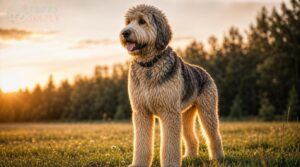
The standard Shepadoodle is a big, athletic dog that grows into a genuinely impressive companion. Fully grown, you’re looking at a weight range of 55 to 85 pounds and a height range of 22 to 27 inches at the shoulder. Here’s how that growth usually unfolds:
- Months 1–4: Leg length shoots up fast, shaping early height
- Months 6–8: Puppies hit roughly half their adult weight
- Months 6–12: Chest and shoulders fill out with muscle
- Months 14–16: Most reach their full, mature size
Size variation is real — parental genetics play a big role. A Poodle-heavy line may look more compact, while stronger German Shepherd influence produces a taller, more sturdy frame. Either way, this falls firmly into large dog size territory, so plan your space accordingly.
Mini Shepadoodle Size

If the standard Shepadoodle is the family SUV, the Mini Shepadoodle is the compact crossover — easier to manage, but still plenty capable. These dogs usually stand 15 to 22 inches tall and weigh between 30 and 55 pounds fully grown.
| Growth Stage | What to Expect |
|---|---|
| 3–6 months | Rapid height development begins |
| 6 months | Roughly 50% of adult height reached |
| 9–12 months | Full height mostly achieved |
| 12–16 months | Muscle and width continue filling out |
| 18 months | Adult weight generally stabilized |
Size variation by generation matters here. F1B lines lean curlier and slightly more compact, while F1 dogs can surprise you by trending larger. Weight management stays important throughout — compact frames stress easily under extra pounds.
Micro Shepadoodle Size

The micro Shepadoodle is the smallest of all dog size categories in this breed — usually under 15 inches tall and under 25 pounds at maturity. Here’s what makes this little dog special:
- Reaches full height by 9–12 months
- Weight stabilizes between 12 and 24 months
- Compact frame needs careful joint monitoring
- Size will vary based on generation and lineage
Coat Types and Colors

Every Shepadoodle wears a coat that’s uniquely its own. Coat type depends heavily on generation — F1 dogs usually have a soft, wavy texture, while F1B dogs lean toward tighter, more Poodle-like curls.
Colors range from classic black and cream to rich browns, silvers, and striking tri-color combinations, reflecting both traditional GSD and Poodle colors in one beautiful dog.
Shedding and Allergies
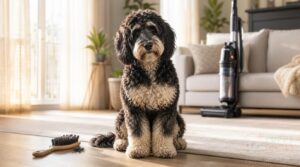
Good news for allergy sufferers — the Shepadoodle’s hypoallergenic dog coat is one of its biggest selling points. Because they grow hair rather than fur, non-shedding traits are stronger than in most breeds. Here’s what helps keep allergens low:
- Bathe regularly to reduce loose dander
- Brush every other day to catch loose hair
- Vacuum frequently to remove settled dander
- Groom every 4–8 weeks professionally
Shepadoodle Temperament and Personality

The Shepadoodle’s personality is honestly one of its best features. You get a dog that’s smart, loving, and enthusiastic to be part of your daily life. Here’s what you can expect regarding temperament.
Intelligence and Trainability
The Shepadoodle is genuinely one of the most intelligent dog breeds you’ll come across. Both German Shepherds and Poodles rank among the smartest dogs in the world, so their mix picks things up fast.
Positive reinforcement training works beautifully here — reward the right behavior, and your dog connects the dots quickly. That learning speed makes training feel less like a chore and more like a conversation.
Loyalty and Protection
A Shepadoodle is an extremely loyal companion animal by nature. That quick-learning brain you just read about? It’s also wired to watch over you.
Protective instincts run deep here. You’ll notice your dog positioning themselves between you and anything unfamiliar — a quiet, steady signal that you’re their person to protect.
Early socialization shapes those guard dog traits into calm, reliable responses rather than anxious ones.
Energy and Playfulness
If loyalty is the Shepadoodle’s heart, high energy is its engine. This dog doesn’t do slow mornings.
- Daily exercise routines of 60–90 minutes keep behavior steady and mood calm.
- Interactive play toys and puzzle feeders satisfy that sharp, always-working mind.
- High energy activities like agility courses and dog sports channel drive productively.
Playful training sessions make learning feel like a game — which is exactly how they like it.
Children and Family Life
All that playful energy finds its best home in a family that’s always moving. Shepadoodles genuinely thrive around children — they’re affectionate, patient, and naturally tuned into family rhythms.
Supervised child-pet interaction keeps things safe and fun.
Daily routines, shared meals, and consistent structure help this dog settle in as a true family companion, everyone counts on.
Pets and Socialization
Getting along with other pets takes a little patience, but Shepadoodles adjust well to early socialization. Start with calm, supervised introductions in neutral spaces.
Their high prey drive can challenge smaller animals, so gradual exposure matters.
Regular playdates and consistent routines build comfort over time, making your Shepadoodle a confident, friendly member of any multi-pet home.
Shepadoodle Care Requirements

Owning a Shepadoodle is genuinely rewarding, but these dogs do need consistent care to stay happy and healthy. They’re active, smart, and social — so a little daily effort goes a long way. Here’s what you’ll want to cover.
Daily Exercise Needs
These dogs need real, consistent movement every day. Aim for 60–90 minutes of daily activity, split across walks, play, and structured time.
Morning and evening sessions work well, especially in summer heat.
Puppies need shorter, gentler outings to protect developing joints. Older dogs do better with slower, spread-out walks.
Off-leash play in a secure fenced area adds healthy variety.
Mental Stimulation Ideas
Keeping a Shepadoodle’s brain busy is just as important as wearing out their legs. This mix inherits sharp intelligence from both parents, and an under-stimulated Shepadoodle will find their own entertainment — usually something you won’t enjoy.
Here are three simple ways to start:
- Puzzle Feeders — Swap the regular bowl for a treat-dispensing toy at mealtime.
- Scent Work — Hide treats around the house and let their nose do the work.
- Toy Rotation — Cycle different toys weekly to keep things feeling fresh.
Interactive training and positive reinforcement training sessions don’t need to be long — even ten focused minutes counts. Social playdates with calm dogs add another layer of mental enrichment that solo play simply can’t replace.
Grooming and Brushing
Grooming a Shepadoodle isn’t complicated, but it does ask for consistency. Their coat type and curliness determines how much work you’re in for — wavy coats from F1 dogs need brushing two to three times weekly, while tighter, nonshedding coats on F1B dogs mat faster and need daily brushing. Either way, use a slicker brush and work from the skin outward.
Schedule professional grooming every six to eight weeks for trims, ear cleaning, and nail care.
Food and Diet Needs
What your Shepadoodle eats fuels everything — their energy, coat, and joints. Feed a high-quality large-breed formula with real animal protein like chicken, fish, or beef as the first ingredient.
Match portions to their age and activity level. Puppies need calorie-dense food for growth, while adults and seniors need less.
Add omega-3s for coat health and fiber for steady digestion.
Apartment Living Concerns
Living in an apartment with a standard Shepadoodle is genuinely tough — they need 60–90 minutes of daily exercise and open space to burn off energy. A mini Shepadoodle is a much better fit for smaller homes.
Check your building’s pet policy carefully, as many restrict size or breed.
The good news? Their low-shedding coat keeps your space cleaner.
Shepadoodle Health and Ownership

Bringing a Shepadoodle home is a big commitment, and knowing what to expect health-wise makes that journey a whole lot smoother. Like any dog, they come with their own set of needs and potential concerns worth understanding before you commit. Here’s what every Shepadoodle owner should know.
Common Health Problems
Like any large, active dog, your Shepadoodle can face some real health challenges. Hip and elbow dysplasia are the most common, causing joint pain and stiffness over time.
Bloat prevention matters too — this breed’s deep chest makes stomach torsion a genuine emergency.
Watch for skin allergies, pannus (an eye condition), seizure episodes, and degenerative myelopathy as your dog ages.
Early joint screening catches problems before they worsen.
Lifespan and Vet Care
With the right care, your Shepadoodle can live 12 to 14 healthy years. That starts with senior wellness exams every six months once your dog hits its golden years — checking heart, lungs, joints, and running bloodwork to catch kidney or liver issues early.
Keep vaccinations current, stay consistent with flea, tick, and heartworm prevention, and don’t skip dental cleanings. Healthy teeth prevent real pain.
Generation Genetics Explained
When breeders talk about "generations," they mean how much of each parent breed is in the mix. An F1 Shepadoodle is 50% German Shepherd and 50% Poodle — the classic combo.
An F1B Shepadoodle results from a backcross to a Poodle, pushing genetics to 75% Poodle. That shift means curlier coats and less shedding, which matters a lot if allergies are a concern.
Is This Dog Right?
So, is a Shepadoodle right for you? That really comes down to your lifestyle and bandwidth. These are high energy family dogs who need 60–90 minutes of daily activity and consistent mental engagement. If you’re away long hours or can’t commit to regular grooming and vet visits, this probably isn’t your match.
- Owner lifestyle matters most — active households thrive with this dog
- Budget planning should cover grooming, food, and routine vet care
- Allergy impact varies by coat generation, so meet the dog first
- Long-term commitment of 10–14 years is part of the deal
- Rescue consideration is always worth exploring before buying
Frequently Asked Questions (FAQs)
What is a poodle mix German Shepherd?
A Shepadoodle is a cross between a German Shepherd and a Standard Poodle — two of the smartest breeds around. That combination brings hybrid vigor, blending loyalty, trainability, and a low-shedding coat.
Is a shepadoodle a German Shepherd or a poodle?
A Shepadoodle is neither one nor the other — it’s a cross between a German Shepherd Dog and Standard Poodle. That 50/50 split means it carries traits from both parent breeds equally.
What is a shepadoodle & a poodle mixed breed dog?
A mixed breed dog born from two purebred parents, the Shepadoodle blends the German Shepherd Dog’s loyalty with the Poodle’s low shedding coat — creating an allergy friendly dog built for both family life and service.
What sizes does a German Shepherd poodle mix come in?
Size varies quite a bit. A standard Shepadoodle usually weighs 50 to 90 pounds, while a mini Shepadoodle sits around 30 to 50 pounds. Smaller micro versions stay under 35 pounds.
Where to buy a Poodle & German shepherd mix in Ohio?
Plenty of puppies await you in Ohio. Sites like Lancaster Puppies and Good Dog list screened breeders statewide. Prices usually run $500–$1,500, and most sellers include health certificates and initial vaccinations.
Are German Shepherds Poodles?
No, German Shepherds and Poodles are completely separate breeds with different origins, coats, and purposes. One herds and guards; the other retrieves and performs. They share nothing except sharp intelligence.
Are Shepadoodle good dogs?
Yes, Shepadoodles are great family dogs — loyal, smart, and easy to train. They’re low-shedding and live 12–14 years. They do need space, daily exercise, and regular vet care to stay happy.
Is a German Shepherd and a Poodle a good mix?
When two working breeds join forces, the result can be something special. You get hybrid vigor, a sharp mind, and an allergy-friendly coat — making the German Shepherd and Poodle a genuinely compatible, rewarding mix.
Are shepadoodles high maintenance?
Shepadoodles are moderately high maintenance. They need daily brushing, regular grooming appointments, 60–90 minutes of exercise, and consistent training. Without enough activity or mental stimulation, they’ll let you know — loudly.
How big will a German Shepherd Poodle mix get?
Size will vary quite a bit with this mix. A standard Shepadoodle commonly weighs 50 to 90 pounds, while a mini Shepadoodle stays closer to 25–50 pounds. Most reach full height by 12 months.
Conclusion
Few dogs on the planet pack this much heart, brains, and loyalty into one curly coat. The German Shepherd‑poodle mix Shepadoodle isn’t just a pet—it’s a partner who learns fast, loves deep, and fits naturally into the rhythm of family life.
If you want a dog that meets you where you are, challenges you to stay active, and never really leaves your side, the Shepadoodle might just be exactly what your home has been missing.