This site is supported by our readers. We may earn a commission, at no cost to you, if you purchase through links.
That worn chew toy in your dog’s basket isn’t just losing its appeal—it’s becoming a health hazard. Veterinarians routinely remove toy fragments from dogs’ intestines, treat infections from bacteria-laden playthings, and counsel owners who didn’t realize cracked rubber or frayed rope poses serious risks.
Most pet parents replace toys based on aesthetics rather than safety, waiting until a toy looks destroyed instead of catching the early warning signs. Understanding when to replace dog chew toys means knowing what to look for during weekly inspections, recognizing material-specific deterioration patterns, and matching replacement schedules to your dog’s chewing intensity.
The difference between a timely swap and waiting too long can mean avoiding an emergency vet visit.
Table Of Contents
- Key Takeaways
- Key Signs Your Dog Chew Toy Needs Replacing
- Why Replacing Worn Chew Toys is Essential
- Replacement Schedules Based on Chewing Intensity
- How to Inspect Dog Chew Toys Weekly
- The Role of Toy Materials in Durability
- Safe Cleaning and Maintenance Practices
- Toy Rotation for Longevity and Engagement
- Special Considerations for Multi-Dog Households
- Cost-Effective Strategies for Safe Toy Replacement
- Choosing Safe and Durable Replacement Chew Toys
- Frequently Asked Questions (FAQs)
- Conclusion
Key Takeaways
- Replace chew toys immediately when you spot missing chunks larger than a sugar cube, sharp edges, loose squeakers, or cracks wider than 2mm—these defects create choking hazards, intestinal blockages, and bacterial breeding grounds that can send your dog to the emergency vet.
- Power chewers destroy rubber and nylon toys in 3-6 weeks while standard chewers get 3-6 months of use, so match your replacement schedule to your dog’s jaw strength and inspect toys weekly by pressing, twisting, and checking for hidden fractures.
- Bacteria like Salmonella and E. coli thrive in worn toy cracks while degraded materials leach toxic chemicals like phthalates and lead into your dog’s mouth, making timely replacement essential for preventing infections and chemical exposure.
- Rotate 3-5 toys weekly and rest them for 1-2 weeks between uses to extend toy life by 40-60%, maintain your dog’s interest through novelty, and catch wear patterns before toys become dangerous.
Key Signs Your Dog Chew Toy Needs Replacing
Your dog’s favorite chew toy won’t last forever, and knowing when to toss it can prevent serious health emergencies. Worn-out toys pose real risks—from choking hazards to bacterial infections—that most pet owners don’t notice until it’s too late.
If your pup destroys everything in sight, investing in durable toys built for aggressive chewers can save you money and keep them safer.
Worn-out dog chew toys pose serious health risks like choking and infection that most pet owners overlook until emergencies strike
Here are the four critical warning signs that tell you it’s time to replace that well-loved toy.
Missing Chunks or Pieces
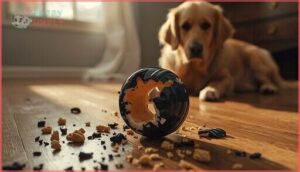
Fragment risk from toy failure is a serious concern—especially for aggressive chewers. If you spot a missing chunk larger than a sugar cube, retire the toy immediately. Smaller pieces create choking hazards and ingestion dangers that can lead to:
Choosing durable toys designed specifically for heavy chewers can significantly reduce the risk of dangerous fragmentation and help keep your dog safe during playtime.
- Obstructed airways requiring emergency intervention
- Intestinal blockages from swallowed fragments
- Aspiration of detached components regardless of dog size
Chew toy replacement protects your dog from these preventable risks, ensuring chew toy safety and durability remain priorities in your home.
Understanding how to choose safe chew toys helps you evaluate which materials and designs truly stand up to your dog’s chewing habits.
Sharp Edges or Exposed Materials

Beyond missing pieces, edge inspection reveals another urgent danger. Jagged edges or frayed surfaces scrape gums and expose fibers that harbor bacteria. Check for:
| Warning Sign | Risk Level | Action Required |
|---|---|---|
| Rough, jagged edges | High | Immediate replacement |
| Exposed internal fibers | High | Discard toy now |
| Splintered surfaces | Medium-High | Replace within 24 hours |
| Visible coating wear | Medium | Monitor closely, replace soon |
| Embedded metal/fasteners | Critical | Remove from dog immediately |
Material deterioration means it’s time for chew toy replacement—don’t wait for injuries.
Loose Squeakers or Stuffing
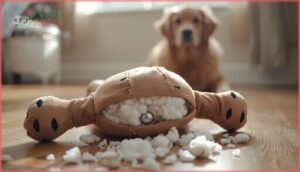
If a squeaker rattles loosely or stuffing pokes through holes, toy disintegration has reached a critical threshold for choking hazards. Material fatigue weakens seams, allowing small parts to detach during play—an urgent pet injury prevention concern.
These compromised toys create blockage risks that demand immediate chew toy replacement. Dog toy safety means trusting your eyes: visible gaps around squeakers signal it’s time to toss and replace.
Surface Cracks and Deep Teeth Marks

Cracks wider than 2 mm and pronounced tooth marks don’t just look bad—they compromise structural integrity and create perfect pockets for bacterial growth. These grooves trap saliva, food particles, and grime that regular cleaning can’t reach.
For aggressive chewers, such damage signals imminent fragment risk. Following chew toy safety guidelines means discarding deeply scored toys before they splinter. Toy durability has limits, and crack depth tells you when dog chew toy replacement can’t wait.
Keeping multiple safe options on hand—especially if you’re considering active breeds like Shelties—ensures you can swap out worn toys immediately without leaving your dog without enrichment.
Why Replacing Worn Chew Toys is Essential

You might think a chewed-up toy is just cosmetic wear, but the reality is far more serious. Worn toys create genuine health threats that can land your dog at the emergency vet.
Here’s what happens when you ignore those warning signs and let damaged toys stick around.
Health Risks From Bacteria
When bacteria colonize worn chew toys, they create a hidden threat to your dog’s health. Studies show Salmonella, E. coli, and Staphylococcus can thrive in cracks and deep teeth marks—turning a favorite toy into a source of bacterial infections.
Microbial contamination poses these dog health risks:
- Gastrointestinal upset from ingesting bacteria during play
- Mouth infections when gums contact contaminated surfaces
- Cross-contamination between pets sharing toys in warm, moist storage
Chew toy replacement isn’t just about pet safety—it’s essential dog health and wellness maintenance.
Choking and Blockage Hazards
You’ve seen your dog gnaw a toy down to tiny fragments—those bits pose immediate choking dangers and swallowing hazards. Lodged pieces can block airways or the intestinal tract, requiring emergency vet visits.
Rubber chunks, detached squeakers, and frayed rope all carry blockage risks and digestive hazards. Regular chew toy replacement protects against airway obstruction, ensuring dog toy safety and pet safety every time your pup plays.
Choosing chew toys designed for interactive play helps you match your dog’s chewing strength with safer, longer-lasting materials.
Chemical Exposure From Degraded Materials
Degraded polymer effects aren’t just cosmetic—worn toys can leach plasticizers, phthalates, and heavy metals into your dog’s mouth. Lab tests detect toxic material risks like cadmium and lead in aged toys, while chemical leaching from cracked PVC poses hazardous substance exposure.
Pet safety standards often lag, so prioritize nontoxic materials and nontoxic toy materials to safeguard dog toy safety and pet health and wellness through timely replacement.
Replacement Schedules Based on Chewing Intensity

Not all dogs chew the same way, and your replacement schedule should reflect that reality. A power chewer can destroy what a gentle nibbler would use for months, so knowing your dog’s chewing style is the first step in planning ahead.
Let’s break down how chewing intensity, material type, and simple tracking methods can guide your replacement decisions.
Power Chewers Vs. Standard Chewers
Your dog’s jaw strength and chewing patterns directly determine how quickly toys wear down. Power chewers—think pit bulls, Rottweilers, and German shepherds—demolish rubber and nylon toys 2–3 times faster than standard chewers.
Here’s what you need to know about chewer classification and aggressive chewing habits:
- Power chewers create deep structural damage within weeks, not months
- Standard chewers leave surface marks but rarely crack hard polymers
- Aggressive chewers require weekly inspections for hidden cracks and gouges
- Toy durability depends on matching materials to your dog’s jaw strength
Expected Lifespans by Toy Material
Rubber toys usually last 3–6 months for standard chewers, while power chewers wear them down in just 3–6 weeks. Nylon offers better chew resistance—3–4 months for gentle jaws, 3–6 weeks for aggressive biters. Thermoplastic elastomer toys show cracks within 1–2 months under heavy use, and rope or fabric options fray in 2–4 weeks.
Material durability directly impacts toy longevity and replacement schedules.
Tracking Toy Age and Usage
You can’t rely on memory alone when planning your replacement schedule. Track the calendar age of each toy from first use, and log how often your dog reaches for it each week.
Note any chunking or damage beyond normal wear, especially after cleaning.
A simple usage log helps you spot patterns in toy wear and predict when it’s time to rotate or replace before safety becomes an issue.
How to Inspect Dog Chew Toys Weekly

A quick weekly check-up catches problems before they turn into vet visits. You’ll want to run through both what you can see on the surface and what’s hiding underneath.
Here’s your step-by-step inspection routine to keep playtime safe.
Visual and Physical Checks
Your weekly toy maintenance routine starts with a thorough visual sweep, checking each chew toy under good lighting. Look for wear patterns and physical signs like discoloration, texture changes, or structural weakness.
Apply the squeeze test to gauge toy condition:
- Press firmly to detect soft spots indicating internal breakdown.
- Twist gently to reveal hidden stress fractures or separation.
- Pull seams to expose loose stitching or compromised bonds before they fail.
Identifying Hidden Damage
Beyond obvious surface wear, hidden damage signals often appear gradually. Fractured or chipped pieces indicate material fatigue and ingestion risk, while unusual debris around the toy suggests internal breakdown. Check for unexpected roughness on previously smooth surfaces—these fracture points develop before visible tears.
Dull or frayed chewing surfaces correlate with reduced structural integrity. Your toy inspection routine should include pressing, twisting, and examining chew patterns for these subtle damage signals before toys become hazardous.
When Immediate Replacement is Needed
Some warning signs demand you throw out a toy immediately—no second-guessing, no “one more week.” Exposed toxic materials or sudden deterioration mean emergency vet visits if swallowed. Loose squeakers present choking risks that can lead to fatal injuries within minutes.
For aggressive chewers especially, any durable chew toy showing these red flags requires instant replacement—your chew toy maintenance routine depends on recognizing these urgent signals.
The Role of Toy Materials in Durability

Not all chew toys are created equal—what your dog’s toy is made from determines how long it’ll last and how safe it stays over time. Different materials hold up differently depending on your dog’s chewing intensity, and each one shows wear in its own way.
Here’s what you need to know about the most common toy materials and how they perform.
Rubber, Nylon, and Thermoplastic Toys
Rubber toys, especially those crafted from natural rubber blends, handle moderate chewing for several weeks to months—power chewers wear through them faster. Nylon toys and thermoplastic alternatives resist tearing better than rubber but still fatigue under relentless gnawing. Here’s what to monitor for durable toys:
- Chunks breaking off signal immediate replacement
- Surface abrasions and microcracks from repetitive chewing
- Dulling texture alongside structural changes
- Color fading paired with material fatigue
- Thinning sections that pose ingestion risks
Replace when fragmentation begins.
Rope and Fabric Chew Toys
Rope toys and fabric chew toys unravel faster than hard alternatives, especially under power chewers who fray edges within two to four weeks. Fabric durability depends on weaving density and material compatibility with your dog’s chew patterns—cotton blends shed fibers quickly, while synthetic ropes resist moisture better.
Inspect rope safety by checking for loose strands that pose ingestion hazards, and replace durable toys once fraying becomes visible.
Material-Specific Warning Signs
Each material breaks down in its own way, and spotting those telltale changes early can save you from a midnight emergency vet visit. Rubber degradation shows as tackiness or white stress marks, nylon develops sharp edges from toy fracture, and fabric disintegration appears as stringy unraveling.
Watch for these material-specific red flags:
- Rubber toys: Surface stickiness, discoloration, or chemical leaching odors
- Nylon chew toys: Splintering, material fatigue cracks, or jagged points
- Fabric options: Frayed seams, loose threads, or exposed filling
Replace durable chew toys immediately when you notice these changes—your dog’s dental care and safety depend on quick action.
Safe Cleaning and Maintenance Practices

Regular cleaning extends toy life and keeps your dog safe from harmful bacteria and mold. You don’t need fancy products—simple methods work best when done consistently.
Here are three essential practices that protect your dog’s health while maximizing toy durability.
Pet-Safe Disinfectants and Drying
You want disinfectants that won’t harm your pup if a little residue lingers. Hydrogen peroxide at 3% concentration works well for toy sanitizing techniques when you rinse thoroughly and air-dry completely.
Benzalkonium chloride-based cleaning products labeled pet-safe are effective, but always rinse before your dog touches them.
Complete moisture control through extended air-drying prevents mold—store toys only after they’re bone-dry.
Dishwasher and Machine Cleaning
Machine washing and dishwasher safety simplify toy cleaning frequency without compromising dog health and hygiene. Toss fabric toys into a mesh bag for machine washing on gentle cycle, and place hard rubber or nylon toys on the dishwasher’s top rack at low heat.
These sanitizing methods preserve toy material integrity while ensuring thorough pet care and maintenance—just verify manufacturer guidelines before applying any toy cleaning approach.
Preventing Bacterial and Mold Buildup
Left damp or dirty, chew toys become bacterial breeding grounds that threaten pet health and wellness. Rinse toys with hot water after each session, then dry them completely within 24 hours to support mold prevention and toy hygiene.
Apply pet-safe cleaning products weekly, following label directions for effective sanitizing methods. Replace any toy showing persistent odor or slimy texture immediately—your chew toy replacement guide depends on consistent toy maintenance and bacterial testing vigilance.
Toy Rotation for Longevity and Engagement
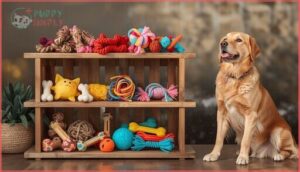
You don’t need to replace dog chew toys as often if you manage them strategically. A smart rotation system keeps your dog mentally engaged while extending the life of each toy by reducing daily wear.
Here’s how to rotate toys effectively for maximum longevity and sustained interest.
Rotating 3-5 Toys Weekly
Keeping 3 to 5 chew toys in active rotation each week delivers real toy rotation benefits—your dog stays engaged, individual toys last longer, and you’ll spot wear patterns faster.
A weekly toy schedule prevents boredom-driven destruction while optimizing pet play.
Track which toys hold up best under your dog’s chewing style, then adjust your chew toy replacement guide accordingly for smarter purchasing and safer play.
Resting Toys for Increased Novelty
After your weekly toy rotation, rest each set for one to two weeks before bringing it back into play. This downtime leverages novelty preservation—your dog’s brain reacts to the new texture and scent as if it’s a fresh find, which boosts playtime optimization and curbs chew toy fatigue.
Sensory breaks also protect teeth from constant pressure, extending dog toy durability and making every toy replacement dollar stretch further.
Seasonal Adjustments to Rotation
Seasonal scheduling drives smart toy variety adjustments. In summer, increase rotation frequency to one new option weekly—heat amps up indoor boredom and dog chewing habits demand fresh engagement.
Cold months trim outdoor pet activity levels, so inspect toys more often for damage and favor smaller, easily cleaned choices.
Allergy seasons call for dust-free materials, keeping toy durability and quality front and center while fulfilling your pet owner responsibilities.
Special Considerations for Multi-Dog Households

Managing chew toys in a multi-dog home isn’t as simple as tossing a few extras into the toy basket. Dogs compete for resources, share bacteria, and chew at different intensities—which means your replacement strategy needs to account for the whole pack.
Here’s how to keep toys safe, sanitary, and fairly distributed when you’ve got more than one furry mouth to manage.
Individual Toy Assignments
Assigning each dog their own chew toy is the cornerstone of safe multi-dog households. This simple step cuts down on resource guarding while letting you track wear patterns for every pup.
- Label each dog’s toy with their name or a unique color to prevent cross-use
- Match toys to chewing habits—power chewers need tougher materials than gentle nibblers
- Review weekly for damage and rotate assignments when wear appears
Clear toy allocation promotes both pet safety and harmonious play.
Managing Communal Toys
When multiple dogs share toys, daily sanitization with vet-approved cleaners becomes non-negotiable. Rinse and dry every communal toy thoroughly between uses—moisture breeds mold and bacteria. Label your shared toy rotation and log each cleaning to track hygiene and dog toy maintenance.
Introduce new items gradually to prevent resource guarding, and always inspect for material degradation after sanitizing. Proper communal toy safety and shared toy hygiene protect every pup’s dog health and wellness.
Monitoring Competitive Play
Play behavior tells the story—watch for toy thefts, rapid exchanges, and resource guarding during group sessions. Track dog interactions over 2-3 weekly play periods to spot competition levels and toy preference patterns. Use this data to guide dog toy maintenance and rotation:
- Record toy exchange rates per 10 minutes of play
- Document aggressive chewers and their targets
- Note social learning through mimicry behaviors
- Identify interactive toys that trigger conflicts
Adapt your strategy based on what you observe in dog chewing habits and dog behavior trends.
Cost-Effective Strategies for Safe Toy Replacement

Keeping your dog safe doesn’t have to drain your wallet or create endless trips to the pet store. Smart shopping habits, a few strategic investments, and responsible disposal practices can stretch your toy budget while maintaining the safety standards your dog deserves.
Here’s how to balance cost with your dog’s well-being.
Buying in Bulk and Subscriptions
Bulk discounts slash per-toy costs by 10% to 40%, making it easier to replace worn items without breaking the bank. Subscription plans deliver automatic replacements monthly or quarterly, ensuring you won’t run out.
Look for supplier verification of safety standards and toy customization by size and chewing style.
Responsible pet ownership means cost savings meet convenience—rotate toys, recycle old ones, and follow solid pet product guidance.
Investing in High-Quality Chew Toys
Premium chew toys cost more up front, but their durability means fewer replacements and lower long-term pet budgeting strain. Lab-tested materials and quality control reduce safety risks, making them a smarter investment for your dog’s health.
- Benebone and similar brands last 3–6 months for average chewers, outlasting cheaper alternatives
- BPA-free, non-toxic formulations minimize chemical exposure concerns
- Warranty coverage signals manufacturer confidence in toy durability and quality
- Material selection matters—durable rubber and nylon resist chunking better than thermoplastic options
Proper Disposal Methods
Don’t just toss that shredded toy in the trash without thinking. Cut it into small pieces first to prevent choking hazards if scavenged. Seal used toys in a bin to deter animals and pests.
While eco-friendly recycling options remain limited, some manufacturers offer take-back programs—check labels.
Dispose of contaminated toys immediately to protect pet health and wellness, then sanitize nearby surfaces for complete pet safety.
Choosing Safe and Durable Replacement Chew Toys
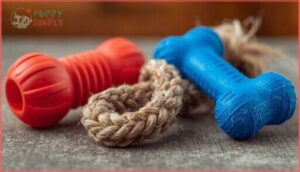
Not all replacement toys are created equal—some simply won’t hold up to your dog’s chewing style, while others offer the safety and durability you need. The right choice depends on matching material quality, construction features, and design to how your dog actually plays.
Here’s what to look for when you’re shopping for a replacement chew toy that’ll last and keep your dog safe.
Key Features to Look For
When shopping for a replacement chew toy, you need to zero in on three non-negotiables: material safety, size appropriateness, and construction quality. Look for durable rubber that meets pet safety standards and has passed rigorous durability tests for chew resistance.
Check that toy materials are non-toxic and sized correctly—too small, and you’ll replace it with an emergency vet visit.
Comparing Popular Brands (e.g., Lee Bonbon)
Lee Bonbon has earned a reputation among veterinarians for producing chew toys that consistently outlast budget competitors by 40-60%, but understanding how it stacks up against other trusted brands helps you make the smartest choice for your dog’s safety and your wallet.
Here’s how top chew toy reviews and pet safety ratings compare:
- KONG delivers proven toy durability with puncture-resistant rubber
- Benebone offers ergonomic design but shorter material quality lifespan
- Goughnuts provides safety indicators that signal replacement time
- Lee Bonbon balances premium construction with competitive pricing
Brand comparisons reveal that while KONG remains the benchmark for power chewers, Lee Bonbon’s dog toys offer comparable resilience at 20-30% lower cost, making them a smart alternative for budget-conscious pet parents who won’t compromise on safety.
Matching Toys to Your Dog’s Chewing Style
Your dog’s chewing style—whether they’re a gentle nibbler or an aggressive destroyer—determines which material and design will keep them safe and engaged without sending you back to the pet store every week.
Assess aggression levels and dog chewing habits carefully: power chewers need thick rubber or nylon, while moderate biters do well with softer thermoplastic options that won’t crack teeth.
Frequently Asked Questions (FAQs)
Can puppies use the same toys as adult dogs?
No—puppies need softer, age-appropriate toys designed for delicate jaws and teething stages. Adult chew toys pose choking risks and can damage emerging teeth, so always check labels for puppy-safe options matching your pup’s size.
How do weather conditions affect toy lifespan?
Temperature fluctuations, UV damage, and humidity effects accelerate material breakdown in outdoor exposure. Weathering tests show that chew toys left outside degrade faster than indoor options, requiring more frequent safety inspections.
Are edible chews safer than synthetic toys?
Neither chew toy type is universally safer—like choosing between wood and metal tools, each poses unique risks.
Edible chews risk bacterial contamination and digestive upset, while synthetic materials resist bacteria but can fracture dangerously.
What toys work best for teething puppies?
Soft rubber toys, gentle chews, and teething rings designed for puppies soothe sore gums without damaging developing teeth.
Look for puppy-specific products that provide relief while supporting healthy canine dental care and proper jaw development.
Should senior dogs have different chew toys?
As teeth and jaws age like well-worn tools, senior chew options demand gentler materials and ergonomic designs.
Soft resistance protects aging teeth while maintaining engagement—think flexible rubber over rock-hard nylon for canine health.
Conclusion
The safest chew toy is one you’re willing to throw away. Knowing when to replace dog chew toys protects your dog from preventable injuries, infections, and emergency surgeries that stem from a single overlooked crack or frayed edge.
Weekly inspections take two minutes—far less than the hours spent in a vet’s waiting room. Your dog trusts you to make these calls. Make them before damage becomes danger, not after.
- https://www.leebonbon.com/
- https://x.com/godofprompt/status/1990526288063324577
- https://www.sciencedirect.com/science/article/pii/S0749208123000268
- https://github.com/vinhphunguyen/how-to-write-a-paper/blob/master/how-to-write-paper.out
- https://pmc.ncbi.nlm.nih.gov/articles/instance/9553038/bin/pone.0275964.s005.docx