This site is supported by our readers. We may earn a commission, at no cost to you, if you purchase through links.
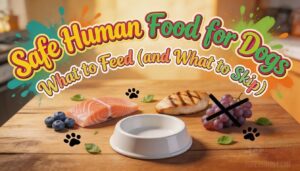
Your dog’s begging eyes during dinner aren’t wrong—some of what’s on your plate is genuinely good for them. Blueberries deliver antioxidants, salmon provides omega-3s, and plain cooked chicken offers clean lean protein.
The problem isn’t sharing; it’s not knowing where the line is. Grapes look harmless. Garlic seems too small to matter. Yet both can cause serious, sometimes fatal, harm.
Knowing which safe human foods dogs can actually tolerate—and which ones to keep far out of reach—makes the difference between a healthy treat and an emergency vet visit.
Table Of Contents
- Key Takeaways
- Safe Human Foods Dogs Can Actually Eat
- Safe Fruits You Can Share With Your Dog
- Dog-Friendly Vegetables Worth Adding
- Protein-Rich Human Foods Safe for Dogs
- Safe Grains, Carbs, and Miscellaneous Treats
- Human Foods That Are Toxic to Dogs
- How to Feed Dogs Human Food Safely
- Frequently Asked Questions (FAQs)
- Conclusion
Key Takeaways
- Safe fruits, vegetables, and lean proteins like blueberries, carrots, and plain cooked chicken can genuinely benefit your dog when served plain and in small portions.
- The 10% rule is your best guardrail — treats, including human food, should never exceed 10% of your dog’s daily calorie intake.
- Common kitchen staples like grapes, garlic, chocolate, and anything containing xylitol are toxic to dogs and require zero tolerance, not just caution.
- Introduce one new food at a time, watch for 24 hours, and call your vet immediately if you notice vomiting, lethargy, or any sign of distress.
Safe Human Foods Dogs Can Actually Eat
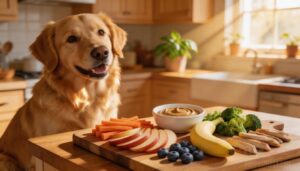
Not everything on your plate is off-limits for your dog. Some everyday foods are genuinely safe — even beneficial — when served the right way and in the right amounts.
For a handy starting point, this guide to non-toxic foods that are safe for dogs breaks down what’s actually worth sharing from your plate.
Here’s what actually makes the cut.
Why Some Human Foods Are Safe for Dogs
Not every food from your plate is a threat. Some human foods are genuinely safe for dogs because they meet four key criteria:
- Simple ingredient list
- Low fat content
- Digestive compatibility with canine metabolism
- Natural antioxidants dogs can use
Whole fruits, plain vegetables, and lean proteins match your dog’s species-specific metabolism well — no sauces, no seasonings needed.
How to Use This List Responsibly
This list works best as a starting point, not a free pass. Safe Human Foods for Dogs still need portion control and moderation for dog treats—size, frequency, and your dog’s individual health all matter.
Use Allergy Testing Protocol thinking: introduce one food at a time. Watch for reactions.
Safe Storage Tips keep prepared foods fresh and contamination-free between servings.
The 10% Treat Rule Explained
Think of treats as a budget — your dog gets 10% of their daily calories for extras. That’s the 10% treat rule, and it’s your best tool for weight management and portion control.
- Calorie tracking keeps overfeeding in check
- Training rewards add up fast — count every one
- Meal adjustment prevents double-feeding
- Moderation matters more for small dogs
- Safe human foods for dogs still count toward that 10%
Safe Fruits You Can Share With Your Dog
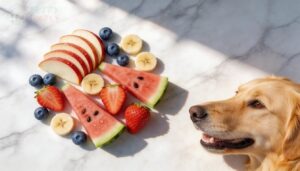
Fruit can be a surprisingly good snack for dogs — crisp, low-calorie, and packed with vitamins. Not every fruit is safe, though, so knowing which ones make the cut matters.
Here are the ones your dog can actually enjoy.
Apples (Remove Seeds and Stem)
Apples make a solid snack for dogs — but prep matters.
Apple seeds contain amygdalin, which breaks down into cyanide during digestion. Even small amounts add up. The stem is a choking risk, especially for smaller dogs.
Slice the flesh, skip the core, and you’ve got a fiber-rich, antioxidant-packed treat that fits neatly into balanced dog nutrition and health.
| Part | Safe? | Action Required |
|---|---|---|
| Flesh | ✅ Yes | Slice into small pieces |
| Seeds | ❌ No | Always remove — toxic |
| Stem & Core | ❌ No | Discard before serving |
Portion control still applies — apples count as treats.
Bananas in Small Portions
Bananas are safe human foods for dogs — just keep portions small. Aim for about 1 to 2 teaspoons per 10 pounds of body weight.
Their banana calorie count adds up fast, so use thin slices as training treats, not daily snacks.
Ripe vs green matters too — riper bananas digest more easily. Fiber digestion varies by dog, so watch stool consistency after the first taste.
Blueberries and Blackberries as Antioxidant Treats
Both blueberries and blackberries rank among the safest human foods for dogs — and they pull double duty as antioxidant-rich treats. Here’s what makes them worth rotating in:
Both berries also make a great gateway to exploring other dog-safe treats, though it’s worth checking what’s off-limits first — like why coconut ice cream isn’t safe for dogs even when it seems harmless.
- Blueberries deliver anthocyanin benefits that fight free radicals
- Blackberries bring polyphenol power from their flesh and seeds
- Together, their antioxidant synergy may support anti-inflammatory effects
- Rinse well, limit to a few pieces, and watch for loose stool
Strawberries and Watermelon (Flesh Only)
Strawberries and watermelon are two safe fruit treats for dogs that check a lot of boxes.
Strawberries offer a Vitamin C Boost, Fiber Benefits, and real Antioxidant Power — just wash them, remove the tops, and slice them small.
Watermelon works as a Hydration Aid on warm days. Feed only the flesh, skip the rind and seeds, and keep portions modest for smart Sugar Management.
Dog-Friendly Vegetables Worth Adding

Vegetables are one of the easiest ways to add real nutrition to your dog’s diet without piling on calories. Most dogs take to them quickly, and a few even make great everyday snacks.
Here are some worth keeping on your radar.
Carrots for Eye Health and Low Calories
Carrots are one of the best low-calorie treats you can offer your dog. They’re packed with beta-carotene, which converts to vitamin A and helps healthy vision. Here’s why they earn a spot in your dog-friendly vegetables rotation:
- Vision-Boosting Carotenoids – Support retina function
- Low-Calorie Crunch – Just 41 calories per 100g
- Satiety Fiber – Keeps dogs fuller, longer
- Easy Prep Tips – Wash, cut, serve plain
Cucumbers and Celery as Hydrating Snacks
Think of cucumbers and celery as nature’s water bowls — both are water-rich snacks that give your dog a quiet hydration boost between meals. Chop them small to avoid choking, serve plain, and skip any seasoning.
They’re cooling snacks on warm days, and their fiber helps healthy digestion.
Start with a tablespoon and watch how your dog responds.
Zucchini, Broccoli, and Sweet Potatoes
Three vegetables punch well above their weight for dogs: zucchini, broccoli, and sweet potatoes.
- Zucchini — Serve raw or cooked. Zucchini fiber aids digestion without added calories.
- Broccoli — Small pieces only. Broccoli antioxidants are real, but too much causes stomach upset.
- Sweet potatoes — Always cooked and peeled. Sweet potato carotene converts to vitamin A.
Skip seasonings entirely.
Broccoli is rich in antioxidants and fiber.
Green Peas — Benefits and Cautions
Green peas round out this vegetable lineup nicely. They deliver solid fiber benefits, antioxidant power, and useful minerals like iron and magnesium — real nutritional benefits for dogs.
But gas production is common, so portion control matters. Stick to a small handful.
And if your dog has kidney issues, skip them entirely — kidney cautions apply here. Green peas are safe human foods for dogs, used wisely.
Protein-Rich Human Foods Safe for Dogs
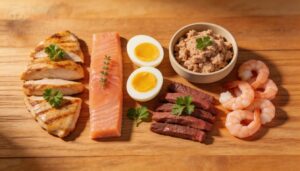
Dogs can absolutely benefit from some of the same proteins you eat every day. The key is knowing which ones are safe and how to serve them right.
Here are the best options to add to your dog’s bowl.
Cooked Chicken (Skinless, Boneless, Plain)
Cooked chicken is one of the safest human foods for dogs — a lean, digestible protein source that fits easily into dog nutrition. Stick to skinless, boneless pieces prepared through simple cooking methods: boiled, baked, or steamed, always plain.
For texture options, shredded works best. Follow the 10% rule for training treats, apply basic safety checks, and store leftovers sealed in the fridge.
Cooked Salmon for Omega-3 Benefits
Salmon is a step up from chicken — same lean protein, but with added omega-3 fatty acids (EPA and DHA) that support joint health and reduce inflammation. Always serve it fully cooked. Raw salmon can carry fatal parasites.
- Use poaching or baking for best omega-3 retention — avoid frying.
- A small portion delivers meaningful EPA/DHA dosage without excess fat.
- Protein-fat balance makes salmon more filling than leaner options.
Eggs, Turkey, and Lean Beef Guidelines
Beyond salmon, eggs, turkey, and lean beef round out your dog’s protein options nicely.
| Food | Cooking Method | Portion Size |
|---|---|---|
| Cooked eggs | Boiled or scrambled, plain | 1 egg occasionally |
| Turkey | Baked or roasted, skinless | Small bite-size pieces |
| Lean beef | Fully cooked, fat trimmed | Tablespoon-size portions |
Stick to these feeding guidelines for pets: no seasoning, no bones, no skin.
Dairy Options: Yogurt, Cottage Cheese, and Cheese
Plain yogurt, cottage cheese, and low-fat cheese can all work as small protein-rich treats — but lactose tolerance varies by dog. Greek yogurt offers probiotic benefits of yogurt for dogs through live cultures.
Watch fat content closely; whole-milk varieties risk GI upset. Portion guidelines stay simple: a tablespoon or two, occasionally.
Skip flavored options entirely — many hide xylitol.
Safe Grains, Carbs, and Miscellaneous Treats

Grains and carbs often get overlooked when people think about sharing food with their dogs. But few pantry staples can actually do your dog some good — when you choose the right ones.
Here’s what’s worth keeping on your radar.
White Rice for Digestive Upset
White rice is one of the most trusted safe human foods for dogs dealing with gastrointestinal upset. Its simple carbs and soft texture make it easy to digest when your dog’s stomach needs a break.
Use it this way:
- Serve plain — no butter, salt, or seasonings
- Cook until soft for maximum easy digestion
- Pair with plain cooked chicken for stool firming
- Keep portions small; portion control prevents overfeeding
Oatmeal for Gluten-Sensitive Dogs
Oatmeal is a gentle option for dogs with dietary restrictions or gluten sensitivity. Use plain oatmeal made with water — no sugar, salt, or spices.
Certified gluten-free oats reduce cross‑contamination risk, making them a smarter pick among allergy‑safe feeding choices.
Cook it fully, serve at a safe temperature, and aim for smooth texture consistency. Start with a small portion size and practice reaction monitoring closely.
Peanut Butter (Xylitol-Free Only)
Peanut butter is a favorite treat — but label inspection is non‑negotiable. Xylitol, a common sweetener, triggers dangerous blood sugar crashes in dogs. Even "low-sugar" versions can contain it.
- Always verify the ingredients list before serving
- Practice portion control — it’s calorie‑dense, so a small smear goes far
- Watch for allergy monitoring signs: itching, vomiting, or loose stools
Choose simple, xylitol‑free peanut butter only.
Plain Popcorn, Honey, and Cooked Potatoes
These three treats are safe in small doses — but each comes with its own rules.
Plain popcorn offers fiber and minerals; stick to a few air-popped kernels and skip unpopped ones.
Small amounts of honey deliver antimicrobial benefits, though its sugar impact is real — a quarter teaspoon is plenty.
Cooked potatoes, plain and peeled, provide digestible potato starch benefits. Always feed in moderation.
Human Foods That Are Toxic to Dogs
Not everything on your kitchen counter is fair game for your dog. Some common foods are genuinely dangerous — not just "probably fine in small amounts."
Here’s what you need to keep away from them entirely.
Chocolate, Grapes, and Raisins

Some foods aren’t just unhealthy for dogs — they’re genuinely dangerous. Chocolate, grapes, and raisins top that list. Chocolate causes methylxanthine toxicity through theobromine and caffeine. Grapes and raisins trigger a kidney damage risk even in tiny amounts. Combined hazards like chocolate-covered raisins are especially alarming.
Chocolate, grapes, and raisins aren’t just unhealthy for dogs — they’re genuinely dangerous
Watch for these acute vomiting signs and more:
- Vomiting or diarrhea shortly after ingestion
- Tremors or seizures from risks of chocolate ingestion in dogs
- Lethargy and decreased urination from grapes and raisins
- Irregular heartbeat linked to methylxanthines
- Rapid progression requiring emergency vet care
Call your vet or the Pet Poison Helpline immediately — don’t wait for symptoms.
Garlic, Onions, and The Allium Family
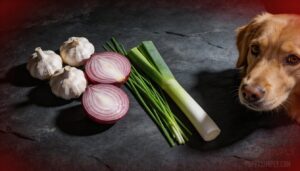
Chocolate and grapes aren’t the only kitchen dangers. The Allium family — garlic, onions, leeks, and chives — ranks among the most dangerous human foods for dogs. Allium toxicity in dogs works through sulfur compounds that destroy red blood cells, causing hemolytic anemia.
| Aspect | Details | What To Do |
|---|---|---|
| Allium Toxic Mechanisms | Sulfur compounds damage red blood cells | Avoid all forms entirely |
| Hidden Allium Sources | Powders, sauces, spice blends, cooked dishes | Always check ingredient labels |
| Symptoms of Hemolysis | Pale gums, weakness, dark urine, lethargy | Contact Pet Poison Helpline immediately |
| Treatment Options | IV fluids, blood monitoring, supportive care | Vet visit — don’t wait |
Preventing accidental exposure means reading every label. Even garlic powder in a sauce counts. These are genuinely dangerous human foods for dogs — no safe threshold exists.
Xylitol in Sugar-Free Products

Alliums aren’t the only hidden threat.
Xylitol — a sweetener in sugar-free gum, peanut butter, and yogurt — triggers a dangerous insulin surge in dogs that can crash blood sugar fast. Xylitol toxicity can also cause serious liver damage. Always check labels on sugar-free products.
If your dog eats anything containing xylitol, that’s an emergency response situation — call your vet immediately.
Avocado, Macadamia Nuts, and Raw Dough
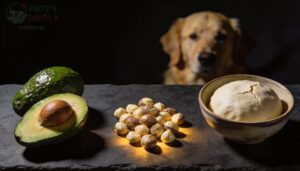
Beyond xylitol toxicity, a few more foods deserve serious caution. Avocado Persin Toxicity is real — persin in the flesh, skin, and leaves can cause vomiting and breathing problems. The pit is also a pit choking hazard.
Macadamia nuts trigger Macadamia Neurological Effects like tremors and weakness within hours.
And Raw Dough Bloat from Yeast Fermentation Alcohol can become life‑threatening fast.
Bacon, Cooked Bones, and Salty Processed Foods
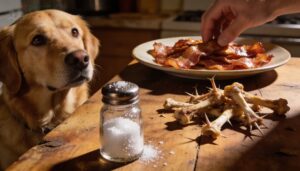
Bacon looks harmless, but it’s a Pancreatitis Trigger wrapped in Seasoning Toxicity risks. Sodium Overload Risks hit fast — especially in dogs with heart or kidney issues. Cooked bones? Classic Bone Splinter Hazards.
Watch for these Digestive Upset Signs after processed foods:
- Vomiting or loose stool
- Excessive thirst
- Lethargy
- Loss of appetite
Skip the scraps.
How to Feed Dogs Human Food Safely
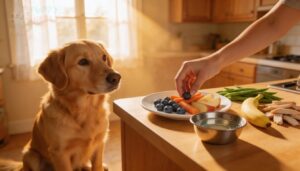
Knowing what to feed your dog** is only half the equation. The other half is how* you feed it***.
A few simple habits make all the difference between a safe snack and an unexpected trip to the vet.
Always Serve Plain With No Seasonings
Think of your dog’s plate like a blank canvas — seasoning-free preparation is the rule, not the option. Salt, garlic-free meals, and plain cooking techniques protect against toxicity and digestive upset.
That means plain chicken, plain yogurt, unsalted unbuttered air-popped popcorn, and unsalted peanuts only.
Always do ingredient label checks — garlic powder and xylitol hide in unexpected places.
No salt policy, no exceptions.
Cut Into Bite-Size Pieces to Prevent Choking
Size matters more than you’d think. Round foods like grapes — already a no-go — show exactly how shape creates choking hazards for dogs.
Slice lengthwise first, then crosswise into uniform bite size cubes. Avoid sticky textures that clump in the throat. Supervise chewing sessions, especially with crunchy or dense foods.
Safe human foods for dogs still require careful prep and portion control.
Introduce New Foods One at a Time
One new food at a time — that’s the rule. A gradual introduction helps you pinpoint exactly what caused any reaction.
- Start with a small amount and observe for 24 hours
- Keep an observation log: food, portion, time, and stool consistency
- Avoid multiple new foods on the same day
- Apply portion control — treats stay under 10% of daily calories
Allergy tracking gets much easier when you test in small amounts.
Signs of Food Intolerance or Poisoning to Watch For
Your dog’s body talks — you just need to listen.
Vomiting Episodes and Diarrhea Onset are the most common symptoms of food poisoning in dogs, often appearing within hours. Watch for Bloating Gas, Skin Rashes, and Fever Weakness too.
Dog vomiting and diarrhea together signal dehydration risk fast. These digestive issues in dogs and allergic reactions in dogs deserve prompt attention.
When to Ask Your Veterinarian
When something feels off, don’t wait and wonder.
Persistent vomiting lasting more than 24 hours, blood in stool, or signs of an allergic reaction — swollen face, hives, labored breathing — all need immediate veterinary advice. Obstruction signs like gagging or a bloated belly are urgent too.
If your dog has a medication interaction risk or existing condition, always confirm safe human foods for dogs with your vet first.
Frequently Asked Questions (FAQs)
What is the 7 7 7 rule for dogs?
Think of it as a timeline for trust. The 7-7-7 rule maps three milestones: 7 days to decompress, 7 weeks for routine building, and 7 months for full trust development.
Can dogs eat human food every day?
Technically, yes — but daily feeding raises real Long-Term Risks.
Human food is higher in fat, salt, and calories, which can disrupt Digestive Health, Calorie Balance, and even cause Nutrient Deficiency over time.
Which human foods help dogs with allergies?
Salmon, plain yogurt, and cooked sweet potato work well for allergy-prone dogs.
These support omega-3 enrichment and probiotic benefits while limiting common dog food allergens through allergy-safe feeding with novel protein sources.
Are organic foods safer for dogs than conventional?
Organic dog food isn’t automatically safer.
nutrient differences between organic and conventional are small.
The label reflects farming practices, not better nutrition.
pesticide residue can still appear.
Prioritize complete, balanced ingredients over the organic label.
Can puppies eat the same foods as adult dogs?
Yes, but with care.
Puppies share the same Digestive Sensitivity and Growth Phase Considerations that demand stricter Portion Size Adjustments. Their Puppy Nutrient Needs differ enough that Veterinary Guidance is always worth seeking first.
How do dog food allergies get properly diagnosed?
Diagnosing dog food allergies requires a strict elimination diet trial lasting 8–12 weeks, using a hydrolyzed protein diet or novel protein diet under veterinary supervision — no treats, no extras, no shortcuts.
Conclusion
Imagine your dog’s tail wagging with joy, their eyes shining with gratitude. Feeding them safe human food can be a wonderful way to show love.
But remember, a balanced diet comes first. Treats should complement, not replace, their regular meals.
By knowing what to feed and what to skip, you’ll create a healthy routine. Your dog will thank you.
Make informed choices, and enjoy sharing snacks with your furry friend, safely and responsibly, every day.
- https://www.medicalnewstoday.com/articles/324453
- https://www.splootvets.com/post/healthiest-human-foods-dogs-can-eat
- https://timesofindia.indiatimes.com/etimes/trending/15-human-foods-that-are-safe-for-dogs-and-6-that-can-be-dangerous-them/articleshow/121797875.cms
- https://www.rover.com/blog/surprisingly-healthy-foods-you-should-be-giving-your-dog/
- https://www.petpoisonhelpline.com/