
This site is supported by our readers. We may earn a commission, at no cost to you, if you purchase through links.

The Pug and Poodle mix sounds like a joke a dog breeder told once and somehow it stuck. Two dogs that could not look more different—one bred for French nobility, the other for Chinese emperors—and someone decided to combine them. The result is the Pugapoo: a compact, curly-faced companion with a personality roughly twice its body size.
These little dogs tend to land somewhere between goofy and charming, which makes them surprisingly hard to resist. Their personality—bold, affectionate, and perpetually curious—ensures they’re never just background noise in a household.
If you’re weighing whether one fits your home, your lifestyle, and your patience for a dog that will absolutely follow you to the bathroom, you’re in the right place.
Table Of Contents
- Key Takeaways
- What is a Pug Poodle Mix?
- Pugapoo Appearance and Size
- Pugapoo Temperament and Family Fit
- Pugapoo Care and Daily Needs
- Pugapoo Health and Puppy Tips
- Frequently Asked Questions (FAQs)
- Should I let my Pug sleep with me?
- How much does a Pugapoo puppy cost?
- How much grooming is required for a Pugapoo?
- Are Pugapoo puppies easy to train?
- Is a Pugapoo suitable for an apartment or small living space?
- How much exercise does a Pugapoo need?
- Is a Pugapoo hypoallergenic?
- How much does a Pugapoo typically cost?
- Do Pugapoos travel well on long trips?
- Can Pugapoos be trained as therapy dogs?
- Conclusion
Key Takeaways
- The Pugapoo blends Poodle smarts with Pug warmth into a compact, adaptable companion that thrives in apartments, families, and nearly any living situation.
- Their flat-faced (brachycephalic) anatomy means they struggle in the heat and can have noisy breathing, so managing their environment isn’t optional — it’s essential.
- Coat type, size, and personality vary widely even within the same litter, so expect a genetic surprise package rather than a predictable outcome.
- Finding a healthy Pugapoo starts with a breeder who offers health clearances, a vet certificate, and a written guarantee — anything less is a red flag worth walking away from.
What is a Pug Poodle Mix?

The Pugapoo is what happens when a Pug’s charm meets a Poodle’s brains — and honestly, it’s a pretty great combination. This designer hybrid has a surprisingly rich backstory behind its goofy name.
If you’re curious about temperament, grooming needs, or what to expect as an owner, this complete Pugapoo breed guide covers everything from puppyhood to personality quirks.
Here’s what you need to know about where this mix comes from and how it’s defined.
Pugapoo Breed Overview
The Pugapoo — a Pug-Poodle mix — has quietly climbed popularity trends over the past decade, and it’s easy to see why. This compact companion blends two beloved breeds into one surprisingly adaptable dog.
Here’s a quick snapshot of what you’re getting:
- A true designer hybrid, not AKC-recognized
- A potentially hypoallergenic coat from the Poodle side
- Manageable size with big personality
- Brachycephalic health issues worth understanding early
- Ownership cost that varies by breeder and health clearances
They usually enjoy an average lifespan of pugapoo of 13–15 years.
Pug and Poodle Origins
Both parent breeds carry rich histories worth knowing.
The Pug traces its roots to Chinese court companion life, later charmed European aristocracy.
The Poodle began as a German water-retrieval dog before France refined it into an elegant companion.
Together, their dog breed history spans centuries — from Tibetan monastery lineage to post-war designer crossbreed popularity.
| Trait | Pug | Poodle |
|---|---|---|
| Origin | Chinese court companion | German water retrieval |
| Rose to Fame | European aristocratic circles | French nobility |
| Role | Lapdog, companion | Worker, show dog |
Designer Hybrid Status
So what exactly makes a Pugapoo a designer dog? Simply put, it’s a deliberately created crossbreed — not a happy accident. Selective breeding drives the whole process, combining Pug charm with Poodle smarts on purpose. But here’s where it gets interesting:
- No AKC recognition — registry variability is real
- Trademark branding shapes the "Pugapoo" name
- Hybrid vigor myth: benefits aren’t guaranteed
- Market demand, not tradition, drives popularity
Common Poodle Parent Sizes
The Poodle side of this mix comes in more than one size — and that matters more than you’d think.
| Poodle Parent | What It Means for Your Pugapoo |
|---|---|
| Toy Poodle | Under 10 lbs; smallest small breed dog outcome |
| Miniature Poodle | Most common; balanced size and temperament |
| Coat Length Variation | Curlier with miniature; wavier with toy |
| Activity Level Differences | Toy = calmer; miniature = more playful |
| Size‑Based Longevity | Smaller parents often mean longer lifespans |
Pugapoo Appearance and Size
One of the first things people ask about the Pugapoo is what they actually look like — and honestly, the answer is “it depends.” No two dogs from the same litter are guaranteed to look alike, which is part of what makes this mix so interesting.
Think of it like a genetic lottery — and you can see that same unpredictability at play in other hybrid breeds like the German Shepherd Husky mix.
Here’s a closer look at shapes, sizes, and coat types you might end up with.
Height and Weight Range

Size class impact is real with this breed — a toy Poodle cross usually stands 10–12 inches tall, while a miniature Poodle cross reaches 12–14 inches.
Weight ranges from 6 to 18 pounds, depending on genetics and diet. Growth milestones peak around 9–12 months.
Tracking your dog’s body condition score helps with weight management and keeps this small dog breed thriving long-term.
Coat Types and Colors

One of the most fun surprises with a Pugapoo is what coat you’ll actually get. Curl patterns range from tight poodle ringlets to soft waves or a smooth Pug-style finish.
Color genetics shape everything from solid black to fawn, apricot, and parti-blends — sometimes with mask markings around the face.
Many have hypoallergenic coat characteristics, and seasonal shedding can be managed with regular brushing.
Facial Features

That face is hard to resist. Round, wide-set eyes — often dark brown — give the Pugapoo a permanently curious brow expression, somewhere between ‘I love you’ and ‘is that a snack?’
Muzzle length is usually moderate, softer than a purebred Pug’s, which helps reduce brachycephalic breathing problems.
Facial wrinkles may appear around the nose and eyes, so watch for tear staining and keep those folds clean.
Tail and Ear Variations

Even within the same litter, no two Pugapoos look quite alike — and their tails and ears might be the biggest giveaway. Tail curl tightness ranges from a loose loop to a tight corkscrew, while tail length ranges stay short to medium. Ear set variations run floppy to semi-erect.
Clean those ears weekly — this designer hybrid dog’s ear shape makes moisture buildup easy to miss.
Litter Appearance Differences

Same litter, totally different dogs — that’s the Pugapoo magic. Birth weight spread can reach 20%, and those early gaps shape growth spurts’ timing noticeably.
- Coat Colors and nose pigmentation, from cream to black
- Eye color shift during the first months
- Paw size variance, hinting at future dog weight and height
Litter size doesn’t predict uniformity — genetics does.
Pugapoo Temperament and Family Fit

The Pugapoo’s personality is honestly one of its biggest selling points. These dogs are social, smart, and surprisingly adaptable — which matters a lot if you’re wondering whether one fits your home and family.
Here’s what you should know about how they act, connect, and settle in.
Personality and Intelligence
Think of a Pugapoo as a social butterfly with a PhD in reading the room. They score high on extraversion sociability—always up for interaction—and their conscientiousness obedience makes trainability surprisingly easy. Short, 10–15 minute sessions with positive reinforcement work beautifully.
The Pugapoo is a social butterfly with a PhD in reading the room
Add openness playfulness, genuine agreeableness compatibility, and low neuroticism resilience, and you have an intelligent, affectionate, people-oriented companion who’s just plain fun to live with.
Good With Children
Pugapoos possess a people-oriented charm that translates beautifully into family life. They are genuinely good with children, offering affection, playfulness, and friendliness without becoming overwhelming. Their temperament thrives on gentle play and supervised interaction, making them ideal companions for younger kids still learning safe handling practices.
Their natural patience establishes Pugapoos as partners for patience-teaching moments. This trait, combined with their calm demeanor, ensures they fit seamlessly into family routines. To maintain harmony, prioritize calm and consistent playtime, allowing their family-compatible nature to shine.
Other Pets and Socialization
Pugapoos are generally good with pets, but early socialization makes all the difference.
Start during the puppy socialization period — around eight to ten weeks — with gradual cat introductions and controlled dog playdates.
Watch body language cues closely; a tucked tail means slow down. Safe retreat spaces help everyone decompress.
Positive reinforcement throughout keeps the whole process low-stress and actually enjoyable.
Barking and Mouthiness
Once your Pugapoo settles in socially, barking and mouthy play becomes the next thing to watch.
Vocal triggers vary—strangers, boredom, or just a squirrel. Here’s what helps:
- Identify the trigger first
- Use positive reinforcement for quiet moments
- Redirect mouthy play to chew toys
- Add environmental enrichment like puzzle feeders
- Start puppy training methods early
Age-related vocalization often increases without consistent dog socialization routines.
Apartment Living Suitability
Good news if you’re eyeing a city apartment — this little one thrives there. Minimal exercise needs and compact size make space efficiency a real win.
Cross-ventilation helps with their breathing sensitivity, so ventilation needs matter.
A pet-friendly layout with smart storage solutions for toys and supplies keeps things tidy.
Noise management stays easy when you catch triggers early.
Pugapoo Care and Daily Needs
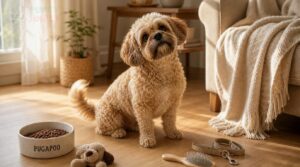
Caring for a Pugapoo isn’t complicated, but getting the daily routine right makes a real difference in how happy and healthy your dog stays. These little guys thrive on consistency — from what’s in their bowl to how much time they spend on your lap versus the sidewalk.
Here’s what a solid daily care routine actually looks like.
Food and Diet Requirements
Think of your Pugapoo’s bowl as their daily fuel gauge — too little and they drag, too much and those tiny joints pay the price.
Life-stage nutrition matters here: puppies need three to four small meals daily, then shift to two as adults.
Prioritize a high-quality diet with a smart protein-fat balance, add fiber digestion support, and always keep fresh water available for diet requirements and calorie control.
Exercise and Playtime
Your Pugapoo doesn’t need marathon sessions — just smart, consistent movement every day. Keep things low-impact and rotating:
- Low-Impact Walks — 30–45 minutes daily keeps energy balanced
- Interactive Tug — great high-energy burner you control
- Scent Games — mental stimulation for dogs without the joint stress
- Gentle Swimming — easy on small frames
- Play Rotation — mix toy types to hold interest
Skip pavement when it’s hot.
Training and Mental Stimulation
Because your Pugapoo inherited serious smarts from the Poodle side, boredom hits fast — and a bored Pugapoo gets creative in ways you won’t love.
Keep obedience sessions short and consistent. Positive reinforcement training works best here; reward the moment they get it right.
Rotate Puzzle Games, Scent Work, and Interactive Play using food puzzle toys and interactive dog toys for lasting mental stimulation.
Grooming and Hygiene
Your Pugapoo’s coat is a genetic mystery box—it could be curly, wavy, or smooth, depending on which parent’s traits dominated. Whatever texture you end up with, a simple care routine keeps their coat healthy and manageable.
Stick to this straightforward regimen:
- Weekly Brushing with canine grooming tools prevents shedding and mats.
- Ear Cleaning twice monthly stops wax buildup.
- Nail Trimming every 2–4 weeks keeps their paws comfortable.
Always mind their sensitive skin—use fragrance-free shampoo exclusively to avoid irritation.
Hot Weather Safety
Hot summer days hit your Pugapoo harder than most dogs — Brachycephalic Obstructive Airway Syndrome makes temperature sensitivity management a real concern. Prioritize hydration strategies (fresh water always available) and shade solutions, while avoiding pavement temperature peaks by walking early or late.
Watch for heat illness signs like heavy panting or red gums. Emergency cooling methods — cooling mats, gradual cool-downs — can prevent heatstroke fast.
Pugapoo Health and Puppy Tips

Loving a Pugapoo means knowing what to watch for health-wise — because this little dog comes with a few quirks worth understanding early. From breathing sensitivities to joint checks, staying ahead of potential issues makes a real difference in their quality of life.
Here’s what you need to know, including tips for finding a healthy puppy in the first place.
Common Health Concerns
Like most designer dogs, your Pugapoo comes with a health checklist worth knowing. Dental disease, skin allergies, and ear infections top the list. Watch for weight management issues too — obesity in small dogs sneaks up fast.
Patellar luxation and Legg-Calvé-Perthes can affect joints, so pre-breeding health screenings matter. Don’t skip parasite prevention either — it’s simple protection with a big payoff.
Brachycephalic Breathing Risks
Breathing is where the Pug side of your Pugapoo really shows up. Brachycephalic Obstructive Airway Syndrome — brachycephalic syndrome, for short — causes narrowed airways, noisy breathing, and heat intolerance. This condition demands close attention to your dog’s respiratory health.
Watch for these critical signs:
- Snoring, wheezing, or snorting during rest
- Swallowing complications like gagging mid-meal
- Exercise collapse after short activity bursts
- Worsening brachycephalic breathing difficulties in warm weather
Airway obstruction can escalate fast — so knowing your dog’s limits matters.
Eye and Joint Screening
Beyond the airways, your Pugapoo’s eyes and joints need regular attention too. Annual eye examinations check corneal clarity, lens cataracts, intraocular pressure, and retina imaging for progressive retinal atrophy.
Joint screening — starting at six months — evaluates hip dysplasia and patellar luxation through hands-on orthopedic assessment. These prebreeding health screenings aren’t overkill; they’re how you catch small problems before they become big ones.
Finding a Healthy Puppy
Once you’ve mapped out your Pugapoo’s screening needs, finding the right puppy comes down to asking the hard questions upfront. A good breeder welcomes your curiosity — does not deflect it.
- Request Health Clearances covering progressive retinal atrophy, hip and knee evaluations
- Confirm a Vet Health Certificate and Parasite Control Records
- Schedule a Breeder Facility Tour
- Insist on a Written Health Guarantee for genetic health screening results
Adoption and Breeder Tips
Once you’ve found a breeder who passes your health-screening checklist, review the contract terms before committing. This ensures transparency and protects both parties.
A responsive breeder will offer puppy health guarantees, share their socialization plan, and schedule breeder vet checks readily. These practices demonstrate accountability and prioritize the puppies’ well-being.
Not ready to buy? Rescue alternatives exist for Pugapoo puppies too. Adoption often provides a head start on genetic health screening, offering peace of mind for prospective owners.
Frequently Asked Questions (FAQs)
Should I let my Pug sleep with me?
You can, but think it through first.
Brachycephalic airway syndrome means louder nighttime breathing, which causes sleep disruption. Set clear boundary training, manage temperature control, and follow basic safety guidelines for your companion animal.
How much does a Pugapoo puppy cost?
Pugapoos aren’t cheap — but they’re not outrageously expensive either. Expect to pay €600–€1,800 from reputable breeders across Europe, or €150–€600 through adoption. Prices shift with coat, lineage, and season.
How much grooming is required for a Pugapoo?
Curly coats need brushing three to four times weekly, while shorter coats require only a few quick sessions.
Bathing every three to six weeks, regular ear cleaning, nail trimming every two to four weeks, and daily dental care complete your Pugapoo’s grooming routine.
Are Pugapoo puppies easy to train?
Yes — with patience and positive reinforcement, Pugapoo puppies pick things up surprisingly fast. Their Poodle-driven problem‑solving aptitude shines early,
though the occasional Pug stubbornness calls for short sessions and crystal-clear cue clarity.
Is a Pugapoo suitable for an apartment or small living space?
Apartment life suits these small doggos surprisingly well.
Their moderate dog energy levels, love of lap time, and minimal exercise needs make city living with dogs feel genuinely manageable in cozy spaces.
How much exercise does a Pugapoo need?
Think of daily exercise like a good cup of coffee — enough to energize, too much causes jitters.
Your Pugapoo needs about 30 minutes of daily walks and light play to stay happy and healthy.
Is a Pugapoo hypoallergenic?
A Pugapoo’s coat inheritance decides everything — Poodle-leaning coats mean less allergen shedding and easier dander control, but no Pug-Poodle mix is a guaranteed hypoallergenic dog.
Allergy testing before committing is the smart move.
How much does a Pugapoo typically cost?
Pugapoo puppies usually cost $800–$2,200 from a reputable breeder.
Breeder price factors like health guarantees and regional price variations affect the final number.
Adoption cost savings through rescues can drop fees considerably lower.
Do Pugapoos travel well on long trips?
Most Pugapoos handle long trips reasonably well once properly acclimatized. Prioritize crate training early, schedule hydration breaks, and maintain steady airflow management.
Their brachycephalic sensitivity means temperature regulation and stress acclimatization aren’t optional — they’re essential.
Can Pugapoos be trained as therapy dogs?
Yes, with the right temperament and handler-dog teamwork, therapy certification is within reach.
Their affectionate, people-oriented nature and strong trainability through positive reinforcement techniques make them genuinely well-suited for calm, structured public environment exposure.
Conclusion
The theory that opposites attract holds up surprisingly well with the pug poodle mix. Breeders gambled on combining two wildly different dogs, and what emerged was a companion that balances Poodle sharpness with Pug warmth in one compact, curly package.
If you go in clear-eyed about their health needs and grooming quirks, you’ll spend far less time troubleshooting and far more time wondering how you ever filled a couch without one.