This site is supported by our readers. We may earn a commission, at no cost to you, if you purchase through links.

Picture a dog that somehow inherited a Siberian Husky’s wanderlust and a Pug’s absolute certainty that the couch belongs to them. That’s the husky pug mix — a compact, spirited little dog with two very different personalities battling it out in one adorable package.
Breeders first started crossing these two breeds around 2000, chasing the best of both worlds: Husky stamina and Pug charm wrapped in a 25–35 pound frame. What they got was the Hug — a nickname that fits surprisingly well.
Before you fall for those icy eyes in a smushed face, there’s a lot worth knowing about this breed.
Table Of Contents
- Key Takeaways
- Husky Pug Mix Overview
- Husky Pug Mix Temperament
- Husky Pug Mix Care Needs
- Husky Pug Mix Health
- Top 3 Husky Pug Mix Essentials
- Frequently Asked Questions (FAQs)
- What is a Pug husky mix called?
- How to get a husky to listen to you?
- Should I let my Pug sleep with me?
- What is a husky Pug mix called?
- How much is a Pug husky mix?
- What is the rarest husky mix?
- Is a husky mix a good family dog?
- How much does a Husky Pug Mix cost?
- How long do Husky Pug Mixes typically live?
- Does the Husky Pug Mix bark a lot?
- Conclusion
Key Takeaways
- The Hug (Husky-Pug mix) is a compact 20–40 lb designer breed that packs serious personality contradictions — stubborn independence from the Husky side, couch-obsessed affection from the Pug side — making consistent, positive-reinforcement training non-negotiable from day one.
- Brachycephalic airway issues, hip and elbow dysplasia, and a range of eye conditions are the breed’s biggest health vulnerabilities, so routine vet screenings and weight management aren’t optional extras — they’re your dog’s lifeline.
- Coat care demands real commitment: depending on whether your Hug leans short or double-coated, you’re brushing 2–4 times a week minimum, with daily grooming during peak shedding seasons in spring and fall.
- With a lifespan of 12–15 years and a price tag of $1,200–$2,500 from reputable breeders, the Hug is a long-term investment that rewards owners who can match its emotional needs with consistent presence, structured exercise, and daily mental stimulation.
Husky Pug Mix Overview
The Husky Pug mix — nicknamed the "Hug" — is one of those dogs that genuinely surprises people once they learn what it’s all about. Two very different breeds; one unexpectedly lovable result.
If unusual pairings intrigue you, the Rottweiler Pug mix proves that unexpected combinations can produce equally charming results.
Here’s what you need to know before we dig in.
Also Called a Hug

Yes, the Husky Pug Mix is literally called a Hug dog — and honestly, the name fits perfectly. Some folks also call it a PUGSKY or Pug Siberian Husky Mix, making it one of the most memorably named designer dog breeds out there.
Like a warm social greeting, this pup radiates emotional comfort the moment it trots into the room.
Designer Crossbreed Origins

The Hug, a lovable designer dog breed, traces its origins to the United States around 2000. It emerged from the late-20th-century crossbreed movement that popularized hybrids like the Labradoodle. Breeders sought to combine the Siberian Husky’s stamina with the Pug’s breed history charm, aiming to achieve hybrid vigor—the health benefits associated with mixed genetics.
This crossbreeding effort was followed by backcross refinement and the development of breed registries, which spurred critical conversations about ethical breeding practices. Many designer mixes, including the Hug, benefit from hybrid vigor health benefits, highlighting the advantages of genetic diversity in canine health.
Size and Weight Range

So you’ve got the backstory — now, how big does a Hug actually get? Think small to medium-sized dogs territory. Average height lands around 12 to 16 inches, while average weight usually runs 20 to 40 pounds. Gender weight differences are real too — males usually are heavier.
Here’s a quick size snapshot:
- Adult Height: 12–16 inches at the shoulder
- Weight Distribution: Most fall between 25–35 pounds
- Size variability in dog hybrids: Genetics from each parent create a natural spread
- Growth Milestones: Puppies hit roughly 70% of adult weight by six months
- Caloric Needs: Adjust portions as your dog matures to avoid unhealthy weight gain
Coat Colors and Types

Now here’s where it gets genuinely fun — coat color genetics in Hugs are basically a surprise box. Your dog might rock Sable Shading with warm cream-to-dark tones, a bold Charcoal Overlay, or even Bi-color Contrast with white patches against dark markings. Merle Patterning occasionally appears too.
Coat type? Either a sleek short coat or a fluffy double long coat.
No two look alike.
Ears, Tail, and Face

Every Hug wears its heritage differently — and nowhere is that more obvious than the ears, tail, and face.
- Ear Carriage shifts from floppy pug-style to alert upright triangular, depending on which parent won that genetic toss
- Tail Curl ranges from a tight pug swirl to a relaxed husky sickle
- Muzzle Length varies too — a shorter pressed nose raises brachycephalic airway obstruction syndrome concerns, while a longer snout breathes more easily
- Facial Expression is surprisingly expressive, with deepening wrinkles and bright eyes that occasionally exhibit heterochromia in dogs
- Ear Wax Management matters — those ears trap moisture quickly
Watch for double coat fur framing the face and always stay current on dog eye health checkups.
Husky Pug Mix Temperament

The Hug’s personality is one of its biggest selling points — and honestly, one of its biggest surprises. You get a dog that embodies a unique blend of traits.
Each dog brings its own spin on that blend — much like how every Merle Bernedoodle has its own personality surprises waiting to win you over.
This breed combines a part goofball, part watchdog nature with an all-heart disposition. Here’s what you can expect from this breed regarding temperament.
Friendly Family Personality
The Hug is essentially your family’s emotional support companion with a tail. From gentle greetings at the door to cozy cuddle sessions on the couch, this dog thrives on connection.
Its affection rituals—following you around, mirroring your mood, and leaning in close—make family bonding feel effortless. As one of the most friendly and naturally social dog temperaments, it offers a warm presence every single day.
The Hug dog follows you, mirrors your mood, and leans in close — effortless companionship, every single day
Children and Other Pets
When properly socialized early, this little charmer is genuinely good with children and other pets.
Supervised Playtime keeps things safe — teach kids Gentle Petting techniques and to read body language.
Set up Safe Retreat Spaces so your pup can decompress.
A Handwashing Routine after cuddles and clear Shared Feeding Rules round out a happy, family-friendly dog breeds’ household.
Watchdog Barking Habits
Your Hug’s watchdog abilities are surprisingly sharp for such a compact dog. That inherited alertness means barking behavior kicks in quickly—think doorbells, passing cyclists, or shifting shadows.
Here’s what usually triggers moderate barking:
- Alarm triggers — sudden sounds or unfamiliar visitors
- Territorial alerts — strangers pausing near your property line
- Social barking — neighbors, dogs, or wildlife nearby
Conditioning and consistent training help balance these innate temperament traits.
Attention-seeking Behavior
Your Hug didn’t just inherit cuteness — it inherited a flair for Drama Displays. This crossbreed’s temperament thrives on connection, manifesting in vocal demands, nudging your hand, or Boundary Testing your "no couch" rule.
Emotional Outbursts follow ignored requests for attention, and some dogs even pace restlessly without enough mental stimulation.
Consistent engagement beats Social Media Validation — your Hug simply needs you, reliably present.
Stubborn Husky Traits
That Husky side doesn’t just show up in the sled-pulling energy — it manifests as stubborn dog behavior that will make you question your leadership more than once. Your Husky is wired for Independent Decisions, meaning Delayed Response is essentially their first language.
Watch for these dog temperament traits:
- Choice Resistance when you repeat a command twice
- Boundary Testing your "sit before dinner" rule — every single night
- Leadership Doubt if your tone wavers or rewards feel inconsistent
- Training Difficulty spikes during high-distraction moments outdoors
Positive reinforcement and calm confidence are your best tools here.
Husky Pug Mix Care Needs
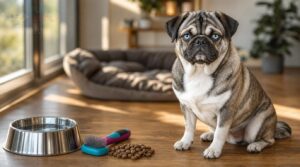
Caring for a Hug isn’t complicated, but it does take some consistency. Every dog is a little different, so knowing what your specific mix needs makes a big difference.
Here’s what to focus on for daily care.
Daily Exercise Requirements
Your Hug’s daily exercise needs depend almost entirely on which parent they take after most.
| Activity | Details |
|---|---|
| Morning Walk Routine | 20–30 min on Joint-Friendly Surfaces |
| Sniff Breaks | 5 min every walk segment |
| Interval Training Sessions | Short bursts, then slow recovery |
| Heat-Safe Play | Early morning or evening only |
| Total Daily Exercise | 30 min–2 hours |
Positive Training Methods
Positive reinforcement training works best here — reward the moment they get it right. Clicker timing and marker training give your dog an instant "yes!" signal.
Reward consistency and shaping techniques build good habits gradually, while error prevention keeps frustration low.
Skip harsh corrections — your Hug will just dig in deeper.
Mental Stimulation Ideas
Training clicks into place — now keep that brain busy. Your dog needs mental enrichment just as much as physical exercise.
Try these indoor dog activities:
- Puzzle Toys and interactive toys that hide treats
- Scent Games using DIY enrichment like hidden kibble trails
- Agility Challenges or Interactive Apps for quick training sessions
Boredom breeds mischief — keep it fun.
Brushing and Shedding
Now, let’s talk fur—because your Hug will shed. A lot.
Shedding seasons peak in spring and fall, but double-coat shedding occurs year-round. Adjust your grooming frequency accordingly:
| Coat Type | Brushing Frequency |
|---|---|
| Short coat | 1–2x per week |
| Long/double coat | 2–4x per week |
| Peak shedding season | Daily |
| Off-season maintenance | 2–3x per week |
| Post-bath sessions | Always brush after |
Use deshedding tools like undercoat rakes for effective coat maintenance. Proper brushing techniques—smooth, head-to-tail strokes—also serve as skin health checks, helping you detect irritation early.
Facial Folds and Ears
Those adorable Pug-style facial folds need real attention. Moisture trapped in the creases — think nasolabial folds and ear cartilage shape — creates the perfect environment for skin dermatitis in dogs. Clean folds daily with a damp cloth and dry thoroughly.
Brachycephalic breathing issues and heat intolerance in brachycephalic breeds mean you’ll want to monitor any snoring or labored breathing closely, too.
Husky Pug Mix Health

Every dog has health quirks, and the Hug is no different. Knowing what to watch for early can make a real difference in how long and how well your dog thrives.
Here are the key health points every Hug owner should keep on their radar.
Lifespan of 12–15 Years
Most Hugs live a solid 12 to 15 years — pretty impressive for a mixed breed. That’s well above the dog lifespan expectations for many larger dogs.
Hit these five basics and you’ll push toward the high end:
- Life Expectancy: stays strong with consistent Preventive Care
- Weight Management reduces stress on aging Joint Health
- Senior Nutrition bolsters muscle and organ function
- Dental Care prevents infections that quietly shorten lifespans
- Routine vet checks catch problems early
Hip and Elbow Dysplasia
Both the Pug and Husky carry genetic risks for hip and elbow dysplasia — so your Husky Pug Mix inherits that double dose. Early Lameness Signs like stiffness or bunny-hopping are your cue to act fast.
| Factor | Hip Dysplasia | Elbow Dysplasia |
|---|---|---|
| Congruity Screening | X-ray hip joint fit | CT or X-ray elbow bones |
| Early Lameness Signs | Noticed during growth phase | Ages 5–18 months |
| Surgical Options | FHO, TPO, total replacement | Fragment removal, BUA |
Weight Management is your first defense against these mixed-breed health concerns.
Breathing Problems
Your Hug’s smooshed face is cute — but it comes with a cost. Brachycephalic Airway Obstruction Syndrome is a real mixed breed health concern here.
Watch for snoring management needs, exercise intolerance, and abnormal breath sounds like wheezing or gurgling. Color change alerts matter too — bluish gums mean an emergency.
Heat stress breathing can escalate fast, so keep walks cool and schedule regular dog health screening.
Eye Condition Risks
Eyes are a weak spot for this mix. Between the Pug’s shallow sockets and the Husky’s genetic baggage, eye disorders in dogs don’t get more varied. Your Pug-Husky mix may face Corneal Abrasions, Dry Eye, Cherry Eye, or Entropion — all causing redness and discomfort.
Deeper mixed breed health concerns include Cataracts, Progressive Retinal Atrophy, and Retinal Degeneration, which quietly steal vision over time.
Vet Checks and Prevention
Your dog needs more than luck to stay healthy — it needs a solid routine. Core Vaccinations, Parasite Prevention, and Dental Exams are non-negotiables at every wellness visit.
Ask your vet about Routine Bloodwork and Weight Monitoring too, as mixed breed health concerns can hide in plain sight.
Regular canine health screening catches problems before they snowball.
Top 3 Husky Pug Mix Essentials
Owning a Hug means staying one step ahead of its grooming, training, and energy needs. The right tools make that a whole lot easier.
Here are three essentials worth having from day one.
1. FURminator Gray Undercoat Grooming Rake Dogs Cats
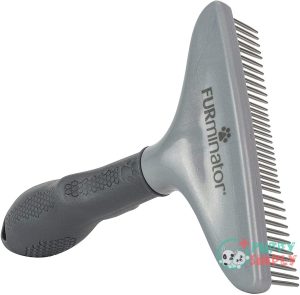
If your Hug has that thick double coat, the FURminator Gray Undercoat Grooming Rake is worth keeping close.
Its rotating metal teeth dig into the dense undercoat to pull out loose hair before it sheds onto your sofa. The ergonomic, non-slip handle ensures comfort during extended grooming sessions, while its lightweight design (just 6.56 oz) makes it ideal for daily use.
Gentle strokes work best—applying excessive pressure may bend the teeth or irritate your dog’s skin.
| Best For | Pet owners with dogs or cats that have thick, double-coat or plush fur—think Golden Retrievers, Huskies, German Shepherds, and long-haired cats—who want to cut down on shedding without stressing their pet out. |
|---|---|
| Primary Use | Dog & cat grooming |
| Target User | Pet owners |
| Shedding Support | Removes loose undercoat |
| Coat Type Focus | Thick double coats |
| Ease of Use | Ergonomic handle |
| Limitations | May bend or misshape |
| Additional Features |
|
- Rotating metal teeth pull loose undercoat hair out efficiently, so less of it ends up on your furniture and clothes.
- The non-slip ergonomic handle keeps grooming comfortable for you, even during longer sessions.
- Feels more like a massage than a brush to most pets, making it easier to use than wire slicker or pin brushes.
- Metal teeth can arrive bent or get misshapen over time, which may mean dealing with a replacement.
- Too much pressure can irritate your pet’s skin or accidentally cut guard hairs on certain coat types like Huskies.
- Loose hair can fly into the air while you’re brushing, so expect a little cleanup in your grooming area afterward.
2. Hertzko Self Cleaning Slicker Brush

Now, if your dog leans more toward the Pug side with a shorter, smoother coat, the Hertzko Self Cleaning Slicker Brush is your go-to. Its fine, angled bristles detangle loose fur and gently massage the skin without scratching — a win for sensitive pups.
Grooming cleanup takes seconds: just press the button, the bristles retract, and the hair wipes right off. At only 3.2 oz, it won’t tire your hand, even during longer sessions.
| Best For | Pet owners with dogs or cats of any coat length who want a lightweight, easy-to-clean brush for regular grooming without the mess. |
|---|---|
| Primary Use | Dog & cat grooming |
| Target User | Pet owners |
| Shedding Support | Controls shedding |
| Coat Type Focus | Long & short hair |
| Ease of Use | Comfort-grip handle |
| Limitations | Less effective short hair |
| Additional Features |
|
- Self-cleaning button retracts bristles instantly — hair comes right off with no fuss
- Gentle angled pins detangle and massage without scratching sensitive skin
- Light at 3.2 oz, so your hand stays comfortable even through longer sessions
- Less effective on short-haired dogs, so results can vary by breed
- The size feels a bit bulky when brushing very small cats
- A few users have reported handle breakage under heavy or rough use
3. Husky Puppy Training Handbook

Training a Husky isn’t always a walk in the park — that stubborn Husky streak is real. Harry Evans’ Husky Puppy Training Handbook ($4.99) offers a practical solution, covering essentials like potty routines, crate basics, leash work, and bite inhibition through positive reinforcement.
The handbook is beginner-friendly and authored by someone who genuinely understands the breed. However, a few sections are generic, so pair it with consistency and patience.
For a strong-willed pup, having a solid game plan from day one makes all the difference.
| Best For | New Husky owners who want a budget-friendly, no-fluff starting point for training their puppy at home. |
|---|---|
| Primary Use | Husky owner education |
| Target User | New Husky owners |
| Shedding Support | Shedding guidance included |
| Coat Type Focus | Husky double coat |
| Ease of Use | Step-by-step format |
| Limitations | Generic training content |
| Additional Features |
|
- Covers all the key basics — potty training, crate work, leash manners, and bite inhibition — in one place
- Written by Harry Evans, who actually knows the breed and runs My Happy Husky
- At $4.99, it’s a low-risk way to go in with a game plan before your pup even comes home
- Some training sections feel generic and don’t fully account for how stubborn Huskies can be
- No page numbers, so finding a specific section takes more effort than it should
- Atypical or particularly strong-willed pups may still need a professional trainer on top of this
Frequently Asked Questions (FAQs)
What is a Pug husky mix called?
This charming crossbreed goes by a few fun nicknames — most people call it the Hug, while others say Pugsky. Both names basically mash the parent breeds together, which honestly makes perfect sense.
How to get a husky to listen to you?
Like teaching a toddler to sit still, patience is everything. Keep sessions short, use high-value treats, and stay consistent.
Your Husky listens best when training feels like a game, not a chore.
Should I let my Pug sleep with me?
It’s totally your call! Sharing your bed can ease your Pug’s anxiety and strengthen your bond — just expect some snoring, shedding, and a serious lack of personal space.
What is a husky Pug mix called?
Most people call it a Hug dog — a cute mashup of Husky and Pug. Some also say Pugsky. Either way, you’ve got one uniquely lovable hybrid on your hands.
How much is a Pug husky mix?
A Hug puppy isn’t cheap — expect to pay $1,200 to $2,500 from a reputable breeder. Adoption through a rescue runs much lower, usually $200 to $600.
What is the rarest husky mix?
The Hug is considered one of the rarest husky mixes, distinguished by its small, compact build and unpredictable coat patterns. These unique traits make it genuinely challenging to find.
Its rarity is further amplified by rare colorings, such as true white or solid black, which are particularly elusive.
Is a husky mix a good family dog?
Picture a dog that’s all tail wags and warm eyes — yes, a husky mix makes a wonderful family dog. They’re friendly, gentle with kids, and thrive on togetherness.
How much does a Husky Pug Mix cost?
Expect to spend $1,200–$2,500 from a reputable breeder, or as little as $200–$500 through rescue adoption. Either way, budget extra for vet visits, vaccines, and supplies.
How long do Husky Pug Mixes typically live?
Most live 12 to 15 years — sometimes stretching to 16 with great care. Think regular vet visits, a healthy weight, and staying on top of breathing or joint issues early.
Does the Husky Pug Mix bark a lot?
The Hug is a moderate barker. You’ll hear alert barks at strangers and excitement bursts during play, but with consistent training and daily exercise, excessive noise stays manageable.
Conclusion
Here’s the truth about the husky pug mix: what looks like a quirky experiment on paper becomes something genuinely special once they’re curled up next to you. No breed is perfect — they’ll test your patience, shed on your couch, and demand attention like it’s their job.
But they’ll also make you laugh daily and love you fiercely. For the right owner, that trade-off isn’t just worth it — it’s everything.
- https://www.alphapaw.com/dog-breeds/husky-pug-mix/?srsltid=AfmBOoqZgKSfShH0O1F8yAr_eHNZstWW5nJAC5kQ40CKwdDeyy09Wve5
- https://www.dogzone.com/crossbreeds/hug/
- https://timberwolfpet.com/blogs/dog-mixes/husky-pug-mix?srsltid=AfmBOoqG71-OLQoLDXnrFg5yWo8iLuvTp5E95v0MYhq3S5uSermFx69S
- https://pugcity.org/pug-mix/hug-pug-husky-mix-breed-info-sn432
- https://www.101dogbreeds.com/hug-dog.asp