
This site is supported by our readers. We may earn a commission, at no cost to you, if you purchase through links.
Your puppy’s immune system won’t fully mature until around six months of age, which means the food you choose now shapes their lifelong health in ways you can’t undo later. That’s why more pet owners are turning to organic grain-free puppy food options—formulas that skip the fillers and focus on what growing bodies actually need.
These foods swap corn, wheat, and soy for nutrient-dense proteins and vegetables, giving your pup cleaner fuel during their most critical developmental window. The challenge isn’t whether organic grain-free diets benefit puppies—it’s knowing which products deliver real quality versus clever marketing.
We’ve evaluated ten standout options that meet strict nutritional standards while keeping your puppy’s unique needs front and center.
Table Of Contents
- Key Takeaways
- Best Organic Grain-Free Puppy Food Options
- 1. OrgaNOMics Salmon and Duck Dinner
- 2. Tender and True Organic Dog Food
- 3. Side By Side Pork Rabbit Stew
- 4. Primal Puppy Freeze Dried Dog Food
- 5. Primal Chicken Freeze Dried Dog Food
- 6. Honest Kitchen Chicken Grain Free Clusters
- 7. ZIWI Peak Beef Wet Dog Food
- 8. Open Farm Turkey Freeze Dried Dog
- 9. Merrick Salmon and Sweet Potato Food
- 10. The Honest Kitchen Turkey Recipe
- Key Benefits of Organic Grain-Free Puppy Food
- How to Choose The Right Organic Puppy Food
- Organic Certification and Labeling Explained
- Transitioning Puppies to Organic Grain-Free Diets
- Frequently Asked Questions (FAQs)
- Should puppies have grain or grain free food?
- Can I switch my dog from grain free to grain?
- Is farmer’s dog grain free?
- How to store organic grain-free puppy food?
- What is the calorie range per serving?
- How often should puppies eat daily?
- Are there seasonal organic ingredient variations?
- What are signs of food intolerance?
- Can puppies thrive on freeze-dried formulas alone?
- Do organic foods prevent dilated cardiomyopathy risks?
- Conclusion
Key Takeaways
- Your puppy’s immune system won’t fully mature until around six months, making early food choices critical for lifelong health outcomes you can’t reverse later.
- While grain-free formulas often promise allergy relief, fewer than 1% of dogs actually have grain sensitivities—and some grain-free diets have been linked to increased DCM (heart disease) risk.
- Quality organic grain-free foods deliver 38-44% protein from whole animal sources like organs and bone, providing better amino acid profiles and digestibility than plant-based fillers.
- Transitioning to any new food requires a gradual 7-10 day schedule and close monitoring for digestive upset or allergic reactions, especially during your puppy’s critical growth window.
Best Organic Grain-Free Puppy Food Options
Choosing the right organic grain-free puppy food means finding options that meet strict USDA standards while supporting your puppy’s growth and development.
The products below have been selected based on their organic certification, high-quality protein sources, and nutritional completeness for puppies.
Each option offers something different, whether you’re looking for freeze-dried convenience, wet food variety, or budget-friendly choices.
1. OrgaNOMics Salmon and Duck Dinner
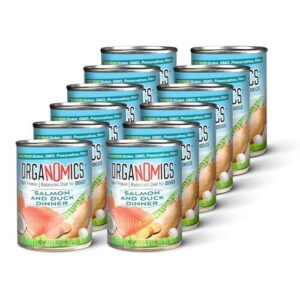
OrgaNOMics Salmon Duck Dinner Grain-Free Pate stands out among organic puppy foods for its ingredient transparency and solid nutritional profile. You’re getting real salmon and duck as the first two ingredients, plus organic vegetables like carrots and sweet potatoes.
With 10% protein and 7% fat, it meets your puppy’s growth needs without grains or artificial additives. Customer satisfaction runs high—reviewers consistently give it 5 out of 5 stars.
The recall history is spotless, which matters when you’re feeding a growing pup. It’s made in the USA using sustainable packaging.
Best For: Pet owners looking for a grain-free, organic puppy food with high-quality protein sources and a clean recall history.
- Real salmon and duck as the first two ingredients provide high-quality protein for growing puppies
- 100% recall-free history and made in the USA with USDA organic vegetables
- Consistently high customer satisfaction with reports of improved coat health and reduced allergy symptoms
- Some customers received dented cans, indicating potential shipping or quality control issues
- Mixed reviews on palatability—not all dogs accepted the food
- Lower protein content at 10% compared to some competing premium puppy foods
2. Tender and True Organic Dog Food
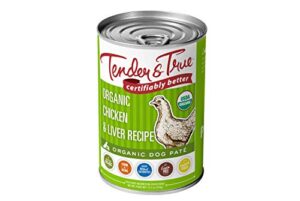
Tender and True Organic Dog Food delivers what conscientious puppy owners want: USDA-certified organic chicken with full ingredient integrity. The canned variety contains 39% protein and 23% fat, numbers that support healthy growth.
The company earned Global Animal Partnership certification for their poultry, meaning your pup’s food comes from humanely raised birds. Everything’s made in their Nebraska facility under strict safety standards that meet FDA and AAFCO guidelines.
While it’s not suitable for large-breed puppies during growth stages, it’s a solid grain-free choice for smaller dogs.
Best For: Owners of small to medium-breed puppies who want USDA-certified organic, grain-free nutrition with humanely raised chicken and strict quality standards.
- USDA Organic and Global Animal Partnership certified, ensuring ethical sourcing and no GMOs, artificial additives, or common allergens like corn, wheat, and soy
- High protein content (39% in canned variety) with quality chicken as the single ingredient, supporting healthy puppy development
- Made in a dedicated USA facility with rigorous FDA and AAFCO safety testing on every batch
- Not suitable for large-breed puppies (70 lbs or more as adults) during critical growth stages
- Contains five anti-nutrients like peas and chickpeas that may impact nutrient absorption in some dogs
- Customer reports of occasional shipping damage and potential quality control issues like black spots in cans
3. Side By Side Pork Rabbit Stew
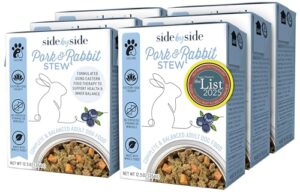
Side By Side Complete Balanced Pork Rabbit Wet Dog Food takes a whole-food approach without USDA organic certification. You’ll find 33 human-grade ingredients—including pork hearts, whole rabbit with bone, and kale—lightly cooked to preserve nutrients. The stew delivers 11% protein and 3% fat, plus non-GMO seeds like chia and pumpkin.
It works as a complete meal or topper, though it’s pricey for daily feeding. Customer feedback points to better energy and coat quality, making this grain-free option worth considering for puppies with sensitivities.
Best For: Dog owners looking for a nutrient-dense, whole-food wet food option who don’t mind the premium price and can use it as a meal topper or rotational diet component.
- Made with 33 human-grade ingredients including whole rabbit and pork hearts, with no synthetic vitamins or artificial additives
- Customers report noticeable improvements in energy levels and coat quality after regular feeding
- Flexible feeding options—works as a complete meal or 25% topper for picky eaters or dogs with sensitivities
- Expensive for daily use as a complete meal, especially for larger dogs
- Short 3-day refrigerator shelf life after opening makes meal planning tricky
- Lower protein content (11%) compared to many premium wet foods, which may not suit highly active dogs
4. Primal Puppy Freeze Dried Dog Food
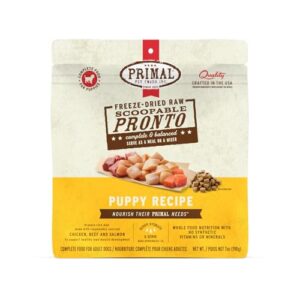
Primal Puppy Freeze Dried Dog Food packs 38% protein and 24% fat from cage-free chicken and wild-caught salmon—exactly what growing puppies need. You’ll spot USDA certified organic fruits like blueberries and vegetables such as kale alongside natural probiotics for gut health. The freeze-dried format locks in nutrients without synthetic vitamins.
Keep in mind the brand faced a 2022 recall for raw frozen products, though they’ve since upgraded safety protocols. At 290 calories per cup, these mini nuggets work well as complete meals or toppers for picky eaters.
Best For: Puppy owners prioritizing high-protein, grain-free nutrition with organic ingredients who want convenient freeze-dried meals or toppers.
- High protein (38%) and fat (24%) from quality sources like cage-free chicken and wild-caught salmon support healthy puppy growth
- USDA organic fruits and vegetables plus added probiotics promote digestive health without synthetic additives
- Convenient scoop-and-serve format works as a complete meal, topper, or treat for picky eaters
- Expensive option with small 7-ounce bags that aren’t cost-effective for large breeds or multiple dogs
- Brand experienced safety recalls in 2022 for Listeria and Salmonella in frozen products (though corrective measures were implemented)
- Some customers report the nuggets can be overly powdery at times
5. Primal Chicken Freeze Dried Dog Food
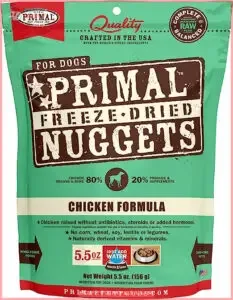
This adult-dog formula offers 39% protein and 30% fat from USA-sourced cage-free chicken raised without antibiotics. USDA certified organic carrots, kale, and blueberries make up 20% of the recipe, plus probiotics for digestive support.
The freeze-dried nuggets stay shelf-stable without refrigeration, though they’re harder to crumble than the puppy version. At $43.95 for 14 ounces, you’re looking at $3.50–$5.00 daily for a 25-pound pup.
Note that Primal received an FDA warning in 2023 regarding excess vitamin D in some batches.
Best For: Dog owners who want a premium, grain-free raw diet with organic ingredients and are willing to pay more for shelf-stable convenience.
- High protein content (39%) from USA-sourced cage-free chicken with no antibiotics, steroids, or hormones
- Shelf-stable freeze-dried format doesn’t require refrigeration and includes probiotics for digestive health
- Made with 20% USDA certified organic fruits and vegetables with no corn, wheat, soy, or artificial additives
- Expensive at $43.95 for 14 ounces, costing $3.50–$5.00 daily for a 25-pound dog
- Nuggets are harder to crumble compared to puppy formulas, making preparation less convenient
- FDA warning issued in 2023 for excess vitamin D in some batches raises quality control concerns
6. Honest Kitchen Chicken Grain Free Clusters
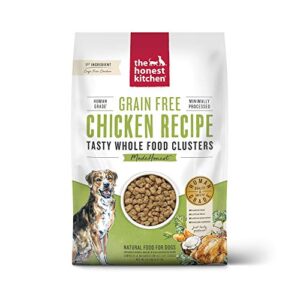
You’ll recognize The Honest Kitchen’s grain-free chicken clusters by their human-grade certification—a rare achievement that means every ingredient meets FDA safety standards for people.
Each cup delivers 26% protein from cage-free chicken, plus probiotics for digestive support, which matters when your puppy’s gut is still maturing.
The cold-pressed clusters break down more easily than traditional kibble, making them gentler on small stomachs.
At around $3 per pound in a 20-pound bag, this organic option balances ethical sourcing with practical feeding costs for growing pups.
Best For: Dog owners who want human-grade, minimally processed food with cage-free chicken and probiotics, especially for pups with sensitive stomachs or food allergies.
- Human-grade certification and American Humane Certified chicken mean you’re getting ingredients that meet the same safety standards as your own food
- Cold-pressed clusters are easier to digest than regular kibble, with added probiotics to support gut health during your puppy’s development
- No fillers, artificial preservatives, or mystery meat meals—just real chicken, vegetables, and functional ingredients you can actually recognize
- Pricier than most kibble options at roughly $3 per pound, which adds up quickly for larger breeds
- Some dogs refuse to eat it outright, and the powdery texture can be messy or unappealing to pickier eaters
- Shipping issues are common—bags sometimes arrive crushed or with holes, wasting food and creating a mess
7. ZIWI Peak Beef Wet Dog Food

ZIWI Peak Beef Wet Dog Food delivers 41% protein on a dry-matter basis, featuring beef, lung, kidney, and tripe in ratios your puppy’s ancestors would recognize. This New Zealand formula meets AAFCO standards for all life stages, including large-breed puppies.
The recipe ensures high bioavailability through chelated minerals and natural glucosamine from New Zealand green mussels. With 1,250 kcal per kilogram, the energy density supports rapid growth without grain fillers.
You’ll find no potatoes, gums, or carrageenan—just 91% meat and organs in a texture puppies devour eagerly.
Best For: Puppy owners seeking a high-protein, organ-rich wet food that meets AAFCO standards for large-breed growth without grains or artificial additives.
- Delivers 41% protein on a dry-matter basis with authentic meat-to-organ ratios from free-range New Zealand beef
- Includes chelated minerals and natural glucosamine from green mussels for better absorption and joint support
- No grain fillers, potatoes, gums, or carrageenan—just 91% meat and organs with consistent energy density at 1,250 kcal/kg
- Some customers report inconsistencies in texture, color, and smell between batches
- Higher price point compared to most conventional wet puppy foods
- May cause digestive upset in some dogs and requires gradual transition despite being formulated for sensitive stomachs
8. Open Farm Turkey Freeze Dried Dog
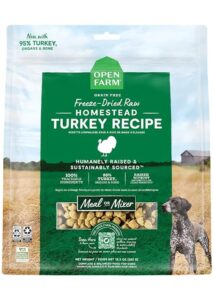
Open Farm Turkey Freeze Dried Dog Food packs 95% humanely raised turkey—meat, organs, and bone—with organic vegetables into bite-sized morsels your puppy can digest easily. This grain-free formula delivers 42% protein and 4,612 kcal per kilogram, meeting all-stage AAFCO standards.
You’ll appreciate the ingredient traceability: every lot code traces turkey back to certified humane farms. Customer reviews praise the organic ingredients and minimal processing, though pricing analysis shows it’s premium-priced at $10.99 for 3.5 ounces.
Note the January 2025 voluntary recall for potential plastic contamination—contact Open Farm if concerned.
Best For: Dog owners who want fully traceable, high-protein nutrition and don’t mind paying premium prices for humanely raised turkey with organic ingredients.
- 95% turkey (meat, organs, bone) delivers 42% protein with complete traceability to certified humane farms
- Grain-free formula uses organic vegetables and skips artificial preservatives, corn, wheat, and soy
- Works as a complete meal or topper for all life stages with a 30-day satisfaction guarantee
- Premium pricing ($10.99 for 3.5 oz) makes it significantly more expensive than competing freeze-dried options
- January 2025 voluntary recall for potential plastic contamination requires checking lot codes before feeding
- Some customers report packaging issues and inconsistent product texture or smell upon delivery
9. Merrick Salmon and Sweet Potato Food
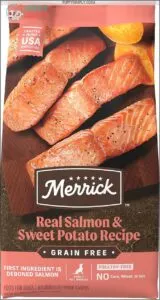
Merrick Grain Free Real Salmon and Sweet Potato leads with deboned salmon protein, delivering 60% protein and healthy fats in every bite. Sweet potatoes and peas replace traditional grains, providing grain-free benefits your puppy needs.
The salmon oil and flaxseed boost omega-3s to 0.8% minimum, supporting skin-coat health as your pup grows. Consumer feedback highlights strong palatability and fewer itching episodes, though market positioning places it in the premium price range.
While not USDA-certified organic, its whole-food approach appeals to owners seeking quality organic ingredients without corn or wheat.
Best For: Dog owners looking for a grain-free, high-protein salmon recipe that supports skin and coat health, especially for dogs with grain sensitivities or allergies.
- Deboned salmon as the first ingredient with 60% protein and healthy fats for strong muscle development and energy
- Omega-3 and omega-6 fatty acids from salmon oil and flaxseed help maintain healthy skin and a shiny coat
- Grain-free formula with sweet potatoes and peas works well for dogs with corn, wheat, or soy sensitivities
- Premium pricing makes it more expensive than many mainstream kibble options
- Some customers report quality control issues like torn bags or packaging problems
- Mixed reviews on palatability, with a few dogs refusing to eat it despite generally positive feedback
10. The Honest Kitchen Turkey Recipe
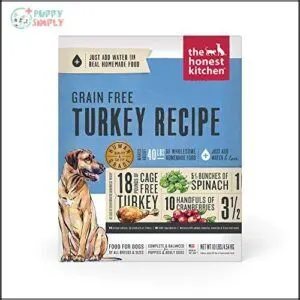
The Honest Kitchen Turkey Recipe transforms 4 lbs of dehydrated, human-grade ingredients into 16 lbs of nourishing food when you add warm water. Cage-free turkey leads the formula, offering 29% crude protein, alongside sweet potatoes, spinach, and coconut—all free from GMOs and artificial additives.
Consumer ratings average 4.8 out of 5 stars, reflecting strong palatability and digestive benefits. Though not USDA-certified organic, ingredient sourcing meets human-grade standards.
The brand’s recall history shows just one incident since 2013, demonstrating consistent safety protocols in the organic puppy foods category.
Best For: Pet parents looking for human-grade, grain-free nutrition that’s easy on sensitive stomachs and simple to prepare for dogs of any size or life stage.
- Cage-free turkey with 29% protein and human-grade ingredients means you’re feeding real food without fillers, GMOs, or artificial preservatives.
- Super convenient dehydration format turns 4 lbs into 16 lbs of fresh food—just add warm water and it’s ready in minutes.
- Excellent safety track record with only one recall since 2013 and 4.8-star consumer ratings prove consistent quality and digestibility.
- Higher price point compared to traditional kibble makes it a premium investment for your dog’s diet.
- Prepared food needs to be eaten within a few hours or refrigerated, so you can’t leave it out all day like dry food.
- Some dogs may need a gradual transition period to avoid digestive upset when switching to this formula.
Key Benefits of Organic Grain-Free Puppy Food
Choosing organic grain-free food for your puppy isn’t just about following a trend—it’s about making informed decisions that can genuinely benefit your growing dog’s health. From reducing digestive upset to supporting a shiny coat, these foods offer several advantages worth considering.
Let’s look at the key benefits that make organic grain-free options appealing to so many puppy owners.
Reduced Allergens and Sensitivities
While grain-free organic puppy foods often promise relief from food allergies, fewer than 1% of all dogs actually have grain sensitivities. Most allergic reactions stem from protein source changes—chicken, beef, or dairy—not grains.
You’ll want to know that allergen substitution risks exist, since legumes in many grain-free formulas show a DCM link. Evidence-based strategies recommend choosing organic ingredients only after confirming your puppy’s specific allergens through veterinary testing.
Some studies have linked grain-free diets to increased risk of DCM.
Improved Digestive Health
Beyond allergen management, your puppy’s gut microbiome thrives on the right fuel. Many organic puppy food reviews highlight firmer stool consistency within 7 to 14 days of switching to grain-free formulas—a sign of enhanced nutrient absorption. Organic ingredients reduce pesticide exposure that can disrupt digestive balance, while alternative carbohydrates support beneficial gut bacteria.
Best organic puppy food brands prioritize digestibility, meaning less waste and better energy utilization for your growing pup. Some pet owners report that grain-free diets help reduce grain sensitivity symptoms in their dogs.
Higher Quality Protein Sources
When choosing organic puppy food, you’ll notice protein sources that stand apart. High-quality organic formulas pack 38–44% protein on a dry-matter basis—like ZIWI Peak beef—far exceeding standard kibbles. These recipes rely on meat, organs, and bone rather than plant fillers, delivering enhanced amino acid quality and protein digestibility above 80–90%. That concentration fuels your puppy’s growth while respecting their carnivorous heritage.
- Animal-origin proteins from deboned salmon, turkey, and beef provide all ten essential amino acids puppies need
- Organ meats like heart and kidney supply natural B vitamins and iron without synthetic fortification
- Protein digestibility exceeds 80–90% in premium animal sources versus 70–85% in some plant proteins
- Energy concentration allows smaller portions—ZIWI Peak delivers 4,612 kcal/kg in freeze-dried formulas
- Sourcing standards include hormone-free, antibiotic-free meats with third-party welfare certifications like G.A.P.
Enhanced Skin and Coat Condition
You’ll see healthier skin and a shinier coat when organic grain-free puppy food delivers the right omega fatty acids and micronutrient benefits.
Salmon-rich formulas improve skin conditions by 64% in 30 days, while dietary oils boost coat sheen through better skin hydration.
Zinc, biotin, and vitamin E strengthen hair shafts and reduce dryness—visible changes usually appear within 6–12 weeks of feeding.
Peace of Mind for Pet Owners
Confidence matters when you’re raising a puppy. Choosing organic grain-free puppy food with certified organic ingredients gives you assurance about what’s actually in the bowl.
- Ingredient Transparency: Every component is traceable from farm to bowl, with third-party verification confirming Ethical Sourcing practices
- Reduced Risks: USDA certification excludes pesticides, GMOs, and antibiotics from puppies’ diets
- Brand Reputation: Lower recall rates reflect stricter safety standards
- Long-Term Health: Fewer chemical additives support your puppy’s development naturally
How to Choose The Right Organic Puppy Food
Picking the right organic puppy food isn’t as simple as grabbing the first bag with a green label. You need to know what those certifications actually mean, how to read ingredient lists like a pro, and whether the formula matches your puppy’s specific needs.
Let’s walk through the key factors that’ll help you make a confident choice for your growing pup.
Understanding Ingredient Labels
Reading ingredient labels is like decoding your puppy’s nutritional blueprint. The first three items on that list make up over 80% of what you’re feeding, so protein sources should lead the charge. Watch out for moisture content—it can bump meat higher on the list than its actual nutritional weight suggests.
Natural flavors appear in 54% of grain-free formulas, so don’t be surprised when you spot them.
Assessing Organic and Grain-Free Certifications
What separates real certification from clever marketing? Choosing organic puppy food means decoding labels that now face regulatory uncertainty—even the USDA delayed new pet food standards in 2025. Here’s what you should verify:
- USDA Organic Label confirms at least 95% certified organic ingredients
- Grain-free verification isn’t regulated like organic standards
- Labeling confusion grows as “regenerative” and “carbon-neutral” claims multiply
- Claim fragmentation dilutes formal certifications’ perceived value
- Non-GMO logos come from private groups, not USDA
Look for the official seal, not just promises.
Considering Life Stage and Breed Size
Not all puppies grow at the same pace—what fuels a Chihuahua won’t suit a Great Dane. Small breeds need energy-dense organic grain-free formulas, around 67–72 kcal per kg daily, while large breeds require controlled calcium levels (2.0–4.5 g per 1,000 kcal) and lower energy density to protect skeletal health.
Always verify AAFCO guidelines confirm your puppy’s food matches breed needs and fosters healthy puppy development.
Evaluating Nutritional Completeness
A complete label isn’t just reassuring—it determines whether your puppy thrives or merely survives. To confirm you’re delivering nutritional balance for puppy development, examine three cornerstones:
- AAFCO Compliance proving at least 22% protein and 8% fat for growth
- Amino Profiles and Fatty Acids meeting puppy nutritional needs
- Micronutrient Adequacy and Ingredient Transparency ensuring nothing’s missing
GrainFree Dog Food for Puppies demands this scrutiny.
Consulting Your Veterinarian
Your veterinarian becomes your puppy’s nutrition translator—82% of puppy owners change food based on expert advice, and with good reason. The 2018 FDA investigation into dietary DCM linked some grain-free formulas to heart risks, making professional guidance non-negotiable.
Your veterinarian becomes your puppy’s nutrition translator, especially after FDA linked some grain-free formulas to heart risks
Vets assess individualized needs, screen for nutritional deficiencies, verify brand reputation, and tailor owner education so you’re confident—not guessing—about your puppy’s plate.
| What Your Vet Evaluates | Why It Protects Your Puppy |
|---|---|
| Cardiac risk factors | Screens for DCM predisposition in certain breeds or diets |
| Growth metrics | Confirms organic grain-free meets puppy nutritional needs |
| Ingredient oversight | Validates manufacturer employs board-certified nutritionists |
| Allergy diagnostics | Rules out true sensitivities before choosing grain-free |
Organic Certification and Labeling Explained
When you’re shopping for organic puppy food, the labels can feel like a puzzle of stamps and claims. Understanding what these certifications actually mean helps you separate real quality from clever marketing.
Let’s break down the key standards and regulations you’ll encounter on those bags and cans.
USDA Organic Vs. Human-Grade Standards
When choosing organic puppy food, you’ll encounter two distinct standards. USDA organic certification guarantees at least 95% organic ingredients grown without synthetic fertilizers or GMOs, focusing on agricultural practices. Human-grade claims require every ingredient and processing step to meet human consumption standards—think food safety audits and FDA-registered facilities.
Both guarantee high-quality ingredients, but they emphasize different aspects of production and regulatory compliance.
Non-GMO Claims Vs. Organic Certification
While both labels signal quality, they protect your puppy from different risks. Non-GMO certification demands GMO testing on high-risk ingredients, blocking genetically modified organisms. USDA Organic certification goes broader—banning GMOs, synthetic additives, and harmful pesticides.
The USDA Organic label earns higher consumer trust (74% vs 36% recognition), offering regulatory oversight that covers your puppy’s entire food chain.
Mixed-Ingredient Organic Food Requirements
When your puppy’s food contains multiple organic ingredients, the USDA Organic Label requires at least 95% certified organic content by weight—excluding water and salt in the Percentage Calculation. The remaining 5% must be Allowed Non-Organic substances or Synthetic Taurine from the National List. Ingredient Traceability documents every source, while Processing Standards prevent contamination during manufacturing, keeping grain-free Organic food ingredients pure for puppies.
- You can’t mix organic and non-organic forms of the same ingredient in one bag
- Every component needs documented farm-to-bowl tracking for certification compliance
- Water and salt don’t count toward the organic percentage calculation
Regulations for Organic Pet Food Labels
Beyond the USDA Organic Label percentage requirements, your puppy’s food faces ongoing Regulatory Changes and Enforcement Measures. The Certification Process demands annual inspections of Ingredient Sourcing practices, while Labeling Compliance rules prevent misleading pet food marketing terms.
AAFCO guidelines work alongside organic standards to verify complete nutrition. Since March 2025, stricter rules ensure that certain organic ingredients meet both safety and purity standards throughout production.
Transitioning Puppies to Organic Grain-Free Diets
Switching your puppy to organic grain-free food isn’t something you should rush—their digestive systems need time to adjust. A gradual shift helps prevent stomach upset while giving you the chance to watch for any unexpected reactions.
Let’s walk through the key steps to make this change as smooth as possible for your growing pup.
Gradual Food Switching Tips

Think of a food switch like moving your puppy into a new home—rushing causes stress. Follow a 7–10 day adjustment schedule, blending 25% new organic grain-free food with 75% old on days 1–3, then shifting to 50/50 by day 4.
Puppies with sensitive stomachs need slower pacing. These mixing methods and supportive strategies, including stool monitoring, help your puppy adapt comfortably while meeting nutritional needs.
Monitoring for Allergic Reactions

During the first week after switching, watch closely for clinical signs like itching, ear redness, vomiting, or loose stools—about 80% of allergic flares surface within seven days.
Track both skin and digestive symptoms daily, since up to half of food-allergic puppies show gut trouble alongside skin issues.
If signs appear, note the allergen sources (beef, chicken, dairy) and consider elimination diets with your vet’s guidance.
Adjusting Portion Sizes and Frequency

Once you’ve successfully transitioned to organic grain-free food, you’ll need to fine-tune portions as your puppy matures. Growth rate and caloric needs shift dramatically—puppies consume two to three times more per pound than adults.
Consider these feeding schedules:
- Under six months: Divide daily portions into three to four meals for steady energy and digestion.
- Six months onward: Reduce to two meals as growth slows.
- Adjust portions at five to seven months and again at twelve months when caloric needs naturally decline.
- Factor in breed differences and activity levels—larger or highly active puppies may need 25% more food.
Weigh your puppy weekly and watch body condition closely. High-quality ingredients in organic formulas pack more nutritional value, so you may feed slightly less than conventional options while still meeting puppy nutritional needs. Prevent overfeeding by measuring carefully—studies show puppies eat 50% more when served oversized portions, raising obesity risk later. Proper portion management ensures dog nutrition fosters healthy development without excess weight gain.
Ensuring Complete and Balanced Nutrition

Complete and balanced nutrition isn’t negotiable when feeding puppies—their rapid development demands AAFCO Compliance. Verify your organic, grain-free formula meets these puppy nutritional needs: 28–32% protein with essential amino acids, proper mineral ratios (1.2% calcium, 1.0% phosphorus), and vitamin supplementation, including DHA. Digestive enzymes and probiotics improve nutrient absorption from high-quality ingredients, ensuring your puppy thrives.
| Nutritional Component | Minimum Standard |
|---|---|
| Crude Protein | 28–32% |
| Calcium to Phosphorus | 1.2% : 1.0% |
| DHA for Brain Development | 0.2% minimum |
| Omega-6 Fatty Acids | 2.5% minimum |
Frequently Asked Questions (FAQs)
Should puppies have grain or grain free food?
Most puppies thrive on balanced diets with grains unless they show specific sensitivities. Grain allergies are rare, representing less than 1% of skin disease cases, while grain-free diets carry potential DCM risks worth discussing with your vet.
Can I switch my dog from grain free to grain?
Yes, you can switch your dog from grain-free to grain. Most dogs don’t have true grain sensitivities, and a gradual shift over 7–10 days helps prevent digestive issues while supporting nutritional balance and reducing DCM risks.
Is farmer’s dog grain free?
The Farmers Dog offers grain-free dog food recipes using sweet potatoes, lentils, and chickpeas instead of wheat or corn.
Their puppy-friendly formulas prioritize ingredient transparency and allergen control, though they aren’t certified organic.
How to store organic grain-free puppy food?
Store your pet food in airtight containers below 80°F to preserve nutritional value and prevent moisture damage. Refrigerate opened wet food and use within three days. Keep bags sealed, monitor shelf life, and maintain hygiene practices.
What is the calorie range per serving?
Calorie density varies widely across organic grain-free options for puppies. You’ll find serving sizes ranging from 290 to 422 kcal per cup, helping you match your puppy’s energy requirements and support healthy weight management throughout growth.
How often should puppies eat daily?
Your puppy’s stomach is practically the size of a walnut—so four meals daily work best for those tiny 6-to-12-week-olds.
By six months, scheduled feeding transitions to twice-daily, supporting healthy caloric distribution and proper puppy nutritional needs.
Are there seasonal organic ingredient variations?
Yes, organic puppy food ingredients shift with the seasons. You’ll find pumpkin and sweet potatoes featured more in fall and winter, while fresh greens and berries appear during warmer months when they’re naturally harvested.
What are signs of food intolerance?
Watch for digestive symptoms like diarrhea or vomiting, skin manifestations such as persistent itching, and ear infections.
Puppies with food sensitivities may show behavioral changes, excessive paw licking, or anal area discomfort requiring dietary adjustment.
Can puppies thrive on freeze-dried formulas alone?
Freeze-dried formulas meeting AAFCO growth standards can support puppies when properly rehydrated. However, microbiological risks from raw ingredients and hydration needs require careful monitoring.
Always verify regulatory compliance and consult your veterinarian first.
Do organic foods prevent dilated cardiomyopathy risks?
The truth? Organic certification doesn’t shield your puppy from dilated cardiomyopathy risks. FDA data shows grain-free controversy centers on ingredient formulation—especially legumes—not organic status.
Diet-associated risks link to taurine deficiency and pulse-heavy recipes, regardless of farming methods.
Conclusion
Think of your puppy’s diet as the foundation of a house—you can’t rebuild it once the walls are up. Choosing organic grain-free puppy food options now protects your dog’s immune system, digestion, and long-term vitality during their most vulnerable months.
You’ve seen what quality looks like across ten vetted products. Now match your puppy’s specific needs with the right formula, introduce it gradually, and watch them thrive on nutrition that respects their biology.
- https://dataintelo.com/report/grain-free-dog-food-market
- https://www.futuremarketinsights.com/reports/grain-free-pet-food-market
- https://www.towardsfnb.com/insights/grain-free-pet-foods-market
- https://straitsresearch.com/report/organic-pet-food-market
- https://www.maximizemarketresearch.com/market-report/organic-pet-food-market/166911/
Khush
November 13, 2025 at 12:01 PM
I appreciate the research that went into this guide, but I have to be honest about my experience. After pricing out some of these options, I realized Whole Earth Farms' foods at $860 per kilo just wasn't sustainable for us long-term, no matter how premium the ingredients. After talking with our vet about the grain-free trend and the DCM concerns you mentioned, we decided to go with IAMS Proactive Health Smart Puppy instead. It's grain-inclusive, which our vet actually preferred, and it's been great for our pup. The omega-3 DHA has really helped with training focus, and we haven't had any of the digestive issues we were worried about. The cost difference is massive, and honestly, our vet explained that grains aren't the enemy unless there's a diagnosed allergy (which is pretty rare). IAMS has the feeding trials and vet backing without the boutique price tag. Just wanted to share another perspective for anyone feeling overwhelmed by the premium organic options. Our pup is thriving, and we're not stressed about the grocery bill every month.