This site is supported by our readers. We may earn a commission, at no cost to you, if you purchase through links.

A puppy with storm-cloud patches and glass‑blue eyes draws attention like few dogs can.
That’s the merle French Bulldog — a coat pattern so visually striking that waitlists form before litters are even born, and prices can climb past €12,000 for the right bloodline.
But behind that swirling, mottled beauty sits a surprisingly complex genetic story.
The same allele responsible for those silver-blue tones can, under the wrong breeding conditions, cause deafness, malformed eyes, and lifelong health struggles.
Understanding what drives the pattern — and what risks come with it — changes how you evaluate every breeder, every price tag, and every puppy.
Table Of Contents
- Key Takeaways
- What is a Merle French Bulldog?
- Merle French Bulldog Genetics
- Merle Frenchie Colors and Appearance
- Merle French Bulldog Health Concerns
- Buying and Caring Responsibly
- Frequently Asked Questions (FAQs)
- Is Merle a French Bulldog?
- Are Merle French Bulldogs AKC approved?
- Can a Merle French Bulldog compete with a Frenchie?
- How much does a Merle French Bulldog cost?
- Why are Merle French Bulldogs controversial?
- Are Merle French Bulldogs prone to joint problems?
- How much is a merle French Bulldog?
- How rare is a merle French Bulldog?
- Can Frenchies naturally be merle?
- Can a merle French Bulldog be registered?
- Conclusion
Key Takeaways
- The merle pattern comes from a single gene at the M locus, and breeding two merle dogs together gives each puppy a 25% chance of serious deafness or blindness.
- DNA testing is the only reliable way to spot cryptic merle carriers — dogs that look solid but can still pass the gene to their pups.
- Merle French Bulldogs aren’t naturally part of the breed; the gene was introduced through crossbreeding, and the AKC still doesn’t recognize it as a standard color.
- Before you buy, ask for dated genetic health documents — a breeder who can’t produce them is a breeder you should walk away from.
What is a Merle French Bulldog?

A merle French Bulldog isn’t just a pretty coat — it’s a whole conversation about genetics, color science, and responsible breeding. Before you fall for those swirling patches and striking blue eyes, there’s a lot worth understanding. Here’s what you need to know first.
The same merle genetics at play in French Bulldogs also show up in other breeds — if you’re curious how the pattern expresses differently, merle Bernedoodles offer a fascinating comparison that sheds light on how the gene behaves across coat types.
Merle Coat Pattern Explained
The merle coat pattern is one of the most eye-catching things you’ll see on a French Bulldog. Instead of a solid, uniform color, you get a swirling mix of irregular patch formation — lighter diluted areas breaking up the base coat in unpredictable ways. No two merle Frenchies look exactly alike.
This happens because merle is driven by dominant gene inheritance at the M locus. Breeders should be aware of the higher risk of deafness associated with single merle genes.
How Merle Affects Pigment
The pattern you saw in the previous section starts at the cellular level. Merle works by disrupting eumelanin production — the dark pigment — in random coat areas.
Phaeomelanin, the red or yellow pigment, stays mostly untouched. That’s why merle Frenchies show a patchy, mottled contrast rather than a smooth, even fade.
Standard Versus Non-standard Color
Not all merle colors are equal in the registry’s eyes. The AKC treats merle as a non-standard coat pattern for French Bulldogs, meaning no merle variation qualifies under the official breed standard.
Colors like lilac or chocolate merle carry an extra layer of "non-standard" — they’re marketing terms, not registry language. Always ask for genetic documentation, not just a color name.
Why Merle Frenchies Are Rare
So why are these dogs so hard to find? It comes down to biology and ethics working together.
- Heterozygous merle breeding limits litter size
- Double merle pairings are avoided responsibly
- AKC non-standard color policy discourages mainstream breeders
- Registration barriers reduce verified availability
- M locus carriers aren’t always visibly obvious
That combination creates real market scarcity — and drives the price premium you’ll see.
Merle French Bulldog Genetics
The merle coat doesn’t happen by accident — it’s written right into the DNA. A handful of key genetic factors determine whether a French Bulldog carries it, expresses it, or passes it on. Here’s what you need to understand about how merle inheritance actually works.
M Locus Inheritance

The M locus is where everything starts. It’s a specific genetic region that controls whether your Frenchie displays a merle coat — or passes the trait along silently.
| Genotype | Result |
|---|---|
| m/m | No merle pattern |
| M/m | Heterozygous merle |
| M/M | Double merle (high risk) |
| Mc/m | Cryptic merle carrier |
Allele dominance means one copy is enough to express the pattern. Gene segregation ensures each puppy inherits independently.
In Lilac Merle French Bulldogs, these genetic principles combine to produce their signature diluted coat and unpredictable swirling patterns.
Single Merle Gene Copy

One copy of the merle allele is all it takes. This heterozygous expression (M/m genotype) creates a visible merle coat pattern genetics outcome without needing two copies.
- A SINE insertion at the M locus triggers random pigment dilution
- Only eumelanin is affected, not phaeomelanin
- Patch variation depends on the insert’s poly A tail length
- Breeding outcomes shift once a merle mates with another merle
- Genetic testing confirms single merle status reliably
Cryptic Merle Carriers

Some merle French Bulldogs carry the gene without looking like it. These are called cryptic merle carriers — also known as phantom merle or ghost merle.
Their coat appears solid. No obvious patches, no visible mottling. That’s because a shorter SINE insertion at the M locus produces little to no pigment dilution.
Genetic screening is the only reliable way to confirm carrier status.
Double Merle Risks

Pairing two merle French Bulldogs is where things go seriously wrong. When both parents carry the M allele, each puppy has a 25% chance of inheriting two copies — creating a homozygous merle genotype at the M locus.
Here’s what that means in practice:
- Double merle deafness risk affects up to 70% of homozygous pups
- Double merle blindness results from eye defects like microphthalmia or coloboma
- Excess white coat signals severe pigment loss
- Double merle breeding is considered an avoidable welfare failure
- Genetic health screening of both parents can prevent this entirely
DNA Testing Importance
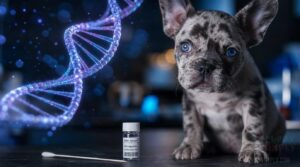
DNA testing removes the guesswork entirely. A simple swab confirms exact merle genotype — one copy or two. This means you can identify cryptic merle carriers that look solid but still pass the M allele on.
Before breeding, test both parents. Platforms like Testing DNA screening provide documented proof buyers can actually verify. No test? No certainty.
Merle Frenchie Colors and Appearance
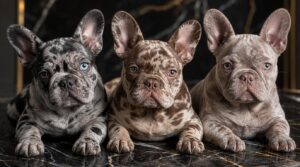
Merle French Bulldogs don’t come in just one look — the color range is genuinely striking. Each variation depends on which base coat genes pair with that single merle allele. Here’s a closer look at the most recognized colors you’ll come across.
Blue Merle French Bulldogs
The blue merle French Bulldog is one of the most visually striking results of merle coat rarity. Its coat layers silver-blue tones with deeper charcoal mottling — no two dogs look alike.
Many carry lighter blue or gray eyes, and some show heterochromia. Always confirm the pattern through genetic testing, not appearance alone.
Lilac Merle French Bulldogs
If blue merle is the silver fox of the color world, lilac merle is the rare gem. The lilac gene combination — requiring both the dilute gene and chocolate gene alongside the M locus — makes this color genuinely hard to produce. Both parents must carry all three recessive traits.
The result is a silver mottled coat with a soft lavender-purple cast. Lighter patches blend into an ashy cream base, while darker mottling creates that unmistakable broken-up look. Many lilac merles also show light nose pigmentation and blue or odd-colored eyes.
Responsible pairings and health considerations for flat-faced breeds matter here too — ethical dog breeding means never cutting corners for color. Expect premium pricing factors to push costs higher than standard merles.
Chocolate Merle French Bulldogs
Chocolate merle sits just a step warmer than lilac. Where lilac leans lavender, chocolate merle leans rich brown — warm, mottled patches over a deep cocoa base. That base color comes from chocolate coat genetics: two recessive copies of the b allele, one from each parent. No shortcuts there.
Here’s what makes this variation stand out:
- Mottled brown patterning breaks up the coat in irregular, eye-catching patches
- Blue eyes or heterochromia appear frequently alongside the chocolate base
- M locus activation overlays the merle pattern directly onto the chocolate pigment
Don’t overlook UV skin protection — lighter-patched areas burn easily. Ethical breeder guidelines still apply: never pair two merles. Pricing of rare coat colors puts chocolate merles firmly in the $5,500–$7,000 range.
Black and Fawn Merles
From warm brown, the palette shifts to something sharper. Black and fawn merles carry a dark eumelanin base broken by irregular, fawn-tinted patches — tan tones surfacing around the muzzle, legs, and belly.
Pattern variability means no two dogs look alike. Always confirm the M locus status through DNA.
Never trust appearance alone.
Blue Eyes and Heterochromia
Eye color gets interesting here. The M locus dominant gene disrupts melanin unevenly — and that shows up in the iris too. Less pigment means light scatters differently, reflecting blue wavelengths.
- Blue eye genetics link directly to reduced iris melanin
- Sectoral heterochromia creates a split-color effect within one eye
- Central heterochromia produces a contrasting ring around the pupil
Merle French Bulldog Health Concerns

The merle coat turns heads, but it comes with some real health baggage you should know about. Some risks are tied to genetics, others just come with the breed. Here’s what to watch for.
Hearing and Vision Problems
Hearing problems are one of the most serious concerns in merle French Bulldogs. Congenital deafness risk is highest in double merles, with up to 70% affected. Even single-copy merles can have progressive hearing loss over time.
Double merle French Bulldogs face up to a 70% chance of congenital deafness — a risk no coat color is worth
On the vision side, ocular abnormalities like microphthalmia and coloboma are real risks. Blue eyes in merle dogs often signal altered pigmentation — always get an ophthalmology exam.
Skin Sun Sensitivity
Merle dogs carry less melanin in affected skin patches. That’s a problem outdoors. Lower melanin means UV radiation penetrates deeper, raising the risk of sunburn and long-term skin damage.
Watch for these warning signs after sun exposure:
- Dry, red, or itchy skin
- Painful blisters on exposed areas
- Slow-healing inflammation lasting up to a week
Limit midday sun exposure and apply dog-safe sunscreen on bare patches.
Brachycephalic Breathing Risks
French Bulldogs are brachycephalic dogs — their flat faces come with narrow nostrils, an elongated soft palate, and sometimes a smaller-than-normal trachea. That anatomy creates real breathing resistance every single day.
Over time, chronic strain can trigger laryngeal collapse, where weakened throat tissue folds inward and further blocks airflow. Exercise intolerance follows quickly. Even light activity can leave your Frenchie gasping.
Heat Intolerance Concerns
Heat doesn’t forgive a flat face. Your Merle French Bulldog can’t cool down the way other dogs can — panting efficiency drops fast when the airway is already cramped.
- Never leave your Frenchie in a parked car — temperatures spike dangerously within minutes
- Watch for heat stress signs: heavy panting, weakness, or sudden sluggishness
- Use hydration strategies like fresh water breaks every 20–30 minutes outdoors
Routine Vet Monitoring
Regular vet visits aren’t optional — they’re your Merle Frenchie’s safety net.
Your vet will assess Body Condition Score, check dental health, and run an Ear Skin Check at every visit. A Respiratory Rate Check helps catch breathing changes early.
Pair that with Genetic DNA health screening and a solid Parasite Prevention Plan for truly lifelong veterinary care.
Buying and Caring Responsibly
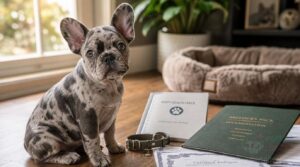
Getting a merle French Bulldog right means doing your homework before the puppy ever comes home. From picking a trustworthy breeder to understanding what daily life actually looks like, the details matter. Here’s what you need to know.
Choosing Ethical Breeders
Not every breeder who sells merle Frenchies is one you should trust. Visit in person when possible. You want to see clean housing, a healthy mother, and puppies that are socialized. Ask direct questions.
Ethical breeders welcome scrutiny — they’ll offer a clear return policy, lifetime aftercare support, and honest answers about their breeding philosophy without hesitation.
Health Testing Documents
A good breeder backs their words with paper. Ask for dated lab reports tied to that specific dog — not generic forms.
Look for Canine DNA health screening results showing genotype outcomes for the M locus.
Certification documents should list the testing facility, evaluator’s name, and a report date.
No traceable documentation? Walk away.
A lifetime health guarantee means nothing without the records behind it.
AKC Color Limitations
AKC doesn’t recognize merle as a standard French Bulldog color. It falls under disqualification criteria in conformation evaluations. Some breeders work around this through non-standard color mapping — registering a dog under an existing AKC color code instead. That means the paperwork won’t say "merle."
Don’t confuse AKC registration with AKC color approval. They aren’t the same thing.
Puppy Price Expectations
So you’ve cleared the AKC paperwork question — now comes the part that surprises most buyers: merle French Bulldog price.
- Pet-quality merle Frenchies usually range from €2,500 to €5,000
- Health-tested, pedigree-documented puppies run €3,500 to €8,000
- Champion lineage pups can exceed €12,000
Hype and rarity drive real price range variability. Budget wisely.
Training and Apartment Living
Owning a merle Frenchie in an apartment is very doable. Crate training tips matter most early on — a crate builds bladder control fast.
Stick to a tight apartment potty routine: out after meals, naps, and play. Their French Bulldog temperament is calm and people-loving, so positive reinforcement training works beautifully.
Keep sessions short, reward often, and you’re set.
Frequently Asked Questions (FAQs)
Is Merle a French Bulldog?
Merle is a coat pattern, not a breed. A French Bulldog wearing merle markings is still a French Bulldog — just one carrying a genetic trait outside AKC standard colors.
Are Merle French Bulldogs AKC approved?
No, they’re not. Merle is not an approved color under the AKC French Bulldog breed standard. The AKC explicitly lists merle among its disqualifying coat colors, making these dogs ineligible for show ring approval.
Can a Merle French Bulldog compete with a Frenchie?
Picture your dog stepping into the ring — only to be turned away at the gate. That’s the reality. AKC breed standards disqualify merle French Bulldogs from competition, including blue or green eyes.
How much does a Merle French Bulldog cost?
Prices usually fall between $5,500 and $7,000, though rare colors like lilac merle can push closer to $15, Ethical breeding and health testing justify the higher end.
Why are Merle French Bulldogs controversial?
The controversy comes down to one thing: looks over health. Outcrossed origins, AKC non-recognition, and double merle welfare risks make this a breed where buyer awareness genuinely matters.
Are Merle French Bulldogs prone to joint problems?
Yes, they can be. French Bulldogs already carry genetic risk for Patella Luxation, Hip Dysplasia, and IVDD. Weight control and low-impact exercise help. Regular vet checks catch problems early.
How much is a merle French Bulldog?
Expect to pay $5,500 to $7,000 from a reputable breeder. Rare coat patterns and champion bloodlines push prices higher. Always verify health testing documents before committing.
How rare is a merle French Bulldog?
Like a gemstone cut from an uncommon vein, merle is genuinely rare. Breeder restrictions, AKC nonstandard color policy, and genetic rarity keep numbers low. Lilac merle sits among the rarest of all.
Can Frenchies naturally be merle?
No, Frenchies can’t naturally carry merle. The gene entered the breed through historical outcrossing with merle breeds. It’s an introduced genetic mutation, not a natural part of French Bulldog DNA.
Can a merle French Bulldog be registered?
Registration is possible, but complicated. AKC registration isn’t available for merle French Bulldogs since merle falls outside breed standard colors. Alternative registries exist, though they don’t carry the same weight.
Conclusion
A merle French Bulldog isn’t just a pretty dog — it’s a responsibility wearing a beautiful coat.
That swirling pattern comes with real stakes: health risks that DNA testing can catch early, and breeders who either respect the genetics or do not.
You now know the difference.
Choose a breeder who tests, documents, and breeds with intention.
The dog you bring home deserves more than good looks.
It deserves a future built on informed decisions.