This site is supported by our readers. We may earn a commission, at no cost to you, if you purchase through links.

A lot of healthy foods in your kitchen can help your dog, and a few can send you to the emergency vet.
Fruit sits right in that gray area.
One day you’re handing over a blueberry as a training treat.
The next you’re learning that grapes and raisins can damage kidneys fast.
That’s why dog friendly fruit alternatives matter so much.
The safest choices aren’t fancy, and they don’t need prep, but the details count: peel this, skip that seed, keep portions small.
With the right swaps, fruit can add crunch, hydration, and variety without turning snack time into guesswork.
Table Of Contents
- Key Takeaways
- Best Everyday Fruit Alternatives
- Hydrating Fruit Alternatives for Dogs
- Low-Sugar Alternatives for Sensitive Dogs
- Unsafe Fruits and Better Swaps
- How to Serve Fruit Safely
- Frequently Asked Questions (FAQs)
- Are fruits safe for dogs?
- Can dogs eat fruits & vegetables?
- Can dogs eat coconut fruit?
- Can dogs eat fruit on a prescription diet?
- Are canned fruits ever safe for dogs?
- Can dogs eat dried fruit alternatives safely?
- Which tropical fruits are safest for dogs?
- How should leftover fruit treats be stored?
- Can fruit be used in homemade dog treats?
- Conclusion
Key Takeaways
- Safe fruit treats for dogs are simple and common, like seedless apple slices, blueberries, strawberries, pears, watermelon, and melon, but they should be served plain, in small pieces, and in small portions.
- The biggest safety rule is to remove anything risky, including seeds, pits, cores, rinds, stems, and tough skins, because those parts can cause choking, stomach upset, or toxicity.
- Some fruits are not worth the risk at all, especially grapes and raisins, while cherries, peaches, plums, avocado, and citrus peels are better replaced with safer options like berries, apples, cucumber, or melon.
- Fruit should stay under 10% of your dog’s calories, and you should watch for vomiting, diarrhea, lethargy, or other signs of trouble, especially in puppies, seniors, diabetic dogs, or dogs on prescription diets.
Best Everyday Fruit Alternatives

Some fruits are easy, safe picks to keep on hand for everyday treating. The best choices are simple to prepare, easy to portion, and practical for most dogs.
If pears are on your list, this guide to safe pears for dogs explains portions and prep.
Here are a few reliable options to start with.
Apple Slices Without Seeds or Core
Although Apples are among Safe fruits for dogs, safety lives in the details:
- Apple Core Extraction
- Seed-Free Slicing
- Thin Apple Slices
- Peel Management
Remove any stems, leaves, seeds, pits, and skin. These Safe preparation methods for feeding fruit to dogs support Calorie Counting and Moderation in dog treats, helping your dog chew safely and avoid stomach upset with every bite.
Blueberries as Bite-size Training Treats
After apple slices, Blueberries shine as Training treats for dogs because their small size promotes Bite-Size Uniformity and fast Training Motivation.
Among Safe fruits for dogs, they offer an Antioxidant Boost plus modest Manganese Content. The Antioxidant properties of blueberries add value, and Freeze-Dried Options can work too.
Keep Safe fruit serving sizes for dogs, small, thawed, and to chew.
Strawberries in Small Fresh Pieces
Like blueberries, Strawberries are handy Strawberry Training Rewards among dog-friendly fruits.
- Safe for dogs, washed and sliced small.
- Practice Strawberry Portion Control and dog treat portion control.
- Offer with meals for Strawberry Digestive Benefits.
- Fresh Strawberry Storage means chilled, covered pieces.
- Watch for softer stool, mouth irritation, and Strawberry Allergy Monitoring.
Serve refrigerated pieces promptly, ideally within two days total.
Pear Chunks With Core Removed
After strawberries, pears offer another pick among dog-friendly fruits. Follow Core Removal Steps: remove any stems, leaves, seeds, pits, and skin, then cut ripe, firm flesh by texture softness.
A quick Ripeness Check and Storage Freshness scan matter. Because of Oxalate Levels, use small pieces when preparing and serving fruit to dogs, following portion and frequency guidelines for fruit treats.
Banana Pieces as an Occasional Sweet Treat
When chosen with good Ripeness Selection, Bananas are safe for dogs as soft, sweet bites among dog-friendly fruits. Their Potassium Role helps normal muscle function, yet the Calorie Tradeoff matters. Because Fiber Digestion varies, follow portion and frequency guidelines for fruit treats.
Try a careful Freezing Technique for tiny pieces.
These are modest Benefits of fruits for canine health overall.
Hydrating Fruit Alternatives for Dogs

When the weather is warm, a few water-rich fruits can be a simple way to give your dog a light, cool treat. The key is choosing options that are safe, easy to serve, and gentle on your dog’s stomach.
Before offering blackberries, check whether blackberries are safe for dogs and the best way to serve them.
Here are a few hydrating fruit choices to think about.
Watermelon Without Seeds or Rind
On a hot day, Watermelon can feel like a splash of comfort for your dog. For safe fruit preparation for dogs, offer only seedless pink flesh, and remove any stems, leaves, seeds, pits, and skin, plus the rind.
Hydration support with watermelon is its gift, with Fiber Benefits, Seasonal Freshness, Cooling Effect, Kidney Support, and Dental Cleaning from simple dog-friendly fruits.
Cantaloupe for Warm-weather Snacking
When summer bites, Cantaloupe can be one of the gentlest dog-friendly fruits. Follow Ripe Selection Cues, then use Cold Serving Tips: chill, peel, remove seeds, and cut small cubes.
Portion Control Rules matter: low-calorie dog treats still need Safe fruit serving sizes for dogs. Digestive Fiber Boost makes Seasonal fruit treats for dogs useful in Enrichment Play Ideas too.
Honeydew as a Cooling Treat
Think of honeydew as a cool sip in fruit form.
For many dog-friendly fruit fans, its peeled flesh gives Honeydew Cooling Benefits and Kidney-safe Moisture when you offer a few chilled bite-size cubes, plain.
- Chilled Serving Temperature
- Seasonal Refreshment Timing
- Careful Chilled Fruit Storage
- low-calorie dog treats, seasonal fruit treats for dogs, and respect safe fruit serving sizes for dogs.
Frozen Fruit Pieces for Enrichment
Frozen fruit turns snack time into gentle work and Sensory Stimulation. Use plain dog-friendly fruits, respect safe fruit serving sizes, and practice moderation in pet feeding.
| Freeze Timing | Texture Variation | Enrichment Games |
|---|---|---|
| Short freeze | soft berries | sniff mat |
| Full freeze | firm apple cubes | Seasonal Rotation, enrichment treats for hot weather, low-calorie dog treats |
Start small; supervise chewing, stop if upset.
Choosing Watery Fruits for Hydration Support
Water can hide in fruit. Choose dog-friendly fruits that are safe for dogs and use fruit preparation for dogs carefully:
- Watermelon: Hydration support with watermelon, rind and seeds removed.
- Cantaloupe, honeydew: strong water content comparison, useful electrolyte boost.
- Strawberries, blueberries: lighter watery bites.
- Seasonal fruit selection, hydration timing, and a cooling snack schedule keep portions smart for warm-weather snacking.
Low-Sugar Alternatives for Sensitive Dogs

If your dog does better with lighter treats, low-sugar options can be a smart place to start. They can help you keep snack time simple, gentle, and easier to manage.
Here are a few choices that work well for sensitive dogs.
Raspberries and Blackberries in Moderation
Among dog-friendly fruits, raspberries and blackberries can be smart low-sugar treats when you follow moderation feeding guidelines. Their fiber benefits and antioxidant benefits for dogs are helpful, but too many may upset digestive tolerance and cause loose stool or visible seeds.
Start with a few berries, watch for allergy risks, and adjust portions to support safe weight management in sensitive dogs.
Cranberries Served Fresh and Unsweetened
Fresh, unsweetened cranberries are safe for dogs when chopped small. They offer an antioxidant boost and vitamin C sources for dogs, with acidity management and portion timing mattering most.
- ruby
- tart
- crisp
- seasonal
- tiny
Dog-friendly fruits with dental benefits can include low-sugar fruit options for diabetic dogs, depending on seasonal availability for some.
Apples as a Lighter Fruit Option
Tart cranberries are fine, but apples are a lighter pick for sensitive dogs. Core and seeds out, small slices in.
They’re safe for dogs, support Digestive Health, and help Weight Management as low-calorie dog treats. Offer fresh or frozen.
| Benefit | Note |
|---|---|
| Fiber Boost | steady stools |
| Vitamin C | modest plus |
| Antioxidant Power | promotes dog-friendly fruits |
| Fruits Dogs Can Eat | simple, crunchy. |
Plain Pumpkin as a Non-fruit Alternative
If apples don’t suit your dog, Pumpkin is a gentle swap.
The Fiber benefits of pumpkin for dogs support Digestive Health, and plain canned or cooked pumpkin fits Portion Guidance, as one teaspoon to start.
It works well for mixing with kibble, stores easily with smart storage tips, and belongs with dog-friendly vegetables and low-calorie dog treats for Digestive health.
Cucumber Slices for Extra Crunch
Switch things up with cucumbers when your dog wants a crisp bite. Safe for dogs, low in calories, and high in fiber, they fit Crunchy Texture Training and work as a light Dental Chewing Aid.
Try peeled, plain slices for Cold Snack Refresh or Enrichment Toy Use. Dog-friendly vegetables also bring Seasonal Crunch Variations without piling on sugar too easily.
Unsafe Fruits and Better Swaps
Some fruits that seem harmless can cause real problems for dogs, so it’s worth knowing which ones to skip. The good news is that there are easy, dog-safe swaps that still feel like a treat.
Some fruits can seriously harm dogs, but safe swaps make treating your dog simple and safe
Here are a few common fruits to avoid, and better options you can offer instead.
Grapes and Raisins Replaced With Blueberries
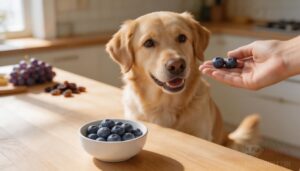
Kidney Safety comes first: Grapes and raisins are never worth the risk, because kidney toxicity from grapes can trigger sudden kidney failure. Blueberries make a smarter swap, with antioxidant properties of blueberries and anthocyanin benefits in plain sight.
For fruit preparation for dogs, wash and serve a few plain pieces, supporting xylitol avoidance, seasonal availability, and even gentle dental health.
Cherries Replaced With Seedless Strawberries

Because whole Cherries carry a real cyanide and choking risk, Strawberries are a kinder swap daily. This is smart Cyanide Hazard Mitigation, with useful Prep Time Reduction during Fruit preparation for dogs.
Among Dogfriendly fruits, the Flavor Profile Comparison is gentler, the Nutrient Density Shift still favorable, and Seasonal Availability often good. That matters when considering Fruit toxicity in dogs.
Peaches and Plums Replaced With Apple Slices

Why risk pits? For dog-friendly fruits, Apples beat Peaches and Plums in nutritional comparison, and safer fruit preparation for dogs.
- Remove core, seeds, stem
- Bite-size pieces aid Digestive Benefits
- Start small for Allergy Screening
- Better Seasonal Availability, Cost Effectiveness
They also offer fiber, water, and light sweetness without pit hazards, making training treats simple, steady, and practical for everyday use.
Avocado Replaced With Cucumber or Melon

| Instead | Why |
|---|---|
| Cucumber | Cooling effect, Calorie control |
| Watermelon | Fat reduction, easy digestive tolerance |
| Melon cubes | Texture contrast, safer fruit preparation for dogs |
Skip Avocado; its fat, pit, skin, and leaves add trouble. Cucumber and Watermelon fit dog-friendly fruits better: plain, seedless, rind-free, small pieces for everyday treats and warm-weather snacking at home.
Citrus Peels Avoided in Favor of Berries

Think of citrus peel as the rough jacket your dog doesn’t need. Peel oil irritation and tougher strips raise citrus toxicity concerns in pets, and choking risk mitigation matters for small mouths.
Instead, choose dog-friendly fruits like Blueberries and Raspberries for Antioxidant benefits, Digestive comfort, and easy Seasonal availability.
It’s a simple way to sidestep fruit toxicity in dogs safely.
How to Serve Fruit Safely

Before you hand over any fruit, a few simple serving habits can make a big difference. The safest approach comes down to how you wash it, prep it, portion it, and watch your dog afterward.
Here’s what to keep in mind before fruit becomes part of your dog’s treat routine.
Washing, Peeling, and Cutting Small Pieces
Gently wash the fruit first. Employing Good Water Rinsing Techniques, using a Produce Brush on firm, dog-friendly fruits, and Drying Before Cutting help ensure treats are safe for dogs and reduce concerns about fruit toxicity at home.
When preparing the fruit, follow these steps:
- Peel rough skins.
- Use a sharp knife.
- Cut into tiny, even bites for uniform size training.
- Remove any stems, leaves, seeds, pits, and skin.
Removing Pits, Seeds, Stems, and Rinds
Once you’ve made small pieces, use a good Knife Choice for Pit Identification, Seed Extraction, Stem Trimming, and Rind Removal. That keeps dog-friendly fruits safe for dogs and helps reduce fruit toxicity in dogs.
Always remove any stems, leaves, seeds, pits, and skin. Those hard leftovers create seed and pit hazards.
| Step | Fruit |
|---|---|
| Pit | peach |
| Seeds | apple |
| Stems/rind | berries melon pieces |
Keeping Fruit Treats Under 10% of Calories
Once the scraps are gone, calories still count. Use Calorie Budget Planning so dog-friendly fruits stay below 10% of a balanced diet.
- Fruit Weight Calculations
- Snack Timing Guidelines
- Simple Portion Charts
- Owner Tracking Apps
- low-calorie dog treats, moderation feeding guidelines, fruit toxicity in dogs
Watermelon, strawberries, and cantaloupe fit best; bananas need smaller pieces for sweet, safer everyday treat swaps.
Watching for Vomiting, Diarrhea, or Lethargy
Even with dog-friendly fruits, watch Vomiting frequency, Stool consistency, Appetite loss, and Lethargy triggers.
Dehydration signs like dry gums, panting, or sunken eyes matter too.
Signs of fruit toxicity in dogs, symptoms of fruit poisoning, toxic fruits for dogs, or Gastrointestinal upset from onions can look like more than a simple stomach upset, so call your vet promptly if symptoms continue.
Adjusting Portions for Puppies, Seniors, and Diabetic Dogs
Because needs change with age and health, use Calorie-based scaling and Age-specific serving sizes when managing fruit portions for dogs.
Follow Weight monitoring guidelines, make Gradual portion adjustments, and keep dog-friendly fruits as low-calorie dog treats.
For senior dog nutrition, use Diabetes-friendly portion timing and Low-sugar fruit options for diabetic dogs, especially if appetite, insulin, or weight shifts over time.
Frequently Asked Questions (FAQs)
Are fruits safe for dogs?
Yes, can dogs eat fruit? Dogfriendly fruits are safe in small, plain pieces. Some options may offer Dental Benefits when fed carefully.
Toxic fruits for dogs raise Kidney Risk, Blood Sugar Impact, and Allergy Signs.
Can dogs eat fruits & vegetables?
Like a gardener, you can offer dogs some dog-friendly fruits and dog-friendly vegetables for Nutrient Benefits and Digestive Health, but follow Portion Guidelines, watch Allergy Risks, and remove any stems, leaves, seeds, pits, and skin.
Can dogs eat coconut fruit?
Dogs can eat plain coconut fruit in tiny amounts, but Coconut fat content can upset Coconut digestive tolerance and Coconut allergy risk.
Follow Coconut serving size, skip shell, and use fresh pulp with storage guidelines.
You can offer fresh coconut meat as an occasional treat.
Can dogs eat fruit on a prescription diet?
Wildly enough, fruit on a prescription diet isn’t a yes. Can dogs eat fruit?
Only with veterinary approval, since nutrient interactions, potassium limits, phosphorus considerations, and blood glucose impact may matter more than nutritional value.
Are canned fruits ever safe for dogs?
Sometimes, after Label Reading, Xylitol Screening, and Syrup Drainage, they fit pet safety guidelines, but canned fruit in syrup raises Sugar Content and Preservative Risks, increasing fruit toxicity in dogs;
choose dog-friendly fruits, moderation feeding.
Can dogs eat dried fruit alternatives safely?
Dried delights demand caution. Plain dried blueberries or apple slices (seed-free) are safer picks, but their calorie density and sugar load mean tiny portions only.
Skip raisins entirely — fruit toxicity in dogs from grapes is no small risk.
Which tropical fruits are safest for dogs?
Safest picks include Mango, Papaya, Pineapple, and Bananas among dog-friendly fruits; use Mango Pit Removal and Pineapple Core Safety, value Papaya Digestive Benefits and Guava Vitamin Content, and respect Lychee Toxicity Risks by skipping lychee entirely.
How should leftover fruit treats be stored?
Like lunchbox fruit, leftover treats spoil fast: follow Refrigeration Guidelines, use Airtight Packaging and Portion Labeling, try Freezing Methods, do Shelf Life Checks, and serve fresh fruit to support canine health and prevent food poisoning.
Can fruit be used in homemade dog treats?
Yes, fruit can be used in homemade dog treats if you choose dog-friendly fruits, follow Allergy Testing Protocol, avoid toxicity in dogs, and use moderation and portion control by removing seeds, pits, peels, and cores.
Conclusion
Regarding your furry friend’s snacks, it’s better to be on the safe side. Think of dog friendly fruit alternatives as a bright twist on traditional treats.
By choosing wisely, you can add variety to snack time without worry. Apples, blueberries, and pears make great choices.
Always remove seeds, pits, and rinds, and keep portions small. With these simple swaps, you can share the fruit bowl with your dog, guilt‑free, every day.
- https://www.petmd.com/dog/nutrition/what-fruits-can-dogs-eat
- https://www.webmd.com/pets/dogs/what-are-safe-fruits-for-dogs-to-eat
- https://www.healthyhappypaws.com.au/health-wellbeing/25-fruits-dogs-can-eat-and-cant-eat
- https://www.petscare.com/en-gb/news/post/dog-friendly-fruits-guide
- https://rawznaturalpetfood.com/what-fruits-and-vegetables-can-dogs-eat/